What Traits Matter Most in Army Delta Force Operators?
Ten traits associated with effective Delta Force operators are resilience, adaptability, self-belief, perseverance, emotional regulation, self-control, drive to improve, humility, stubbornness, and teamwork. Together, they describe someone who can keep going, change plans, make sound decisions under stress, and put the team ahead of ego.
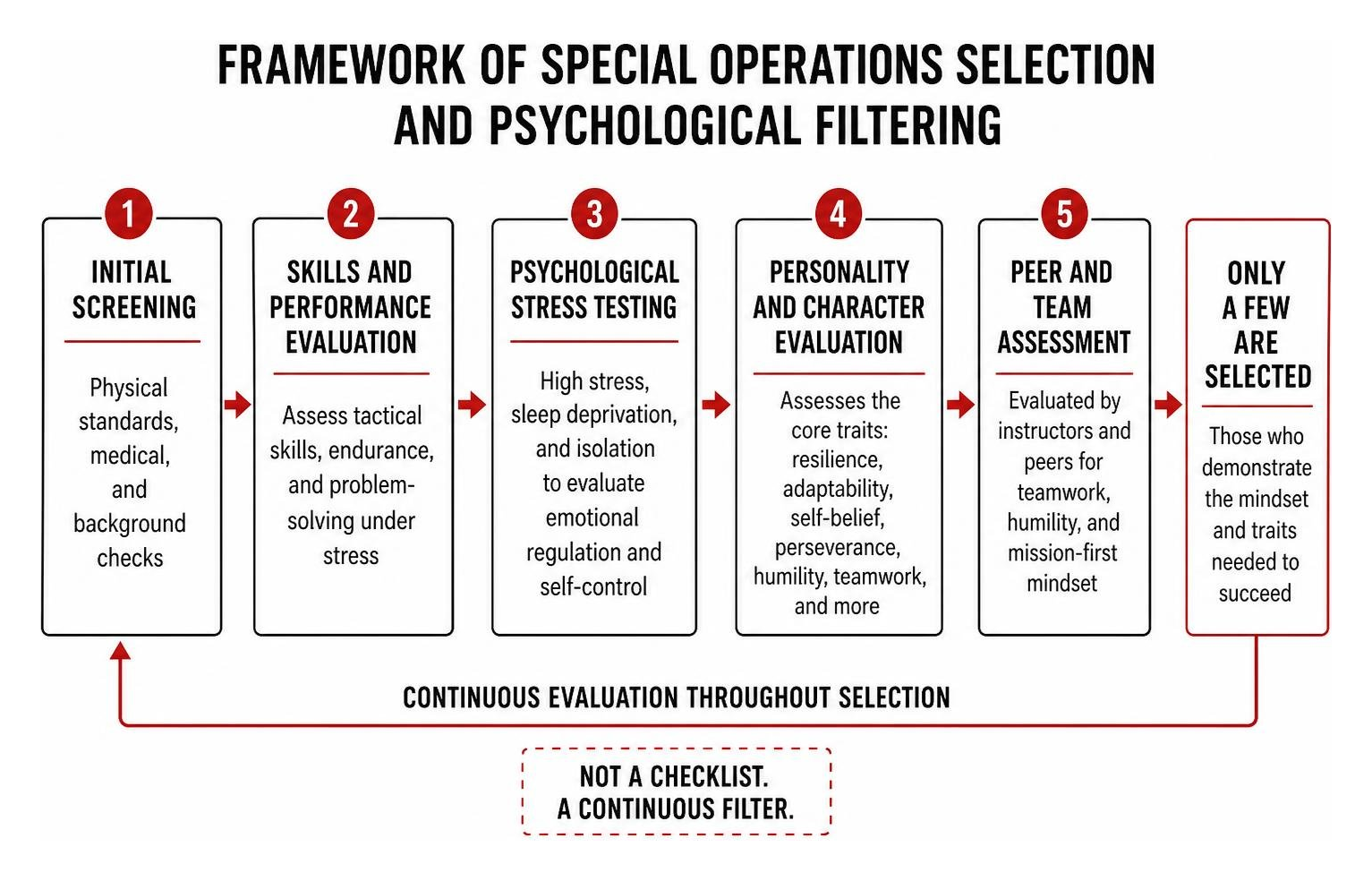
Delta Force does not publish a verified personality profile of its operators. This list draws on public accounts of elite-unit selection and a 2025 study of former UK Special Forces operators, so it is a useful guide, not a checklist for getting selected.
I’m L.C. Fowler, a Navy veteran and BUD/S Class 89 graduate, and I bring that training perspective to 10 Personality Traits of Army Delta Force Operators. As publisher of USMilitary.com, I want to help you understand what these traits mean beyond the myths.
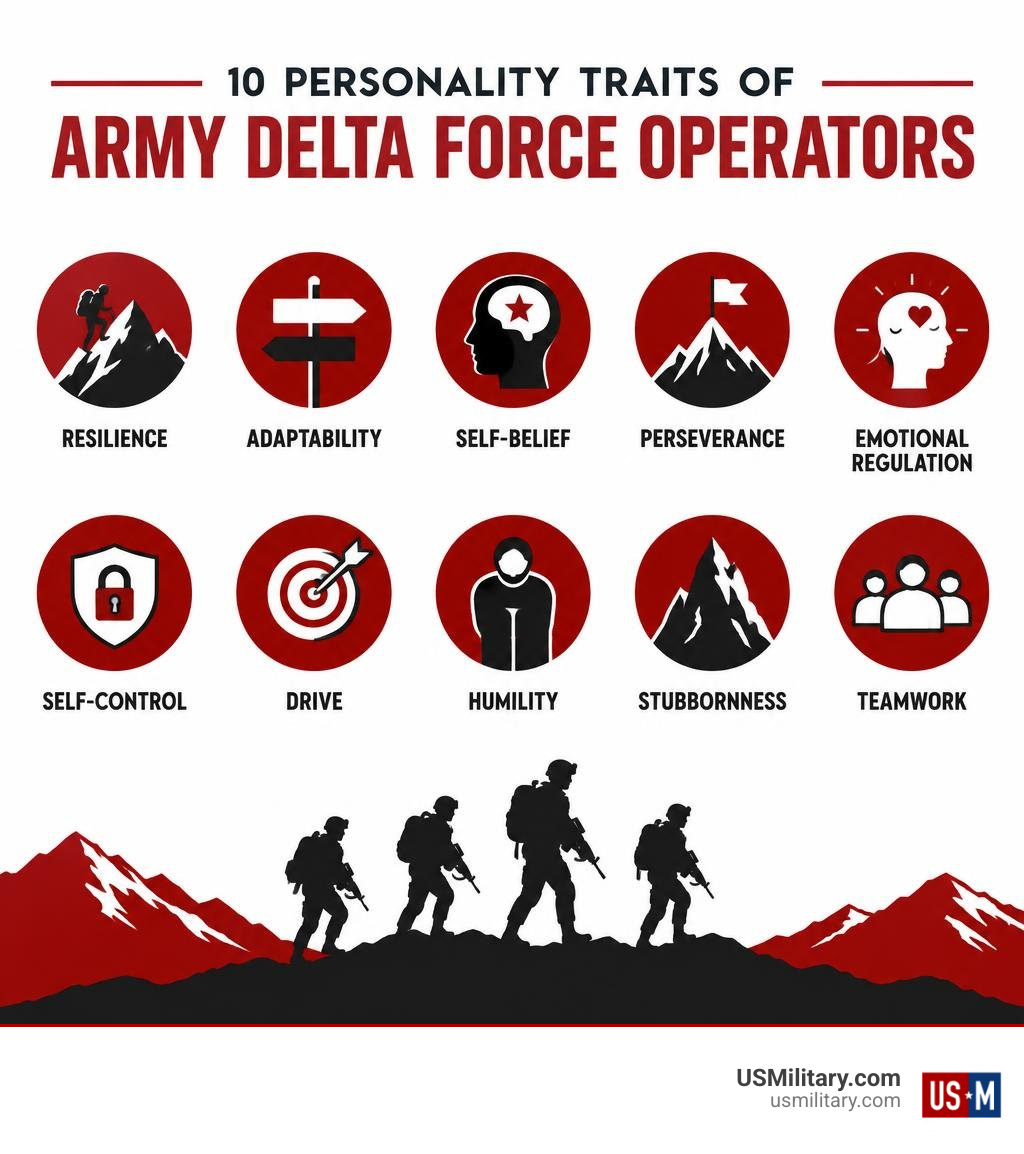
Quick look at 10 Personality Traits of Army Delta Force Operators:
- The Shadow Warriors: Everything You Need to Know About Delta Force
- Inside the Kit: Delta Force’s Essential Equipment
- Unbreakable Spirit: How to Build Mental Toughness
The Core 10 Personality Traits of Army Delta Force Operators
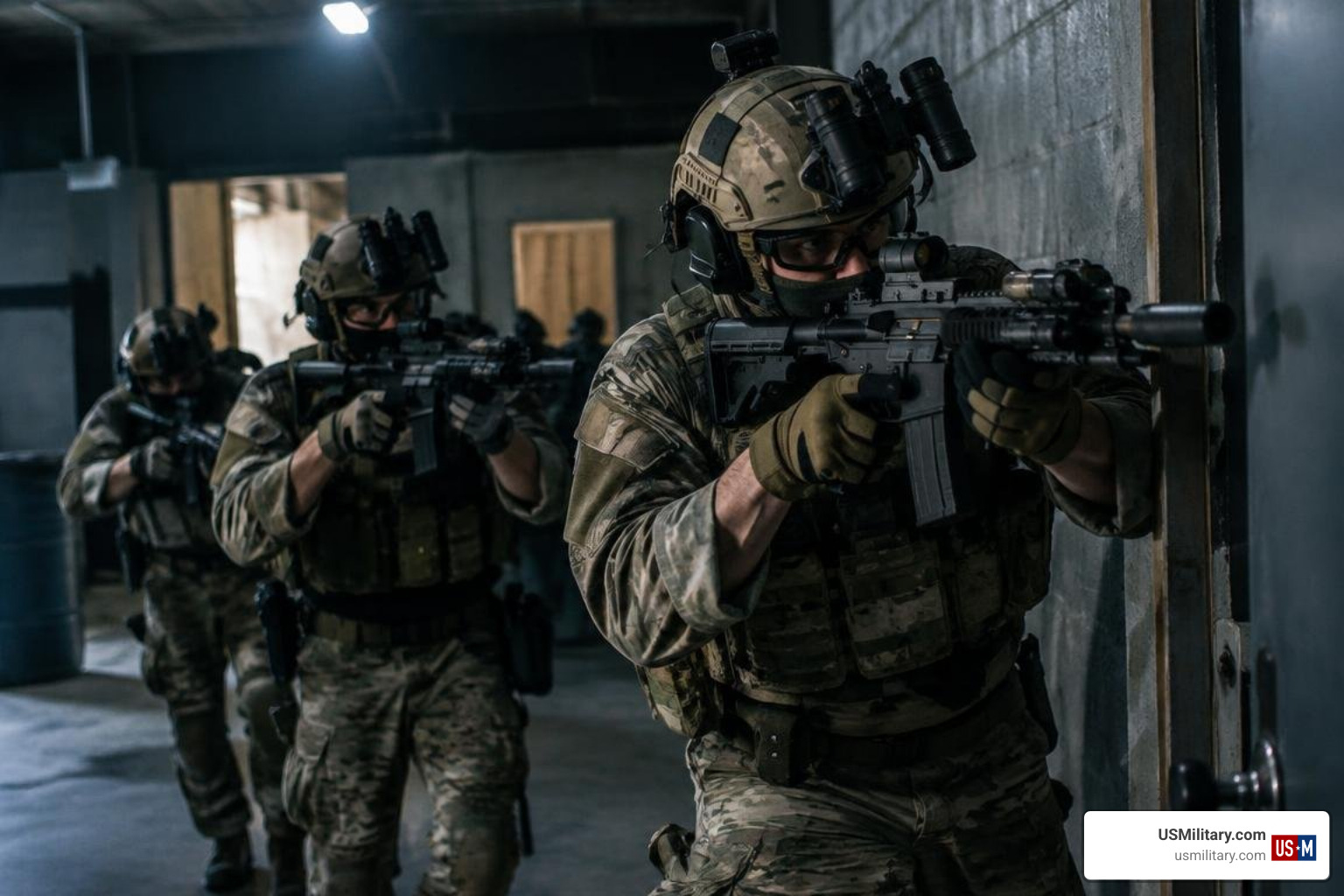
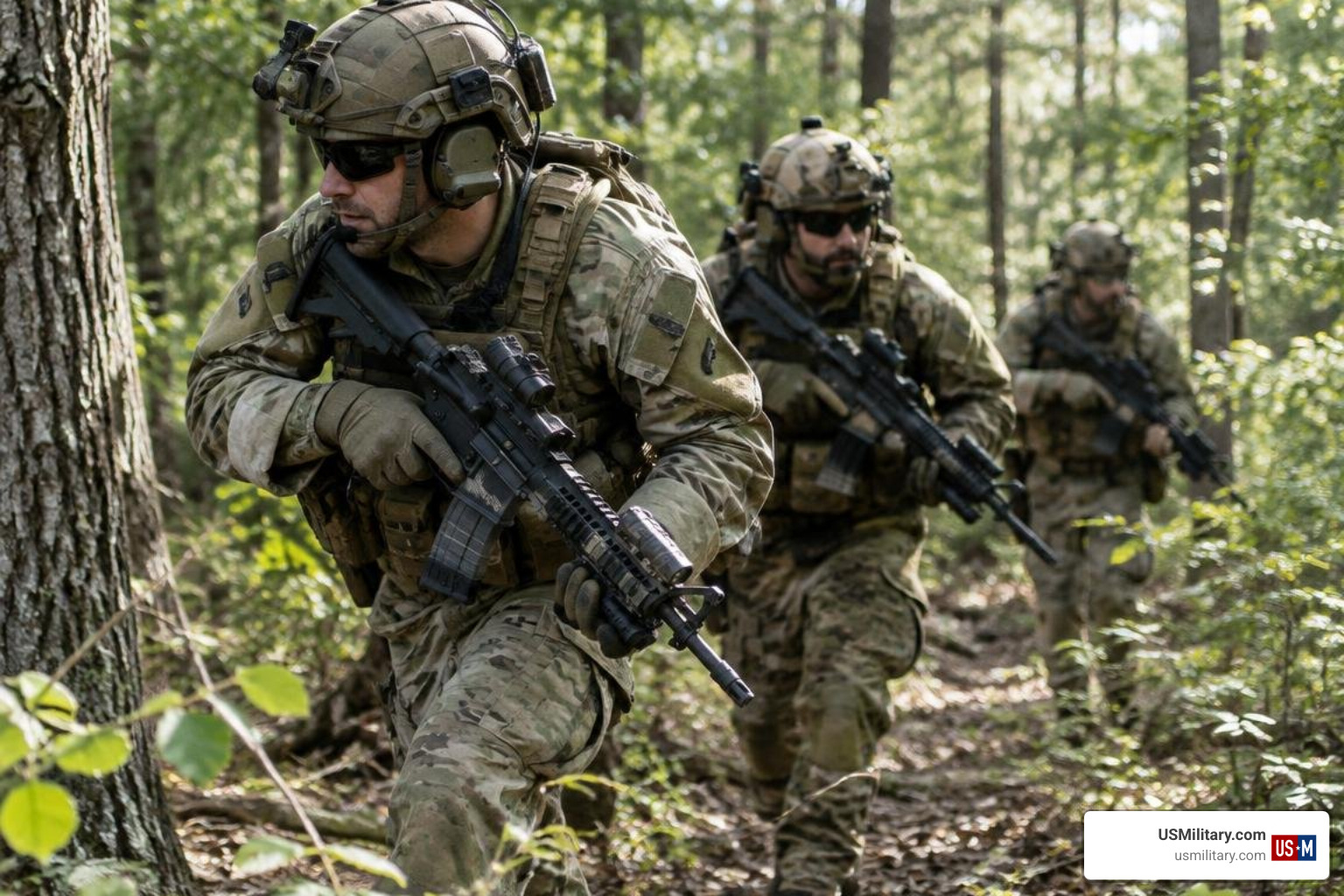
When people picture elite counter-terrorism units, Hollywood often paints a picture of reckless, hyper-aggressive commandos. The operational reality of the 1st Special Forces Operational Detachment-Delta (1st SFOD-D) is quite different. Founded in 1977 by Colonel Charles Beckwith, the unit’s culture emphasizes calculated precision, quiet confidence, and unmatched psychological endurance. You can read more about the unit’s history and organizational structure or explore The Shadow Warriors: Everything You Need to Know About Delta Force to see how that heritage shapes modern missions.
Delta Force operators are typically Type A perfectionists who channel their competitive drive inward. Rather than bragging, they embody a calm, collected posture. They are problem solvers who thrive in ambiguity, pairing relentless determination with absolute loyalty to their assault troop.
Psychological Hardiness and Self-Belief: 10 Personality Traits of Army Delta Force Operators
The cornerstone of the operator profile is psychological hardiness—a combination of commitment, internal locus of control, and viewing extreme hardship as a challenge rather than a threat.
In a benchmark scientific exploration of Special Forces psychological traits, researchers found that unwavering self-belief serves as the primary engine for perseverance (Breen & Cotterill, 2025). In Tier 1 assessment courses, instructors do not tell candidates how long a ruck march will last or what standard they must beat. Candidates face solitary challenges, including the legendary 40-mile “Long Walk” through rugged mountain terrain with heavy loads.
Without deep-rooted self-belief, self-doubt creeps in during the dark hours of an endurance trek. An operator possesses an intrinsic, non-quitting intent: the conscious decision that physical exhaustion will never dictate their actions.
Humility and Tactical Stubbornness: 10 Personality Traits of Army Delta Force Operators
Two traits that rarely seem to belong together—humility and stubbornness—coexist seamlessly in top-tier operators (Breen & Cotterill, 2025).
- Humility: In elite units, unchecked ego gets teammates killed. Humility allows operators to undergo brutal, ego-stripping peer reviews and candid post-mission debriefs. They accept fault immediately, learn from errors, and focus entirely on the mission outcome.
- Tactical Stubbornness: This is a constructive, relentless refusal to yield to mission obstacles. When a primary breach fails, communications go black, or unexpected enemy resistance appears, an operator stubbornly works the problem until a solution emerges.
Humility ensures the operator listens to feedback and respects the dynamic battlefield, while stubbornness provides the grit required to achieve objectives against impossible odds.
Adaptability, Emotional Regulation, and Lifelong Learning
Delta missions rarely unfold exactly as rehearsed. As the military adage reminds us, no plan survives first contact. Adaptability is the cognitive skill that allows operators to abandon a ruined plan instantly without panicking.
Biologically, elite operators exhibit unique stress responses, including higher levels of neuropeptide Y and blunted cortisol spikes. This physiological profile prevents cognitive tunnel vision when adrenaline surges.
During the grueling six-month Operator Training Course (OTC), candidates master advanced marksmanship, demolitions, executive protection, and complex tradecraft. Operators are perpetual students who constantly refine their skills, study enemy tactics, and maintain self-control when split-second, life-or-death decisions are required.
Elite Mindset in Action: Comparison, Coping, and Applications
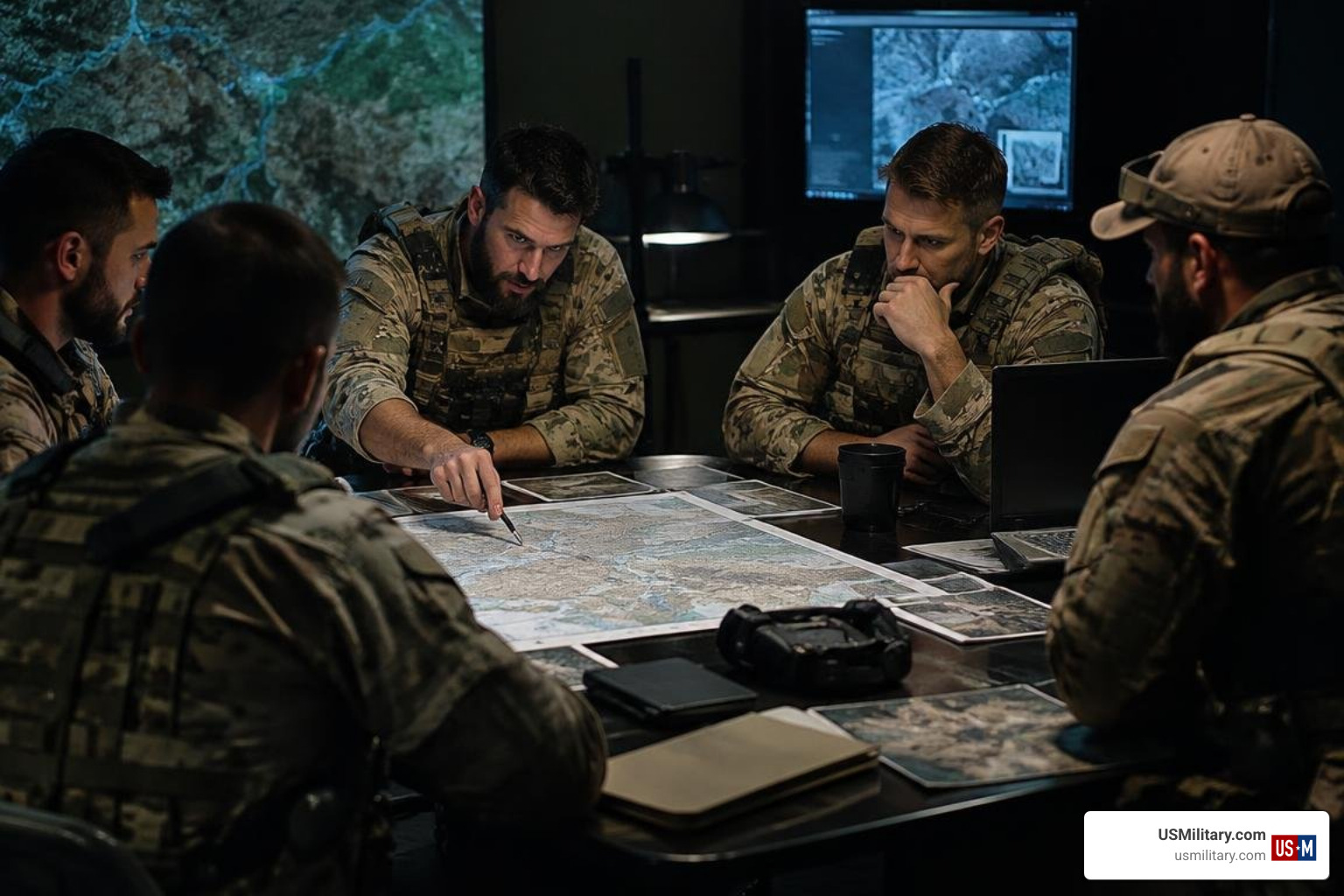
Sustaining performance across decades requires deliberate stress management. Operators rely on structured coping mechanisms to handle prolonged exposure to trauma and high operational tempos. These include:
- Pre-Mission Visualization: Mental rehearsals of target layouts, potential contingencies, and worst-case scenarios.
- Arousal Control Techniques: Tactical box-breathing to lower resting heart rates during critical pauses.
- Structured Debriefs: Open, rank-free operational debriefs that process tactical lessons and clear psychological tension.
| Trait / Dimension | Army Delta Force (1st SFOD-D) | Navy SEALs (DEVGRU / Whitespace) | UK Special Forces (SAS/SBS) |
|---|---|---|---|
| Primary Heritage | U.S. Army Special Forces / Rangers / SAS model | U.S. Navy UDT / Maritime Direct Action | British Commando / SAS origins |
| Selection Focus | Solitary land navigation, psychological boards | Water competency, Hell Week, team boats | Hills phase, solitary navigation |
| Cultural Mindset | Understated, quiet confidence, mature autonomy | Dynamic aggression, maritime adaptability | Understated humor, rugged persistence |
| Key Psychological Edge | Deliberate problem-solving under isolation | High pain tolerance and pack resilience | Tactical stubbornness and humility |
To see how these service paths compare in detail, you can check out our guide to compare Delta Force and Navy SEAL career paths.
Comparing Delta Force Mindsets to Navy SEALs and Special Forces
While all special operations personnel share immense grit, subtle cultural differences exist. Understanding the difference between Delta Force and SEALs often comes down to their operational environments and assessment structures.
Delta candidates are typically older, more experienced soldiers drawn from the 75th Ranger Regiment and Special Forces Groups. Because Delta selection is modeled after the British SAS, it evaluates an individual’s capacity to operate autonomously under prolonged cognitive and physical isolation.
Navy special warfare candidates entering BUD/S are often younger recruits tested heavily on boat-crew camaraderie and maritime survival. Those looking at naval Tier 1 can explore the path to Tier One and DevGru requirements to see how those physical pipelines diverge.
Stress Inoculation and Civilian High-Performance Applications
The mental framework of special operators offers valuable lessons outside the military. High-pressure corporate environments, emergency medicine, and crisis management teams frequently adapt these principles:
- Stress Inoculation: Expose yourself to controlled, incremental stressors to build familiarity and confidence before high-stakes events.
- Cognitive Reframing: View unexpected setbacks as evolving problems to solve rather than personal catastrophes.
- Decisive Emotional Control: Separate immediate emotional reactions from analytical decision-making when deadlines loom.
By cultivating quiet confidence, embracing honest self-appraisal, and staying committed to lifelong learning, anyone can build a more resilient mindset.
At USMilitary.com, we provide trusted guidance on military careers, transition planning, and veteran resources. Whether you are aiming for special operations selection or navigating your service benefits, focus on mastering the basics, supporting your team, and developing the mental toughness to never quit.
— L.C. Fowler
Scientific References
Shane Breen, Stewart Cotterill. “An Exploration of the Psychological Traits Deemed Crucial for Success in UK Special Forces Operators.” Behavioral Sciences, 2025. DOI 10.3390/bs15091194.
Breen S, Cotterill S. “An Exploration of the Psychological Traits Deemed Crucial for Success in UK Special Forces Operators..” Behavioral sciences (Basel, Switzerland), 2025. PMCID PMC12466407.
Free for Service Members & Veterans
Get the military benefits intel no one tells you about.
Weekly updates on VA benefits, pay changes, and money tips — free for service members and veterans.
No spam. Unsubscribe anytime. Your info is never shared.



Leave a Reply