The Military Draft and the Iran War: What You Need to Know Right Now
Can Trump bring back the military draft amid the Iran War? Here’s the short answer:
- No draft has been authorized. As of early 2026, there is no active plan to reinstate conscription.
- Trump cannot do it alone. Reinstating the draft requires Congress to amend the Military Selective Service Act — it is not something the president can do unilaterally.
- Officials have kept options open. White House Press Secretary Karoline Leavitt said on Fox News that President Trump “wisely does not remove options off the table,” but stopped short of announcing any draft plans.
- The U.S. still has over 1.3 million active personnel. Combined with Reserves and National Guard, the military has significant capacity before conscription would even be considered.
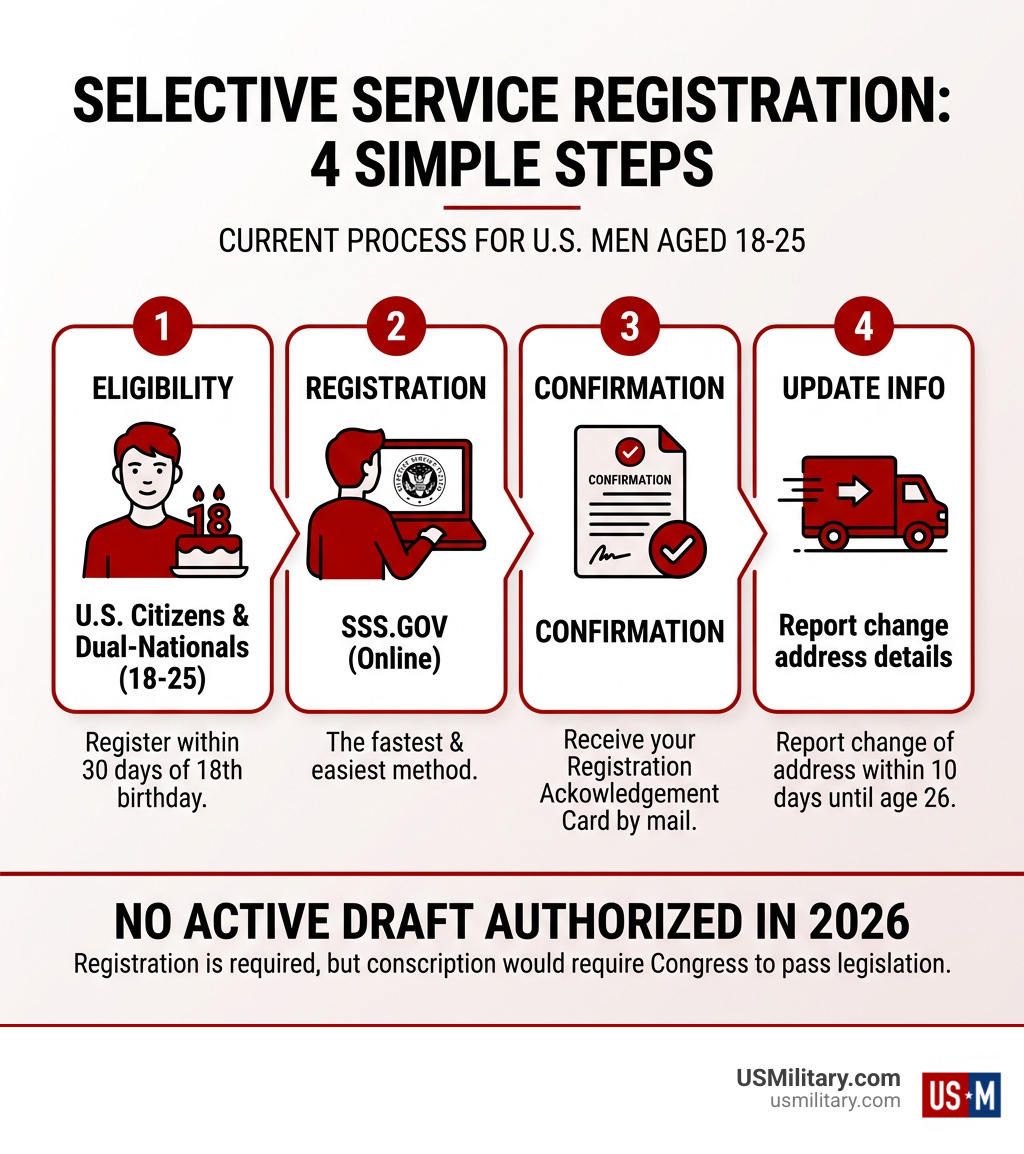
- Men aged 18–25 are still required to register with the Selective Service System — that hasn’t changed.
With U.S. airstrikes ongoing in Iran under Operation Epic Fury, public anxiety about a potential draft has surged. Social media is filled with claims and concerns — some accurate, many exaggerated. This article cuts through the noise with verified facts.
I’m Larry Fowler, publisher of USMilitary.com and a longtime resource for active military, veterans, and those exploring service — and the question of can Trump bring back the military draft amid the Iran War is one of the most urgent topics hitting our community right now. Let’s break down exactly what the law says, what officials have actually stated, and what it would realistically take for a draft to happen.
Basic Can Trump Bring Back The a Military Draft Amid The Iran War glossary:
- Could A War With Iran Spark a Military Draft
- Everything You Need to Know About the Military Draft
- Does the US currently have a military draft
Can Trump Bring Back The a Military Draft Amid The Iran War?
When we hear the word “draft,” it often conjures up images of the 1960s and the turbulent era of the Vietnam War. Today, as tensions escalate in the Middle East and Operation Epic Fury dominates the headlines, many families are asking if history is about to repeat itself. The question of Can Trump Bring Back The a Military Draft Amid The Iran War is complex because it involves both presidential power and strict legislative hurdles.
Currently, the United States operates an all-volunteer force. This has been the case since 1973. While the President serves as the Commander in Chief of the Armed Forces, his power is not absolute when it comes to conscription. To understand if is the military draft coming back?, we have to look at the balance of power between the White House and the U.S. Capitol.
The primary legal framework is the Military Selective Service Act. While the infrastructure for a draft (the Selective Service System) exists and is fully functional, the authority to actually induct citizens into the military expired decades ago. For a draft to return, Congress would have to pass new legislation, and the President would have to sign it into law.
Legal Realities: Can Trump Bring Back The a Military Draft Amid The Iran War?
Under Constitutional law, specifically Article I, Section 8, Congress has the sole power “to raise and support Armies.” This means that even if a President desperately wanted to start a draft tomorrow, they would need a majority vote in both the House of Representatives and the Senate.
In the current political climate, passing such a mandate would be an uphill battle. Most lawmakers are acutely aware that roughly three-quarters of Americans oppose reinstating a military draft. However, in a state of extreme national emergency—such as a full-scale ground invasion or a massive expansion of the Iran conflict—the political “math” could change.
If a draft were authorized, the Selective Service System is designed to be incredibly fast. Their goal is to have the first draftees at a Military Entrance Processing Station (MEPS) within 193 days of the law being signed. The military draft age remains focused on young men, specifically those in the 18 to 25 age bracket, with a focus on those turning 20 in the year of the draft.
The Role of the Selective Service System
Even though there hasn’t been a draft since the 1970s, the “machinery” of the draft has never stopped running. This is why almost all male U.S. citizens and immigrants aged 18–25 are required by law to register. Currently, there are over 15 million men registered in the system.
We often get asked who needs to register. The law is quite broad:
- All male U.S. citizens (including dual citizens).
- Male immigrants (documented or undocumented) living in the U.S.
- Transgender individuals who were assigned male at birth.
Starting December 18, 2026, the process is expected to become even more streamlined with automatic registration using federal databases. This ensures that if the military draft were ever called, the government has an accurate and complete list of who is eligible. Failing to register is technically a felony and can lead to a $250,000 fine, up to five years in prison, and the loss of eligibility for federal jobs and student aid.
Official Statements on Ground Troops and Conscription
The recent surge in public concern was largely triggered by comments made by White House Press Secretary Karoline Leavitt. During an interview on Fox News’ “Sunday Morning Futures” with Maria Bartiromo on March 8, 2026, Leavitt was asked directly about the possibility of a draft and the deployment of ground troops.
Her response was carefully measured. She stated that while a draft is “not part of the current plan right now,” the President “wisely does not remove options off of the table.” This “strategic flexibility” is a hallmark of the administration’s foreign policy. By refusing to rule anything out, the administration believes it maintains a stronger bargaining position against adversaries like Iran.
Defense Secretary Pete Hegseth has echoed this sentiment. When asked about boots on the ground, Hegseth indicated that the U.S. is willing to go as far as needed to secure national interests. While the current focus of Operation Epic Fury is an air campaign targeting nuclear ambitions and military infrastructure, the refusal to rule out ground troops is what keeps the draft conversation alive.
Trump’s Personal Stance and Historical Context
To understand the likelihood of Can Trump Bring Back The a Military Draft Amid The Iran War, we should also look at the President’s own history and rhetoric. Historically, Donald Trump has been vocal about his distaste for long-term “forever wars.” He has frequently referred to the Vietnam War and the Iraq War as “horrible mistakes.”
During the Vietnam era, Trump himself received four education deferments and one medical exemption for bone spurs, which kept him from being drafted. This personal history has led some analysts to believe he would be hesitant to impose a draft on a new generation.
In a September 2024 post on Truth Social, he even used the threat of a draft as a campaign tool against his opponents, suggesting that a vote for the other side would lead to “all of your sons and daughters” getting draft notices. However, now that he is in the White House during an active conflict, the rhetoric has shifted toward keeping “all options on the table.”
Eligibility, Exemptions, and the Modern Lottery System
If a draft were ever reinstated, it wouldn’t be a “grab bag” of names. It would follow a highly regulated, transparent lottery system designed to be the most fair version in U.S. history.
The draft would likely begin with a lottery based on birthdates. Here is how the priority generally works:
- 20-year-olds: Men who turn 20 during the calendar year the draft is called.
- 21-year-olds: Followed by 22, 23, 24, and 25.
- 19-year-olds: Usually called after the older brackets are exhausted.
- 18-year-olds: The last to be called.
Once a birthdate is drawn, that individual is called for an evaluation at MEPS. This is where the military draft disqualification list comes into play. Not everyone who is drafted will serve. In fact, during the Vietnam War, more than half of the 27 million eligible men were deferred, exempt, or disqualified.
One major question we see is: will the pentagons decision allowing women into combat lead to a possible draft?. As of right now, the law only requires men to register. While there have been several attempts in Congress to change this to be gender-neutral, none have passed into law yet. In the event of a draft today, only men would be called.
Comparison: Vietnam Era vs. Modern Draft Procedures
| Feature | Vietnam Era Draft | Modern Potential Draft |
|---|---|---|
| Selection Method | Local boards had high discretion | Centralized National Lottery |
| Primary Age | 18.5 to 26 | 20 (First Priority) |
| Registration | Manual at post offices | Automatic (starting 2026) |
| Exemptions | High for college students | Much stricter; usually 1-semester deferment |
| Women | Not eligible | Not required to register (currently) |
| Conscientious Objectors | Hard to prove; many jailed | Clearly defined legal pathway |
Public Reaction and the Likelihood of Conscription
The reaction to the “options on the table” comment has been swift. Figures like Marjorie Taylor Greene have criticized the administration’s refusal to rule out a draft, calling it a betrayal of GOP promises to avoid new foreign wars. Veterans’ advocacy groups have also expressed concern, with some leaders arguing that even discussing a draft treats service members’ lives as “bargaining chips.”
However, we must look at the numbers. The U.S. currently has over 1.3 million active serving personnel. When you add the Reserves and National Guard, the total force is formidable. Historically, the U.S. only turns to conscription when the volunteer force cannot meet the needs of a massive, multi-front war.
The when was the last draft in the US was 1973, at the tail end of the Vietnam War. Since then, the military has invested billions in making the all-volunteer model work. Reinstating a draft would be a massive logistical, political, and social undertaking that most experts believe is a “last resort” scenario.
Assessing the Odds: Can Trump Bring Back The a Military Draft Amid The Iran War?
So, what are the actual odds? Most military analysts suggest that as long as the conflict remains an air and sea campaign (like the current strikes in Operation Epic Fury), the need for a draft is virtually zero. A draft is a tool for “mass” — it is used when you need hundreds of thousands of boots on the ground to hold territory.
If the conflict were to escalate into a full-scale ground invasion of Iran—a country with a population of over 85 million and a rugged, mountainous geography—the strain on the all-volunteer force would be immense. That is the only realistic scenario where a draft would even be debated in Congress.
Even then, the question of can you refuse to go to war if drafted? remains a legal reality. Individuals can claim Conscientious Objector status if they have deeply held religious or moral beliefs against war. During the Vietnam era, roughly 210,000 people were charged with draft violations, though only a small fraction served jail time.
Frequently Asked Questions about the Military Draft
Who is currently required to register for the Selective Service?
Almost all male U.S. citizens and male immigrants (including undocumented, refugees, and legal permanent residents) aged 18 through 25 must register. This must be done within 30 days of their 18th birthday.
Can the President reinstate the draft without Congressional approval?
No. The President does not have the legal authority to unilaterally reinstate the draft. Congress must pass legislation to amend the Military Selective Service Act to authorize the induction of personnel.
Are women currently eligible to be drafted for the Iran war?
No. Under current law, only men are required to register with the Selective Service and only men would be subject to a draft. While there has been political debate about including women, no such law has been enacted.
Conclusion
At USMilitary.com, our mission is to provide you with the facts so you can navigate these uncertain times with clarity. While the rhetoric surrounding the Iran conflict is intense, the legal and political barriers to a military draft are significant.
To summarize the answer to Can Trump Bring Back The a Military Draft Amid The Iran War:
- It is not currently happening. There are no active plans for a draft.
- Congress is the gatekeeper. The President needs legislative approval to start conscription.
- The Volunteer Force is strong. With 1.3 million active personnel, the U.S. has significant capacity.
- Strategic Ambiguity. The administration’s refusal to rule out a draft is likely a tactical move to keep adversaries guessing rather than a signal of an imminent policy change.
We will continue to monitor the situation in Iran and any legislative shifts in Washington. For more detailed guides on how the system works, check out our resource on What is the U.S. Military Draft?. Stay informed, stay prepared, and remember that we are here to support our military community every step of the way.
Free for Service Members & Veterans
Get the military benefits intel no one tells you about.
Weekly updates on VA benefits, pay changes, and money tips — free for service members and veterans.
No spam. Unsubscribe anytime. Your info is never shared.


