Why Many Veterans Are Not Using All Their VA Benefits

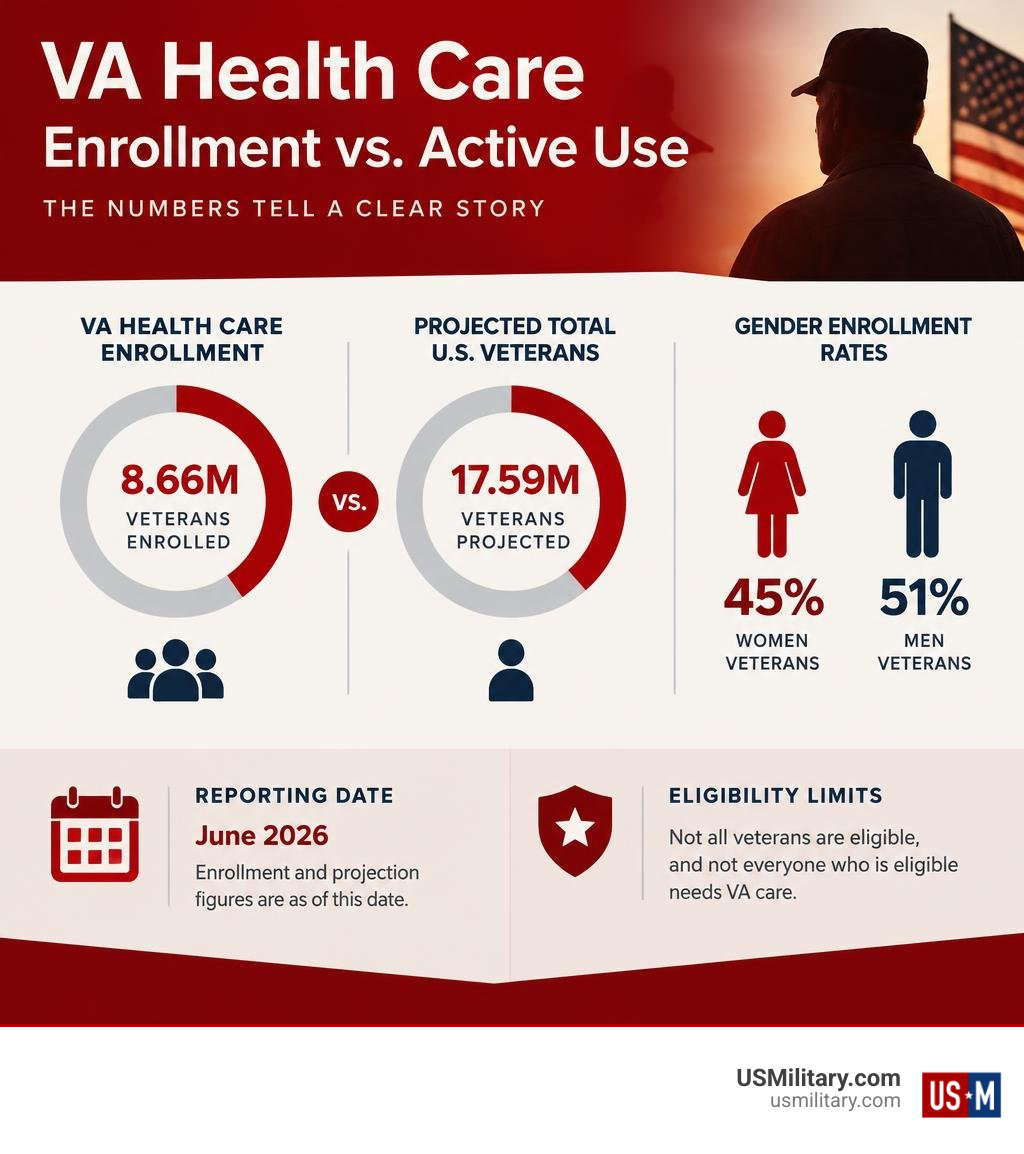
No, many veterans are not using all the VA benefits available to them. As of June 2026, 8.66 million veterans were enrolled in VA health care, compared with a projected 17.59 million U.S. veterans. That does not mean everyone else is eligible or needs VA care. But the gap is real: only 45% of women veterans are enrolled, compared with 51% of men.
Veterans may miss benefits because they do not know what they qualify for, find applications hard to navigate, live far from care, or hesitate to seek help after a bad experience. Others use private insurance or Medicare instead. This article examines the gaps and what can help close them.
I’m Larry Fowler, I’m a Navy veteran and publisher of the USMilitary.com Network since 2007, where I’ve covered VA benefits and disability trends. In Are Military Veterans Taking Full Advantage Of Their VA Benefits Today: If Not, Then Why?, I’ll examine why enrollment does not always lead to use.
Terms related to Are Military Veterans Taking Full Advantage Of Their VA Benefits Today: If Not, Then Why?:
Current State of Veteran Benefit Utilization: Enrollment vs. Active Use
In October 2026, the data on veteran support shows a stark contrast between the number of living veterans and those actively using federal programs. Out of the approximately 17.59 million U.S. veterans nationwide, a significant portion remains entirely disconnected from the federal support systems designed specifically for their post-service lives.
According to official metrics tracked on the VA Benefits and Health Care Utilization Pocket Card, enrollment has climbed steadily, but active engagement tells a different story. While 8.66 million service members are formally enrolled in Veterans Health Administration (VHA) services, only 7.34 million accessed care through the fiscal year to date. That leaves more than 1.3 million enrolled men and women outside the clinical care network they signed up for.
The gap widens when you look at disability compensation. As of mid-2026, 6,573,827 veterans receive service-connected disability compensation, with 2,090,059 holding a 100% disability rating. Our detailed VA disability claims guide explains how filing properly can help close this divide, yet millions of eligible individuals never file an initial claim.
Historic legislative expansions have driven massive engagement. Through mid-2026, more than 6.88 million toxic exposure screenings have been conducted nationwide, with 3,353,898 veterans endorsing at least one potential exposure. Furthermore, 2,510,132 veterans and survivors have successfully completed claims connected to toxic exposures. Yet, even with these record filings, massive segments of our military community remain on the sidelines.
Health Care, Disability Compensation, and Housing Participation Rates
Participation varies dramatically across benefit categories. While disability pay and homeownership programs show strong adoption, education and specialized rehabilitation services show stark gaps.
According to the official Survey of Veteran Enrollees’ Health, 84% of VA health care enrollees carry some form of public or private insurance outside the VA system. Specifically, 50% hold Medicare, 29% rely on TRICARE, and 29% maintain private employer-sponsored plans. Because 53% of enrollees choose non-VA facilities for some or all of their medical needs, the VA system operates alongside private networks rather than as a standalone care solution.
Monthly payments under the current VA disability pay rates provide essential tax-free support, yet other valuable benefits experience lower uptake:
| Benefit Category | Total Active Participants / Enrollees (2026) | Estimated Eligible Universe | Key Utilization Insight |
|---|---|---|---|
| VHA Health Care | 8.66 Million Enrolled | 17.59 Million Veterans | 7.34M accessed care FYTD; 53% split care with private providers. |
| Disability Compensation | 6.57 Million Veterans | ~17.59 Million Veterans | 2.09M rated at 100%; 1.88M receiving PTSD compensation. |
| VA Home Loan Guaranty | 4.05 Million Active Loans | All eligible dischargees | Zero down-payment feature drives high lifelong utility. |
| VA Life Insurance | 5.56 Million Policies | Active duty & veterans | Supervises $1.50 trillion in total face-value protection. |
| Education Programs | 949,308 Beneficiaries (FY25) | Post-9/11 & GI Bill cohorts | Critical for transition; underused by older returning cohorts. |
| Vocational Rehab (Ch. 31) | 191,232 Participants (FY25) | All service-disabled veterans | Participation remains under 5% of all disabled veterans. |
Understanding how to access these programs is essential, and our ultimate US VA benefits guide breaks down how every branch member can unlock these diverse federal entitlements.
Utilization Disparities Across Eras and Benefit Types
Why do specific programs enjoy massive enrollment while others languish? Much of the disparity comes down to awareness of programs and immediate life-stage needs. While younger Post-9/11 veterans readily tap into the GI Bill, older cohorts often overlook lesser-known entitlements.
Many service members routinely bypass valuable resources simply because they don’t know these programs exist. A review of forgotten VA benefits reveals high-value offerings like automobile adaptive equipment grants, caregiver stipends, and dental allowances that go unclaimed year after year.
Legislative pushes, most notably the PACT Act, demonstrated that when outreach is aggressive and bureaucratic friction is lowered, veterans respond en masse. However, sustaining that momentum across all demographics requires identifying the deep-rooted obstacles that keep veterans from claiming what they have earned.
Key Barriers Preventing Veterans from Accessing Their Earned Benefits
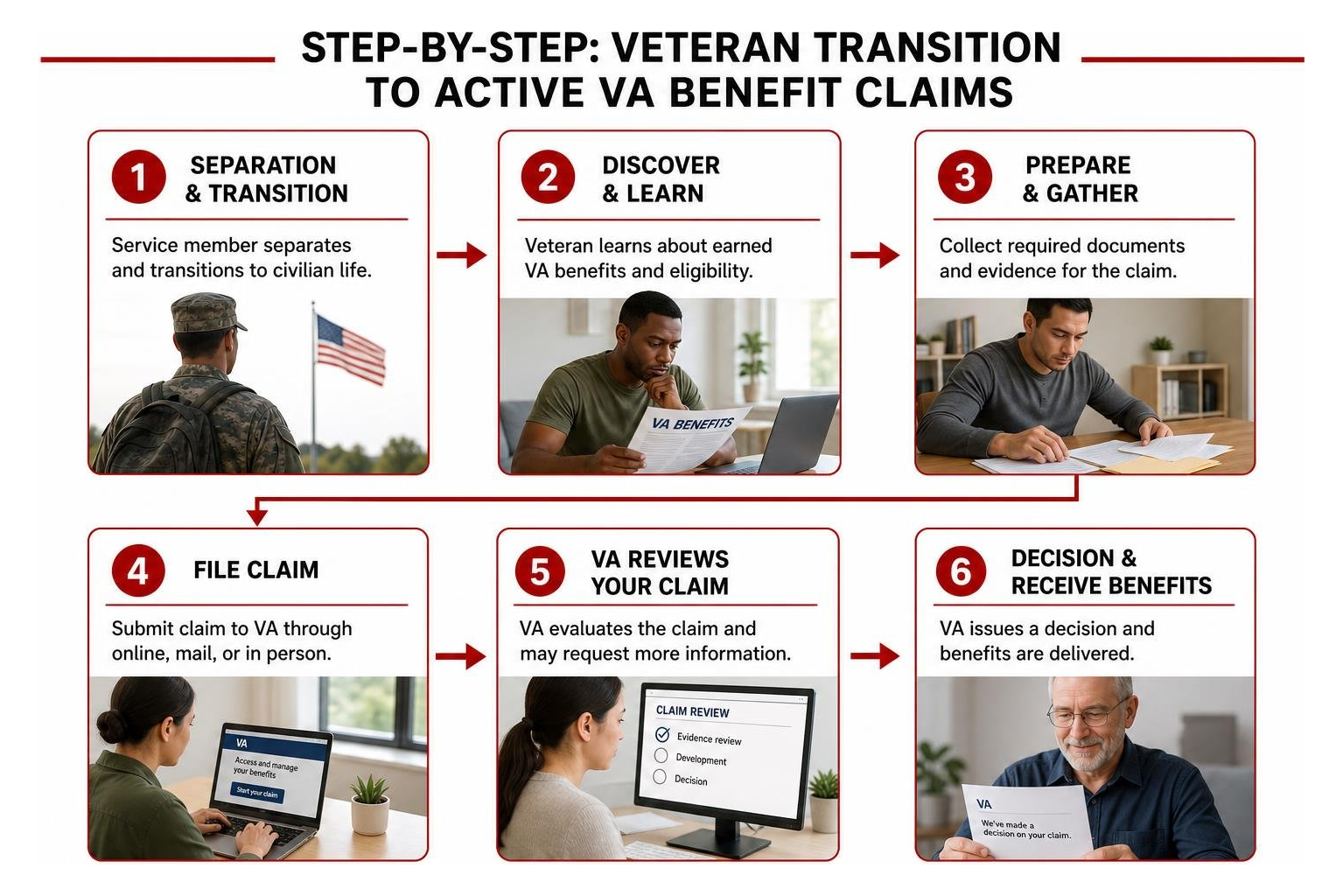
The path from separation to receiving monthly compensation or clinical care is rarely smooth. For hundreds of thousands of former military personnel, navigating federal bureaucracy can feel harder than active deployment.

A landmark benefits received by veterans and survivors study published by the U.S. Census Bureau highlighted that more than half of all veterans received zero public benefits. The primary drivers behind this shortfall are administrative hurdles:
- Complex Claims Paperwork: Assembling service treatment records, buddy statements, and nexus letters requires considerable time and effort.
- Protracted Decision Timelines: Waiting months or years for initial claim adjudications discourages many from filing supplemental claims.
- Dual Coverage Reliance: Holding private insurance or Medicare leads many to assume they are ineligible for VA enrollment.
- Geographic Isolation: Rural veterans often face multi-hour commutes to reach the nearest VA Medical Center (VAMC).
Veterans often experience significant financial setbacks when delays and paperwork errors stall their claims. Our guide on VA disability tax-free pay for service-related injuries helps claimants avoid common documentation mistakes that lead to administrative denials.
Demographic Disparities, Military Sexual Trauma, and Mental Health Stigma
Significant utilization disparities exist along gender and demographic lines. Women represent the fastest-growing demographic within the veteran community—projected at roughly 12% of all living veterans in 2026—yet only 45% are enrolled in VA health care, compared to 51% of their male counterparts. This leaves over 1 million eligible women veterans disconnected from the system.
A primary driver of this disparity is the heavy emotional barrier surrounding Military Sexual Trauma (MST) and post-traumatic stress. Approximately 38% of women service members and veterans report experiencing military sexual trauma during their service. The psychological aftermath often causes individuals to distance themselves entirely from military culture, avoiding VA clinics out of fear of re-traumatization or lack of female-focused clinical providers.
The VA has expanded initiatives via the Center for Women Veterans and targeted regional summits to address these issues. State governments also provide localized safety nets; our breakdown of state benefits for disabled veterans shows how state-level departments provide trauma-informed support and property tax exemptions for qualifying service members.
Systemic Red Tape, Distrust, and Information Gaps
Confidence in the federal administration plays a major role in whether a veteran chooses to seek care. As of early 2026, the VA-wide trust score measured 81%. While this improves on historical lows, nearly one in five veterans still doubts the department’s reliability, consistency, and care quality.
Information gaps remain widespread. Thousands of veterans live with conditions they believe are non-compensable. Exploring unclaimed VA disability benefits demonstrates that secondary conditions—such as sleep apnea, migraines, and radiculopathy stemming from service-connected joint injuries—are frequently left off claims.
Independent analysis from state-by-state veteran benefit research confirms that regional differences in county veteran service officers (CVSOs) directly correlate with disability uptake rates. Where veteran advocacy is proactive, benefit utilization surges; where outreach is absent, claims drop.
The Cost of Inaction: Health and Financial Consequences
Failing to utilize earned VA benefits carries steep personal, physical, and financial consequences. When service-connected ailments go untreated, chronic physical conditions worsen, mental health challenges compound, and household budgets absorb unnecessary strain.

The financial loss associated with delayed or unfiled claims is substantial. For a veteran eligible for a 70% or 100% disability evaluation, waiting five years to file can easily translate into $100,000 to $200,000 in lost tax-free compensation. Our resource on not leaving money on the table helps ensure families don’t forgo these statutory entitlements.
Beyond monthly compensation, enrolling in VA benefits unlocks a broad array of secondary financial advantages:
- State Tax Reductions: Many states offer property tax waivers for highly rated veterans, saving thousands annually.
- No-PMI Home Financing: Eliminating private mortgage insurance on primary home purchases through the VA loan program.
- Comprehensive Healthcare Caps: Capping out-of-pocket medical expenses and prescription costs for life.
- Education Transferability: Providing educational assistance to dependents under Chapter 35 Dependents’ Educational Assistance (DEA).
Veterans can explore our analysis of veteran tax benefits to see how federal and state exemptions combine to build lasting family wealth. Additionally, learning how to unlock exclusive military deals and freebies provides practical, everyday savings for service personnel across the country.
Successful Outreach Strategies and Actionable Solutions to Close the Benefit Gap
Closing the gap between benefit eligibility and actual enrollment requires practical, proactive outreach. The Department of Veterans Affairs has modernized transition pipelines through programs like VA Solid Start (VASS). By placing structured phone calls at 30, 60, and 365 days post-separation, VASS achieved a 75.6% overall contact rate and an 88.3% contact rate for priority transitioning members.
Similarly, the Transition Assistance Program (TAP) has seen high engagement, with over 145,000 service members attending the core VA Benefits and Services course in FY 2025. These initiatives introduce service members to essential guides like our comprehensive VA benefits guide well before they hang up their uniforms for good.
Community-level advocacy remains the cornerstone of effective outreach. When local veterans help fellow service members navigate the initial paperwork, enrollment numbers rise. Combining digital portals, peer mentorship, and expanded access to community care creates a clear, dependable path for veterans seeking care.
Actionable Steps for Veterans to Claim Unaccessed Benefits
If you or a loved one served in the armed forces and have not fully engaged with your earned benefits, follow this streamlined approach to secure your standing:
- Obtain Official Service Documentation: Secure your DD-214, military medical treatment records, and service personnel records.
- Submit an Intent to File: File an “Intent to File” on VA.gov to lock in your effective date and protect potential retroactive pay while you compile evidence.
- Undergo a Toxic Exposure Screening: Complete your military toxic exposure assessment at any local VAMC or community outpatient clinic to record potential exposures.
- Schedule an Annual VA Health Assessment: Complete an initial primary care intake to establish care within your assigned Priority Group and maintain active enrollment.
- Review Secondary Service Connections: Work alongside an accredited Veteran Service Officer (VSO) to evaluate whether existing service-connected disabilities have caused secondary conditions.
- Protect Your Rating Over Time: Learn key guidelines for maintaining your VA disability rating and safeguarding your earned benefits as policies evolve.
For a complete perspective on long-term benefits across every phase of military and civilian life, consult the ultimate guide to military benefits.
Frequently Asked Questions About VA Benefit Utilization
Why do so many eligible veterans avoid applying for VA health care?
Many veterans believe they are ineligible because they were not injured during combat or separated without a formal disability rating. Others rely on employer-provided health insurance or Medicare, assuming VA care would disrupt their existing coverage. In reality, VA health care works effectively alongside private plans, providing specialized care for service-connected conditions while covering prescription medications at low or zero cost.
How did the PACT Act impact VA enrollment and toxic exposure claims?
The Sergeant First Class Heath Robinson Honoring our Promise to Address Comprehensive Toxics (PACT) Act of 2022 generated one of the largest expansions of veteran benefits in U.S. history. By creating presumptive service connections for over 20 burn pit, radiation, and environmental exposure conditions, it removed the burden on veterans to prove direct causal links. Through mid-2026, over 2.5 million PACT Act-related claims have been completed, driving new enrollments and expanding access across all service eras.
What percentage of military veterans receive VA disability compensation?
As of 2026, approximately 37.4% of the living U.S. veteran population (6.57 million of 17.59 million individuals) receives monthly disability compensation. The number of claimants receiving a 100% rating has grown steadily, now exceeding 2.09 million. To understand how individual disabilities combine to form a composite rating, review our VA disability rating chart guide.
Conclusion
The gap between veteran eligibility and benefit utilization remains an ongoing challenge, but it is closing. As information spreads and claims processes streamline, more veterans are stepping forward to access the health care, disability pay, education, and housing benefits they earned through their military service.
At USMilitary.com, our mission is to empower every service member, veteran, and military family with clear, accurate, and actionable information. Whether you are transitioning to civilian life, seeking a higher disability rating, or applying for your first VA home loan, you don’t have to navigate the process alone. Explore our comprehensive guide to US veteran benefits today to claim the benefits you have earned.
Free for Service Members & Veterans
Get the military benefits intel no one tells you about.
Weekly updates on VA benefits, pay changes, and money tips — free for service members and veterans.
No spam. Unsubscribe anytime. Your info is never shared.



Leave a Reply