Why Army Jobs That Require Security Clearance Open Doors Others Can’t

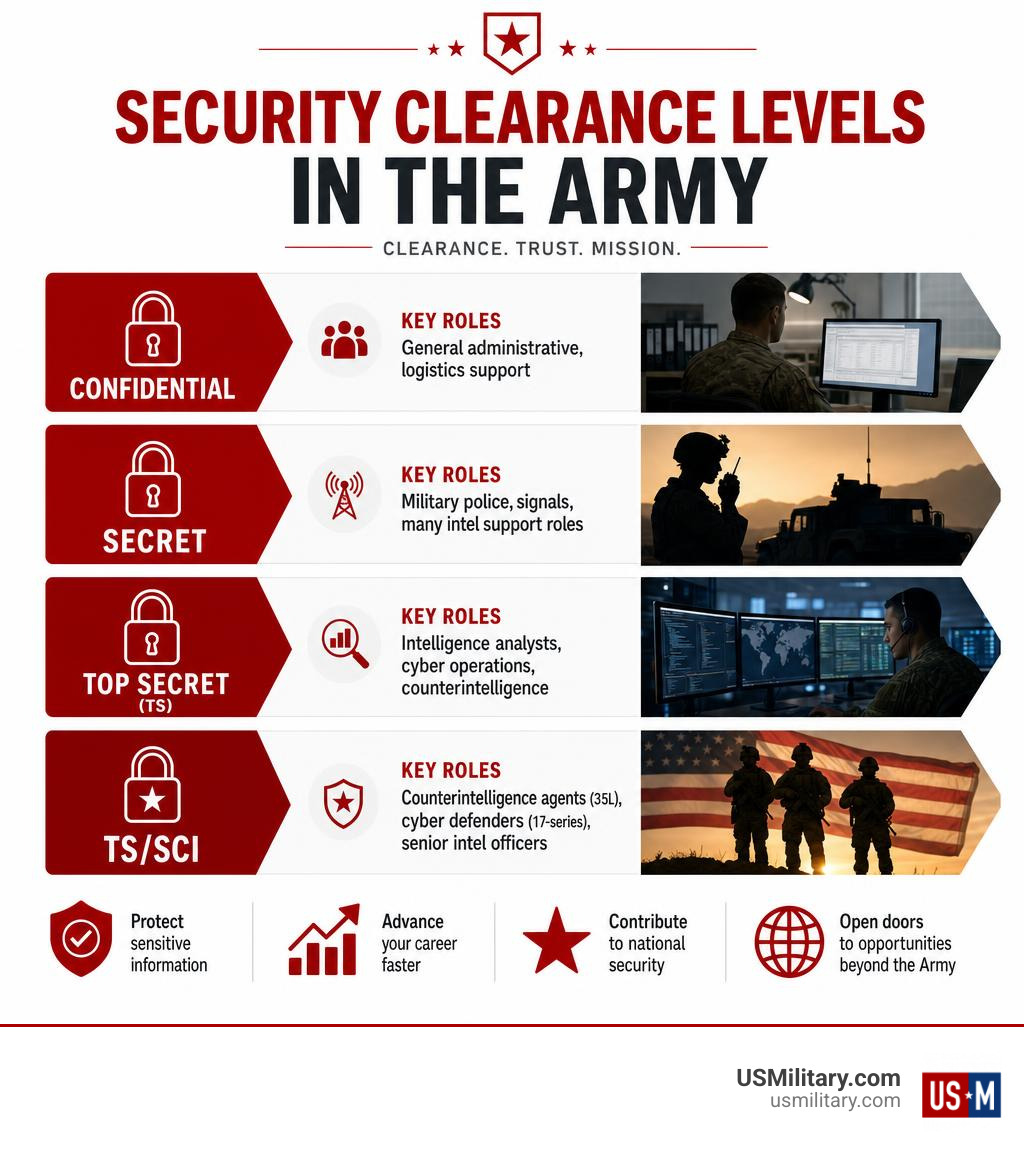
Army jobs that require security clearance are some of the most in-demand and career-defining roles in the U.S. military. Here’s a quick look at the most common types:
| Clearance Level | Common Army Roles |
|---|---|
| Confidential | General administrative, logistics support |
| Secret | Military police, signals, many intel support roles |
| Top Secret (TS) | Intelligence analysts, cyber operations, counterintelligence |
| TS/SCI | Counterintelligence agents (35L), cyber defenders (17-series), senior intel officers |
There are currently over 63,000 active Top Secret/SCI positions across the Department of the Army alone. These roles span active duty, National Guard, Reserve, and civilian contractor positions.
Cleared Army roles matter because they:
- Give you access to work that directly shapes national security
- Fast-track career growth inside and outside the military
- Make you highly competitive in the civilian defense job market after service
The demand for cleared talent is high — and the Army is one of the largest pathways to getting there.
I’m Larry Fowler, publisher of the USMilitary.com Network since 2007 and a longtime resource for service members navigating army jobs that require security clearance and military career planning. My network has connected hundreds of thousands of military candidates with the right information to make confident career decisions, and this guide is built to do the same for you.
Army jobs that require security clearance word guide:
- 20 Navy Jobs That Can Set You Up For Financial Success For Life
- The Differences Between Air Force EOD vs Navy EOD Careers
- Top 20 Career Jobs in the Space Force
Understanding Army Jobs That Require Security Clearance
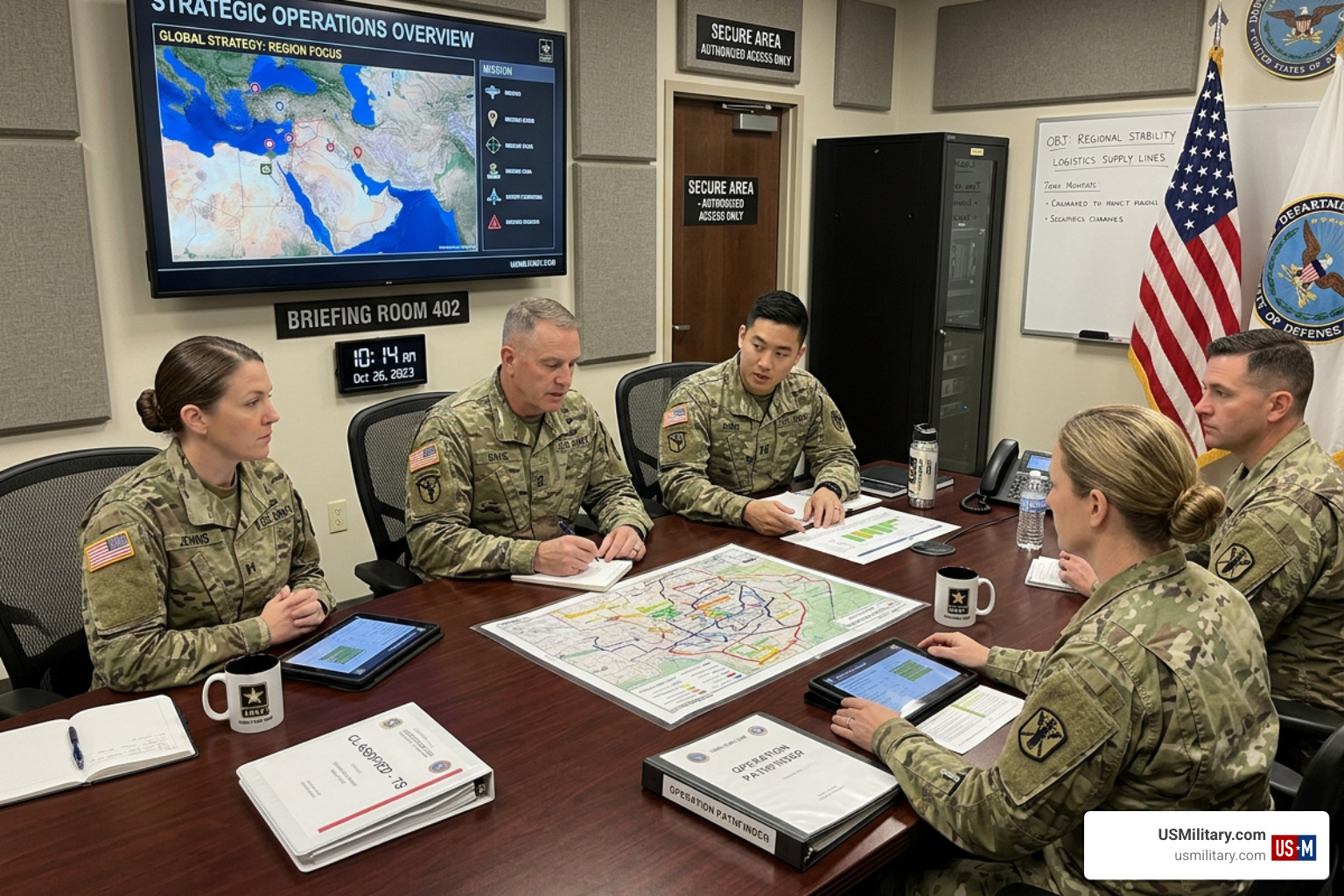
To fully understand how army jobs that require security clearance operate, we first have to break down what a security clearance actually is. In simple terms, a clearance is a formal determination by the federal government that an individual is trustworthy enough to access classified national security information.
The Army governs this process under strict regulatory frameworks, most notably the newly updated AR 380-67 Personnel Security Program. This regulation outlines exactly how sensitive positions are designated and how the military evaluates candidates to protect national defense.
There are four primary tiers of access you will encounter when looking at Army Jobs That Require Security Clearance:
- Confidential: This is the basic level of clearance. Unauthorized disclosure of this information could cause damage to national security. It is relatively easy to obtain but rarely used for highly specialized modern careers.
- Secret: This level is common across many combat, tactical, and administrative roles. Unauthorized disclosure of Secret information could cause “serious damage” to national security.
- Top Secret (TS): This tier is reserved for roles handling exceptionally sensitive materials. Unauthorized disclosure of TS information could cause “exceptionally grave damage” to national security. It requires a much deeper background investigation.
- Sensitive Compartmented Information (SCI): SCI is not a higher clearance level per se, but rather a restrictive “compartment” of Top Secret data. To access TS/SCI information, you must pass extra security vetting, which often includes a polygraph test and strict physical access controls.
By aligning your career goals with the appropriate clearance level, you position yourself to work on projects that are vital to our country’s safety.
Top Military Occupational Specialties (MOS) for Cleared Personnel
If you want to secure a job that commands high respect and offers incredible post-military marketability, choosing the right Military Occupational Specialty (MOS) is key. The Army categorizes these roles based on technical demands, operational environments, and the level of classified material handled.
To help you find the Best Jobs In The Army, we have broken down some of the most prominent cleared fields below.
Intelligence and Cyber Army Jobs That Require Security Clearance
The intelligence (35-series) and cyber operations (17-series) branches are the premier destinations for soldiers seeking high-level clearances. These roles exist to detect, analyze, and neutralize foreign threats before they can disrupt American interests.
- MOS 35L – Counterintelligence (CI) Agent: This is one of the most elite intelligence roles in the military. According to the official MOS 35L Counterintelligence Agent Specifications, candidates must be at least 20 years old at accession, have normal color vision, and have never been a member of the U.S. Peace Corps (to avoid conflicts of interest abroad). Crucially, you must be eligible for an Interim TS/SCI clearance just to begin training, and you must obtain a fully adjudicated TS/SCI clearance within 12 months to maintain the MOS.
- MOS 35F – Intelligence Analyst: These specialists gather information from various sources and synthesize it into actionable intelligence briefings for commanders. This role requires a Top Secret clearance and excellent critical thinking skills.
- MOS 17C – Cyber Operations Specialist: As a cyber warrior, you will execute both defensive and offensive cyber operations. This highly technical field requires a TS/SCI clearance and high scores on the Armed Services Vocational Aptitude Battery. You can learn more about how your test scores affect your options by reading our guide on Army Jobs Based On Asvab Scores.
Technical and Support Army Jobs That Require Security Clearance
You do not have to be a field spy or a hacker to work in a cleared environment. The Army relies heavily on technical support specialists to maintain the secure networks that transmit classified data.
- Information Assurance Analyst / IT Specialist (25-Series): These professionals manage military database systems, secure communication lines, and local networks. Many of these roles require a Secret or Top Secret clearance, alongside industry-standard certifications like CompTIA Security+ (IAT Level II compliance).
- Security Specialist: These personnel manage physical security programs, control access to Sensitive Compartmented Information Facilities (SCIFs), and coordinate clearance tracking for their units.
These technical positions are among the Top 6 Figure Military Jobs when translated to the civilian sector, making them highly lucrative paths for long-term career planning.
The Process of Obtaining and Maintaining a Security Clearance

Getting a security clearance is not as simple as filling out a one-page job application. It is a thorough, multi-step process designed to examine your entire life to ensure you are completely loyal and reliable.
Here is what the journey looks like:
- The SF-86 Questionnaire: Once you are slotted for a cleared job, you will fill out the Standard Form 86 (SF-86). This massive document asks for detailed information about your past 10 years, including where you have lived, worked, traveled, and went to school, as well as your financial records and foreign contacts.
- The Background Investigation: Investigators will verify everything on your SF-86. They will interview former employers, neighbors, college professors, and personal references. For Top Secret clearances, they will also run deep financial audits and criminal background checks.
- The Polygraph (If Required): Certain TS/SCI positions require a polygraph examination. This test usually focuses on counterintelligence issues (such as espionage or sabotage) or lifestyle questions (such as drug use and criminal activity).
- Adjudication: Once the investigation is complete, the files are sent to the Consolidated Adjudication Services. They look at the “whole-person concept” to decide whether to grant your clearance. Currently, the average security clearance investigation is completed within 60 days, though complex cases can take longer.
- Continuous Evaluation and Reinvestigation: Getting your clearance is only half the battle; you must also maintain it. Historically, a Periodic Reinvestigation (PR) was required every 5 years for Top Secret clearances. Today, the military uses Continuous Evaluation (CE), which automatically monitors public records, financial databases, and self-reported life changes in real-time to ensure you remain trustworthy.
Career Progression and Transitioning to Civilian Defense Roles
One of the biggest perks of holding a security clearance is the massive boost it gives to your career progression. Inside the military, having a clearance makes you eligible for leadership roles, specialized deployments, and advanced technical schools.
Outside the military, the benefits are even greater. The cost for a civilian company to sponsor a brand-new Top Secret clearance can be incredibly high, and the process takes months. Because of this, defense contractors, aerospace companies, and federal agencies love to hire veterans who already hold active clearances.
If you are planning your transition, we highly recommend browsing the ClearanceJobs Department of the Army Listings. You will quickly see that having an active TS/SCI clearance dramatically increases your marketability and starting salary potential in fields like:
- Aerospace and Defense Engineering
- Federal Law Enforcement
- Government IT and Cybersecurity
- Logistics and Supply Chain Management
By combining your military experience with an active clearance, you can transition smoothly into highly respected, well-paying civilian careers.
Frequently Asked Questions about Army Security Clearances
What disqualifies you from getting an Army security clearance?
While the military looks at the “whole-person concept,” certain issues are major red flags during an investigation. The most common disqualifying factors include:
- Financial Distress: High debt-to-income ratios, unpaid bankruptcies, or a history of failing to pay taxes make you a target for bribery.
- Criminal History: Felony convictions or a pattern of misdemeanor arrests can show a lack of respect for the law.
- Foreign Influence: Having close, continuous contact with foreign nationals or owning property in foreign countries can create conflicts of interest.
- Drug Use: Recent illegal drug use or misuse of prescription medication is a common reason for clearance denials.
- Dishonorable Discharge: Any prior military service ending in a dishonorable discharge is an automatic disqualifier.
How long does it take to get a security clearance in the Army?
On average, a standard background investigation is completed within 60 days. However, if there is a backlog or if you have lived overseas, the process can take several months. To keep training on schedule, the Army often issues an Interim Clearance based on a preliminary review of your SF-86 and fingerprint checks. This temporary access allows you to begin your school or job duties while your full background check is finalized.
Do National Guard and Reserve roles require security clearances?
Yes! Many National Guard and Reserve positions require the exact same security clearances as their active-duty counterparts. For example, a Title 32 National Guard Security Specialist or a Title 5 Cyber Specialist must hold active Secret or Top Secret clearances to work in military command centers and SCIFs.
Part-time service members go through the same background investigations and polygraphs as active-duty soldiers, making the Guard and Reserves an excellent way to earn a valuable clearance while maintaining a civilian career.
Conclusion
Navigating army jobs that require security clearance can feel overwhelming, but the professional rewards are well worth the effort. Whether you want to work in cyber defense, counterintelligence, or secure communications, holding a clearance proves your character, opens doors to elite assignments, and secures your financial future long after you hang up the uniform.
At USMilitary.com, we are dedicated to helping you make the best decisions for your military career, home buying journey, and transition to civilian life. If you are ready to take the next step toward a cleared military specialty, Explore Career Military Training Options today!
clean or you could struggle to get the clearance you need.
Free for Service Members & Veterans
Get the military benefits intel no one tells you about.
Weekly updates on VA benefits, pay changes, and money tips — free for service members and veterans.
No spam. Unsubscribe anytime. Your info is never shared.


More Than 90% Of Clients Have Increased Ratings! Why Settle For Less Than You Deserve? Expert Priority Help With Your VA Claim Today! Free Evaluation Call!
The mission of Veteran Services United is to support veterans in filing and winning disability claims by offering expert guidance, advocacy, and personalized assistance. Through dedicated service, Veteran Services United empowers veterans to secure the benefits they have earned, ensuring they receive the care and support they deserve.