Why Veteran Mental Health Matters Now More Than Ever
Veteran mental health is a critical issue affecting millions of Americans who have served in uniform. Understanding the challenges veterans face and knowing where to find help can make a life-saving difference.
Quick Facts About Veteran Mental Health:
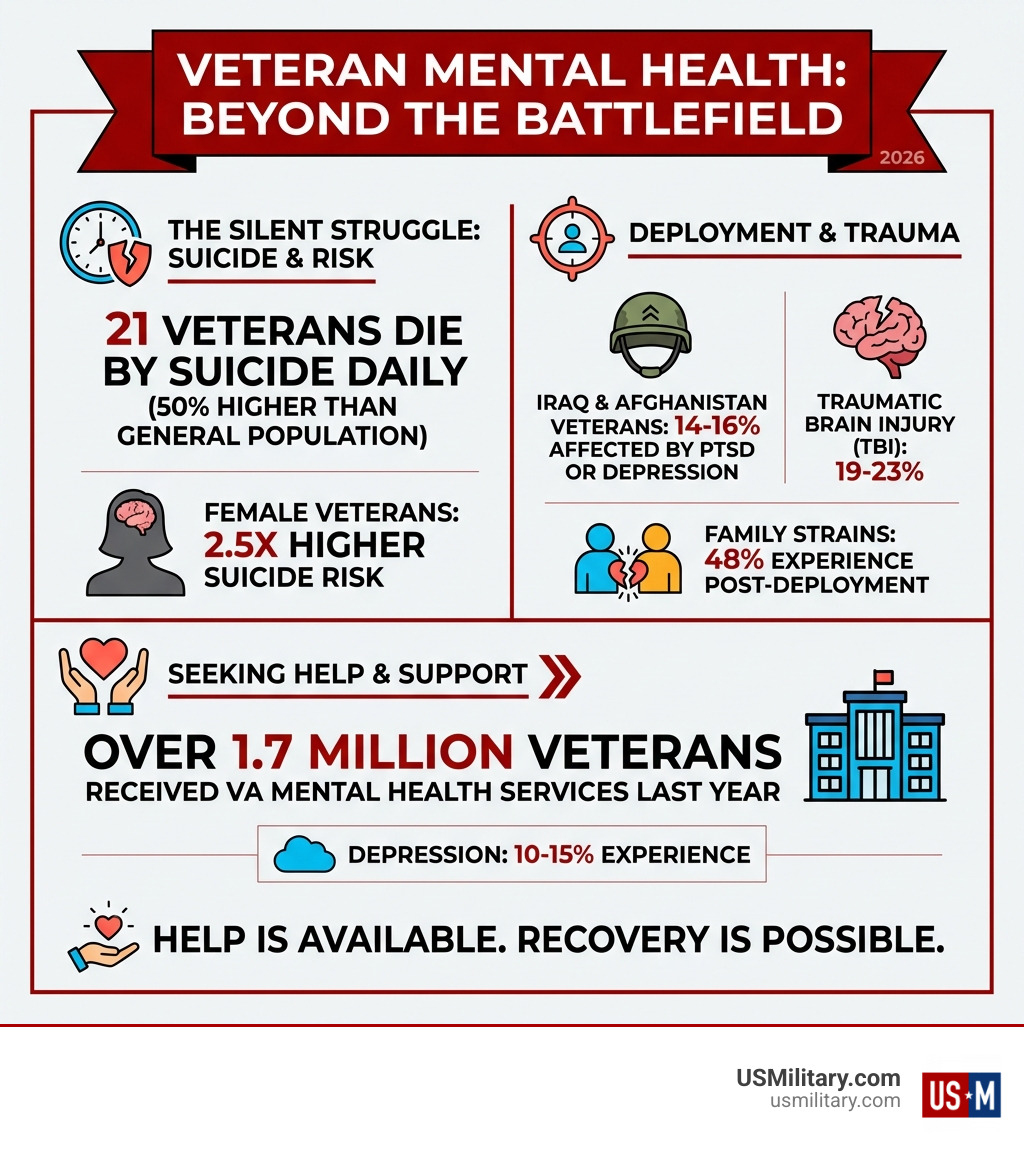
- 1 in 5 veterans from Iraq and Afghanistan experience PTSD or major depression
- Over 6,000 veterans die by suicide each year—approximately 21 per day
- Female veterans have up to 2.5 times greater suicide risk than non-veteran women
- Over 1.7 million veterans received mental health services at VA last year
- 73.5% of veteran suicides involve firearms
The statistics are sobering. But here’s what matters most: help is available, treatment works, and recovery is possible.
The transition from military to civilian life brings unique challenges. Veterans may struggle with traumatic memories, military sexual trauma, the stress of deployment, or the loss of military structure and identity, regardless of combat experience.
Post-traumatic stress disorder, anxiety, and depression are the most common challenges. Yet, many hesitate to seek help due to stigma or career concerns.
The good news: Mental health care does not automatically put security clearances or credentials at risk. The VA offers comprehensive services, often at no cost. Crisis support is available 24/7 by dialing 988 and pressing 1.
This guide will help you understand veteran mental health challenges, recognize warning signs, and access the right resources—whether you’re a veteran yourself, considering military service, or supporting someone who has served.
Understanding the Invisible Wounds: Common Mental Health Challenges
When our service members return home, they often carry “invisible wounds” that are just as impactful as any physical injury. Recognizing these challenges is the first step toward healing. The most common mental health issues our veterans face include Post-Traumatic Stress Disorder (PTSD), depression, anxiety, Traumatic Brain Injury (TBI), and Substance Use Disorder (SUD). We also recognize the growing understanding of moral injury, a profound psychological wound that can affect veterans.
Post-Traumatic Stress Disorder (PTSD) can develop after a life-threatening event like combat or military sexual trauma (MST). It involves more than just reliving memories and can profoundly impact daily life.
Depression is a persistent mood disorder that interferes with daily life. Signs include loss of interest, difficulty concentrating, and thoughts of suicide. Gulf War veterans, for example, face a higher risk of depression than the general population.
Anxiety disorders are also prevalent, manifesting as constant worry, panic attacks, or intense social fear, which complicates reintegration into civilian life.
Traumatic Brain Injury (TBI), even in mild cases, can have significant mental health consequences. Its effects often overlap with and worsen conditions like PTSD and depression, complicating diagnosis and treatment.
Substance Use Disorder (SUD) often co-occurs with other mental health conditions, as veterans may use substances to cope with symptoms, creating a new set of challenges.
Moral injury is the psychological distress from actions (or inactions) that violate one’s moral code. For veterans, this can involve deeply held beliefs about right and wrong, leading to intense guilt, shame, and betrayal.
Signs and Symptoms to Recognize
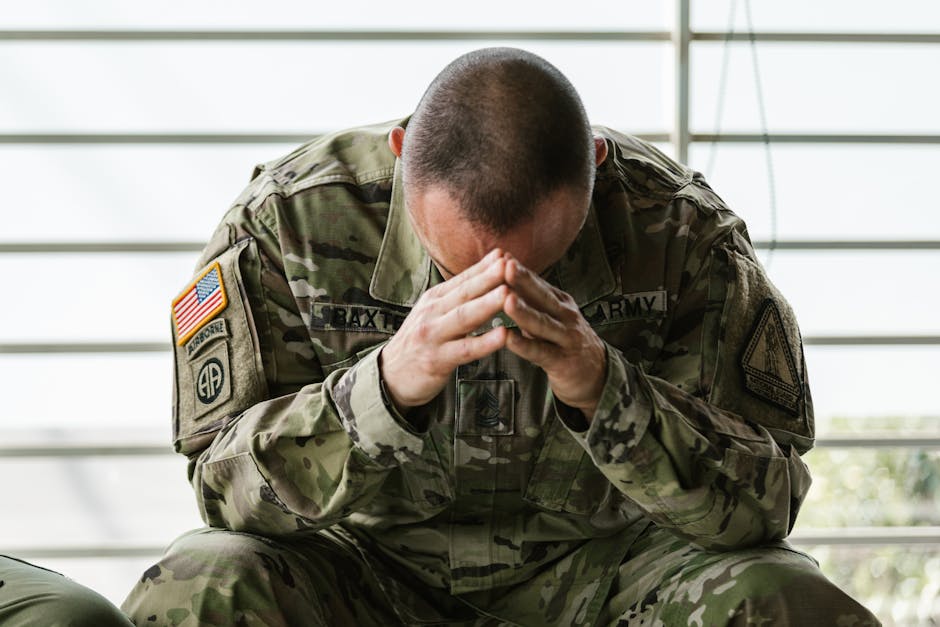
Knowing the signs of mental health challenges is crucial for yourself and your loved ones. Symptoms can be subtle, so it’s important to be aware of the following.
For PTSD, common symptoms include:
- Reliving traumatic events: Flashbacks, nightmares, or intrusive thoughts.
- Avoidance: Staying away from people, places, or activities that are reminders of the trauma.
- Negative thoughts and mood: Feelings of detachment, loss of interest, or persistent negative beliefs.
- Hyperarousal: Being constantly on guard, easily startled, or having angry outbursts.
You can find more scientific research on PTSD symptoms and related topics from the VA’s National Center for PTSD.
For depression, watch for:
- Persistent sadness or hopelessness
- Loss of interest or pleasure in hobbies and activities.
- Changes in appetite or sleep
- Fatigue or low energy
- Feelings of worthlessness or guilt
- Difficulty concentrating or making decisions.
- Thoughts of death or suicide: These require immediate attention.
Other general signs include sudden anger outbursts (reported by 47% of deployed service members), difficulty adjusting to civilian life (44%), and physical symptoms like headaches or chronic pain that may stem from mental distress.
Co-Occurring Disorders: The Link Between Mental Health and Substance Use
Many veterans with PTSD or depression turn to alcohol or drugs to cope, a practice known as self-medication. This often creates a complex cycle where mental health issues and substance use disorders feed into each other.
Research shows a strong link: 82% to 93% of OEF/OIF veterans with SUDs also have another mental health disorder, and are 3 to 4 times more likely to have PTSD or depression. This highlights the need for an integrated treatment approach that addresses both conditions simultaneously.
High rates of alcohol dependence are seen among veterans, with 5–39% of deployed service members experiencing issues. Veterans are more likely to consume alcohol than non-veterans (56.6% vs. 50.8%). The risk is even higher for those who experienced more combat, with heavy drinking rates of 26.8% and binge drinking rates of 54.8%.
Opioid use is also a concern. Between 2001 and 2009, VA opioid prescriptions increased from 17% to 24%. A PTSD diagnosis significantly increased the likelihood of receiving an opioid prescription.
Recognizing a substance use disorder can be difficult. Signs include guilt, difficulty with responsibilities, and inability to control consumption. Integrated care is available and effective. You can learn more about research on SUD in veterans from this study.
Statistics on Veteran mental health: A Stark Comparison
The numbers paint a clear picture of the mental health burden on our veterans:
Prevalence in Deployed Veterans:
- One in five U.S. veterans of Iraq and Afghanistan experience PTSD or major depression.
- Between 2001 and 2014, PTSD was the most frequent new diagnosis among Iraq and Afghanistan war Veterans in VHA care.
- In 2008, over 7% of returning troops met criteria for PTSD or depression and also reported a possible TBI.
Impact on Family and Adjustment:
- 48% of deployed service members experience strains in family life after deployment.
- 47% report sudden outbursts of anger after deployment.
- 44% have difficulty adjusting to civilian life.
Substance Use:
- 5–39% of deployed service members have issues with alcohol dependence.
- SUDs are more common in male veterans (10.5% alcohol, 4.8% other drugs) than female veterans (4.8% alcohol, 2.4% other drugs).
- Veterans are more likely to consume alcohol than non-veterans (56.6% vs. 50.8%).
Traumatic Brain Injury (TBI):
- 19–23% of deployed service members have a TBI.
Suicide Rates:
- Over 6,000 veterans die by suicide annually.
- Approximately 21 veterans die by suicide daily, a rate 50% higher than the general U.S. adult population.
- Female veterans have up to 2.5 times greater suicide risk than non-veteran women.
- In 2022, firearms were involved in 73.5% of Veteran suicides.
- From 2021 to 2022, the suicide rate for female Veterans decreased 24.1%, while it rose 1.6% for male Veterans.
- Alcohol or drug use was a factor in ~30% of military suicides.
VA Service Utilization:
- Over 1.7 million Veterans received mental health services at VA last year.
- In 2023, 31.0% of VHA service users had a confirmed mental health diagnosis, with 14.0% having a PTSD diagnosis.
These numbers underscore the urgent need for accessible and effective mental health support for our veteran community.
The Unique Stressors: Why Veterans Face Mental Health Problems
Military service exposes individuals to a unique set of stressors that can profoundly impact veteran mental health. It’s not just about the battlefield; it’s about the entire journey from enlistment to civilian reintegration.
Impact of Deployment and Combat Exposure
Deployment and combat exposure leave an indelible mark. Facing life-or-death situations and witnessing trauma creates a constant state of hypervigilance. This sustained stress can make it difficult to feel safe even after returning home.
Prolonged separation from family during deployment strains relationships and creates isolation. This pressure, combined with the emotional toll of combat, contributes to conditions like PTSD and anxiety and is linked to higher rates of problematic drinking.

The Transition to Civilian Life
Transitioning to civilian life is a major challenge, often involving a profound loss of identity and structure. The military’s clear mission and camaraderie are replaced by a world that can feel isolating.
Many veterans experience difficulty relating to civilians and face employment challenges as military skills may not translate directly to civilian jobs. This can lead to feelings of alienation and loneliness.
Re-adjusting to family life can also be difficult. Veterans may struggle to reconnect with spouses and children after long absences. Studies show that 48% of deployed service members experience family strains and 44% have difficulty adjusting to civilian life. A study on the challenges veterans face when transitioning highlights that factors like childhood trauma also shape mental health outcomes, not just combat exposure. You can explore more about this through a study on the Association of Suicide Risk With Transition to Civilian Life Among US Military Service Members.
Military Sexual Trauma (MST) and Its Aftermath
Military Sexual Trauma (MST)—sexual assault or repeated, threatening sexual harassment during service—is a deeply violating experience. It can cause severe, long-lasting psychological effects, including PTSD, depression, anxiety, and substance use disorders.
The prevalence of MST is a significant concern, affecting both men and women. Survivors often face unique barriers to reporting and seeking help, including fear of retaliation and stigma, which can delay healing and worsen mental health issues.
The VA offers specialized VA resources for MST survivors. These services are available regardless of discharge status or whether the MST was reported at the time. The VA is committed to providing compassionate, trauma-informed care to help survivors heal. You can find comprehensive information on MST and available support at VA resources for MST.
A Guide to Veteran Mental Health Resources and Support
Navigating mental health challenges can feel overwhelming, but we want to assure you that a vast network of support and resources is available. Taking the first step to reach out is an act of courage, and we’re here to help guide you.
Immediate Help: The Veterans Crisis Line
For veterans in crisis or those concerned about a veteran, immediate, confidential support is available 24/7 through the Veterans Crisis Line. It’s a lifeline designed to connect veterans and their loved ones with qualified, compassionate responders, many of whom are veterans themselves.
Here’s how to access immediate help:
- Dial 988 then Press 1
- Text 838255
- Start a confidential chat online at their website.
This service is available around the clock, every day of the year, for veterans and their concerned family members or friends. Please, don’t hesitate to reach out if you or someone you know needs help. You can find more information and access support directly through the Veterans Crisis Line website.
The Role of the VA in Veteran Mental Health Care
The Department of Veterans Affairs (VA) is a cornerstone of support for veteran mental health, offering a wide array of comprehensive services. Our veterans deserve the best care, and the VA strives to provide it, often outperforming non-VA care in nationwide quality and patient satisfaction reviews.
The VA’s mental health services are designed to address a full spectrum of conditions, from PTSD and depression to anxiety, substance use problems, and military sexual trauma. We are excited to share that veterans no longer need to pay copays for their first three outpatient mental health care and substance use disorder visits of each calendar year through 2027. This policy significantly reduces financial barriers to care.
Key services offered by the VA include:
- Comprehensive Mental Health Services: This includes counseling, therapy (individual, group, and family), medication management, and specialized programs for various conditions.
- Vet Centers: These community-based centers offer free readjustment counseling and outreach services to combat veterans, MST survivors, and their families. They provide a less formal, more community-oriented setting than traditional VA hospitals, and critically, you don’t need to be enrolled in VA healthcare to use them.
- Eligibility for Care: While generally tied to enrollment in VA health care, some services, particularly those at Vet Centers or related to MST, may be accessible even if you’re not fully enrolled.
- Residential Rehabilitation Treatment Programs (RRTPs): For veterans with severe mental illness or co-occurring disorders, these programs offer structured, live-in treatment environments. The VA is advancing efforts to give veterans faster and simpler access to these programs.
The VA is continually expanding its offerings and making them more accessible. For a detailed look at the full range of services, please visit An overview of VA mental health services.
Navigating the VA for Veteran mental health services
Accessing mental health support through the VA is designed to be as straightforward as possible, with various pathways to ensure you get the help you need.
Getting Started:
If you’re already receiving VA medical services, the easiest way to access mental health care is to ask your primary care provider to help you make an appointment with a VA mental health provider. If you’re new to VA services, contact your nearest VA medical center or Vet Center to discuss your needs. If you’re unsure what kind of help you need, you can call 877-222-8387 (TTY: 800-877-8339 for hearing loss) Monday through Friday, 8:00 a.m. to 8:00 p.m. ET, to find the right resources.
Telemental Health Options:
For many veterans, getting to a VA facility in person can be a challenge. The VA offers extensive telemental health options, allowing you to receive mental health services online or over the phone. This includes virtual appointments with providers, online self-help portals, and helpful mobile health apps designed for veterans to manage symptoms of PTSD, depression, and stress.
Peer Support Specialists:
Sometimes, the best support comes from someone who truly understands your journey. The VA offers programs with peer support specialists—fellow veterans who have steerd similar mental health challenges and can provide invaluable guidance and empathy. The BeThere peer assistance program and Military OneSource (1-800-342-9647) connect you with peer coaches.
To begin your journey with VA healthcare and access these vital services, you can learn more about how to apply for VA health care.
The Support System: How Family and Friends Can Help
Family and friends play a crucial role in a veteran’s mental health journey. You are often the first to notice changes and can be vital in encouraging them to seek help.
Recognizing warning signs is the first step. Pay attention to changes in mood, behavior, sleep, or substance use. If you notice hopelessness or withdrawal, don’t dismiss them.
Start a conversation in a calm, private moment. Express your concerns with care, focusing on specific observations, like, “I’ve noticed you seem more withdrawn lately, and I’m worried about you.”
Listen actively without interruption or judgment. Validate their feelings, even if you don’t fully understand them.
Help find resources. Offer to research VA services, make calls, or drive them to appointments. This can remove a significant barrier to getting help.
Avoid judgment. Mental health struggles are not a sign of weakness. Remind your loved one that seeking help is a sign of strength.
Resources for Caregivers and Families
Supporting a veteran is demanding, so it’s vital for caregivers to have their own resources. The VA offers several programs for family and friends.
- VA Caregiver Support Program: Offers education, peer support, and financial aid for eligible caregivers. Find help via the local caregiver support coordinator or by calling the Caregiver Support Line at 855-260-3274.
- Coaching Into Care program: A free, confidential national phone service for family and friends. Licensed professionals offer advice on how to encourage your veteran to seek care. Call 888-823-7458.
- Support groups: Connecting with other caregivers who understand your experiences can provide a sense of community and a safe space to share challenges and strategies.
- Prioritize self-care: To effectively support your veteran, you must care for your own well-being. Use available resources and take breaks to avoid burnout.
Your role is invaluable. We encourage you to use these resources to sustain yourself and continue providing the best possible support to your veteran.
Frequently Asked Questions about Veteran Mental Health
We understand that you might have specific questions about veteran mental health and accessing care. Here, we address some common concerns to help clarify the path forward.
Will seeking mental health care affect my security clearance or career?
This is a very common and understandable concern, but we want to assure you that seeking help is a sign of strength, not weakness. The VA explicitly states that being diagnosed with a mental health condition or seeking mental health care does not automatically put work-related credentials, such as security clearances, at risk.
Federal policies and regulations are in place to protect individuals who seek mental health treatment. The focus is on your ability to perform your duties, and treatment is designed to improve that ability. Transparency and honesty on forms are always key, but your willingness to address mental health challenges is generally viewed positively, demonstrating responsibility and resilience. Your focus should be on getting the care you need to maintain your stability and well-being.
What are Vet Centers and how are they different from VA hospitals?
Vet Centers play a unique and vital role in the VA’s mental health support system, and they offer a distinct experience from traditional VA hospitals.
- Community-based counseling: Vet Centers are located in communities, often in storefronts or smaller, less formal buildings, making them more accessible and less intimidating than large hospital campuses.
- Less formal setting: The atmosphere is typically more relaxed and less clinical, fostering a sense of comfort and camaraderie.
- Services for combat veterans and MST survivors: Their primary focus is on providing readjustment counseling to combat veterans and survivors of Military Sexual Trauma (MST), as well as their families.
- No VA enrollment required: Critically, you do NOT have to be enrolled in VA health care or receive disability compensation to use Vet Center services. This removes a significant barrier for many veterans seeking help.
- Individual and group counseling: They offer a range of services including individual, group, and family counseling for issues like PTSD, bereavement, and military-related grief.
Think of Vet Centers as a welcoming, local hub for emotional support and community connection, specifically custom to the unique experiences of certain veteran populations.
What if I don’t have a service-connected disability rating?
It’s a common misconception that you must have a service-connected disability rating to receive mental health care from the VA. We want to be clear: you may still be eligible for care even without a disability rating.
- Vet Centers are free: As mentioned, Vet Centers offer free counseling services to eligible combat veterans, MST survivors, and their families, regardless of VA enrollment status or disability rating.
- Care for specific conditions like MST is available: The VA provides care for needs linked to military sexual trauma (MST) to any veteran, regardless of whether they have a service-connected disability, were separated from service, or are enrolled in VA health care.
- Other eligibility: Your eligibility for other VA health care services often depends on factors like your income level, length of service, and other specific criteria. It’s always worth checking, as you might qualify for some benefits even without a disability rating.
The best way to determine your eligibility for various VA health care services is to visit the VA’s official page to check your VA eligibility or contact your nearest VA medical center.
Conclusion: Taking the First Step Towards a Healthier Future
As we’ve explored, veteran mental health is a complex but profoundly important topic. The invisible wounds of service – PTSD, depression, anxiety, moral injury, and the struggles of transitioning to civilian life – are real, and they affect millions of our nation’s heroes. The statistics are a stark reminder of the challenges, but they also underscore the urgent need for action and support.
We want to reiterate a crucial message: seeking help is not a sign of weakness; it is a courageous act. Recovery is not just a possibility; it is a reality for countless veterans who have found the strength to reach out. There is a wide network of support available, from immediate crisis intervention through the Veterans Crisis Line to comprehensive, personalized care offered by the VA and community organizations.
Whether you are a veteran struggling in silence, a family member looking for ways to support a loved one, or simply someone who cares about those who have served, we hope this guide has provided clarity and encouragement. We owe it to our veterans to ensure they have every opportunity to heal and thrive.
For more information about military benefits and resources, including healthcare, education, and financial planning, please visit USMilitary.com.
Free for Service Members & Veterans
Get the military benefits intel no one tells you about.
Weekly updates on VA benefits, pay changes, and money tips — free for service members and veterans.
No spam. Unsubscribe anytime. Your info is never shared.