Why the VA Home Loan Benefit Matters for Service Members and Veterans
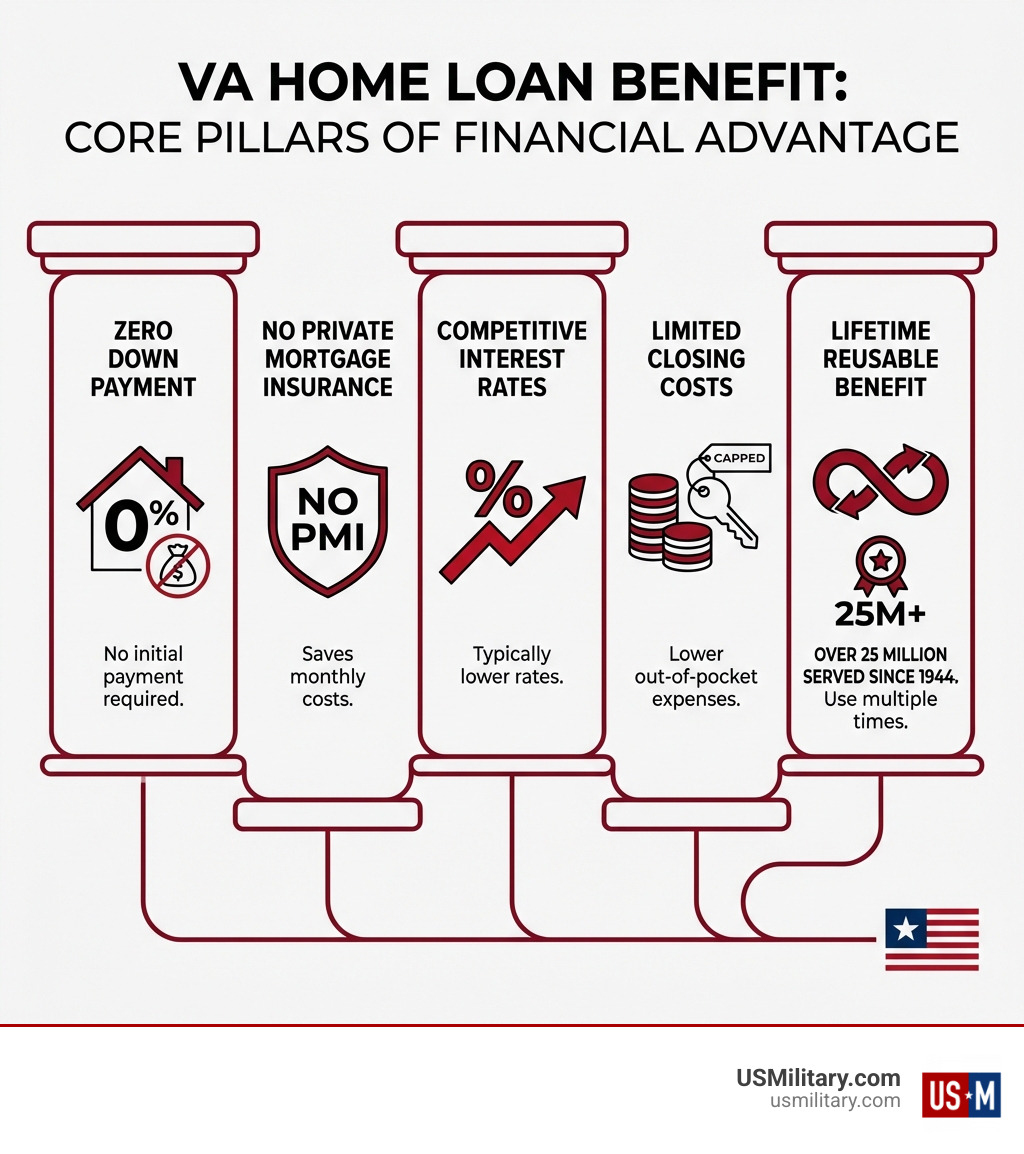
When you apply for a VA loan, you’re accessing one of the most powerful benefits earned through military service. Created in 1944 as part of the original G.I. Bill, the VA home loan has helped over 25 million military members, veterans, and their families achieve homeownership.
What makes VA loans so impactful? They remove common financial barriers. Nearly 90% of VA-backed loans require no down payment, and you won’t pay Private Mortgage Insurance (PMI), saving hundreds monthly. Interest rates are also typically lower because the VA guarantees a portion of your loan.
This isn’t just another government program; it’s a benefit you earned. Whether you’re on active duty, recently separated, or retired, the VA loan benefit is available to you and can be used multiple times. Eligible surviving spouses can also use this benefit.
The program’s popularity continues to grow, with hundreds of thousands of veterans using it to purchase homes each year. These aren’t just numbers; they represent families finding stability and building equity in communities across America.
Are You Eligible? Understanding the Core Requirements
Before you can apply for a VA loan, you must confirm your eligibility. This benefit is primarily for Veterans, active-duty service members, National Guard and Reserve members, and certain surviving spouses, and it requires meeting specific service and discharge criteria.
The VA guarantees a portion of the loan, encouraging private lenders to offer better terms. To learn more, check the official VA eligibility criteria.
Meeting Minimum Service Requirements
Service requirements vary by the era you served:
- Wartime: Generally, 90 continuous days of active duty.
- Peacetime: Typically, 181 continuous days of active duty.
- Active-Duty Service Members: You generally need 90 continuous days of service.
- National Guard and Reserve Members: Usually requires 6 creditable years of service. If called to active duty, the time requirement is often much shorter.
- Exceptions for Early Discharge: You might still be eligible if discharged for a service-connected disability, hardship, reduction in force, or other specific reasons.
Your character of service is also key; an honorable discharge is typically required. If you have a different discharge status, you can apply for a discharge upgrade or a VA Character of Discharge review.
Surviving Spouses: Certain surviving spouses may be eligible, particularly if receiving Dependency and Indemnity Compensation (DIC).
Lender Requirements: Credit and Income
While the VA sets service rules, private lenders have their own financial requirements.
- Credit Score: The VA doesn’t set a minimum score, but most lenders look for a score of 620 or higher. VA loans are known for their flexibility, so don’t be discouraged by a lower score. For tips, see our guide on Fixing Your Credit Score for a VA Home Loan.
- Sufficient Income and DTI: Lenders must verify that you have stable and sufficient income to make your mortgage payments. They will analyze your debt-to-income (DTI) ratio, which compares your monthly debts to your gross income, to assess your overall financial stability.
The Step-by-Step Process to Apply for a VA Loan
Ready to turn your military benefit into a home? The process to apply for a VA loan is more straightforward than you might think. On average, VA loans close faster than conventional or FHA loans, often in about a month. Here’s how to steer the journey.
Step 1: Find a VA-Approved Lender
Your first step is finding a lender approved by the U.S. Department of Veterans Affairs. Working with a lender who specializes in VA mortgages can lead to a smoother process. Be sure to shop around and compare interest rates and fees from several lenders to find the best deal.
Start by getting pre-qualified for an estimate of what you can borrow. For a stronger position when making offers, get a pre-approval, which is a conditional commitment from a lender for a specific loan amount. For a list of lenders, check out our guide to the Best VA Home Loan Lenders.
Step 2: Obtain Your Certificate of Eligibility (COE) to Apply for a VA Loan
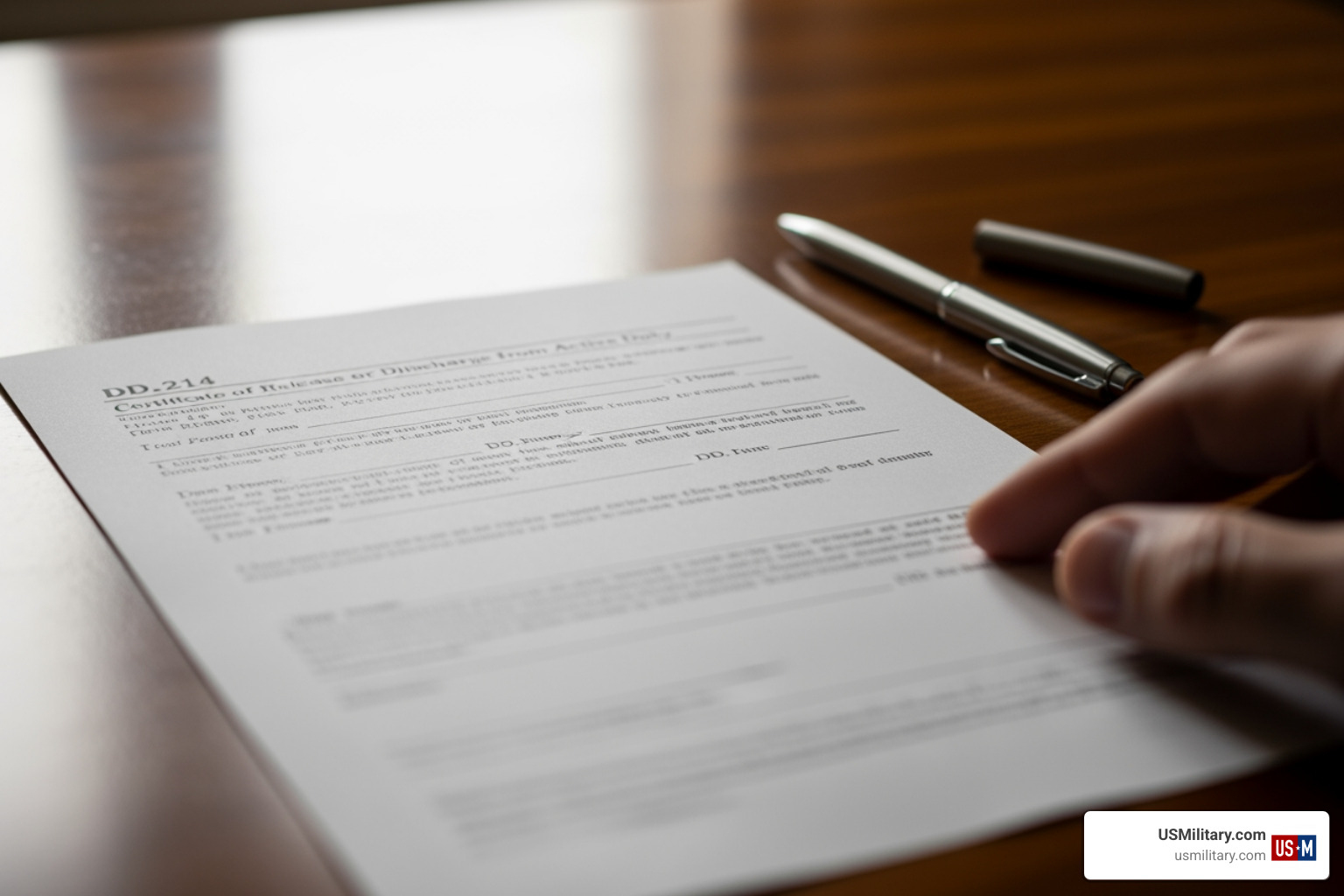
Your Certificate of Eligibility (COE) is the official VA document that proves you meet the service requirements. Lenders need this to confirm your eligibility.
- How to Get a COE: The easiest way is through your lender, who can often get it for you electronically in minutes. You can also request your COE directly from the VA online or by mail (which takes longer).
- Documents Needed: You’ll need proof of service, such as a DD Form 214 for Veterans or a statement of service for active-duty personnel.
Step 3: Go House Hunting and Sign a Purchase Agreement
With your pre-approval and COE, it’s time to find your home. We recommend working with a real estate agent experienced with VA loans. They can help you find a suitable property that meets VA’s Minimum Property Requirements (MPRs)—ensuring the home is safe, sound, and sanitary.
Once you make an offer, your lender will order a VA appraisal. The appraiser determines the home’s fair market value and verifies it meets MPRs. VA appraisal timelines are very competitive, often averaging about a week. Your purchase agreement should include a “VA Option Clause,” which allows you to back out of the deal without penalty if the appraisal comes in lower than the purchase price.
Step 4: Complete the Lender’s Application to Formally Apply for a VA Loan
With a signed purchase agreement, you’ll finalize your loan application. You’ll provide standard financial documents like recent pay stubs, W-2s, bank statements, and a list of current debts to verify your income, assets, and employment.
The lender’s underwriting team will review your file, credit report, and the VA appraisal. Once everything is approved, you’ll sign final loan disclosures and head to closing. At closing, you’ll sign the final paperwork, pay any closing costs, and receive the keys to your new home! For more answers, see our VA Home Loan Questions section.
Understanding Your VA Loan Options and Costs
The VA loan benefit offers incredible flexibility to meet various homeownership needs. Whether you’re buying, refinancing, or renovating, there’s likely a VA loan for you. However, it’s important to understand the associated costs.
Types of VA Loans Available
The VA home loan program provides several powerful options:
- VA Purchase Loan: The most common type, used to buy a home with little to no down payment.
- Interest Rate Reduction Refinance Loan (IRRRL): Also known as a “Streamline Refinance,” this popular option helps you refinance an existing VA loan to get a lower interest rate with a simpler process.
- Cash-Out Refinance: Allows you to access your home’s equity by refinancing for more than you owe. You can use this option even if your current mortgage isn’t a VA loan.
- VA Renovation Loan: Lets you finance both the purchase of a home and the cost of repairs in a single loan.
- VA Energy Efficient Mortgage (EEM): Finance up to an additional $6,000 for qualified energy-efficient home improvements.
- Native American Direct Loan (NADL): A direct loan from the VA for eligible Native American Veterans to use on Federal Trust Land.
While great for purchasing a home, VA loans generally don’t allow you to Buy Land with a VA Loan on its own.
The VA Funding Fee and Closing Costs
A unique cost of VA loans is the VA Funding Fee, a one-time fee paid to the VA that helps keep the program running for future generations. The fee varies based on your service, down payment amount, and whether it’s your first use of the benefit. It can usually be rolled into the loan amount.
- Who is Exempt?: You are exempt from the fee if you receive VA compensation for a service-connected disability, or if you are a qualifying surviving spouse.
- Closing Costs: The VA limits the closing costs lenders can charge. A major benefit is that sellers can pay for some of your closing costs through seller concessions, potentially reducing your out-of-pocket expenses.
VA Loan Limits and Reusing Your Entitlement
As of 2020, the VA eliminated loan limits for Veterans with their full entitlement. This means you can buy a home for any price with no down payment, provided you qualify with your lender. If you have a previous VA loan, you may have partial entitlement and could use a VA Jumbo Loan.
Your entitlement is the amount the VA guarantees on your loan. A huge advantage of the program is that you can restore and reuse your entitlement multiple times throughout your life. This is typically done after you sell the home and pay off the loan in full.
VA Loans vs. Conventional Loans: A Quick Comparison
How do VA loans stack up against conventional loans? For most eligible veterans, the VA loan’s unique advantages make it the superior choice.
| Feature | VA Loan | Conventional Loan |
|---|---|---|
| Down Payment | Often 0% (nearly 90% of VA loans have no down payment) | Typically 3-20% or more |
| Mortgage Insurance | No Private Mortgage Insurance (PMI) required | PMI required if less than 20% down payment |
| Interest Rates | Often lower and more competitive | Varies, can be higher without a substantial down payment |
| Credit Requirements | More flexible; VA has no minimum, lenders set their own | Generally stricter, higher credit scores preferred |
| Government Guarantee | VA guarantees a portion to the lender | No government guarantee |
| Closing Costs | VA limits allowable costs; seller concessions allowed | Varies by lender; fewer limits on seller contributions |
| Loan Limits | No limits for Veterans with full entitlement (since 2020) | Set by Fannie Mae and Freddie Mac (conforming limits) |
| Assumability | Generally assumable by qualified buyers (VA or non-VA) | Less common and more difficult to assume |
The absence of PMI is a significant financial advantage. As detailed in our guide Do VA Loans Have PMI, this feature alone can save you hundreds monthly, setting the VA loan apart as a powerful tool for homeownership.
Frequently Asked Questions about Applying for a VA Loan
We know you might have more questions as you prepare to apply for a VA loan. Here are some common ones.
How does the VA loan process differ for active-duty service members versus Veterans?
The core process is the same, with minor differences in documentation and occupancy. Veterans use their DD Form 214 to prove service, while active-duty members provide a statement of service. For occupancy, an active-duty service member’s spouse can fulfill the primary residence requirement if the member is deployed or stationed elsewhere, offering valuable flexibility.
What happens if I don’t meet the minimum service requirements for a VA loan?
Don’t give up. You might still qualify under an exception if you were discharged early for reasons like a service-connected disability, hardship, or a reduction in force. The VA will review your specific case. If your discharge status is the issue, you can apply for a discharge upgrade or request a VA Character of Discharge review to potentially gain eligibility.
Are there any specific property requirements for a home purchased with a VA loan?
Yes, the VA has Minimum Property Requirements (MPRs) to ensure the home is safe, sound, and sanitary. A VA-approved appraiser will check for compliance with MPRs, such as having a sound structure, safe water, and adequate heating. The property must also be your primary residence. A VA appraisal is not a substitute for a home inspection, which we strongly recommend getting to identify any other potential issues.
Your Path to Homeownership Starts Here
The VA home loan is more than a mortgage—it’s a powerful benefit you’ve earned through your service. With advantages like no down payment, no PMI, and competitive rates, it makes homeownership accessible and affordable.
We’ve outlined how to apply for a VA loan, from checking eligibility to closing on your new home. This is a reusable benefit that can help you build equity throughout your life.
Your service protected the American dream for others; now it’s time to achieve it for yourself. Don’t let the process intimidate you. Connect with VA-savvy professionals who can guide you.
Explore all your Military Veteran Home Loan Benefits and take the first step toward your new home today.
Free for Service Members & Veterans
Get the military benefits intel no one tells you about.
Weekly updates on VA benefits, pay changes, and money tips — free for service members and veterans.
No spam. Unsubscribe anytime. Your info is never shared.



More Than 90% Of Clients Have Increased Ratings! Why Settle For Less Than You Deserve? Expert Priority Help With Your VA Claim Today! Free Evaluation Call!
The mission of Veteran Services United is to support veterans in filing and winning disability claims by offering expert guidance, advocacy, and personalized assistance. Through dedicated service, Veteran Services United empowers veterans to secure the benefits they have earned, ensuring they receive the care and support they deserve.