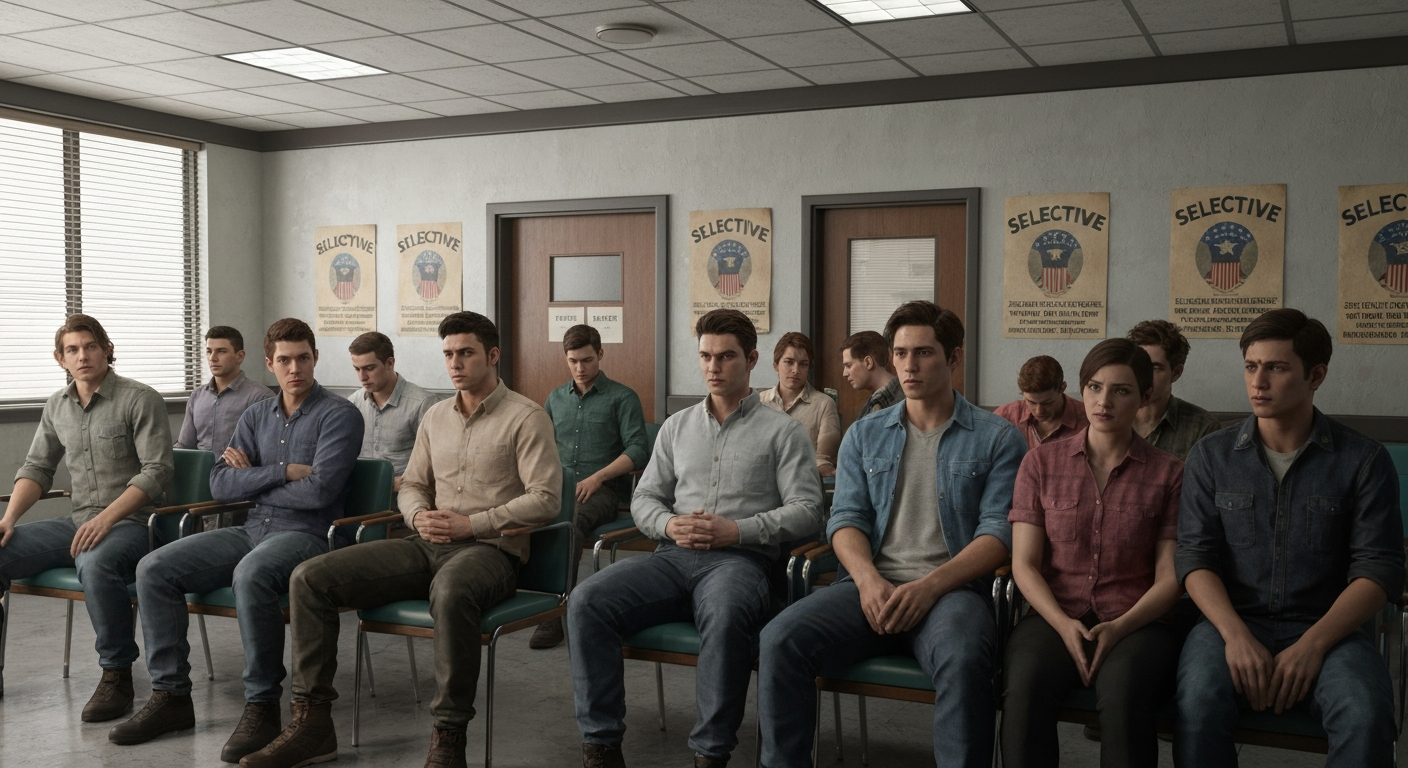
Key Highlights
Here are the main takeaways about the military draft:
- The United States currently has an all-volunteer military and no active draft.
- The Selective Service System maintains a list of eligible individuals in case a draft is needed.
- Federal law requires nearly all male U.S. citizens and male immigrants, ages 18-25, to register.
- If a draft were reinstated, a lottery system based on birth dates would be used to call people for service.
- Failing to register can result in serious legal consequences, including ineligibility for federal benefits.
Introduction
Have you ever wondered about the military draft? While the United States currently relies on a strong volunteer military, the system for a potential draft is still in place. This system, known as the Selective Service System, requires most young men to register when they turn 18. This article will explain what the draft is, how it has been used in the past, and what would happen if it were needed again today. Let’s explore the details of this important civic responsibility.
Overview of the Military Draft in the United States
The military draft, officially managed by the Selective Service System, serves as a backup for the current all-volunteer force. Its purpose is to ensure the country can quickly assemble military personnel in the event of a national emergency that the volunteer force cannot handle alone.
This means that if Congress and the President authorize it, the military selective service system can compel individuals into military service. While there is no draft today, understanding how it functions is important for all Americans.
Definition and Purpose of the Military Draft
The military draft is the mandatory enlistment of individuals into military service. It’s a tool the government can use to expand the armed forces when necessary for national defense. The core purpose is to have a fair and equitable system ready to go if a crisis demands more troops than the volunteer military can supply.
So, how would it work? First, Congress and the President would need to pass a law to authorize a draft. This would activate the Selective Service System. A lottery would then be held to determine the order in which registered men are called. Those selected would receive orders to report to a Military Entrance Processing Station (MEPS) for evaluation.
At the MEPS, individuals undergo physical, mental, and moral evaluations. If found fit for service, they are inducted into the armed forces. The process is designed to deliver the first inductees to the military within 193 days of a draft being authorized. Draft registration is the first step in ensuring this system can work rapidly.
Distinction Between Conscription and Volunteer Service
It’s important to understand the fundamental difference between conscription and the volunteer military we have today. Conscription, another term for the draft, is compulsory military service. The government requires you to serve.
In contrast, our current all-volunteer force is made up of individuals who choose to join. They go through a recruitment process and enlist for a specific term of service. This has been the standard for the U.S. military since 1973.
Here’s a simple breakdown:
- Conscription (The Draft): Mandatory military service required by law.
- Volunteer Service: A personal choice to enlist in the armed forces.
- Activation: A draft is only activated during a national emergency authorized by law, whereas the volunteer force is always active.
History of the U.S. Military Draft
The United States has relied on a military draft at various points over the last century and a half to fill its ranks during major conflicts. The modern system is rooted in laws like the Selective Service Act, which was crucial during times of war.
Major events such as World War I, World War II, and the Vietnam War saw millions of Americans conscripted into service. The use of a draft lottery became a defining feature, especially during the Vietnam era, before the nation shifted its approach to military staffing.

Early Drafts and Colonial Era Origins
While the idea of compulsory service dates back to the colonial era, the modern military draft system took shape over the last 150 years. The U.S. government has periodically implemented a national draft to meet the demands of large-scale wars, recognizing the need for a structured way to call citizens to service.
Before the creation of the Department of Defense, the Department of War managed these efforts. The process evolved from basic conscription acts into a more organized system involving draft registration for eligible men. This created a pool of potential draftees that could be called upon when needed.
These historical drafts laid the groundwork for today’s Selective Service System. They established the legal and logistical framework for registering, classifying, and inducting individuals, ensuring the nation could mobilize its citizens for defense in an orderly fashion.
Major Draft Periods: World War I, II, Korea, Vietnam
The 20th century saw several major draft periods, most notably during World War I and World War II, when the Selective Service Act was used to build a massive fighting force. The draft was also used during the Korean and Vietnam Wars. The Vietnam War, in particular, is remembered for its use of a draft lottery to determine the order of induction, which was a significant change managed by the Department of Defense.
This lottery system was designed to make the selection process more random. It involved drawing birth dates to decide who would be called up. For example, in the first lottery for the Vietnam War, 195 out of 366 possible birthdays were called for potential induction.
Here’s how the later Vietnam draft lotteries broke down:
| Lottery Date | For Men Born In | Birthdays Called |
|---|---|---|
| July 1, 1970 | 1951 | 125 of 365 |
| Aug. 5, 1971 | 1952 | 95 of 365 |
The Shift to an All-Volunteer Force After 1973
Following the conclusion of the Vietnam War, the United States made a significant policy change. In 1973, the active draft ended, and the nation transitioned to an all-volunteer force. This meant the military would be staffed entirely by individuals who chose to enlist.
However, the framework for a draft was not completely dismantled. Although the draft itself was suspended, the Selective Service System was kept in place as a standby organization. The requirement for draft registration was temporarily paused but was later reinstated.
This shift created the system we have today: a professional, volunteer military backed by the readiness of the Selective Service System. All young men are still required to complete their draft registration, ensuring that a pool of eligible individuals is available if a national crisis ever requires a return to conscription.
The Selective Service System Explained
The Selective Service System is the government agency responsible for managing the military draft. It operates independently of the Department of Defense and its primary role is to register men and maintain a system that can quickly provide personnel in a national emergency.
Should Congress and the President authorize a military draft, the Selective Service would be in charge of the entire process, from conducting the draft lottery to processing claims for deferments and exemptions. It ensures the process is fair and equitable for everyone.

History and Creation of the Selective Service System
The Selective Service System is the agency that facilitates the draft. Its mission is to be ready to supply personnel to the military if authorized by law. This system ensures that, in a crisis, the process of calling up citizens is orderly and fair. It is directly related to the draft because it manages the registration and selection process.
The modern history of the draft is shaped by presidential actions. For instance, President Gerald Ford offered amnesty to those who had avoided the draft during the Vietnam War, and President Jimmy Carter later issued a full pardon. It was also President Carter who reinstated the requirement for men to register with the Selective Service System in 1980.
This registration requirement remains in effect today. The Department of Justice has the authority to prosecute those who fail to register, though this has not happened since 1986. The main function of the Selective Service System now is to maintain this registration list.
Role of the Selective Service Today
Today, the primary role of the Selective Service System is to maintain a database of eligible individuals through draft registration. This process is mandated by federal law and ensures that the U.S. is prepared for a crisis that requires more troops than the all-volunteer military can provide. The agency is separate from the Department of Defense but works to support it if a draft is enacted.
If a draft were to occur, a lottery would determine who gets selected. The process involves a random drawing of birth dates. If your birth date is drawn early, you would be among the first to receive an induction notice. The military’s needs would determine how many people are drafted.
The Selective Service System also has other key responsibilities:
- Managing an alternative service program for conscientious objectors.
- Maintaining a network of local and appeal boards to review claims for deferments and exemptions.
- Ensuring the draft process, if activated, is fair and equitable.
How Registration Supports Possible Future Drafts
Your draft registration is a crucial part of national security preparedness. The Selective Service System maintains this list of registrants so that, if a national draft is ever needed, the process can be swift and organized. Without this database, mobilizing personnel would be a much slower and more complicated task.
To bring back the draft, the U.S. government would follow a clear legal process. Congress would have to pass an amendment to the Military Selective Service Act, and the President would need to sign it into law. This action would authorize the President to induct individuals into the armed forces, officially starting the draft process.
Once authorized, the Selective Service System would be activated. It would use the existing registration database to conduct a lottery and begin issuing induction orders. This established framework ensures that the country can respond quickly to a large-scale national emergency that requires rapid military expansion.
Military Draft Age and Who Must Register
The age requirements for draft registration are specific and apply to a wide range of individuals. Federal law requires nearly all male citizens and male immigrants to register with the Selective Service System.
This registration must be completed when eligible men are between the ages of 18 and 25. It’s a common question on applications for driver’s licenses, student aid, and federal jobs, highlighting its importance as a civic duty.
Age Requirements and the Registration Process
The law is very clear about the age requirements for draft registration. You must register with the Selective Service System within 30 days of your 18th birthday. This requirement for male citizens remains in effect until you reach your 26th birthday. After you turn 26, you can no longer register.
The government makes the registration process simple and accessible. There are several ways you can complete your draft registration to ensure you comply with the law.
You can register through any of the following methods:
- Online through the official Selective Service website.
- At any U.S. post office.
- By returning the registration card that is mailed to you around your 18th birthday.
- Often, you can register when applying for a state driver’s license.
Gender and Citizenship Considerations
Under current federal law, the requirement to register with the Selective Service System applies only to male citizens and residents. Women, including female citizens, are not required or permitted to register for the draft. This has been a topic of debate for years, especially since women became eligible for combat roles in 2013.
For this to change, Congress would need to amend the law. In 2016, lawmakers considered a provision to include women in draft registration but ultimately decided against it, instead ordering a review of the entire system.
Therefore, unless the law is changed, the Selective Service System will continue to register only men. The discussion around this issue continues, but for now, the legal obligation rests solely with male citizens and residents.
Special Cases: Dual Nationals and Immigrants
The rules for draft registration extend beyond just U.S. citizens. Most male immigrants residing in the United States are also required to register. This includes permanent residents (green card holders), refugees, asylum seekers, and undocumented immigrants.
Similarly, dual nationals who are men living in the U.S. must register with the Selective Service. Federal law considers them subject to the same registration requirements as other U.S. residents. The key factor is residency within the United States, not just citizenship status.
However, certain exceptions exist. Some individuals, such as those in the U.S. on valid student or visitor visas, are not required to register. In the event of a draft, dual nationals may sometimes be exempt from military service depending on their country of citizenship and residency, but registration is still mandatory.
Draft Lottery Procedures
If a draft were activated, the Selective Service would use a lottery to determine the order in which registrants are called. This process is designed to be random and fair, ensuring that everyone has an equal chance of being selected.
The draft lottery is based on birth dates. Numbers would be drawn for each day of the year, and those with the lowest lottery numbers corresponding to their birthdays would be the first to be called. The military’s needs in the year of the lottery would determine how many people are ultimately drafted.
How the Draft Lottery Works
The draft lottery is a system designed to create a random order of selection for military service. The Military Selective Service System would conduct this process publicly to ensure transparency. It would be nationally televised and live-streamed.
The process involves two large drums. One drum would contain capsules with every date of the year, while the second would contain capsules with numbers from 1 to 365 (or 366 for a leap year). A date is drawn from the first drum, and a number is drawn from the second. The number drawn becomes the lottery number for that birth date.
This continues until all birth dates have been assigned lottery numbers. Here’s the key takeaway:
- The lottery establishes a clear sequence for induction.
- Those with the lowest lottery numbers are called first.
- The first group to be called would be men turning 20 in the year the draft is held.
Historical Use of Lottery Systems in the Draft
Yes, the United States has used a random draft lottery in the past, most famously during the Vietnam War. This system was introduced to make the selection process seem more impartial compared to earlier draft methods that relied heavily on local board decisions.
The first Vietnam-era lottery was held on December 1, 1969. It determined the draft order for men born between 1944 and 1950. In that lottery, 195 birth dates were called, meaning men with those birthdays were eligible for induction in the year of the draft. If your birthday wasn’t one of the first 195 drawn, you were not called to serve that year.
This practice continued for several years. Lotteries were held in 1970 and 1971 for men born in subsequent years, though fewer birthdays were called as the war wound down. These historical lotteries established the model that the Selective Service would use if a draft were reinstated today.
Current Policies on Random Selection
Current policy dictates that if a draft were needed, a system of random selection would be used. The Selective Service System is prepared to conduct a national draft lottery very similar to the one used during the Vietnam War. This ensures the process is fair for all who have completed their draft registration.
The lottery would prioritize individuals by age. The first group to be considered for the draft would be men who are 20 years old during the calendar year of the lottery. If more people are needed, the lottery would then move to those who are 21, then 22, and so on, up to age 25.
This age-based priority system means that your chances of being drafted decrease as you get older. Once you pass your 26th birthday, you are over the age of liability and would not be called in a draft.
Classifications and Status Under the Draft
If a draft were activated, not everyone who is registered would be inducted into military service. The Selective Service System would use a classification process to determine each person’s eligibility. This process is governed by the Military Selective Service Act.
Registrants would have the opportunity to file claims for different statuses. These claims would be reviewed by local boards, with decisions that can be challenged through appeal boards. These draft classifications determine who is available for service, who is deferred, and who is exempt.
Classification Categories and Their Meanings
Currently, registrants are not assigned a classification. This only happens if a draft is activated. At that time, local boards would review individual cases to assign draft classifications that define a person’s availability for military service.
Each classification code has a specific meaning. For example, Class 1-A means you are considered available for military service. Other classifications indicate a deferred or exempt status based on specific circumstances, such as being a conscientious objector or having a critical civilian job.
Some of the most common classification categories from past drafts include:
- 1-A: Available for military service.
- 1-A-O: Conscientious objector available for noncombatant military service.
- 4-F: Registrant not qualified for military service, often for medical reasons.
Medical, Educational, and Occupational Classifications
Beyond general availability, draft classifications can also reflect a person’s specific skills or situation. For instance, a medical classification like 1-AM would designate a medical specialist available for service, while a 4-FM would mean a medical specialist who is not qualified. The system even has a standby plan to draft health care personnel if needed.
An educational deferment, such as Class 2-S, was historically given to students to allow them to continue their studies. Similarly, an occupational exemption could be granted to individuals in critical civilian jobs. Class 2-A was used for those in essential non-agricultural occupations, while 2-C was for agricultural workers.
These classifications ensure that the draft does not disproportionately harm essential civilian functions, such as health care or other vital industries. The goal is to balance military needs with the needs of the nation as a whole.
Changes in Draft Classifications Over Time
Draft classifications have not remained static throughout history; they have evolved based on the country’s needs and changes in the law. The Department of Defense and Congress periodically review these policies, sometimes leading to significant adjustments.
A notable example is the 1-Y classification, which was for registrants only qualified for service in a time of war or national emergency. This classification was abolished in 1971, and local boards were instructed to reclassify all men who held this status. This shows how the system can adapt to changing military requirements.
After the draft ended in 1973 and registrant processing stopped in 1976, nearly all registrants were moved to Class 1-H, meaning they were not currently subject to processing. This remains the default status today, as no draft classifications are being actively assigned.
Exemptions, Deferments, and Postponements
If a draft is reinstated, receiving an induction notice doesn’t automatically mean you will serve. You may be eligible for exemptions, deferments, or postponements based on your circumstances. These provisions allow individuals to delay or avoid service for valid reasons.
For example, students may receive an educational exemption, while a conscientious objector may be assigned to alternative service. The system also accounts for health care workers and others in critical fields. These options are processed through a formal application and review process.
Medical, Family, and Educational Exemptions
Several types of exemptions and deferments are available in the event of a draft. A medical exemption, for instance, would be granted if you are found not qualified for service during your physical evaluation. An educational deferment allows college students to finish a semester or, if they are seniors, the academic year.
A family exemption, or hardship deferment, may be granted to men whose induction would cause significant hardship to dependents who rely on them for support. This ensures that families are not left in a vulnerable position.
Here are some key deferments and exemptions:
- Students: High school students can postpone service until graduation or age 20. College students can postpone until the end of the current semester.
- Hardship: For individuals who are the primary support for their family.
- Certain Occupations: Ministers and some elected officials are exempt from service. Veterans are also generally exempt from a peacetime draft.
Conscientious Objector Status
A conscientious objector is someone who is opposed to serving in the armed forces based on deeply held moral or religious beliefs. The Military Selective Service system provides a way for these individuals to apply for special status.
If your claim for conscientious objector status is approved, you will not be forced to engage in combat. Instead, you may be assigned to a noncombatant role within the military (Class 1-A-O). This could include roles like a medic or another position that does not involve using weapons.
Alternatively, if you are opposed to all forms of military service, you may be classified as 1-O. In this case, you would be required to perform alternative service. This is civilian work that contributes to the national health, safety, or interest, allowing you to fulfill your obligation without violating your religious beliefs.
How to Apply for Deferment or Exemption
The application process for a deferment or exemption only begins after you receive an order to report for induction. You cannot apply preemptively. Once you receive your notice, you can file a claim for reclassification with your local Selective Service office.
Filing a claim automatically delays your induction until your case is reviewed. The Selective Service will contact you with instructions on what information and supporting evidence you need to provide. It is important to submit this information promptly to ensure your claim is processed correctly.
If your initial claim is denied by the local board, you have the right to challenge the decision. You can take your case to the Selective Service appeal boards, which will conduct a further review. This ensures that every individual has a fair opportunity to present their case.
Is the military draft coming back?
What Happens If You Do Not Register for the Military Draft
Failing to complete your draft registration with the Selective Service System is a serious matter with significant legal consequences. Under federal law, not registering is classified as a felony. While prosecutions are rare—the last one occurred in 1986—the potential penalties are severe. They can include a fine of up to $250,000, up to five years in prison, or both.
Beyond the direct legal penalties, the most common and lasting consequences relate to your eligibility for various government programs and opportunities. These consequences can affect you for the rest of your life, making it crucial to comply with the registration requirement before you turn 26.
Legal Consequences and Penalties
The legal consequences for non-registration are spelled out clearly in federal law. Knowingly failing to register for the draft is a felony. If you were ever prosecuted in a district court for this offense, the penalties are substantial.
However, the government has not prosecuted anyone for this crime since 1986. Instead, the focus has shifted to the administrative penalties that come with non-registration. These consequences are often applied automatically when you apply for certain benefits later in life.
The primary penalties for failing to register include:
- A potential felony conviction.
- A fine of up to $250,000.
- A prison term of up to five years.
- A felony conviction also means losing your right to vote and own a firearm.
Impact on Federal Benefits and Employment
The most immediate and widespread impact of not completing your draft registration is the loss of eligibility for many federal benefits. Once you turn 26, you can no longer register, and the consequences become permanent. This can significantly affect your future education and employment opportunities.
For example, men who fail to register are barred from receiving federal student aid, including Pell Grants and federal student loans. They are also ineligible for federal job training programs and most federal government employment. Government statistics show that over a million men have already been denied these benefits due to non-registration.
Appealing a denial of these government benefits can be a difficult, expensive, and time-consuming process. The easiest way to avoid these problems is to simply register as required between the ages of 18 and 25.
Conclusion
In conclusion, understanding the military draft is essential for grasping how the U.S. prepares for national defense. The draft has evolved through history, significantly impacting generations, and today, the Selective Service System plays a crucial role in maintaining readiness. It’s important to know the requirements, classifications, and potential legal implications of registration. Whether you are directly affected or simply curious about how it all works, being informed empowers you to engage with this vital aspect of civic responsibility. If you have further questions or need guidance regarding the military draft, don’t hesitate to reach out for more information or to discuss your concerns.
Frequently Asked Questions
Are women currently required to register for the military draft?
No, female citizens are not currently required to register for the military draft. Under existing federal law, only men must complete a draft registration with the Selective Service System. For this to change, Congress would need to pass a new law amending the current requirements.
How would the government reinstate the draft today if needed?
To reinstate a national draft, Congress would have to pass and the President would have to sign legislation authorizing it. This would activate the Selective Service System, which would then use its database from draft registration to conduct a lottery and issue induction orders as required by the Defense Department.
What makes the military draft different from voluntary enlistment?
The military draft, or conscription, is mandatory service required by law. In contrast, voluntary enlistment is a personal choice to join the volunteer military. With a draft, individuals are compelled to serve, whereas with enlistment, people choose to join and commit to a term of service.
Free for Service Members & Veterans
Get the military benefits intel no one tells you about.
Weekly updates on VA benefits, pay changes, and money tips — free for service members and veterans.
No spam. Unsubscribe anytime. Your info is never shared.


