What Are the Navy SEAL Teams and How Many Exist Today?
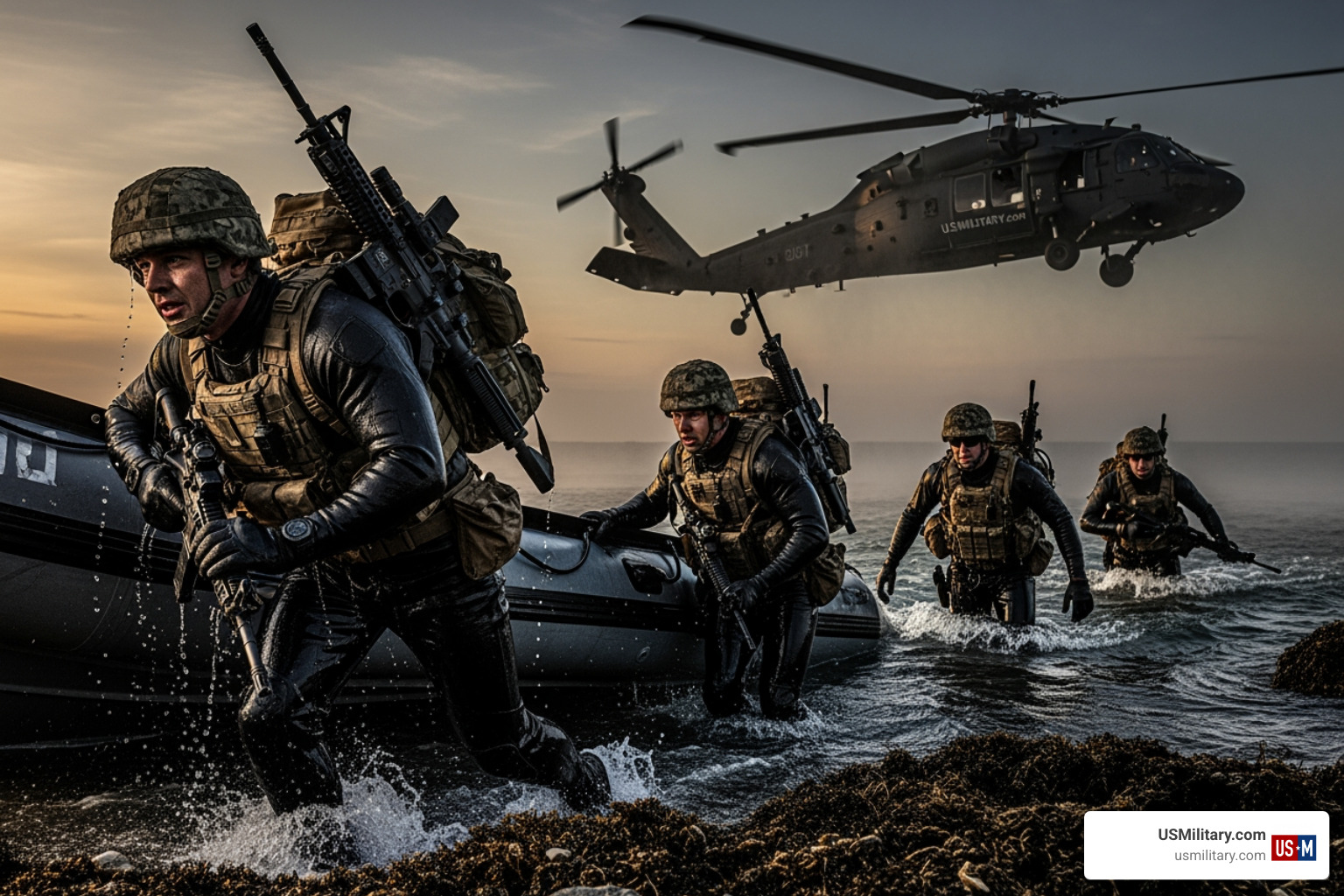
If you’ve ever wondered how many SEAL teams are there here’s the quick answer:
| Category | Number | Details |
|---|---|---|
| Conventional Active-Duty SEAL Teams | 8 | Teams 1, 2, 3, 4, 5, 7, 8, 10 |
| Total Active-Duty SEAL Teams | 10 | Includes specialized units |
| Reserve SEAL Teams | 2 | Teams 17 and 18 |
| SEAL Delivery Vehicle (SDV) Teams | 2 | SDVT-1 and SDVT-2 |
| DEVGRU (SEAL Team 6) | 1 | Tier 1 Special Mission Unit under JSOC |
| Active-Duty SEALs | ~2,450 | Less than 1% of all Navy personnel |
The U.S. Navy’s SEAL Teams are among the most elite and most recognized special operations forces in the world. Yet despite their fame — from the raid that killed Osama bin Laden to the rescue of Captain Richard Phillips — they remain a remarkably small force. Just 2,450 active-duty SEALs serve today, representing less than 1% of the entire U.S. Navy.
These warriors operate across every environment imaginable: ocean, jungle, desert, arctic, mountain, and urban. They trace their roots back to World War II frogmen clearing beaches at Normandy, and they continue to shape the front lines of U.S. national security in 2026.
This guide breaks down every team, their locations, missions, history, and structure — in plain language.
I’m Larry Fowler, publisher of USMilitary.com, and I’ve spent nearly two decades helping service members, recruits, and veterans navigate exactly these kinds of questions — including how many SEAL teams are there — by connecting them with accurate, reliable military information. In this guide, I’ll walk you through everything you need to know about the SEAL Teams, from the big picture down to the platoon level.

Terms related to how many seal teams are there and tell me about them:
- Air Force Pararescuemen (PJs) vs Navy SEALs
- Pros and Cons Of Army Delta Force vs Navy SEALs
- Who Has The Hardest Training: Navy SEALs vs Army Rangers
How Many SEAL Teams Are There? When people ask how many SEAL teams are there and tell me about them, they are often surprised to learn that the numbering system isn’t just a simple 1 through 10. Currently, there are 10 active-duty SEAL Teams in total. This includes eight “conventional” teams and two highly specialized units.
The eight conventional SEAL Teams are the backbone of Naval Special Warfare (NSW). They are divided by their home ports: odd-numbered teams (1, 3, 5, 7) are based on the West Coast, while even-numbered teams (2, 4, 8, 10) are based on the East Coast. You might notice some numbers are missing, like Team 6 and Team 9. Team 9 was never formally established, and Team 6 was transitioned into a specialized command we now know as DEVGRU.
In addition to these active units, there are two reserve teams (Teams 17 and 18) that provide critical backup and specialized skills during major conflicts. Altogether, the community is tiny. With only about 2,450 active-duty SEALs, they make up a mere 1% of the Navy’s total force. Despite their small size, their impact is massive, often performing missions that a much larger conventional force simply couldn’t handle. For more details on the specific numbers, you can check out How Many SEAL Teams Are There In The Navy.
| Location | Teams | Command |
|---|---|---|
| Coronado, CA (West Coast) | 1, 3, 5, 7, 17 (Res) | NSW Group 1 |
| Little Creek, VA (East Coast) | 2, 4, 8, 10, 18 (Res) | NSW Group 2 |
| Dam Neck, VA (East Coast) | DEVGRU (Team 6) | JSOC |
| Pearl Harbor, HI / Little Creek, VA | SDV Teams | NSW Group 3 |
Geographic Areas of Responsibility
Each team has a specific “backyard” where they specialize. This allows Navy SEALs to become experts in the languages, cultures, and terrains of specific regions.
- NSW Group 1 (Coronado, CA): These odd-numbered teams primarily focus on the Indo-Pacific and Middle East. Team 1, for example, often handles Southeast Asia, while Team 3 and Team 7 have historically focused heavily on the Middle East and Southwest Asia.
- NSW Group 2 (Virginia Beach, VA): These even-numbered teams look toward Europe, South America, and Africa. Team 2 is the “arctic” specialist, training extensively in cold-weather environments. Team 4 often focuses on Central and South America, requiring many of its members to be fluent in Spanish or Portuguese.
Specialized and Reserve Components
Beyond the standard teams, the Navy maintains specialized units for undersea mobility. SEAL Delivery Vehicle (SDV) Teams operate mini-submersibles that can be launched from larger submarines. This allows SEALs to approach a target completely submerged, avoiding surface radar and lookouts.
According to the official Structure | Navy SEALs, these units fall under Naval Special Warfare Group 3. They are the masters of undersea stealth. On the reserve side, SEAL Teams 17 and 18 are staffed by “citizen warriors”—former active-duty SEALs who continue to serve part-time. They provide a surge capacity, ensuring that if a major global conflict breaks out, the Navy has a deep pool of experienced operators to draw from.
The Organizational Structure of Naval Special Warfare
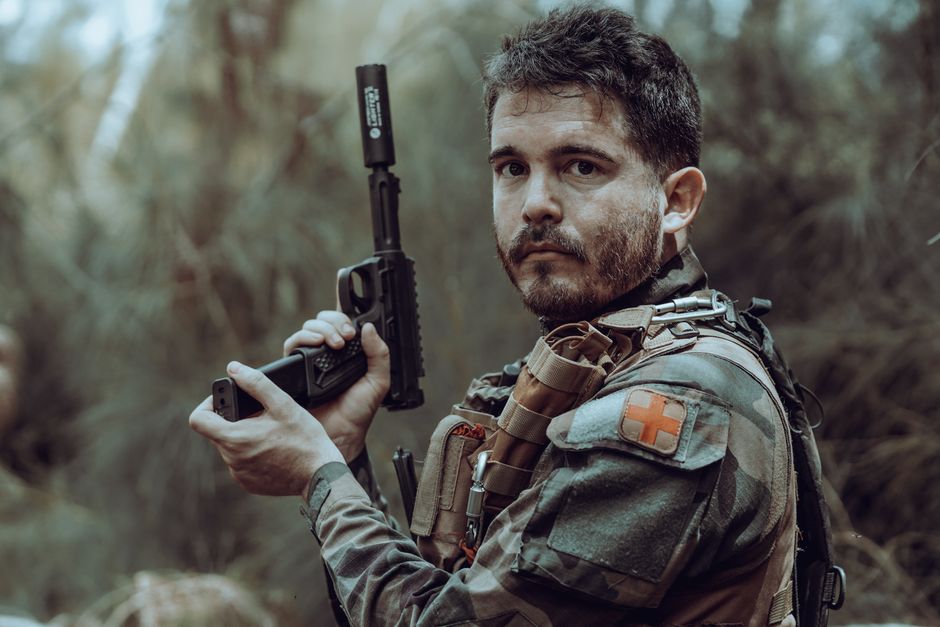
To understand how many seal teams are there and tell me about them, you have to look at the “support system” that makes their missions possible. Naval Special Warfare Command (NSWC), also known as “WARCOM,” was established in 1987 in Coronado, California. It oversees approximately 5,400 active-duty personnel and 1,200 reservists.
A SEAL never works alone. They are part of a larger machine that includes Special Boat Teams (manned by SWCC) and support technicians like cryptologists, EOD (explosive ordnance disposal) techs, and logistics experts. This integration is what What Does a Navy SEAL Do? so effectively—it’s not just about the shooter; it’s about the intelligence and the “ride” that gets them to the target.
Anatomy of a SEAL Platoon
The “platoon” is the basic working unit of a SEAL Team. A standard Team is commanded by an O-5 Commander and consists of a headquarters element and eight operational platoons.
- Size: Each platoon is roughly 16 men.
- Leadership: Usually led by two officers (a Lieutenant and a Lieutenant Junior Grade) and a Platoon Chief (E-7).
- Structure: The platoon can be broken down into two 8-man squads or four 4-man fire teams.
Every member of the platoon is a specialist. While everyone is a highly trained shooter, individual SEALs will have additional roles like medic, sniper, lead scout, or communications expert. They rotate through a rigorous cycle: training for 12 to 18 months, then deploying for 6 months. This ensures that every operator is at peak readiness when they hit the ground. Meeting the Navy SEAL Requirements is just the beginning; the learning never stops.
Integration with SWCC and SDV Teams
SEALs are the “passengers,” but the Special Warfare Combatant-craft Crewmen (SWCC) are the “drivers.” These elite sailors operate high-performance boats like the Combatant Craft Medium (CCM) and the Special Operations Craft-Riverine (SOC-R).
Under NSW Group 4, there are three Special Boat Teams (SBT):
- SBT-12 (Coronado): Focuses on Pacific maritime operations.
- SBT-20 (Little Creek): Focuses on Atlantic and European waters.
- SBT-22 (Stennis, MS): The riverine experts, specializing in jungle and river environments.
This partnership is vital. While a SEAL might jump out of a plane or swim from a sub, they often rely on SWCC for high-speed “hot” extractions under fire. Achieving Navy SEAL Qualifications means learning how to work seamlessly with these boat teams and SDV units to ensure total maritime mobility.
Historical Evolution: From WWII Frogmen to 2026
The SEALs didn’t just appear out of thin air in 1962. Their DNA comes from the Scouts and Raiders and the Naval Combat Demolition Units (NCDUs) of World War II. During the D-Day landings at Omaha Beach, NCDUs faced a staggering 52% casualty rate as they cleared obstacles under heavy German fire.
According to SEAL History: The Story of Naval Special Warfare, the need for pre-assault reconnaissance led to the creation of Underwater Demolition Teams (UDTs). These “Naked Warriors” famously swam into enemy beaches wearing nothing but swim trunks, fins, and a mask to map out defenses.
In January 1962, President John F. Kennedy, recognizing the need for unconventional warfare in the Cold War, officially established SEAL Teams 1 and 2. They were formed using personnel from the UDTs, but their mission expanded from just “underwater” to “Sea, Air, and Land.” Since then, Famous US Navy SEALs have left their mark on every major American conflict.
Key Operations and Combat History
The history of the SEALs is a timeline of high-stakes missions:
- Vietnam War: SEALs earned a terrifying reputation among the Viet Cong, who called them “the men with green faces.” They specialized in ambushes and prisoner snatches in the Rung Sat Special Zone.
- Grenada & Panama: During Operation Urgent Fury (1983) and Operation Just Cause (1989), SEALs performed beach reconnaissance and famously disabled General Noriega’s private jet and boat to prevent his escape.
- Global War on Terror: For over two decades, SEALs were at the tip of the spear in Iraq and Afghanistan.
- Operation Neptune Spear: The 2011 raid in Abbottabad, Pakistan, that eliminated Osama bin Laden remains the most famous mission in the unit’s history.
- Maersk Alabama: In 2009, SEAL snipers saved Captain Richard Phillips from Somali pirates with three simultaneous shots from the fantail of a moving Navy destroyer.
During these years, the Navy SEAL Training pipeline evolved to meet the demands of modern counter-terrorism and “great power competition” that we face today in 2026.
Training, Equipment, and Selection Standards
You can’t talk about how many SEAL teams are there without mentioning the “crucible” that creates them. Basic Underwater Demolition/SEAL (BUD/S) training is widely considered the toughest military training in the world.
- The Attrition Rate: Roughly 75% to 80% of candidates “ring the bell” (quit) before finishing.
- Hell Week: The most famous part of BUD/S involves five and a half days of continuous training with only about four hours of sleep total.
- The Pipeline: After 24 weeks of BUD/S, candidates move to SEAL Qualification Training (SQT) for another 26 weeks.
To even get a contract, you must exceed the Navy SEAL Physical Requirements, which include a 500-yard swim, push-ups, sit-ups, pull-ups, and a 1.5-mile run.
Once they reach the teams, the gear is top-tier. While the SIG Sauer P226 was the standard for years, many operators now prefer the Glock 19 for its reliability in saltwater environments. The primary rifle is usually the M4A1 carbine or the FN SCAR, often equipped with advanced four-tube night vision goggles that allow them to “own the night.”
Because of the danger and the skill required, the pay reflects their elite status. If you’re curious about the numbers, check out How Much Do SEALs Make? or our Navy SEALs vs Delta Force Pay Guide.
Frequently Asked Questions about SEAL Team Numbers
How many SEAL teams are there and in the reserves?
There are two reserve teams: SEAL Team 17 (based in Coronado) and SEAL Team 18 (based in Little Creek). These teams are made up of approximately 325 reserve SEALs and 125 reserve SWCC, supported by 775 support personnel. These reservists aren’t just “weekend warriors”; they are highly experienced operators who often augment active-duty teams during deployments, bringing civilian expertise (like medical or tech skills) into the tactical environment.
How many SEAL teams are there and tell me about them regarding Tier 1 status?
While all SEALs are elite, DEVGRU (United States Naval Special Warfare Development Group), formerly known as SEAL Team 6, is on another level. It is a “Tier 1” Special Mission Unit, placing it in the same category as the Army’s Delta Force. Based at Dam Neck, Virginia, DEVGRU falls under the Joint Special Operations Command (JSOC). They handle the most sensitive missions, including counter-proliferation of nuclear weapons and high-value target recovery. Joining DEVGRU requires a separate, grueling selection process known as “Green Team.”
What is the difference between East and West Coast SEAL Teams?
The primary difference is their “Area of Responsibility” (AOR).
- West Coast (Coronado): Odd numbers. They focus on the Pacific and the Middle East. They are the masters of jungle and desert warfare.
- East Coast (Little Creek): Even numbers. They focus on Europe, Africa, and South America. They are the Navy’s experts in arctic and cold-weather operations.
While all SEALs share the same basic training, their advanced training is tailored to the environment they are most likely to fight in.
Conclusion
At USMilitary.com, we believe that understanding the structure of our military is the first step in supporting those who serve. As we look at the state of Naval Special Warfare in 2026, the SEAL Teams are shifting their focus from the counter-insurgency battles of the last two decades toward “great power competition.” This means returning to their maritime roots—operating in contested waters and using stealth to deter global adversaries.
The answer to how many SEAL teams are there is more than just a list of numbers; it’s a story of a small, dedicated group of Americans who choose the hardest path possible to keep our nation safe. Whether they are in a mini-sub off a distant coast or training in the freezing waters of the Atlantic, the SEALs remain our most versatile maritime force.
If you’re ready to dive even deeper into the “Frogmen,” be sure to read our Everything You Need to Know About Navy SEALs for a full breakdown of the lifestyle, missions, and future of the Teams.
Ready to start your journey or want to learn more about Navy benefits? Click here to connect with a recruiter and explore your path in the U.S. Navy.
Free for Service Members & Veterans
Get the military benefits intel no one tells you about.
Weekly updates on VA benefits, pay changes, and money tips — free for service members and veterans.
No spam. Unsubscribe anytime. Your info is never shared.


