Total deaths and percentage deaths are very different

The military branch with highest percentage of deaths varies depending on the war — but the data tells a clear and consistent story.
Quick Answer:
| War | Branch with Highest % Deaths | Fatality Rate |
|---|---|---|
| Vietnam War | Marine Corps | 5.0% of those serving |
| World War II | Merchant Marine | 4.5% of those serving |
| Iraq/Afghanistan (raw numbers) | Army | ~72% of total deaths |
| Iraq/Afghanistan (per capita training) | Marine Corps | ~11 per 100,000 |
A few key points to understand right away:
- Total deaths and percentage deaths are very different. The Army almost always has the most deaths in raw numbers — because it’s the largest branch. But that doesn’t mean it has the highest rate of deaths per person serving.
- The Marine Corps consistently has the highest fatality percentage among traditional branches, driven by its “first to fight” role in ground combat.
- The Merchant Marine — often overlooked — actually had the single highest percentage killed in WWII at 4.5%, higher even than the Marines.
These numbers matter whether you’re considering enlistment, researching military history, or trying to understand the real risks of service.
I’m Larry Fowler, publisher of the USMilitary.com Network since 2007, and I’ve spent years helping active military members and veterans navigate exactly these kinds of questions — including understanding how the military branch with highest percentage of deaths affects everything from benefit eligibility to career decisions. Let’s dig into the full picture so you can make sense of the data.
Historical Fatality Rates: The Vietnam War Case Study
When we look back at the Vietnam War, the statistics provide a sobering look at the risks faced by different branches. While the Army carried the heaviest burden in terms of total volume, the Marine Corps emerged as the military branch with highest percentage of deaths during the conflict.
The Vietnam War was characterized by intense ground combat, jungle warfare, and constant exposure to ambushes. Because the Army and Marines were the primary ground forces, they naturally faced significantly higher risks than the Navy or Air Force. However, the way these two branches were utilized led to a stark difference in their proportional loss.
According to the Vietnam War U.S. Military Fatal Casualty Statistics, the disparity is rooted in the specific roles these service members played. Marines were often the “tip of the spear” in high-intensity regions like the I Corps Tactical Zone near the DMZ. This environment required constant patrolling and direct engagement with North Vietnamese Army (NVA) regulars. You can read more info about Marine bravery in combat to see how that culture of valor persists today.
Why the Marine Corps had the military branch with highest percentage of deaths in Vietnam
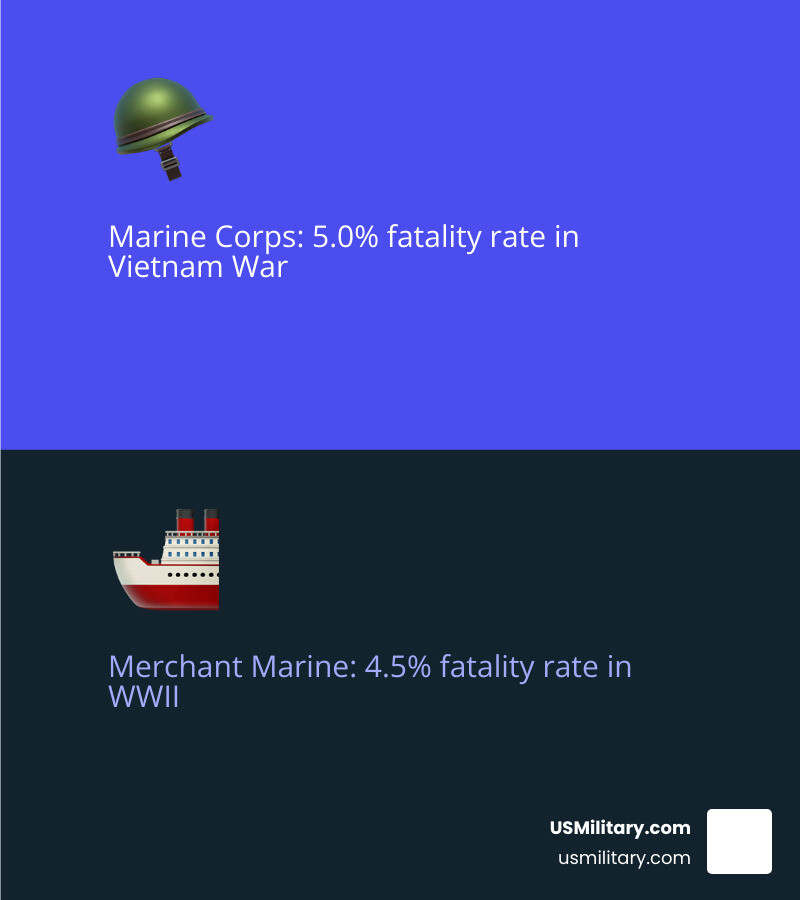
The numbers for the Marine Corps in Vietnam are staggering. Out of approximately 294,000 Marines who served in-country, 14,836 were killed. This results in a 5.0% fatality rate.
To put that in perspective, 1 out of every 20 Marines who went to Vietnam did not come home. Several factors contributed to this high percentage:
- Expeditionary Missions: Marines are designed as a rapid-response, expeditionary force. In Vietnam, this meant they were frequently inserted into the most contested areas.
- Close-Quarters Engagement: The nature of the fighting in places like Hue City or Khe Sanh involved brutal, face-to-face combat where technology offered less of a “buffer” than it did for pilots or sailors.
- Concentrated Force: Because the Marine Corps is smaller than the Army, their losses represented a much larger “slice” of their total population.
Comparing Army raw totals to Marine Corps percentages
If you only look at the evening news reports from the 1960s, you might think the Army was the “deadliest” branch because their death toll was the highest. The Army suffered 38,179 fatalities in Vietnam. However, because the Army had a massive presence—roughly 1,407,000 personnel served—their branch fatality rate was 2.7%.
While 2.7% is still a tragic and significant number, it is nearly half the rate of the Marine Corps. This difference exists because the Army handled a wider variety of “occupation” and support roles, whereas the Marines were almost exclusively focused on high-risk infantry and combat operations.
| Branch | Personnel Served | Total Fatalities | % of Branch Killed |
|---|---|---|---|
| Marine Corps | 294,000 | 14,836 | 5.0% |
| Army | 1,407,000 | 38,179 | 2.7% |
| Navy | 126,000 | 2,556 | 2.0% |
| Air Force | 273,000 | 2,580 | 1.0% |
WWII and the Merchant Marine: The Military Branch with Highest Percentage of Deaths?
World War II presents a different statistical anomaly. While the Marines are often the first branch people think of when discussing high casualty rates—especially given the “meat grinder” battles of the Pacific—a non-combatant group actually suffered the highest percentage of losses.
The Merchant Marine saw a 4.5% death rate, which was higher than any of the official military branches. These were civilian mariners who manned the cargo ships carrying vital supplies across the Atlantic and Pacific. They were sitting ducks for German U-boats, and for a long time, they weren’t even eligible for veteran benefits.
Marine Corps and Army Air Forces in the Pacific and Europe
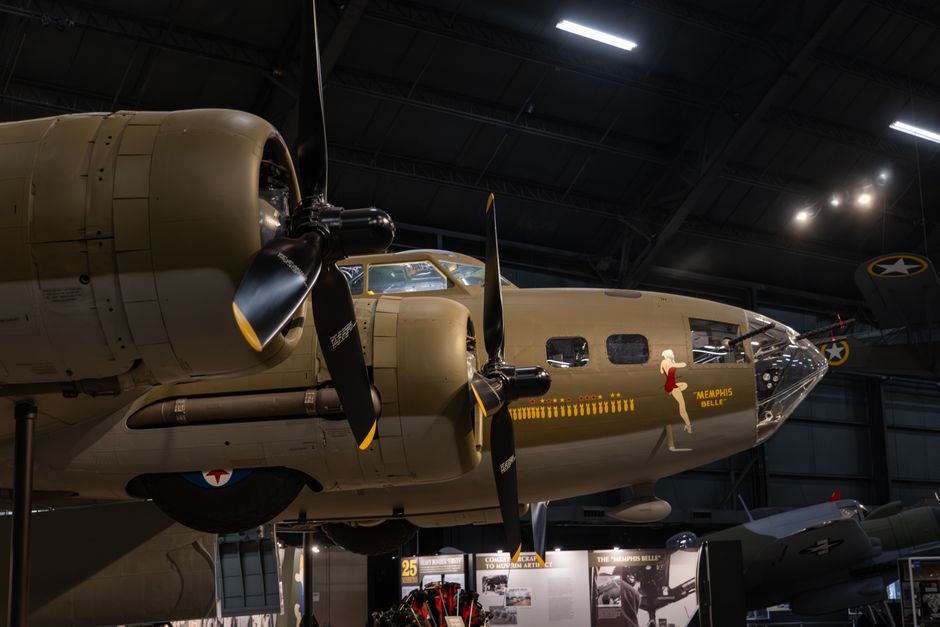
Within the official military branches during WWII, the Marine Corps again led with a 3.7% fatality rate. Their “island hopping” campaign involved amphibious assaults against entrenched Japanese defenders who were ordered to fight to the last man.
However, a specific group within the Army—the 8th Air Force—faced what many consider the most dangerous job of the war. In 1943, a crew member in the 8th Air Force had a 75% chance of being killed, captured, or wounded before finishing their 25-mission tour. Daylight bombing raids over Germany meant flying into “flak alleys” where pilots were essentially helpless against anti-aircraft fire and enemy interceptors.
The Coast Guard and Navy: Lower percentage risks in WWII
The Navy and Coast Guard had significantly lower fatality percentages compared to the ground and air forces. The Navy’s rate was 1.5%, while the Coast Guard sat at 0.8%.
According to the Official America’s Wars Fact Sheet, these branches primarily focused on convoy protection, maritime law enforcement, and search and rescue. While sailors faced the terrifying prospect of ship sinkings or kamikaze attacks, the sheer number of personnel serving in support roles on large vessels kept the overall percentage of deaths lower than those in the foxholes or cockpits.
Modern Conflict Trends: Iraq, Afghanistan, and Training Risks
In modern warfare, the “front line” has become blurred. During Operation Iraqi Freedom (OIF) and Operation Enduring Freedom (OEF), the primary threats shifted from traditional infantry battles to Insurgent tactics and Improvised Explosive Devices (IEDs).
The risks in these conflicts were often sudden and random. One of the most tragic examples of modern risk was the suicide bombing during the Kabul airport attack, which claimed the lives of 13 U.S. service members during the final days of the Afghanistan withdrawal.
Modern data on the military branch with highest percentage of deaths
In the post-9/11 era, the Army has borne the brunt of the absolute numbers. With 5,069 deaths across various operations, the Army accounts for roughly 72% of all fatalities. This is largely because the Army serves as the primary occupation and peacekeeping force, staying in-country for longer durations and covering more territory than the expeditionary Marines.
However, if we look at per capita risk, the Marine Corps remains the military branch with highest percentage of deaths in many specific combat intervals. Their smaller size means that even a single bad month can spike their percentage much higher than the Army’s.
The impact of non-combat fatalities and training mishaps
One of the most surprising statistics in modern military life is that training deaths outpaced combat deaths 4:1 during certain periods of the Iraq and Afghanistan wars. When you aren’t in a “hot” war zone, the most dangerous thing you can do is train for one.
The Marine Corps has the highest rate of training accidents, at approximately 11 per 100,000 service members. These often involve:
- Vehicle Accidents: Rollovers of heavy tactical vehicles.
- Aviation Mishaps: Helicopter crashes, such as the Marine CH-53E mishap report which identified a fallen Marine.
- Live-Fire Exercises: The inherent danger of practicing with real explosives and ammunition.
Beyond physical accidents, we must also address the “invisible” fatalities. Soldiers honoring fallen brethren often includes those lost to the tragedy of suicide, which has become a major focus for DoD prevention initiatives.
Factors Influencing Branch Fatality Percentages
Why does one branch consistently lose a higher percentage of its people than another? It’s rarely about the quality of the troops—it’s about the mission.
Role of the Air Force and Space Force in relative safety
The Air Force and the newly formed Space Force consistently have the lowest casualty rates. This is largely due to strategic distance.
- Technology Focus: Air Force personnel are often operating advanced machinery from secure bases or high altitudes.
- Space Operations: The Space Force handles satellite monitoring and GPS systems, roles that currently involve zero ground combat exposure.
- Aerial Combat: While pilots face high risks during active dogfights or SEAD (Suppression of Enemy Air Defenses) missions, the vast majority of Air Force personnel serve in support, maintenance, and intelligence roles far from the “wire.”
Why ground branches consistently face higher risks
The Army and Marines face higher fatality percentages because their job is to physically hold ground.
- Front-Line Exposure: Infantry and combat engineers are constantly exposed to small arms fire and IEDs.
- Rules of Engagement: In peacekeeping or urban warfare, soldiers often have to wait for a threat to manifest before they can respond, increasing their vulnerability.
- The “First to Fight” Culture: The Marine Corps prides itself on being the first branch to arrive in a conflict. This expeditionary nature means they often enter a theater before medical infrastructure or secure bases are fully established.
Frequently Asked Questions about Military Fatality Rates
Which military branch has the lowest fatality rate?
The Air Force traditionally has the lowest fatality rate. Their missions are technology-driven and often allow for a greater distance between the service member and the enemy. The Space Force is expected to have an even lower rate, though as a new branch, it currently lacks a long-term historical data set for comparison.
Does the Army or Marines have more deaths?
It depends on how you measure it. In raw numbers, the Army always has more deaths because it is much larger. In percentage terms, the Marine Corps has historically been the military branch with highest percentage of deaths in major conflicts like Vietnam and WWII. In modern conflicts, the Army’s role as an occupation force has kept its fatality numbers high, but the Marines still face higher per-capita risks during active expeditionary phases.
What was the deadliest group to serve with in WWII?
While the Merchant Marine had the highest percentage of deaths (4.5%) for a general service group, the 8th Air Force aircrews were the deadliest specific unit to serve with in 1943, facing a 75% casualty rate.
Conclusion
Understanding the military branch with highest percentage of deaths isn’t about ranking “toughness”—it’s about recognizing the specific sacrifices required by different roles in our national defense. Whether it’s a Marine on a jungle patrol in 1968 or an Army National Guardsman on a convoy in 2005, the risk is real and the service is profound.
At USMilitary.com, we are committed to providing veterans and their families with the resources they need to navigate life after service. This includes helping families understand their Support for Gold Star Families and providing guidance on benefit eligibility. If you are considering joining the service, we encourage you to explore all branches of the military to find the path that best fits your goals and your tolerance for risk.
The data shows that every branch carries its own dangers, but they also offer unique opportunities to serve a cause greater than oneself. We honor all those who have served, especially those who represent the statistics we discussed today.
Free for Service Members & Veterans
Get the military benefits intel no one tells you about.
Weekly updates on VA benefits, pay changes, and money tips — free for service members and veterans.
No spam. Unsubscribe anytime. Your info is never shared.


