
Safest military jobs in 2026 focus on non-combat roles that leverage technology, specialized skills, and support functions while minimizing exposure to direct conflict. Here are the top options:
| Military Job | Primary Location | Key Skills | Civilian Career Growth |
|---|---|---|---|
| Cyber Operations/IT | Secure office facilities | Network security, coding | 33% growth (Info Security) |
| Medical/Healthcare | Hospitals, clinics | Patient care, diagnostics | 46% growth (Nurse Practitioners) |
| Financial Management | Administrative offices | Budgeting, accounting | Stable demand |
| Human Resources | Personnel offices | Records, administration | Consistent growth |
| Logistics/Supply Chain | Warehouses, offices | Inventory, procurement | 19% growth (Logisticians) |
| Intelligence Analyst | Secure facilities (SCIF) | Data analysis, reporting | 36% growth (Data Scientists) |
| Paralegal Specialist | Law offices | Legal research, documentation | Steady demand |
Military service doesn’t always mean frontline danger. The modern military has evolved significantly, with technological advancements and cyber warfare shifting many roles from physical battlefields to digital ones. According to Department of Defense mortality reports, non-combat incidents like accidents and illnesses now account for most military deaths, while fatalities from hostile action have declined sharply since major combat operations ended in Iraq and Afghanistan.
The definition of “safe” in military contexts has changed dramatically. Today’s safest roles involve desk-based work in secure facilities, far from combat zones. These positions offer cutting-edge training in high-demand fields like cybersecurity, healthcare, and data analysis—skills that translate directly into lucrative civilian careers.
Historically, the Air Force, Space Force, and Coast Guard have recorded the lowest fatality and injury rates per service member. These branches prioritize technical expertise and support operations over direct combat missions. Even within traditionally combat-focused branches like the Army and Marine Corps, administrative, medical, and technical roles provide significantly lower risk profiles.
The numbers back this up. Information security analysts—with many military counterparts—are projected to see 33% employment growth from 2023 to 2033, with median wages of $120,360. Nurse practitioners show even stronger growth at 46%, earning a median of $126,260 annually. These aren’t just safe jobs; they’re pathways to financially secure futures.
I’m Larry Fowler, and since 2007 I’ve helped hundreds of thousands of service members and veterans steer their military careers through the USMilitary.com Network, providing crucial insights on everything from military benefits to career transitions, including guidance on the safest military jobs in 2026. My work has supported recruitment efforts across all branches and connected countless individuals with opportunities that balance meaningful service with personal security.
Whether you’re considering enlistment, looking to transition within the military, or planning your exit strategy to civilian life, understanding which roles minimize risk while maximizing career potential is critical. The following sections break down exactly what makes these seven jobs the safest options for 2026, what you’ll actually do day-to-day, and how they set you up for success both in uniform and after.
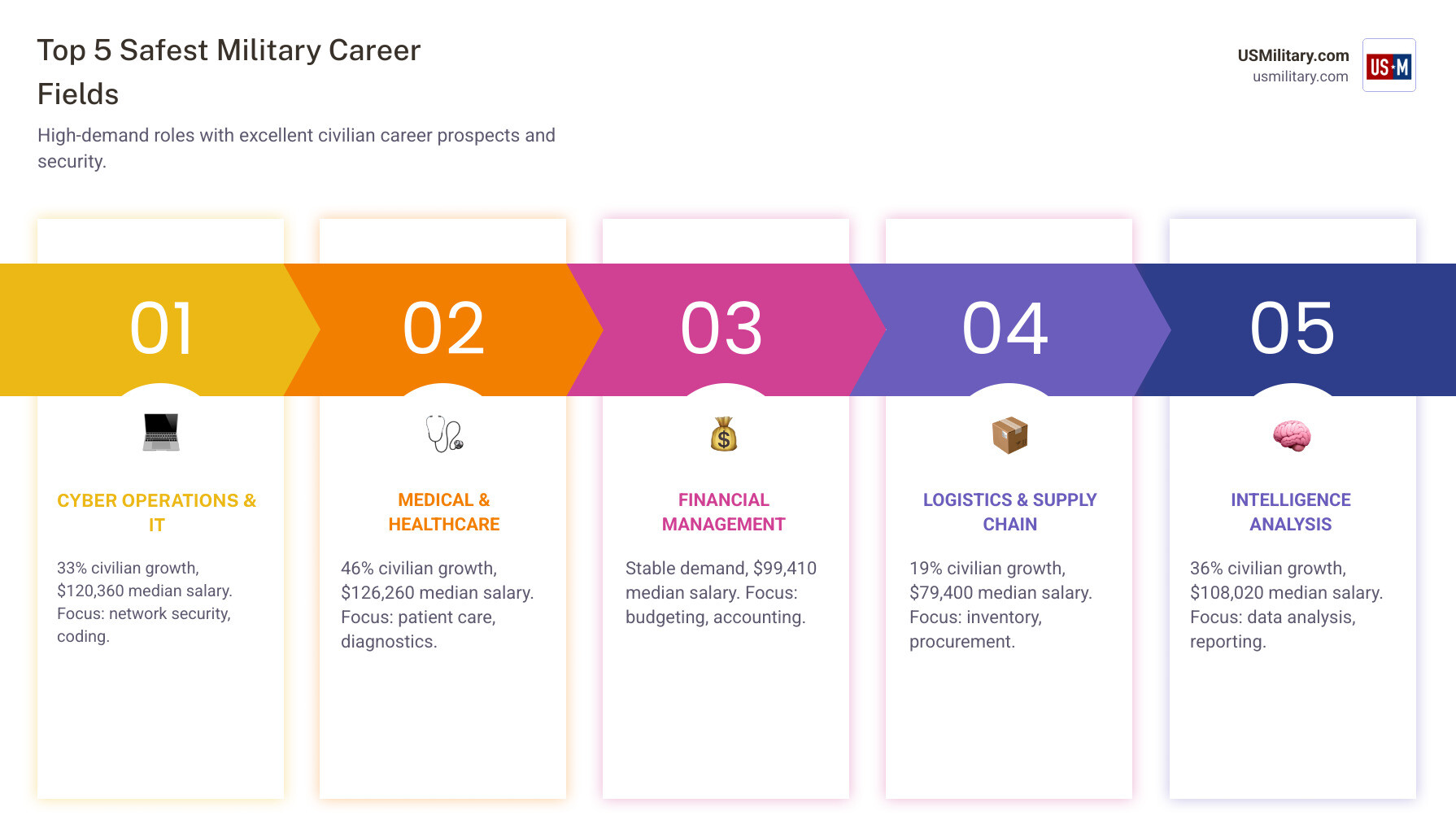
Essential safest military jobs in 2026 terms:
How ‘Safety’ in the Military Has Evolved for 2026
The concept of “safety” in the military has undergone a profound change. Gone are the days when military service was almost exclusively associated with direct, physical combat. While combat roles remain vital, the reality of modern warfare and defense has broadened significantly. For those seeking the safest military jobs in 2026, this evolution is key.
Today, “safe” in the military context is about probability and context, not absolute invulnerability. It generally means a lower likelihood of front-line combat deployment, roles primarily based in secure or domestic installations within the United States, and a strong focus on technical, logistical, or support functions. This shift is largely driven by rapid technological advancements and changing global dynamics.
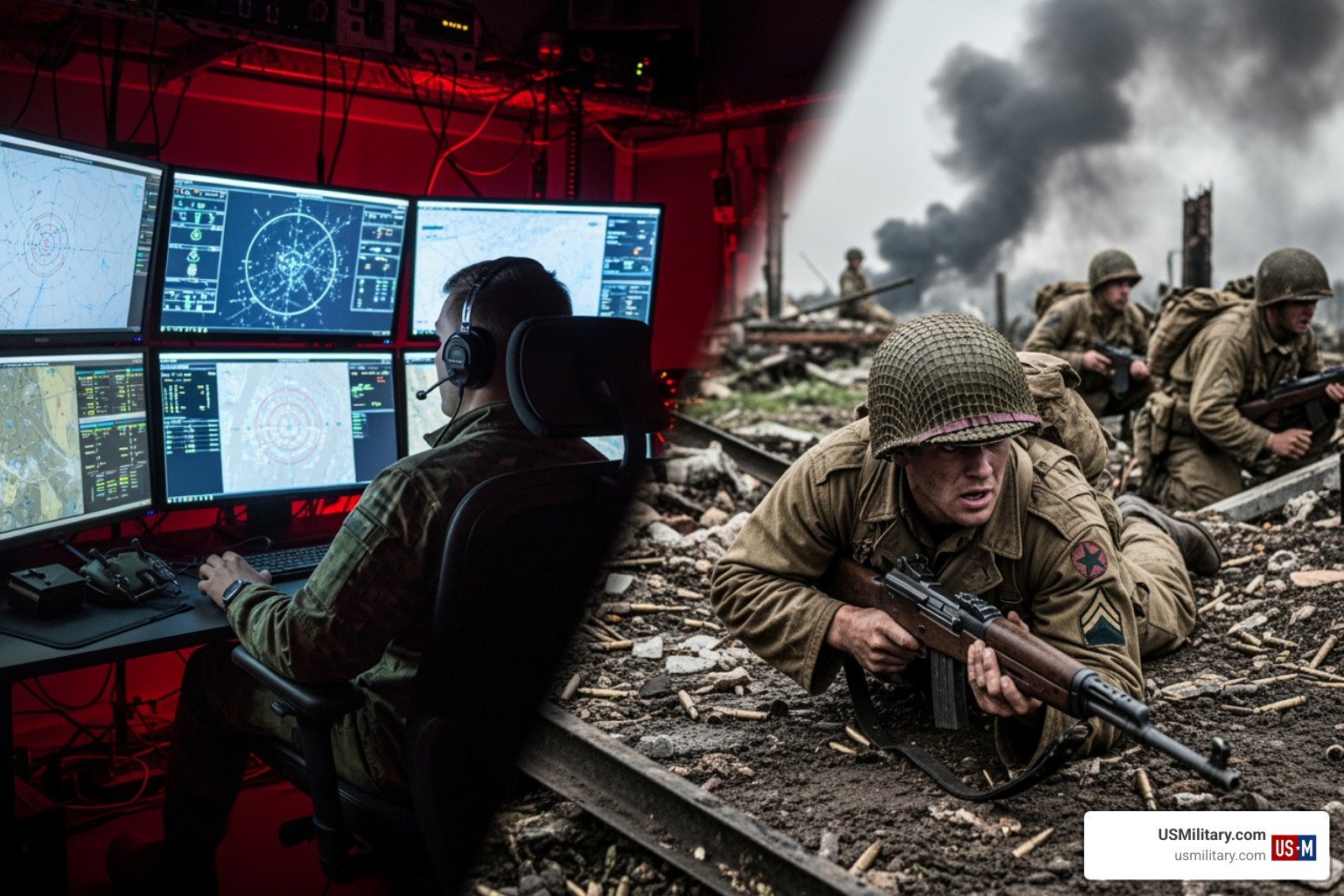
Technological advancements have created entirely new categories of military jobs. Cyber warfare, for instance, has moved a significant portion of the “battlefield” into the digital field. This means highly skilled individuals can contribute directly to national defense from behind a computer console, often thousands of miles from any physical conflict zone. Remote operations, such as drone piloting and intelligence analysis, also exemplify this trend, allowing for critical missions to be executed with significantly reduced personal danger to service members.
Another crucial factor is the composition of military fatalities. According to Department of Defense mortality reports, non-combat incidents—such as accidents, illnesses, and even self-harm—account for the majority of military deaths in recent years. Fatalities from hostile action have declined sharply since primary combat operations ended in Iraq and Afghanistan. This highlights that while direct combat risk has decreased for many roles, the military continues to focus on improving overall well-being and safety protocols across all operations.
When we consider the safest military branches, historical data points us toward the Air Force and the Coast Guard. These branches have consistently recorded the lowest fatality and injury rates per service member. The Air Force, with its emphasis on air superiority, space operations, and cyber defense, naturally offers many roles that are technical and office-based. Similarly, the Coast Guard, primarily focused on maritime law enforcement, search and rescue, and environmental protection within U.S. waters, inherently has a different risk profile than ground combat forces. The relatively new Space Force also falls into this category, being a highly technical branch focused on space operations and cyber capabilities.
While the Army and Marine Corps have historically faced higher fatality and injury rates due to their combat-centric missions, every branch comprises a vast array of jobs. Even within these branches, there are numerous administrative, medical, logistical, and technical roles that offer significantly lower risk. The wiser question isn’t simply “Which branch is safest?” but rather, “Which branch and role best balance my skills, goals, and comfort with risk?” We believe that understanding these nuances is essential for making an informed decision about your military career. For more detailed information, exploring different branches and their offerings can be insightful. More info about Service Choices.
Top 7 Safest Military Jobs in 2026
This section details specific, low-risk roles that are crucial for national defense, offering excellent training and civilian career prospects. These roles are often found across multiple branches, though some may be more prevalent in one service over another.
1. Cyber Operations & IT Specialist: A Top Choice for the Safest Military Jobs in 2026
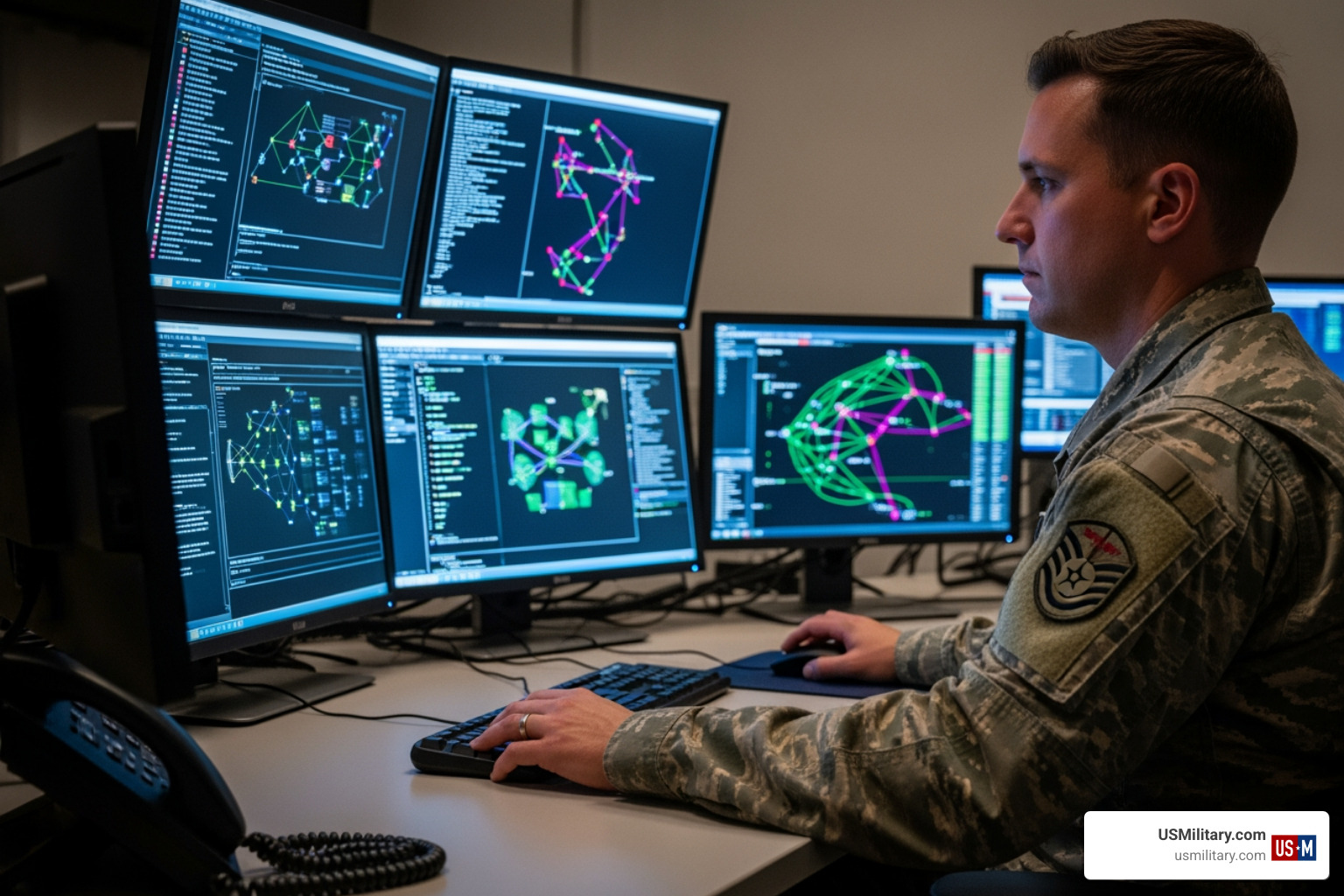
The need for robust cybersecurity is paramount, and the military is no exception. Cyber Operations and IT Specialists are on the front lines of defending our nation’s digital infrastructure. These roles are consistently among the safest military jobs in 2026 because they operate far from physical conflict.
- Duties: These specialists are responsible for network defense, information security, systems administration, and offensive/defensive cyber operations. They design, install, and support complex computer systems, ensuring the integrity and security of sensitive military information. For example, an Air Force Cyber Systems Operator defends critical networks from cyber attackers, while a Marine Corps Cryptologic Digital Network Technician plans and maintains secure communication systems.
- Why it’s safe: The work is primarily office-based, typically within secure facilities or data centers, often located on domestic bases or in allied countries away from direct combat zones. The “combat” takes place in cyberspace, minimizing personal physical danger.
- Transferable skills: The skills gained are highly sought after in the civilian sector. You’ll develop expertise in cybersecurity analysis, network engineering, data analysis, and IT management. The U.S. Bureau of Labor Statistics projects that employment for information security analysts will grow 33 percent from 2023 to 2033, with a median annual wage of $120,360. Data scientists are projected to grow 36 percent, with a median annual wage of $108,020. Civilian careers include Cybersecurity Analyst, IT Manager, Software Developer, and Data Scientist.
For a deeper dive into the civilian career potential of these roles, check out BLS data on Information Security Analysts. You can also learn more about general IT careers in the military at More info about IT Career.
2. Medical & Healthcare Services: A Rewarding and Safe Military Job in 2026
Providing healthcare is a fundamental support function for any large organization, and the military is no different. Medical and Healthcare Services roles are consistently ranked among the safest military jobs in 2026, offering crucial support from secure environments.
- Duties: These professionals engage in patient care, medical administration, laboratory work, and specialized roles like dental assisting or biomedical equipment maintenance. They serve as nurses, physicians, physician assistants, health services technicians, and more. A Health Services Technician in the Coast Guard, for example, provides routine and emergency medical care. Dental Specialists address dental needs on bases and abroad.
- Why it’s safe: Most medical roles are based in hospitals, clinics, or aid stations located on large, secure military installations, either stateside or in established overseas bases. While deployments are possible, direct combat exposure is rare, and their primary mission is healing, not fighting.
- Transferable skills: The medical training and experience are directly applicable to civilian healthcare. You can transition into roles like Nurse Practitioner, Physician Assistant, Registered Nurse, or Medical Technician. Healthcare occupations are projected to grow 14 percent from 2023 to 2033. Nurse practitioners are projected to grow a remarkable 46 percent, with a median annual wage of $126,260.
Explore the broader landscape of civilian healthcare opportunities at BLS data on Healthcare Occupations, and gain insights into specific Navy medical roles at More info about US Navy Career as a Medical Specialist.
3. Financial Management Technician
Every military operation, from purchasing supplies to paying service members, relies on sound financial management. Financial Management Technicians ensure that funds are allocated, tracked, and accounted for correctly, making this one of the safest military jobs in 2026.
- Duties: These specialists handle budgeting, accounting, pay and entitlements, and auditing. They manage military finances, review expenses, and ensure compliance with financial regulations. They are the military’s equivalent of bookkeepers or accountants, bringing order to complex financial systems.
- Why it’s safe: This is predominantly a desk job, performed in administrative offices at virtually any military installation worldwide. There’s no direct combat involvement, and the work environment is typically secure and structured.
- Transferable skills: The experience translates directly to civilian careers in accounting, finance, and business administration. You could become an Accountant, Financial Advisor, or Budget Analyst. These skills are always in demand in both public and private sectors.
Understanding the financial aspects of military life can be very beneficial. Learn more about the financial advantages of military careers at More info about 4 Financial Reasons for Military Careers.
4. Human Resources (HR) Specialist
Human Resources Specialists are the backbone of military personnel management, ensuring that service members are supported throughout their careers. This administrative role is consistently among the safest military jobs in 2026.
- Duties: HR Specialists maintain personnel records, assist with career navigation, process promotions and awards, and provide administrative support for everything from leave requests to evaluations. They help soldiers with various administrative processes and ensure personnel data is accurate.
- Why it’s safe: This is a classic administrative role, almost exclusively performed in an office environment. HR specialists are essential for unit and mission success, but their work keeps them far from the front lines, typically on secure bases.
- Transferable skills: The organizational, interpersonal, and administrative skills developed are highly valued in the civilian workforce. Potential civilian roles include HR Manager, Recruiter, Administrative Director, or Office Manager.
For those interested in the personnel side of military service, we encourage you to explore More info about Jobs in Navy Personnel.
5. Logistics & Supply Chain Specialist
Logistics and Supply Chain Specialists are critical to every military operation, ensuring that troops have the equipment, ammunition, food, and other resources they need, when they need them. This vital support role is one of the safest military jobs in 2026.
- Duties: These specialists manage inventory, coordinate transportation logistics, handle purchasing and procurement, and oversee the distribution of supplies. They ensure the seamless flow of resources, from the smallest bolt to massive equipment. A Mobility Chief, for example, plans the movement of materials and supplies across vast distances.
- Why it’s safe: While their work supports operations, their primary duties are typically performed in warehouses, offices, or transportation hubs, not in direct combat. Their focus is on managing the flow of resources, keeping them out of harm’s way.
- Transferable skills: The expertise gained in managing complex supply chains is highly valuable in the civilian sector. Civilian careers include Logistics Manager, Supply Chain Analyst, Purchasing Agent, or Operations Manager. Logisticians are projected to see 19% employment growth from 2023 to 2033, with a median annual wage of $79,400.
Learn more about the benefits of coordinating transportation in the military at More info about Benefits of Working as a Transportation Management Coordinator.
6. Intelligence Analyst
Intelligence Analysts play a crucial role in national security by collecting, analyzing, and disseminating critical information. Their work directly informs strategic decision-making, making it one of the most intellectually demanding and safest military jobs in 2026.
- Duties: Intelligence Analysts examine vast amounts of data from various sources (reports, satellite imagery, communications), assess threats, create detailed reports, and brief commanders. They focus on prevention and understanding potential adversaries.
- Why it’s safe: This role is performed in secure, office-based environments, often within Sensitive Compartmented Information Facilities (SCIFs), far removed from active conflict zones. The danger is to national security if they fail, not typically to their personal physical safety.
- Transferable skills: The analytical, critical thinking, and data interpretation skills are highly transferable. Civilian careers can include Data Scientist (36% growth, $108,020 median wage), Intelligence Analyst for government agencies (like the CIA or FBI), or Market Research Analyst.
For those with a keen mind for analysis, a career as a Navy Intelligence Specialist could be a perfect fit. Find more at More info about a Career as a Navy Intelligence Specialist.
7. Paralegal Specialist (JAG Corps)
Paralegal Specialists support the legal operations within the military, working closely with Judge Advocate General (JAG) Corps lawyers. This role offers a professional, office-based environment, making it one of the safest military jobs in 2026.
- Duties: Paralegal Specialists conduct legal research, prepare legal documents (like wills, powers of attorney, and court-martial paperwork), and assist military lawyers in various legal proceedings. They are integral to the military justice system and provide legal assistance to service members and their families.
- Why it’s safe: The work is conducted in a law office setting, typically on military bases, supporting military justice and administrative law. This keeps them out of direct combat and provides a highly structured and secure work environment.
- Transferable skills: The legal knowledge and administrative expertise are directly transferable to civilian legal fields. You can pursue careers as a Paralegal, Legal Assistant, or Court Clerk. These roles are consistently in demand across the country.
If you’re considering a legal path within the military, exploring More info about US Army Lawyer JAG Careers can provide valuable insights.
Understanding the Risks and Preparing for a Safer Career
While we’ve highlighted some of the safest military jobs in 2026, it’s crucial to understand that no military role is entirely without risk. The military, by its very nature, involves a commitment to national defense, which can entail inherent dangers. Even in non-combat roles, certain risks persist:
- Deployment Possibilities: Even support roles can involve deployments to less stable regions, though typically to secure bases or forward operating locations rather than direct combat zones.
- Training Accidents: Military training, regardless of the job, can involve physical exertion, machinery, or simulated combat, which carries a risk of accidents.
- Base Security: While bases are designed to be secure, they can still be targets for attacks, particularly in deployed environments.
- Mental Health Considerations: The unique pressures of military life, including deployments, separation from family, and exposure to stressful situations (even indirectly), can impact mental health. We actively work to provide resources and support for service members in this area.
For those pursuing these safer military careers, excellent training and educational pathways are readily available. Your journey often begins with the Armed Services Vocational Aptitude Battery (ASVAB), which helps determine your aptitudes for various military occupational specialties. Preparing for this test is crucial, and resources like The ASVAB can be incredibly helpful.
Once enlisted, specific job training typically involves a combination of initial skills courses, technical schools (often referred to as AIT, Tech School, or Class “A” School), and on-the-job training. For example, a Cyber Operations Specialist might attend a Cyber Systems Operations Initial Skills Course, while a Health Services Technician would go through several months of medical training. The military also strongly supports higher education, offering various programs and benefits to help you earn a degree while serving. Learn more about your options at Getting a College Education in the Military.
Transitioning from military to civilian life, especially with the high-demand skills acquired in these safer roles, is often seamless. We understand the importance of making this transition successful, and several resources are available:
- Transition Assistance Program (TAP): The U.S. Department of Labor’s Veterans’ Employment and Training Service (VETS) offers TAP, a comprehensive program designed to help service members transition to civilian careers. Find out more at Transition Assistance Program.
- SkillBridge: The U.S. Department of Defense SkillBridge program provides opportunities for service members to gain civilian work experience through industry training, apprenticeships, or internships during their last 180 days of service. This is an incredible way to gain real-world civilian experience before you even leave the uniform. Explore opportunities at SkillBridge.
- USAJOBS: For federal civilian employment, all military jobs are posted on USAJOBS. This platform allows you to search for and apply to government positions that align with your military experience. Begin your search at Finding civilian jobs on USAJOBS. The O*NET MOC crosswalk is also an excellent tool to map your military occupation codes to civilian Standard Occupational Classification (SOC) system codes, helping you identify relevant job openings.
These resources, combined with the valuable skills and experience gained in the safest military jobs in 2026, provide a strong foundation for a rewarding post-service career.
Conclusion
As we’ve explored, military service in 2026 offers a diverse range of opportunities that extend far beyond traditional combat roles. For those seeking the safest military jobs in 2026, the focus has shifted towards critical support functions that leverage technology, specialized skills, and administrative expertise. Roles in Cyber Operations & IT, Medical & Healthcare Services, Financial Management, Human Resources, Logistics & Supply Chain, Intelligence Analysis, and Paralegal Services stand out as excellent choices.
These jobs not only minimize exposure to direct conflict but also provide invaluable training and experience that translate directly into high-demand, well-paying civilian careers. From cybersecurity analysts to nurse practitioners and data scientists, the skills learned in these military occupations are highly sought after in the civilian sector, offering a clear pathway to a secure future.
Serving our nation with security is not just a possibility; it’s a reality for many. If you’re considering military service, we encourage you to look closely at these roles. They represent a chance to contribute meaningfully to national defense, develop cutting-edge skills, and build a foundation for a successful life, all while balancing your comfort with risk.
Ready to explore your options further? We at USMilitary.com are dedicated to providing comprehensive resources to help you steer your military career. Explore all Military Jobs and find how you can serve with purpose and security. Your journey to understanding the benefits of military life starts here.



My 17 year old daughter has a desire to work in some aspect of bookkeeping or secretarial. Will she still need to prepare for a physical and bootcamp for a position like that?
Are you serious? Everyone goes through Bootcamp! She will learn to shoot a rifle and destroy the enemy! And save the lives of other soldiers! An Administration job doesn’t mean you get out of training!
Yes she will if she has a body mass over 25.9 she can’t get in
are there jobs for people who want to become an automotive engineer?A non combat job
are there jobs for a noncitizens too?im hungarian,noncitizen,no green card and no visa!
Hello,
I was in the Navy (5 yrs), my brother and father in Army, and have other family in the Army, Coast Guard, Marines and Air Force. For those with questions: 1) _all_ persons who enlist have to go through basic training. That is why it is called basic training. 2) Everyone who joins signs a contract. 3) You may get promised all sorts of things from recruiters, you may NOT always have those promises granted. Once a new recruit goes to boot camp, they will laugh at you if you say “well, my recruiter told me….” or “I was promised and they have to …”.
One part of your contract you sign is that the Navy, Army etc… can change their mind upon THEIR needs.
People do sign their contracts promising them to be a navy seal or a secretary and then they end up cleaning bathrooms for 4 yrs.
NO ENLISTED will automatically be accepted into a special force (seal, rangers etc…). They must 1) qualify 2) there must be a slot open.
In other words, after boot camp, they have to want to put you in the position for you to get it.
What is the best job in the Air Force?
I am in 7th grade. I have had my heart set on going into the military. I am in a military family, I want to be in a job that does not make you go into combat. I am a female, I want to have a family, and I like work, a sense of accomplishment. What would you recommend?
I have always wanted to join the military but I have also always wondered if you do make the cut how low can you go with the years in the contract that you have to sign