What Is the Age to Enlist in US Army?
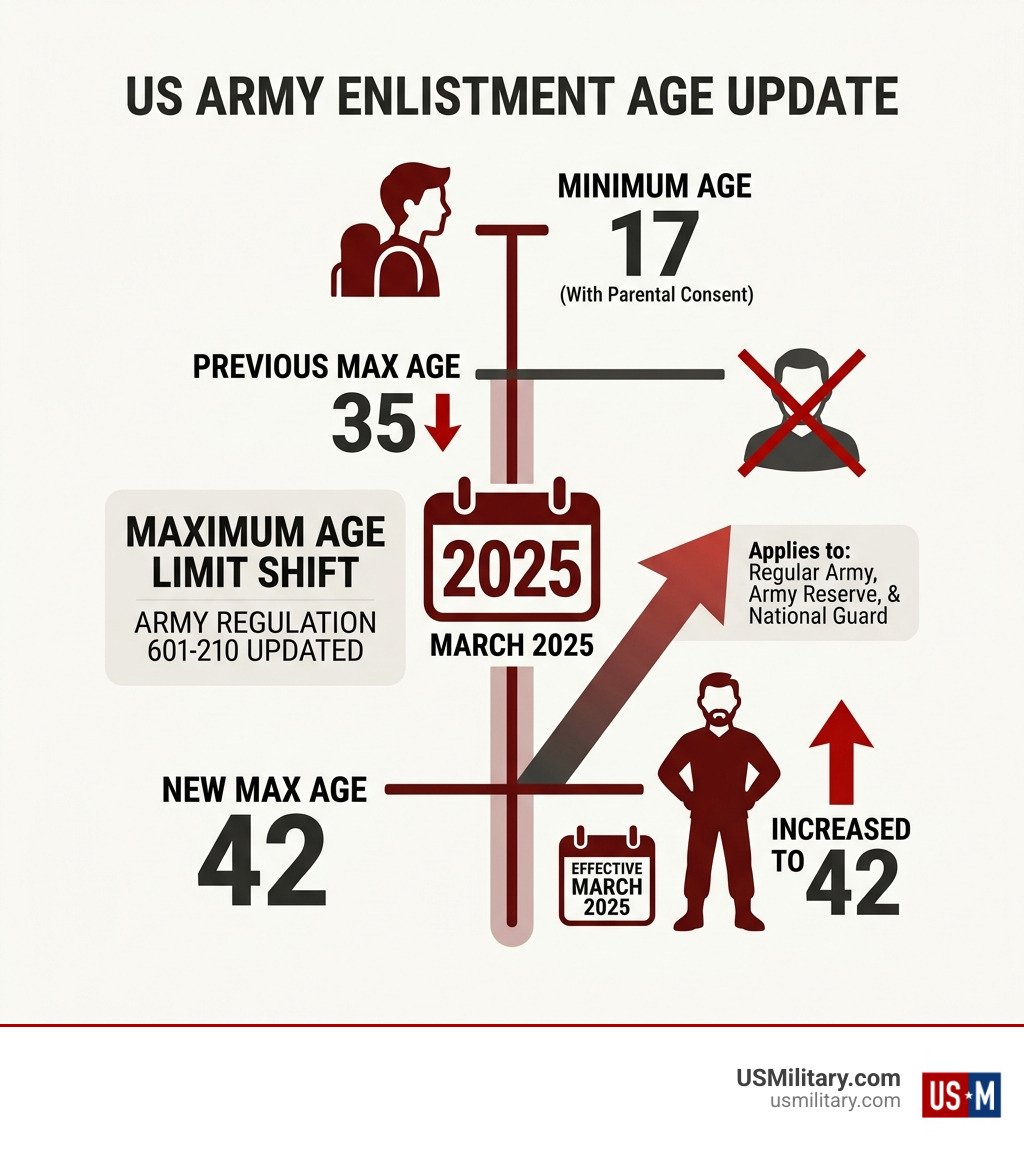
The age to enlist in US Army changed significantly in March 2025. Here’s the quick answer:
| Requirement | Details |
|---|---|
| Minimum age | 17 (with parental consent) or 18 (without) |
| Maximum age (as of March 2025) | 42 years old |
| Applies to | Regular Army, Army Reserve, and Army National Guard |
| Previous maximum | 35 years old |
This update came through Army Regulation 601-210 and affects all three Army components equally.
If you’re in your late 30s or early 40s and wondering whether you’ve missed your window — you haven’t. The Army has officially reopened the door for older recruits.
But the age change is just one piece of the puzzle. Understanding the full picture — from minimum age rules to waivers to physical standards — helps you figure out if you qualify and what steps to take next.
I’m Larry Fowler, publisher of the USMilitary.com Network, and since 2007 I’ve helped hundreds of thousands of people navigate military enlistment questions — including the age to enlist in US Army and how policies like this one affect real recruiting decisions. Let me walk you through everything you need to know.
Current Maximum Age to Enlist in US Army
As of April 2026, we are now over a year into the Army’s expanded age policy. Effective March 2025, the Army officially updated Army Regulation 601-210, raising the maximum age to enlist in US Army from 35 to 42.
This isn’t just a pilot program or a temporary “maybe.” It is a permanent shift designed to bring the Army into alignment with several other branches. Whether you are looking to join the Regular Army (Active Duty), the Army Reserve, or the Army National Guard, the “42 rule” now applies across the board.
For those who have spent years thinking they were “too old” to serve, this change is a massive opportunity. However, it is important to remember that while the age limit has moved, the entry standards have not been lowered. You still need to pass the same physical, medical, and academic benchmarks as a 19-year-old. You can find more about these general rules at Requirements to join the U.S. military or check out our guide on the Military Age Cut Off.
Historical Context of Age Limits
The age to enlist in US Army has always been a bit of a moving target, often shifting based on the nation’s needs. If we look back to 2006, during the height of operations in Iraq and Afghanistan, the Army similarly raised the age limit to 42 to bolster its ranks.
However, as the “surge” ended and the military began a period of downsizing, the policy was reversed. In 2016, the maximum age was dropped back down to 35. For nearly a decade, 35 remained the hard line, unless a recruit had prior military service or a highly specialized skill (like being a surgeon).
The return to age 42 in 2025 was driven by a desire for policy alignment. Before this change, the Air Force, Space Force, and Coast Guard had already moved their limits to 42. The Army decided it was time to stop losing high-quality, mature applicants to other branches simply because of a birthday. You can read more about how these limits have evolved over time in our article on the Age Limit To Join Military.
Waivers and Exceptions for the Age to Enlist in US Army
Even with the new limit of 42, there are still “what if” scenarios. What if you are 43? Or 45?
Waivers are the military’s way of saying, “We have a rule, but we’re willing to ignore it for the right person.” For the age to enlist in US Army, waivers are most commonly granted to:
- Prior Service Members: If you served four years in the Navy and are now 44, the Army often “subtracts” your previous years of service from your current age. In this case, your “military age” would be 40, making you eligible.
- Specialized Roles: Chaplains, doctors, and certain legal professionals often have much higher age ceilings, sometimes into their 50s, because their professional expertise is so valuable.
- Case-by-Case Merit: If you are 43, have a master’s degree, speak three languages, and can run a 5-minute mile, a recruiter might be able to push an age waiver through.
The best advice we can give is to speak with a recruiter directly. They are the only ones who can initiate a waiver request. You can also review the Eligibility & Requirements to Join on the official Army site for the most technical breakdowns.
Why the Army Raised the Enlistment Age to 42
We often get asked, “Is the Army getting desperate?” The answer is more nuanced than a simple yes or no. The truth is that the Army is facing a “perfect storm” of recruiting challenges.
According to Pentagon data, only about 23% of young Americans (ages 17-24) are actually eligible to serve. That is a staggering statistic. When you filter out those who don’t meet academic standards, those who struggle with obesity, and those with disqualifying criminal records, the “pool” of potential soldiers becomes very small.
By raising the age to enlist in US Army to 42, the Army isn’t just looking for “more” people; they are looking for “different” people. Older recruits often bring a level of stability and life experience that a teenager simply hasn’t developed yet. For a deeper look at the recruiting landscape, see our report on Army Recruiting 2024.
Performance Standards and the Age to Enlist in US Army
There is a common myth that older recruits are “broken” or can’t keep up. The data actually suggests the opposite. A study by the RAND Corporation found that recruits in the 25-to-35 age bracket were actually 15% less likely to “wash out” (drop out) of initial entry training compared to their younger peers.
Furthermore, these older soldiers were 6% more likely to reenlist after their first term. Why? Maturity. A 38-year-old who joins the Army usually isn’t doing it on a whim. They’ve had a career, maybe a mortgage, and they understand the value of the benefits and the mission. They are often more motivated and focused than a 18-year-old who is still trying to find themselves.
We discuss these performance metrics and what they mean for the future of the force in our article Requirements To Join The Army 2.
Related Policy Changes and Marijuana Waivers
Raising the age wasn’t the only change made to broaden the recruiting pool. The Army has also become more pragmatic regarding past mistakes.
In the past, a single conviction for marijuana possession could be a permanent “no-go.” However, with the legalization of marijuana in many states, the Army has updated its regulations. As of 2025, many applicants with a single, minor marijuana possession conviction can enlist without needing a formal waiver, provided they meet all other character standards.
This shift, combined with the new age to enlist in US Army, shows a modern military that is focused on a person’s current potential rather than every minor hiccup in their past. If you’re curious about how these legal changes affect your application, check out How To Join The Army.
Minimum Age and General Eligibility Requirements
While most of the news focuses on the “upper” limit, the “lower” limit remains the same. You can join the Army at 17, but you’ll need your parents to sign off on it. Once you hit 18, you are legally an adult and can make the decision yourself.
Beyond the age to enlist in US Army, there are several “must-haves” for any recruit:
- You must be a U.S. citizen or a resident alien (Green Card holder).
- You must have a high school diploma or a GED.
- You must pass a criminal background check.
- You must meet the physical and medical standards set by the Department of Defense.
You can find a comprehensive checklist of these rules at Eligibility Requirements – Today’s Military.
Physical and Academic Standards
Joining the Army isn’t just about showing up; you have to prove you have the brains and the brawn. Every recruit must take the ASVAB (Armed Services Vocational Aptitude Battery). This isn’t an IQ test, but it does measure your ability to learn the jobs the Army needs to fill.
For those who struggle with the academic or physical side, the Army introduced the Future Soldier Preparatory Course. This 90-day program helps recruits boost their ASVAB scores or meet body fat percentage requirements before they head to Basic Training. It has been a massive success in helping motivated people overcome initial hurdles.
For more details on the testing process, visit Requirements to join the U.S. military.
Citizenship and Residency
The Army has long been a pathway to the American dream. U.S. citizens are always welcome, but non-citizens with a valid Green Card can also enlist.
One of the biggest perks for non-citizens is accelerated naturalization. In some cases, serving in the Army can allow you to apply for U.S. citizenship after just one day of honorable service. This is a powerful incentive for those who want to give back to the country they now call home. You can read more about this at Eligibility & Requirements to Join.
Comparing Army Enlistment Age to Other Military Branches
The Army doesn’t exist in a vacuum. If you’re considering the age to enlist in US Army, you might also be looking at the Navy or the Air Force. Each branch has its own culture and its own age limits.
| Branch | Max Enlistment Age (Enlisted) |
|---|---|
| US Army | 42 |
| US Air Force | 42 |
| US Space Force | 42 |
| US Coast Guard | 42 |
| US Navy | 41 |
| US Marine Corps | 28 |
As you can see, the Army is now tied for the most “age-friendly” branch in the military.
Air Force and Space Force Age Limits
The Air Force and Space Force were the pioneers of the “42 limit.” Because these branches are highly technical and often involve roles that are less physically punishing than a combat infantryman, they realized early on that a 40-year-old software engineer or mechanic was a vital asset.
The Coast Guard followed suit shortly after. If you’re interested in how the Coast Guard handles older recruits, we have a specific breakdown here: Coast Guard Enlistment Age Requirements For Active Duty And Prior Service.
Navy and Marine Corps Requirements
The Navy currently sits at 41, just one year shy of the Army’s limit. This was a recent increase from their previous limit of 39. If you’re looking at the Navy Reserve, the rules are very similar. Check our guide on Joining The Navy Reserve Are You Within The Age Range.
Then there are the Marines. The Marine Corps remains the “young man’s game” of the military, with a strict cutoff of 28 for new enlistees. They pride themselves on this youth-centric model, though they will occasionally grant waivers for exceptional candidates. You can learn more about their unique culture at Meeting The Requirements Of Enlisting In The Usmc.
Frequently Asked Questions about Age to Enlist in US Army
Is the age increase related to a military draft?
No. This is a common concern we see on social media, but there is no connection. The United States military remains an all-volunteer force. The increase in the age to enlist in US Army is simply a policy shift to widen the recruiting pool and allow more qualified Americans to choose to serve. It is about expanding opportunity, not forcing service.
Can I join the Army at 42 without prior service?
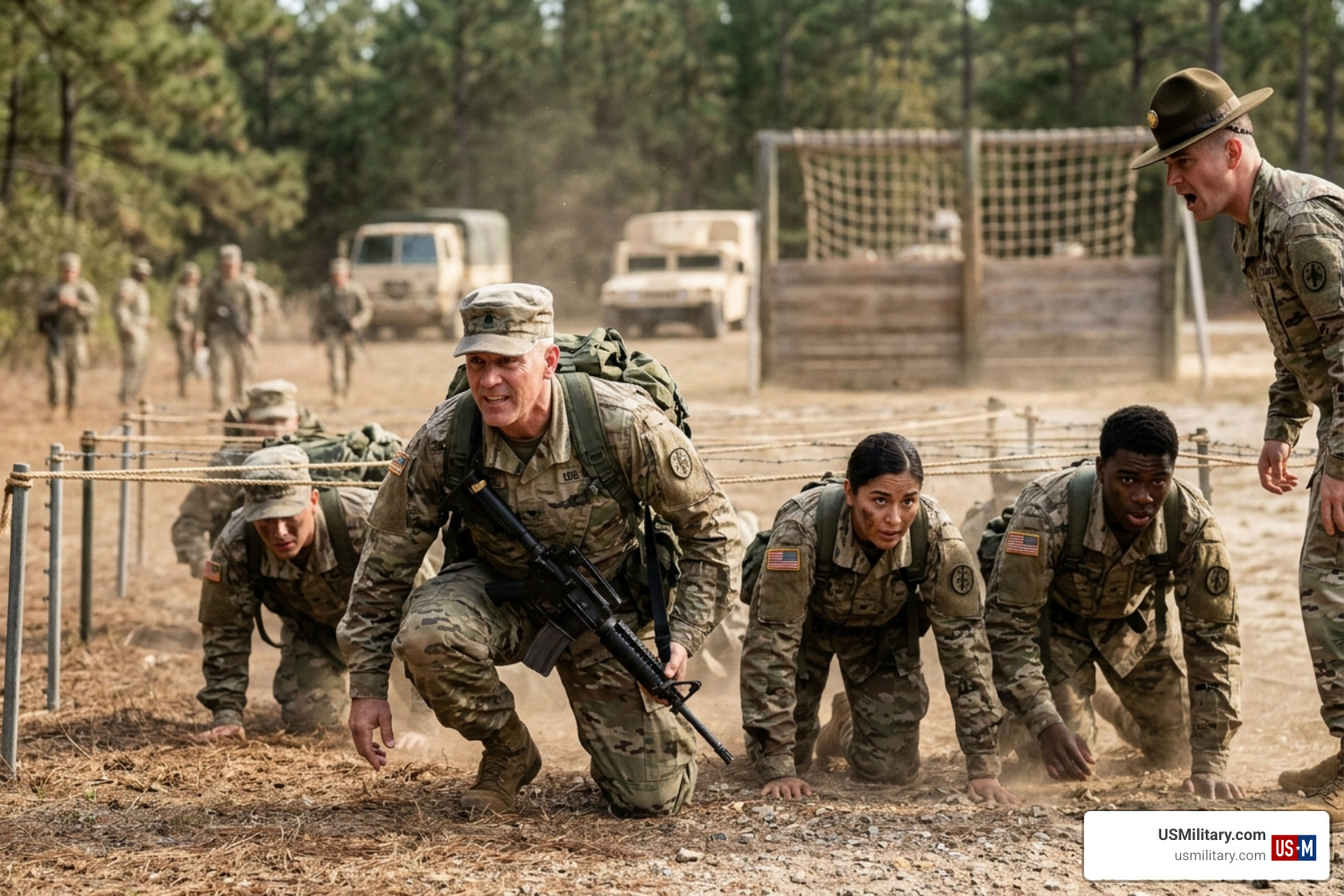
Yes! Under the March 2025 regulation, you can walk into a recruiter’s office at age 42 and start the process, even if you’ve never worn a uniform in your life. You will attend the same Basic Combat Training (BCT) as everyone else. Just be prepared — your drill sergeant might be younger than you!
What are the education requirements for older recruits?
The requirements are the same regardless of age. You need a high school diploma or a GED. If you have a GED, your chances of enlistment improve significantly if you have at least 15 college credits or if you score high on the ASVAB. The Army values education because it correlates with a soldier’s ability to handle complex technical training.
Conclusion
The decision to serve your country is a noble one, whether you make it at 18 or 42. By raising the age to enlist in US Army, the military has recognized that “fitness for duty” isn’t just about the year you were born — it’s about your health, your character, and your commitment.
At USMilitary.com, we are dedicated to providing you with the most accurate and up-to-date information. From understanding your VA benefits to finding the right career path within the military, we are here to serve those who serve.
If you’re ready to take the next step and see if you meet the requirements for the Army or any other branch, we can help you get started.

Free for Service Members & Veterans
Get the military benefits intel no one tells you about.
Weekly updates on VA benefits, pay changes, and money tips — free for service members and veterans.
No spam. Unsubscribe anytime. Your info is never shared.


