Is a New World Order Coming? Is The Handwriting on the Wall? Is It A Time Of Panic, Anxiety, or Peace?

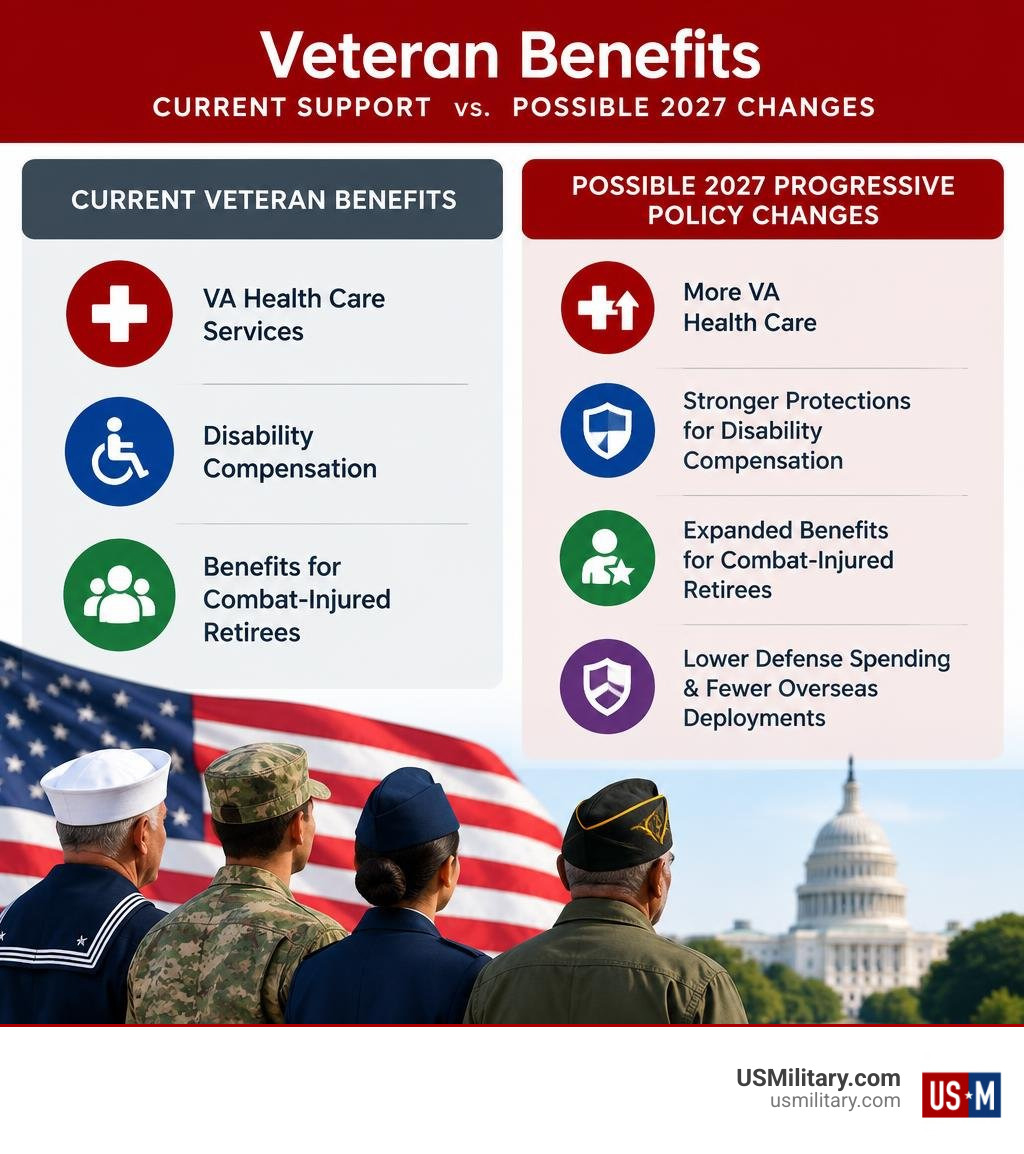
What a socialist Democrat government means to military veterans in 2027 depends on the laws it passes, not its label. A stronger progressive voice in Congress could push for more VA health care, protect disability compensation, and expand benefits for combat-injured retirees. It could also seek lower defense spending and fewer overseas deployments. None of those changes would happen automatically.
The 2026 midterms can change Congress, not the presidency. And Democratic Socialists of America proposals are not the platform of every Democrat, including veteran candidates. The key question is whether lawmakers will protect specialized VA care and existing benefits while paying for any expansion.
I’m Larry Fowler, a Navy veteran and BUD/S Class 89 graduate. Through my work publishing USMilitary.com, I follow VA disability and benefits policy; in this article, I’ll separate proposals from current law to explain what a socialist Democrat government means to military veterans in 2027.
Easy What A Socialist Democrat Government Means To The Military Veterans in 2027 word list:
What A Socialist Democrat Government Means To The Military Veterans in 2027
Looking ahead to 2027, an expanded socialist Democrat presence in federal policymaking could bring expanded social safety nets and intense debates over defense spending. The Department of Veterans Affairs operates on roughly $400 billion annually, delivering medical care and financial assistance to millions of former service members. Under a progressive governing framework, this system would face staunch opposition to privatization, direct investment in public infrastructure, and expanded social programs designed to lift low-income veterans.
At the same time, the broader Democratic Socialists of America (DSA) platform advocates for shifting hundreds of billions of dollars from the Pentagon budget to domestic needs like universal healthcare, public education, and affordable housing. For the 2 million active-duty and reserve personnel and the 18 million living American veterans, this ideological shift creates fundamental questions about how our national priorities will balance global defense commitments against domestic support systems.
Defense Budget and Force Readiness: What A Socialist Democrat Government Means To The Military Veterans in 2027

A socialist Democrat platform fundamentally re-evaluates America’s global military posture. Progressive factions call for non-interventionism, ending foreign entanglements, and reducing overall Pentagon outlays. Such spending reductions could impact active-duty force structure, maintenance pipelines, and modernization efforts across the Army, Navy, Air Force, Marines, and Space Force.
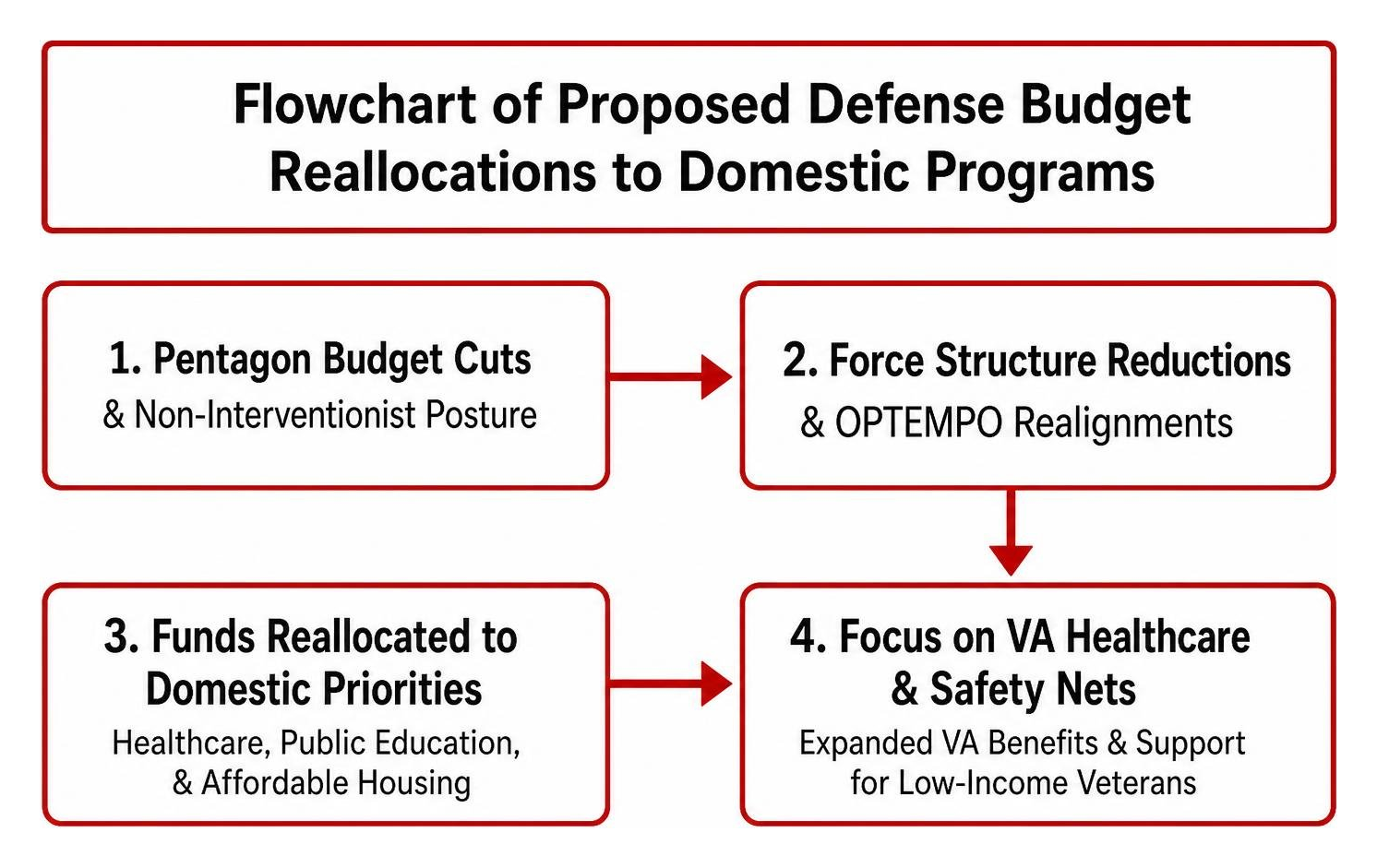
Critics argue that sharp spending cuts risk creating recruitment challenges and operational strains on serving troops. Furthermore, debates surrounding “ideological demilitarization” have sparked concern among traditionalists who emphasize that military oaths to support and defend the Constitution remain permanent, non-partisan obligations. Veteran lawmakers often point out that any major force restructuring must ensure our troops retain technological superiority and adequate operational support.
Healthcare and Disability Claims: What A Socialist Democrat Government Means To The Military Veterans in 2027
On the healthcare front, a socialist Democrat agenda champions universal access and robust funding for public health facilities. Rather than outsourcing services to private networks, progressive platforms prioritize direct funding for VA medical centers, particularly expanding mental health clinics, traumatic brain injury (TBI) treatment, and services in rural communities.
Maintaining specialized combat-related medical expertise remains a central issue. While universal healthcare models like Medicare for All aim to cover all citizens, veterans rely on specialized care for blast injuries, severe burns, and military sexual trauma (MST). Navigating these distinct systems requires consulting the ultimate US VA benefits guide to protect earned access to dedicated VA clinics. Progressive platforms consistently push to expand the VA’s internal clinical staffing to prevent care delays.
✉ Get updates like this in your inbox
Weekly VA benefit changes, pay updates, and money tips for service members, veterans, and military families. Free, no spam.
VA Disability Compensation and the Major Richard Star Act
One of the largest tests for any progressive legislative majority is how it handles earned disability compensation. While progressive tax models aim to target high earners—noting that the top 1% of the U.S. population averages $1,316,985 annually compared to $50,107 for the bottom 99%—statutory budget offset rules often complicate benefit expansions.
| Policy Area | Current Law Framework | Proposed Progressive / Socialist Democrat Approach |
|---|---|---|
| VA Healthcare System | Mixed model with expanded private Community Care options. | Fully funded, publicly delivered VA care; strict limits on privatization. |
| Concurrent Receipt | Restricted for Chapter 61 combat retirees under 20 years. | Full concurrent receipt via the Major Richard Star Act. |
| Disability Rating Criteria | Standardized ratings with periodic administrative updates. | Strong opposition to diagnostic cuts (e.g., sleep apnea, tinnitus). |
| Environmental Exposures | PACT Act presumptive model via the Toxic Exposures Fund. | Mandatory full funding and broader presumptive toxic exposure rules. |
| Transition Support | Standard Transition Assistance Program (TAP) modules. | Mandatory personalized roadmaps, expanded check-ins, and housing grants. |
Past legislative debates highlighted the risks of fiscal offsets. For example, Section 108 of the proposed Take Care of America’s Veterans Act sought to restructure rating criteria for conditions like sleep apnea and tinnitus, potentially reducing future compensation by $57 billion over 10 years for roughly 1.5 million claimants. Progressive lawmakers joined Veterans Service Organizations to block these offsets, ensuring veterans exploring 10 VA disability benefits, which many often do not claim, can file without facing sudden rating reductions.
Combat-Injured Benefits vs. Fiscal Offsets
The Major Richard Star Act represents a vital legislative priority for wounded service members. Costing about $58 billion over a decade, the bill lets medically retired personnel with combat injuries (Chapter 61 retirees) receive both full military retirement pay and VA disability compensation without an offset.
Despite securing 336 cosponsors in the House and 79 in the Senate, progress has repeatedly stalled over federal PAYGO (Pay-As-You-Go) rules. Progressive lawmakers argue that earned combat entitlements should be treated as mandatory obligations exempt from budget trade-offs, mirroring the protections established for the PACT Act’s Toxic Exposures Fund. Understanding these rules is essential when navigating disabled veteran benefits and concurrent receipt eligibility.
Veteran Candidates, Defense Leadership, and Cultural Reform

Veteran candidates have become influential voices in shaping national policy. Data show that Democratic military veteran candidates perform 5.8 percentage points better in competitive congressional races than non-veterans. In 2024, 143 VoteVets-endorsed candidates won elections across federal, state, and local offices, showing that military service can bridge political divides.
A prominent example includes the cohort of female veteran candidates known as the “Hell Cats,” who draw on their operational experience to challenge defense policies and counter political figures like Defense Secretary Pete Hegseth. Progressive veteran leaders emphasize strong protections under the Uniform Code of Military Justice (UCMJ), transparent reporting of military sexual trauma, robust support for diverse service members, and strict adherence to constitutional orders. Their background allows them to advocate for working-class veterans while maintaining operational credibility.
Addressing Mental Health, Suicide Prevention, and Transition Services
Transitioning from active duty to civilian life brings significant psychological and financial challenges. Progressive military frameworks emphasize modernizing the Transition Assistance Program (TAP) and expanding initiatives like the VA Solid Start program, which provides three structured check-in calls during a veteran’s first year of separation.
Investing in evidence-based care for post-traumatic stress disorder (PTSD), substance use disorders, and blast injuries remains essential to curbing veteran suicide. Community-based clinics and rapid-response mental health services are critical tools for addressing veteran mental health needs before crises develop.
Frequently Asked Questions About Progressive Veteran Policies
Would a Democratic Socialist majority cut existing VA disability ratings?
No. Federal regulations strictly protect existing service-connected disability ratings under grandfathering rules. Recent proposals to adjust rating criteria for conditions like sleep apnea and tinnitus were designed only for prospective claims, and progressive lawmakers joined major veterans groups to reject those cost-saving offsets, helping veterans continue maximizing earned benefits without leaving money on the table.
How would Medicare for All affect specialized VA medical centers?
Progressive platforms consistently maintain the VA as an independent, specialized healthcare network rather than dissolving it into a single-payer civilian pool. While universal healthcare would cover general medical needs for all Americans, the VA would retain dedicated funding for combat-specific conditions, polytrauma, and service-connected rehabilitation. You can review current healthcare options through our guide to VA healthcare and transition resources.
What happens to the Major Richard Star Act under socialist Democrat budget rules?
Progressive lawmakers strongly back the Major Richard Star Act and advocate for waiving PAYGO budget offset rules to pass it. Rather than cut other military programs to cover the $58 billion ten-year cost, progressive budget proposals aim to fund concurrent receipt through corporate tax enforcement and reforms to defense contractor spending.
Conclusion
A socialist Democrat government in 2027 would bring major debates over defense budgeting, troop deployments, and public healthcare funding. While proposals to reduce Pentagon spending draw scrutiny regarding military readiness, progressive domestic policies consistently prioritize defending the VA budget, ending homelessness, and expanding entitlements for combat-injured personnel.
At USMilitary.com, we provide active-duty members, veterans, and military families with transparent, accurate updates on VA disability ratings, VA home loans, and federal legislation. To ensure you and your family receive every earned entitlement, explore our comprehensive guide to US veteran benefits and stay informed about the policies that affect your service.
Free for Service Members & Veterans
Get the military benefits intel no one tells you about.
Weekly updates on VA benefits, pay changes, and money tips — free for service members and veterans.
No spam. Unsubscribe anytime. Your info is never shared.



Leave a Reply