When discussing the US military, one question often sparks intense debate: What is the most elite unit in the US military? This topic ignites curiosity and admiration for the exceptional men and women who serve in these top-tier organizations. We will look at special operations and identify the most distinguished groups in America’s armed forces.
Table Of Contents:
- The Contenders for Most Elite US Military Unit
- What Makes a Unit ‘Elite’?
- The Debate Continues
- Conclusion
The Contenders for Most Elite US Military Unit
Several groups are considered for the title of the most elite in the US military. Each possesses exceptional capabilities and a storied history of accomplishments. Here’s a rundown of the top contenders from across the armed services.
Navy SEALs
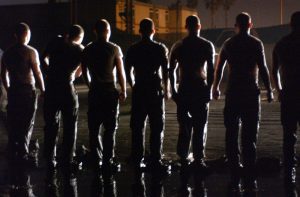
The Navy SEALs are often the first group that comes to mind when discussing elite military forces. These maritime special operations forces are renowned for their grueling training and versatility in sea, air, and land operations. A member of the SEAL team is prepared for any environment.
SEALs undergo some of the most challenging military training anywhere. Their infamous Hell Week pushes candidates to their absolute physical and mental limits. Only the most resilient and determined individuals manage to complete the selection process.
Notable missions include the raid that resulted in the death of Osama bin Laden and the rescue of Captain Phillips from Somali pirates. These operations show the SEALs’ incredible skills and global reach. SEAL Team Six, formally known as the Naval Special Warfare Development Group (DEVGRU), is a U.S. Navy component of the Joint Special Operations Command and is often tasked with the most demanding missions.
Delta Force
Officially known as the 1st Special Forces Operational Detachment-Delta (1st SFOD-D), Delta Force is the Army’s premier counterterrorism unit. They specialize in hostage rescue, direct action missions, and special reconnaissance. This highly secretive army unit is composed of the best soldiers the military has to offer.
Delta Force operators are selected from the Army’s most accomplished soldiers, including the Green Berets and the 75th Ranger Regiment. Their training is shrouded in secrecy, but it is known to be incredibly intense and highly selective. The primary purpose of their training is to create an operator who can think critically under extreme pressure.
While many of their operations remain classified, Delta Force has been involved in high-profile missions like the hunt for Saddam Hussein and the battle of Mogadishu. These soldiers are considered some of the most capable direct action specialists in the world. Their ability to operate effectively in complex, high-stakes environments is a testament to their training.
Green Berets
The Army Special Forces, commonly known as Green Berets, are experts in unconventional warfare. They are often called soldier-diplomats because of their role in working with foreign militaries and local populations. This ability to act as both warrior and diplomat sets them apart.
Green Berets receive extensive language and cultural training. This preparation allows them to integrate and operate within diverse environments around the globe. This focus on foreign internal defense is a core competency of this military special forces group.
Their missions often involve training foreign forces, conducting special reconnaissance, and carrying out direct action operations. Green Berets played a crucial role in the early stages of the Afghanistan war, working with local forces to overthrow the Taliban. Their expertise in unconventional warfare makes them a powerful instrument of national policy.
75th Ranger Regiment
The 75th Ranger Regiment, also known as Army Rangers, serves as the U.S. Army’s premier light infantry special operations force. The regiment is a lethal, agile, and flexible force, capable of conducting a variety of complex joint special operations missions. They are the go-to force for large-scale raids and airfield seizures.
The selection process for the Ranger Regiment is incredibly demanding, with candidates having to pass the Ranger Assessment and Selection Program (RASP). This course tests soldiers on their physical fitness, mental toughness, and ability to work as part of a team under constant stress. The regiment is composed of three primary light infantry battalions and a regimental special troops battalion.
Within the regiment exists the Regimental Reconnaissance Company (RRC), a unit that conducts deep reconnaissance and surveillance to support Ranger and other special operations forces missions. The RRC is a highly specialized element that receives extensive training in surveillance techniques. Every soldier in the Ranger Regiment is expected to be “Ranger Ready” to deploy anywhere in the world on short notice.
Marine Raider Regiment
The Marine Raider Regiment, part of the Marine Corps Forces Special Operations Command (MARSOC), is the Marine Corps’ contribution to the U.S. Special Operations Command. A Marine Raider is tasked with direct action, special reconnaissance, and foreign internal defense missions. They carry on the legacy of the elite Marine Raiders of World War II.
Formed in 2006, MARSOC brought the Marine Corps into the fold of the broader special operations community. Marine Raiders undergo a grueling Assessment and Selection process followed by an Individual Training Course (ITC) that forges them into proficient special operators. This training emphasizes their ability to operate in austere environments, often with limited support.
Their operational focus often places them in roles where they train and advise partner-nation forces, similar to the Green Berets. However, they also maintain a robust capability for direct action missions. This makes the Marine Raider an extremely versatile operator within the special operations force.
Force Reconnaissance
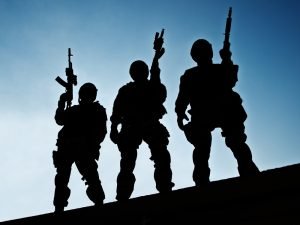
The Marine Corps’ Force Reconnaissance companies, or Force Recon, are another elite unit with a storied history. It is important to distinguish them from Marine Raiders, as Force Reconnaissance is not a part of SOCOM. Instead, they serve as a deep reconnaissance and direct action asset for the Marine Expeditionary Force.
The primary purpose of Force Recon is to conduct amphibious and deep reconnaissance, surveillance, and limited-scale raids in support of the Marine Air-Ground Task Force (MAGTF). They gather critical intelligence far behind enemy lines, paving the way for larger conventional forces. They receive training in a variety of insertion methods, from diving to parachuting.
The selection process is arduous, and members are chosen from the top tier of the Marine Corps. Their ability to operate in small teams deep in enemy territory requires a high degree of maturity, skill, and independence. Force Reconnaissance continues to be one of the most respected units in the military.
Air Force Special Operations
The Air Force has its own highly specialized operations units that are critical to the success of any ground mission. Air Force Special Warfare includes Combat Controllers (CCT), Pararescuemen (PJs), and Special Reconnaissance (SR) airmen. These individuals are experts in integrating air power with ground operations.
Air Force Combat Controllers are FAA-certified air traffic controllers who deploy into combat zones to provide close air support and direct air traffic. They often embed with other special forces units like SEALs or Green Berets, acting as the crucial link to air support. Their work ensures that bombs and munitions are delivered accurately, preventing friendly fire and maximizing effectiveness.
Pararescuemen, or PJs, are dedicated to combat search and rescue, with their motto being “That Others May Live.” They undergo some of the most diverse training, becoming expert parachutists, divers, and paramedics. They are responsible for rescuing downed pilots and other personnel from behind enemy lines, often under heavy fire.
The Intelligence Support Activity
Perhaps the most secretive unit on this list is the U.S. Army’s Intelligence Support Activity (ISA). This elite special forces intelligence unit is tasked with providing actionable, real-time intelligence for other special operations units, particularly Tier 1 elements like Delta Force and DEVGRU. Its existence has rarely been officially acknowledged.
ISA operators are masters of signals intelligence (SIGINT), human intelligence (HUMINT), and other clandestine intelligence-gathering methods. They can intercept electronic communications, track targets, and provide critical information that shapes hostage rescue attempts and direct action missions. Their work is the definition of high-stakes intelligence support.
Because it is a highly secretive organization, very little is known about the ISA’s selection process or specific operations. However, this support activity is a force multiplier for the entire special operations command. Their ability to gather information in denied areas makes them one of the most valuable, if unseen, assets in the U.S. military.
Here is a simple table that breaks down some of the top special operations forces:
| Unit | Branch | Primary Mission | Key Skills |
|---|---|---|---|
| Delta Force | Army | Counter-Terrorism, Hostage Rescue | Direct Action, Special Reconnaissance, Marksmanship. |
| Navy SEALs (DEVGRU) | Navy | Maritime Special Operations, Counter-Terrorism | Amphibious Operations, Direct Action, Underwater Demolition. |
| Green Berets | Army | Unconventional Warfare, Foreign Internal Defense | Language/Cultural Expertise, Teaching, Guerilla Warfare. |
| 75th Ranger Regiment | Army | Direct Action, Airfield Seizure | Large-Scale Raids, Light Infantry Tactics, Forcible Entry. |
| Marine Raiders | Marine Corps | Direct Action, Foreign Internal Defense | Amphibious Operations, Irregular Warfare, Reconnaissance. |
| Air Force CCT/PJ | Air Force | Close Air Support, Combat Search & Rescue | Air Traffic Control, Paramedic Skills, Parachuting. |
What Makes a Unit ‘Elite’?
Defining the “most elite” military unit is not a simple task. Several factors contribute to a unit’s high standing and reputation. These factors separate a special operations unit from conventional forces.
These elements include:
- Selection Process: How rigorous and selective is the unit’s recruitment? A high attrition rate is often a hallmark of an elite unit, as it filters for only the most capable individuals.
- Training: What is the intensity and duration of the unit’s training program? Elite units receive training that goes far beyond conventional military instruction, focusing on specialized skills.
- Mission Scope: How diverse and challenging are the unit’s typical missions? These groups are often tasked with the nation’s most critical and sensitive operations.
- Operational History: What significant operations has the unit successfully completed? A track record of success in high-stakes environments builds a reputation.
- Technological Edge: Does the unit have access to cutting-edge equipment and technology? Superior gear, from weapons to radio communications, can provide a significant advantage.
Each of the special forces units mentioned excels in these areas. This makes it difficult to definitively crown one as the “most elite” over the others. Their exceptional capabilities are applied in different ways to solve different problems.
The Debate Continues
So, what is the most elite unit in the US military? The truth is, there is no single answer. Each of these special operations forces excels in different areas and brings a distinct set of skills to the battlefield.
The Navy SEALs’ versatility and high-profile missions have cemented their place in popular culture as a premier force. Delta Force’s secretive nature and specialized counterterrorism role make them a strong contender for the top spot. The Green Berets’ special skill set in unconventional warfare and ability to operate independently sets them apart.
Meanwhile, the Army Rangers are a formidable direct action force, and the Marine Raiders offer a potent combination of skills. The Air Force combat controllers and PJs provide critical life-saving and fire support capabilities that enable all other ground operations. Finally, the secretive work of the Intelligence Support Activity makes many of these missions possible in the first place.
Conclusion
What is the most elite unit in the US military? It is a question without a clear and simple answer. Each of the operations units we have discussed represents the pinnacle of military training, skill, and operational capability within the United States armed forces.
Rather than trying to name a single “most elite” unit, it is more valuable to appreciate the different strengths each brings to the fight. A Navy SEAL, a Green Beret, a Marine Raider, and an Army Ranger all represent the highest standard of a professional warrior. They are supported by a vast network of other specialists who make their success possible.
The strength of the US Special Operations Command lies in this diversity. Together, these special operations forces form a comprehensive and unmatched capability, ready to tackle any challenge. The true elite status of these units is not found in competition with one another, but in their collective power to handle the most demanding and critical missions the nation faces.
Want more military info? Find your nearest military recruiter here!
Free for Service Members & Veterans
Get the military benefits intel no one tells you about.
Weekly updates on VA benefits, pay changes, and money tips — free for service members and veterans.
No spam. Unsubscribe anytime. Your info is never shared.



More Than 90% Of Clients Have Increased Ratings! Why Settle For Less Than You Deserve? Expert Priority Help With Your VA Claim Today! Free Evaluation Call!
The mission of Veteran Services United is to support veterans in filing and winning disability claims by offering expert guidance, advocacy, and personalized assistance. Through dedicated service, Veteran Services United empowers veterans to secure the benefits they have earned, ensuring they receive the care and support they deserve.