What You Need to Know About Women in Military Draft
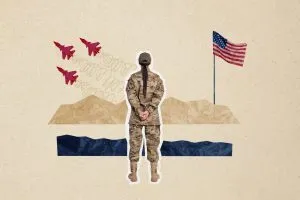
Women in military draft registration is one of the most debated topics in U.S. defense policy today. Here is a quick summary:
- Current law: Only men aged 18-26 must register with the Selective Service System. Women are not required to register.
- Has the U.S. ever drafted women? No. Women have never been conscripted in U.S. history.
- Could that change? Yes. Congress has debated expanding registration to women multiple times, most recently in the FY2025 NDAA — but no law has passed yet.
- Registration vs. draft: Registering with Selective Service does not mean you will be drafted. It simply adds your name to a database used only if Congress and the President authorize a draft.
- Likelihood of a draft: Very low. The U.S. has had an all-volunteer military since 1973 and has not drafted anyone since the Vietnam War.
The debate has grown louder since 2015, when the Pentagon opened all combat roles to women. Before that, the Supreme Court upheld male-only registration in Rostker v. Goldberg (1981) specifically because women were barred from combat. That rationale no longer applies — and lawmakers, military leaders, and courts are still working out what comes next.
More than 300,000 women served in Afghanistan and Iraq. Yet they remain exempt from the same registration requirement that applies to every American man who turns 18.
That gap is what this debate is really about.
I’m Larry Fowler, publisher of the USMilitary.com Network, where since 2007 I’ve helped active-duty members and veterans navigate complex military policy — including the evolving conversation around women in military draft registration and Selective Service reform. In this guide, I’ll walk you through everything you need to know, from current law to the latest legislation.

Women in military draft glossary:
- Does the US currently have a military draft
- What disqualifies you from the military draft
- age for military draft
Current Legal Requirements for Selective Service
As we stand today, the legal landscape regarding the draft remains remarkably consistent with the post-Vietnam era. Under the MSSA: 50 U.S.C., the Selective Service System is mandated to maintain a database of individuals eligible for military service in the event of a national emergency.

Currently, the law is gender-specific. Only male U.S. citizens and most male non-citizen residents (including undocumented immigrants and green card holders) are required to register. The registration window is narrow: you must register within 30 days of your 18th birthday, and the requirement remains in effect until you turn 26.
Despite the fact that women now serve in every capacity within the Armed Forces, they are still not required to register. This creates a unique legal distinction. While men face significant fines, imprisonment, and loss of federal employment opportunities for failing to register, women do not. Furthermore, registration is often a prerequisite for various workforce programs and state-level benefits like driver’s licenses in many jurisdictions.
Penalties for Failing to Register
The consequences for men who ignore this requirement are steep. According to the SSS, failure to register is a felony. While prosecutions are rare, the “silent” penalties are what usually catch up with people. If you haven’t registered by age 26, it is essentially too late to fix it, and you may be permanently barred from:
- Federal student loans and grants (FAFSA).
- Federal job training programs.
- Federal executive agency jobs.
- U.S. citizenship (for male immigrants).
A recent update in 5 U.S.C. §3328 through the FY2025 NDAA does provide some relief for veterans. It allows veterans who failed to register to still seek federal employment if they can provide a Form DD-214 showing they served on active duty, proving they weren’t trying to “dodge” service.
The History and Evolution of Women in Military Draft Debates
The conversation about women in military draft registration isn’t new; it has just evolved alongside the roles women play in the military. Historically, the exclusion of women was based on the fact that they were legally barred from ground combat.
In 1981, the Supreme Court ruled in Rostker v. Goldberg that the male-only draft was constitutional. The Court reasoned that because the draft’s primary purpose was to provide combat troops, and women were excluded from combat, there was no reason to require them to register.
However, women have always stepped up. During WWII, President Roosevelt even considered a draft for nurses to meet a dire shortage, though a surge in volunteers made it unnecessary. We’ve seen a steady march toward equality ever since, from the evolving roles and historical contributions of women in combat to the first female Navy SEAL candidates. The 2013 lift of the combat ban effectively removed the legal foundation of the Rostker decision.
Historical Milestones for Women in Military Draft Discussions
Several key moments have brought us to the current crossroads:
- 1992 Presidential Commission: Recommended that women should not be required to register, but that integration should be based on qualifications.
- 2015 Combat Integration: Defense Secretary Ash Carter opened all military occupations to women. This was a “game changer” for the draft debate.
- 2020 National Commission Report: A congressionally mandated commission formally recommended that women be required to register, calling it a “necessary and fair step” for national security and gender equality.
Today, we see female U.S. Marines leading local talks and enlisted female Marines setting trends in roles that were once off-limits. Their success in these positions makes the argument for exclusion increasingly difficult to maintain.
Recent Legislative Efforts and the FY2025 NDAA
The most recent activity regarding this topic occurred during deliberations for the FY2025 NDAA: Selective Service Registration Proposals. This year, the debate shifted from “should they” to “how should we register everyone?”
A major proposal proposed by the SSS was the implementation of automatic registration. Instead of requiring 18-year-olds to proactively sign up, the government would use existing data from other federal agencies to enroll them automatically.
While the Senate Armed Services Committee (SASC) version of the bill initially included language that would require women to register, this provision has faced significant pushback. Proponents argue it’s about “all hands on deck” and gender equity. They point out that NROTC is a great path for future female naval officers and that officer careers for women are already thriving.
Conservative opposition, however, remains vocal. Senators like Josh Hawley and Tom Cotton have argued that “conscripting our daughters” is a bridge too far, emphasizing traditional roles and the desire to protect women from forced combat.
The Status of Women in Military Draft Legislation Today
Currently, the S.2150 bill and various NDAA amendments are the primary vehicles for change. While the House and Senate have both shown bipartisan support for the idea of expansion in committee votes, the provision is often stripped out during final negotiations to ensure the broader defense bill passes.
This means that for the time being, the status quo remains. However, the infrastructure for change is being built. We see more female officer opportunities in the Coast Guard and educational symposiums for female Marines that continue to normalize women’s presence in high-stakes military roles.
Arguments For and Against Including Women in Military Draft Registration
The debate over women in military draft registration is rarely about military necessity—since we have an all-volunteer force—and more about the principles of citizenship. Here’s a look at the pros and cons of women in combat and registration.
Proponents argue that since the DoD seeks the right standards for women, those standards should apply to everyone regardless of gender. If a woman can meet the physical requirements of a role, she should be eligible for the draft just like a man.
| Argument For Inclusion | Argument Against Inclusion |
|---|---|
| Gender Parity: It is the last legal distinction between men and women in civic duty. | Traditional Roles: Belief that women should be protected from the horrors of combat. |
| National Security: Doubling the talent pool ensures the best people are available in a crisis. | Physical Standards: Concerns that a draft might lead to “lowered standards” to accommodate averages. |
| Equality of Risk: If women have the right to serve in combat, they should share the responsibility. | Societal Impact: Concerns about the impact on families and childcare if both parents are drafted. |
| Modern Warfare: Many draft roles would be in tech, cyber, or logistics, not just infantry. | Moral/Religious Objections: Some view the conscription of women as fundamentally immoral. |
Public Opinion on Women in Military Draft
Public opinion has been a bit of a roller coaster. According to a 2021 Ipsos poll, support for drafting women actually dropped to 45%, down from a high of 63% in 2016. This decline suggests that as the reality of potential conflict feels closer, people become more hesitant.
There is also a generational divide. Many younger Americans see registration as a relic of the past entirely, while others see it as a simple matter of fairness. As female naval aviators take flight and more women find top reasons to join the Marines, the sight of women in uniform becomes the norm, which may eventually shift the needle back toward support for equal registration.
How a Potential Draft Would Work Today
If a draft were ever reinstated—which, again, is highly unlikely—it wouldn’t be a “free-for-all.” The process is designed to be as fair as possible through a lottery system.
The Selective Service would use a lottery based on birthdates. A drum containing 366 capsules (one for every possible birthday) would be drawn to determine the order in which men (and potentially women) are called. Priority is usually given to those in the year they turn 20, followed by 21, 22, 23, 24, and 25. 18 and 19-year-olds are typically the last to be called.
We can look to international models for comparison. Norway and Sweden both have gender-neutral “total defense” models where everyone registers, but only those with the highest motivation and skills are actually called to serve. Israel has long required conscription for women, though with specific caveats for combat roles and exemptions for religious or family reasons.
Exemptions and Classifications in a Draft Scenario
Even if your number is called, you aren’t immediately sent to boot camp. The system allows for various deferments and exemptions. Today, most of this would be completed electronically.
According to the SSS’s annual report to Congress, the following classifications would likely apply:
- 1-A: Available immediately for military service.
- 1-A-O: Conscientious Objector (available for non-combatant service only).
- 1-O: Conscientious Objector (available for civilian alternative service).
- 2-D: Ministerial students.
- 3-A: Hardship deferment (for those with dependents who would suffer if they served).
- 4-F: Not qualified for military service (physical, mental, or moral reasons).
Student postponements also exist, allowing high schoolers to finish their diploma and college students to finish their current semester (or senior year).
Frequently Asked Questions about Women in Military Draft
Are women currently required to register for the Selective Service?
No. As of today, only biological males (at birth) aged 18 through 25 are required by law to register. Even though women serve in all combat roles, the Military Selective Service Act has not yet been amended to include them.
What are the penalties for men who fail to register for the draft?
Men who fail to register can face a fine of up to $250,000 and up to five years in prison. More commonly, they lose eligibility for federal student aid, federal job training, and federal employment. Non-citizens may also be denied U.S. citizenship.
Which other countries require women to participate in military conscription?
Several countries have gender-neutral drafts or mandatory service, including Norway, Sweden, Israel, and North Korea. Norway and Sweden are often cited as the most modern examples of how a gender-neutral system can work effectively.
Conclusion
The debate over women in military draft registration is about more than just filling ranks; it’s about how we define the responsibilities of citizenship in the 21st century. While the U.S. military remains an all-volunteer force, the Selective Service exists as a “just in case” insurance policy for the nation.
At USMilitary.com, we are committed to providing you with the most accurate military resources and veteran guidance available. Whether you are curious about your civic duty or looking for everything you need to know about the U.S. military draft, we are here to help you stay informed as these laws continue to evolve.
The question of whether “equality of opportunity” should also mean “equality of obligation” is one that Congress will likely continue to grapple with for years to come. For now, the door remains open for women to serve voluntarily—and they are doing so with distinction across every branch of our Armed Forces.
Free for Service Members & Veterans
Get the military benefits intel no one tells you about.
Weekly updates on VA benefits, pay changes, and money tips — free for service members and veterans.
No spam. Unsubscribe anytime. Your info is never shared.


