Understanding Coast Guard Age Limits: Everything You Need to Know
The coast guard enlistment age has recently changed, opening doors for more Americans to serve. Here’s what you need to know right now:
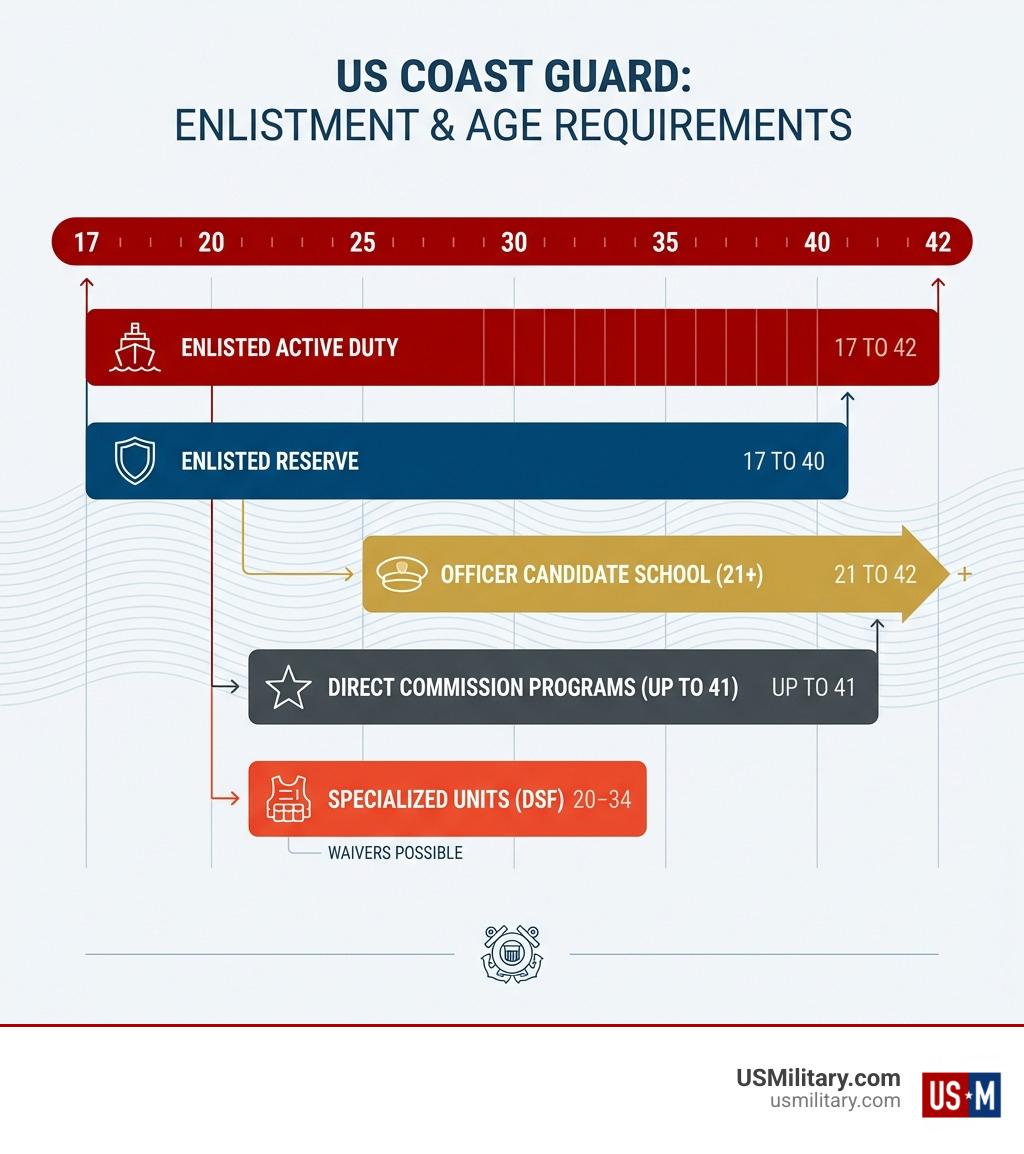
Current Coast Guard Age Requirements:
- Minimum Age: 17 years old (with parental consent)
- Maximum Active Duty Age: 42 years old (raised from 35 in fall 2022)
- Reserve Maximum Age: 40-41 years old (depending on role)
- Officer Programs: Varies by program (21-42 years old)
- Specialized Units (DSF): 20-34 years old (waivers possible)
If you’re wondering whether you’re too old or too young to join the Coast Guard, you’re not alone. The Coast Guard made significant changes to its age policy in 2022, raising the maximum enlistment age to 42 to address recruitment challenges in a tight labor market.
This guide breaks down exactly what these age requirements mean for you. Whether you’re a recent high school graduate, a professional considering a career change, or someone with prior military service, understanding the Coast Guard’s age policies is your first step toward service.
The Coast Guard is unique among military branches. It operates under the Department of Homeland Security during peacetime and protects over 100,000 miles of U.S. coastline. With approximately 41,000 active-duty members, it’s the smallest armed forces branch—but it plays a critical role in maritime security, search and rescue, and law enforcement.
Age limits exist for good reason. They balance physical readiness requirements with operational needs. But as you’ll see, these limits are more flexible than many people think.
Coast Guard Enlistment Age: The Basics for New Recruits
Joining the U.S. Coast Guard is an exciting and challenging endeavor. Like all military branches, we have specific entry requirements designed to ensure that every recruit is ready for the rigors of service. One of the most common questions we receive revolves around the coast guard enlistment age. Let’s explore the specifics for active duty and reserve components.
Minimum Age to Join
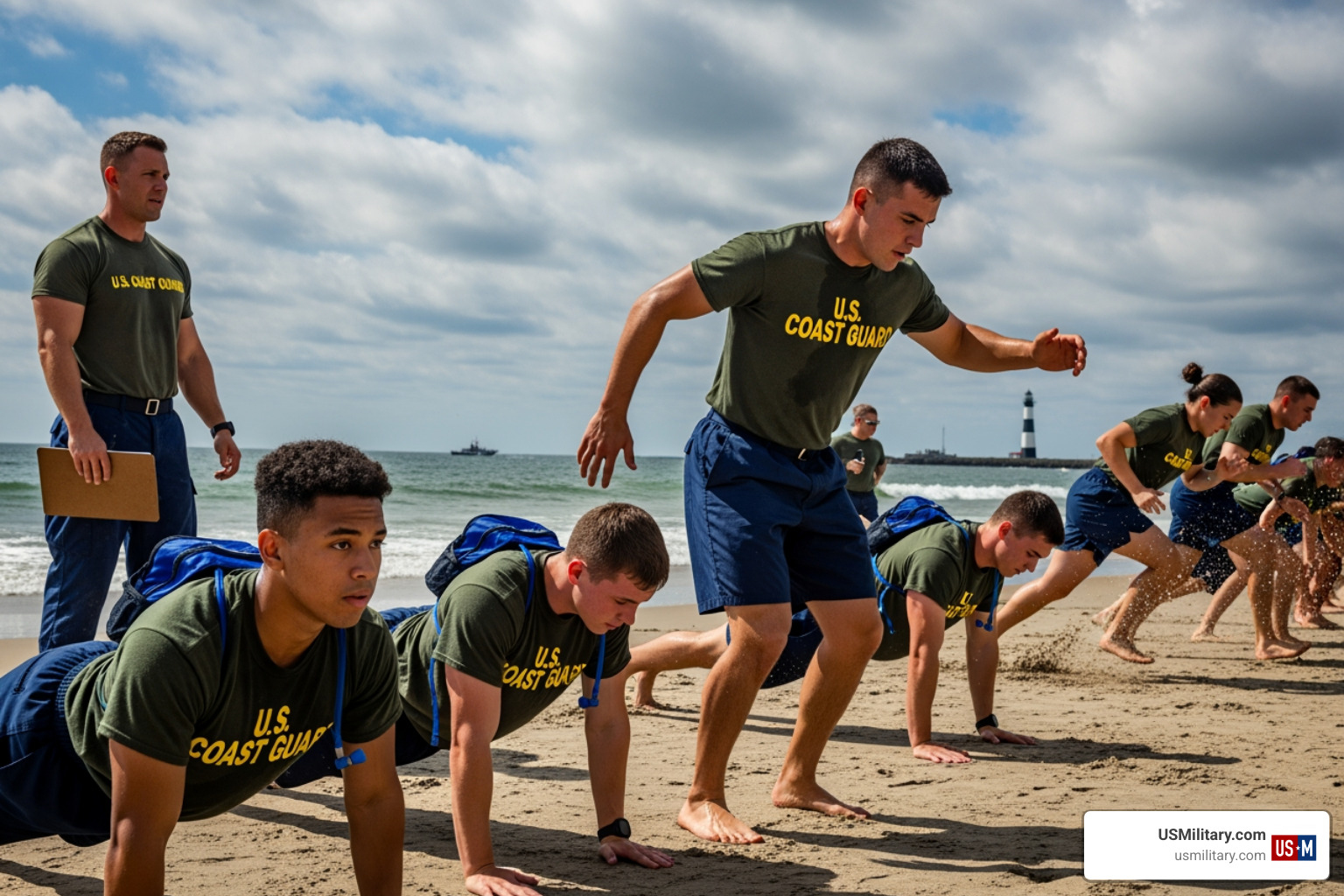
The journey to becoming a Coast Guardsman can begin relatively early! The minimum age to enlist in the Coast Guard is 17 years old. However, if you’re 17, we require parental consent to begin the enlistment process. This ensures that both you and your family are fully on board with this significant life decision. Along with meeting the minimum age, recruits typically need to be a high school graduate or have an equivalent credential, and meet other basic eligibility criteria to start their career with us.
Maximum Active Duty Enlistment Age
This is where things have seen some recent and significant changes! Historically, the maximum age for active duty enlistment in the Coast Guard was 35. However, in the fall of 2022, we officially raised this limit to 42 years old. This policy change, outlined in ALCOAST 437/22, was a strategic move to address recruitment challenges in a tight labor market and expand our applicant pool. We recognize that valuable skills, experience, and maturity aren’t exclusive to younger candidates. This adjustment allows us to welcome a wider range of qualified individuals who are ready to serve our nation. So, if you’re in your late 30s or early 40s and have been dreaming of serving, now might be your chance!
Age Limits for the Coast Guard Reserve
For those looking to serve our country on a part-time basis, the Coast Guard Reserve offers a fantastic opportunity. The age limits for reservists are slightly different than for active duty. While the minimum age remains 17 (with parental consent), the maximum age for enlistment in the Coast Guard Reserves can be up to 40 or 41 years old, depending on the specific role and your qualifications.
The Reserve component is vital to our mission, allowing individuals to balance civilian careers and family life with military service. If you’re interested in Fulfilling a Responsibility in the U.S. Coast Guard without committing to full-time active duty, the Reserve could be an excellent fit. Just like active duty, specific roles within the Reserve might have additional requirements, so it’s always best to chat with a recruiter for personalized information.
Age Requirements for Officer and Specialized Programs
Beyond enlisted roles, the Coast Guard also offers numerous opportunities for those seeking leadership positions and advanced careers as officers. These paths often have their own unique age considerations, reflecting the different educational and experience requirements.
Becoming a Coast Guard Officer: Age Considerations
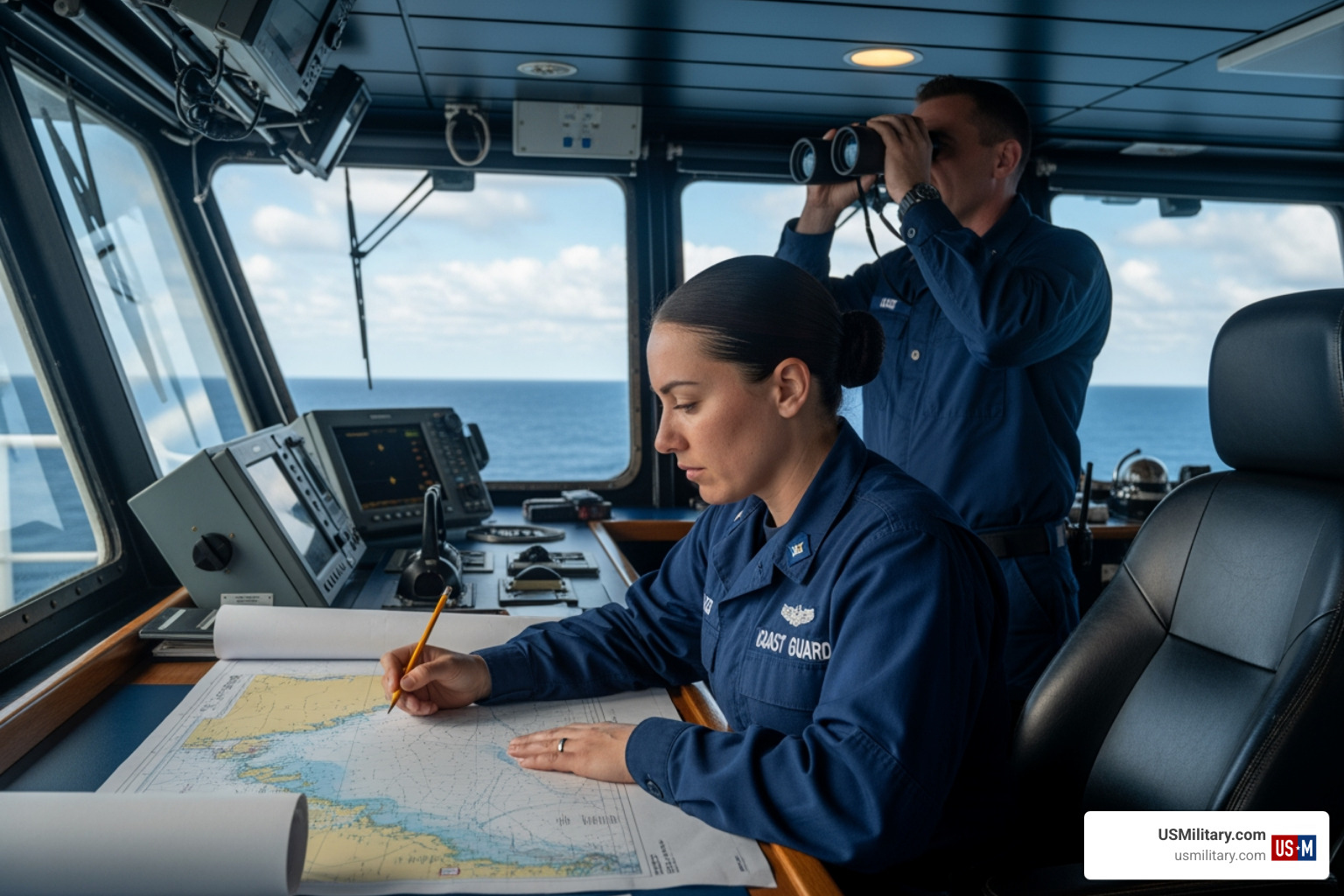
Becoming a Coast Guard officer typically requires a college degree. Our officer corps comprises leaders who guide our missions and personnel. The primary pathways to commissioning are Officer Candidate School (OCS), Direct Commission programs, and the U.S. Coast Guard Academy. Each of these routes has specific age requirements.
For instance, Officer Candidate School (OCS) is a rigorous 17-week program designed for college graduates. Applicants for OCS generally need to be at least 21 years old. Other officer career paths, such as those pursued through Educational Coast Guard Academy Options, have their own distinct age and academic requirements.
Age Ranges for Specific Officer Programs
While 21 is a common minimum age for officer programs, the maximum age can vary significantly based on the specific commissioning path and your prior experience.
- Officer Candidate School (OCS): While the minimum is generally 21, the maximum age for OCS applicants (and several other officer accession programs like DCE, DCIO, DCL, DCPA, DCSS, LOMM, MARGRAD, PTMO, OCS-R, and OCS-T) was recently raised to 41 years old.
- Direct Commission Aviator (DCA): For those with a passion for flight, the maximum age for Direct Commission Aviators was increased from 34 to 36 years old.
- Other Direct Commissions: Many other Direct Commission programs, which cater to professionals in fields like law, medicine, engineering, and intelligence, generally allow applicants up to 41 years old. These programs value specialized civilian expertise, and the extended age limit helps us bring in highly qualified individuals.
These varying age limits reflect our need for diverse talent and experience within our officer ranks, from fresh college graduates to seasoned professionals.
Age Requirements for Specialized Units
The Coast Guard has several specialized units that require unique skills and physical capabilities. These units often have specific age ranges to ensure peak performance and readiness.
For example, our Deployable Specialized Forces (DSF), which include elite teams like the Maritime Security Response Team (MSRT), typically require applicants to be between the ages of 20 and 34. These roles are incredibly demanding, involving tactical operations, counter-terrorism, and high-risk law enforcement activities.
While there’s a standard age range, it’s worth noting that age waivers are possible on a case-by-case basis for exceptional candidates. So, if you’re slightly outside this range but possess unparalleled skills and experience, don’t count yourself out. Units like our Coast Guard Rescue Swimmer Careers also have stringent physical and medical requirements that often correlate with age. Always discuss your specific situation with a recruiter for the most accurate information.
Waivers and Exceptions for Coast Guard Age Limits
While we have clear age guidelines, we also understand that life paths aren’t always linear. The Coast Guard is committed to finding the best talent, and sometimes that means making exceptions for highly qualified individuals. This is where the concept of age waivers comes into play.
Understanding the Coast Guard Enlistment Age Waiver Process
Yes, the Coast Guard does offer age waivers for enlistment! The Coast Guard Recruiting Command has the authority to authorize case-by-case waivers for certain entrance standards, including age. This process is typically reserved for otherwise strong candidates who possess exceptional skills, experience, or qualifications that would be a significant asset to the service.
For instance, if you have specialized civilian certifications, critical language skills, or prior military experience that makes you an outstanding applicant, an age waiver might be considered. It’s not a guarantee, but it opens the door for individuals who might otherwise be just outside the standard age limits. The best way to explore this option is to Contact a recruiter for details and discuss your unique circumstances. They can guide you through the waiver application process and help you present the strongest case.
How Prior Service Affects Your Enlistment Age
If you’ve previously served in any branch of the U.S. military, your prior service can significantly impact your coast guard enlistment age eligibility. Many branches, including the Coast Guard, have provisions that allow prior service members to subtract their previous years of active duty service from their current age when calculating their enlistment eligibility. This is sometimes referred to as a “constructive age” calculation.
For example, if the maximum age for a particular role is 42, but you served four years on active duty in the Army, your effective age for enlistment purposes could be considered 38 (42 – 4 = 38). This flexibility is designed to retain valuable experience and leadership within our ranks. If you have a DD214 (Certificate of Release or Discharge from Active Duty), bring it when you speak with a recruiter, as it’s crucial for verifying your prior service.
How Coast Guard Age Policies Compare to Other Branches
It’s helpful to see how the Coast Guard’s age policies stack up against other military branches. While there are similarities, each service has its own specific requirements, often reflecting their unique missions and operational demands.
Here’s a comparison of the minimum and maximum active duty enlistment ages for the Coast Guard and other U.S. military branches:
| Military Branch | Minimum Active Duty Age | Maximum Active Duty Age |
|---|---|---|
| Army | 17 (with parental consent) | 41 |
| Marine Corps | 17 (with parental consent) | 28 |
| Navy | 17 (with parental consent) | 41 |
| Air Force | 17 (with parental consent) | 39 |
| Coast Guard | 17 (with parental consent) | 42 |
| Space Force | 17 (with parental consent) | 42 |
As you can see, the Coast Guard, along with the Army, Navy, and Space Force, now offers a higher maximum enlistment age compared to the Air Force and especially the Marine Corps. This reflects a broader military-wide trend toward adjusting recruitment goals and adapting to evolving demographics and labor market conditions. Our decision to raise the maximum age to 42 makes us one of the most flexible branches in terms of coast guard enlistment age, allowing us to tap into a wider pool of talent and experience.
Frequently Asked Questions About the Coast Guard Enlistment Age
We know you might still have some lingering questions, especially with all the recent changes. Let’s tackle some of the most common ones about the coast guard enlistment age.
What was the Coast Guard’s maximum enlistment age before the recent change?
Before the policy update in the fall of 2022, the maximum coast guard enlistment age for active duty was generally 35 years old. This change to 42 years old was a significant shift, driven by the need to recruit qualified candidates in a competitive labor market. It’s part of our broader “Ready Workforce 2030” initiative, aiming to remove barriers and ensure we have the personnel needed to fulfill our critical missions.
Do I still need to meet physical fitness standards if I enlist at an older age?
Absolutely, yes! Age is just one factor in eligibility. Regardless of your age, all applicants must meet our universal physical fitness and medical standards. We don’t adjust these standards based on age because the demands of service remain the same. This means you’ll still need to pass a comprehensive medical exam at a Military Entrance Processing Station (MEPS) and meet the requirements of our Physical Fitness Test (PFT).
For enlisted recruits, this typically involves performing a certain number of push-ups and sit-ups within a minute and completing a 1.5-mile run within a specific time. Officer candidates also have their own PFT standards. Our missions require physical readiness, whether you’re 18 or 42. So, start training early! You can learn more about what to expect during Enlisted USCg Basic Training.
How do I start the process if I am near the maximum age limit?
If you’re approaching the maximum coast guard enlistment age of 42, our strongest recommendation is to contact a recruiter immediately. The application process, from initial interview to basic training, can take several months. Time is of the essence!
A recruiter will help you understand the specific application timeline, guide you through preparing necessary documents, and schedule essential steps like taking the ASVAB test and undergoing your physical exam. Don’t delay—every day counts when you’re close to the age cutoff. You can find local resources and connect with recruiters through pages like Coast Guard Recruiters Near Me. They are your best resource for navigating the process efficiently.
Begin Your Journey: Next Steps for Joining the Coast Guard
We hope this guide has clarified the coast guard enlistment age requirements and shown you that age might be less of a barrier than you initially thought. With recent policy changes, we’re more flexible than ever, welcoming a diverse range of ages into our ranks for both active duty and reserve roles, and across various officer programs.
While age is an important factor, it’s just one piece of the puzzle. You’ll also need to meet other key requirements, including:
- ASVAB Scores: Performing well on the Armed Services Vocational Aptitude Battery (ASVAB) is crucial for determining your eligibility and potential job assignments.
- Medical and Background Checks: All applicants undergo thorough medical evaluations and background checks to ensure they meet our health and security standards.
- Physical Fitness: As we discussed, maintaining physical readiness is non-negotiable, regardless of your age.
If you’re ready to explore how your unique skills and experience can contribute to protecting our nation’s waterways and safeguarding our coasts, we encourage you to take the next step. Our team at USMilitary.com is dedicated to providing comprehensive resources to help you on your journey.
To learn more about military age limits across all branches and find the path that’s right for you, visit our detailed guide: Learn more about military age limits and find your path. Your service could begin sooner than you think!
Free for Service Members & Veterans
Get the military benefits intel no one tells you about.
Weekly updates on VA benefits, pay changes, and money tips — free for service members and veterans.
No spam. Unsubscribe anytime. Your info is never shared.



More Than 90% Of Clients Have Increased Ratings! Why Settle For Less Than You Deserve? Expert Priority Help With Your VA Claim Today! Free Evaluation Call!
The mission of Veteran Services United is to support veterans in filing and winning disability claims by offering expert guidance, advocacy, and personalized assistance. Through dedicated service, Veteran Services United empowers veterans to secure the benefits they have earned, ensuring they receive the care and support they deserve.