Religion, Extremism, and the Real Story of 9/11
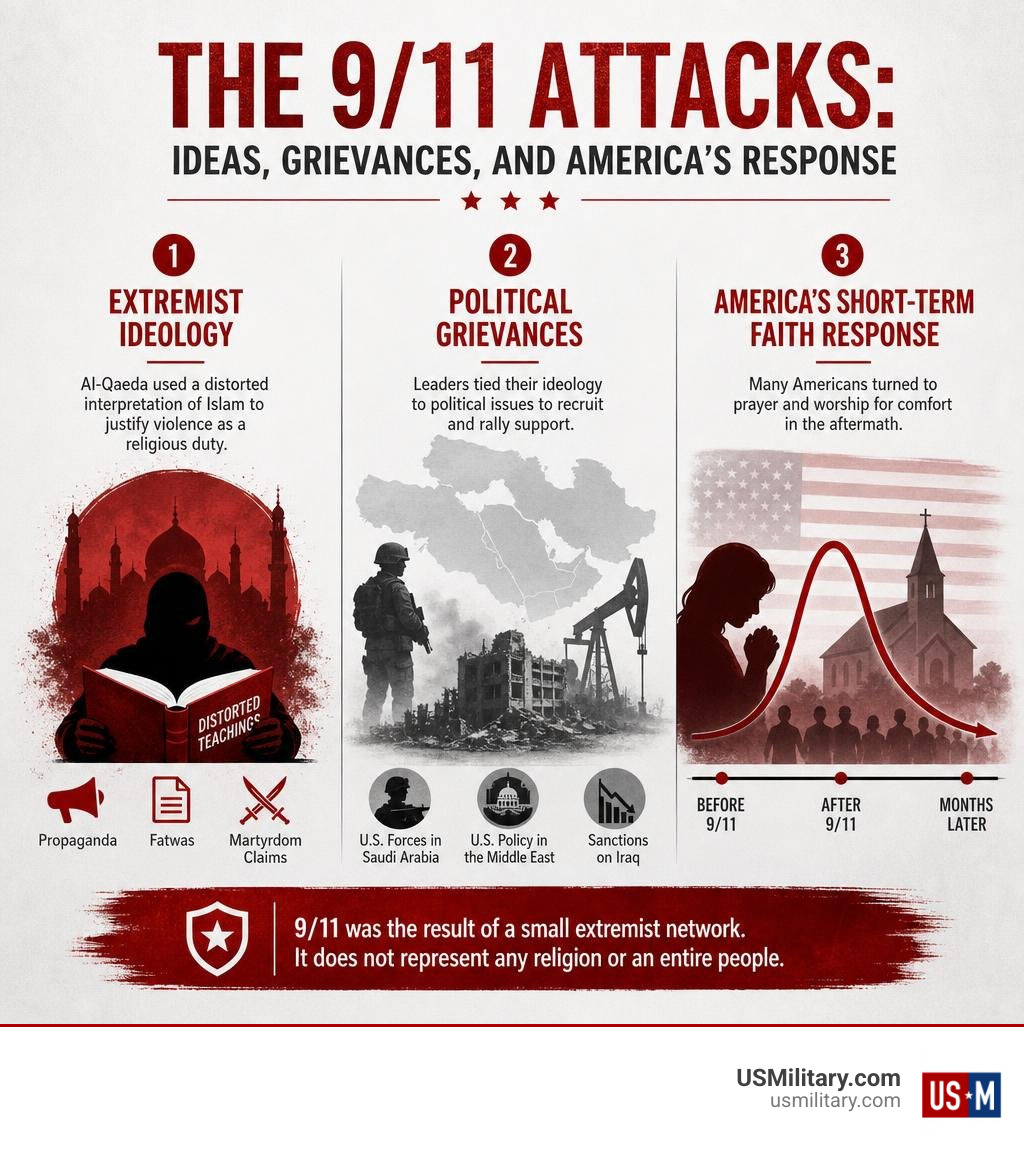
Yes, the Islamic religion played a part in the 9/11 attacks, but it was not the whole cause. Al-Qaeda used an extremist, widely rejected interpretation of Islam to present violence as a religious duty. Its leaders also tied that message to political grievances, including U.S. forces in Saudi Arabia, U.S. policy in the Middle East, and the effects of sanctions on Iraq.
That distinction matters. The attacks were committed by al-Qaeda, not by Islam or Muslims as a whole. The group’s leaders used selective religious language, self-styled fatwas, and martyrdom claims to recruit and justify mass murder. At the same time, their strategy aimed to provoke a wider U.S. military response and deepen conflict.
For many Americans, 9/11 also brought a brief turn toward prayer, worship, and spiritual comfort. Christian church attendance rose in the months after the attacks, but most measures returned near earlier levels soon afterward. The national trauma changed public debate about good, evil, faith, security, and Islam, without creating a lasting religious revival.
I am LARRY FOWLER, publisher of the USMilitary.com Network, serving military members and veterans with clear information on military careers, benefits, and service-related issues since 2007. In examining The Truth: Did Religion Have A Part In The 9/11 Attacks, I aim to separate documented Islamic extremist ideology from broad religious stereotypes and explain why this history still matters to the military community.
Related Analysis and Topics:
- The Unfiltered Truth About How Important Christian Faith Is In The US Military Today
- The Unfiltered Truth About Faith Eroding In Today’s Military
- Navy SEAL Christian Faith
The Truth: Did Islamic Religion Have A Part In The 9/11 Attacks? Examining Al-Qaeda’s Motivations
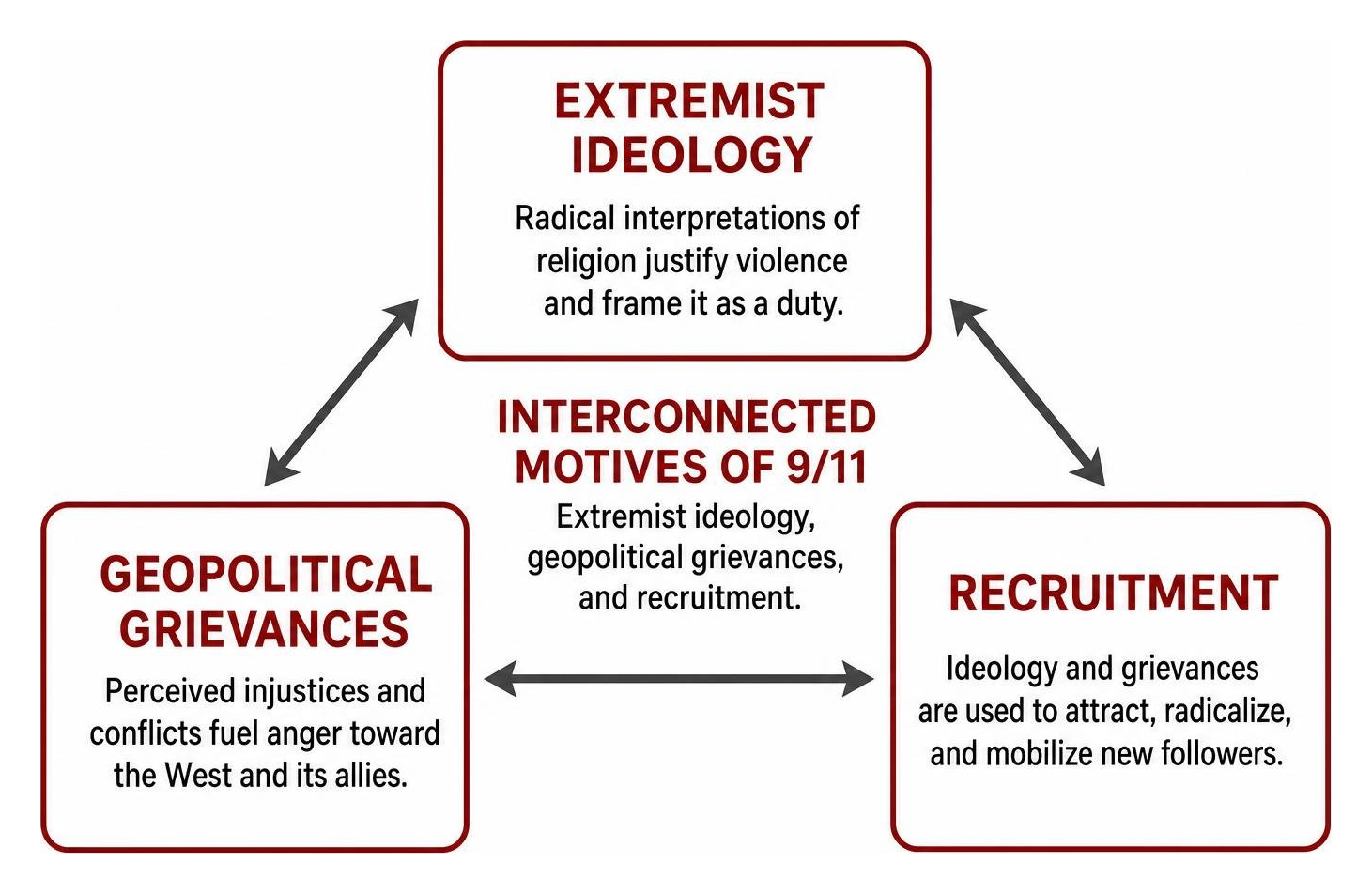
When dissecting modern military history and national security, answering the central question of extremist motivation requires reviewing primary documentation. The official 9/11 Commission Report documents how al-Qaeda constructed an ideological framework blending Islamic extreme religious radicalism with sharp geopolitical aims.
Osama bin Laden and his ideological circle drew heavily upon radical interpretations popularized by mid-20th-century theorists such as Sayyid Qutb. This doctrine embraced takfir—the practice of declaring other Muslims apostates if they did not adhere strictly to a fundamentalist political-religious vision. By categorizing secular governments, Western nations, and non-fundamentalist Muslims as illegitimate, al-Qaeda attempted to justify violence that violated centuries of mainstream Islamic legal tradition.
In 1996 and 1998, bin Laden issued self-styled fatwas declaring war against the United States. Classical Islamic jurisprudence requires recognized legal scholars with deep scriptural authority to issue formal decrees. Bin Laden possessed no such credentials. Yet his 1998 declaration claimed that killing Americans—civilians and military personnel alike—was an individual religious obligation for every Muslim. Scholarly reviews, including an analytical study on religious clash theories, highlight that while al-Qaeda weaponized faith to rally recruits, the organization operated as a transnational terrorist enterprise leveraging religion to achieve strategic outcomes.
Ideological Roots: The Truth: Did Religion Have A Part In The 9/11 Attacks Through Extremist Doctrine?
The operational manual recovered from the 9/11 hijackers reveals how theological language was used to mentally condition the operatives. Hijacker ringleader Mohamed Atta and his co-conspirators carried written spiritual instructions filled with scriptural citations, prayers, and calls for purification before boarding the aircraft.
The hijackers relied on selective readings of the Quran, specifically weaponizing verses addressing historical warfare while stripping away traditional legal boundaries regarding civilian immunity. They framed mass murder as an act of personal martyrdom (istishhad). By convincing young recruits that hijacking commercial airliners was a direct act of holy devotion, al-Qaeda built an ideological pipeline that transformed violent anti-Western radicalism into a perceived moral duty.
Geopolitical Conflict vs Faith: The Truth: Did Religion Have A Part In The 9/11 Attacks or Was It Policy?
While religious rhetoric provided the spiritual justification, al-Qaeda’s broader platform was rooted in specific geopolitical grievances. Bin Laden’s manifestos and public statements repeatedly cited three main political issues:
- The U.S. Military Presence: The stationing of approximately 5,000 U.S. troops in Saudi Arabia following the 1991 Gulf War, which al-Qaeda framed as foreign occupation near Islam’s holiest sites.
- Economic Sanctions on Iraq: The post-Gulf War trade embargoes that contributed to widespread civilian suffering across the region.
- The Israeli-Palestinian Conflict: Long-standing U.S. diplomatic and military support for Israel.
Bin Laden weaponized high youth unemployment, economic stagnation, and political disenfranchisement across the Middle East to recruit followers, using faith as an emotional rallying cry. The group designed the attacks to bait the United States into large-scale military interventions, hoping to spark a wider confrontation between the Western world and Islamic nations.
Immediate Aftermath: The 2001 Surge in American Faith and Church Attendance
Inside the United States, the attacks generated an immediate, collective emotional shock. In the days and weeks following September 11, millions of Americans turned toward spiritual practices for solace, community, and moral orientation. National surveys indicated that roughly 90% of American adults turned to true faith without advocating violence, such as Christianity, prayer, or personal spirituality, to cope with the trauma.
Weekly religious attendance surged dramatically. By November 2001, church attendance peaked at 48% of American adults, up from 42% recorded in August 2001. Across the country, historic houses of worship near Ground Zero—most notably St. Paul’s Chapel in Lower Manhattan—became 24/7 relief sanctuaries providing meals, rest, and spiritual counseling to rescue workers and first responders.
| Metric / Indicator | Pre-9/11 Level | Immediate Post-9/11 Level | Long-Term Post-9/11 Trend |
|---|---|---|---|
| Church Attendance | 42% (August 2001) | 48% (November 2001) | Returned to baseline (~42%) by early 2002 |
| Turned to Prayer/Faith for Coping | Not measured pre-crisis | 90% | Temporary crisis response |
| Faith “Very Important” in Life | 68% | 68% | Remained stable across decades |
| Identified as Christian | 86% | 84% | Gradual long-term demographic decline |
| Belief in Absolute Moral Truth | 38% (Jan 2000) | 22% (Late 2001) | Secularization and situational ethics increased |
| Bible as Primary Moral Decision Guide | Not tracked pre-9/11 | 13% | Reliance on personal feelings rose to 25% |
Demographic Disparities in Post-9/11 Spiritual Coping
The national turn toward faith was not uniform across every demographic segment. According to a longitudinal panel analysis using the Add Health dataset (Uecker, 2008), the short-term spiritual response varied significantly by age, gender, prior religious background, and geography.
- Gender Differences: Young men exhibited the most pronounced short-term spikes in prayer frequency and religious salience during the immediate two months following the attacks. While 45% of young men rated faith as very important before 9/11, that figure rose to 50% in the weeks immediately following.
- Prior Religious Socialization: Counterintuitively, young adults who had never attended religious services during adolescence demonstrated higher religious salience in the month following the attacks ($\beta = 0.36, p < 0.05$), indicating that crisis-driven faith often functioned as a compensatory coping mechanism for individuals lacking established community support structures.
- Geographic Proximity: Residents in the Northeast corridor showed higher rates of active religious coping compared to other regions, reflecting the psychological impact of proximity to Ground Zero and the Pentagon.
The Fleeting Revival: Why Moral Truth and Church Attendance Waned
Despite widespread media speculation about a lasting spiritual awakening, the post-9/11 religious surge was short-lived. By early 2002, national church attendance returned to normal baseline levels. While 44% of American adults described themselves as “absolutely committed” to Christianity post-attack (a minor increase from 42% pre-9/11), broader cultural measures revealed notable shifts in moral perception.
Nationwide belief in absolute moral truth dropped sharply from 38% in January 2000 to 22% after the attacks. Among young adults aged 18 to 25, only 22% believed in absolute moral truth. When asked how they made core ethical choices, only 13% cited Scripture or religious teaching, while 25% cited personal feelings and 14% pointed to parental guidance. The crisis prompted Americans to seek emotional comfort in religious spaces without producing permanent changes in theological conviction or regular religious practice.
Impact on American Muslims and the Evolution of Counter-Extremism Strategy
In 2001, Muslims accounted for less than 1% of the U.S. adult population (growing to approximately 1.1% over subsequent decades). Despite being victims, first responders, and service members at Ground Zero, American Muslims faced immediate scrutiny, heightened bias incidents, and federal surveillance programs.
President George W. Bush sought to separate extremist ideology from mainstream Islam six days after the attacks during his historic address at the Islamic Center of Washington, D.C., declaring that “Islam is peace” and that the war on terror targeted terrorists, not ordinary believers. An in-depth foreign relations analysis noted that navigating domestic security requirements while protecting civil liberties remained a central challenge of post-9/11 governance.
Civil Society, Integration, and Post-9/11 Discrimination
In response to heightened public suspicion, American Muslim communities expanded their civic engagement. Grassroots non-profits, civil rights organizations, and interfaith councils launched outreach programs, public educational forums, and community partnerships.
Over time, these organizations built coalitions with Christian, Jewish, and secular institutions. These efforts helped demystify Islamic traditions, counter extremist recruitment materials, and defend constitutional civil liberties across the country.
Countering Violent Extremism Programs and Global Policy Lessons
Federal counter-terrorism strategies shifted substantially over the subsequent two decades. Early federal efforts relied heavily on conventional intelligence and kinetic force, but national security policymakers gradually established Countering Violent Extremism (CVE) frameworks focused on preventive intervention.
Key lessons learned from CVE programs include:
- Community-Led Credibility: Government messaging alone often lacks credibility among at-risk youth; effective prevention relies on local teachers, mental health practitioners, parents, and religious leaders.
- Separating Ideology from Civil Rights: Blanket surveillance programs generated community distrust, whereas transparent partnerships produced sustainable security outcomes.
- Addressing Geopolitical Push Factors: Extremist recruiters systematically exploit foreign policy fallout—such as drone strike casualties or prisoner abuse scandals—requiring military operations to uphold ethical standards to avoid fueling enemy propaganda.
Long-Term Spiritual Legacies and Faith in the Armed Forces
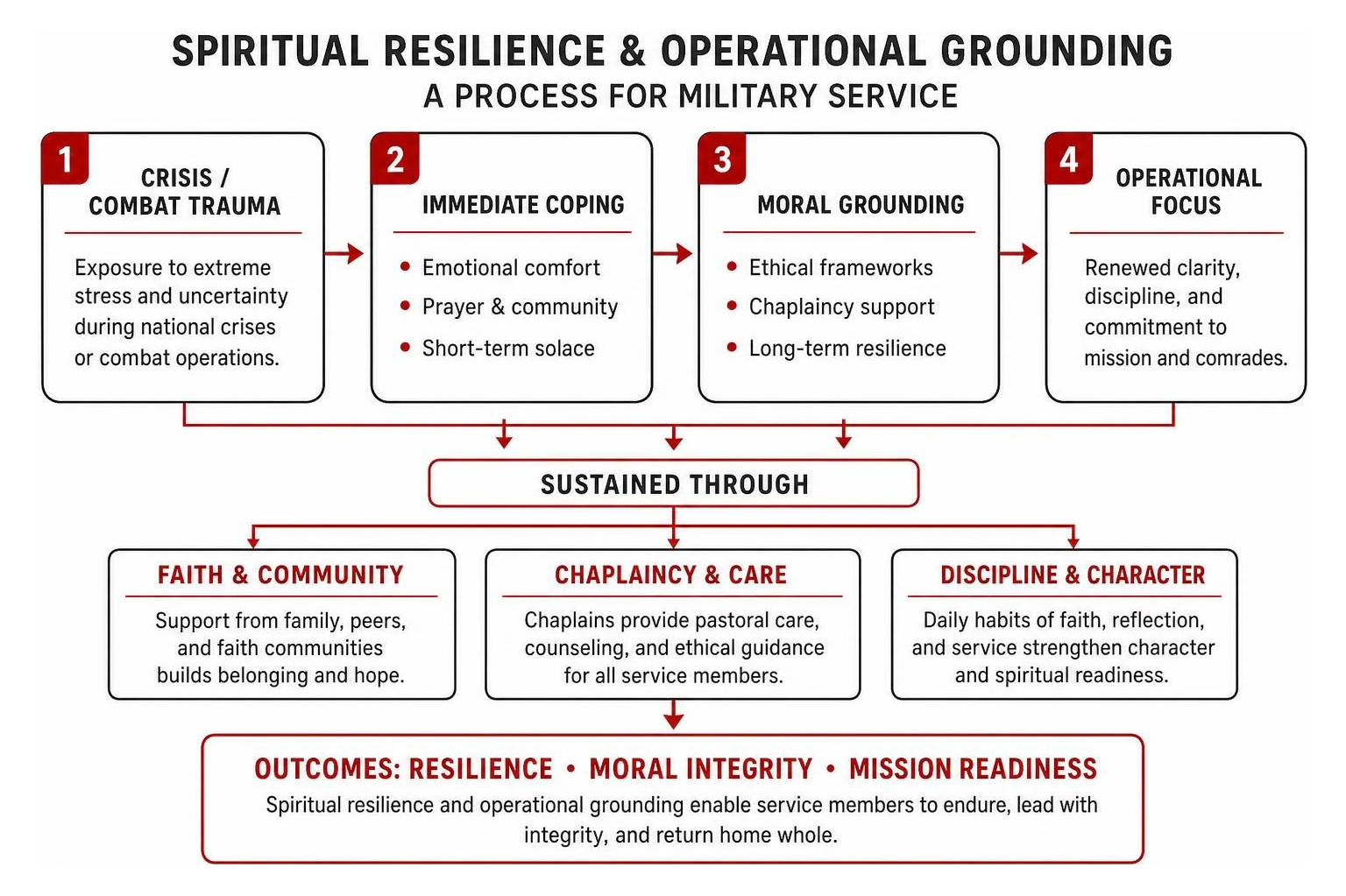
For the men and women of the United States Armed Forces, the events of September 11 reshaped operational readiness, mental resilience, and spiritual grounding. In combat environments worldwide, faith often served as a vital anchor under extreme stress.
Spiritual survival narratives from the attacks remain a testament to human resilience. The miraculous story of Genelle Guzman McMillan, the final survivor pulled alive from the World Trade Center rubble after 27 hours under the concrete, highlighted how prayer provided the psychological stamina needed to survive severe physical trauma.
Personal Resilience, Miracles, and Moral Foundations
Within military units, personal faith often reinforces core military virtues: selfless service, moral discipline, and commitment to comrades. Elite operators frequently reflect on the intersection of spirituality and operational focus, as outlined in studies on Navy SEAL Christian faith principles.
During the chaos of 9/11, spiritual leadership was exemplified by figures like Father Mychal Judge, the FDNY Chaplain who lost his life ministering to firefighters in the North Tower lobby. Chaplains across every military branch continue to provide vital pastoral care, suicide prevention counseling, and ethical guidance to service personnel of all faiths.
Enduring Lessons on Spiritual Transformation and Crisis Response
Decades removed from 2001, military leaders understand that crisis-induced turns toward faith are often fleeting unless supported by disciplined habits and personal conviction. As we examine discussions regarding faith eroding in today’s military, clear trends emerge: genuine spiritual readiness requires proactive, ongoing cultivation rather than reactive crisis responses.
For active-duty service members, veterans, and military families, maintaining a coherent moral and spiritual foundation provides essential protection against combat-related trauma, moral injury, and operational fatigue.
Frequently Asked Questions About Religion and 9/11
Did the 9/11 attacks lead to a permanent religious revival in the United States?
No. While roughly 90% of Americans engaged in prayer or spiritual coping, and church attendance spiked to 48% in November 2001, attendance returned to baseline levels (~42%) by early 2002. Long-term trends show continuing gradual secularization rather than a permanent revival.
How did the 9/11 attackers use Islamic texts to justify their actions?
Al-Qaeda selectively cited Quranic warfare passages out of context, completely ignoring classical Islamic legal prohibitions against targeting non-combatants. Bin Laden issued unauthorized fatwas and weaponized the concept of takfir to brand opponents as apostates, cloaking geopolitical objectives in religious language.
How did views on absolute moral truth change after September 11?
Belief in absolute moral truth fell from 38% in January 2000 to 22% in late 2001. A growing majority of American adults—particularly those aged 18 to 25—began prioritizing individual intuition, personal emotions, and secular reasoning over scriptural doctrines for ethical decision-making.
Conclusion
Understanding the intersection of faith and the September 11 attacks requires clarity: religion was weaponized by al-Qaeda as an extremist recruiting tool and ideological justification, but it operated hand-in-hand with specific geopolitical objectives. Mainstream Islamic scholars and populations worldwide overwhelmingly rejected al-Qaeda’s distorted theology.
At USMilitary.com, we remain dedicated to supporting our service members, their faith, religious choice, veterans, and military families with unbiased information on career progression, VA healthcare benefits, disability ratings, and educational pathways. Explore our platform today to access the resources and support you have earned through your dedicated service to our nation.
Reference List
Uecker JE. “Religious and Spiritual Responses to 9/11: Evidence from the Add Health Study*..” Sociological spectrum : the official journal of the Mid-South Sociological Association, 2008. PMCID PMC3118577.
Free for Service Members & Veterans
Get the military benefits intel no one tells you about.
Weekly updates on VA benefits, pay changes, and money tips — free for service members and veterans.
No spam. Unsubscribe anytime. Your info is never shared.


