Escalation in the Gulf: Trump Says He May Declare Strait of Hormuz a US Territory ‘After We Finish Defeating Iran’
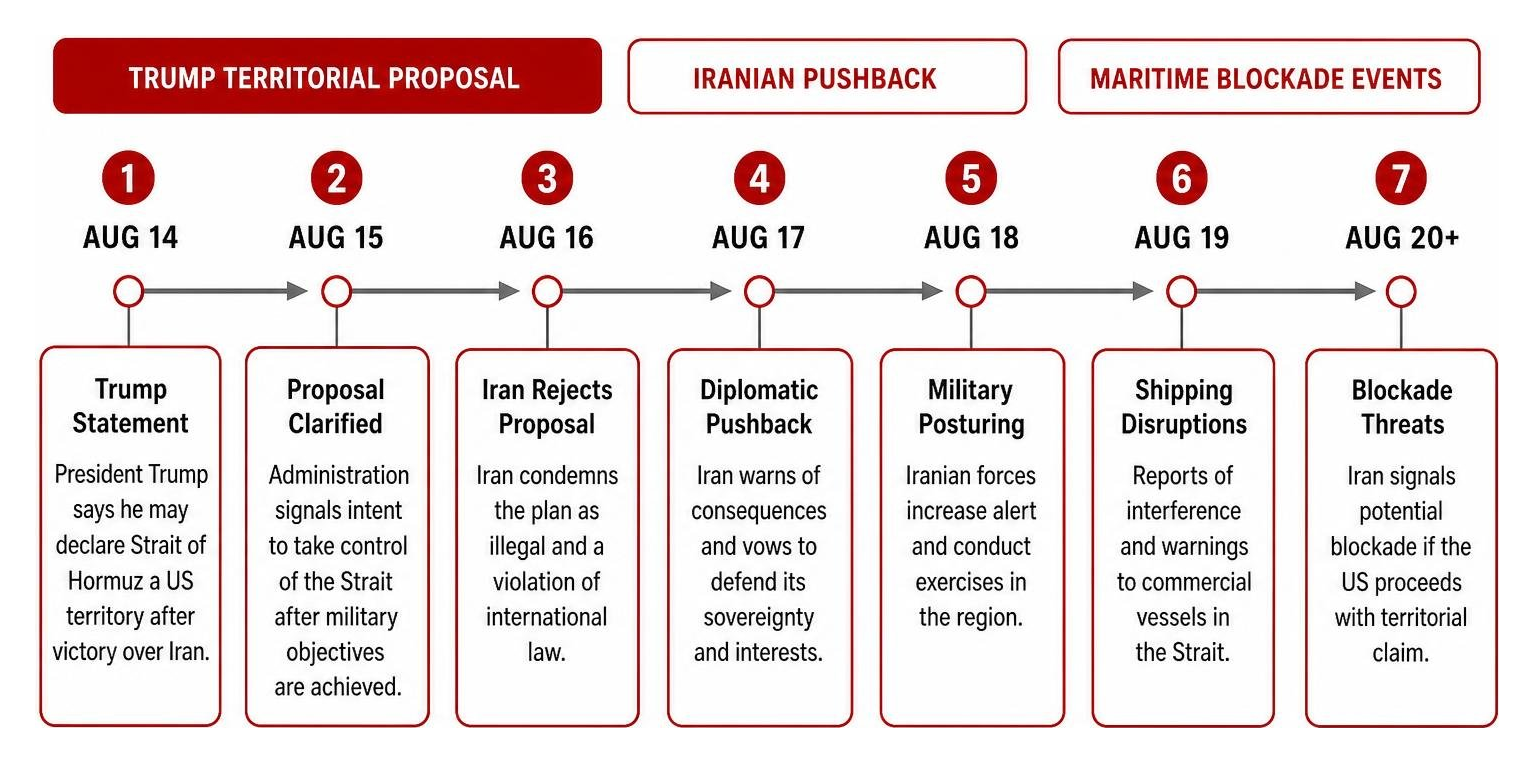
The geopolitical temperature in the Middle East spiked sharply following President Donald Trump’s public assertion that the United States could convert one of the world’s most critical maritime bottlenecks into American sovereign land. The controversial statement, Trump says he may declare Strait of Hormuz a US territory ‘after we finish defeating Iran’, immediately ignited worldwide debate over international maritime law, defense posture, and energy security.
Speaking during an address focused on domestic security and military posture, the President framed the potential takeover as a natural outcome of ongoing armed hostilities with Tehran. By framing the control of the narrow body of water as an outcome of military victory, the administration signaled a potential shift in how the U.S. might approach international choke points during major wars. For insights into broader policy shifts under the current administration, check out our analysis on Military Changes With President Trump.
Further reporting on the speech highlights how the proposal was presented to law enforcement and defense audiences. Coverage from The Horizon Wire noted that the idea of taking over the waterway was paired with assertions that U.S. naval forces were already holding an “impenetrable wall of steel” across the Persian Gulf.
Context Behind Trump’s Remarks at Long Island Rally
The controversial statements unfolded during a speech at the Nassau County Police Academy training center in Garden City, New York. Addressing a crowd of law enforcement officers and local officials, President Trump turned his attention away from domestic crime statistics to detail the military campaign in the Middle East. It was within this campaign-style atmosphere that he laid out his vision for the Persian Gulf following the end of active combat.
During the speech, Trump told the audience that Iran was being “very badly defeated” and referred to the regime in Tehran as “a very evil country.” He stated that once military objectives were achieved, Washington would step in to take direct control of the shipping route. As reported by Al Jazeera, the President asserted that the United States would soon officially designate the narrow passage as an American territory, ensuring that global shipping routes remained under U.S. oversight.
White House Clarifications and Proposed Shipping Tolls
Following the public address, foreign policy analysts and international observers scrambled to parse whether the statement represented formal U.S. strategic doctrine or political rhetoric. To add to the complexity, the administration previously floated the idea of collecting a 20 percent fee or toll on commercial products navigating through the waterway, positioning the U.S. Navy as a self-appointed “guardian” of global commerce to recoup military expenditures.
Legal scholars immediately pointed out that levying commercial transit fees in international waters violates established maritime conventions. Meanwhile, administration surrogates offered varying interpretations of the President’s words. According to coverage from Gulf News, a White House official privately suggested to reporters that the President’s comments regarding declaring the waterway U.S. territory were intended as a joke, even as official public statements maintained a firm stance on controlling Gulf shipping lanes.
Iran’s Rejection and the Standoff in the Strait
Tehran wasted no time firing back against the U.S. administration’s declarations. Iranian leaders dismissed the idea that their territorial waters or adjacent international channels could be annexed by decree. The diplomatic pushback coincided with active military interdictions in the Persian Gulf, where both U.S. and Iranian forces have enforced overlapping maritime blockades, bringing commercial traffic to a near-total standstill.
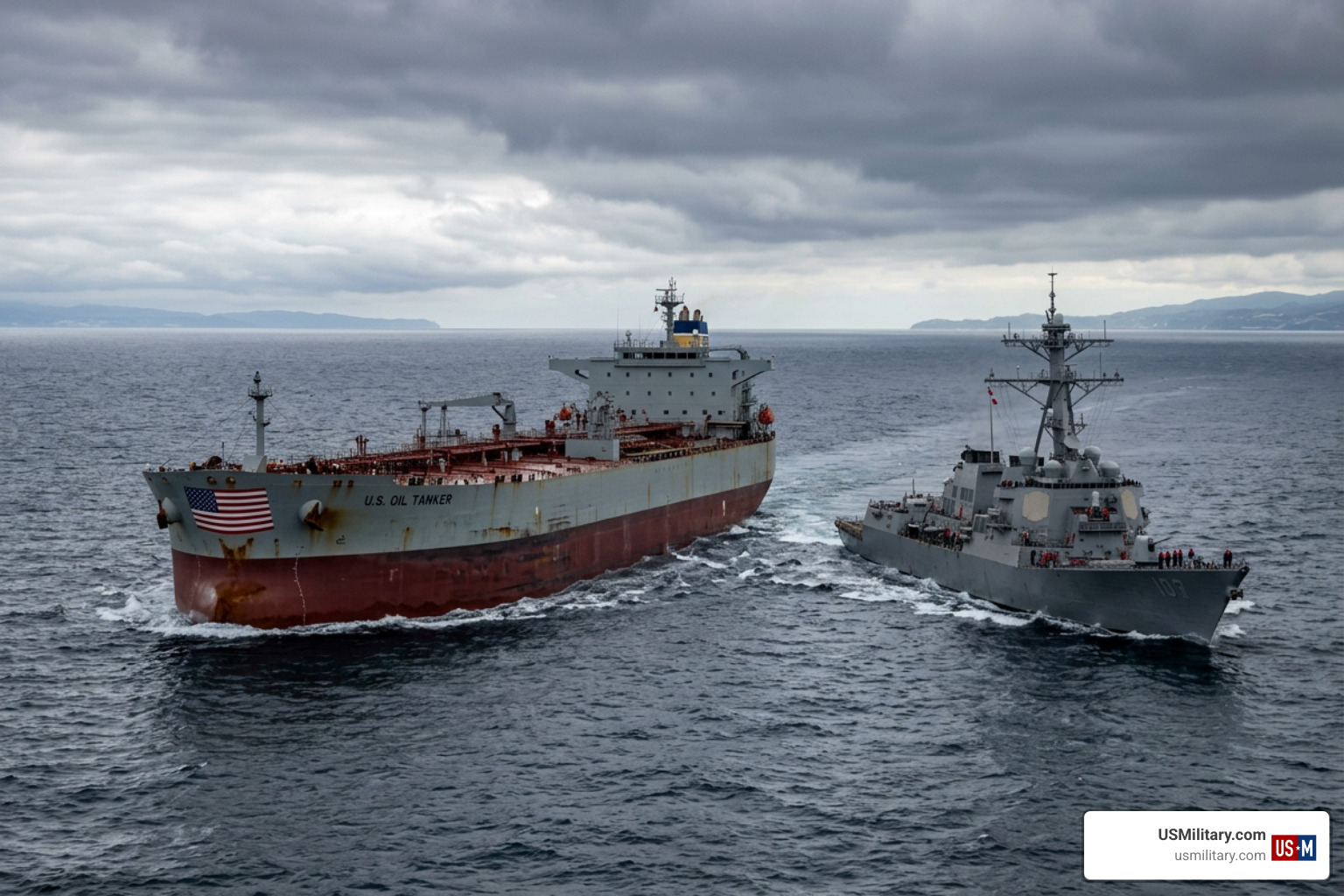
The strategic standoff has severely disrupted global supply networks. For a detailed breakdown of how naval blockades are established and maintained in this region, see our complete guide on how Trump Announces Naval Blockade Strait of Hormuz.
‘Delusions’: Tehran Responds to Trump Saying He May Declare Strait of Hormuz a US Territory ‘After We Finish Defeating Iran’
Official Iranian channels responded with sharp rhetoric. Deputy Foreign Minister Kazem Gharibabadi posted a blunt rejection on social media, advising Washington to accept reality and stop “indulging in delusions.” He emphasized that the strategic waterway has been, is, and will remain Iranian, asserting that control over its opening or closing rests entirely with Tehran.
As covered by the Free Press Journal, Iranian judicial chief Gholam-Hossein Mohseni-Eje’i similarly ridiculed the declaration, dismissing U.S. claims as the “delusions of a featherbrained individual.” Iranian diplomatic figures underscored that standard transit rights through the 170-kilometer-long passage cannot be rewritten by presidential speeches, tweets, or aircraft carrier strike groups.
Current State of Shipping Traffic and the Naval Blockade
The real-world consequence of this political war of words is visible on maritime tracking screens. In peacetime, the Strait of Hormuz is one of the busiest maritime arteries on Earth, handling roughly 130 to 140 commercial vessels every day. Under the current naval blockade and active war conditions, that robust commercial flow has collapsed.
On a recent Friday, maritime intelligence recorded only two merchant vessels attempting to navigate through the strait, neither of which was carrying crude oil. Commercial shipping risks across the Persian Gulf currently include:
- Direct targeting of commercial ship hulls by unknown land-based or airborne projectiles.
- Kinetic interdictions and warning shots fired by U.S. Navy ships enforcing blockade protocols against vessels bound for Iranian ports.
- Swarming tactics and explosive uncrewed boat strikes launched by regional proxy forces.
- Disruption of AIS (Automatic Identification System) transponder signals, forcing some brave crews to turn off tracking systems to avoid detection.
- Severe spikes in maritime insurance rates, making commercial passages economically unviable for major ocean carriers.
The United Kingdom Maritime Trade Operations (UKMTO) center has repeatedly issued alerts warning merchant fleets to exercise extreme caution when transiting the Gulf of Oman and adjacent waters due to ongoing missile and drone threats.
Legal, Geopolitical, and Regional Implications
The assertion that a sovereign state can annex an international strait runs headlong into decades of international law. The United Nations Convention on the Law of the Sea (UNCLOS) establishes clear guidelines regarding freedom of navigation and sovereign sea territory.
| International Maritime Law (UNCLOS) | Proposed U.S. Sovereignty Claim |
|---|---|
| Guarantees unhindered “transit passage” for all vessels through international straits. | Proposes direct territorial administration and U.S. federal jurisdiction over the waterway. |
| Strictly prohibits non-coastal states from charging tolls or transit fees on merchant ships. | Floats a 20% commercial toll on cargo to cover U.S. naval security costs. |
| Respects coastal nations’ 12-nautical-mile territorial sea limits (Iran, Oman, UAE). | Requires overriding coastal nations’ maritime sovereignty and borders. |
| Protects global commons and free oceanic commerce during peacetime. | Establishes strategic control derived from military victory and naval blockades. |
International Law and Free Transit Rights
Under established maritime frameworks, the Strait of Hormuz consists of territorial seas belonging to Iran, Oman, and the United Arab Emirates, alongside designated international shipping lanes. International law guarantees transit passage for all commercial vessels, ensuring unhindered trade between open oceans and the Persian Gulf.
Legal scholars note that declaring the strait an American territory would require completely disregarding the legal rights of neutral neighboring states like Oman and the UAE. As discussed in reporting by the Bahamas Spectator, attempting to alter the sovereign status of international waterways sets a precedent that could destabilize global maritime order everywhere from the South China Sea to the Danish Straits.
Responses From Gulf Allies: UAE and Saudi Arabia
The conflict has placed regional neighbors in a difficult position. Gulf allies such as Saudi Arabia and the United Arab Emirates rely heavily on safe passage through the strait to export petroleum products. However, the active war and continuous vessel attacks have severely disrupted their economies.
In a dramatic move demonstrating the severity of market disruptions, the UAE announced its departure from OPEC to gain operational flexibility in pumping crude and managing global energy shortages independently. Meanwhile, Saudi Arabia has strongly condemned Iranian drone and missile strikes targeting commercial oil tankers near UAE ports. For more on the expanding military posture in the Middle East, read about how the US Moves Airborne Troops and Marines as Iran Rejects Ceasefire.
Military Readiness and Morale Aboard the USS Abraham Lincoln
Behind the high-level diplomatic statements are thousands of active-duty U.S. Navy service members carrying out mission orders daily. Central to the U.S. military posture in the region is the Nimitz-class aircraft carrier USS Abraham Lincoln (CVN 72), which has borne the brunt of operational requirements in the Persian Gulf region.

Extended Deployments in the Persian Gulf
The USS Abraham Lincoln carrier strike group has been deployed at sea for more than 260 days—approaching nine full months of continuous operations. During this eight-month operational window, the carrier’s air wing has launched more than 10,000 sorties, maintaining round-the-clock air dominance and maritime interdiction patrols.
This extended operational tempo inevitably creates severe strain on both warship machinery and shipboard personnel. To relieve the long-serving carrier, the Pentagon has ordered the USS George Washington to deploy to the region. To understand the operational strategy guiding these naval deployments, see our analysis on Why the US-Israeli Strategy Against Iran Is Working.
Why Trump Says He May Declare Strait of Hormuz a US Territory ‘After We Finish Defeating Iran’ Amid Deployment Strain
The long deployment length has triggered intense public scrutiny back home, with military families raising concerns over service member burnout and long-term mental health. President Trump downplayed these operational concerns during his New York address, suggesting that nine months at sea was “not nearly enough” during wartime conditions.
In response to public inquiries, Pentagon spokesman Sean Parnell pushed back against media narratives alleging poor living conditions aboard the carrier. The Navy confirmed that robust support systems are actively serving the crew, including:
- 24/7 availability of embedded chaplains and clinical psychologists.
- The deployment of specialized mental health professionals and social workers to the strike group.
- Morale support assets, including an expeditionary facility dog named “CAPT Fathom” stationed aboard to assist sailors coping with stress.
Economic Impact and Midterm Election Politics
The military blockade in the Strait of Hormuz has sent shockwaves through energy markets, directly influencing domestic American politics ahead of the 2026 midterm elections. Because the strait normally handles nearly 20 percent of world oil consumption, even partial closures create immediate price shocks at gas stations across the United States.

Gas Price Surges and Energy Market Volatility
Global energy benchmarks surged as shipping traffic ground to a halt. Brent crude oil prices rose to $88 per barrel—a 5 percent weekly increase—while broader market futures fluctuated wildly.
On American soil, the average price of regular gasoline hit $4.07 per gallon on a recent Friday, up significantly from $3.16 per gallon recorded just one year prior. Addressing these financial pressures directly, President Trump urged Americans to accept higher fuel costs as a small trade-off, arguing that paying “a tiny little bit more for your gasoline” is a necessary price for ensuring Iran is permanently prevented from developing nuclear weapons capability.
Public opinion polls reflect growing domestic fatigue over Middle East military interventions. A Quinnipiac University national poll conducted in late July revealed that 60 percent of U.S. voters oppose U.S. military action against Iran, creating a complicated political backdrop for lawmakers facing reelection.
Ceasefire Negotiations and Diplomatic Deadlocks
Despite intense economic pressure, formal peace negotiations remain stalled. A 60-day negotiating window established in mid-June expired recently with zero direct talks taking place between Washington and Tehran.
Third-party nations, notably Qatar and Pakistan, have stepped in to act as diplomatic intermediaries, passing back-and-forth messages between the warring nations. However, significant structural obstacles remain:
- Iran demands an immediate end to the U.S. naval blockade on its ports before reopening maritime traffic.
- The U.S. insists on total Iranian compliance with nuclear dismantling and maritime security guarantees before easing economic blockades.
- Surrounding proxy conflicts in Yemen and Lebanon continue to ignite localized skirmishes, threatening fragile third-party diplomatic efforts.
For veterans and military families wondering about potential long-term force requirements if conflict expands, our breakdown explains Could a War With Iran Spark a Military Draft?.
Frequently Asked Questions About the Strait of Hormuz Standoff
Can the United States legally declare the Strait of Hormuz a U.S. territory?
Under established international law, including UNCLOS rules, no nation can unilaterally annex international straits or foreign territorial seas. The Strait of Hormuz contains territorial waters belonging to Iran, Oman, and the UAE. Any effort to claim U.S. sovereignty over these waters would violate international law and require overriding the territorial sovereignty of multiple sovereign countries.
How much oil passes through the Strait of Hormuz during wartime?
During peacetime, approximately 20 percent of global crude oil and liquefied natural gas (LNG) passes through the strait, averaging 130 to 140 commercial vessels daily. During active wartime blockades, oil traffic drops to near zero, leaving only a small trickle of non-petroleum cargo vessels attempting transit.
Are the U.S. and Iran currently engaging in direct peace talks?
No direct bilateral negotiations are occurring between top U.S. and Iranian officials. Instead, diplomatic messaging is handled through neutral third-party mediators, primarily Qatar and Pakistan, who relay draft proposals concerning maritime security and blockade relief.
Conclusion
The statement Trump says he may declare Strait of Hormuz a US territory ‘after we finish defeating Iran’ captures the intense strategic, economic, and political stakes defining the current conflict in the Persian Gulf. As maritime traffic remains stalled, deployed sailors face extended sea tours, and American consumers digest rising fuel prices, the debate over who controls global trade choke points remains front and center.
For active-duty service members, veterans, and military families navigating these complex times, having access to accurate, up-to-date defense information is critical. Whether you are reviewing military career options, assessing VA home loan benefits, tracking military retirement policy, or keeping up with global defense news, we are here to support your service journey. Stay updated on defense news, military benefits, and career options at USMilitary.com.
Free for Service Members & Veterans
Get the military benefits intel no one tells you about.
Weekly updates on VA benefits, pay changes, and money tips — free for service members and veterans.
No spam. Unsubscribe anytime. Your info is never shared.


