What Is a US Military Website — and Which Ones Matter Most?

The US military website ecosystem is large, but most people only need a handful of official sources to find what they’re looking for. Here are the key official sites by purpose:
| What You Need | Official Website |
|---|---|
| Department of War news & policy | war.gov |
| Joint Chiefs of Staff updates | jcs.mil |
| Army news, careers & benefits | army.mil |
| Navy information | navy.mil |
| Air Force news & operations | af.mil |
| Marine Corps updates | marines.mil |
| CENTCOM operations & releases | centcom.mil |
| General military info & benefits | usa.gov/military |
All official U.S. military sites use a .mil domain and secure HTTPS connections.
As of June 2026, these sites are covering major stories — from the end of the Iran blockade in the Strait of Hormuz to new defense technology initiatives and a $80 billion Pentagon budget request tied to ongoing operations. Whether you’re exploring enlistment, tracking active operations, or looking for veteran benefits, knowing which site to visit first saves a lot of time.
I’m Larry Fowler, publisher of USMilitary.com since 2007 — a privately owned, non-government US military website network built to help active service members, veterans, and families cut through the noise on VA benefits, disability trends, and military career decisions. In the sections below, I’ll walk you through exactly where to go and what’s happening across the U.S. military right now.
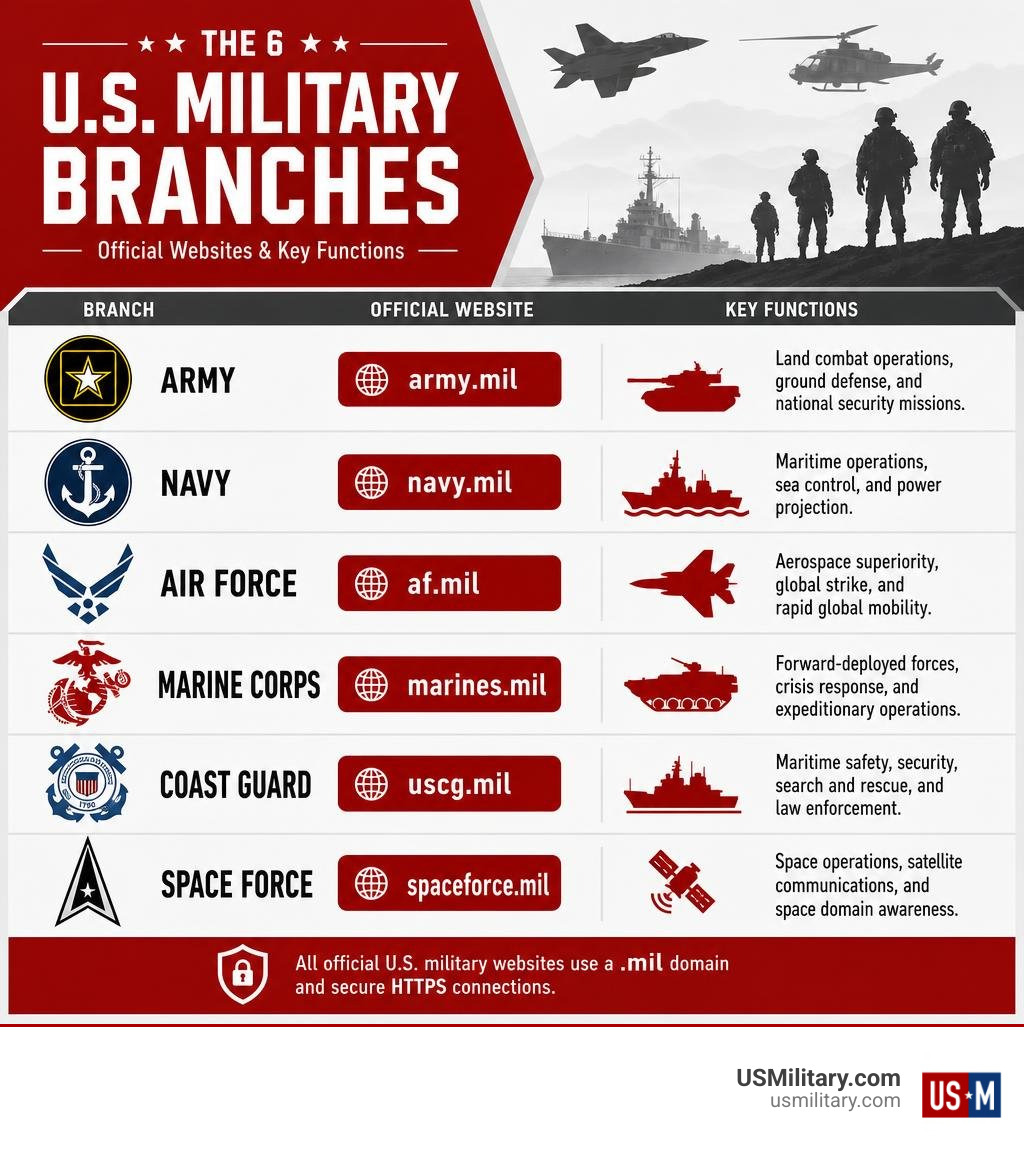
Navigating the Official US Military Website Ecosystem
When you first dive into official government sites, it can feel like trying to read a map written in alphabet soup. The sheer volume of portals, databases, and news hubs is enough to make anyone dizzy. However, there is a very simple rule of thumb to keep you safe and on the right track: look for the .mil domain extension.
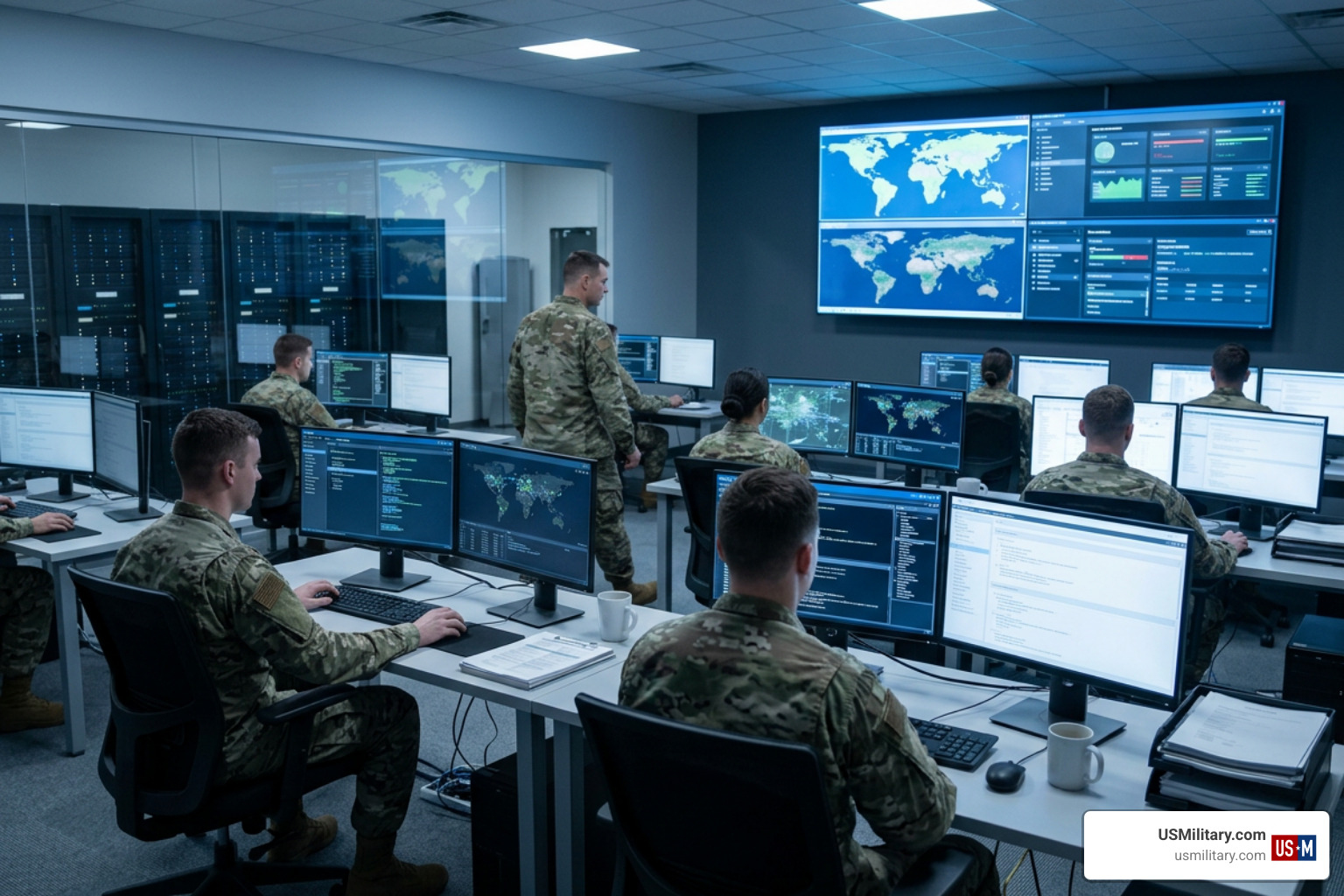
An official us military website will always end in .mil. This isn’t just a fancy branding choice; it is a restricted top-level domain reserved exclusively for the U.S. military. These platforms utilize secure, encrypted HTTPS connections to protect sensitive information, which is particularly important if you are logging in to view service records or personal benefits.
If you are looking for high-level military strategy, official public releases, and joint operational updates, your primary stop should be the Official Website of the Joint Chiefs of Staff. This hub provides direct insight into how the 2.8 million service members and civilians in the Joint Force are being deployed globally.
For broad policy shifts, defense directives, and statements from leadership, the Home | U.S. Department of War (the newly renamed Department of Defense, or DoD) serves as the civilian-led command center for official military communication. It is here that the Secretary of War, Pete Hegseth, and other top officials outline the nation’s defense trajectory.
Finding Resources on an Army or Air Force US Military Website
If you are looking to enlist, transition, or simply track the day-to-day activities of land and air forces, the individual branch portals are your best bet.
To explore the oldest branch of the armed forces, The Official Home Page of the United States Army is the definitive resource. This portal is packed with guides on the Army Fitness Test, grooming standards, rank structures, and active-duty recruiting goals. It also highlights major initiatives, such as “Tell Your Formation”—a leader-led communication effort designed to translate complex regulations into plain English for everyday soldiers.
On the aviation side, The Official Home Page of the U.S. Air Force focuses heavily on operational readiness, global deterrence, and pilot career paths. Whether you want to learn about the newly introduced Air Expeditionary Wing 2.0 or check the status of the T-38 Talon training fleet, this site serves as the central flight line for air power updates.
We also encourage you to look at More info about military branches on our own platform to see how these career paths stack up against one another in terms of lifestyle, deployment schedules, and civilian transferability.
Accessing Navy and Marine Corps Portals via a US Military Website
For those drawn to the water or amphibious warfare, the Navy and Marine Corps maintain highly active digital presences.
United States Navy – Home showcases how combat-ready sailors, submarines, and carrier strike groups deploy worldwide to maintain maritime security without relying on foreign land bases. The Navy portal is an excellent tool for tracking fleet movements, understanding the core values of Honor, Courage, and Commitment, and reading up on the latest naval engineering breakthroughs.
Meanwhile, Marines.mil – Official website of the United States Marine Corps highlights the unique, fast-striking nature of the Corps. From updates on Realistic Urban Training to the selection of Marine leaders for historic NASA space flights, this site captures the high-intensity culture of the Marines.
To help make sense of how these maritime forces coordinate, we provide More info about the US military to give you a clear, unbiased look at how each branch contributes to our national defense.
Current Operations: Iran Blockade and Operation Epic Fury
The year 2026 has seen significant naval activity in the Middle East. For two months, the U.S. Navy and its allies maintained a strict maritime blockade in the critical waters of the Gulf of Oman and the Strait of Hormuz. This operation was designed to choke off illicit shipping and enforce strict compliance against vessels linked to regional aggression.
During this high-stakes mission, U.S. forces successfully redirected 91 commercial ships to ensure compliance with the blockade. In cases where vessels actively attempted to violate the perimeter, decisive actions were taken. U.S. forces disabled 3 oil tankers violating the blockade in the Gulf of Oman.
The maritime blockade was officially lifted by the U.S. Navy on June 18, 2026, marking the end of a highly tense, two-month naval standoff.
Running parallel to these maritime efforts was Operation Epic Fury, a major multidomain campaign aimed at neutralizing hostile capabilities and restoring deterrence in the region. This operation involved coordinated airstrikes, intelligence gathering, and the deployment of specialized units, including the New Hampshire Air National Guard, whose airmen recently returned home after completing their rotation.
For real-time updates and official command statements on these ongoing activities, the U.S. Central Command (CENTCOM) Official Website Homepage remains the most authoritative source of public information.
Multinational Exercises and Global Integration in 2026
Even while executing active combat and blockade operations, the Joint Force continues to train alongside international partners to build what leadership calls “integrated deterrence.”
A prime example of this is Regional Cooperation 2026, an annual multinational command-post, field training, and cyber defense exercise. This year, more than 350 military personnel from 10 countries and 10 U.S. National Guard units gathered to strengthen security bonds, improve communication protocols, and practice joint responses to regional threats.
In the Indo-Pacific, the Marine Corps recently concluded the Pacific Amphibious Leaders Symposium 26 (PALS 26) and PACS 26. These events focused heavily on amphibious operations, logistics resilience, and maintaining a free and open Indo-Pacific. By integrating multinational forces into realistic training scenarios, the U.S. military ensures that if a crisis erupts, allies can seamlessly plug into our operational network.
Defense Budget Priorities and Technological Adaptation for FY2026 and FY2027
To maintain a competitive edge over global adversaries, the Department of War has shifted its strategic focus toward next-generation technology and rapid procurement. Secretary of War Pete Hegseth has emphasized the need for “defense and fiscal hawks to unite” to build the nation’s arsenal without compromising immediate readiness.
The financial and operational priorities for the upcoming fiscal years reflect this transition:
| Defense Priority | FY2026 Focus | FY2027 Strategic Shift |
|---|---|---|
| Emergency Funding | $80 billion requested for Iran war & operations | Integration of emergency funds into base readiness |
| Aviation & Autonomy | Expansion of Collaborative Combat Aircraft (CCA) | Full operational integration of loyal wingman drones |
| Sensing Technology | Prototype testing of quantum sensors | Deployment of quantum sensing for advanced ISR |
| Acquisition Reform | Streamlining UAS marketplace procurement | Scaling localized drone manufacturing and dominance |
Technologically, the military is moving away from the platforms of yesterday. The Air Force is actively validating its open-architecture systems to expand the Collaborative Combat Aircraft (CCA) ecosystem—autonomous drone wingmen designed to fly alongside manned fighter jets.
Additionally, the Department of War announced a major initiative to revolutionize Intelligence, Surveillance, and Reconnaissance (ISR) via quantum sensing. This technology allows for highly precise navigation and target detection even in environments where GPS is actively jammed by an enemy.
Readiness, Border Security, and Humanitarian Missions
While preparing for high-tech warfare, the U.S. military remains heavily committed to domestic security, disaster response, and humanitarian aid.
On the home front, National Defense Areas have been expanded along the Texas border, stretching approximately 250 miles west of the Gulf. Under Joint Task Force (JTF) Southern Border, active and National Guard forces are providing critical logistics, aerial surveillance, and engineering support to civilian border patrol agencies.
At the same time, search and rescue units continue to save lives daily. For example, reserve airmen from the 920th Rescue Wing recently assisted in the dramatic rescue of 11 survivors from a downed civilian aircraft 80 miles off the Florida coast, demonstrating that military readiness directly translates to saving lives at home.
Supporting Service Members and Military Families
At USMilitary.com, we believe that the true backbone of our national defense is not our stealth fighters or aircraft carriers—it is the service members and families who sacrifice so much. Navigating military life can be incredibly stressful, but there are excellent resources available to help.
For active-duty families, the official MyArmyBenefits portal offers updated calculators for Blended Retirement System (BRS) continuation pay, tuition assistance, and parental leave. Additionally, the military has introduced quality-of-life updates, such as expanding commissary grocery delivery to 70 stateside stores and ending TRICARE Pharmacy copays for Prime Remote members.
Spouses also have access to the newly renamed “SpouseWorks” scholarships (formerly MyCAA), which provide up to $4,000 to help military spouses pursue degrees, certifications, and licenses.
When the time comes to transition out of uniform, we are here to help you navigate the complex worlds of VA disability ratings and VA home loans. We offer clear, step-by-step guides to help you secure the compensation and housing benefits you earned. For more tips on managing military life, transition strategies, and family support, check out More info about military blogs on our site.
Frequently Asked Questions about US Military Operations
What is the current status of the U.S. military blockade of Iran?
The U.S. Navy officially lifted its maritime blockade in the Strait of Hormuz and the Gulf of Oman on June 18, 2026, after a highly successful two-month operation. During the blockade, U.S. and allied forces redirected 91 commercial vessels to ensure compliance and disabled 3 oil tankers that attempted to violate the restrictions.
What are the key objectives of Operation Epic Fury?
Operation Epic Fury is a multidomain campaign designed to restore regional deterrence, neutralize hostile threats in the Middle East, and protect critical international shipping lanes. The operation has relied heavily on joint forces, including deployed Air National Guard units, to conduct precision strikes and gather vital intelligence.
How are U.S. military branches adapting to quantum sensing and AI?
The military is rapidly integrating artificial intelligence into autonomous systems like the Air Force’s Collaborative Combat Aircraft (CCA). Furthermore, the Department of War has launched a dedicated initiative to field quantum sensing technology, which provides secure navigation and advanced target detection even when traditional GPS signals are blocked or jammed.
Conclusion
Whether you are tracking global operations, researching cutting-edge defense technologies, or trying to make sense of your transition benefits, having a reliable us military website network makes all the difference.
Official government portals like war.gov and army.mil are invaluable for policy and official updates, but they don’t always explain how these changes affect your wallet, your career, or your family. That is where we come in. At USMilitary.com, we are dedicated to providing clear, honest, and practical guidance on everything from VA home loans and disability ratings to career comparisons across every branch of service.
Ready to take the next step in your military journey? We encourage you to Explore the complete guide to branches of the military to find the path that best fits your personal and professional goals.
Free for Service Members & Veterans
Get the military benefits intel no one tells you about.
Weekly updates on VA benefits, pay changes, and money tips — free for service members and veterans.
No spam. Unsubscribe anytime. Your info is never shared.


