Drones Are Changing SEAL Missions, Not Replacing SEALs
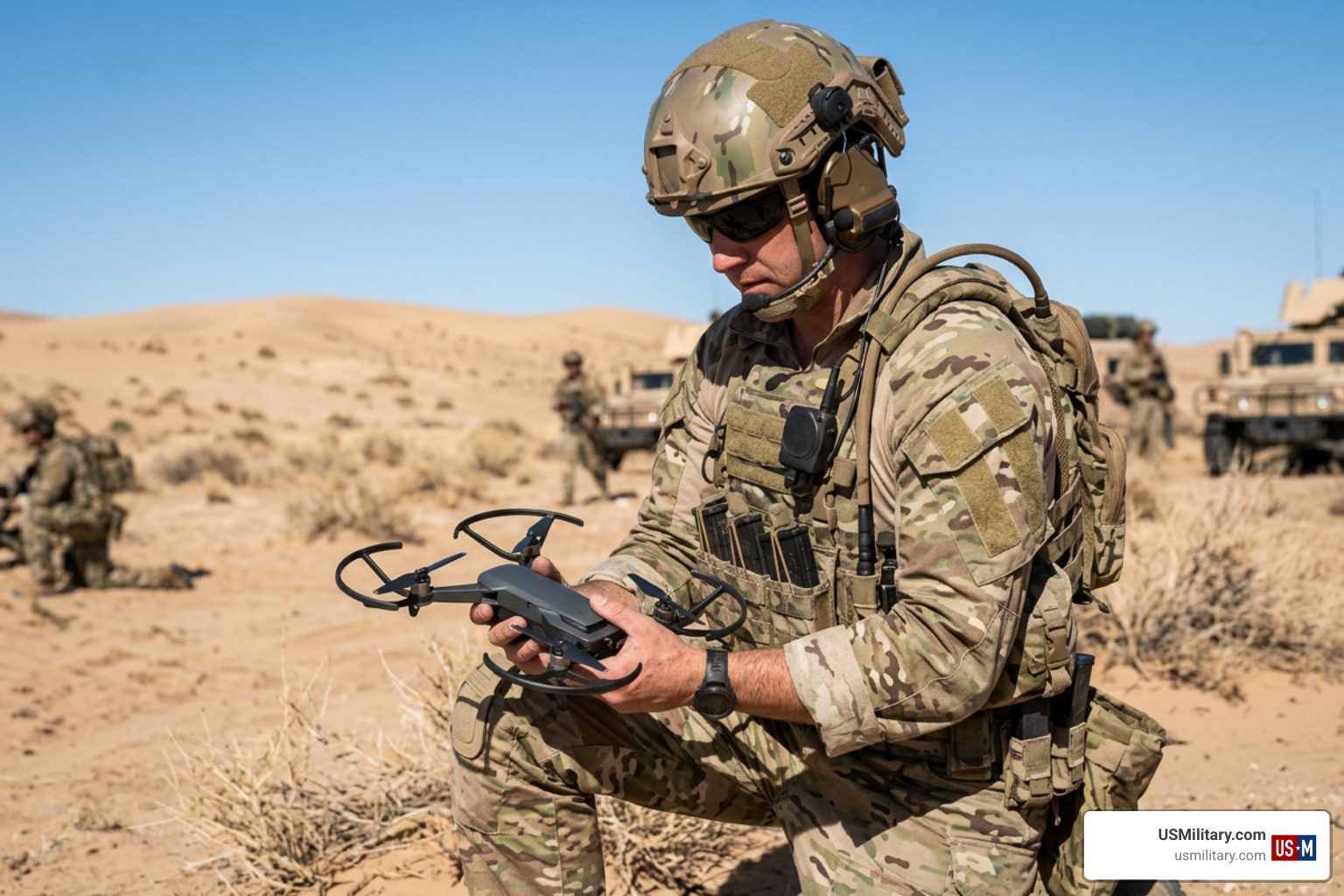
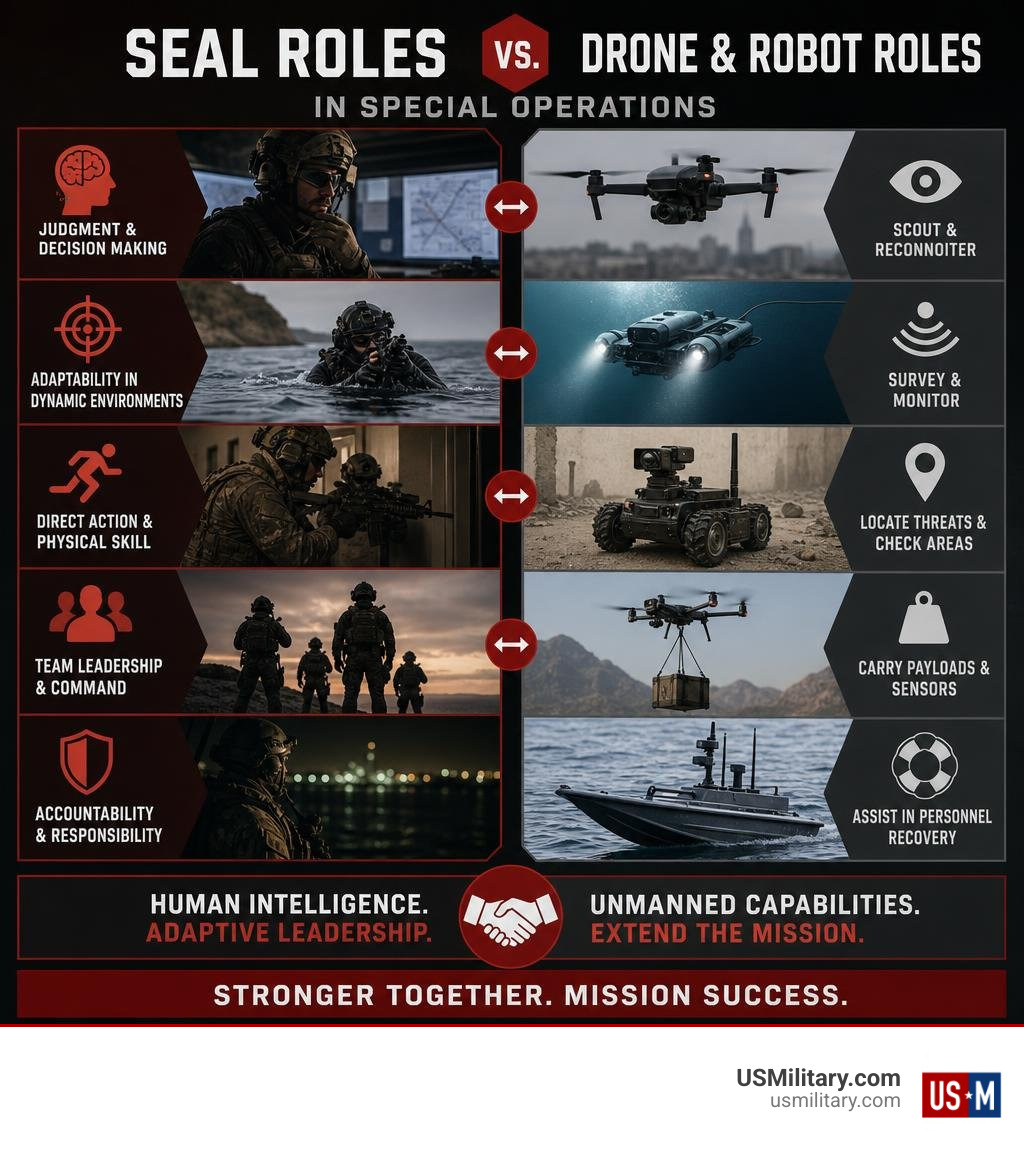
No, Navy SEALs are not actively being replaced with drones and robots. The Navy is using unmanned systems to take on the most repetitive, exposed, or dangerous parts of a mission – such as scouting rooms, surveying harbors, locating threats, carrying sensors, and helping recover personnel at sea. SEALs still provide the judgment, adaptability, physical skill, and command decisions that machines cannot reliably match.
Do You Qualify To Increase Your VA Disability Rating? Free Call With An Expert. Click HERE And See If You Are Entitled To More Money.
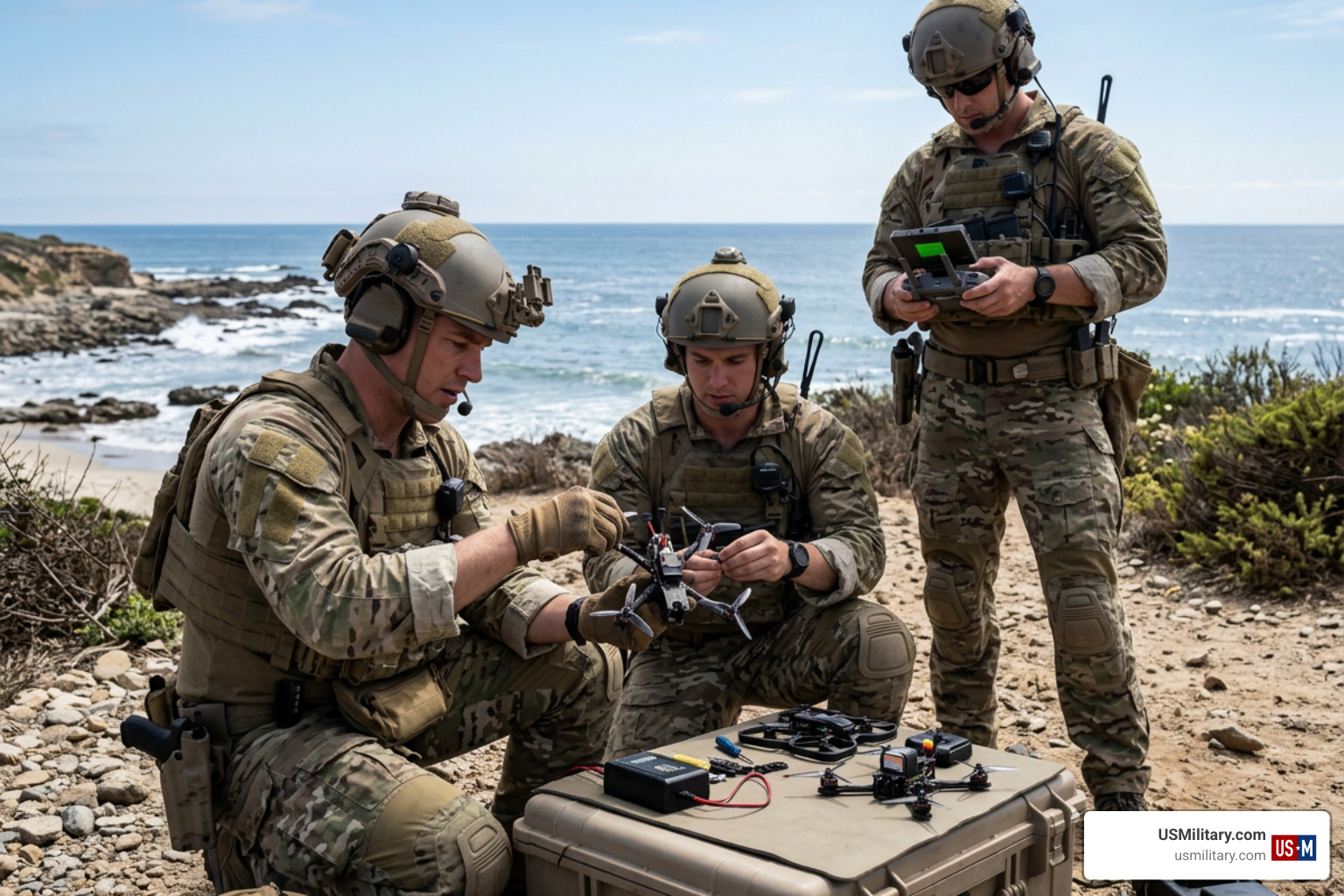
The clearest sign is retraining, not force replacement. Naval Special Warfare has planned an 80-hour drone course that teaches SEALs to build, repair, and fly first-person-view drones. Meanwhile, the Navy’s Robotics Warfare Specialist rating creates dedicated sailor jobs for operating and maintaining autonomous systems across air, sea, and undersea missions.
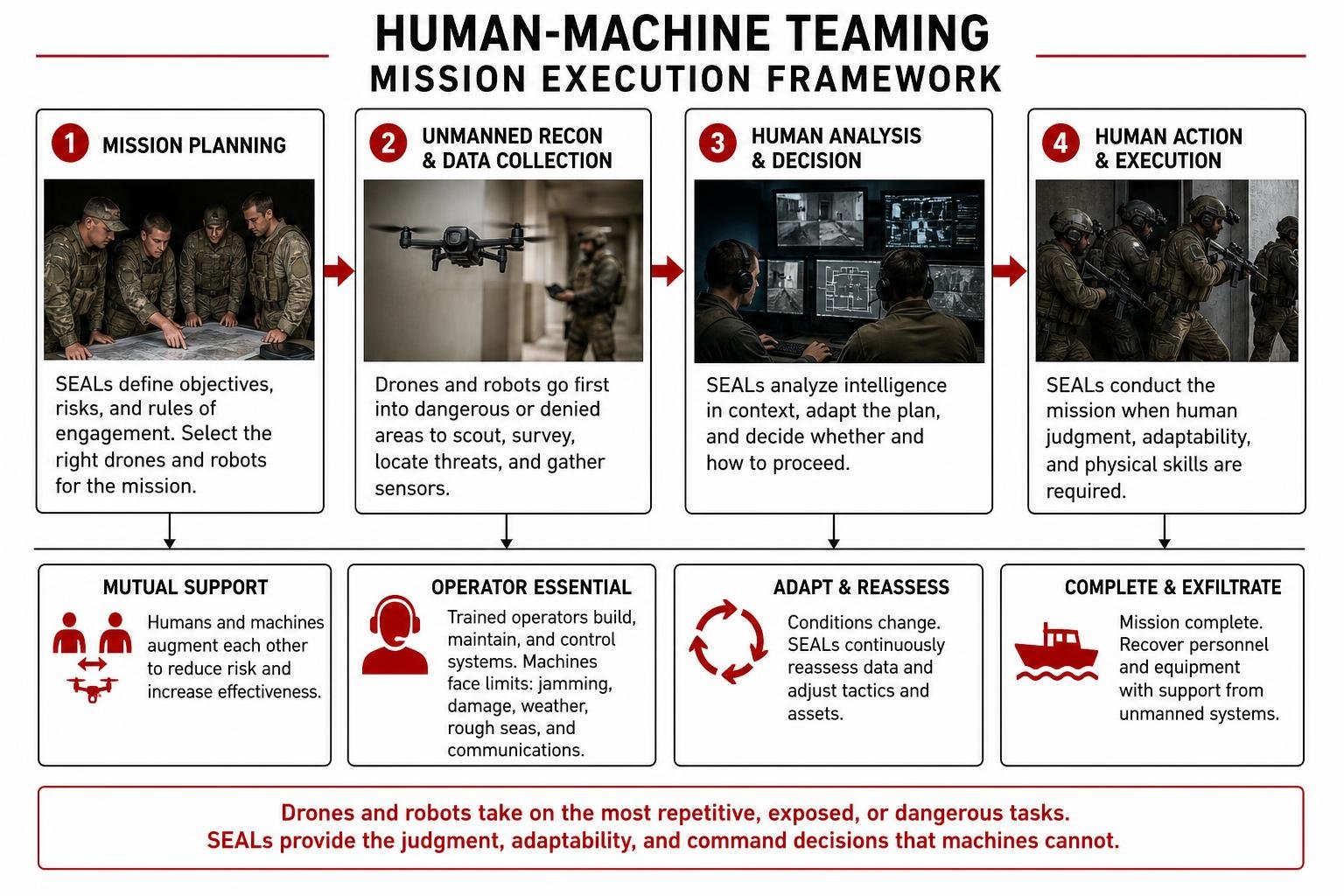
In practice, the future is human-machine teaming: a drone may check a dangerous doorway or harbor first, while SEALs decide what the intelligence means and carry out the mission when human action is needed. Drones can be jammed, damaged, confused by bad weather or rough seas, and limited by communications – problems that make trained operators essential in complex combat situations.
I am Larry Fowler, publisher of the USMilitary.com Network since 2007, where I have followed military career trends, service opportunities, and technology changes affecting active-duty personnel and veterans. For readers asking, Are Navy SEALs Actively Being Replaced With Drones & Robots, this guide separates verified operational changes from the headlines.
Are Navy SEALs Actively Being Replaced With Drones & Robots terms at a glance:
- Navy SEALs Complete Guide
- Navy SEAL vs Delta Force: Elite Units Compared
- The Definitive Guide to a Day in the Life of a Navy SEAL Operator
Are Navy SEALs Actively Being Replaced With Drones & Robots?
The rapid integration of autonomous hardware across the Department of Defense often sparks speculative headlines. Yet, looking at actual doctrine and theater deployments reveals a completely different picture. The Pentagon is not executing a subtraction strategy; it is building a force-multiplication architecture. Elite commando units are not standing down. Instead, they are integrating uncrewed platforms to absorb the highest-risk exposure points on the battlefield.
This operational framework falls under what military strategists call hybrid warfare doctrine. In this setup, autonomous systems serve as initial sensor nodes and precision tools, while human operators retain tactical command, contextual judgment, and decisive ground authority. In fact, elite commando duties remain firmly on the list of 10 military jobs that AI will never replace due to the chaotic nature of contested combat zones.
Tactical Realities: Are Navy SEALs Actively Being Replaced With Drones & Robots for High-Risk Raids?
In high-intensity direct action missions, the most perilous phase has historically been breaching the threshold—what special operators call the “fatal funnel.” Confined hallways, barricaded entryways, and unmapped subterranean rooms force human commandos into narrow fields of fire where reaction time is measured in milliseconds.
Today, frontline teams deploy advanced uncrewed systems into these structures before any boot crosses the doorway. Autonomous quadcopters, such as Shield AI’s Nova, utilize onboard optical and LiDAR sensor suites alongside proprietary artificial intelligence to navigate GPS-denied indoor spaces at speeds exceeding 2,000 square feet per minute. Rather than requiring an operator to manually toggle joystick inputs, the aircraft self-navigates multi-story buildings, identifies barricaded occupants, maps dead ends, and feeds real-time spatial intelligence back to the assault force.
This rapid tactical feedback transforms room clearing. It strips away the enemy’s element of surprise without eliminating the assault team. The robot maps the structure and identifies threats, but human commandos execute the final breach, resolve hostage situations, verify identities, and handle non-combatants. The expanding field of artificial intelligence military applications serves to shield human warfighters from unnecessary casualty risk, not sideline them from direct action.
From Direct Action to Fleet Support: The Shifting SEAL Mission
The strategic evolution of special operations reaches far beyond close-quarters combat. As the global security landscape shifts toward great-power maritime deterrence, the core mission profile of Naval Special Warfare is undergoing a foundational pivot. According to Naval Special Warfare leadership, including Rear Adm. Keith Davids, the community is transitioning from two decades of counterterrorism raids to directly supporting distributed fleet maritime operations.
Rather than acting strictly as an isolated direct-action force, Navy SEALs now operate as distributed forward reconnaissance and targeting assets for the wider surface and subsurface fleet. In modern littoral environments, SEAL platoons slip into anti-access/area-denial (A2/AD) envelopes to:
- Conduct coastal electromagnetic warfare and targeted signal jamming
- Perform sensitive site exploitation and maritime interdiction of illicit weapon shipments
- Identify, track, and provide terminal target cueing for long-range fleet hypersonic and cruise missiles
- Secure remote maritime chokepoints and island chains to establish forward expeditionary bases
Autonomous systems directly accelerate this shift. Small uncrewed aircraft and surface craft allow small commando detachments to monitor hundreds of square miles of open ocean while staying hidden under strict emissions control.
Autonomous Systems Reshaping Sea, Air, and Undersea Special Operations
The modern battlespace is expanding horizontally across air, surface, and sub-surface domains simultaneously. Chief of Naval Operations Adm. Daryl Caudle has detailed an overarching hedge force strategy designed to field expendable, highly capable autonomous assets alongside traditional capital ships. The Navy’s long-term roadmap aims for nearly half of its surface fleet to consist of unmanned or hybrid vessels.
A major milestone in this operational transition occurred when the aircraft carrier USS Theodore Roosevelt deployed with the Seahawk medium unmanned surface vessel (MUSV) integrated directly into its carrier strike group. This deployment moved autonomous surface platforms from isolated experimental testing into standardized fleet operations, establishing real-time communications pipelines and operational concepts that coordinate directly with tactical surface teams.
Sea Drones in Combat: From Search and Rescue to Strike Missions
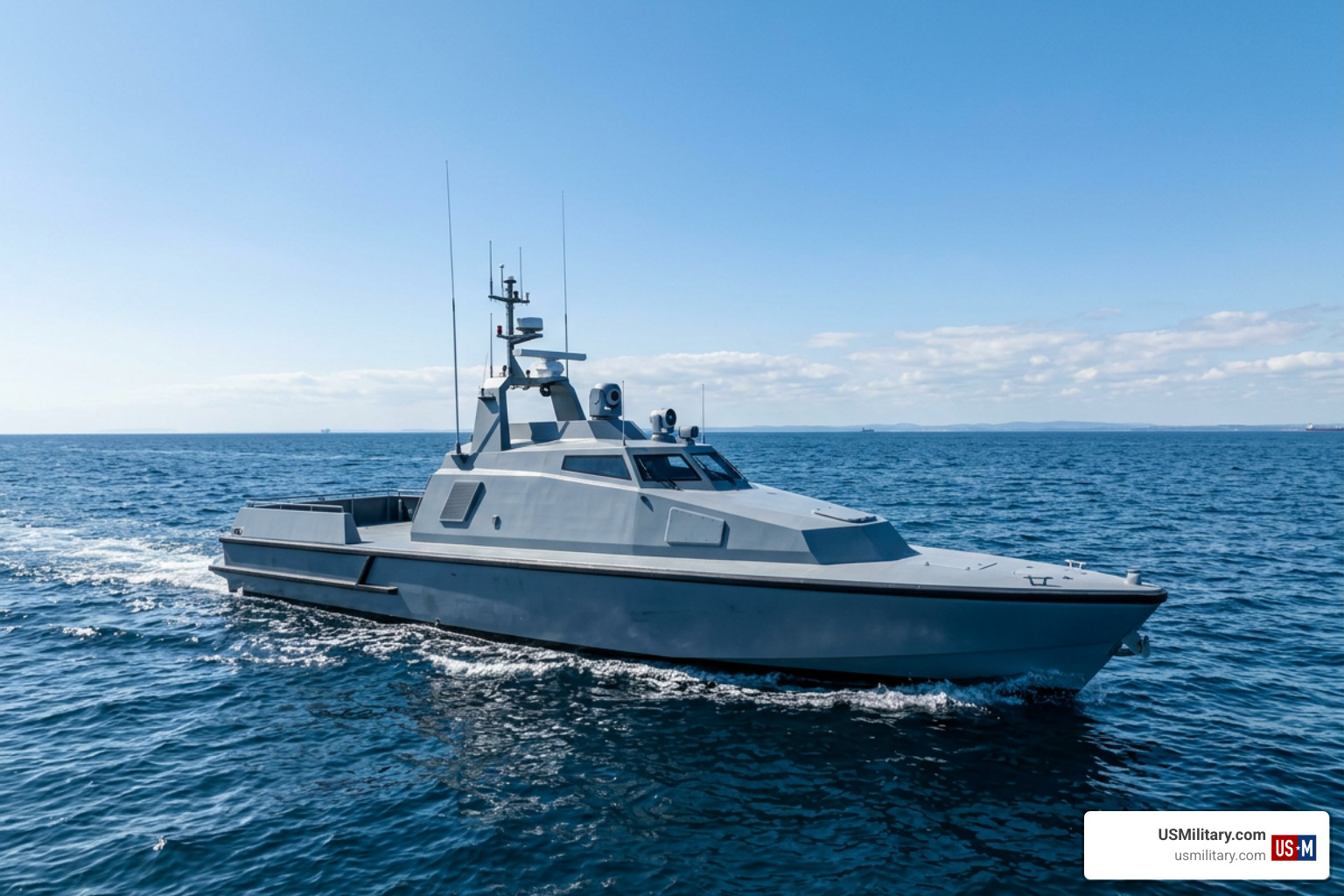
The tactical viability of uncrewed surface vessels (USVs) is no longer theoretical—it is actively documented in combat operations. Defense tech firms like Saronic, founded by a former SEAL Team Six operator, are producing autonomous surface craft at rates unseen since mid-20th-century industrial mobilizations. Saronic’s 24-foot Corsair USV boasts an operational range surpassing 1,000 nautical miles, capable of operating autonomously in heavy seas and contested chokepoints.
These platforms have quickly proved their worth across multiple mission profiles. In the Strait of Hormuz, an autonomous Corsair vessel executed the rapid combat rescue of two downed Apache helicopter pilots within approximately two hours of their crash, retrieving the aircrew from hazardous waters without exposing a manned search-and-rescue boat to hostile shore fire. Beyond search-and-rescue, uncrewed surface vessels operated under experimental initiatives like Task Force 59 have executed direct kinetic strike missions, neutralizing hostile coastal infrastructure and submarine maintenance facilities.
While these sea drones deliver remarkable stand-off strike range, they lack the fine motor control and physical versatility required for close-in boarding, clandestine contraband seizure, and complex hostage retrieval.
Undersea Insertion: Autonomous Wingmen for Submersibles
Nowhere is the integration of autonomous platforms more technically demanding—or tactically vital—than in the undersea domain. For decades, covert combat swimmer insertions relied on either wet submersibles, such as the Mk 11 Shallow Water Combat Submersible where divers are fully exposed to freezing water, or the newer pressurized Dry Combat Submersible (DCS), which offers extended range and environmental protection but cannot fit inside standard submarine Dry Deck Shelters.
To bridge this operational gap, Naval Special Warfare has paired submersibles with autonomous underwater wingmen. The Navy’s Mk 19 Razorback Unmanned Undersea Vehicle (UUV)—a specialized 10.6-foot, 530-pound autonomous system capable of diving to 600 feet with 70 hours of operational endurance—acts as an underwater scout. Launched from standard submarine Dry Deck Shelters or host craft, the Razorback swims ahead of manned submersibles to map minefields, survey harbor bathymetry, and detect passive sonar tripwires. In March 2026, joint interoperability exercises demonstrated that allied vessels, such as a French nuclear attack submarine, can launch and recover U.S. Razorback systems.
By sending an autonomous UUV into heavily defended harbors first, operators ensure the approach channel is clear before deploying a manned SEAL Delivery Vehicle to insert human commandos ashore.
Retraining the Force: The Rise of Drone Schools and Robotics Ratings
The clearest proof that operators are not being replaced is the massive institutional investment in teaching them how to build, repair, and deploy these platforms directly on the frontlines.
Naval Special Warfare Command launched a dedicated 10-day, 80-hour drone warfare curriculum specifically structured for active-duty SEALs. Moving far beyond commercial flying basics, the syllabus covers:
- 35 Hours of Classroom Engineering: Aerodynamics, radio-frequency spectrum theory, counter-jamming frequencies, and mission planning.
- 5 Hours of Hardware Fabrication: Micro-soldering, payload modularity, field repair, and 3D-printing replacement drone components in austere environments.
- 40 Hours of Tactical Flight Operations: First-person-view (FPV) high-speed manual piloting, GPS-denied navigation, live-fire kinetic strike coordination, and night-vision maneuvers.
This hands-on pipeline equips operators to build custom strike drones on the fly during clandestine operations, cementing uncrewed systems as an organic component of modern Navy SEAL training.
The Robotics Warfare Specialist (RW) Rating
To build deep institutional technical expertise across the wider fleet, the Navy formally established the Robotics Warfare Specialist (RW) rating. Rather than treating uncrewed vehicle operations as a temporary collateral duty, the RW rating creates an enlisted career track dedicated entirely to managing autonomous ecosystems.
The initial cohort of roughly 400 sailors was selected from seasoned drone and uncrewed vehicle operators across the submarine, surface, and special operations support communities. These specialists manage end-to-end autonomous infrastructure, focusing on:
- Cross-domain maintenance of aerial, surface, and subsurface uncrewed platforms
- Advanced electronic troubleshooting and micro-component repairs
- Tactical data link security, mesh networking, and sensor data routing
- Supervising uncrewed vehicle operations to support human combat leadership
This specialized community works directly with operational units, enabling every drone warfare pilot and systems technician to maintain constant operational readiness for front-line commando teams.
Specialized Tier-One Integration and DEVGRU Adaptations
At the highest tier of Naval Special Warfare, the Naval Special Warfare Development Group (NSWDG)—commonly known to the public through its historic title, SEAL Team Six—actively integrates bleeding-edge autonomous systems into its secretive operational portfolio. For those exploring what is DEVGRU?, the unit functions as the military’s premier testbed for advanced maritime counterterrorism and clandestine special reconnaissance tactics.
DEVGRU assault squadrons use custom micro-drones like the palm-sized Black Hornet drone for silent over-the-wall reconnaissance during hostage rescues and high-value interdictions. By operating autonomous aerial swarms and low-signature surface craft, Tier-One operators gather high-resolution intelligence inside heavily monitored denied zones while keeping human teams safely outside active sensor networks until the moment of execution.
Technical and Ethical Boundaries Preventing Total Automation
Despite exponential leaps in machine autonomy, hard physical limits, environmental barriers, and core ethical requirements prevent unmanned systems from fully replacing human commandos.
| Capability / Factor | Human Navy SEALs | Autonomous Drones & Robots |
|---|---|---|
| Tactical Adaptability | Immediate contextual problem-solving in chaotic, fluid situations. | Constrained by algorithmic parameters and edge-case code limits. |
| Environmental Resilience | Operates across severe weather, saltwater, extreme heat, and dense brush. | Vulnerable to heavy saltwater corrosion, sensor fogging, and motor stalls. |
| Electronic Warfare Resistance | Completely immune to radio frequency jamming and cyber intrusion. | Susceptible to signal blocking, GPS spoofing, and spectrum denial. |
| Lethal Decision Authority | Governed by moral judgment, nuanced Rules of Engagement, and empathy. | DoD AI ethics policy strictly mandates human-in-the-loop oversight. |
| Physical Versatility | Breaches structures, handles prisoners, conducts trauma care, extracts hostiles. | Limited to single-purpose mechanical functions, kinetic strikes, or sensor feeds. |
Reliability Failures and the Need for Human-in-the-Loop
The harsh realities of real-world maritime operations frequently expose the limits of pure software autonomy. In August 2025, during an autonomous vessel fleet exercise off the coast of Southern California, a sudden software stall on one uncrewed boat caused an immediate collision with another vessel, prompting the Navy to temporarily pause a $20 million development contract. In another live-ocean test, an autonomous surface craft accelerated unpredictably while under tow, capsizing an adjacent manned support boat.
Saltwater corrosion, dense surf zones, sensor blinding, and sophisticated electronic warfare jamming continuously disrupt automated platforms. Most importantly, Department of Defense AI ethics principles strictly mandate a “human-in-the-loop” doctrine for any lethal engagement. Autonomous systems can track targets, map terrain, and maneuver toward objectives, but an accountable human operator must verify the target and authorize the final release of weapon systems.
Frequently Asked Questions About Drone and Robot Integration in Special Operations
Are Navy SEALs actively being replaced with drones & robots across combat units?
No. Navy SEALs are not being replaced by unmanned systems. The Department of Defense is using drones and autonomous craft to handle repetitive, high-risk tasks like broad-area surveillance, pre-assault structure mapping, and decoy operations. The human operator remains central to making command decisions, adapting to sudden tactical shifts, and executing direct action.
What is the Navy’s new Robotics Warfare Specialist (RW) rating?
The Robotics Warfare Specialist (RW) rating is an enlisted career path created by the U.S. Navy to professionalize drone maintenance, tactical networking, and autonomous system operations. The initial group of roughly 400 sailors operates across aerial, surface, and undersea platforms to keep autonomous systems mission-ready for fleet and special operations units.
How are Navy SEALs trained to build and pilot drones?
Naval Special Warfare delivers a concentrated 10-day, 80-hour drone warfare course for SEAL operators. The curriculum combines 35 hours of classroom theory, 5 hours of hands-on component fabrication and soldering, and 40 hours of practical first-person-view flight training and live-fire tactical integration.
Conclusion
The transformation underway across Naval Special Warfare is not an eviction of the human commando—it is an evolution of maritime special operations. By shifting dull, dangerous, and exposed surveillance tasks to expendable uncrewed platforms, the Navy preserves its most valuable resource: the seasoned judgment and unmatched combat skill of its elite operators. Drones and uncrewed submersibles will continue to scout dangerous channels, breach hazardous entryways, and map contested littoral zones, but human SEALs remain the heart of national defense when complex missions hang in the balance.
For service members, military families, and aspiring operators seeking in-depth guidance on special operations career paths, active-duty training pipelines, VA benefits, and service transitions, explore the resources available at USMilitary.com and read our comprehensive guide to Navy SEAL careers and training.
Free for Service Members & Veterans
Get the military benefits intel no one tells you about.
Weekly updates on VA benefits, pay changes, and money tips — free for service members and veterans.
No spam. Unsubscribe anytime. Your info is never shared.


