What Veterans Are Saying About the 2026 Midterms
Military veterans’ thoughts and comments about the midterm elections and the Democratic Socialists Party are far from uniform. Some veterans welcome candidates who focus on housing, healthcare, and the cost of living. Others worry about government spending, defense policy, or the growing influence of socialism. Views on the Iran war also shape how some veterans read the Republican losses. Military service alone does not predict a veteran’s vote.
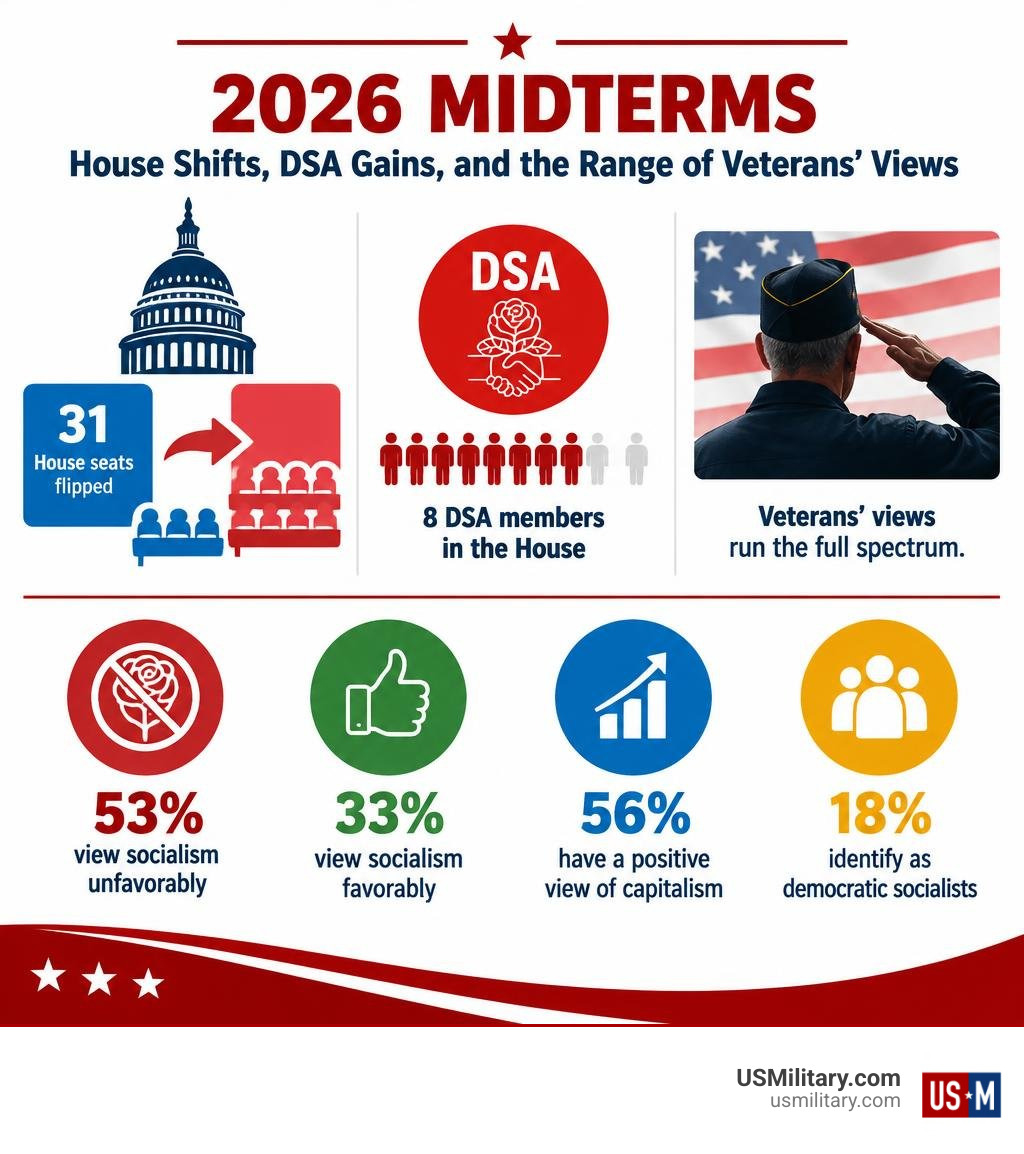
The 2026 results put those differences in focus: Democrats flipped 31 House seats, while Democratic Socialists of America members increased their House presence to eight. The DSA is a political organization, not the Democratic Party. Those results show electoral gains, not a shared verdict from veterans.
I’m Larry Fowler, a Navy veteran and BUD/S Class 89 graduate who has published military news and benefits guidance since 2007. In Military veterans thoughts and comments about midterm elections and the democrat socialists party, I’ll look at where veterans agree, where they differ, and what the results may mean for 2028.
Military Veterans Thoughts and Comments About Midterm Elections and the Democrat Socialists Party

When we talk to fellow service members across the country, political discussions often reflect a clear tension between traditional constitutional oaths and shifting economic ideologies. In the 2026 midterms, 53% of voters nationwide viewed socialism unfavorably, compared to 33% who viewed it favorably, while 56% maintained a positive view of capitalism. Yet, 18% of midterm voters identified themselves as democratic socialists, showing a distinct and energetic bloc within the electorate.
That split means military veterans’ thoughts and comments about the midterm elections and the Democratic Socialists Party do not line up along a single ideological front. For many conservative and moderate veterans, the core tenets of socialism feel incompatible with the principles of individual liberty and free enterprise they defended in uniform. They view the expansion of state control and entitlement spending as a risk to the nation’s fiscal health and global standing.
At the same time, a growing number of veterans engage in democratic socialist community organizing, pointing out that public service, collective responsibility, and community support mirror the camaraderie and mutual protection found in the armed forces. Because Gallup polling shows that 90% of adults over age 50 trust elected leaders with military backgrounds regardless of party, veterans on both sides of the aisle carry significant weight when debating these civic models.
Military Veterans’ Thoughts and Comments About the Midterm Elections and the Democratic Socialists Party on Defense and Security
National defense strategy and foreign military entanglements remain central to how veterans judge political platforms. A notable portion of progressive and democratic socialist veterans advocate for rolling back expansive defense spending and ending protracted overseas engagements. They argue that excessive defense contracting diverts vital resources away from domestic infrastructure, public education, and veterans’ healthcare.
This anti-interventionist stance resonates with many younger enlisted personnel who experienced the physical and mental tolls of extended deployments. We see these viewpoints championed by veterans challenging establishment political strategies, who urge both major parties to reconsider foreign interventionism and private security contracting.
Conversely, traditional defense-minded veterans express serious concerns that socialist-driven reductions in Pentagon appropriations could compromise combat readiness, slow modernization, and weaken deterrence against near-peer adversaries. These national security debates often overlap with heated election-year discussions surrounding partisan rhetoric on military service drafts, demonstrating how defense policy directly shapes voter sentiment among military families.
Economic Realities, Cost of Living, and Government Programs
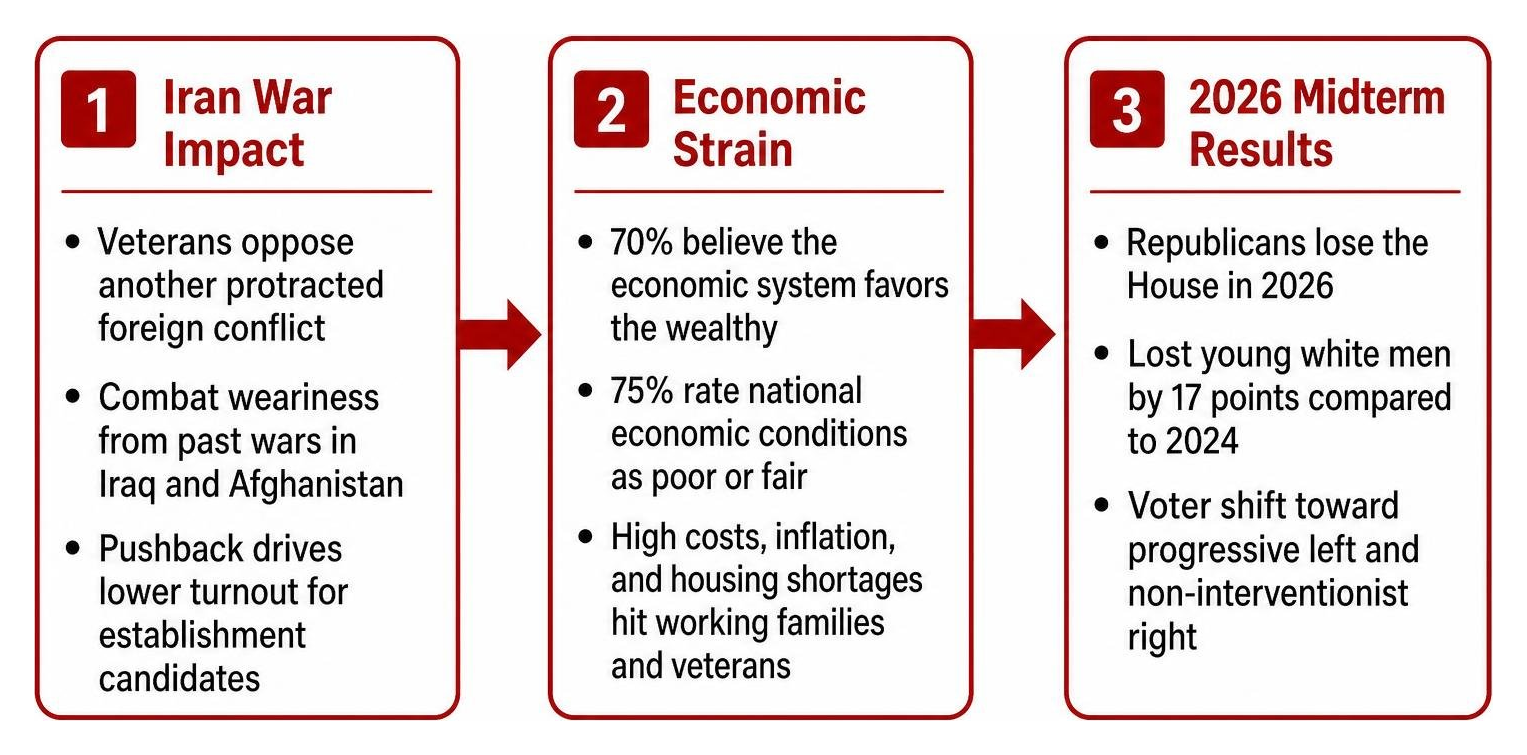
Economic pressures played a decisive role in the 2026 midterms. Post-election data revealed that 70% of voters believe the American economic system favors the wealthy rather than treating working families fairly, and 75% rated national economic conditions as poor or fair. Transitioning service members and disabled veterans frequently face significant financial hurdles, including soaring housing costs, inflation, and gaps in civilian healthcare access.
| Policy Area | Democratic Socialist Proposals | Traditional Veteran Community Priorities |
|---|---|---|
| Healthcare | Universal single-payer coverage (Medicare for All) | Preserving and fully funding VA healthcare and community care options |
| Housing | Universal rent control and expanded public housing | Strengthening VA home loan accessibility and property tax exemptions |
| Higher Education | Broad student loan forgiveness and tuition-free public college | Protecting and expanding the Post-9/11 GI Bill and vocational training |
| Federal Budget | Higher corporate taxation to fund public safety nets | Fiscal restraint to curb inflation and protect military pay raises |
While progressive veterans see expanded social safety nets as a logical extension of earned benefits, conservative service members warn that unchecked federal outlays drive inflation and strain public finances. When assessing veteran trust in national defense leadership, debates over resource allocation and economic stewardship remain vital to evaluating congressional performance.
The Iran War Impact and Republican Midterm Losses

The military conflict involving Iran emerged as a primary catalyst for voter dissatisfaction, contributing directly to Republican losses in the House. Veterans from past operations in Iraq and Afghanistan voiced sharp criticism over entering another protracted foreign conflict in the Middle East.
Public pushback was reflected in detailed veteran analysis on foreign policy and midterm losses, with commentators highlighting that working-class communities carry the primary burden of overseas casualties and regional instability. This combat weariness has also complicated domestic military recruitment efforts, as detailed in our reporting on operational impacts on service recruitment.
✉ Get updates like this in your inbox
Weekly VA benefit changes, pay updates, and money tips for service members, veterans, and military families. Free, no spam.
Alienation of Young Working-Class Male Voters
A key demographic development in the 2026 cycle was the substantial drop in support for Republicans among young working-class men. Midterm returns indicated that Republicans lost young white men by 17 points compared to 2024 margins, alongside softening support among young Black and Latino men.
Many of these voters expressed frustration with high consumer prices, housing shortages, and the prospect of overseas deployments. Discontent over media framing of military operations fueled both lower turnout for establishment candidates and increased interest in populist messaging from both the progressive left and non-interventionist right.
Partisan Friction Over Federal Spending and Veterans Care
The growing national debt and high cost of living have heightened partisan disagreements regarding federal funding for the Department of Veterans Affairs (VA). As lawmakers debate domestic appropriations versus defense budgets, veterans emphasize that earned benefits—including VA disability compensation, specialized clinical care, and caregiver support—must remain insulated from partisan gridlock. Confronting these budget standoffs is essential to addressing political polarization and cultural divide across the veteran community.
The Surge of Veteran Candidates and the Battle for Patriotism
A record 752 military veterans ran for Congress across all 50 states in 2026. The most striking increase occurred among female veterans, with 95 running for federal office compared to 40 in 2024—a 137% surge.
Strategic recruitment efforts, such as calling up veteran candidates in battleground districts, helped Democrats flip 31 House seats. These candidates utilized their service records to contest traditional partisan assumptions about patriotism and national security credentials.
Military Veterans’ Thoughts and Comments About the Midterm Elections and the Democratic Socialists Party in Congressional Campaigns
The expanding presence of former service members is reshaping political debates within both major parties. While establishment Democrats often deploy moderate veterans to win conservative-leaning swing districts, an emerging group of progressive service members entering congressional politics focuses heavily on working-class economic reform and corporate accountability.
At the same time, Republicans continue fielding substantial numbers of veteran nominees, pointing to strong representation documented in ongoing veteran recruitment across competitive House districts. These dynamic contests show that military experience informs diverse political philosophies across Capitol Hill.
Independent Veteran Candidates Challenging the Two-Party System
Frustration with two-party polarization prompted several high-profile veterans to run as independent, nonpartisan candidates in 2026. Emphasizing core military values such as loyalty, duty, respect, selfless service, honor, integrity, and personal courage, these candidates sought to build broad coalitions:
- Nebraska Senate Race: An independent Navy veteran secured significant working-class support, finishing within approximately seven points of the incumbent.
- Montana Senate Race: An independent veteran garnered roughly 38% of the statewide vote in a competitive three-way contest.
- Idaho Senate Contest: An independent veteran challenger captured over 33% of the vote by campaigning on government transparency and civic accountability.
While independent runs face structural hurdles, their competitive performance highlights growing public demand for alternative leadership models, challenging the traditional strategies of party leadership during midterm cycles.
Midterm Lessons and Coalition Building for the 2028 Presidential Race
The 2026 midterms leave Washington with a divided government and offer critical takeaways for the upcoming 2028 presidential campaign. With voters expressing deep concern over foreign interventions and everyday living expenses, both major parties must adapt their outreach to maintain working-class and veteran support.
Building durable coalitions will require addressing kitchen-table economics, maintaining responsible national security policies, and connecting with the broader electorate, as seen when evaluating broad veteran voter alignment.
Frequently Asked Questions About Veterans, Midterm Elections, and Democratic Socialism
How do military veterans view the Democratic Socialists of America’s gains in the 2026 midterms?
Veterans hold diverse views. Many conservative and moderate veterans view democratic socialism unfavorably, expressing concerns over expanded federal spending and defense reductions. Conversely, progressive veterans support the DSA’s focus on universal healthcare, affordable housing, and labor protections.
Why did foreign policy and the Iran conflict heavily influence veteran voter turnout?
Combat veterans frequently voice skepticism toward prolonged foreign interventions. Frustration with military entanglements in Iran, paired with the domestic economic toll of defense spending, led to lower voter enthusiasm and notable demographic shifts away from the governing party.
What drove the record surge in female veteran candidates running for Congress in 2026?
Female veteran candidacies rose by 137% in 2026, driven by an effort to bring nonpartisan leadership, operational discipline, and national security experience into high-stakes congressional races.
Conclusion
The 2026 midterm elections demonstrated that America’s military veterans represent an engaged, independent-minded, and diverse voting bloc. Whether running as mainstream candidates, organizing with progressive groups, or building independent platforms, veterans continue to shape the national dialogue around governance, defense, and economic fairness.
For service members, veterans, and military families seeking reliable tools, benefits analysis, and career insights, explore our comprehensive career and benefits guidance for military members and veterans at USMilitary.com to stay informed on your earned benefits.
Free for Service Members & Veterans
Get the military benefits intel no one tells you about.
Weekly updates on VA benefits, pay changes, and money tips — free for service members and veterans.
No spam. Unsubscribe anytime. Your info is never shared.



Leave a Reply