What You Need to Know About Iran Shot Down American Apache Helicopter
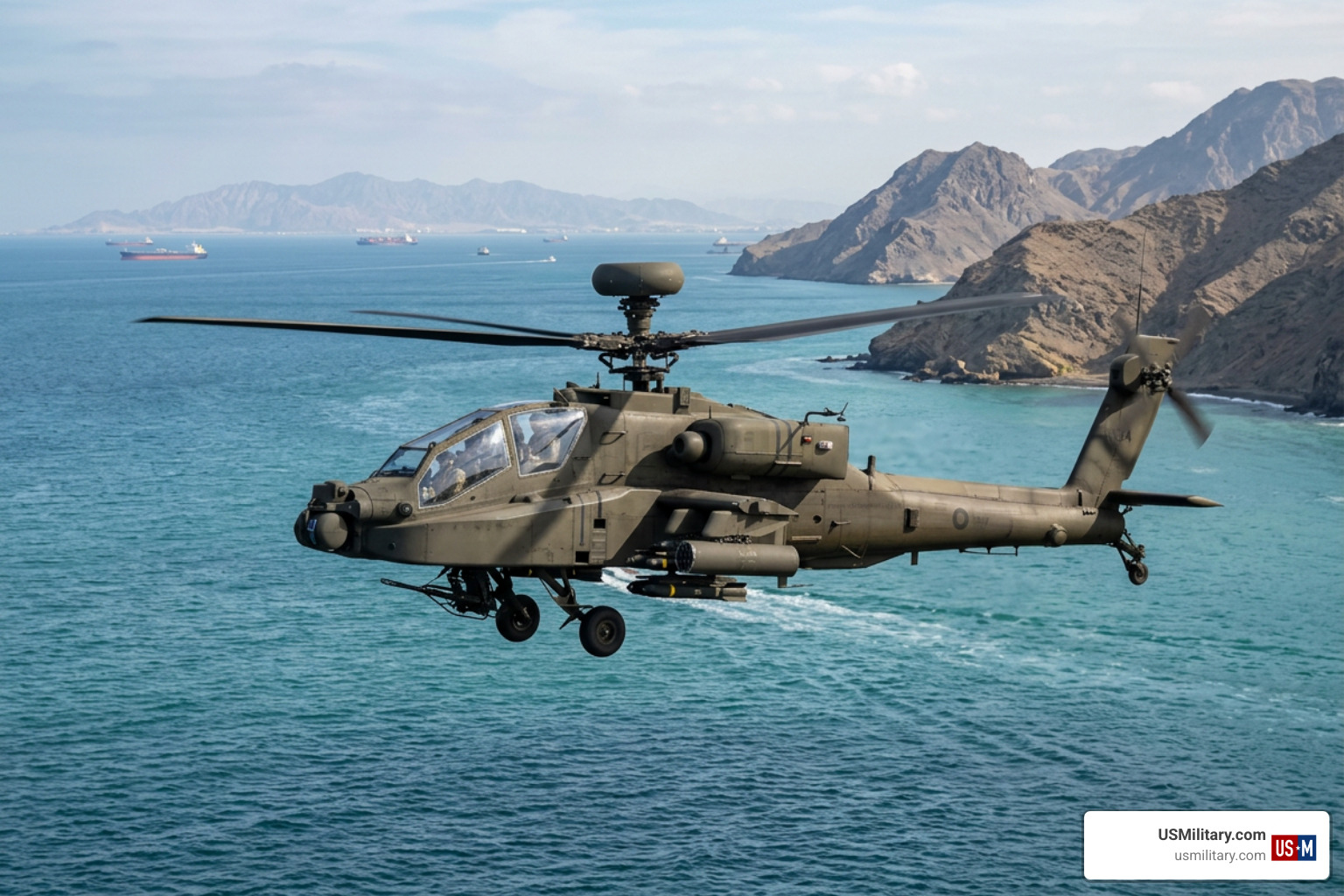
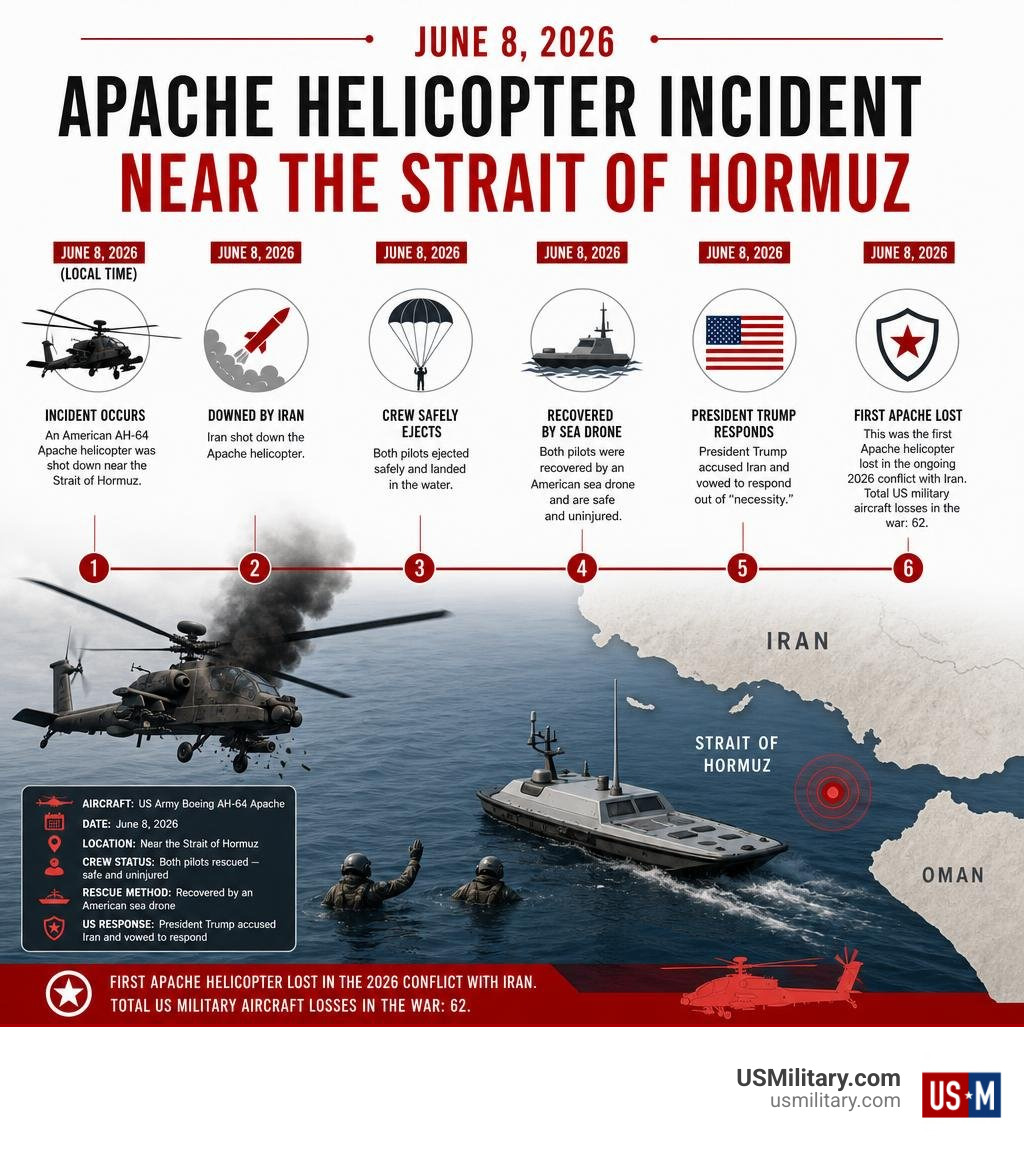
On June 8, 2026, reports emerged that Iran shot down an American Apache helicopter near the Strait of Hormuz. Here are the key facts:
- Aircraft: US Army Boeing AH-64 Apache
- Date: June 8, 2026
- Location: Near the Strait of Hormuz
- Crew status: Both pilots rescued — safe and uninjured
- Rescue method: Recovered by an American sea drone
- US response: President Trump accused Iran and vowed to respond
This was the first Apache helicopter lost in the ongoing 2026 conflict with Iran. It brought total US military aircraft losses in the war to 62.
President Trump responded sharply, accusing Iran of the attack and stating the US would respond out of “necessity.”
I’m Larry Fowler, publisher of USMilitary.com since 2007, and I’ve spent nearly two decades tracking military conflicts, aircraft operations, and VA benefits for active-duty service members and veterans — including closely following incidents like the Iran shot down American Apache helicopter story as they affect the broader military community. In the sections below, we break down exactly what happened, how the crew survived, and what it means for US-Iran relations.
The June 2026 Incident: Did Iran Shot Down American Apache Helicopter?

The high-stakes aerial environment over the Persian Gulf reached a boiling point on June 8, 2026. Military analysts and defense enthusiasts alike scrambled for details as news broke that a premier US attack helicopter had gone down in one of the most heavily contested maritime choke points in the world. Initial reports sparked immediate concern over the crew’s safety and the potential for a massive escalation in the 2026 Iran war.
For those tracking the conflict, the incident raised a critical question: Did Iranian forces successfully target and down one of the US military’s most advanced rotary-wing platforms, or did technical failure play a role in the crash? According to initial coverage, including reports from US Army Apache Helicopter Goes Down Near Strait Of Hormuz , the heavy-duty AH-64 Apache Attack Helicopter was operating on a patrol mission when it plummeted into the waters near the Strait of Hormuz.
Details of the June 8 Crash Near the Strait of Hormuz
The incident occurred during the afternoon hours of June 8, 2026, in the international airspace closely bordering the Strait of Hormuz. The aircraft involved was a US Army Boeing AH-64 Apache, a twin-turboshaft attack helicopter renowned for its survivability, target acquisition systems, and heavy armor.
While operating low over the water—a standard profile for maritime patrol and anti-swarm boat missions—the helicopter experienced a catastrophic event that forced it into the sea. Because helicopters naturally operate at lower altitudes and slower speeds than fixed-wing fighter jets, they are inherently more vulnerable to low-altitude threats, including small arms fire, rocket-propelled grenades (RPGs), and portable air defense systems (MANPADS).
Claims Surrounding How Iran Shot Down American Apache Helicopter
Following the crash, Iranian state-affiliated media outlets and online propaganda channels quickly claimed responsibility. Tehran boasted that its local air defense units had successfully locked onto and neutralized the American combat helicopter using advanced ground-based defense systems or shoulder-fired missiles.
These claims were cataloged across various platforms, echoing historical rhetoric found in sources like Iran claims it has downed US Apache Helicopters, A-10 Warthog, F … . While the Pentagon acknowledged the loss of the airframe, US defense officials remained cautious about confirming a direct missile strike, pointing out that mechanical failure or pilot evasion maneuvers under threat could also lead to a water landing. Regardless of the exact trigger, the loss represents a significant symbolic victory for Iranian forces, marking the first time an Apache helicopter has been lost during this specific 2026 campaign.
Crew Status and the Sea Drone Rescue Operation
In any aviation incident, the primary concern is always the survival and recovery of the crew. The US military puts an immense amount of planning, budget, and training into Combat Search and Rescue (CSAR) operations. Fortunately, the June 8 incident proved to be a triumph of modern rescue technology, ensuring that both pilots returned home to their families without sustaining serious injuries.
Operating over water carries unique hazards, but it also opens up new avenues for automated rescue operations. The rapid recovery of the crew highlights the evolving integration of unmanned systems alongside traditional US Military Helicopters and specialized rescue platforms, which are detailed extensively in resources like US Military Helicopters 3.
How the Pilots Were Rescued by an American Sea Drone
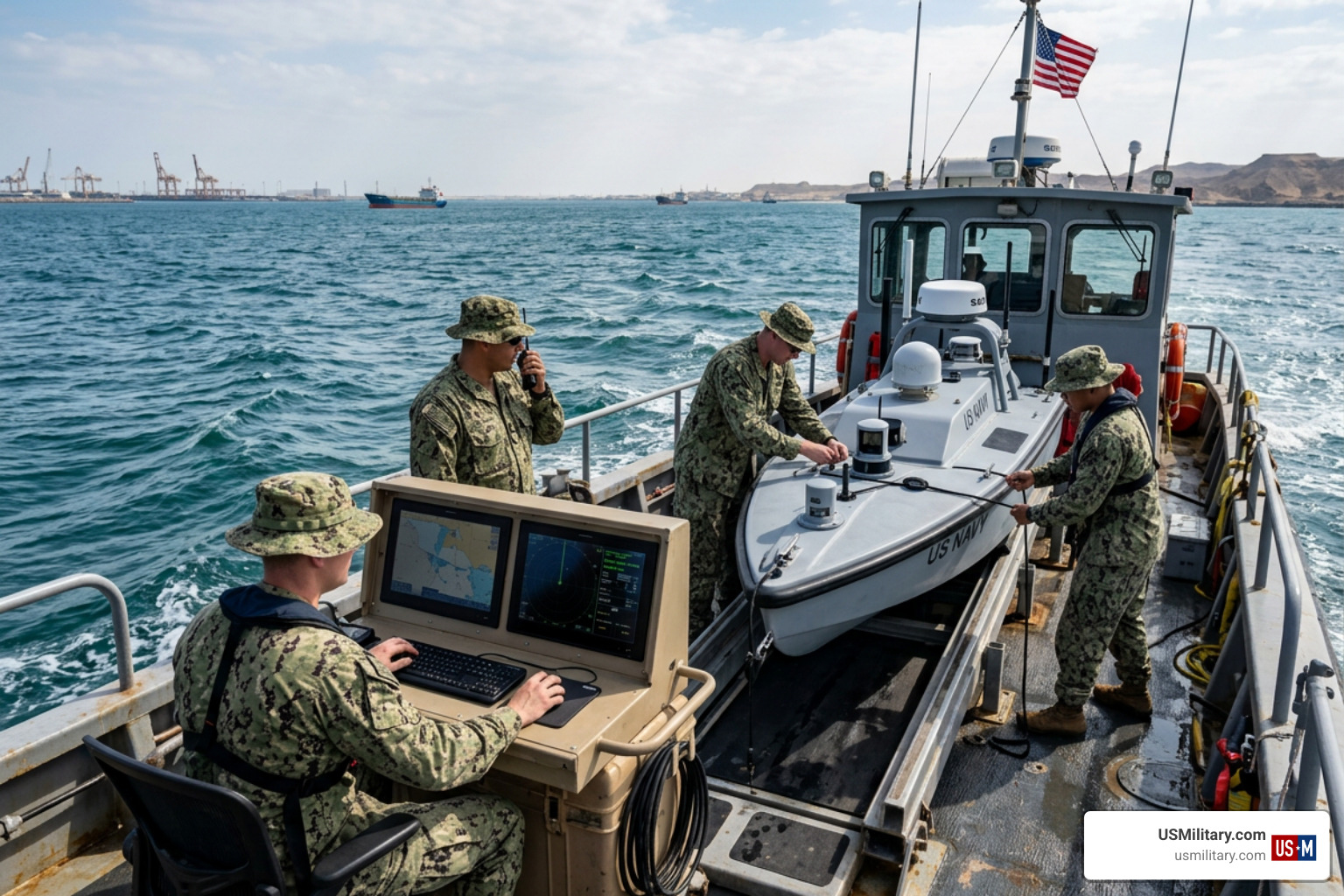
Immediately following the ditching of the Apache helicopter, the two-pilot crew managed to exit the sinking airframe and deploy their survival gear in the warm waters of the Persian Gulf. Rather than waiting hours for a traditional manned helicopter or surface vessel to navigate the hostile waters—which were heavily patrolled by Iranian fast-attack craft—US Central Command (CENTCOM) deployed an autonomous sea drone.
The unmanned surface vessel (USV), operating in the immediate vicinity as part of the Navy’s forward-deployed robotic fleet, reached the pilots within minutes. The sea drone successfully pulled both aviators from the water, shielding them from potential capture by Iranian forces. This rapid-response capability represents a massive leap forward in CSAR doctrine, drawing parallels to high-stakes pilot recoveries on land, such as the famous operations detailed in How SEAL Team 6 Rescued F-15 Pilot. Thanks to this seamless technology integration, the pilots were returned to a US naval vessel safely and completely uninjured.
Strategic Context of the 2026 Iran War and Aviation Losses
The loss of the AH-64 Apache on June 8, 2026, cannot be viewed in isolation. It is a single, highly publicized piece of a much larger puzzle. The 2026 conflict between the United States and Iran has seen intense aerial combat, electronic warfare, and heavy utilization of unmanned platforms.
As the air campaign progressed, both sides suffered notable losses. The conflict has forced military strategists to re-evaluate the vulnerability of crewed aircraft in modern contested airspace, especially when compared to the high volume of unmanned platforms lost, as discussed in Second Plane Goes Down in Iran and analyzed in the Future of Drone Warfare.
Comparing US and Iranian Aircraft Losses in 2026
To understand the scale of the air war, we must look at the numbers. While the United States maintains technological air superiority, the sheer density of Iran’s air defense network—even when heavily degraded—has taken a toll.
Below is a breakdown of the verified military aircraft losses sustained by both sides during the 2026 conflict up to mid-June:
| Aircraft Type / Category | United States Losses | Iranian Losses |
|---|---|---|
| Total Aircraft Losses | 62 | 43 |
| Unmanned Aerial Vehicles (e.g., MQ-9 Reaper) | 29 | 18 |
| Fighter Jets (e.g., F-15, F-35, F-18) | 11 | 22 |
| Attack Helicopters (AH-64 Apache / AH-1) | 1 | 3 |
| Support / Transport / Reconnaissance | 21 | 0 |
This data, supported by strategic analyses like The Ins and Outs of US Apache Deployment Claim vs Iran Fleet Mission, reveals that while Iran has lost a higher proportion of its crewed fighter inventory, the US has absorbed significant losses in unmanned surveillance assets, particularly the MQ-9 Reaper. The June 8 crash represents the only US Apache helicopter lost in the conflict so far, making it an incredibly rare and politically sensitive event.
Historical Context: From Operation Praying Mantis to Flight 655
The waters around the Strait of Hormuz have been a flashpoint for decades. This is not the first time US helicopters and Iranian forces have traded fire in these narrow lanes. During the late 1980s, the “Tanker War” saw frequent clashes.
For instance, in October 1987, US helicopter gunships engaged and neutralized hostile Iranian speedboats that had fired upon American assets, a landmark event captured in U.S. helicopter gunships sank one Iranian patrol boat and… – UPI Archives . The tensions culminated in historic tragedies, such as the accidental downing of Iran Air Flight 655 in 1988 by the USS Vincennes, which resulted in the loss of 290 civilian lives and deeply scarred US-Iran relations for generations. The 2026 conflict carries the heavy weight of this history, with both sides operating under highly sensitive rules of engagement to avoid repeating past miscalculations while still projecting decisive military strength.
US Response and Geopolitical Implications
The downing of a US military asset in international waters always demands a response from the highest levels of the American government. With the Strait of Hormuz serving as the arterial highway for a massive portion of the world’s petroleum shipping, any military action in this corridor threatens global economic stability.
Following the June 8 incident, the geopolitical temperature rose instantly. The Trump administration faced immediate pressure to establish a firm deterrent against further attacks on US rotary-wing assets, leading to discussions of a potential US Military Attack on Iran Coming and aggressive maritime maneuvers outlined in Trump Calls Irans Bluff Proceeds to Hormuz Blockage Redirecting Ships to Strait of America.
President Trump’s Vow to Respond to the Attack
President Donald Trump did not mince words when addressing the loss of the Apache helicopter. In a formal press briefing, he accused Iranian forces of a direct, hostile act against an American military crew. Trump asserted that while the safe recovery of the pilots was a major victory, the destruction of US military hardware would not go unanswered.
The administration declared that the US would respond out of “necessity” at a time and place of its choosing. Speculation immediately grew regarding targeted strikes against Iranian coastal radar installations, missile launch sites, or fast-attack naval bases. Behind the scenes, defense analysts suggested that elite units might be utilized for surgical operations, a possibility explored in The Unfiltered Truth About US Military Secretly Activating SEALsDelta in Iran.
Frequently Asked Questions About the Apache Downings
What Happened When Iran Shot Down American Apache Helicopter?
On June 8, 2026, a US Army Boeing AH-64 Apache attack helicopter crashed into the waters near the strategic Strait of Hormuz. While Iran claimed its air defense units shot down the helicopter, the US military investigated whether the crash was caused by hostile ground fire, a shoulder-fired missile, or a critical mechanical malfunction during low-altitude operations.
Were the pilots injured in the June 2026 Apache crash?
No. Both US Army pilots survived the water landing completely uninjured. They successfully exited the sinking helicopter and were rapidly recovered from the Persian Gulf by an advanced American autonomous sea drone before Iranian patrol forces could reach them.
How many US aircraft have been lost in the 2026 Iran war?
As of mid-June 2026, the United States has lost a total of 62 military aircraft in the conflict. The vast majority of these losses consist of unmanned aerial vehicles, including 29 MQ-9 Reaper drones. The June 8 incident marks the first and only AH-64 Apache helicopter lost during the war.
Conclusion
The downing of the AH-64 Apache helicopter on June 8, 2026, highlights the persistent dangers American service members face when operating in highly contested environments like the Strait of Hormuz. Fortunately, cutting-edge search-and-rescue technology, specifically the deployment of autonomous sea drones, ensured that a potential tragedy was averted and both pilots returned home safely.
At USMilitary.com, we are dedicated to keeping our service members, veterans, and their families informed about global military developments, career paths, and the benefits they have earned through their service. Whether you are looking for information on VA home loans, disability ratings, or a comprehensive Guide to the Branches of the Military, we serve as your trusted, central hub for all military-related resources. Stay safe, stay informed, and thank you for your service.
Free for Service Members & Veterans
Get the military benefits intel no one tells you about.
Weekly updates on VA benefits, pay changes, and money tips — free for service members and veterans.
No spam. Unsubscribe anytime. Your info is never shared.



More Than 90% Of Clients Have Increased Ratings! Why Settle For Less Than You Deserve? Expert Priority Help With Your VA Claim Today! Free Evaluation Call!
The mission of Veteran Services United is to support veterans in filing and winning disability claims by offering expert guidance, advocacy, and personalized assistance. Through dedicated service, Veteran Services United empowers veterans to secure the benefits they have earned, ensuring they receive the care and support they deserve.