What It Takes To Become a Navy SEAL Today: Eligibility, PST Standards, and Selection
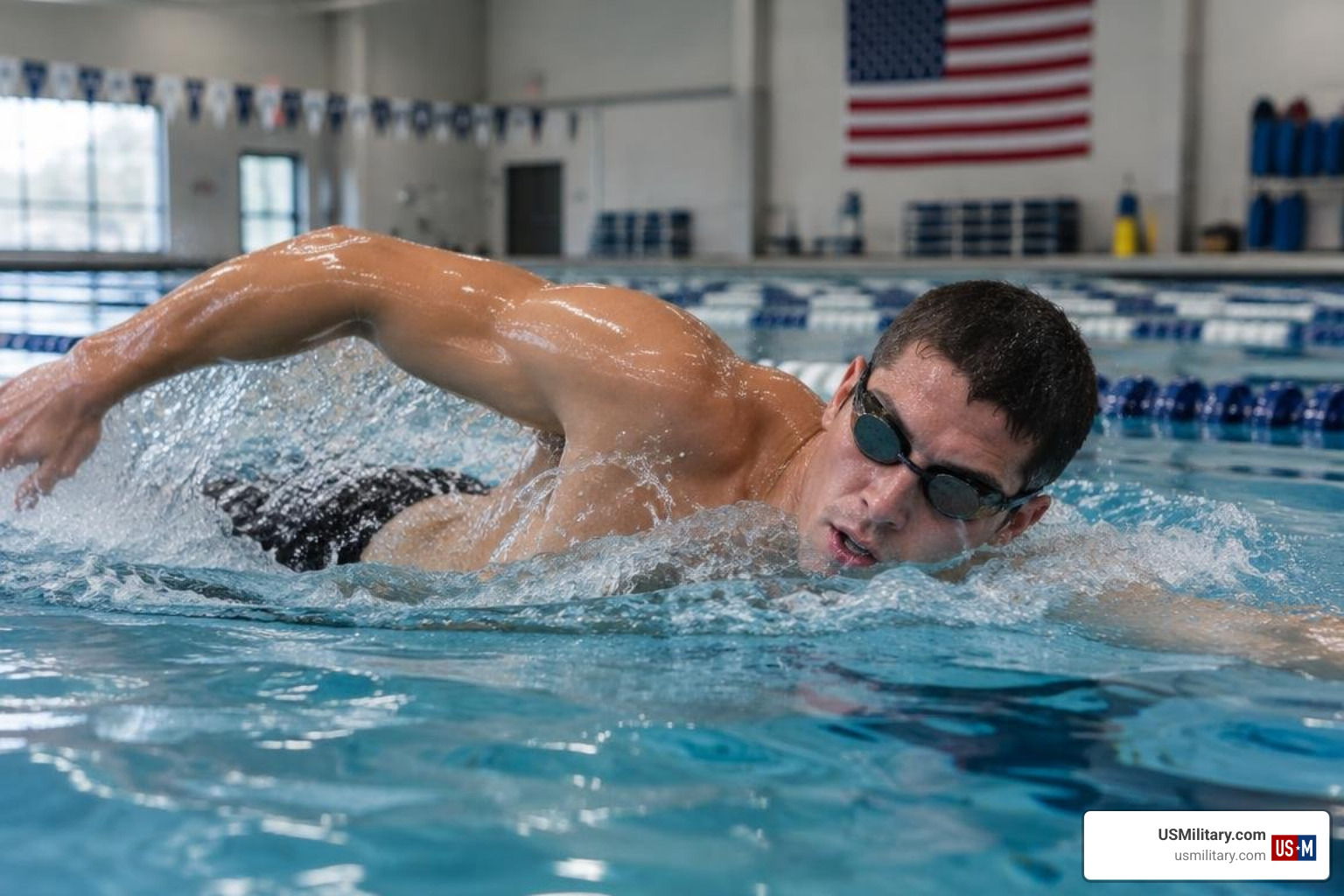
Entering Naval Special Warfare requires passing six strict screening gates. Before taking a single fitness assessment, candidates must satisfy the Navy’s baseline administrative and medical prerequisites. You can begin by unpacking foundational SEAL entry requirements and selection criteria to determine where your background stands. Official standards and requirements are outlined on Navy.com.
Core Eligibility Requirements and the Physical Screening Test
Applicants must be U.S. citizens. Enlisted candidates must be 17 to 28 years old (17-year-olds require parental consent). Officer applicants can apply up to age 41 under certain commissioning programs, though the vast majority enter in their early-to-mid twenties.
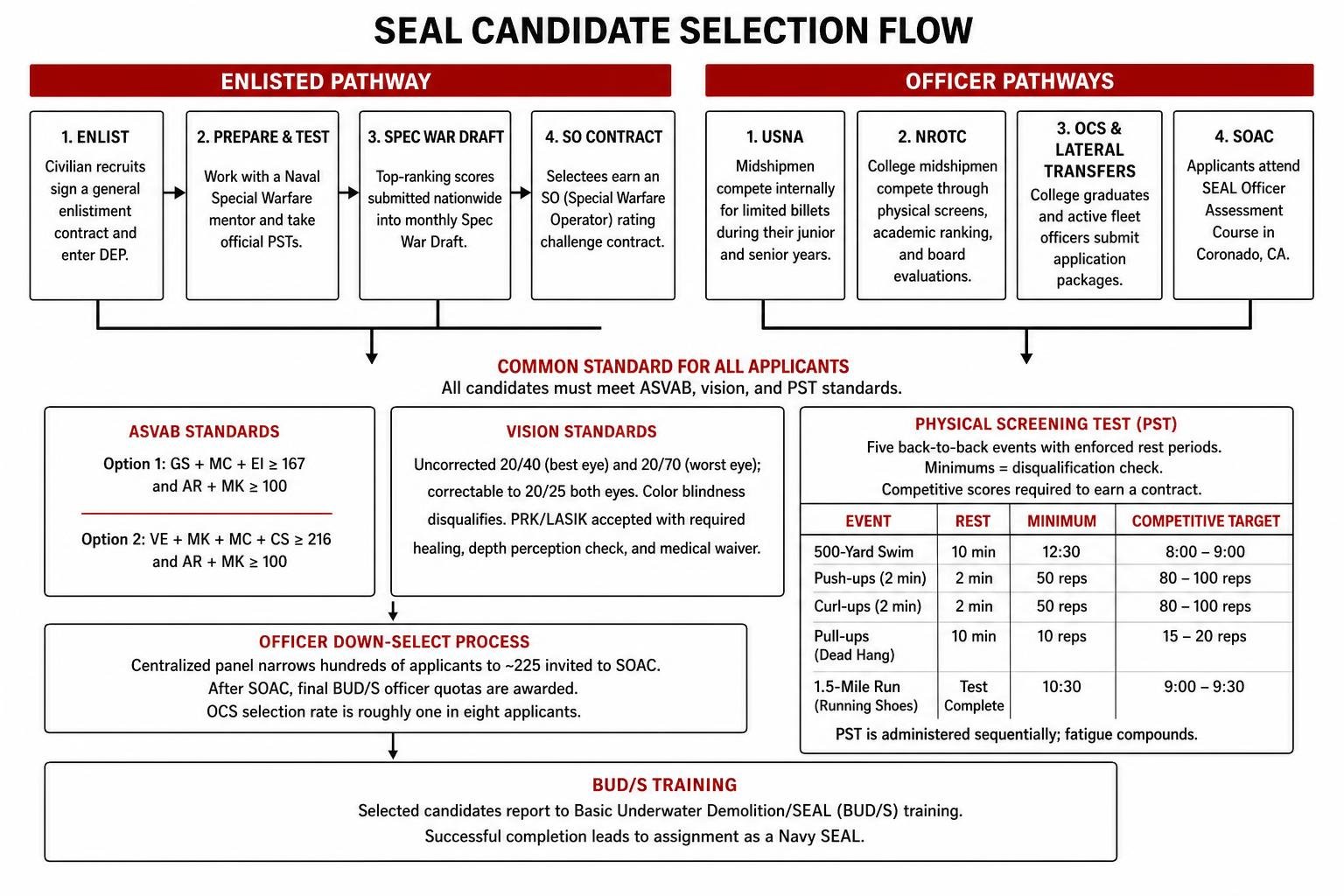
Academic standards depend on Armed Services Vocational Aptitude Battery (ASVAB) line scores. You must achieve one of two primary score combinations:
- General Science (GS) + Mechanical Comprehension (MC) + Electronics Information (EI) equal to or greater than 167, along with Arithmetic Reasoning (AR) + Mathematics Knowledge (MK) equal to or greater than 100.
- Verbal Expression (VE) + Mathematics Knowledge (MK) + Mechanical Comprehension (MC) + Coding Speed (CS) equal to or greater than 216, along with AR + MK equal to or greater than 100.
Vision standards require uncorrected visual acuity no worse than 20/40 in your best eye and 20/70 in your worst eye, correctable to 20/25 in both eyes. Color blindness is an automatic disqualifier. Corrective surgical procedures like PRK and LASIK are accepted, provided you complete the required post-operative healing periods, pass depth perception checks, and receive an approved medical waiver.
The Physical Screening Test (PST) evaluates muscular endurance and cardiovascular stamina across five back-to-back events with strictly enforced rest periods. Minimum passing standards will only earn you a disqualification checkmark at selection boards. You must achieve competitive marks to secure a contract. Detailed guidelines can be verified through LegalClarity.
| PST Event | Rest Interval | Minimum Standard | Competitive Score Target |
|---|---|---|---|
| 500-Yard Swim (Breaststroke or Combat Sidestroke) | 10 Minutes | 12:30 | 8:00 – 9:00 |
| Push-ups (2 Minutes) | 2 Minutes | 50 reps | 80 – 100 reps |
| Curl-ups (2 Minutes) | 2 Minutes | 50 reps | 80 – 100 reps |
| Pull-ups (No Time Limit / Dead Hang) | 10 Minutes | 10 reps | 15 – 20 reps |
| 1.5-Mile Run (Running Shoes) | Test Complete | 10:30 | 9:00 – 9:30 |
Candidates who rely solely on minimum times rarely make it through the selection draft. The PST is administered sequentially, meaning muscle fatigue compounds with each event.
What It Takes To Become a Navy SEAL Today: Enlisted vs. Officer Pathways and SOAC
There are four primary routes into the community:
- Enlisted Entry: Civilian recruits sign a general enlistment contract and enter the Delayed Entry Program (DEP). By working with a regional Naval Special Warfare mentor, recruits take official PSTs. Top-ranking scores are submitted nationwide into a monthly Spec War Draft to earn an SO (Special Warfare Operator) rating challenge contract.
- United States Naval Academy (USNA): Midshipmen compete internally for limited billets during their junior and senior years.
- Naval Reserve Officers Training Corps (NROTC): College midshipmen nationwide compete through physical screens, academic ranking, and board evaluations.
- Officer Candidate School (OCS) and Lateral Transfers: College graduates and active fleet officers submit official application packages to the SEAL Officer Community Manager.
OCS selection is exceptionally competitive, with roughly one in eight applicants accepted to attend training.
Officer applicants must complete the SEAL Officer Assessment Course (SOAC), a grueling three-week summer screening held in Coronado, California. SOAC tests leadership under extreme physical duress. Candidates must run over five miles on soft sand, swim long distances with and without fins, carry 35-to-40-pound rucks over distance, and demonstrate team-first problem-solving.
Application windows follow rigid administrative cycles: for example, the FY28 application cycle for SEAL officers opens on November 1, 2026. A centralized down-select panel narrows hundreds of initial applicants to approximately 225 candidates invited to attend SOAC, after which final BUD/S officer quotas are awarded.
The Complete Training Pipeline, Community Comparisons, and Career Commitments
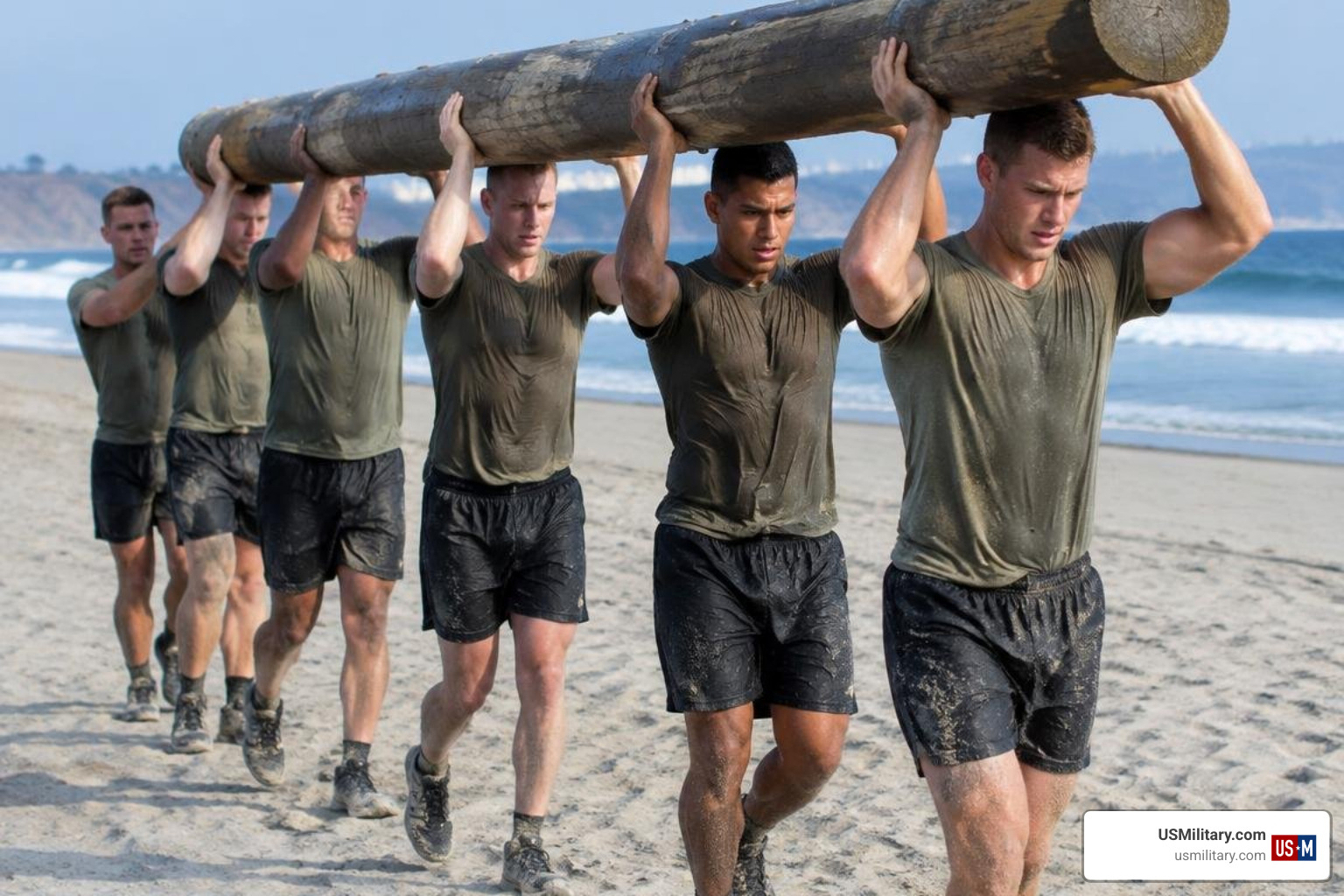
Naval Special Warfare operates under U.S. Special Operations Command (USSOCOM), requiring operators to master land, air, and maritime warfare. The journey from civilian or midshipman to fully qualified operator is one of the longest in the military.
What It Takes To Become a Navy SEAL Today: The Complete Pipeline from BUD/S to SQT
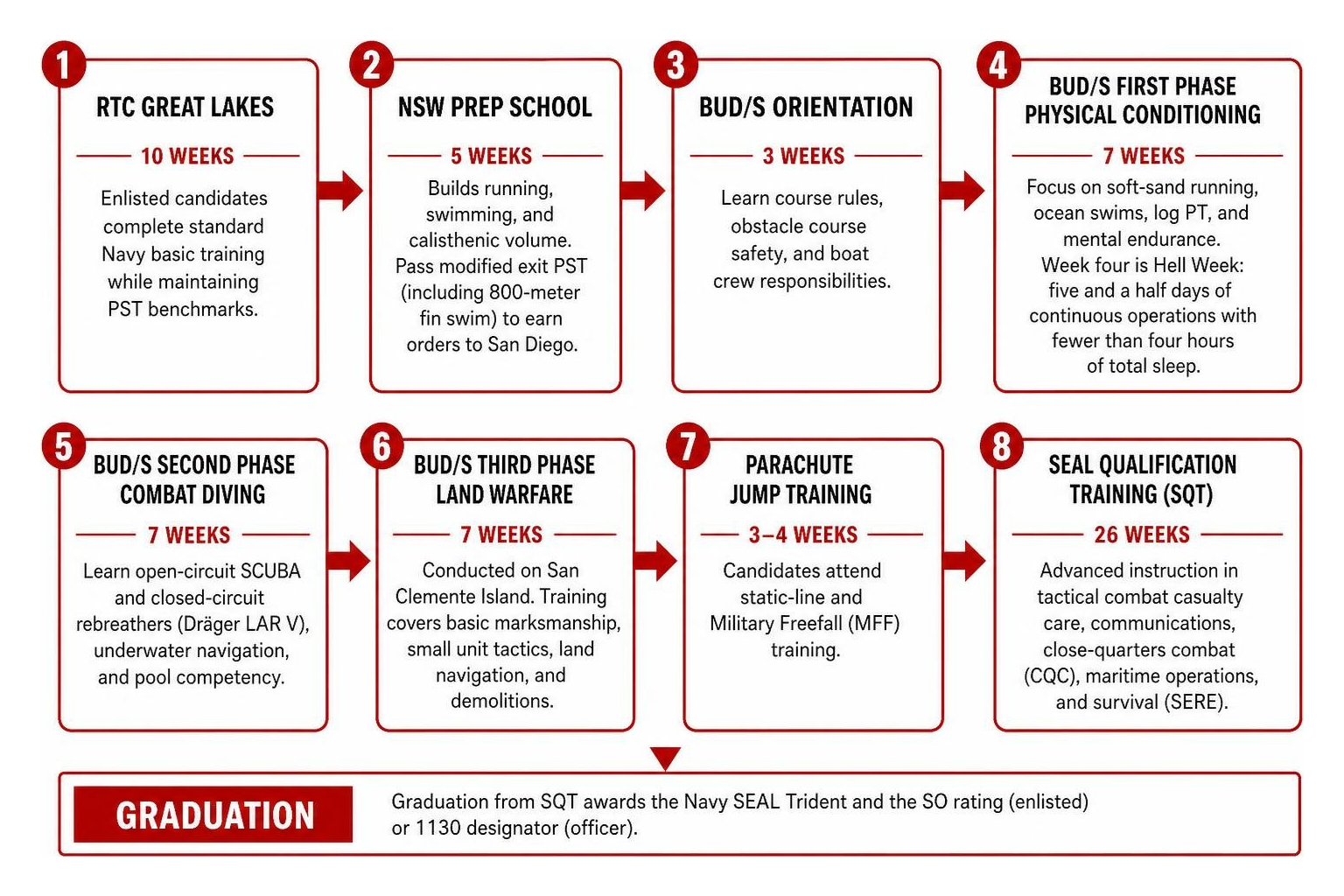
The pipeline spans well over a year of continuous evaluation:
- Recruit Training Command (RTC) Great Lakes (10 Weeks): Enlisted candidates complete standard Navy basic training while maintaining PST benchmarks.
- Naval Special Warfare Preparatory School (5 Weeks): Located at Great Lakes, BUD/S Prep builds running, swimming, and calisthenic volume. Candidates must pass a modified exit PST (including an 800-meter fin swim) before receiving orders to San Diego.
- BUD/S Orientation (3 Weeks): Located at the Naval Special Warfare Center in Coronado, candidates learn course rules, obstacle course safety, and boat crew responsibilities.
- BUD/S First Phase – Physical Conditioning (7 Weeks): The phase focuses on soft-sand running, ocean swims, log PT, and mental endurance. Week four is Hell Week: five and a half days of continuous physical operations with fewer than four hours of total sleep.
- BUD/S Second Phase – Combat Diving (7 Weeks): Candidates learn open-circuit SCUBA and closed-circuit rebreathers (Dräger LAR V), underwater navigation, and pool competency.
- BUD/S Third Phase – Land Warfare (7 Weeks): Conducted on San Clemente Island, training covers basic marksmanship, small unit tactics, land navigation, and demolitions. You can learn more about mastering the three phases of BUD/S training to understand the structural shifts between each segment.
- Parachute Jump Training (3–4 Weeks): Candidates attend static-line and Military Freefall (MFF) training.
- SEAL Qualification Training / SQT (26 Weeks): Advanced instruction in tactical combat casualty care, communications, close-quarters combat (CQC), maritime operations, and survival (SERE).
Graduation from SQT awards the Navy SEAL Trident and the SO rating (enlisted) or 1130 designator (officer). A full review of expectations is outlined in our breakdown of formal BUD/S training requirements, with historical overviews accessible via Study.com and Wikipedia.
BUD/S maintains an overall historical attrition rate of roughly 68%, with some classes losing over 80%. Most dropouts occur during the first three weeks of First Phase or during Hell Week. If a student decides to quit, they step up to the courtyard, ring a brass ship’s bell three times, and submit a Drop on Request (DOR).
Commissioned officers graduate at an average rate of 61%, while enlisted candidates graduate at roughly 21%. This difference stems from officer pre-selection hurdles like SOAC, which screen candidates heavily before they ever arrive in Coronado. Fewer than 10% of all candidates who sign an initial contract earn the Trident.
Physical Conditioning, Mental Resilience, and Female Candidate Milestones
Succeeding at BUD/S requires balanced durability rather than excessive muscle mass. You need a fast combat sidestroke, a strong aerobic base for four-mile timed runs under 30 minutes, and the core stability to lift heavy logs without sustaining back injuries. Active-duty operators must also maintain high scores on the Navy Combat Fitness Test (CFT), which incorporates weighted-vest pull-ups, push-ups, and distance swimming.
Mental stamina is equally critical. You can explore developing unbreakable mental toughness for elite training to see how positive self-talk, visualization, goal segmentation, and breath control help candidates push through cold water and sleep deprivation.
All Naval Special Warfare roles are fully open to women. In 2021, the first female candidate graduated from the Naval Special Warfare pipeline, successfully completing Special Warfare Combatant-craft Crewman (SWCC) training. While women have entered BUD/S screening, no female candidate has yet completed SQT to earn the SEAL Trident.
Service Commitment, Deployment Cycles, and Navy SEALs vs. Green Berets
Enlisting through the SEAL Challenge Contract incurs a 72-month (6-year) active-duty obligation. The training pipeline consumes about 56 weeks for enlisted sailors and 62 weeks for officers.
Once assigned to one of the numbered SEAL Teams, operators follow an 18-month Fleet Readiness Training cycle divided into individual training, unit-level integration, and an operational overseas deployment lasting about six months. Today, there are roughly 2,500 active-duty Navy SEALs.
When comparing Navy SEAL and Army Green Beret mission sets, their primary tactical focuses stand out. SEALs specialize in maritime operations, direct-action raids, combat diving, and precise hostage rescue. Green Berets concentrate on unconventional warfare and foreign internal defense, embedding with foreign allied forces for long periods, which requires extensive foreign language and cultural training. Further details are available through Army PRT and Indeed’s Career Guide.
Beyond standard base pay, qualified SEALs receive special duty pays:
- Special Duty Assignment Pay (SDAP): up to $375 per month
- Dive Pay: $215 to $340 per month
- Demolition Pay: $150 per month
- Parachute (Hazardous Duty) Pay: $150 to $225 per month
- Foreign Language Proficiency Pay (when qualified)
- Enlistment and retention bonuses ranging from $40,000 up to $60,000 for specific critical ratings
At USMilitary.com, we provide direct, practical information to help veterans and recruits navigate military careers, benefits, and special operations pathways. You can explore our comprehensive Navy SEAL guide and career resources to research program options, evaluate benefits, and start preparing for the selection process.
Take an honest look at your current run and swim times, address any gaps in your physical conditioning, and commit to the preparation needed to succeed.
— Larry Fowler, BUD/S Class 89, for USMilitary.com
Free for Service Members & Veterans
Get the military benefits intel no one tells you about.
Weekly updates on VA benefits, pay changes, and money tips — free for service members and veterans.
No spam. Unsubscribe anytime. Your info is never shared.



Leave a Reply