The question of “how deadly are Navy SEALs” is complex. It’s not solely about physical strength. It encompasses much more than the weapons they use or the combat techniques they master. Above all, it’s the mere thought of men being trained only to kill.
However, we regard our SEALs, Delta Force, Beret, or any military branch warriors their job often compels the use of deadly force. And few others, if any, know this better than the US Military. Namely, Navy SEALs, also referred to as the Teams.
Table of Contents:
- The Grueling Path to Becoming a Navy SEAL
- Strategic Thinking & Problem Solving: The Mental Game of How Deadly Are Navy Seals
- Specialized Skills & Advanced Tech Capabilities
- The Human Factor: Beyond “Deadliness”
- Conclusion
The Grueling Path to Becoming a Navy SEAL
Becoming a Navy SEAL involves one of the most demanding challenges in any military branch. This starts with Phase 1 in Basic Underwater Demolition SEAL training (BUD/S) in Coronado, CA. The first weeks are about finding out who can withstand the physical demands and the cold water of being a SEAL. Then, finally, the infamous Hell Week, a severe test of endurance. Hell Week tests both physical and mental capabilities.
Many candidates do not succeed. The tragic loss of two SEALs during a 2024 mission, reported by KPBS, highlights this. These incidents show the risks, even in training environments.
BUD/S pushes candidates to their limits. In fact, many are injured and required to ‘roll back’ to the next oncoming class. But most ring the bell to DOR (drop on request).
Not everyone is suited for this. Only 10-20% complete all three phases or 26 weeks of BUD/S, proving they possess the necessary qualities. Many hazards can cause harm or even fatalities during training exercises.
BUD/S training includes intense physical conditioning, mental resilience exercises, and specialized combat training. It’s a comprehensive program preparing candidates for every type of operation. This primary special operations force has training for any situation.
Besides being a top fighting force, SEALs undertake rescue missions. Their rescue of an American kidnapped in Nigeria showcases this skill. Their history is long and is known as the Navy SEALs’ rich history.
To become a Navy SEAL, you must meet the following qualifications and complete the notoriously challenging Basic Underwater Demolition/SEAL (BUD/S) training program.
Age Requirements
- Be between the ages of 17 and 28 (with some waivers available for older candidates)
Citizenship
- Be a U.S. citizen
Education
- Hold a high school diploma or equivalent
- Score a minimum of 50 on the Armed Services Vocational Aptitude Battery (ASVAB) test in the following areas:
- General Technical (GT)
- Mechanical Comprehension (MC)
- Paragraph Comprehension (PC)
Physical Fitness
- Pass the Navy’s Physical Screening Test (PST), which includes:
- 500-yard swim in 12 minutes and 30 seconds
- 42 push-ups in 2 minutes
- 50 sit-ups in 2 minutes
- 1.5-mile run in 10 minutes and 30 seconds
- 6 pull-ups in 2 minutes
Medical Requirements
- Meet the Navy’s medical standards for enlistment, including:
- Passing a physical examination
- Meeting body fat percentage standards
- Having no tattoos or body piercings that violate Navy policy
Background
- Pass a background check and security clearance investigation
- Have no felony convictions or convictions for misdemeanors involving moral turpitude
BUD/S Training
- Complete the 24-week BUD/S training program, which includes:
- Physical conditioning
- Swimming and diving training
- Obstacle course training
- Land warfare training
- Survival, Evasion, Resistance, and Escape (SERE) training
- First aid and medical training
- Advanced swimming and diving training
Tips for Success
- Start training early to build your physical fitness and endurance
- Focus on building your swimming and diving skills
- Develop a strong mental toughness and resilience
- Stay motivated and committed to your goal of becoming a Navy SEAL
Strategic Thinking & Problem Solving: The Mental Game of How Deadly Are Navy Seals
After initial challenges, SEALs embark on missions needing quick tactical decisions. This involves immediate planning to keep these military personnel safe.
Consider hostage rescues or counter-terrorism. Rapid decisions determine success or failure. Pressure, focus, and mental strength are vital to keep each operations force member in top form.
Intelligence Gathering: More Than Meets the Eye
Intelligence gathering and threat assessment are crucial in unpredictable settings. Navy SEALs work independently. Emphasis lies on how a mission will benefit their purpose and how these secret warriors get the job done.
The Power of Teamwork and Communication
SEALs rarely work alone. It’s a myth that they operate as lone wolves. Teamwork underpins what distinguishes them. They usually work in platoons with teams stationed on the East Coast, Little Creek, VA, and West Coast teams in Coronado, CA.
✉ Get updates like this in your inbox
Weekly VA benefit changes, pay updates, and money tips for service members, veterans, and military families. Free, no spam.
An incident involving kidnappers using motorcycles and AK-47s, reported by CNN, shows this. Situations can rapidly worsen in complex rescues. A high degree of teamwork is always a focus for these special operations forces.
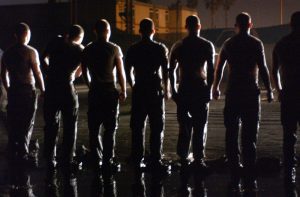
It’s often said that BUD/S is so hard because the more they bleed in training, the less they die on the battlefield.
Specialized Skills & Advanced Tech Capabilities
Navy SEALs become master ‘deadly’ warriors because they master many skills. It’s more than general expertise; it’s specialized mastery in their field. The Navy SEAL community fosters camaraderie and mutual support among its members.
Here are some of the many skills that Navy SEALs need to develop:
- Combat Diving: Training in closed-circuit diving, underwater navigation, and demolition.
- Parachuting: Both static-line and free-fall techniques, including High Altitude Low Opening (HALO) jumps.
- Close Quarters Combat (CQC): Hand-to-hand combat, room clearing, and hostage rescue tactics.
- Land Warfare: Small unit tactics, patrolling, reconnaissance, and ambush techniques.
- Survival, Evasion, Resistance, and Escape (SERE): Skills to survive in various environments and resist capture.
- Sniper Training: Long-range marksmanship, concealment, and target observation skills for any Navy SEAL sniper.
- Communications: Operation and maintenance of various communication devices.
Navy SEALs demonstrate expertise in all areas and achieve skill and precision, defining unmatched military capabilities. Their expertise is unparalleled to others in the field.
Weapons and Tactics: Precision and Adaptability
Expert marksmanship is one facet of Navy SEALs’ weaponry skills. It’s not sufficient to be just a good shooter. The focus is on decision-making under pressure to allow these Navy SEAL snipers to be ready for anything.
SEAL snipers, deadly marksmen in the Middle East, are feared adversaries. Their training includes using various sniper rifles. Navy SEAL snipers are trained in advanced camouflage and concealment methods.
Tech: A Critical Part of Navy SEAL Operations
Advanced technology is integral to Navy SEAL missions. Technology enables greater achievement than manpower alone. Surveillance, communication, and analytical tools can shift outcomes. This allows conventional forces to use a variety of support. Each operations force depends on tech for better support.
The main content is to educate and engage, providing informative details. The press room offers updates and resources. SEAL teams represent the core of Naval Special Warfare.
Loss and Sacrifice
We must remember the sacrifices SEALs make. Consider those killed in action, like those who drowned off Somalia’s coast during a weapons seizure. The SEAL ethos drives them, creating strong bonds with fellow SEALs.
The Naval Special Warfare Command honors fallen SEALs. Families receive support. This is true whether they are lost in the Arabian Sea or elsewhere.
Conclusion
The question “How deadly are Navy SEALs” is not about a single aspect of military training. With great risks there are great rewards. Their skills extend far beyond physical combat. Navy SEALs operate as a unit globally, which is part of what makes these special operations forces the best.
They are elite, often in dangerous settings, like searching vessels for weapons bound for Yemen. Their expertise includes intelligence, strategy, and commitment, supported by a logistical team. They risk danger to combat foes armed with diverse weapons, like AK-47s.
Want more military info? Find your nearest military recruiter here!


