How Military Troops Turn Fear Into Action

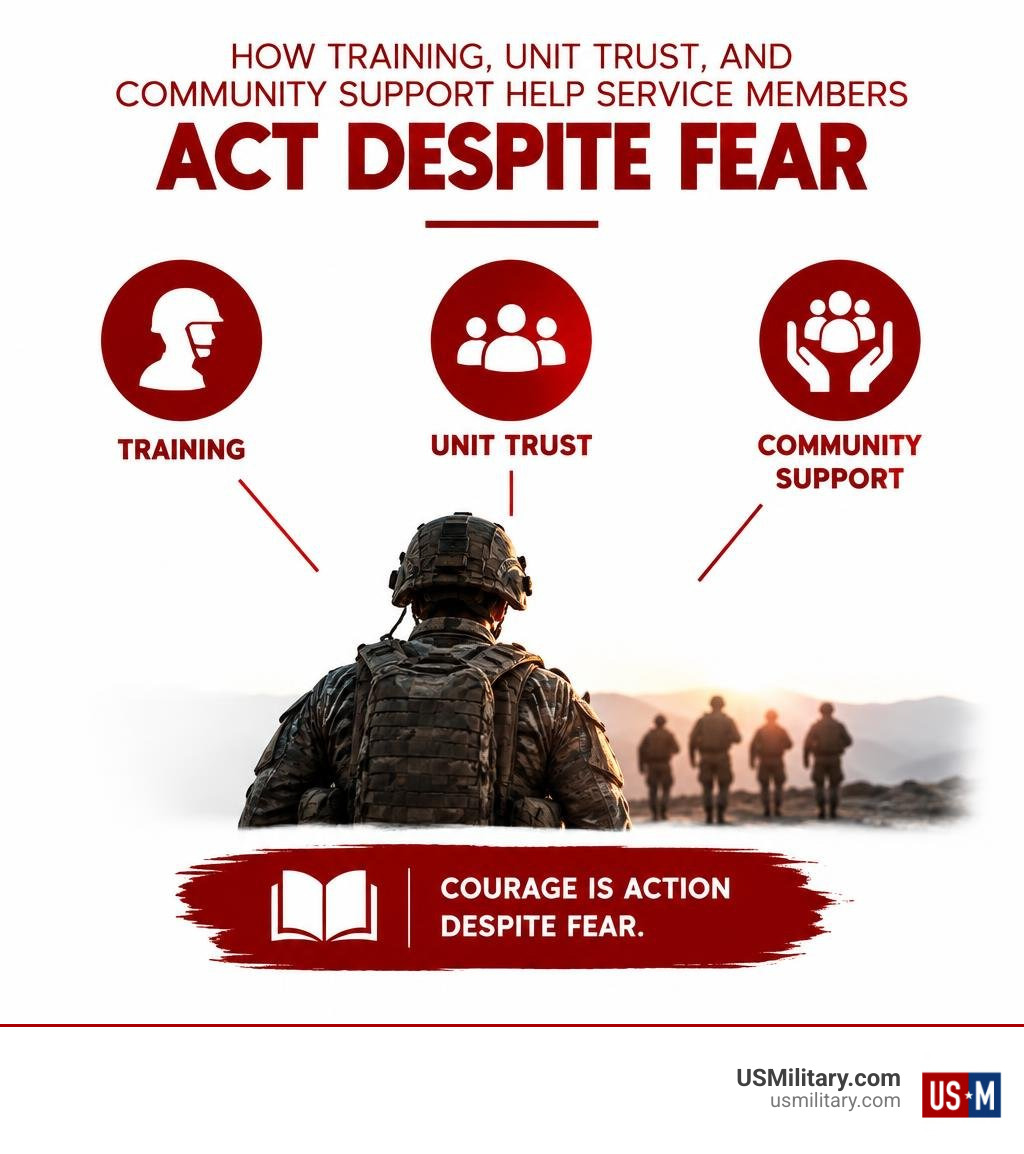
Understanding how fearless military troops overcome fear with books like Dare to Live Greatly starts with a practical truth: courage is action despite fear, not the absence of it. Name the danger, rely on training, check in with your team, and take the next sound step. Reading can help troops reflect on purpose and perseverance, but it works alongside practice, trusted leaders, and support from others.
That distinction matters in real life. A service member on a cold range, a sailor on night watch, or an airman facing a first deployment may all feel the same tight chest and racing thoughts. The difference is not that fear disappears. The difference is that training gives them a clear next action, teammates give them confidence, and leaders give them a reason to keep moving. Books can reinforce that mindset between drills, during downtime, and after a hard day, helping troops turn a moment of doubt into a lesson they carry forward.
I’m Larry Fowler, a Navy veteran and BUD/S Class 89 graduate. My training and work as publisher of USMilitary.com inform this look at How Fearless Military Troops Overcome Fear.
Related content about How Fearless Military Troops Overcome Fear:
- Why Faith Is Important For All Men
- Top 15 Faith Based Books Authored By Military Elite Special Forces Operators
- Top 20 faith books for military men and women
Winter War and Japanese Holdouts: Two Case Studies in Will to Fight
Examining extreme military conflicts helps us understand human endurance under immense strain. The Finnish Winter War (1939–1940) provides an enduring case study. With a population of roughly 3.7 million, Finland faced massive Soviet manpower and material superiority. Rather than succumbing to panic, Finnish forces leveraged harsh sub-zero terrain, ski mobility, and decentralized small-unit tactics to stall enemy advances.
For today’s troops, the lesson is practical rather than romantic. Small teams that know their terrain, trust each other, and can make sound decisions without waiting for perfect information are harder to shake. That is why realistic training matters so much. When a squad has rehearsed moving, communicating, and caring for each other in difficult conditions, fear has less room to turn into confusion. The mission still feels hard, but the next step is clear, and clear steps are what keep people moving.
In contrast, the cases of Japanese holdouts Hiroo Onoda and Shoichi Yokoi demonstrate how extreme, internalized discipline operates over decades of isolation. While their survival showcased intense personal endurance, it also revealed the critical difference between disciplined persistence and harmful adherence to outdated orders without operational feedback. For an academic analysis of these dynamics, consult the research within the Journal of Advanced Military Studies.

How fearless military troops overcome fear with unnerving newfound confidence
Troops maintain resolve through clear mission logic, deep belonging, and shared operational narratives. When fear strikes, disciplined service members fall back on rigorous preparation and mutual accountability. Studying accounts of resilience—paired with relevant lessons in military mental toughness—gives operators reflective frameworks to channel anxiety into structured performance.
In plain terms, a shared story helps a unit remember why it is there. That story might be told in a debrief, in a letter home, or in a book discussed over coffee after training. It reminds people that they are part of something larger than a single bad moment. When troops feel connected to each other and to the mission, they are more likely to speak up, help a teammate, and keep going even when the work is uncomfortable.
What the Japanese holdout cases can—and cannot—teach
The holdout cases prove that daily routines, unwavering duty, and internalized command structures sustain humans in extreme environments. However, they also illustrate the dangers of isolation. Without clear communication, ethical boundaries, and current strategic guidance, absolute persistence becomes disconnected from reality, imposing profound psychological costs.
Modern service members should take the positive lesson and leave the harmful part behind. Routine, discipline, and commitment are strengths. Isolation, silence, and refusing to seek help are not. Healthy units encourage communication, check on each other, and use leadership and medical support when needed. That balance protects both the mission and the person carrying it out.
How Fearless Military Troops Overcome Fear
In military doctrine, will to fight is defined as the disposition and decision to fight, act, or persevere when required. True courage does not require fearlessness; it means managing biological fear so it does not degrade into paralyzing panic.
✉ Get updates like this in your inbox
Weekly VA benefit changes, pay updates, and money tips for service members, veterans, and military families. Free, no spam.
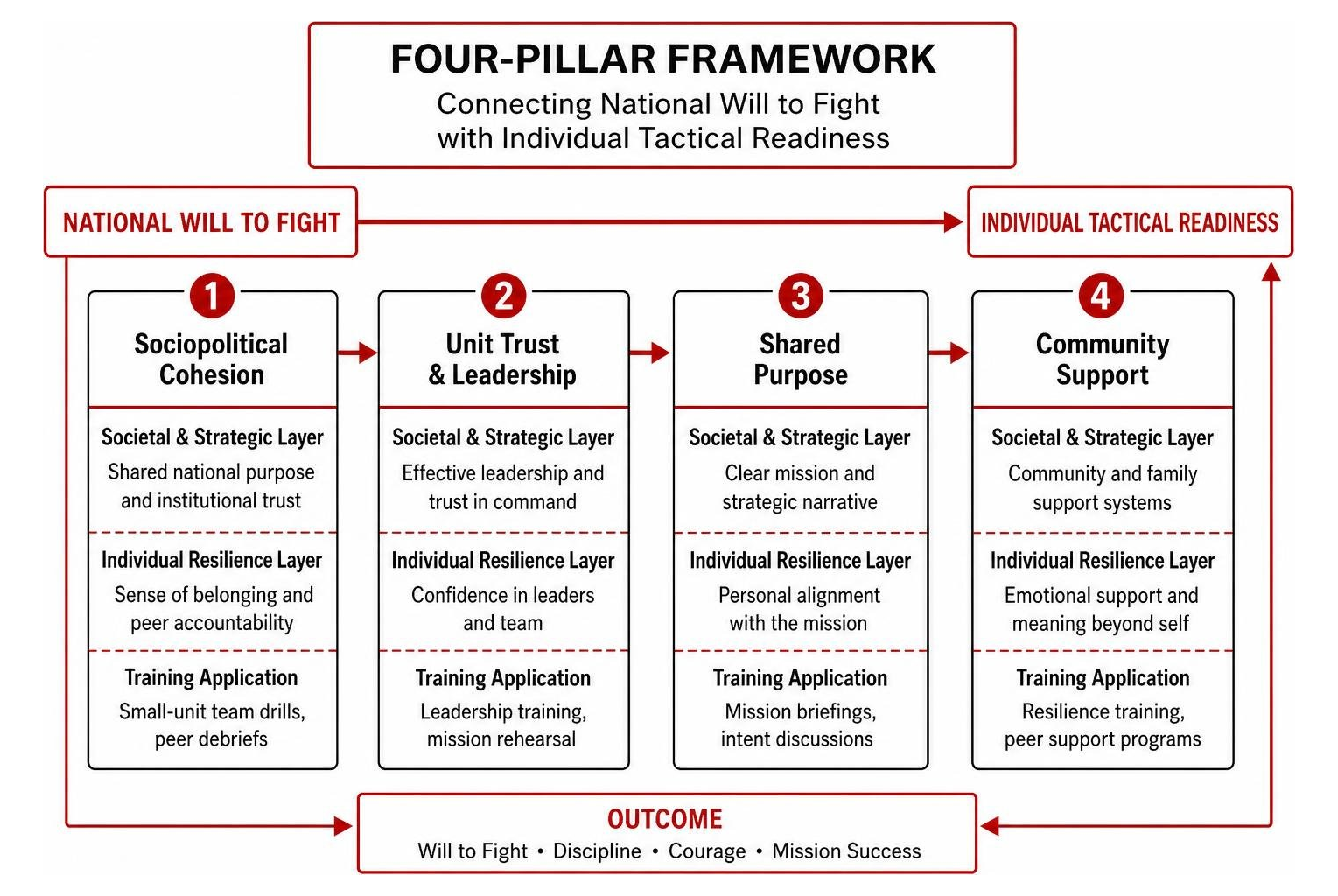
The table below contrasts the four societal pillars of fighting spirit with individual psychological resilience:
| Pillar | Societal & Strategic Layer | Individual Resilience Layer | Training Application |
|---|---|---|---|
| Sociopolitical Cohesion | Shared national purpose and institutional trust | Sense of belonging and peer accountability | Small-unit team drills, peer debriefs |
| Logistics & Adaptation | Dispersed supply lines and climate readiness | Mastering gear and operating in harsh weather | Realistic field evolutions, gear maintenance |
| Civic Engagement | Broad public support and family backing | Grounding identity beyond rank and role | Strong family programs, clear communication |
| Anticipated Support | Dependable reinforcement and medical care | Trust in squadmates and tactical leadership | Medical evacuation drills, cross-training |
None of these pillars works alone. A troop may have strong personal toughness, but without reliable gear, clear orders, and teammates who will not leave them behind, that toughness gets worn down fast. Likewise, a well-supplied unit can still struggle if people do not trust each other or understand the purpose behind the mission. Building will to fight means building all of these layers together, day after day, in training and in garrison life.

How fearless military troops overcome fear in modern training
Modern military frameworks integrate mission command, peer cohesion, and holistic recovery. The U.S. Army’s Holistic Health and Fitness (H2F) doctrine under Field Manual 7-22 emphasizes five interdependent domains: physical, mental, sleep, nutrition, and spiritual readiness.
Spiritual readiness enables personnel to find meaning during hardship, whether through faith-based traditions, philosophical frameworks, or ethical worldviews. Service members seeking to strengthen their inner resolve often explore relevant faith and service context alongside qualified chaplaincy and medical support.
That holistic approach is easy to understand in everyday terms. A tired, hungry, or injured troop will struggle to think clearly no matter how motivated they are. Sleep, food, physical care, and time to reflect are not extras. They are part of readiness. Leaders who protect those basics, and troops who look out for each other in those areas, build a stronger unit than leaders who only talk about toughness.
Using Dare to Live Greatly as a Reflective Reading Tool
In Dare to Live Greatly, lessons from Navy SEAL BUD/S training highlight perseverance, faith, and purposeful action. Crucially, fear is treated not as a disqualifying weakness, but as friction to be confronted directly. While texts like this offer valuable reflection, they serve as personal development tools rather than clinical treatment for psychological trauma or substitutes for official tactical doctrine. Readers interested in these insights can review the book details for Dare to Live Greatly or examine the publisher’s book overview.
That honest framing is part of what makes the book useful for discussion. It does not promise that reading alone will remove fear or solve every problem. Instead, it invites readers to think about their choices, their faith, and the example they set for others. For many veterans and service members, that kind of reflection is most powerful when it is shared. A short conversation with a trusted teammate can turn a personal insight into a practical habit the whole team can use.
A practical military reading and discussion plan
Units and small groups can implement a structured five-step discussion model to extract practical lessons from military literature:
- Read a short passage: Focus on an account involving operational pressure or adversity.
- Identify the core friction: Name the specific fear, uncertainty, or obstacle described.
- Connect to unit values: Discuss how the lesson relates to team responsibilities and current mission goals.
- Select an actionable habit: Choose a practical standard, such as box breathing, gear checks, or structured communication.
- Debrief after field exercises: Evaluate how well the team applied the standard during stressful training.
Keeping the plan short is important. A few pages, a focused discussion, and one clear habit are more useful than a long meeting that everyone forgets. Over time, those small habits add up. Teams start to communicate earlier, prepare more carefully, and support each other more consistently when pressure rises.
For a deeper look at the operational background behind these principles, explore this author background and book context.
Frequently Asked Questions About Military Courage and Fear
Does courage mean a service member feels no fear?
No. Fear is an innate, biological warning mechanism. Courage means assessing the situation objectively, relying on rehearsed procedures, and executing the mission despite internal anxiety. It also means asking for help, checking on teammates, and admitting when something is not right.
Can books like Dare to Live Greatly help troops manage fear?
Yes. Books provide mental reframing tools, reinforce ethical purpose, and spark small-group dialogue. However, reading is a supplemental tool that works alongside realistic physical training, unit leadership, and behavioral health resources. The best results come when reading leads to conversation and action.
How can leaders build will to fight without relying on individual toughness alone?
Leaders build sustainable resolve by establishing clear intent, ensuring thorough logistical preparation, fostering transparent communication, and ensuring personnel receive adequate sleep and recovery. They also model calm decision-making, recognize effort, and create a culture where troops can speak up early about problems before they become crises.
Conclusion
Will to fight is not an innate trait possessed by a select few; it is a capability built through disciplined preparation, unit cohesion, grounded purpose, and reliable leadership. By studying historical endurance alongside modern training frameworks, service members learn to turn fear into purposeful execution.
For troops, veterans, and families, the takeaway is encouraging. Courage can be practiced, supported, and strengthened over time. Read widely, train hard, lean on your team, and take the next sound step. That is how fear becomes action, and how ordinary people do extraordinary work together.
Explore comprehensive military guidance and veteran resources from USMilitary.com for ongoing professional development, career planning, and transition support.
Free for Service Members & Veterans
Get the military benefits intel no one tells you about.
Weekly updates on VA benefits, pay changes, and money tips — free for service members and veterans.
No spam. Unsubscribe anytime. Your info is never shared.


Leave a Reply