Why “Ranger” Represents America’s Most Demanding Careers
How to become Ranger depends entirely on which type of Ranger you’re pursuing—U.S. Army Rangers and Park Rangers follow completely different paths, though both demand exceptional dedication.
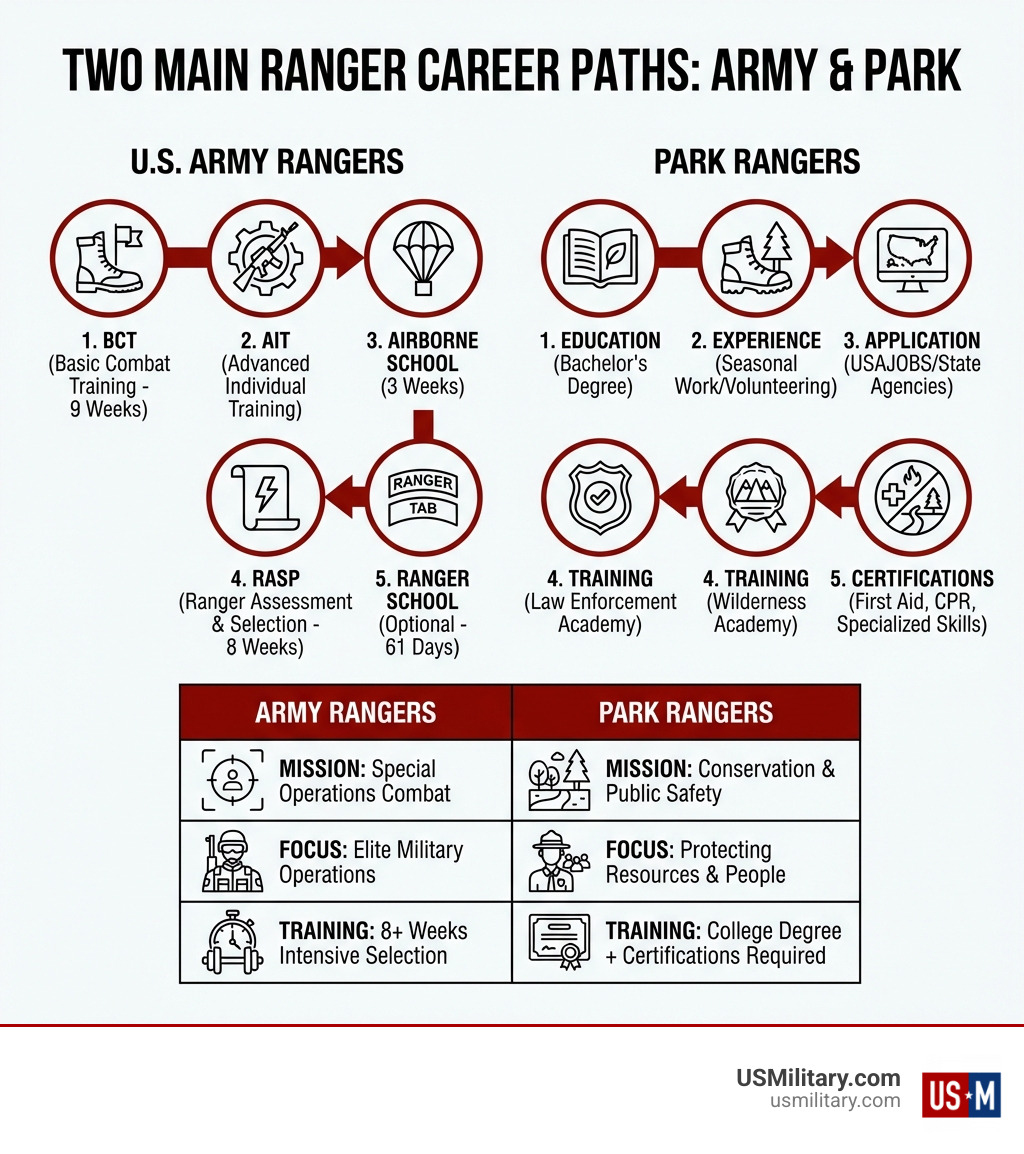
Quick Answer: The Two Main Paths
U.S. Army Ranger:
- Meet basic requirements (U.S. citizen, 17-34 years old, pass ASVAB)
- Complete Basic Combat Training (9 weeks)
- Finish Advanced Individual Training
- Pass Airborne School (3 weeks)
- Successfully complete RASP—Ranger Assessment and Selection Program (8 weeks)
- Optional: Attend Ranger School (61 days) to earn the Ranger Tab
U.S. Park Ranger:
- Earn a bachelor’s degree in natural science, forestry, or criminal justice
- Gain experience through seasonal work or volunteering
- Apply through USAJOBS.gov (federal) or state/local agencies
- Complete required training (law enforcement academy for enforcement rangers)
- Obtain certifications (First Aid, CPR, specialized skills)
The word “Ranger” carries weight, representing a calling that demands more than most careers. It applies to the elite soldiers of the 75th Ranger Regiment, a special operations force conducting the military’s most dangerous missions, and the dedicated Park Rangers who protect our natural treasures. Army Rangers undergo some of the world’s toughest training to “lead the way,” while Park Rangers serve as the thin green line protecting America’s wild places from Yellowstone to Yosemite. This guide breaks down the requirements, training, and challenges for both paths, providing a roadmap for anyone drawn to military service or conservation work.
What Does It Mean to Be a “Ranger”?
The term “Ranger” applies to diverse roles, from soldiers in combat to conservationists in national parks. At its core, being a Ranger means being a protector of people, wildlife, or resources. While their duties vary, all Rangers share a profound sense of duty, a commitment to service, and often, a love for the outdoors. Let’s explore the primary types of Rangers in the United States.
U.S. Army Ranger
When we talk about how to become Ranger in the U.S. Army, we’re talking about becoming part of an elite force. The 75th Ranger Regiment is a special operations force renowned for direct action missions like raids, airfield seizures, and reconnaissance.
It’s important to understand the distinction between earning a Ranger Tab and being a member of the 75th Ranger Regiment. The Tab is awarded for completing the grueling Ranger School, the Army’s premier leadership course open to soldiers from various military specialties. However, not all Tab-holders are assigned to a Ranger Battalion. Conversely, all members of the 75th Ranger Regiment are expected to pass Ranger School, but their primary identity comes from the Regiment itself, signified by the Ranger Scroll on their uniform. The Regiment has its own rigorous selection process, RASP, which we’ll cover later. For a deeper dive into special operations, you might want to compare Green Berets vs. Army Rangers or explore What is Delta Force and other Worlds Toughest Special Forces.
U.S. Park Ranger
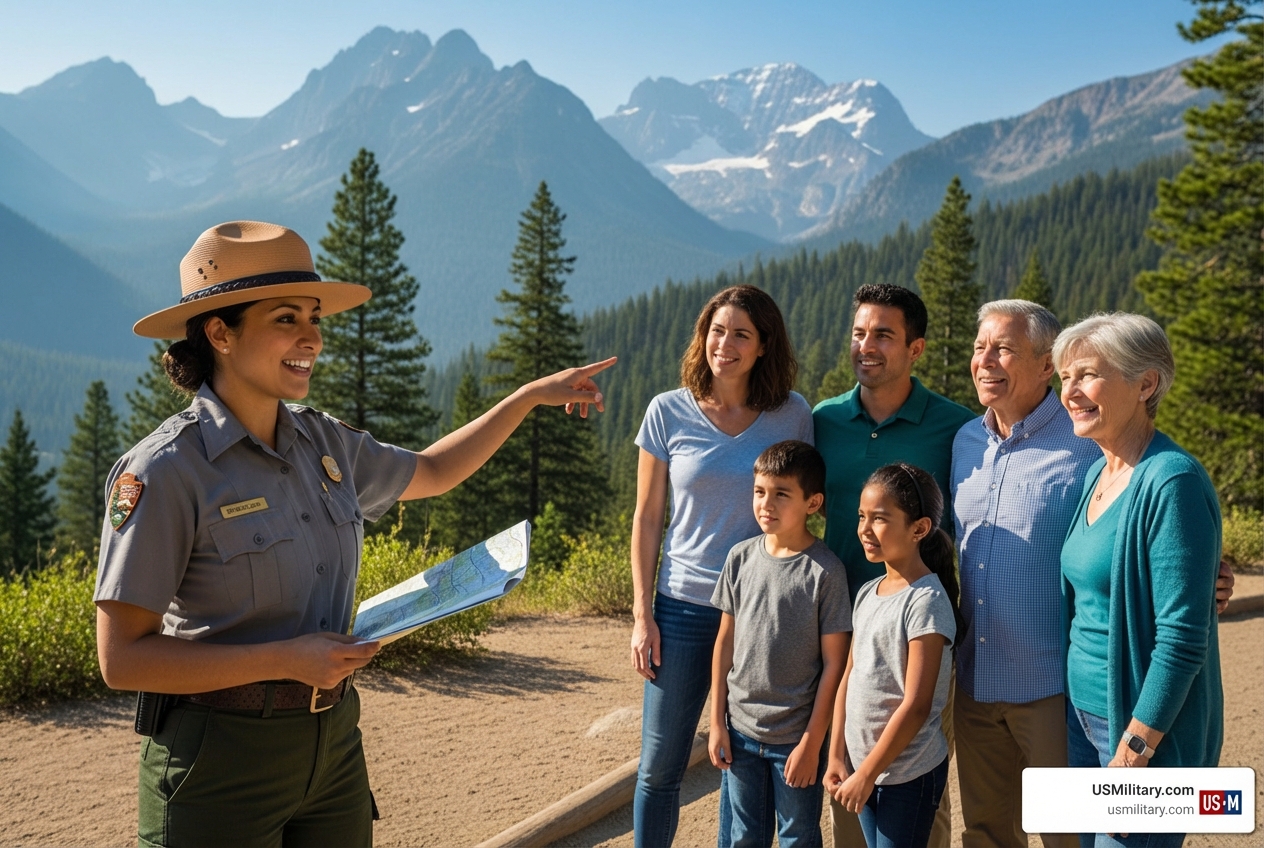
On a different but equally vital frontier, U.S. Park Rangers are the “keepers of our nation’s natural resources and protected public lands.” Their dual mission is preservation and public enjoyment. Responsibilities are broad, encompassing conservation, public education, law enforcement, and search and rescue operations.
Park Ranger positions exist at federal, state, and local levels.
Federal Park Rangers work for agencies like the National Park Service (NPS) and U.S. Forest Service (USFS), managing vast national lands.
State Park Rangers are employed by individual state park systems, which manage millions of acres and often have state-specific training academies.
Local Park Rangers work for municipal or county departments, focusing on community parks and local resource protection.
Here’s a quick comparison of these different levels:
| Agency Level | Primary Focus | Hiring Process |
|---|---|---|
| Federal | Large-scale conservation, national cultural/historical preservation, law enforcement, interpretation. | Primarily through USAJOBS.gov; often requires bachelor’s degree; specific federal law enforcement training (PRLEA) for commissioned roles. |
| State | State-specific natural/cultural resource management, law enforcement, visitor services, education. | Through state government job boards (e.g., careers.wa.gov); requirements vary by state but often include degrees and state-specific law enforcement training. |
| Local | Community parks, local resource protection, recreation programs, visitor assistance. | Through municipal/county government job boards; requirements generally less stringent than state/federal, but still often require relevant education/experience. |
Other Specialized Ranger Roles
Beyond Army and Park Rangers, other specialized roles exist. A notable example is the Texas Ranger, an elite and highly selective state-level law enforcement agency within the Texas Department of Public Safety. Becoming a Texas Ranger requires at least eight years of experience investigating major crimes with a law enforcement agency and is a role for seasoned officers, not an entry-level position.
Your Step-by-Step Guide on How to Become a Ranger (U.S. Army)
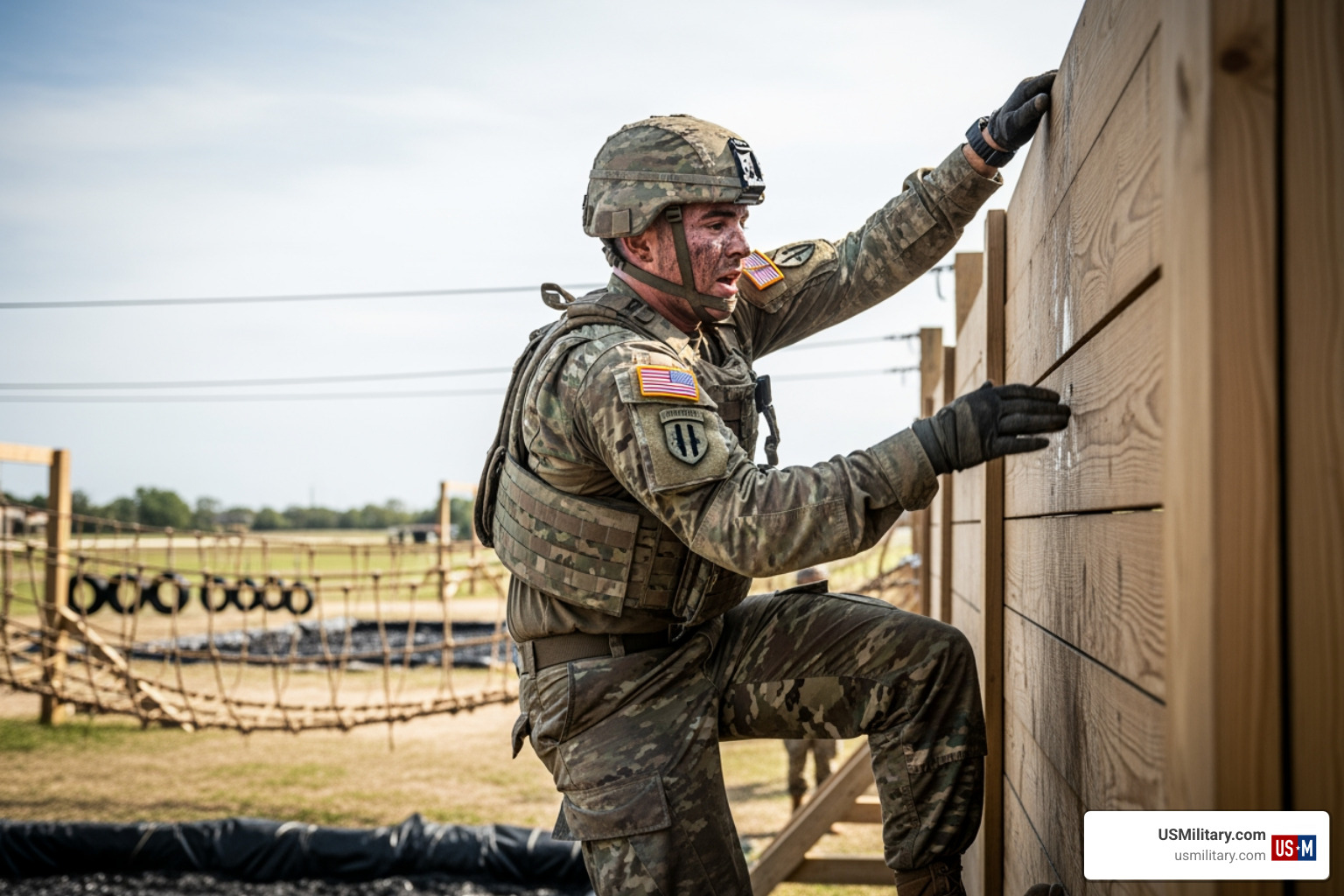
For those drawn to the elite world of military special operations, becoming a U.S. Army Ranger is a path demanding unparalleled commitment and dedication. This journey transforms a civilian into an elite soldier, capable of leading the way in the military’s toughest missions.
How to Become a Ranger: The Initial Requirements
Before you can even dream of the Ranger Tab or the 75th Ranger Regiment, you must meet the fundamental requirements to join the U.S. Army.
- U.S. Citizenship: This is non-negotiable. We’re talking about protecting our nation, so you must be a citizen.
- Age Limits: Typically, you must be between 17 and 34 years old. Waivers might be available for certain circumstances, but generally, this is the window. You can learn more about general age limits for military service here: National Guard Age Limit and Cut Off Age for Military.
- ASVAB Score: You’ll need to achieve a qualifying score on the Armed Services Vocational Aptitude Battery (ASVAB). High scores are always beneficial, as they open up more MOS options.
- Physical Fitness: While the extreme physical tests come later, you must be in good physical condition to enter basic training. You’ll undergo a physical exam to ensure you meet the Army’s health and wellness standards.
- Security Clearance: A background check for security clearance is mandatory. This involves a thorough review of your personal history, including financial records, criminal record, and associations.
- No Major Disqualifiers: Certain factors can disqualify you from service, including significant criminal history, certain medical conditions, or drug use. Be honest with your recruiter.
Preparing for military basic training is your first step. It’s not just about physical fitness; it’s about mental readiness too. We recommend familiarizing yourself with 3 Things You’ll Need for Military Basic Training and Things to Expect at Boot Camp.
How to Become a Ranger: The Training Pipeline
Once you’ve met the initial requirements and enlisted, your journey truly begins. The path to becoming an Army Ranger is a structured progression of intense training.
- Basic Combat Training (BCT): This is your introduction to military life, a challenging 9-week program that transforms civilians into soldiers. You’ll learn fundamental soldiering skills, military customs, and physical conditioning.
- Advanced Individual Training (AIT): After BCT, you’ll attend AIT for your specific Military Occupational Specialty (MOS). For aspiring Rangers, this often means an infantry MOS like 11B (Infantryman). Some soldiers may go through a 15-week One Station Unit Training (OSUT) course that combines BCT and AIT.
- Airborne School: This three-week course at Fort Benning (now Fort Moore) teaches you how to safely parachute from an aircraft. It’s a prerequisite for the 75th Ranger Regiment and many other special operations units. You’ll complete five jumps, including a night jump, to earn your Airborne wings. Learn more about it here: Army Jump School.
Many aspiring Rangers enlist with an “Option 40” contract, which guarantees them a shot at RASP (Ranger Assessment and Selection Program) after completing BCT, AIT, and Airborne School.
The Crucible: Ranger Assessment and Selection Program (RASP)
RASP is the 8-week selection program for the 75th Ranger Regiment, held at Fort Moore, Georgia. This intense screening process is designed to assess a soldier’s physical and mental toughness, leadership potential, and aptitude for the Ranger lifestyle. It pushes candidates to their limits through continuous physical exertion, sleep deprivation, and complex tactical scenarios. Candidates are constantly evaluated on their performance in:
- Physical Fitness: Expect demanding runs, ruck marches, obstacle courses, and strength tests. You’ll need to pass the Army Physical Fitness Test (APFT) with high scores and complete a five-mile run in under eight minutes per mile.
- Land Navigation: Both day and night land navigation are critical skills tested early in RASP.
- Combat Water Survival Test (CWST): You’ll face water confidence events that push you out of your comfort zone.
- Tactical Skills: Marksmanship, small unit tactics, and basic demolitions are taught and tested.
- Teamwork and Leadership: Rangers operate as a team, so your ability to lead and work effectively with others is paramount.
There are two versions of RASP: RASP 1 for junior enlisted soldiers (E-1 to E-5) and RASP 2 for senior non-commissioned officers (NCOs) and officers (E-6 and above). Each is custom to the leadership expectations of their respective ranks. Successfully completing RASP means you’ve been selected for the 75th Ranger Regiment and will receive your Ranger Scroll. For more details, see our guide on the U.S. Army Ranger Assessment and Selection Program.
Earning the Tab: The Legendary Ranger School
While RASP selects you for the Regiment, Ranger School is a separate, 56-day leadership course that earns you the prestigious Ranger Tab. It’s considered one of the toughest courses in the U.S. Army and is open to soldiers from any MOS, as well as members of other U.S. military branches.
Ranger School is designed to develop small-unit tactical leadership skills. It’s broken down into three phases, each focusing on different environments and challenges:
- Crawl (Fort Moore) Phase (20 days): Formerly known as the Benning Phase, this initial stage focuses on developing tactical patrolling and small-unit operations. It’s highly physical, with a strong emphasis on land navigation, patrolling, and combat skills. Expect little sleep and food, pushing you to your physical and mental limits.
- Walk (Mountain) Phase (21 days): Conducted in the rugged terrain of the Appalachian Mountains in Dahlonega, Georgia, this phase challenges Rangers to operate in mountainous environments. Students learn mountaineering skills, execute complex patrols in difficult terrain, and face significant hunger and sleep deprivation, testing their resilience to the extreme.
- Run (Florida) Phase (16 days): The final phase takes place in the swamps and coastal areas near Eglin Air Force Base, Florida. Here, the focus shifts to small boat operations, ship-to-shore movements, and survival in a jungle/swamp environment. It’s a test of adaptability and endurance in an unforgiving landscape.
Throughout Ranger School, you’ll be constantly assessed on your leadership and tactical proficiency under extreme stress, sleep deprivation, and caloric deficit. Graduating is a testament to unwavering toughness and an understanding of the Ranger Creed. It’s a remarkable achievement, and progress continues with our Female Soldier Successfully Completes 2nd Pre-Ranger Course.
The Path to Becoming a U.S. Park Ranger
For those who feel a deep connection to nature and a desire to protect America’s natural and cultural heritage, the path to becoming a U.S. Park Ranger offers a rewarding career in public service. It’s an alternative to the military Ranger path, focusing on conservation, education, and visitor safety.
Education and Experience
The educational requirements for U.S. Park Rangers generally involve a college degree, with specific fields of study often preferred. For federal positions, a bachelor’s degree is typically required for entry-level (GS-5) interpretive or law enforcement roles.
Relevant fields of study often include:
- Natural Sciences: Biology, ecology, wildlife management, environmental science, geology, forestry.
- Recreation and Park Management: Outdoor recreation, parks and tourism management.
- Criminal Justice/Law Enforcement: Especially for law enforcement Ranger positions.
- History/Archaeology: For cultural resource management or interpretive roles at historical sites.
For federal positions with the National Park Service, a GS-5 level role often requires a bachelor’s degree or a combination of specialized experience and education. The NPS typically requires at least 24 credit hours in relevant fields. You can explore programs at institutions like Southern New Hampshire University (BS in Environmental Science) or Arizona State University – Online (Online BS in Conservation Biology and Ecology). An Online Wildlife and Forestry Conservation Career Diploma might also be a good starting point for entry-level roles.
Experience is equally crucial. Many Park Ranger positions, especially federal ones, are highly competitive. Gaining experience, even in entry-level or volunteer capacities, can significantly boost your application.
Beneficial experiences include:
- Seasonal Work: Many federal and state parks hire seasonal Rangers for visitor services, interpretation, or maintenance. These roles are invaluable for gaining on-the-job experience and making connections. NPS hires new permanent law enforcement rangers approximately twice per year, and seasonal experience can be a stepping stone.
- Volunteer Experience: Volunteering with park agencies or conservation organizations demonstrates commitment and provides practical skills. Organizations like the Student Conservation Association (SCA) and American Conservation Experience (ACE) offer opportunities.
- Internships: Internships provide structured learning and exposure to various aspects of park management.
- Related Fields: Working in fields like environmental education, outdoor guiding, museum work, or even law enforcement (for those pursuing commissioned Ranger roles) can provide transferable skills.
Essential Skills and Certifications
Beyond education and experience, a specific set of skills and certifications are vital for U.S. Park Rangers.
- Law Enforcement Training: For commissioned law enforcement Park Rangers, completion of a Park Ranger Law Enforcement Training Academy (PRLEA) is mandatory. This provides eligibility for a Type II Law Enforcement Commission, allowing you to apply for seasonal law enforcement appointments. State-specific academies, like the Basic Law Enforcement Academy (BLEA) in Washington State, require 720 hours (18 weeks) of training. The Ranger Training Program (RTP) in some state parks can last 14-20 weeks.
- First Aid/CPR: These are fundamental skills for any Ranger, as they are often first responders in remote areas. Wilderness First Aid (WFA) or Wilderness First Responder (WFR) certifications are highly beneficial for those working in backcountry settings.
- Communication Skills: Rangers interact with a diverse public, from young children to international visitors. Strong interpersonal and communication skills are essential for education, conflict resolution, and emergency situations.
- Physical Fitness: While not as extreme as Army Rangers, Park Rangers need to be physically fit. They may patrol vast areas on foot, perform manual labor, conduct search and rescue, or operate in challenging terrain.
- Specific Certifications: Depending on the role and location, additional certifications might be required or highly advantageous. These can include:
- Boat operator licenses.
- Chainsaw certification for trail maintenance.
- All-Terrain Vehicle (ATV) certification.
- Wildlife handling or rescue training.
The application process for federal Park Ranger positions is primarily through USAJOBS, the U.S. government’s official employment site. State park positions are found on respective state government job portals. Federal positions often differentiate between announcements open to all U.S. citizens (with veteran preference) and those for current government employees.
Potential disqualifiers, especially for law enforcement roles, can include a criminal record, certain medical conditions, or failing background checks, polygraphs, or psychological assessments.
The Physical and Mental Demands of a Ranger
Whether serving in the U.S. Army or protecting our national parks, the title of Ranger implies an individual of unwavering toughness and immense resilience. The demands placed upon them, both physically and mentally, are significant and often extreme.
The Physical Gauntlet
For Army Rangers, physical fitness is not just a requirement; it’s a way of life. The standards are among the highest in the military.
- Army Physical Fitness Test (APFT): While the Army has transitioned to the Army Combat Fitness Test (ACFT), traditional APFT elements like push-ups, sit-ups, and a two-mile run are still used in Ranger selection. For RASP, candidates need to score 60% on the APFT (17-21 age group minimums: 49 push-ups, 59 sit-ups, 15:12 two-mile run) and complete a five-mile run in under eight minutes per mile.
- Ranger Physical Assessment Test (RPAT): This specialized test for Ranger School includes events like push-ups, sit-ups, pull-ups (minimum 6), a five-mile run (minimum 40:00), and a 16-mile hike with a 65-pound pack (minimum 5 hours, 20 minutes). Stew Smith, a former Navy SEAL and fitness expert, recommends aiming for much higher scores (e.g., 80 push-ups, 80 sit-ups, 12 pull-ups, sub 13:00 two-mile run) to be truly competitive.
- Endurance and Ruck Marches: Ranger training heavily emphasizes endurance running and long-distance ruck marches (carrying heavy packs). These are integral to operating effectively in the field. Soldiers are advised to prepare for rucking 6-12 miles, learning to power-walk at a sub-15-minute mile pace.
- Strength and Stamina: Calisthenics, core strength, and overall stamina are continuously tested. The ability to perform under constant physical strain, often with minimal sleep and food, is paramount.
Park Rangers also face significant physical demands. They must be prepared for:
- Long patrols on foot, sometimes over rugged terrain.
- Manual labor for trail maintenance or facility upkeep.
- Responding to emergencies, including search and rescue operations, which can involve strenuous activity.
- Working outdoors in all weather conditions, from scorching heat to freezing cold.
Mental Fortitude and the Ranger Creed
Beyond the physical, the mental demands on any Ranger are immense.
For Army Rangers, mental fortitude means problem-solving under extreme pressure and leading through chaos. The sleep and food deprivation in Ranger School are designed to test psychological limits, forcing candidates to lead when utterly exhausted. This resilience and commitment to the mission are hallmarks of a Ranger, encapsulated in the Ranger Creed, which allows them to “lead the way.”
Park Rangers, too, require strong mental fortitude. They must:
- Handle diverse and sometimes difficult public interactions.
- Remain calm and effective during emergencies or dangerous situations.
- Possess strong judgment for law enforcement actions or resource management decisions.
- Maintain vigilance and adapt to constantly changing environmental conditions.
- Work independently for extended periods in remote areas.
The average Ranger, whether military or park-based, isn’t just physically strong; they possess a mental toughness that allows them to overcome adversity and fulfill their critical roles.
Frequently Asked Questions about Becoming a Ranger
What is the difference between being in the 75th Ranger Regiment and having a Ranger Tab?
The 75th Ranger Regiment is a special operations unit where soldiers are called Rangers. These soldiers are part of a specific combat unit with a direct action mission. The Ranger Tab is awarded for completing the grueling Ranger School, a leadership course open to soldiers from across the Army, and even other branches. Not all soldiers with a Ranger Tab serve in the 75th Ranger Regiment, but all members of the 75th Ranger Regiment are expected to earn the Ranger Tab.
Can women become Army Rangers?
Yes. The U.S. Army opened Ranger School to women in 2015, and female soldiers have successfully graduated and earned the Ranger Tab. Women can also serve in the 75th Ranger Regiment if they meet the stringent requirements, which are the same for all candidates regardless of gender.
How much do Rangers get paid?
Pay for Army Rangers is based on military rank and years of service, plus special duty pay (like jump pay for Airborne-qualified soldiers) and other bonuses specific to special operations forces. This can vary significantly from an E-1 to a commissioned officer.
Park Ranger salaries vary by agency (federal, state, or local) and are typically based on the General Schedule (GS) pay scale for federal positions, often starting at the GS-5 or GS-7 level depending on education and experience. State and local park ranger salaries are determined by their respective government pay scales. For example, the Association of National Park Rangers notes that federal positions can range from GS-1 to GS-11 and above, with corresponding pay increases at each level. Opportunities for advancement within Park Ranger careers include specializing in law enforcement, interpretation, resource management, or moving into supervisory and management roles.
Conclusion
The journey to how to become Ranger is not for the faint of heart. Whether your calling leads you to the U.S. Army’s elite 75th Ranger Regiment or to the vital conservation efforts of a U.S. Park Ranger, both paths require immense dedication and fortitude. From the grueling 56 days of Ranger School to the educational pursuits and practical experience necessary for park protection, the title of “Ranger” is earned through hard work and perseverance.
At USMilitary.com, we understand that this is more than just a job; it’s a calling. If you’re ready to take that first step or want to explore more about elite military careers, we have resources to guide you. Your journey towards becoming a Ranger starts now.
Compare Army Delta Force vs. Navy Seals to explore other elite military opportunities and find the path that’s right for you.
Free for Service Members & Veterans
Get the military benefits intel no one tells you about.
Weekly updates on VA benefits, pay changes, and money tips — free for service members and veterans.
No spam. Unsubscribe anytime. Your info is never shared.



More Than 90% Of Clients Have Increased Ratings! Why Settle For Less Than You Deserve? Expert Priority Help With Your VA Claim Today! Free Evaluation Call!
The mission of Veteran Services United is to support veterans in filing and winning disability claims by offering expert guidance, advocacy, and personalized assistance. Through dedicated service, Veteran Services United empowers veterans to secure the benefits they have earned, ensuring they receive the care and support they deserve.