Why the Navy SEALs’ Most Powerful Mantra Works
Slow is smooth and smooth is fast navy seal is one of the most counterintuitive yet powerful principles used by America’s most elite warriors. Here’s what it means and why it matters:
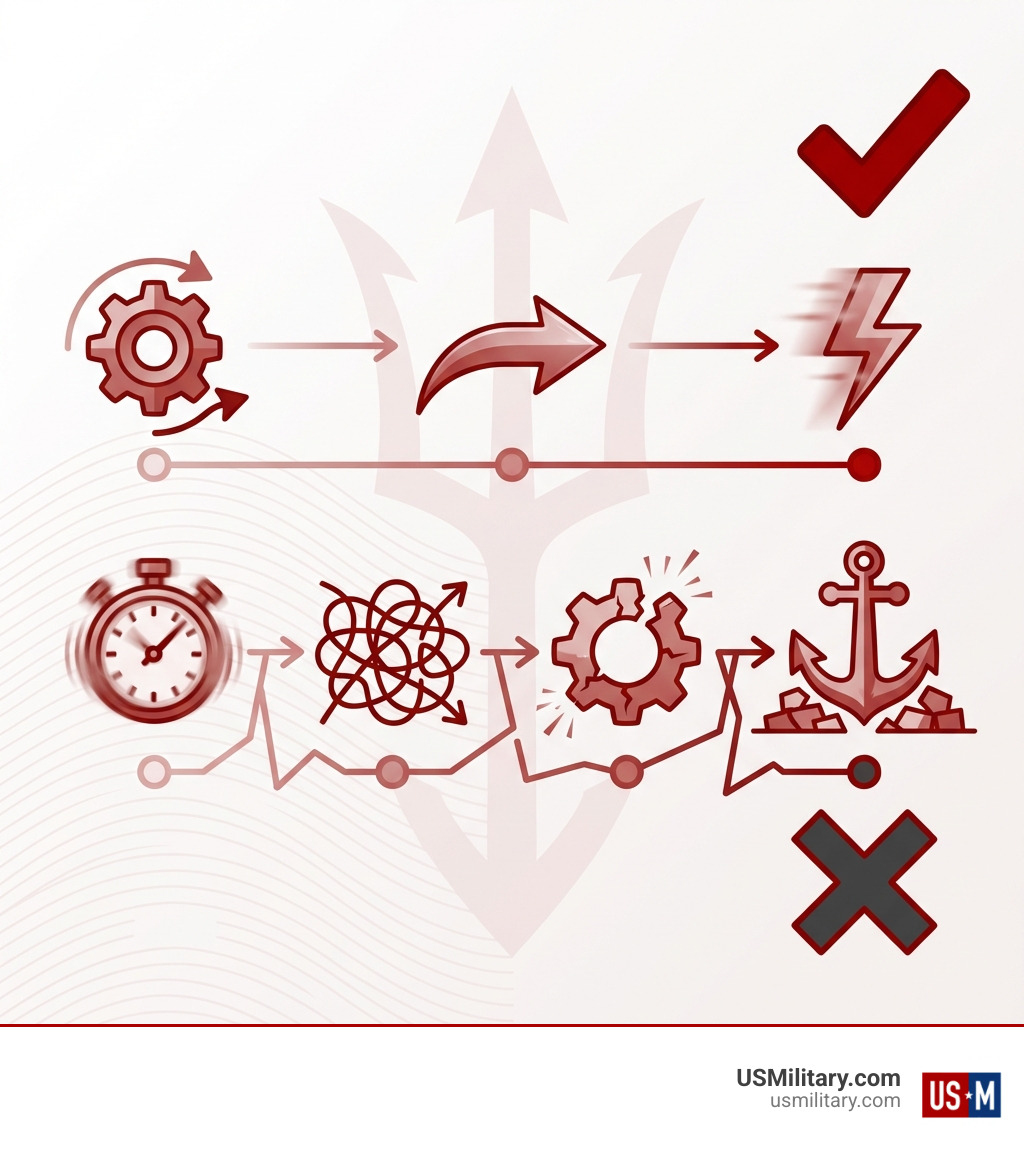
- The Core Principle: Deliberate, controlled actions executed with precision lead to faster overall results than rushing
- Why It Works: Rushing causes errors, and errors require time to fix—making the rushed approach slower in the end
- Where It’s Used: Navy SEAL operations, BUD/S training, high-stress missions, and tactical movements
- Real-World Impact: Prevents cascading failures (like one person tripping and causing the whole team to fall), reduces mistakes, and ensures mission success
The saying sounds backward at first. How can being slow make you fast? But in Navy SEAL operations—where a single mistake can mean mission failure or lost lives—this mantra becomes crystal clear. When a SEAL team exits a helicopter under fire, the instinct is to move as quickly as possible. But if one person rushes and trips, the entire team stumbles, and everyone slows down or stops until they regain their footing.
Slow is smooth and smooth is fast teaches that taking an extra second to move deliberately and correctly prevents the minutes (or hours) lost to fixing avoidable errors. Before SEALs even begin executing a mission, they carefully plan every detail, working through potential problems beforehand. This preparation allows them to move smoothly during execution, which paradoxically makes them faster than if they had rushed in unprepared.
I’m Larry Fowler, publisher of the USMilitary.com Network, and since 2007 I’ve been helping active military members and veterans understand the principles that make our Special Operations forces so effective. The slow is smooth and smooth is fast navy seal philosophy applies far beyond the battlefield—it’s a principle that can transform how you approach military training, career decisions, and everyday challenges.
Learn more about slow is smooth and smooth is fast navy seal:
The SEALs’ Secret: What “Slow is Smooth and Smooth is Fast Navy Seal” Really Means
The phrase slow is smooth and smooth is fast navy seal isn’t just a catchy motto; it’s a fundamental operating principle deeply ingrained in the culture of U.S. Special Operations Forces. We consistently see this philosophy applied in the complex, high-stress situations our elite warriors face. It’s a testament to the power of precision and deliberate action, even when the stakes are at their highest.
The Origin of a Warrior’s Mantra
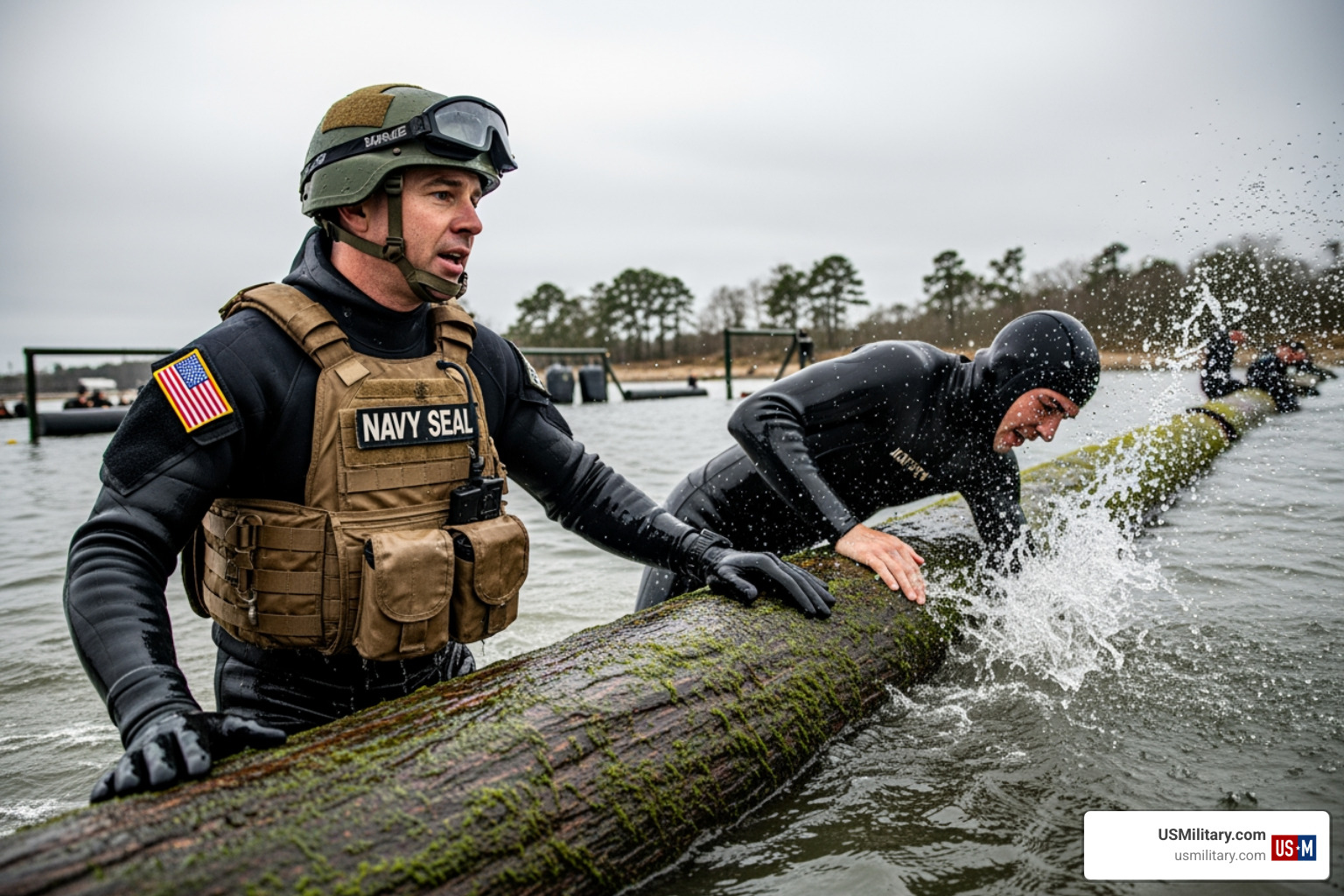
While its exact origin remains somewhat debated, the mantra “slow is smooth, smooth is fast” is widely attributed to the special operations community, particularly the Navy SEALs. It’s a core teaching during intense military training, like BUD/S (Basic Underwater Demolition/SEAL) where recruits are pushed to their physical and mental limits. This isn’t just a Navy SEAL exclusive; similar sentiments are echoed across various military branches and elite units. We’ve heard variations like “Slow is steady, steady is smooth, smooth is fast” within the Army, especially during weapon drills and squad movements in combat scenarios.
The concept itself isn’t new; it has historical roots that stretch back to ancient times. The Latin phrase “Festina lente,” meaning “make haste slowly,” was a favorite of Roman emperors like Augustus. It encouraged swift action tempered by prudence, a principle often applied to military commanders. This historical context shows us that the wisdom behind slow is smooth and smooth is fast navy seal has been recognized for centuries as a key to effective leadership and execution. For those interested in the rigorous training that instills this mindset, you can find More info about BUD/S Navy Seals. The historical concept of “Festina lente” (make haste slowly) perfectly encapsulates this timeless wisdom.
Deconstructing the Paradox: Why Deliberate is Faster
At its core, the mantra is about prioritizing accuracy and precision over perceived speed. It sounds paradoxical because our modern culture often equates frantic movement with efficiency. However, as the Navy SEALs demonstrate, rushing often leads to errors. And errors, inevitably, lead to delays.
Consider a scenario in a SEAL operation: imagine a team member, in their haste, trips while moving through rough terrain. This single error doesn’t just affect them; it can cause a cascading failure. The next person might trip, or the entire team might have to slow down, break formation, and regroup to regain their footing. This seemingly small mistake, born of a desire to be “fast,” ultimately makes the entire operation slower and more dangerous.
Conversely, by moving deliberately – taking the extra second to ensure footing, check surroundings, or confirm a clear path – each individual contributes to the overall smoothness of the team’s movement. This smoothness, free from fumbles and errors, allows the team to maintain a consistent, efficient pace that, in the long run, is significantly faster than a rushed, error-prone approach. Getting things right in the beginning may require a little extra time, but it results in fewer mistakes and faster work, as it prevents falls and reduces errors. It’s about precision: a precisely executed action is inherently more efficient and therefore faster.
The Science Behind Smoothness: How Your Brain Achieves Speed
The effectiveness of slow is smooth and smooth is fast navy seal isn’t just anecdotal; it’s deeply rooted in how our brains and bodies function under pressure. Our cognitive abilities, particularly those related to decision-making and problem-solving, are significantly impacted by how we approach tasks.

Training the Brain: Muscle Memory and Neural Pathways
When we rush, especially in complex or high-stakes situations, our brain’s prefrontal cortex – the area responsible for executive functions like decision-making and problem-solving – becomes overloaded. This stress response can lead to errors, diminished creativity, and even burnout. It’s like trying to run a complex software program on an old, slow computer; it will eventually crash or produce errors.
The “slow is smooth” part of the mantra encourages deliberate practice. By performing tasks slowly and carefully, we allow our brains to fully engage with the task at hand. This focused approach facilitates more robust neural connections, promoting learning and mastery. When we practice slowly, we ingrain correct motor patterns into our muscle memory. This process, often called “automaticity,” means that eventually, the task can be performed without conscious thought, freeing up cognitive resources. This is like building a superhighway for information in our brains. As proficiency grows and movements become automatic, speed naturally follows. We’re not trying to be fast; we become fast because our execution is flawless.
The Psychology of Calm Under Pressure
The ability to remain calm under pressure is a hallmark of elite performers, and it’s directly linked to the “smooth is fast” principle. In high-stress environments, our bodies naturally release adrenaline, triggering the “fight or flight” response. While this can provide a burst of energy, it can also impair fine motor skills, tunnel vision, and clouded judgment.
Navy SEALs are trained to manage this stress response through a methodical approach. By focusing on deliberate, pre-rehearsed actions, they override the urge to panic and rush. This allows for improved decision-making even in chaotic situations. The rigorous training, including infamous events like Navy Seal Hell Week, pushes individuals to their absolute limits, forcing them to find composure and execute smoothly when every fiber of their being screams to move faster. This psychological discipline ensures that their actions are purposeful and effective, rather than reactive and error-prone, ultimately leading to faster, more successful outcomes.
From the Battlefield to the Boardroom: Applying the Principle in Daily Life
The wisdom of slow is smooth and smooth is fast navy seal isn’t confined to military operations. Its universal applicability makes it a powerful philosophy for success in almost any aspect of civilian life, from professional endeavors to personal growth and skill mastery.
In Professional Settings: Business, Sports, and Skilled Trades
We see this principle at play across a myriad of professions:
- Project Management: In project management, rushing through initial planning phases often leads to scope creep, budget overruns, and missed deadlines. A deliberate, meticulous planning stage, where risks are mitigated and goals clearly defined, ensures a smoother execution and faster completion. The Project Management Institute (PMI) itself echoes the sentiment that thorough planning and coordination are crucial factors in achieving faster outcomes.
- Software Development: The tech world’s “move fast and break things” mantra often overlooks the hidden costs of constant bug fixes and refactoring. A slower, more deliberate approach to coding, focusing on clean architecture and robust testing, leads to more stable, reliable software that ultimately delivers faster and more consistent results. Rushed code often means more time spent debugging later.
- Civil Engineering: In civil engineering, the pressure to meet deadlines can lead to rushed designs. However, as one expert noted, “rushing designs leads to mistakes, large review letters, and potential denial of approvals.” The true cost isn’t just the design fee, but the construction cost of flawed plans. Taking the time for a sound, efficient design, even if it seems “slow” initially, results in faster approvals and significantly lower construction costs.
- Sports: Think of a Formula 1 race car driver. Jerking the steering wheel in haste leads to overcorrection, loss of control, and slower lap times. Smooth, precise inputs, even at high speeds, are what make them fast. Similarly, in basketball, a head coach like Jeremy Shulman likely emphasizes fundamental strength and consistency in practice. This disciplined approach, though seemingly “slow,” contributes to record-breaking victories.
- Music: Renowned cellist Pablo Casals once said, “I play the notes as they are written, but it is God who makes the music.” His dedication to accuracy and understanding each note allowed for the fluid speed and harmonious melodies for which he was known. Musicians often practice slowly to master technique, eventually enabling breathtaking speed.
- Leadership: Effective leaders understand that hasty decisions, especially in crises, can have devastating consequences. By taking the time to gather information, consider perspectives, and plan strategically, they ensure smoother execution and more favorable outcomes, even if the decision-making process initially seems slower. This strategic thinking leads to faster, more impactful results.
For Personal Growth: How “slow is smooth and smooth is fast navy seal” applies to you
This philosophy is equally transformative in our personal lives:
- Learning New Skills: Whether it’s learning a musical instrument, a new language, or a complex craft, trying to rush through the basics often leads to ingrained errors and frustration. Deliberate, focused practice, even at a “slow” pace, builds a strong foundation, leading to faster mastery and higher proficiency in the long run.
- Problem-Solving: When faced with a complex personal or professional problem, our instinct might be to frantically try solutions. However, a systematic approach – slowing down to fully understand the issue, identify its root causes, and then methodically test solutions – often leads to a faster and more effective resolution.
- Fitness Techniques: In the gym, trying to lift too heavy or move too fast with poor form leads to injury and stalled progress. Focusing on proper technique and controlled movements, even with lighter weights, builds strength and prevents setbacks, ultimately leading to faster, safer gains.
- Public Speaking: Rushing through a presentation can lead to stumbling, forgetting points, and losing the audience. A deliberate, well-paced delivery, with clear articulation and thoughtful pauses, creates a smoother, more impactful, and ultimately more effective message.
Here’s a list of daily tasks where embracing this principle can make us more efficient:
- Cooking: Rushing preparation often leads to burnt food, cut fingers, or forgotten ingredients. Deliberate steps ensure a delicious meal.
- Driving: Speeding and aggressive maneuvers might seem fast, but they increase accident risk and fuel consumption, ultimately slowing down the journey or causing costly delays. Smooth driving is safer and often more efficient.
- Organizing: Trying to quickly “clean up” often results in simply moving clutter around. Taking the time to sort, declutter, and find proper homes for items leads to lasting organization and saves time in the future.
- Writing an Email/Report: Hitting send on a rushed email with typos or unclear messages often requires follow-up clarifications, wasting time. A quick review ensures clarity and accuracy.
How to Cultivate a “Smooth is Fast” Mindset
Embracing the slow is smooth and smooth is fast navy seal mindset isn’t about being sluggish; it’s about intentionality and discipline. In a world that constantly pushes for immediate results, cultivating this approach requires a conscious effort to prioritize quality and foresight.
Step 1: The Power of Meticulous Planning
For Navy SEALs, execution is only as good as the plan that precedes it. Before they even begin execution, they are carefully planning what they are going to do, going through the details, so that they can mitigate the risks, understand the goals, and work through potential problems beforehand. This emphasis on pre-planning is a cornerstone of their success.
We can adopt this in our lives by:
- Pre-planning: Before diving into a task or project, take a moment to outline the steps, identify potential obstacles, and envision the desired outcome. This upfront investment of time saves countless hours of rework later.
- Risk Mitigation: Think proactively about what could go wrong. Just as SEALs consider every contingency, we can anticipate challenges and develop strategies to address them before they arise.
- Defining Goals: Clearly understanding the “why” and “what” of a task provides direction and prevents wasted effort.
- Checklists: Simple checklists, inspired by military precision, can ensure that no critical step is overlooked.
The importance of this planning stage cannot be overstated. It’s the foundation upon which smooth, and therefore fast, execution is built. To understand the depth of preparation required, explore The importance of planning in Navy Seal Training.
Step 2: Accept Deliberate Practice and Repetition
Once a plan is in place, the next step is to execute it with deliberate practice. This means:
- Breaking Down Tasks: Instead of tackling a large project all at once, break it into smaller, manageable components. Focus on executing each component perfectly, one at a time.
- Focusing on Form: Prioritize correctness and technique over speed. For instance, when learning a new skill, practice it slowly until the movements or thought processes become fluid and error-free. Only then gradually increase speed.
- Quality Over Quantity: It’s better to complete one task perfectly than ten tasks with multiple errors. The time saved from not having to fix mistakes far outweighs the perceived speed of rushing.
- Building Habits: Consistent, deliberate repetition helps to embed desired behaviors and skills, turning them into automatic responses. This is the “muscle memory” we discussed earlier, where actions become so ingrained they require minimal conscious effort.
This approach aligns with the “crawl, walk, run” methodology common in military training. First, you understand the fundamentals (crawl), then you practice them slowly and deliberately (walk), and finally, with mastery, you can execute them quickly and efficiently (run).
Frequently Asked Questions about “Slow is Smooth, Smooth is Fast”
We often encounter questions about this seemingly paradoxical mantra. Let’s address some of the most common ones to clarify its meaning and application.
Who first said “slow is smooth, smooth is fast”?
While the phrase is widely associated with the U.S. Navy SEALs and the broader special operations community, pinpointing the single individual who first uttered it is difficult. Its military roots are strong, and it has been a guiding principle in training and operations for decades. It’s more of a collective wisdom that has been passed down through generations of elite warriors, rather than the brainchild of one person. The mantra’s power lies not in its specific origin, but in its universal truth and practical application, popularized by units like the SEALs.
Isn’t it better to be fast in an emergency?
This is a critical distinction. In an emergency, it’s absolutely vital to act with urgency and purpose. However, “slow is smooth, smooth is fast” isn’t about being literally slow; it’s about being deliberate and controlled to achieve purposeful speed, rather than panicked rushing.
Consider paramedics responding to a crisis. They don’t run frantically into a scene, tripping over equipment or making hasty decisions. Instead, they move with a calm, deliberate efficiency. Every action is precise, every assessment thorough, because they know that a rushed mistake could cost a life. Their training allows them to operate at an incredibly fast pace, but it’s a speed built on smooth, rehearsed actions, not chaotic haste. This composure under fire ensures that crucial steps aren’t missed and that their actions are maximally effective.
How does the “slow is smooth and smooth is fast navy seal” mantra apply to the PST?
The Physical Screening Test (PST) is the crucial first hurdle for aspiring Navy SEALs, and the slow is smooth and smooth is fast navy seal mantra is incredibly relevant here. While the PST measures speed and endurance, attempting to rush through it without proper technique is a common mistake that leads to failure.
- Pacing the Swim and Run: For events like the 500-yard swim or the 1.5-mile run, candidates are taught to find a consistent, maintainable pace. Trying to sprint the first few laps or miles often leads to burning out and significantly slower overall times. Instead, focusing on smooth, efficient strokes in the water and a steady, rhythmic stride on the run ensures energy conservation and a faster finish. Breaking the 500-yard swim into 10 50-yard segments, each completed smoothly and consistently, is a classic application.
- Perfect Form on Calisthenics: Push-ups, sit-ups, and pull-ups are not just about raw strength; they’re about maintaining perfect form for the duration. Rushing through reps with sloppy technique not only wastes energy but can lead to reps not being counted. By performing each repetition smoothly and deliberately, candidates maximize their efficiency and score higher.
- Avoiding Burnout: The PST is a continuous test. Rushing one event can negatively impact subsequent events. The mantra encourages candidates to approach each component with a measured intensity, preserving energy and mental focus for the entire test.
Excelling at the PST isn’t about being the fastest in every single moment, but about being the most efficient and consistent throughout. This is why a disciplined approach, rooted in the “slow is smooth, smooth is fast” philosophy, is key to success. For more detailed training strategies, you can find More on Navy Seal Training.
Conclusion: Mastering the Art of Deliberate Speed
The slow is smooth and smooth is fast navy seal mantra is far more than just a military saying; it’s a profound philosophy for achieving peak performance and efficiency in all areas of life. We’ve explored its origins within the elite Special Operations community, digd into the scientific principles that underscore its effectiveness, and seen how its wisdom translates from the battlefield to boardrooms and beyond.
The core message is clear: true speed isn’t born of frantic haste, but from deliberate, precise, and smooth execution. By taking the time to plan carefully, practice deliberately, and maintain composure under pressure, we minimize errors, prevent costly rework, and ultimately achieve our goals faster and with greater quality. This elite mindset, cultivated by our nation’s most formidable warriors, offers a powerful roadmap for anyone seeking to control chaos, improve learning, and open up their full potential.
At USMilitary.com, we are dedicated to providing valuable insights and resources for military members, veterans, and those who admire the discipline and excellence of our armed forces. Embracing principles like “slow is smooth, smooth is fast” can transform not just military careers, but any pursuit requiring focus, precision, and resilience.
For those interested in the rigorous training and exceptional capabilities of our elite units, we invite you to explore further. You can Compare elite units like Navy SEALs vs. Delta Force to understand the diverse strengths within our special operations community.
Free for Service Members & Veterans
Get the military benefits intel no one tells you about.
Weekly updates on VA benefits, pay changes, and money tips — free for service members and veterans.
No spam. Unsubscribe anytime. Your info is never shared.


