Why the Navy SEAL Path Demands Everything You Have
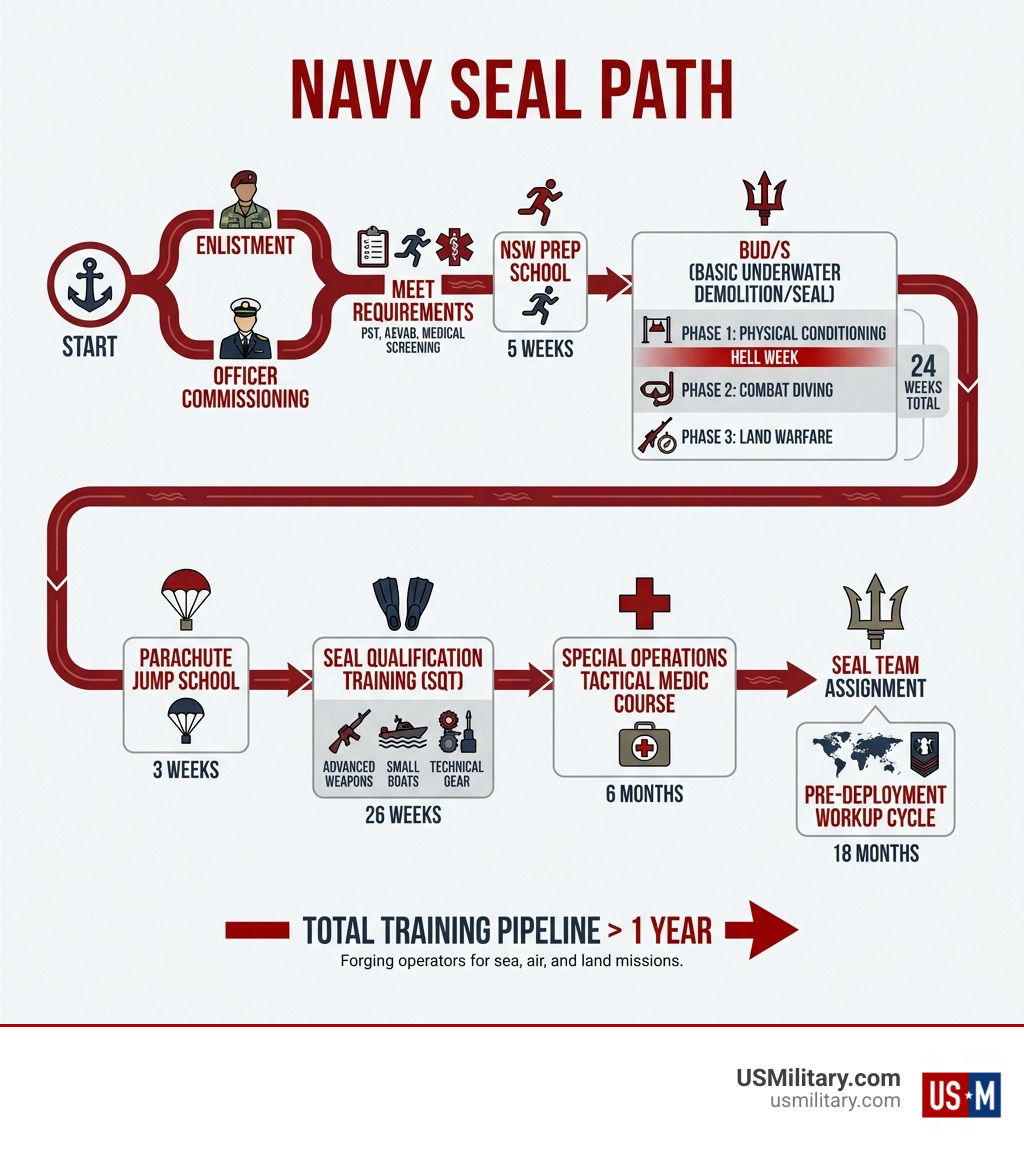
The Navy SEAL path is one of the most challenging career journeys in the U.S. military, requiring over a year of intense formal training before earning the coveted Trident insignia. Here’s what you need to know:
Quick Overview of the Navy SEAL Path:
- Meet Requirements – Pass Physical Screening Test (PST), ASVAB, and medical screening
- Naval Special Warfare Prep School – 5 weeks of initial conditioning
- BUD/S Training – 24 weeks including Hell Week (Phase 1), Combat Diving (Phase 2), and Land Warfare (Phase 3)
- Parachute Jump School – 3 weeks of airborne training
- SEAL Qualification Training (SQT) – 26 weeks of advanced tactical training
- Medical Training – 6-month Special Operations Tactical Medic course
- Team Assignment – 18 months of pre-deployment training before first deployment
The reality is stark: only 9.5% of candidates who start SEAL training actually graduate. That means roughly 9 out of every 10 people who attempt this path will not make it.
Why such a high failure rate? Because becoming a Navy SEAL isn’t just about physical strength. It’s about mental resilience, unwavering teamwork, and the ability to perform under extreme stress when you’re exhausted, cold, and pushed beyond what you thought possible. As the SEAL ethos states: “The only easy day was yesterday.”
Whether you’re considering the enlisted route or pursuing an officer commission through the Naval Academy, ROTC, or OCS, you’ll face the same brutal training pipeline at BUD/S in Coronado, California. The training is designed to forge operators who can execute covert missions by sea, air, and land – capturing high-value targets, conducting special reconnaissance, and performing underwater demolitions.
This guide will walk you through every step of the Navy SEAL path, from initial eligibility requirements to career progression, so you can make an informed decision about whether this demanding career is right for you.
The Starting Line: Are You Eligible?
Before you can even dream of wearing the Trident, you must meet a stringent set of initial requirements. These aren’t just bureaucratic problems; they ensure that only candidates with the fundamental aptitude and potential are considered for the demanding Navy SEAL path.
First, you must be a U.S. citizen. There are no exceptions here. Next, let’s talk about age. For enlisted candidates, you generally need to be between 18 and 29 years old. Waivers are sometimes available for 17-year-olds (with parental consent) and for those up to 30 years old, but these are granted on a case-by-case basis. For officers, the age limit is typically 28 years old or younger.
Education is another critical component. You must have the equivalent of a high school education, which means a high school diploma or a GED. However, statistics show that candidates with a two-year or four-year college degree are almost twice as likely to succeed at BUD/S. This highlights the importance of intellectual capacity and discipline alongside physical prowess.
The Armed Services Vocational Aptitude Battery (ASVAB) is a mandatory test that measures your aptitude in various academic areas. To qualify for the Navy SEAL program, you’ll need to achieve a composite ASVAB score of at least 220. Don’t just aim for the minimum; excelling here demonstrates your ability to learn and process complex information, a vital skill for a SEAL.
Vision requirements are also strict: 20/40 in your best eye and 20/70 in your worst eye, correctable to 20/25. Medical screening is exhaustive, ensuring you are in peak physical health and free from any conditions that could compromise your safety or mission effectiveness. This includes passing a comprehensive physical exam required for divers. Finally, you must possess good moral character and be eligible for a security clearance, which involves thorough background checks.
| Physical Screening Test (PST) Event | Minimum Requirements | Competitive Scores |
|---|---|---|
| 500 yd Swim (combat sidestroke) | 12:30 | < 9:00 |
| Push-ups (2 min) | 50 | 90+ |
| Sit-ups (2 min) | 50 | 90+ |
| Pull-ups (no time limit) | 10 | 18+ |
| 1.5 mi Run (boots & pants) | 10:30 | < 9:30 |
The Physical Screening Test (PST)
The Physical Screening Test (PST) is your first major hurdle on the Navy SEAL path. It’s a comprehensive assessment of your physical fitness, and simply meeting the minimums won’t cut it if you want to stand a real chance. We’re looking for individuals who can crush these standards.
The PST consists of five events:
- 500-yard swim: Performed using the combat sidestroke or breaststroke. The minimum is 12 minutes, 30 seconds, but competitive candidates often finish under 9 minutes.
- Push-ups: As many as possible in 2 minutes. The minimum is 50, with competitive scores well over 90.
- Sit-ups: As many as possible in 2 minutes. Again, the minimum is 50, but aiming for 90+ is recommended.
- Pull-ups: As many as possible, no time limit, no letting go of the bar. A minimum of 10 is required, but competitive candidates can do 18 or more.
- 1.5-mile run: Completed in boots and long pants. The minimum time is 10 minutes, 30 seconds, with competitive times often under 9 minutes, 30 seconds.
The importance of competitive scores cannot be overstated. While the Navy has minimums, the reality of BUD/S (Basic Underwater Demolition/SEAL) training demands far more. Candidates who only aim for the minimums often struggle and are more likely to drop out. We encourage you to exceed these standards significantly. To truly understand what it takes, you can find out more about PST standards directly from the official guidelines. Crushing the minimums isn’t just about showing off; it’s about building the physical and mental foundation necessary to survive the subsequent phases of training.
Initial Steps and Application
Once you’re confident you meet the basic eligibility and can exceed the PST standards, it’s time to take the initial steps on your Navy SEAL path. This journey officially begins by contacting a Navy recruiter. Be upfront about your aspirations to become a SEAL. They will guide you through the enlistment process, which typically starts with signing up for a regular Navy Source Rating (like Gunner’s Mate or Operations Specialist) to join the Delayed Entry Program (DEP).
A crucial resource at this stage is the Navy Special Warfare/Special Operations mentor in your area. These former SEALs, EOD, and divers are invaluable. They not only help you train for the PST but also guide you through the specific administrative requirements.
Beyond the ASVAB and PST, you’ll also undergo the C-SORT (Computerized-Special Operations Resilience Test), a psychological battery test designed to assess your mental toughness and resilience under stress. A clean background check is essential for obtaining the necessary security clearance, as SEALs operate in highly sensitive environments.
There are three primary paths to becoming a Navy SEAL, each with its own nuances:
- Civilian: This is often considered the most direct route. You enlist in the Navy with a SEAL contract, go through boot camp, and then enter the SEAL pipeline.
- In-Navy Transfer: If you’re already an active-duty Sailor, you can apply for a rating transfer. This involves notifying your command, working with your Navy Career Counselor, passing a PST, and submitting a comprehensive application package. Many active-duty Sailors arrange to re-enlist with a BUD/S option at the end of their first enlistment.
- Inter-Service Transfer: For those serving in another branch of the military, you must separate from your current service and then join the Navy. This path is generally less smooth, but not impossible. You’ll need to visit a Navy recruiter 45 days before your separation, go through MEPS (Military Entrance Processing Station) for initial qualifications, pass the PST, and secure a SEAL contract. To attend Navy SEAL training, you must be in the Navy.
The Forge: Conquering the SEAL Training Pipeline
If you’ve made it past the initial screenings and earned your SEAL contract, congratulations! You’ve stepped onto the most challenging segment of the Navy SEAL path: the training pipeline. This is where the overwhelming majority of candidates are weeded out, a testament to the brutal attrition rate. We’re talking about a process designed to push you beyond your perceived limits, exposing weaknesses and forging unbreakable bonds.
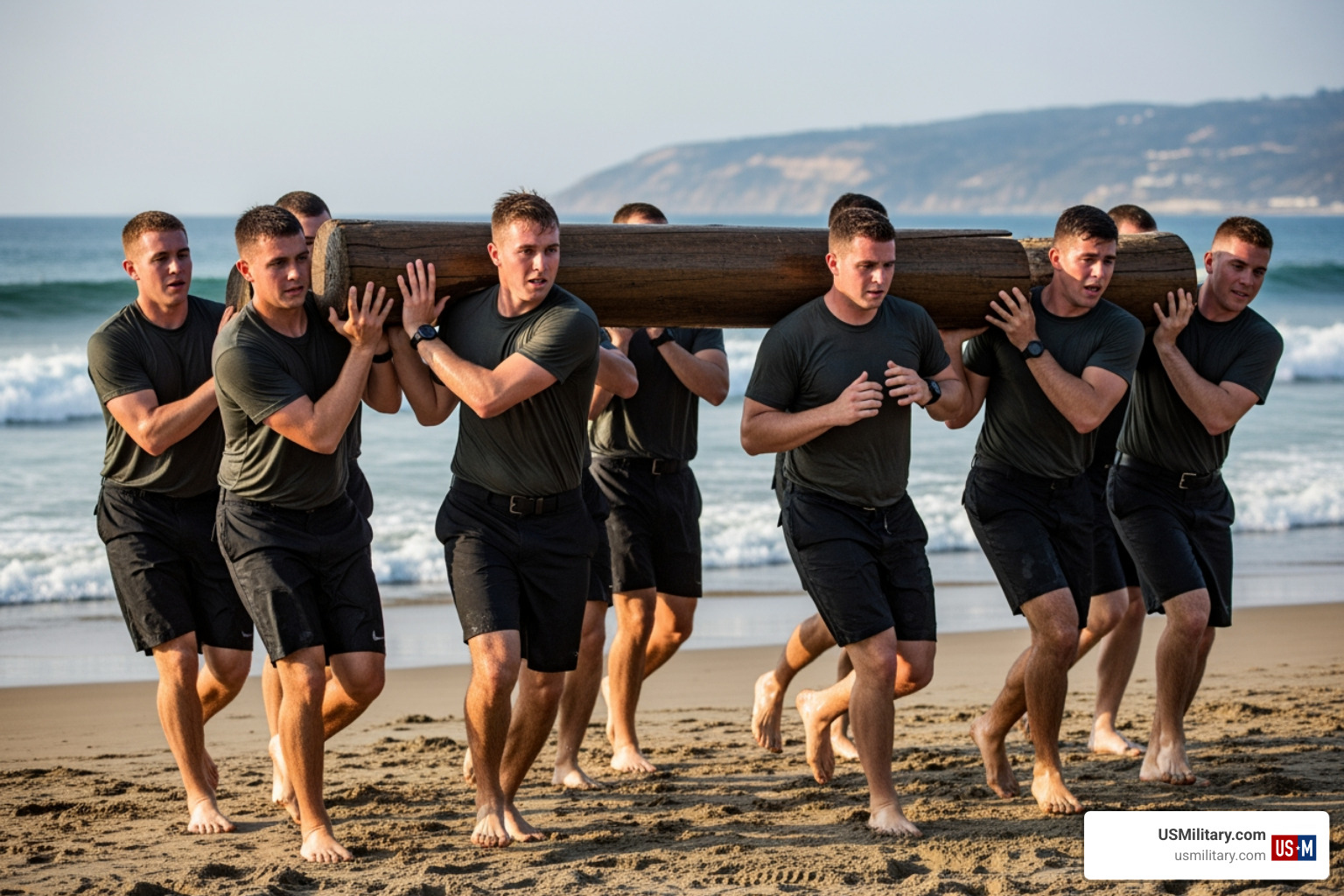
The Naval Special Warfare Center in Coronado, California, is the crucible where this change occurs. Here, teamwork and mental resilience aren’t just buzzwords; they are the keys to survival. You’ll learn to rely on your teammates and yourself in ways you never imagined. The training environment is intentionally high-stress, forcing candidates to think creatively and maintain awareness even when exhausted.
Pre-Training and Orientation
Your journey into the formal training pipeline begins even before BUD/S itself.
First up is the Naval Special Warfare Preparatory School (5 weeks), often called “Prep” or “NSW Prep.” This five-week program starts with an initial Physical Screening Test and ends with an even more demanding Modified Physical Screening Test. It’s designed to give you a solid foundation in the physical conditioning and aquatic skills necessary for BUD/S. For many, this is their first taste of the relentless pace and high standards expected.
Following Prep, you’ll move on to BUD/S Orientation (2 weeks). This phase focuses on acclimatization to the BUD/S environment and further refining your physical readiness. It’s about learning the ropes, understanding the strict standards, and getting a clearer picture of the immense challenge ahead. This is your chance to absorb what’s expected and mentally prepare for the intensity that’s about to hit.
BUD/S Phase 1: Physical Conditioning & Hell Week
Phase 1 of BUD/S is a grueling 7-week duration known as the “Physical Conditioning” phase. It’s carefully designed to develop your mental and physical stamina, leadership skills, and teamwork. You’ll be constantly wet, cold, and sandy, performing continuous physical evolutions. This includes extensive running in boots, surf torture (lying in the cold ocean surf), and relentless Log PT (physical training with heavy logs).
The pinnacle of Phase 1, and perhaps the entire BUD/S program, is Hell Week. This isn’t just a tough week; it’s a 5.5-day crucible of continuous training, during which candidates sleep a maximum of four hours in total. Imagine over 200 miles of running and more than 20 hours of physical training per day, all while enduring extreme cold, exhaustion, and psychological pressure.
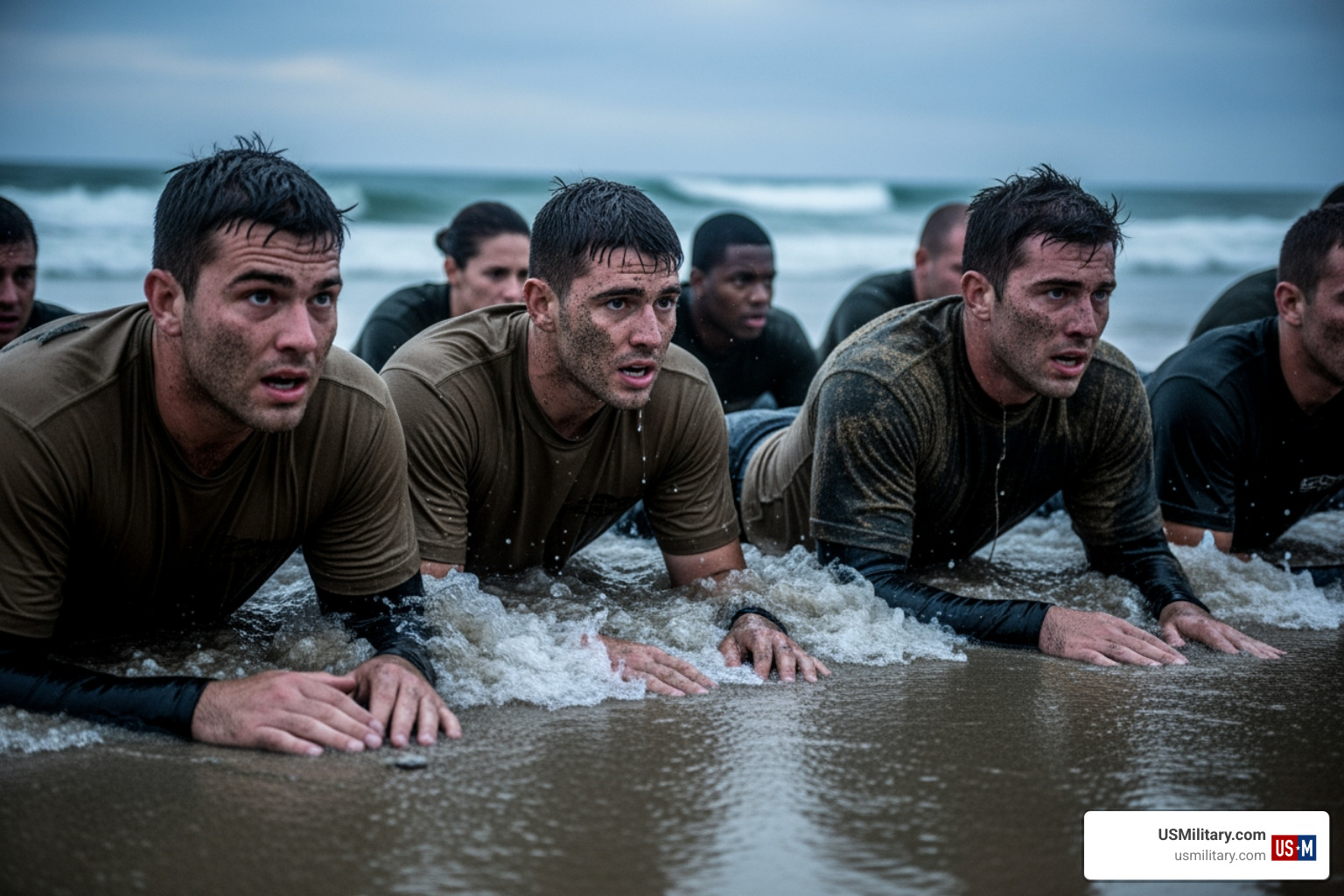
Hell Week is the ultimate test of will, proving who has the mental fortitude to continue when their body screams to quit. It’s a gut check, designed to identify those who can perform when pushed beyond what they thought possible, and those who can’t. The infamous “bell” is always nearby for those who choose to “DOR” (Drop on Request).
BUD/S Phase 2: Combat Diving
After surviving Hell Week, you’ll move into Phase 2, the Combat Diving phase, which also lasts 7 weeks. This phase concentrates on developing comfort and proficiency in the water, essential for the “Sea” component of SEAL. You’ll dig deep into dive physics, mastering underwater skills and combat SCUBA.
Training covers both open-circuit and closed-circuit (rebreather) SCUBA systems, teaching you how to operate stealthily underwater. Key elements include drown-proofing, where you learn to remain calm and resourceful while your hands and feet are tied, and rigorous pool competency tests designed to assess your ability to perform under stress in a submerged environment. This phase is less about brute force and more about mental control, problem-solving, and overcoming the instinctual fear of being underwater.
BUD/S Phase 3: Land Warfare
The final 7-week duration of BUD/S is dedicated to Land Warfare. This phase moves candidates to San Clemente Island, where they learn to apply their skills in a tactical environment. Here, you’ll gain proficiency in basic weapons, demolitions, and land navigation.
You’ll learn patrolling techniques, rappelling, marksmanship, and essential infantry tactics, all within the context of small-unit operations. This phase integrates the physical and mental toughness developed in previous phases with the tactical skills necessary to operate effectively on land. It’s about becoming a competent warfighter, capable of executing complex missions in diverse terrain.
Post-BUD/S: Airborne and SQT
Successfully completing BUD/S is a monumental achievement, but the Navy SEAL path isn’t over yet.
Next is Parachute Jump School, a 3-week program at Tactical Air Operations in San Diego, California. Here, SEAL candidates receive both static-line and free-fall training, enabling them to insert into operational areas from the air.
Following airborne training, you’ll enter SEAL Qualification Training (SQT), a comprehensive 26-week course. SQT is where you truly become a tactical operator. It provides students with the core tactical knowledge they will need to join a SEAL Platoon. This includes advanced weapons training, close-quarters combat (CQC), maritime operations, cold weather training, and SERE (Survival, Evasion, Resistance, and Escape) training. Upon successful completion of SQT, you will finally earn the coveted Special Warfare Operator Naval Rating and the Special Warfare Officer designation, culminating in the awarding of the SEAL Trident. This signifies you are a fully qualified Navy SEAL.
Choosing Your Navy SEAL Path: Enlisted vs. Officer
While all SEALs endure the same rigorous BUD/S and SQT training, your Navy SEAL path can diverge significantly depending on whether you choose to be an enlisted operator or a commissioned officer. Both roles are critical, but they involve different career progression, leadership roles, and responsibilities. What’s unique is that both enlisted and officer candidates train side-by-side through BUD/S and SQT, fostering a shared understanding of the operational environment.
The Enlisted Navy SEAL Path
The enlisted route is the most common way into the SEAL teams, with roughly ten times more enlisted SEALs than officers. As an enlisted SEAL, your primary focus will be on operational execution. You’ll become a Special Operator (SO) with a specific Naval Enlisted Classification (NEC) code, such as NEC O26A for Combatant Swimmer (SEAL).
After SQT, new enlisted SEALs are assigned to a Troop (TRP) and subordinate Platoon (PLT) within a SEAL Team. You’ll spend your career specializing in various operational roles within your platoon, such as Medic, Lead Breacher, or Weapons Man. Enlisted SEALs have numerous advanced training opportunities, including sniper, breacher, and the highly specialized 18Delta SOF Medicine Course at Ft. Bragg, North Carolina, for those who become Special Operations Tactical Medics. This path often leads to a long-term career deeply embedded in operational platoons, honing specialized skills and taking on increasing tactical leadership responsibilities.
The Officer Navy SEAL Path
The officer Navy SEAL path is highly competitive, focusing more on leadership, planning, and management. Officer candidates typically commission through the U.S. Naval Academy (USNA), Naval Reserve Officer Training Corps (NROTC), or Officer Candidate School (OCS).
A critical step for officer candidates is the SEAL Officer Assessment and Selection (SOAS) course, which assesses leadership, physical fitness, communication skills, and commitment. Once selected and commissioned, officers attend BUD/S and SQT alongside their enlisted counterparts. After SQT, they complete Junior Officer Training Course (JOTC) and earn the 1130 Designator.
SEAL Officers typically spend about five years leading platoon-level operations as Platoon Commanders. From there, their career progresses to broader leadership roles, including planning large-scale operations, becoming department heads, or training officers in charge. Progression can lead to executive officer and eventually commanding officer roles within a SEAL Team, alternating between operational tours and staff assignments, language school, or military education. This path emphasizes strategic thinking and leadership, preparing officers for high-level command. For more detailed information on the officer selection process, you can learn about the SEAL Officer Selection process directly from MyNavy HR.
Life as a SEAL: Deployment Cycles and Continuous Growth
Earning the Trident is not the end of the Navy SEAL path; it’s just the beginning of your operational career. Upon graduation from SQT, new SEALs receive orders to a SEAL Team, typically located on the East Coast (Virginia Beach, VA) or West Coast (Coronado, CA). Life as a SEAL is defined by constant training, skill maintenance, and a rigorous deployment cycle.
The Workup Cycle
A SEAL’s operational life revolves around the “workup cycle,” a normal pre-deployment period lasting 12 to 18 months. This intense cycle is typically divided into three phases:
- Individual Specialty Training (6 months): This phase focuses on individual skill refinement. SEALs attend various professional development courses, such as Jumpmaster, Close Quarters Defense, NSW Sniper, Dive Supervisor, Breacher, or specialized arctic warfare training. These courses ensure each operator is an expert in their assigned role within the platoon.
- Unit Level Training (6 months): Here, the platoon integrates its individual specialists, training as a cohesive unit. This includes practicing small unit tactics, maritime interdiction operations, and direct action scenarios.
- Task Group Level Training (6 months): This final phase involves larger-scale exercises, often with other special operations forces or conventional units. It culminates in a Certification Exercise (CertEx), which simulates real-world operational scenarios to ensure the platoon is fully prepared for deployment. During this workup, platoons can be out of town up to 85% of the time, building readiness and cohesion.
Deployment and Stand-Down
Following the intensive workup, a SEAL Team/Squadron deployment currently lasts approximately 6 months. During this time, SEALs operate globally, often in high-stress, high-risk environments, executing sensitive special operations missions. They perform critical tasks such as direct action, special reconnaissance, counterterrorism, and foreign internal defense.
Upon returning from deployment, SEALs enter a “stand-down” phase. This period is crucial for mental and physical recovery. It involves turning in gear, repairing equipment, and, most importantly, reconnecting with family. This transition back to family life after prolonged periods of high-stress operations is a critical aspect of a SEAL’s well-being.
Advanced Career Opportunities
The Navy SEAL path isn’t solely confined to operational platoons. As SEALs gain experience, they have numerous opportunities for advanced career progression and professional development. Many veteran SEALs transition into non-operational roles, leveraging their expertise to train the next generation. This can include serving as a BUD/S Instructor, sharing their hard-won knowledge and shaping future operators.
Other opportunities include departmental support roles within Naval Special Warfare, such as medical, communications, or weapons specialists, ensuring the teams have the best possible support. SEALs may also be assigned to joint command assignments, working with other special operations forces or inter-agency partners. Lifelong learning is a core tenet, with opportunities for further education and advanced leadership training throughout a SEAL’s career.
Frequently Asked Questions about the Navy SEAL Path
Can women become Navy SEALs?
Yes, absolutely. In December 2015, all military occupations, including Navy SEALs, were opened to women. This means that women are eligible to enter the SEAL training pipeline if they meet the same acceptance guidelines and successfully complete the same rigorous training regimen as men. There are no separate standards based on gender. While the SEAL officer and enlisted pipelines have yet to see a female graduate, the first woman to become a Special Warfare Combatant-craft Crewmen (SWCC), a similar Naval Special Warfare path, graduated on July 15, 2021. This demonstrates the Navy’s commitment to equal opportunity within its special operations forces.
What is the success rate for SEAL training?
The success rate for SEAL training is notoriously low, highlighting its extreme difficulty and selectivity. The overall success rate from signing enlistment papers to graduating SEAL Qualification Training (SQT) is approximately 9.5%. This means that fewer than one in ten individuals who begin the process ultimately earn the Trident.
The attrition rate is highest during BUD/S, particularly in Phase 1 (Physical Conditioning), which includes Hell Week. While specific numbers fluctuate, Hell Week alone can wash out a significant percentage of a class. For example, the success rate from completing SEAL pre-indoctrination to completing SEAL Qualification Training is 9.5%. The training is designed to push candidates to their physical and mental breaking points, ensuring that only the most resilient and determined individuals make it through.
Can you join the SEALs from another military branch?
Yes, it is possible to join the SEALs from another military branch, but it requires a specific process known as an inter-service transfer. This path is generally more complex than enlisting directly into the Navy with a SEAL contract. Candidates must separate from their current branch of service and then formally join the U.S. Navy.
The process involves working closely with a Navy recruiter, meeting all the standard SEAL requirements (age, education, ASVAB, PST, medical, moral character), and securing a SEAL contract. You cannot attend BUD/S as a member of another service; you must be a Navy Sailor. For detailed information and the official process, we recommend you visit the official Navy SEAL and SWCC site for details.
Conclusion
The Navy SEAL path is undeniably one of the most demanding journeys in the world, requiring an unparalleled level of physical, mental, and emotional commitment. From the initial stringent eligibility requirements and the grueling Physical Screening Test to the multi-phased Basic Underwater Demolition/SEAL (BUD/S) training, Parachute Jump School, and SEAL Qualification Training (SQT), every step is designed to test the limits of human endurance and resolve. The low success rate of approximately 9.5% underscores the extraordinary dedication and resilience needed to earn the coveted Trident.
Whether you pursue the enlisted or officer route, you’re signing up for a life of continuous training, intense workup cycles, global deployments, and the unique camaraderie forged in the crucible of Naval Special Warfare. It’s a path for the exceptionally dedicated, those who thrive under pressure and embody the ethos of “the only easy day was yesterday.”
At USMilitary.com, we understand the gravity of such a decision and provide comprehensive resources to help you steer your military career. For those considering this elite force, we hope this guide has provided a clear and realistic overview of what it truly takes. If you’re ready to explore other elite units, you can also compare the differences between elite units like Delta Force and Navy SEALs to find the right fit for your ambitions.
Free for Service Members & Veterans
Get the military benefits intel no one tells you about.
Weekly updates on VA benefits, pay changes, and money tips — free for service members and veterans.
No spam. Unsubscribe anytime. Your info is never shared.


