How a VA Disability Rating for Cancer Can Reach 100%

Veterans with service-connected active cancer can often receive a 100% VA disability rating during active disease and qualifying treatment. To get there, file a claim with proof of your diagnosis, treatment records, and evidence that links the cancer to service – or show that it qualifies as a presumptive condition tied to exposures such as Agent Orange, burn pits, radiation, or contaminated water.
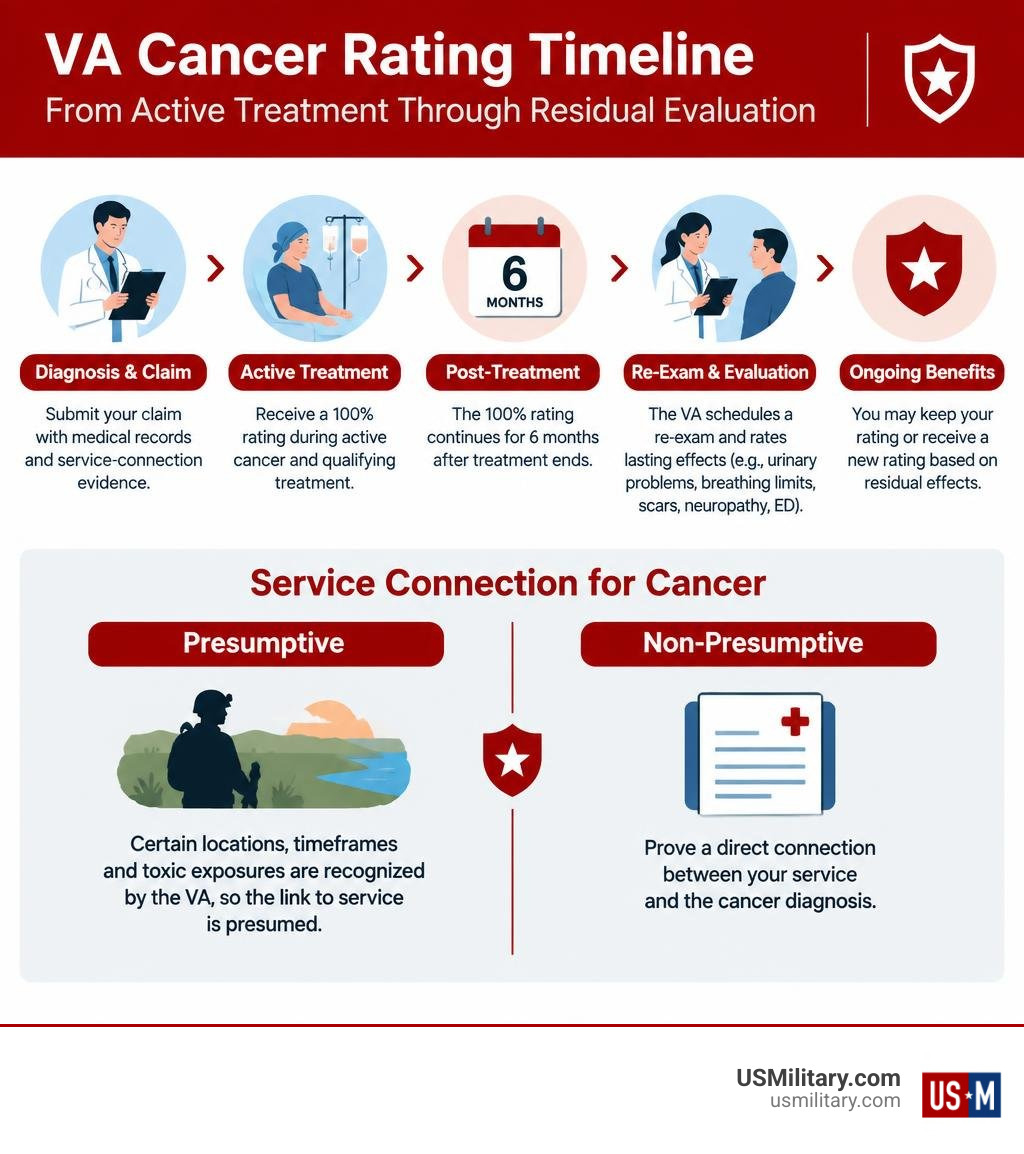
The VA generally continues the 100% rating through treatment and for six months after treatment ends. It then schedules a re-exam and rates lasting effects, such as urinary problems, breathing limits, scars, neuropathy, or erectile dysfunction. Some cancers follow different timelines, including non-Hodgkin lymphoma and multiple myeloma.
As of 2026, a veteran rated at 100% receives $3,938.58 per month before possible dependent-based additions. A cancer diagnosis does not automatically mean approval, but good medical records, a clear treatment timeline, and strong service-connection evidence can make a major difference.
I am LARRY FOWLER, publisher of the USMilitary.com Network, where I have helped connect service members and veterans with clear information on VA benefits and disability trends since 2007. This guide explains the VA disability rating for cancer in plain language, from proving service connection to protecting benefits after treatment.
Understanding Presumptive vs. Non-Presumptive Service Connection for Cancer
Establishing service connection is the foundational step in securing disability compensation. The Department of Veterans Affairs (VA) divides cancer claims into two primary categories: presumptive and non-presumptive (direct) service connection.
A presumptive service connection eliminates the burden of proving that your specific military duties directly caused your cancer. Instead, Congress and the VA recognize that military service in specific geographic regions during designated timeframes exposed veterans to known toxic substances. If you served in an eligible location and later developed a covered malignancy, the VA automatically presumes a direct link between your service and the diagnosis.
Common presumptive categories cover:
- Agent Orange & Tactical Herbicides: Vietnam, qualifying Thailand bases, Korean DMZ, and C-123 aircraft exposure.
- Toxic Hazards and Burn Pits: Addressed broadly under the PACT Act for service in Southwest Asia, Iraq, and Afghanistan.
- Camp Lejeune Contaminated Water: Service at Marine Corps Base Camp Lejeune or MCAS New River for at least 30 cumulative days between August 1, 1953, and December 31, 1987.
- Ionizing Radiation: “Atomic Veterans” involved in atmospheric nuclear testing, the post-war occupation of Hiroshima and Nagasaki, or service at Enewetak Atoll.
For a broader understanding of what ailments meet these standards, check our guide on qualifying conditions for benefits.
If your condition falls outside presumptive lists, you must establish direct service connection. This requires military service records documenting exposure to in-service toxins (such as asbestos or industrial degreasers), pathology reports confirming a current diagnosis, and a formal medical nexus letter from a healthcare provider explaining why your military exposure is “at least as likely as not” the cause of your illness.
PACT Act and Expanded Presumptive Cancer Categories
The Sergeant First Class Heath Robinson Honoring our Promise to Address Comprehensive Toxics (PACT) Act substantially expanded presumptive coverage for veterans exposed to open-air burn pits and other environmental hazards.

The PACT Act added more than 20 presumptive conditions, primarily focusing on respiratory, gastrointestinal, and reproductive malignancies. In January 2025, the VA expanded these categories further by adding acute and chronic leukemias, multiple myelomas, myelodysplastic syndromes, myelofibrosis, urinary bladder, ureter, and related genitourinary cancers as presumptive for Gulf War and Post-9/11 veterans.
The list of presumptive cancers includes:
- Respiratory Cancers: Lung cancer, bronchus cancer, larynx cancer, pharynx cancer, and trachea cancer.
- Reproductive Cancers: Prostate cancer, breast cancer, ovarian cancer, cervical cancer, and uterine cancer.
- Gastrointestinal Cancers: Esophageal cancer, stomach cancer, colorectal cancer, pancreas cancer, and liver cancer.
- Hematologic & Lymphatic Cancers: Lymphomas (Hodgkin’s and non-Hodgkin’s), leukemias, and multiple myeloma.
- Genitourinary Cancers: Kidney cancer, urinary bladder cancer, and ureter malignancies.
- Other Soft-Tissue & Head Cancers: Melanoma, glioblastoma, and neck cancers.
Direct Service Connection and Non-Presumptive Cancer Claims
Veterans diagnosed with cancers not explicitly listed in presumptive statutes must build a direct service connection claim. This process requires three distinct elements:
- A medical diagnosis of cancer verified by pathology or cytology.
- In-service evidence documenting an event, injury, disease, or toxic exposure (such as occupational exposure to industrial solvents, fuels, or asbestos depending on your Military Occupational Specialty).
- A competent medical nexus opinion linking your diagnosed condition to that specific in-service exposure.
When filing a direct claim, ensure your military personnel and medical files show when and how you encountered hazardous materials. Understanding the fundamentals of initiating the claims process properly will help avoid common evidentiary omissions that trigger initial denials.
How the VA Disability Rating for Cancer Works: Securing Your 100% Temporary Benefit
The VA Schedule for Rating Disabilities (VASRD), codified in 38 CFR Part 4, governs how malignancies are evaluated across bodily systems. For example, hematologic malignancies are rated under Department of Veterans Affairs § 4.117, while genitourinary cancers follow 38 CFR § 4.115b.
When a veteran establishes service connection for an active malignant neoplasm, the VA assigns a temporary 100% disability rating. This reflects total disability during active illness and intensive treatment. As of 2026, the baseline payment for a single veteran rated at 100% is $3,938.58 monthly, which is completely tax-free. Veterans with qualifying dependents (spouses, children, or dependent parents) receive additional monthly compensation, as outlined in the current 2026 monthly compensation rates.
How the VA Disability Rating for Cancer Is Assigned at 100% During Active Treatment
A temporary total disability rating is granted when a veteran undergoes active, therapeutic intervention for a malignant neoplasm. Qualifying interventions include:
- Chemotherapy, immunotherapy, or targeted biological therapies.
- Radiation therapy.
- Extensive surgical resection.
- Continuous medical monitoring for active, symptomatic disease.
The rating remains at 100% throughout active treatment. Under 38 CFR § 4.29 and § 4.30, temporary 100% ratings also apply during hospitalizations exceeding 21 consecutive days for service-connected conditions, or during designated surgical convalescent periods. To understand the financial and legal scope of total ratings, read our guide on navigating 100% disability compensation.
Rating Duration Across Specific Cancer Diagnoses
While most cancers retain a 100% temporary rating for the duration of treatment plus a standard six-month window after treatment ends, specific diagnostic codes outline different timelines:
- Standard Malignant Neoplasms: Evaluated six months after the cessation of active treatment (chemotherapy, radiation, or surgery).
- Non-Hodgkin’s Lymphoma (DC 7715): Retains a 100% rating during active treatment, followed by a mandatory two-year post-treatment evaluation window before a re-examination occurs.
- Multiple Myeloma (DC 7703 / 7709): Receives a 100% rating for five years following the initial diagnosis of symptomatic disease before a mandatory re-evaluation is scheduled.
- Prostate Cancer (DC 7528): Accounts for approximately 29% of all cancer diagnoses among veterans. It receives a 100% rating during active treatment and continues for six months post-treatment before residual urinary or bowel dysfunctions are evaluated.
What Happens After Treatment: The Mandatory Six-Month Re-Evaluation and Residual Ratings
A 100% cancer rating is rarely permanent at the time of initial grant. When curative treatment ends, the VA tracks the claim for a follow-up assessment. Under 38 CFR § 3.105(e), the VA must issue a notice of proposed reduction before adjusting any temporary rating downward, giving veterans the right to submit new medical records or request a hearing.
At the conclusion of the mandatory post-treatment period (typically six months), the VA schedules a Compensation and Pension (C&P) examination to establish whether the disease is in complete remission. If remission is confirmed, the VA cannot simply reduce the rating to zero without evaluating lasting physical harm. Instead, it transitions the evaluation from the active cancer code to individual diagnostic codes for all post-treatment residuals, referencing the standard VA rating chart schedule.
Post-Remission Evaluations: How the VA Disability Rating for Cancer Transitions to Residuals

During the post-treatment C&P exam, an examiner completes a Disability Benefits Questionnaire (DBQ) focusing on functional loss, structural deficits, and permanent side effects caused by surgery, chemotherapy, or radiation.
Common post-cancer residuals evaluated by the VA include:
- Surgical scars and tissue loss.
- Lymphedema and restricted joint range of motion.
- Organ resection or chronic gastrointestinal dysfunction.
- Peripheral neuropathy resulting from neurotoxic chemotherapy drugs.
- Voiding dysfunction, urinary incontinence, and renal impairment.
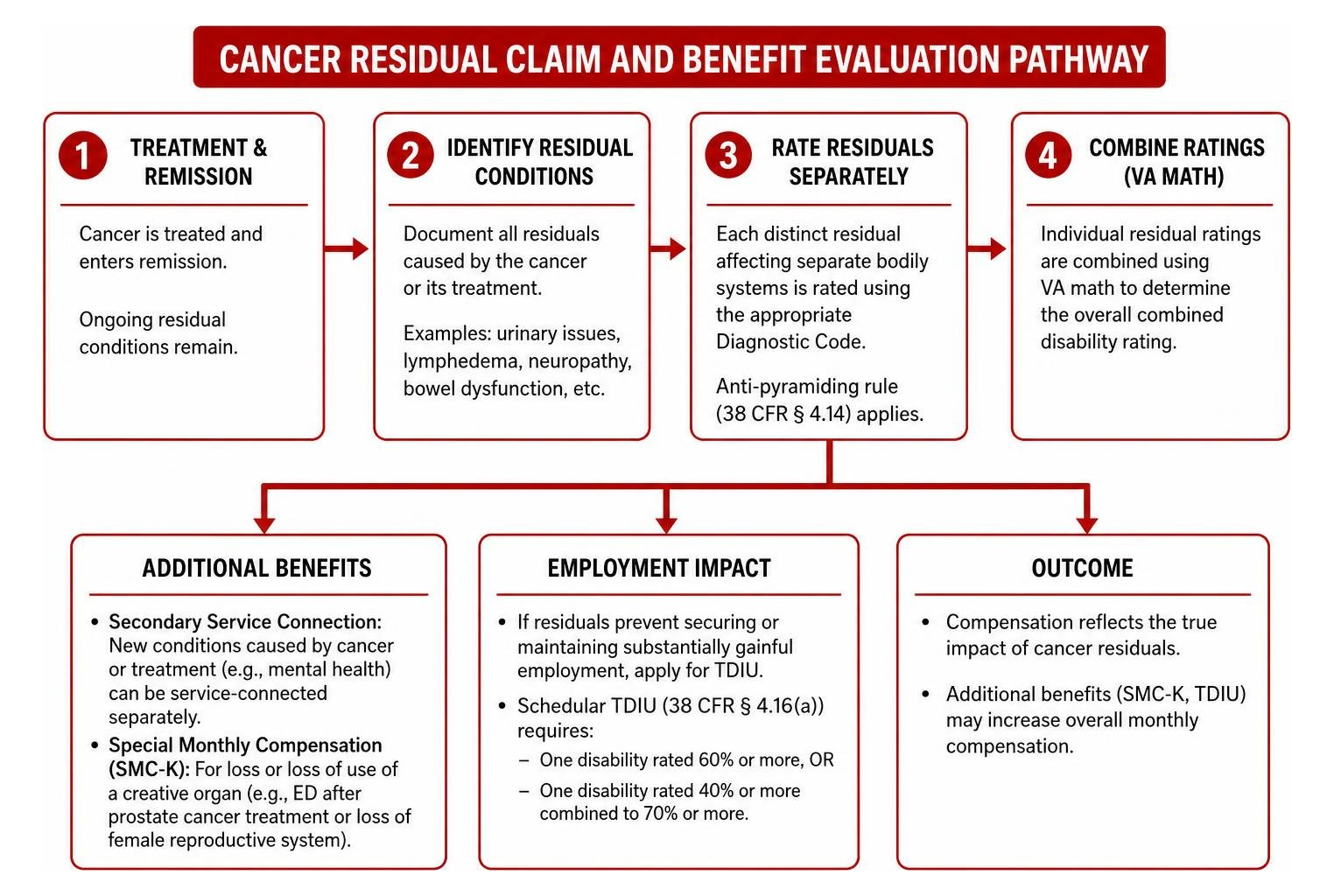
Because the VA adheres to the anti-pyramiding rule (38 CFR § 4.14), you cannot receive multiple ratings for the exact same functional impairment. However, distinct residuals affecting separate bodily systems are rated independently and combined using VA math. For practical tips on protecting your benefits during this transition, review our steps to maintain your rating.
Common Residual Rating Schedules by Cancer Type
The following table illustrates how common post-treatment cancer residuals are rated after a malignancy enters remission:
| Cancer Type & Diagnostic Code | Common Residual Conditions | Diagnostic Code (DC) | Rating Percentages & Criteria |
|---|---|---|---|
| Prostate Cancer (DC 7528) | Voiding Dysfunction / Urinary Incontinence | DC 7528 / DC 4.115a | 60%: Requires appliance or >4 pad changes/day 40%: Requires 2-4 pad changes/day 20%: Requires 1 pad change/day |
| Prostate Cancer (DC 7528) | Urinary Frequency | DC 7528 / DC 4.115a | 40%: Day intervals <1 hr or night awakenings ≥5 times 20%: Day intervals 1-2 hrs or night awakenings 3-4 times 10%: Day intervals 2-4 hrs or night awakenings 2 times |
| Breast Cancer (DC 7630) | Anatomical Loss / Mastectomy Residuals | DC 7626 | 80%: Both breasts removed (radical/modified) 50%: One breast removed (radical/modified) 30%: Simple mastectomy |
| Breast / Soft Tissue | Lymphedema / Functional Arm Impairment | DC 7626 / DC 5201 | 10% to 40%: Based on limb volume increase and limitation of arm flexion/abduction |
| Gastrointestinal / Radiation | Bowel Dysfunction / Radiation Proctitis | DC 7332 | 10% to 30%: Ranging from moderate urgency to severe fecal leakage |
| Chemotherapy Complications | Peripheral Neuropathy | DC 8520 | 10% to 60%: Graded from mild sensory numbness to severe motor paralysis of extremities |
Secondary Service Connection, SMC-K, and TDIU for Cancer Residuals
Cancer treatment often causes downstream medical conditions that warrant compensation beyond the original tumor site. When cancer or its medical therapy causes a new disability, you can file for secondary service connection.
A prime example is mental health. Undergoing cancer therapy, facing recurrence anxiety, and coping with permanent physical changes frequently lead to clinical depression, generalized anxiety disorder, or somatic symptom disorders. If a mental health professional confirms that your psychological condition is linked to your cancer diagnosis or treatment, it can be rated separately. Review our guide on overlooked disability benefits to identify other secondary conditions you may be eligible to claim.
Special Monthly Compensation (SMC-K) for Loss of Use
Special Monthly Compensation under SMC-K is a statutory award granted in addition to standard monthly disability compensation. It provides financial relief for the loss or loss of use of a creative organ.
- Erectile Dysfunction (ED): Following radical prostatectomy, radiation therapy, or pelvic surgeries for genitourinary malignancies, ED is common. Veterans service-connected for prostate or genitourinary cancer who experience treatment-induced ED qualify for SMC-K.
- Female Reproductive System Loss: Mastectomies, surgical oophorectomy, or hysterectomies resulting from cancer treatment also qualify for SMC-K.
- Compensation Rate: As of 2026, SMC-K adds approximately $139.87 per month to your combined disability payment.
Total Disability Based on Individual Unemployability (TDIU)
When cancer residuals leave a veteran unable to secure or maintain substantially gainful employment, Total Disability Based on Individual Unemployability (TDIU) provides an important safety net. TDIU pays compensation at the full 100% rate even if your combined schedular rating is lower.
To qualify for schedular TDIU under 38 CFR § 4.16(a):
- You must have one service-connected disability rated at 60% or higher, OR
- You must have a combined rating of 70% or higher, with at least one individual disability rated at 40% or higher.
For example, a veteran whose active bladder cancer rating dropped to 60% due to severe voiding dysfunction (requiring frequent daily pad changes), who also carries a 70% rating for secondary major depressive disorder, qualifies for TDIU if those combined conditions prevent full-time work. Explore the step-by-step application requirements in our complete TDIU filing guide.
Step-by-Step Guide to Filing and Appealing Your Cancer Disability Claim
Filing a successful VA disability claim requires organized medical records, service documentation, and clear functional evidence.
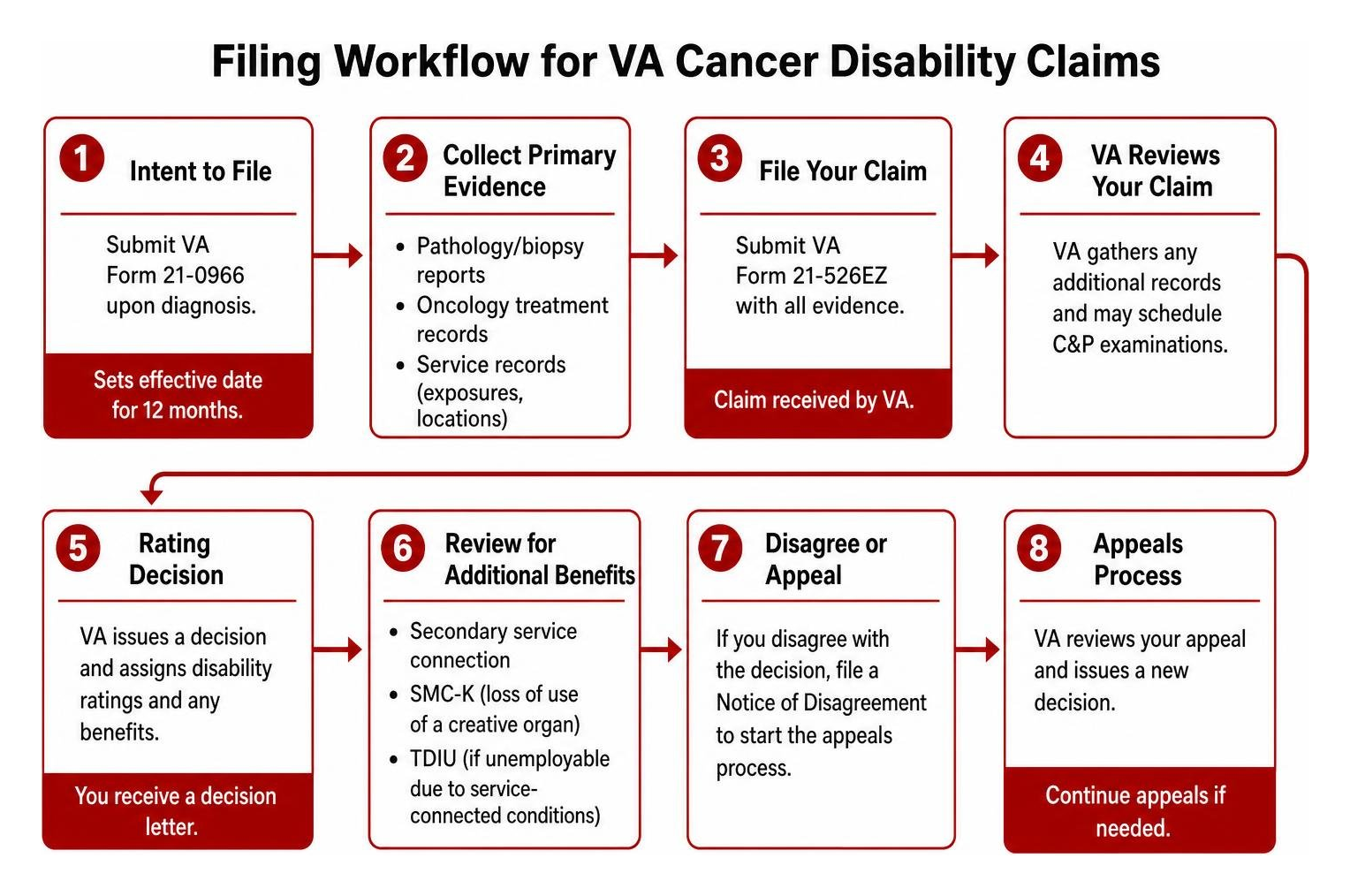
- Submit an Intent to File (VA Form 21-0966): Submit this form immediately upon diagnosis. It sets your effective date, protecting your back pay while you gather medical and service documentation over the following 12 months.
- Collect Primary Evidence:
- Pathology and biopsy reports confirming malignancy.
- Oncology treatment records detailing chemotherapy, radiation regimens, or operative notes.
- Service records showing deployment dates, qualifying locations, or occupational exposures.
- Obtain Supporting Statements: Submit personal lay statements documenting your daily physical symptoms, fatigue levels, and functional limitations.
- Submit Your Formal Application: File VA Form 21-526EZ online via VA.gov or with the assistance of an accredited Veterans Service Officer (VSO). For an end-to-end overview, see our comprehensive claims blueprint.
Preparing for the Cancer C&P Exam and Evidence Submission
During a cancer Compensation and Pension exam:
- Bring a concise timeline summarizing your diagnosis date, major surgeries, chemotherapy cycles, and ongoing medications.
- Clearly describe your worst symptom days, including daily functional limitations like incontinence, neuropathy, breathing issues, or chronic fatigue.
- Do not downplay lingering issues. If you require absorbent pads, note the exact daily replacement frequency, as this directly determines urinary rating percentages.
Appealing a Denied Cancer Claim or Rating Reduction
If the VA denies your initial cancer claim or proposes an improper rating reduction before treatment is finished, you have several appeal pathways under the Appeals Modernization Act (AMA):
- Supplemental Claim (VA Form 20-0995): Use this route when you have new and relevant evidence, such as updated oncology notes or a private medical nexus letter. Learn more about reopening claims with new evidence.
- Higher-Level Review (VA Form 20-0996): Request an experienced senior adjudicator to re-examine your existing claim file for clear legal or factual errors without submitting new evidence.
- Board of Veterans’ Appeals (VA Form 10182): Appeal directly to a Veterans Law Judge at the Board in Washington, D.C., with options for a direct review, evidence submission, or a formal hearing.
For practical advice on overturning an unfavorable decision, read our guide on turning a VA denial into an approval.
Frequently Asked Questions About Cancer VA Disability Ratings
Can I Keep My 100% Disability Rating Permanently After Cancer Remission?
Under VA regulations, the temporary 100% rating assigned for an active malignancy ends once treatment finishes and the mandatory post-treatment period (usually six months) concludes. You can only maintain a permanent 100% rating if your post-remission residual disabilities (such as severe respiratory impairment, permanent organ loss, or combined nerve damage) equal a 100% combined rating on their own, or if you are granted permanent and total TDIU.
What Happens if My Cancer Returns After the VA Reduces My Rating?
If your cancer recurs or metastasizes after your rating was reduced to a post-remission residual level, you can file for an immediate rating increase. Submitting pathology reports or clinical notes showing active recurrent disease or renewed therapeutic treatment prompts the VA to restore your temporary 100% disability rating for the duration of the new treatment cycle. You can learn more about requesting a rating increase to understand the documentation needed.
How Does the VA Rate Prostate Cancer and Erectile Dysfunction Together?
The VA rates prostate cancer residuals primarily based on urinary or bowel dysfunction under Diagnostic Code 7528 and 38 CFR § 4.115a. Erectile dysfunction is evaluated separately as a secondary condition. While ED without physical deformity is rated at 0% non-compensable on the standard rating schedule, it qualifies for Special Monthly Compensation (SMC-K). This provides an additional $139.87 monthly payment on top of your disability compensation without violating anti-pyramiding rules.
Conclusion
A cancer diagnosis presents immense physical, emotional, and financial challenges. Navigating the VA disability system should not add to that burden. By understanding how the VA rates active cancer at 100%, taking full advantage of presumptive conditions under the PACT Act, and thoroughly documenting post-treatment residuals, you can secure the compensation and healthcare benefits you have earned.
We encourage you to file an Intent to File as early as possible, maintain organized medical records, and track every long-term side effect of your treatment. To understand how your residuals combine under VA math and plan your long-term benefits strategy, continue exploring your VA disability rating chart benefits with our team at USMilitary.com.
Free for Service Members & Veterans
Get the military benefits intel no one tells you about.
Weekly updates on VA benefits, pay changes, and money tips — free for service members and veterans.
No spam. Unsubscribe anytime. Your info is never shared.


