What a Democratic Congress Could Change for Military Recruiting Next Year

A new congressional majority in 2027 could shift defense spending toward troop pay, readiness, and benefits while questioning costly weapons programs. That may help recruiters make a stronger case for service, but the proposed 5% to 7% military pay raises are not final. Automatic draft registration scheduled for December 2026 does not end the all-volunteer force.
The key question for recruits is what becomes law in 2027, not the political label attached to Congress. Pay, career options, and future VA benefits will matter more than a budget headline.
I’m Larry Fowler, a Navy veteran, BUD/S Class 89 graduate, and publisher of USMilitary.com, where I have covered military and veteran issues since 2007. My perspective also comes from years of helping prospective recruits connect with military opportunities.
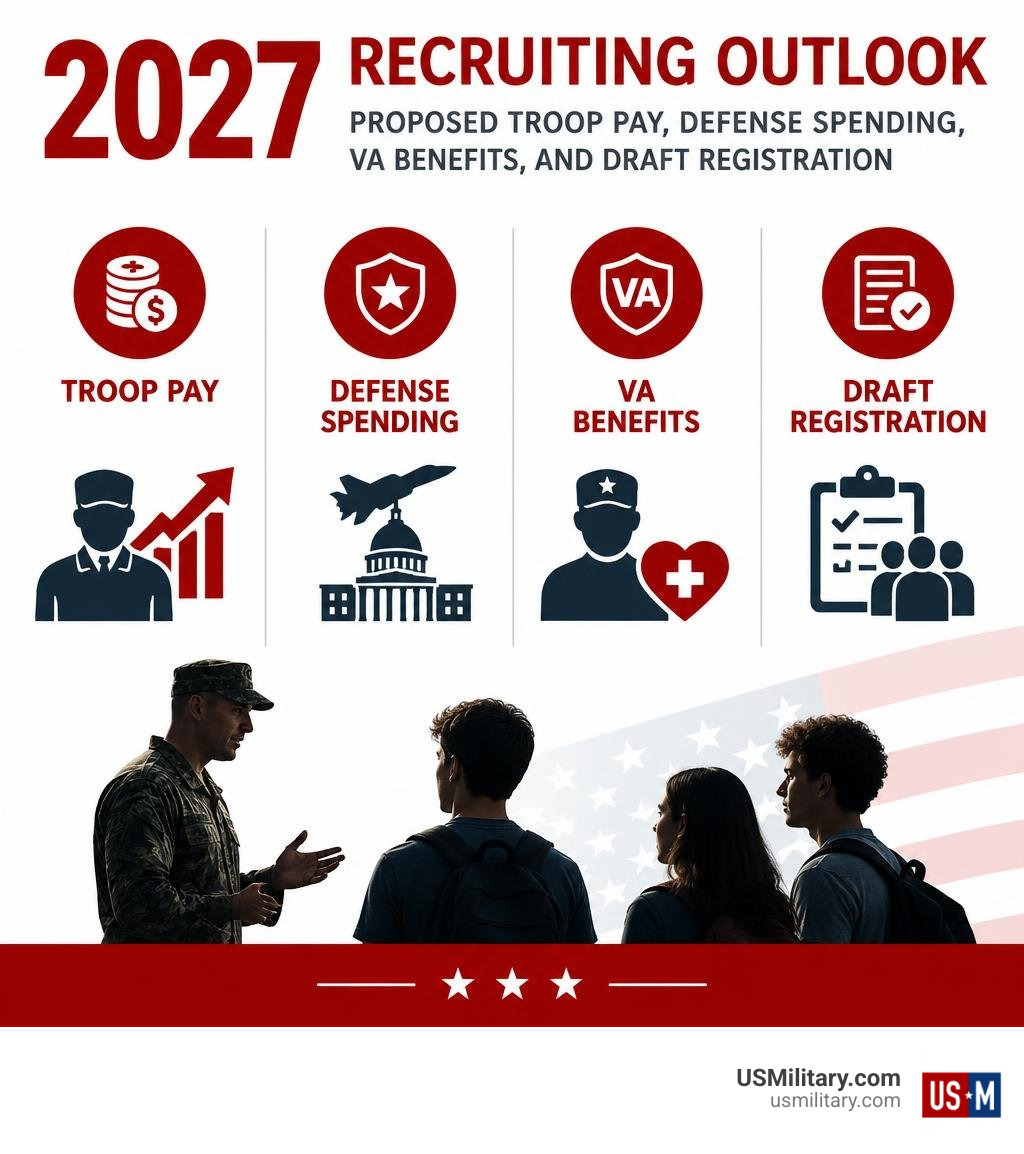
Defense Budgets and Pay: What Does a Socialist Democrat Congress Mean for Military Recruiting in 2027?
As we head into 2027 following the 2026 midterm elections, Capitol Hill faces a massive fiscal puzzle. The FY2027 defense budget request reached a staggering $1.54 trillion, which includes a $1.15 trillion base discretionary request and a $350 billion mandatory reconciliation package. With Democrats controlling legislative committees, this massive topline will face intense scrutiny.
Rather than rubber-stamping major weapons programs, lawmakers are prioritizing troop welfare, readiness, and quality of life. For prospective service members evaluating their options using our early look at the 2027 military pay chart, this shift in spending priorities signals robust baseline compensation rather than cuts to personal income.
Troop Compensation and the 5% to 7% Pay Raise Debate
The House-passed FY2027 National Defense Authorization Act (NDAA), approved by a 216-212 vote, authorized roughly $1.15 trillion in national security spending. Crucially for recruiting, it established a tiered military pay raise structure:
- E1 to E5: 7% targeted raise for junior enlisted personnel
- E6 to O3: 6% targeted raise for mid-tier enlisted and junior officers
- O4 and above: 5% baseline raise for senior officers
This tiered approach directly tackles recruiting shortfalls by making entry-level military pay competitive against civilian entry wages. Simultaneously, federal labor advocates are pushing the FAIR Act to secure a 4.1% raise for civilian federal workers to prevent inflation from eroding government salaries.
| Pay Category | Proposed 2027 Adjustment | Target Group | Primary Policy Driver |
|---|---|---|---|
| Junior Enlisted | 7.0% | Ranks E1–E5 | Enlistment incentive & retention |
| Mid-Grade Enlisted / Junior Officers | 6.0% | Ranks E6–O3 | Mid-career talent preservation |
| Senior Military Officers | 5.0% | Ranks O4+ | Standard cost-of-living baseline |
| Civilian Federal Employees (FAIR Act) | 4.1% | GS Workforce | Inflation parity & civilian parity |
Shifting Dollars from Battleships to Enlistment Bonuses
High-end procurement programs face the chopping block as personnel initiatives get funded. The proposed Trump-class battleship program—projected to cost $23 billion for the lead ship USS Defiant and $18 billion for each of the next 14 vessels—faces immense pushback. Defense analysts note that a single battleship costs as much as 10 Arleigh Burke-class destroyers.
Lawmakers are also trimming the $25 billion Golden Dome initiative and restructuring the Air Force’s F-47 Next Generation Air Dominance fighter. Trimming these vanity megaprojects frees up discretionary capital for enlistment incentives. To see where these funds land, check which military branch offers the highest cash recruitment bonuses to maximize your entry package.
High School Outreach, JROTC, and the Shrinking Teen Population
Military recruiters are operating in a tough demographic environment. As reported on how military recruiting faces hurdles as the teen population shrinks, only 23% of young Americans aged 17 to 24 meet basic physical, medical, and academic standards for military enlistment without a waiver.

Overcoming Demographic Hurdles in Youth Accessions
To widen the recruitment pool, the military has leaned heavily on initiatives like the Army’s Future Soldier Preparatory Course. This program helps applicants raise their academic test scores and meet physical fitness benchmarks before basic training. You can explore how these preparatory steps fit into the enlistment journey in our step by step guide to US Army recruitment.
✉ Get updates like this in your inbox
Weekly VA benefit changes, pay updates, and money tips for service members, veterans, and military families. Free, no spam.
High School Recruiter Access and JROTC Expansion Rules
Recent legislation has reinforced recruiter access across American school districts. Reports on NDAA recruiting tweaks that expand high school access require any secondary school receiving federal funding to give military recruiters the same campus access as college admissions officers and civilian employers. Furthermore, the authorized statutory cap for nationwide Junior ROTC units was expanded from 3,400–4,000 up to 3,600–4,200 units, creating broader pipelines for young leaders.
Automatic Draft Registration and the All-Volunteer Force
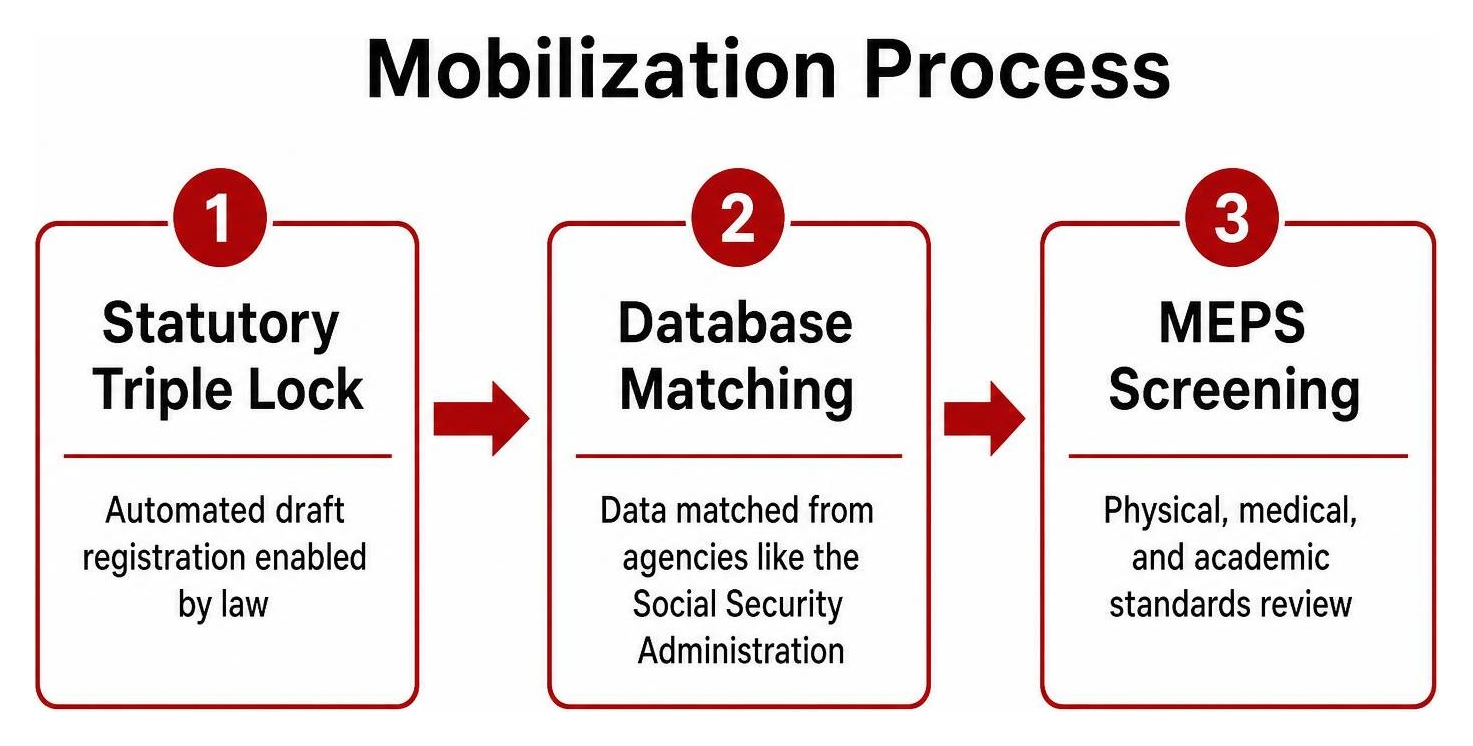
Starting in December 2026, Section 535 of the Defense Authorization Act modernizes the Selective Service System by introducing automated data-matching registration for young men ages 18 through 26.

What Does a Socialist Democrat Congress Mean for Military Recruiting in 2027 Regarding Draft Fears?
Misinformation about automatic draft registration has created unnecessary online alarm. To understand how politicians use conscription debates, read about the secrets behind draft rhetoric. Mainstream reporting confirms that automatic draft registration takes effect in late 2026 as an administrative database update, not an active call to arms.
Selective Service Modernization vs. Active Conscription Rumors
The Selective Service System operates on a modest annual budget of roughly $26 million to $32.3 million, with 124 full-time staff, and maintains a database of about 80 million records. According to the Congressional Research Service analysis on Selective Service issues, automated registration simply pulls existing data from agencies like the Social Security Administration. It replaces outdated paperwork to prevent young men from accidentally committing a felony by failing to register, preserving the integrity of the All-Volunteer Force.
Long-Term Value Proposition: VA Benefits and Career Incentives
A progressive-leaning Congress places heavy emphasis on the total lifecycle of military service, particularly veteran benefits. With the Department of Veterans Affairs operating on a roughly $400 billion annual budget, legislative efforts focus on protecting earned benefits, expanding mental healthcare, and strengthening the transition to civilian life. Understanding the broader political debates in our report on veteran policies and party leadership helps recruits see how federal policy protects their post-service earned entitlements.
Major Richard Star Act and Concurrent Receipt Protections
A cornerstone of veteran advocacy entering 2027 is the Major Richard Star Act, which boasts 336 House and 79 Senate cosponsors. This legislation would allow combat-injured Chapter 61 medically retired veterans with fewer than 20 years of service to receive their full military retired pay alongside VA disability compensation without an offset. Lawmakers are advancing this $58 billion, decade-long reform by waiving statutory PAYGO budget-offset rules, significantly enhancing the military’s long-term value proposition for recruits.
What Does a Socialist Democrat Congress Mean for Military Recruiting in 2027 Career Stability?
Recruits need to know their financial future is protected during and after service. While recruiters often highlight enlistment bonuses, knowing the facts helps you avoid the common recruitment misconceptions told to prospects. In the housing market, programs like the Veterans Affairs Servicing Purchase (VASP) offer a 2.5% fixed interest rate to assist delinquent veteran homeowners, reinforcing the safety net that military service provides.
Frequently Asked Questions About Military Recruiting in 2027
Will the Democratic Congress Cut Military Pay Raises in 2027?
No. Bipartisan consensus strongly backs military compensation, particularly the proposed 7% targeted pay raise for junior enlisted service members (E1 to E5) to ensure entry-level military pay outpaces civilian inflation.
Is an Active Military Draft Returning Due to Automatic Registration?
No. Automatic registration taking effect in December 2026 is purely a backend database modernization using existing federal records. The United States has operated entirely as an All-Volunteer Force since 1973, and returning to active conscription would require a separate act of Congress signed by the President.
How Will Foreign Policy and the Iran Conflict Affect 2027 Recruitment?
Regional conflicts and overseas tensions make some potential recruits hesitant. However, congressional oversight that reins in prolonged foreign entanglements and refocuses defense resources on domestic readiness and compensation helps stabilize enlistment propensity.
Conclusion
The 2027 military recruiting landscape under a new congressional majority is defined by a shift toward personnel support, compensation, and veteran protections. By redirecting funds away from high-risk procurement vanity projects like nuclear battleships and reinvesting in junior enlisted pay, quality of life, and expanded JROTC programs, lawmakers are working to reinforce the All-Volunteer Force.
For anyone exploring a future in uniform, check out our comprehensive military recruiting resources and branch career guides to make an informed decision about your career path.
Free for Service Members & Veterans
Get the military benefits intel no one tells you about.
Weekly updates on VA benefits, pay changes, and money tips — free for service members and veterans.
No spam. Unsubscribe anytime. Your info is never shared.



Leave a Reply