Where To Go If You Need Help Filing For VA Disability: Top Authorized Resources
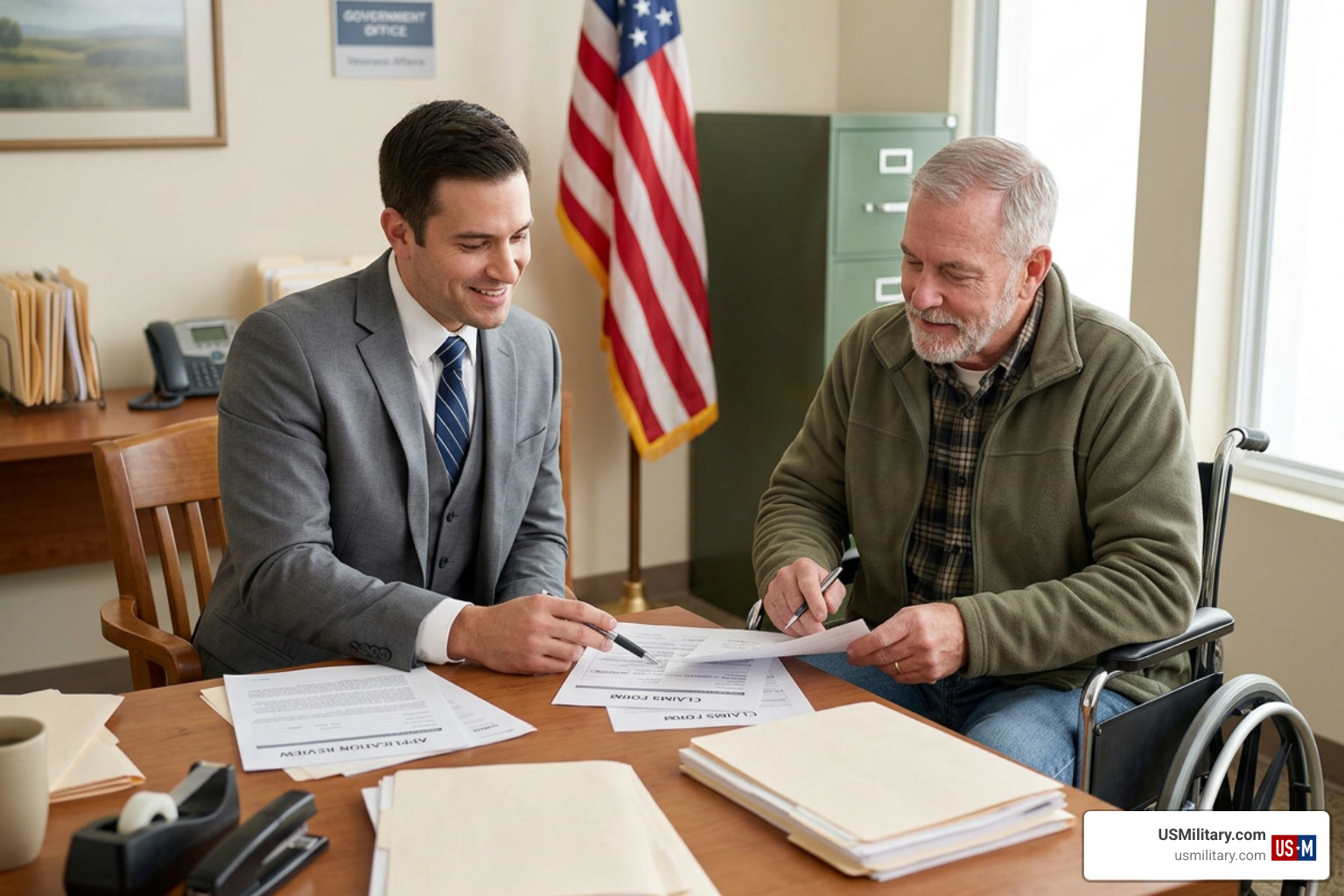
When navigating the Department of Veterans Affairs benefits system, working with certified professionals ensures your paperwork meets strict legal standards. The VA requires anyone representing a claimant to hold official accreditation through the VA Office of the General Counsel (OGC). This accreditation confirms that your representative has completed specialized training in veterans benefits law and adheres to strict ethical standards.
The VA recognizes three main types of accredited representatives:
- Veterans Service Organization (VSO) Representatives: Trained professionals employed by charter-recognized non-profit organizations or government veterans commissions.
- Accredited Claims Agents: Independent individuals who undergo background checks and pass a comprehensive VA examination on disability law.
- Accredited Attorneys: Licensed lawyers in good standing with a state bar who have completed required continuing legal education in veterans benefits.
| Representative Type | Cost for Initial Claims | Cost for Appeals / Supplemental Claims | Best Suited For |
|---|---|---|---|
| VSO Representative | Always Free ($0) | Always Free ($0) | Initial claims, standard increases, local in-person guidance |
| Accredited Claims Agent | Free (by law) | Fee-based (contingency on retroactive back pay) | Complex appeals, legal brief development |
| Accredited Attorney | Free (by law) | Fee-based (contingency on retroactive back pay) | Formal Board of Veterans’ Appeals, court litigation, complex denials |
You should never pay upfront fees to anyone just to prepare or file an initial application for disability compensation.
Where To Go If You Need Help Filing For VA Disability at No Cost: State and Local VSOs
For initial filings, local and national Veterans Service Organizations provide completely free, comprehensive claims assistance. You do not need to be a paying member of these organizations to receive their help.
National organizations like AMVETS utilize dedicated National Service Officers (NSOs) alongside State Department of Veterans Affairs personnel and County Veteran Service Officers (CVSOs). AMVETS operates on a streamlined “Three Cs” method:
- Consult: Discuss your symptoms, military exposures, and diagnosed medical conditions with an accredited officer.
- Collect: Assemble your military service records, clinical histories, and diagnostic reports.
- Contact: Reconnect with your representative to review paperwork, verify form accuracy, and submit the complete package to the VA.
State-level agencies offer extensive networks of accredited professionals. For instance, the Texas Veterans Commission (TVC) maintains over 80 accredited benefits advisors across 49 offices throughout the state, working directly within VA medical centers and regional offices. State agencies and local County Veteran Service Officers coordinate through official agreements to ensure veterans in every county have access to in-person and extended-hour phone consultations.
To officially authorize a VSO to manage your claim, you will complete VA Form 21-22 (Appointment of Veterans Service Organization as Claimant’s Representative).
Where To Go If You Need Help Filing For VA Disability Appeals: Accredited Attorneys and Claims Agents
If your initial claim was denied or you were assigned an improperly low disability rating, hiring private legal representation can be an effective next step. Accredited claims agents and attorneys specialize in navigating complex administrative appeals, gathering specialized medical nexus opinions, and arguing legal points before the Board of Veterans’ Appeals (BVA).
If you are looking for local legal assistance, you can find a VA Disability Attorney Near Me through accredited directories. When selecting legal counsel, use resources to Find VA Disability Lawyer representation that operates on a clear contingency fee agreement. Under federal guidelines, accredited attorneys and agents typically charge a reasonable percentage of past-due benefits (retroactive back pay) awarded upon a successful appeal, but they cannot bill you out-of-pocket for initial claims preparation.
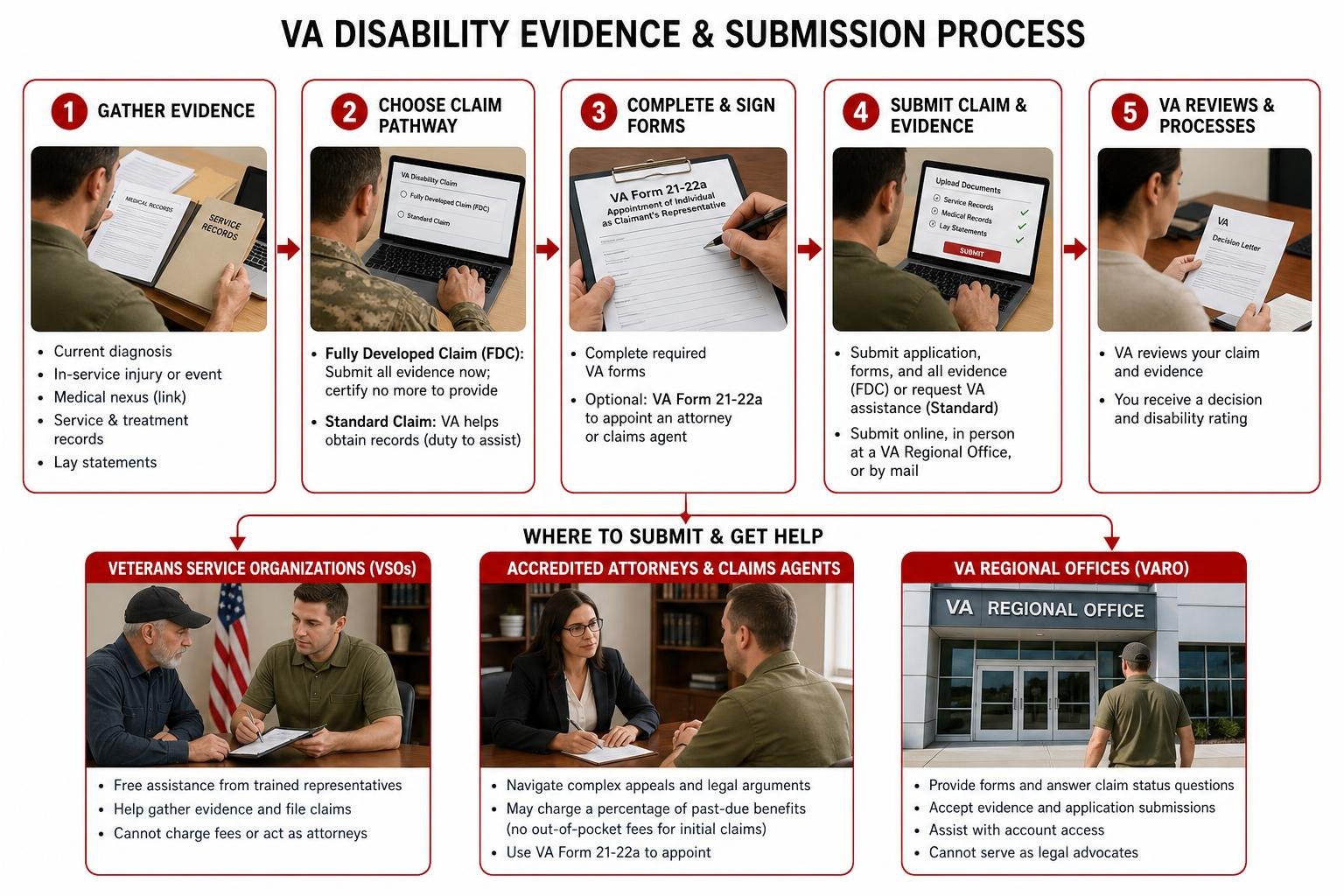
To appoint an independent attorney or claims agent, you and your representative will complete and sign VA Form 21-22a (Appointment of Individual as Claimant’s Representative).
VA Regional Offices and In-Person Intake Centers
If you prefer direct, face-to-face service from government staff, you can visit a local VA Regional Office (VARO). Public Contact Representatives at these offices can:
- Provide official blank VA forms
- Answer direct questions regarding claim status
- Accept physical evidence and application submissions
- Assist in establishing your electronic account access
While regional office personnel cannot serve as your legal advocate or argue decisions on your behalf like a VSO or attorney, they can guide you through the submission process and verify document receipt.
How to Prepare and Submit Your VA Disability Claim

Understanding How to File a VA Disability Claim requires a structured approach to gathering records and selecting the right filing program. The VA offers two main pathways for processing claims:
- Fully Developed Claims (FDC): You submit all relevant private treatment records, service records, and lay statements at the exact moment you file, certifying that you have no additional evidence to provide. This significantly shortens processing time.
- Standard Claims: You ask the VA to help obtain records on your behalf from federal facilities, private medical providers, or state agencies under their statutory “duty to assist.”
For official guidelines on these pathways, review the VA guide on How to Apply – Compensation.
Gathering Required Medical Evidence and Service Documentation
A successful disability claim requires establishing three distinct elements: a current physical or mental diagnosis, an in-service injury or event, and a medical link (nexus) connecting the two.
Make sure you collect the following documents before submitting:
- Separation Papers: DD Form 214 or discharge paperwork confirming your service dates and character of discharge.
- Service Treatment Records (STRs): Military medical, dental, and behavioral health records showing in-service symptoms or trauma.
- Private and VA Medical Records: Diagnostic test results, clinic notes, surgery reports, and ongoing treatment documentation from civilian providers.
- Lay and Buddy Evidence: Written statements from family members, fellow service members, or supervisors describing how the condition started or limits your daily activities.
- Medical Nexus Letters: An independent medical opinion from a licensed healthcare specialist. Learn How to Submit a Nexus Letter to the VA to ensure your physician uses the correct legal terminology, such as certifying your condition is “at least as likely as not” related to your military service.
Locking in Your Effective Date With an Intent to File
Your effective date determines the precise day your VA disability compensation begins. Setting an early effective date ensures you receive full retroactive pay back to that point once your claim is approved.
If you plan to file a paper application or need time to gather medical opinions, submit an Intent to File (VA Form 21-0966). This gives you a 365-day (1-year) window to collect all evidence while protecting your effective date.
If you choose to file online via VA.gov, simply opening and saving an application automatically establishes your digital Intent to File timestamp.
Step-by-Step Submission Channels
When you are ready to officially File VA Disability paperwork, you have several reliable channels:
- Online Submission: Submit through the VA.gov portal or upload appointment forms using AccessVA QuickSubmit.
- Official Digital Form: File for disability compensation with VA Form 21-526EZ directly online to streamline data transfer.
- By Mail: Send hard copies to the centralized mail processing hub:
> Department of Veterans Affairs
> Claims Intake Center
> PO Box 4444
> Janesville, WI 53547-4444 - By Fax: Send your forms to (844) 531-7818 (inside the US) or (248) 524-4260 (international).
What to Expect After Filing and How to Handle Claim Denials

Once the Claims Intake Center processes your application, your claim moves into evidence gathering, review, and decision phases. As of August 2026, the average processing timeline for disability-related claims is approximately 68.6 days.
During this window, the VA will likely schedule you for a Compensation and Pension (C&P) exam. These medical examinations assess the current severity of your disability and verify service connection. Attending these appointments is critical; missing a C&P exam without rescheduling is one of the most common reasons claims are immediately denied.
Once a rating specialist reviews the findings, they issue an official Rating Decision outlining your monthly compensation based on the official Veterans Disability Pay Scale.
Navigating Unfavorable Decisions and Service Connection Denials
Receiving a rating lower than expected or an outright denial is common, but it is not the end of the road. If your VA Claim Denied notice arrives, the first step is to carefully review the “Reasons for Decision” section in your rating letter. This section identifies exactly what was missing—such as a lack of formal diagnosis, no documented in-service event, or no medical nexus.
Under federal regulation 38 CFR § 3.156, you can overturn previous denials by providing “new and relevant” evidence that directly addresses the specific reason for denial. Discover How to Turn Your VA Denial Into a Winning Appeal by targeting the evidentiary gaps identified by the rating officer.
The Three Decision Review Pathways: Supplemental Claims, HLR, and Board Appeals
Under the Appeals Modernization Act, you have three options if you disagree with a VA decision:
- Supplemental Claim: You submit new and relevant evidence that was not previously considered. This is submitted on VA Form 20-0995.
- Higher-Level Review (HLR): A senior rating specialist reviews your original claim without considering new evidence, checking for clear legal or factual errors. Accredited representatives can also submit a Claim Accuracy Request to expedite obvious administrative mistakes.
- Board of Veterans’ Appeals (BVA): You appeal your claim directly to a Veterans Law Judge in Washington, D.C., choosing between a direct review, evidence submission, or a formal hearing.
Frequently Asked Questions About VA Disability Claims Help
Do Veterans Service Organizations charge a fee to file my claim?
No. By federal law (Title 38 of the Code of Federal Regulations), accredited Veterans Service Organization representatives cannot charge fees for helping you prepare, present, or file initial claims or appeals. Their services are completely free.
How long does the VA take to make a disability decision in 2026?
According to VA performance data, claims take an average of 68.6 days to process. Timelines vary depending on claim complexity, the number of claimed conditions, and how quickly C&P exams are scheduled and returned. Review official resources on How To File A VA Disability Claim | Veterans Affairs for ongoing updates.
What is the difference between VA Form 21-22 and VA Form 21-22a?
- VA Form 21-22 appoints a recognized Veterans Service Organization (such as AMVETS or the Texas Veterans Commission) to act as your organizational representative.
- VA Form 21-22a appoints a specific individual (such as an accredited private claims agent or licensed disability attorney).
Conclusion
Securing the VA disability compensation you earned through your military service does not have to be an overwhelming process. By partnering with accredited VSO representatives, state claims officers, or certified legal advocates, you can avoid common application errors, meet evidence requirements, and protect your effective dates.
Take the next step in managing your military benefits by staying informed with USMilitary.com, and make sure to check current VA disability pay tables to understand the financial support available for you and your family.
Free for Service Members & Veterans
Get the military benefits intel no one tells you about.
Weekly updates on VA benefits, pay changes, and money tips — free for service members and veterans.
No spam. Unsubscribe anytime. Your info is never shared.


