The 12 VA Disability Claims That Are Easist to get approved are conditions that have a clear, direct link to military service — and knowing which ones they are can save you months of frustration.
Here they are at a glance:
- Tinnitus — rated 10%, easiest to prove with a personal statement
- Hearing Loss — backed by objective audiogram results
- PTSD — strong presumptive rules for combat and MST survivors
- Knee Pain — extremely common from physical training and service demands
- Back/Spinal Conditions — documented via X-ray or MRI
- Migraines — rated by frequency and severity
- Sleep Apnea — often secondary to PTSD or other conditions
- Scars — visible, documentable, and service-connected
- Sinusitis/Rhinitis — now presumptive under the PACT Act
- Sciatica (Radiculopathy) — commonly secondary to back injuries
- GERD — frequently secondary to PTSD or medication side effects
- Plantar Fasciitis — direct result of years of military physical demands
The VA initially denies 60–70% of all disability claims — but many of these 12 conditions have a significantly more direct path to approval. The key is knowing what evidence to submit and why these claims are structured the way they are.
I’m Larry Fowler, publisher of USMilitary.com and a longtime resource for veterans navigating VA benefits since 2007. My experience tracking VA disability trends and helping veterans understand their options makes me well-suited to walk you through the 12 VA Disability Claims That Are Easist to win. Let’s break down exactly what makes each one more straightforward — and how to file yours the right way.

Why Some VA Disability Claims Are Easier to Win in 2026
As we move through April 2026, the landscape of VA disability has shifted significantly. When we talk about “easy” claims, we aren’t suggesting the VA is handing out money for free. Instead, we mean these conditions have a more direct path to proving the three pillars of service connection: a current medical diagnosis, an in-service event or injury, and a “nexus” (the link) connecting the two.
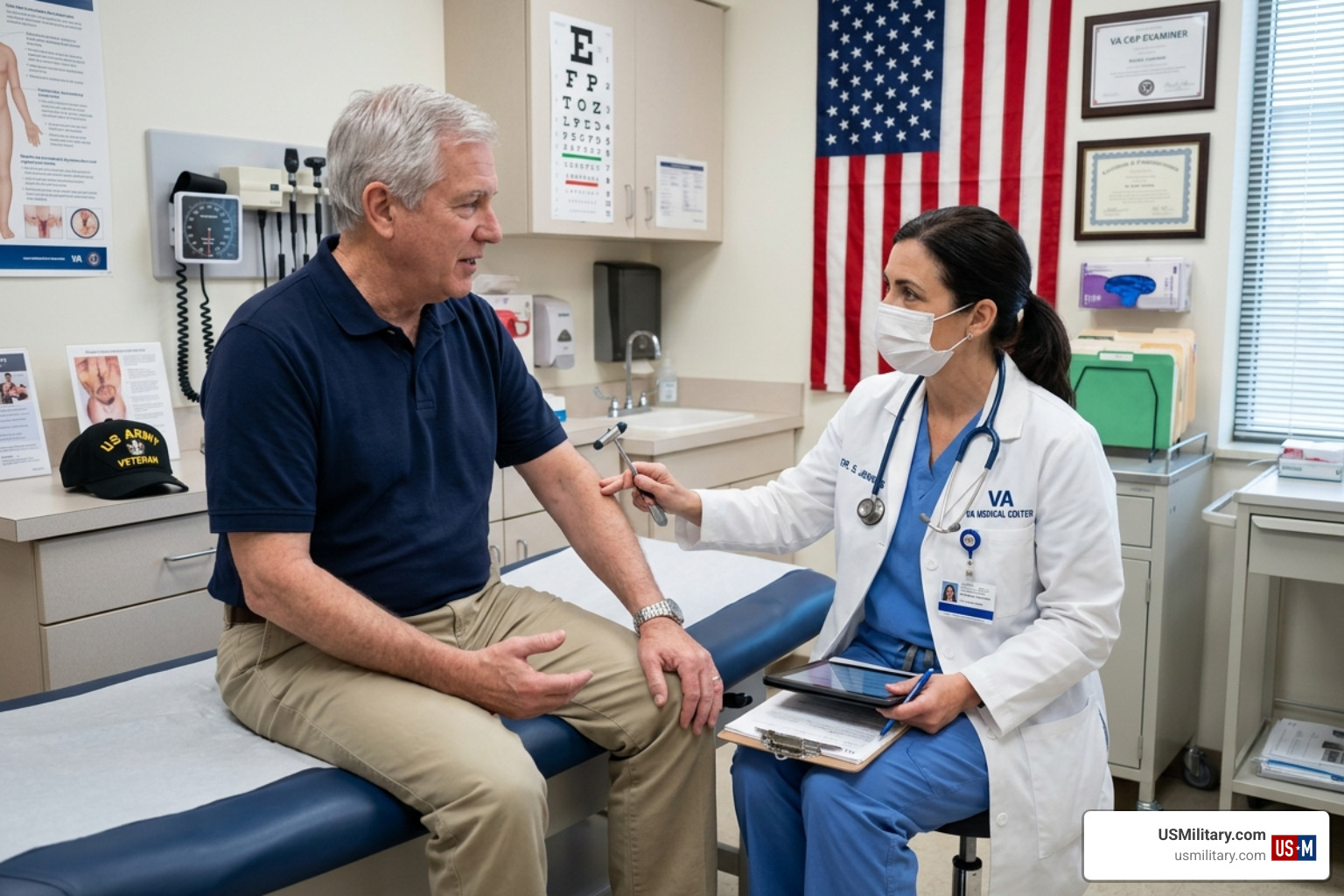
Several factors make the 12 VA Disability Claims That Are Easist stand out this year:
- The PACT Act Legacy: This landmark legislation has made conditions like Sinusitis and Rhinitis “presumptive.” This means if you served in certain locations (like Southwest Asia) during specific windows, the VA assumes your condition was caused by toxic exposure. You don’t have to prove the link; you just need the diagnosis and proof of service in that area.
- 2026 Rating Updates: The VA has recently updated how it evaluates certain conditions. For instance, mental health ratings have become more objective, often making it easier for veterans with severe symptoms to reach the 70% or 100% threshold.
- Objective Evidence: Claims like hearing loss or spinal injuries rely on hard data—audiograms, MRIs, and X-rays. Unlike “subjective” pain that can be hard to quantify, these results are difficult for the VA to dispute.
- The Painful Motion Rule: Under 38 CFR § 4.59, if you have pain when moving a joint (even if your range of motion is technically “normal”), the VA is required to award at least the minimum compensable rating (usually 10%).
For a full breakdown of what qualifies, you can view the Va Disability Conditions List.
12 VA Disability Claims That Are Easist to Get Approved
Let’s dive into the specifics of these 12 conditions. Understanding the “why” behind their high approval rates is half the battle.
1. Tinnitus
Tinnitus is the #1 most awarded VA disability, with over 2.7 million veterans currently receiving benefits. It is a 10% rating—no more, no less. It is considered “easy” because there is no objective test for “ringing in the ears.” The VA relies heavily on your MOS (Military Occupational Specialty) and your personal statement. If you were a mechanic, infantryman, or worked on a flight deck, the exposure to loud noise is a given.
2. Hearing Loss
With over 1.4 million awarded claims, hearing loss is a staple. It is rated based on a very specific speech discrimination and pure-tone threshold test. While it can be difficult to get a high rating (many veterans get 0% even with noticeable loss), it is very easy to get “service-connected” if your exit physical showed a decline compared to your entrance exam.
3. PTSD (Post-Traumatic Stress Disorder)
While PTSD is a heavy topic, the claim process has become more streamlined for those with combat ribbons or those who experienced Military Sexual Trauma (MST). For combat veterans, the VA often concedes the “stressor” (the traumatic event), meaning you only need a diagnosis and a nexus. The Ptsd Va Disability Rating frequently lands at 70% for many veterans, making it a high-value claim.
4. Knee Pain (Limitation of Flexion)
Our knees take a beating in the military. Whether it’s from jumping out of planes or just years of rucking, knee injuries affect over 1.6 million veterans. The VA rates the knee based on how far you can bend it. Pro tip: stop moving as soon as you feel pain during your exam. To see how these are calculated, check the Va Knee Rating Chart.
5. Back and Spinal Injuries
Spinal injuries are among the top five most common claims. Because the military involves heavy lifting and repetitive strain, the VA frequently approves these when backed by imaging like X-rays. Whether it is a lumbosacral strain or degenerative disc disease, these are foundational claims.
6. Migraines
Migraines are often claimed as a secondary condition to things like tinnitus or PTSD. The rating (0% to 50%) depends on how “prostrating” they are—meaning they force you to lie down in a dark room. Keeping a “headache log” is the best way to win this claim. For more details, see Whats Chronic Headache Va Disability Rating.
7. Sleep Apnea
While the VA has tightened the rules on sleep apnea in 2026, it remains a common claim. It is most successful when filed as secondary to a service-connected condition like PTSD (due to weight gain from meds or airway restriction) or Sinusitis. A sleep study is mandatory for this claim.
✉ Get updates like this in your inbox
Weekly VA benefit changes, pay updates, and money tips for service members, veterans, and military families. Free, no spam.
8. Scars
Scars are straightforward because they are visible. If you had surgery while in the service or an injury that left a mark, you can get rated based on the size, location, and whether the scar is “painful” or “unstable.” Even a 10% rating for a scar can open the door to other benefits.
9. Sinusitis and Rhinitis
Thanks to the PACT Act, these are now presumptive for millions of veterans. If you have chronic stuffiness or sinus infections and served in a qualifying location, the VA essentially fast-tracks these.
10. Sciatica (Paralysis of the Sciatic Nerve)
Sciatica is that shooting pain that goes down your leg. It is almost always secondary to a back injury. Because the nerves are directly linked to the spine, if your back is service-connected, proving your sciatica is too becomes much simpler.
11. GERD (Acid Reflux)
Gastroesophageal Reflux Disease is incredibly common. It is often linked to the high-stress environment of service or as a side effect of taking NSAIDs (like “Motrin 800s”) for years to deal with physical pain.
12. Plantar Fasciitis
Years of marching in boots on hard surfaces leads to “flat feet” or plantar fasciitis. This is a very common musculoskeletal claim that is easily documented by a podiatrist.
Strategies for a Successful VA Claim
Filing for the 12 VA Disability Claims That Are Easist still requires a plan. You are essentially building a legal case for yourself.
Nexus Letters
A Nexus Letter is a document from a medical professional that states your condition is “at least as likely as not” caused by your military service. While presumptive conditions don’t always need one, having a nexus letter for secondary conditions (like migraines secondary to tinnitus) is the “gold standard” for approval.
Buddy Statements
Sometimes, your medical records from 20 years ago are incomplete. A “Buddy Statement” (VA Form 21-10210) from someone you served with can verify that you fell off that truck or were exposed to that blast. These carry significant weight in the absence of official records. If you’re feeling overwhelmed, looking for a Va Disability Lawyer Near Me can help you organize this evidence.
Strengthening Your 12 VA Disability Claims That Are Easist
The most important document you can provide is a Statement in Support of Claim. This is your chance to tell the VA, in your own words, how your disability affects your life. Don’t just say “my back hurts.” Say, “I cannot pick up my daughter,” or “I have to miss three days of work a month due to migraines.”
If you reside in the Southeast, a Va Disability Lawyer South Carolina can offer localized expertise in navigating the regional offices.
Common Mistakes When Filing the 12 VA Disability Claims That Are Easist
Even with “easy” claims, veterans often trip at the finish line.
- Missing the C&P Exam: If the VA schedules a Compensation & Pension exam, you must go. Missing this is an automatic denial in most cases.
- Downplaying Symptoms: We were trained to “suck it up.” In a VA exam, that mentality will cost you. Be honest about your worst days.
- Ignoring the 5-Year Rule: Once you have a rating, the VA generally won’t reduce it if it’s been in place for five years unless the condition has shown sustained improvement. Learn more about the Va Disability 5 Year Rule 3.
- Filing for the Hard Stuff First: Sometimes it’s better to get the “easy” wins to build your confidence and your monthly compensation before tackling the Top 10 Hardest Va Disabilities.
Ratings, Compensation, and Secondary Conditions
The goal of filing these claims is to reach a “combined” rating that reflects your true level of disability. The VA uses “VA Math,” which isn’t standard addition. For example, a 10% rating for tinnitus and a 10% rating for a scar doesn’t always equal 20%.
As of 2026, the average processing time for a claim is about 132 days, down from previous years. A 70% rating for a single veteran now pays over $1,700 a month. To see exactly where you stand, use our Va Disability Pay Tables or run your numbers through the Va Disability Calculator.
Secondary Connections: The “Force Multiplier”
The real secret to a fair rating is secondary connections.
- Tinnitus → leads to Migraines or Insomnia
- Knee Injury → leads to Back Pain (due to altered gait)
- PTSD → leads to GERD or Sleep Apnea
For example, many veterans successfully file for Va Disability For Migraines Secondary To Tinnitus, which can move a veteran from a 10% rating to a 40% or 50% rating relatively quickly.
Frequently Asked Questions About Easy VA Claims
How long does it take for the VA to process these claims in 2026?
Currently, the average is 132 days. However, “Fully Developed Claims” (where you provide all the evidence upfront) can move faster. Be aware of seasonal patterns—backlogs often peak in the summer and drop toward the end of the year.
Who qualifies for these claims based on service era?
- Vietnam Veterans: Strong presumptives for Agent Orange exposure (Type 2 Diabetes, Hypertension).
- Gulf War & Post-9/11: Massive eligibility for respiratory issues and cancers under the PACT Act.
- Peace-time Veterans: Still eligible for all 12 claims, though they rely more on direct service connection rather than presumptives.
What are the next steps to file a claim successfully?
- Intent to File: Do this TODAY on VA.gov. It locks in your effective date, meaning if your claim takes six months to approve, you get six months of back pay.
- Gather Records: Get your DD-214 and all private medical records.
- Consult Experts: Whether it’s a VSO or the Best Disability Va Claims Lawyers, don’t go it alone if you’re confused.
Conclusion
Navigating the VA doesn’t have to be an exercise in frustration. By focusing on the 12 VA Disability Claims That Are Easist, you are playing to the strengths of the current system. Whether it’s the 10% for the ringing in your ears or a presumptive PACT Act claim for your sinuses, these benefits are yours by right of service.
At USMilitary.com, we are dedicated to ensuring you have the most up-to-date information for 2026. Your service was valuable, and the injuries you carry today deserve recognition. For more resources and deep dives into specific conditions, visit our central hub for More info about VA disability services.
Free for Service Members & Veterans
Get the military benefits intel no one tells you about.
Weekly updates on VA benefits, pay changes, and money tips — free for service members and veterans.
No spam. Unsubscribe anytime. Your info is never shared.


