What Are the Best 25 National Guard Job Training & Careers in 2026?
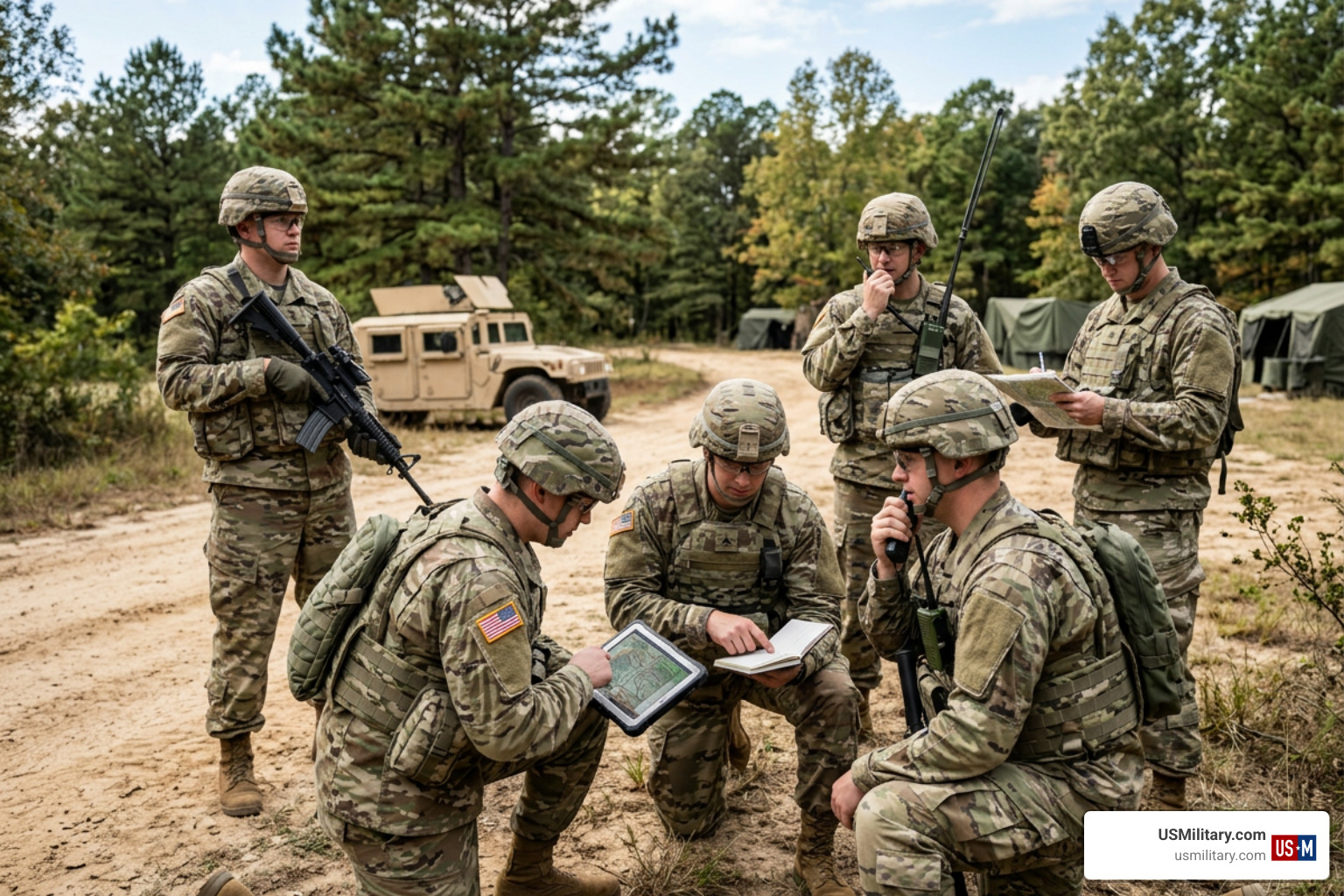
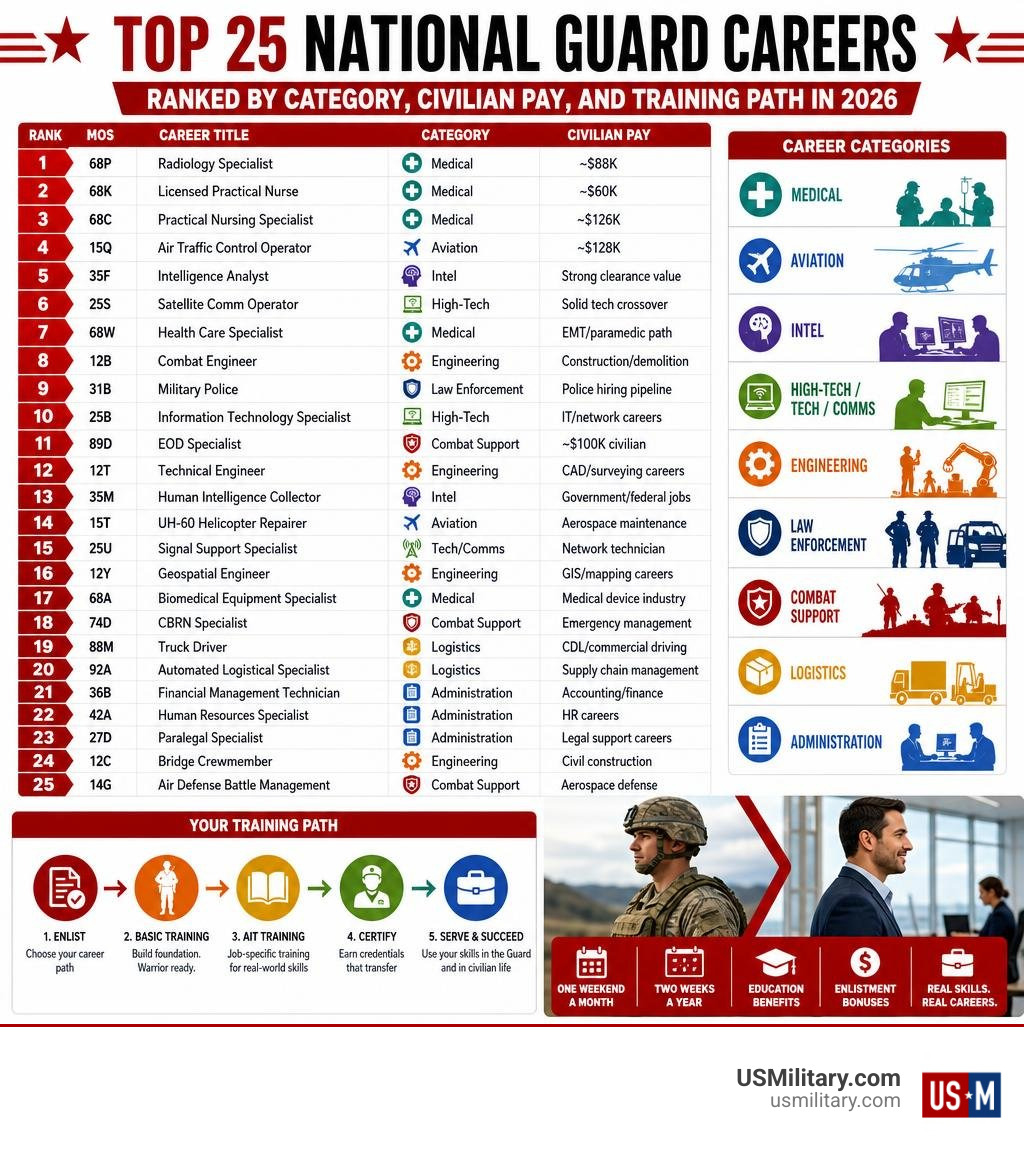
The National Guard Best 25 Job Training & Careers in 2026 includes a wide range of roles — from high-paying cyber and medical positions to engineering, aviation, and law enforcement paths. Here’s a quick look at the top options:
| Rank | MOS / Role | Category | Civilian Pay Potential |
|---|---|---|---|
| 1 | 17C Cyber Operations Specialist | High-Tech | ~$112K+ median |
| 2 | Aviation Pilot (Warrant Officer) | Aviation | $120K+ |
| 3 | 68C Practical Nursing Specialist | Medical | ~$126K |
| 4 | 15Q Air Traffic Control Operator | Aviation | ~$128K |
| 5 | 35F Intelligence Analyst | Intel | Strong clearance value |
| 6 | 25S Satellite Comm Operator | High-Tech | Solid tech crossover |
| 7 | 68W Health Care Specialist | Medical | EMT/paramedic path |
| 8 | 12B Combat Engineer | Engineering | Construction/demolition |
| 9 | 31B Military Police | Law Enforcement | Police hiring pipeline |
| 10 | 25B Information Technology Specialist | High-Tech | IT/network careers |
| 11 | 89D EOD Specialist | Combat Support | ~$100K civilian |
| 12 | 12T Technical Engineer | Engineering | CAD/surveying careers |
| 13 | 35M Human Intelligence Collector | Intel | Government/federal jobs |
| 14 | 15T UH-60 Helicopter Repairer | Aviation | Aerospace maintenance |
| 15 | 25U Signal Support Specialist | Tech/Comms | Network technician |
| 16 | 12Y Geospatial Engineer | Engineering | GIS/mapping careers |
| 17 | 68A Biomedical Equipment Specialist | Medical | Medical device industry |
| 18 | 74D CBRN Specialist | Combat Support | Emergency management |
| 19 | 88M Truck Driver | Logistics | CDL/commercial driving |
| 20 | 92A Automated Logistical Specialist | Logistics | Supply chain management |
| 21 | 36B Financial Management Technician | Administration | Accounting/finance |
| 22 | 42A Human Resources Specialist | Administration | HR careers |
| 23 | 27D Paralegal Specialist | Administration | Legal support careers |
| 24 | 12C Bridge Crewmember | Engineering | Civil construction |
| 25 | 14G Air Defense Battle Management | Combat Support | Aerospace defense |
In 2026, the National Guard offers more than 150 career specialties — with training programs that build real, transferable skills. Whether you’re a student, a working professional, or someone ready for a career change, there’s a part-time military path designed for you.
The Guard’s structure is unique. You serve one weekend a month and two weeks a year after initial training — while still accessing education benefits, enlistment bonuses up to $20,000, and job training that civilian employers actively seek out.
I’m Larry Fowler, publisher of USMilitary.com — a network I’ve grown since 2007 to help active military, veterans, and recruits navigate career and benefits decisions, including the National Guard Best 25 Job Training & Careers in 2026. Over the years, this platform has connected hundreds of thousands of individuals with the right military career resources, and I’m here to help you do the same.
Why Choose the National Guard Best 25 Job Training & Careers in 2026?
Choosing to serve in the National Guard in 2026 provides a unique dual-career path that you won’t find in active-duty branches. While active-duty personnel live on military installations and work full-time under federal control, National Guard service members remain in their home communities. This allows you to go to college, build a civilian career, and raise a family, all while serving your country and state part-time.

The dual mission of the National Guard is another major benefit. You support both state missions (responding to natural disasters, civil emergencies, and search-and-rescue operations under the command of your state governor) and federal missions (supporting global military operations under the President). This means your service directly impacts your local community during times of crisis.
Financially, the Guard offers incredible support. By taking advantage of National Guard Benefits, you can access tuition assistance programs that cover up to 100% of college costs, the Montgomery GI Bill for Selected Reserve, and student loan repayment options up to $20,000. When you Explore All Army Jobs & Careers, you will find that the specialized training you receive is fully funded, meaning you get paid to learn high-value skills.
Top 25 National Guard Careers and Training Programs
To help you find the right fit, we have broken down the top 25 careers into five distinct categories. Each role requires specific ASVAB scores, technical aptitudes, and training timelines, but all of them offer direct pathways to civilian employment.
High-Tech & Cyber National Guard Best 25 Job Training & Careers in 2026
The technology sector continues to dominate the job market, and the military is no exception. With over 3.5 million unfilled cyber security jobs in the civilian sector, high-tech roles in the National Guard offer some of the most lucrative post-service career transitions.
- 1. 17C Cyber Operations Specialist: This is widely considered the premier technical role in the military. You will conduct offensive and defensive cyber operations to protect critical networks. The training is intense: 25 weeks at Corry Station, Florida, followed by 20 weeks at Fort Gordon, Georgia. The Guard invests roughly $300,000 in training each 17C soldier, preparing you for civilian roles like incident responder or cybersecurity analyst with a median civilian salary of $112,000+.
- 2. 25S Satellite Communication Systems Operator-Maintainer: You will install, operate, and maintain complex satellite communications equipment, including encoding and decoding classified messages and countering electronic jamming. Training lasts 28 weeks at Fort Gordon, Georgia, and prepares you for high-paying roles as a satellite systems technician or aerospace communications specialist.
- 3. 25U Signal Support Systems Specialist: Responsible for maintaining radio, wire, and battlefield communication systems. In 2026, this high-demand role is eligible for enlistment bonuses up to $20,000.
- 4. 25B Information Technology Specialist: You will manage computer networks, hardware, and software systems. This role is a direct pipeline to civilian IT administration and database management.
- 5. Network Administrator: Often serving in specialized communications units, these personnel secure military networks from cyber threats and manage user access, translating to high-paying civilian network engineering careers averaging over $74,000 annually.
Engineering & Combat Support National Guard Best 25 Job Training & Careers in 2026
If you prefer hands-on problem-solving, construction, or technical planning, the engineering and combat support branches offer excellent leadership development and practical technical skills. Make sure you meet the basic physical and mental standards outlined in the National Guard Requirements before applying for these rigorous positions.
- 6. 12B Combat Engineer: This role is perfect for those who want to build and destroy. You will handle bridge construction, mine detection, route clearance, and demolition operations. Training requires 14 weeks of One Station Unit Training (OSUT) at Fort Leonard Wood, Missouri.
- 7. 12T Technical Engineer: You will develop construction plans, conduct land surveys, and draw detailed maps using Computer-Aided Design (CAD) systems. This role requires 14 weeks of Advanced Individual Training (AIT) at Fort Leonard Wood, Missouri, and translates directly to civilian drafting and civil engineering technology careers.
- 8. 12Y Geospatial Engineer: You will analyze geographic data and create maps from satellite imagery to support disaster relief and military operations, preparing you for high-demand civilian GIS analyst careers.
- 9. 12N Horizontal Construction Engineer: You will operate heavy machinery like bulldozers, scrapers, and graders to build roads, airfields, and structures.
- 10. 12C Bridge Crewmember: Specialized in constructing tactical bridges to allow troops and vehicles to cross rivers and rough terrain under combat or disaster conditions.
- 11. 89D Explosive Ordnance Disposal (EOD) Specialist: The premier tactical explosives expert. You will locate, identify, and disarm unexploded ordnance and improvised explosive devices (IEDs), leading to civilian corporate safety or federal law enforcement careers earning around $100,000.
- 12. 14G Air Defense Battle Management System Operator: You will operate the Sentinel Radar system and other warning systems to protect friendly forces from aerial and missile attacks. Training lasts 16 weeks and 3 days.
Medical & Healthcare Specialties
Medical roles in the National Guard provide top-tier clinical training and certifications that are highly respected in the civilian healthcare industry.
- 13. 68W Health Care Specialist (Combat Medic): This is the second-largest MOS in the Army. You will provide emergency medical treatment on the battlefield and support humanitarian aid missions. Training includes 16 weeks of AIT at Fort Sam Houston, Texas, where you will earn your National Registry EMT (NREMT) certification.
- 14. 68A Biomedical Equipment Specialist: You will service, calibrate, and repair complex medical equipment used in military hospitals. This is a highly technical field with a direct path to the high-paying civilian medical device industry.
- 15. 68C Practical Nursing Specialist: You will provide direct patient care under the supervision of physicians and registered nurses, preparing you for immediate civilian licensing and employment in a field projected to grow rapidly.
- 16. Dental Corps Officer: A highly professional officer track where you provide dental care to service members, boasting a national average civilian salary equivalent of over $161,000 annually.
Aviation & Intelligence Roles
Aviation and intelligence positions offer specialized skills, security clearances, and technical qualifications that are highly sought after by commercial airlines, defense contractors, and federal intelligence agencies.
- 17. Aviation Pilot (Warrant Officer): Flying helicopters like the UH-60 Black Hawk, AH-64 Apache, or CH-47 Chinook is one of the most exciting careers in the military. This path requires passing the Selection Instrument for Flight Training (SIFT) test and incurs a 10-year service commitment after graduation. Learn more about your options by reviewing the Benefits of Joining the Air National Guard.
- 18. 15Q Air Traffic Control Operator: You will track aircraft, coordinate flight paths, and control tactical airfields. This role prepares you for civilian FAA careers, which can pay upwards of $128,000.
- 19. 15T UH-60 Helicopter Repairer: You will perform critical maintenance and inspections on Black Hawk helicopters, gaining valuable aviation maintenance experience.
- 20. 35F Intelligence Analyst: You will analyze raw intelligence, draft reports, and advise commanders on threat environments. This role grants you a Top Secret security clearance, making you highly employable in defense and government sectors.
- 21. 35M Human Intelligence Collector: You will conduct screenings, debriefings, and interrogations to gather intelligence, building advanced communication and analysis skills.
Law Enforcement, Logistics & Administration
These careers focus on maintaining order, managing supply chains, and handling the essential administrative functions that keep the National Guard running smoothly.
- 22. 31B Military Police: You will enforce military laws, conduct patrol operations, and support disaster response. This role is eligible for enlistment bonuses up to $10,000 or $20,000 in 2026, depending on state-specific shortages.
- 23. 88M Truck Driver: You will operate heavy transport vehicles across varied terrain, making it easy to earn your commercial driver’s license (CDL) for a seamless civilian transition.
- 24. 92Y Unit Supply Specialist: You will manage the receiving, inspection, and distribution of unit equipment and supplies, building valuable logistics and warehouse management skills.
- 25. 36B Financial Management Technician: You will handle payroll, budgeting, and vendor payments, preparing you for civilian bookkeeping and accounting roles.
- Bonus Administrative Roles: 42A Human Resources Specialist (manages personnel records and promotions) and 27D Paralegal Specialist (provides administrative support in military law).
Comparing Service Branches and Leadership Pathways
When deciding how to serve, it is important to understand the differences in schedule flexibility, benefits, and career progression between the National Guard, active-duty components, and the Army Reserve.
| Feature | National Guard | Active Duty (Army/Air Force) | Army Reserve |
|---|---|---|---|
| Primary Mission | State & Federal Response | Global Federal Operations | Federal Support |
| Service Schedule | 1 Weekend/Month, 2 Weeks/Year | Full-Time | 1 Weekend/Month, 2 Weeks/Year |
| Command Structure | State Governor / US President | US President | US President |
| Education Benefits | State + Federal Tuition Aid | Federal Tuition Assistance | Federal Tuition Assistance |
If you are choosing between the Army Reserve and the National Guard, the biggest difference lies in the command structure and education benefits. The National Guard can be called up by state governors for local disasters, whereas the Reserve is strictly federal. Furthermore, many states offer 100% tuition waivers for National Guard members at state colleges, a benefit not always available to Reservists. For a deep dive into these differences, read our guide on Army Reserve vs National Guard.
To maximize your pay, you should keep an eye on the latest National Guard Pay Chart 2026 to see how your rank and years of service impact your drill checks.
Leadership and Officer Pathways
If you are a college student or want to lead soldiers as an officer, the Guard offers several unique programs:
- 09R Simultaneous Membership Program (SMP): This program allows you to participate in your college’s ROTC program while simultaneously serving in a local National Guard unit. You will earn monthly drill pay as a cadet, receive ROTC stipends, and graduate as a commissioned Second Lieutenant.
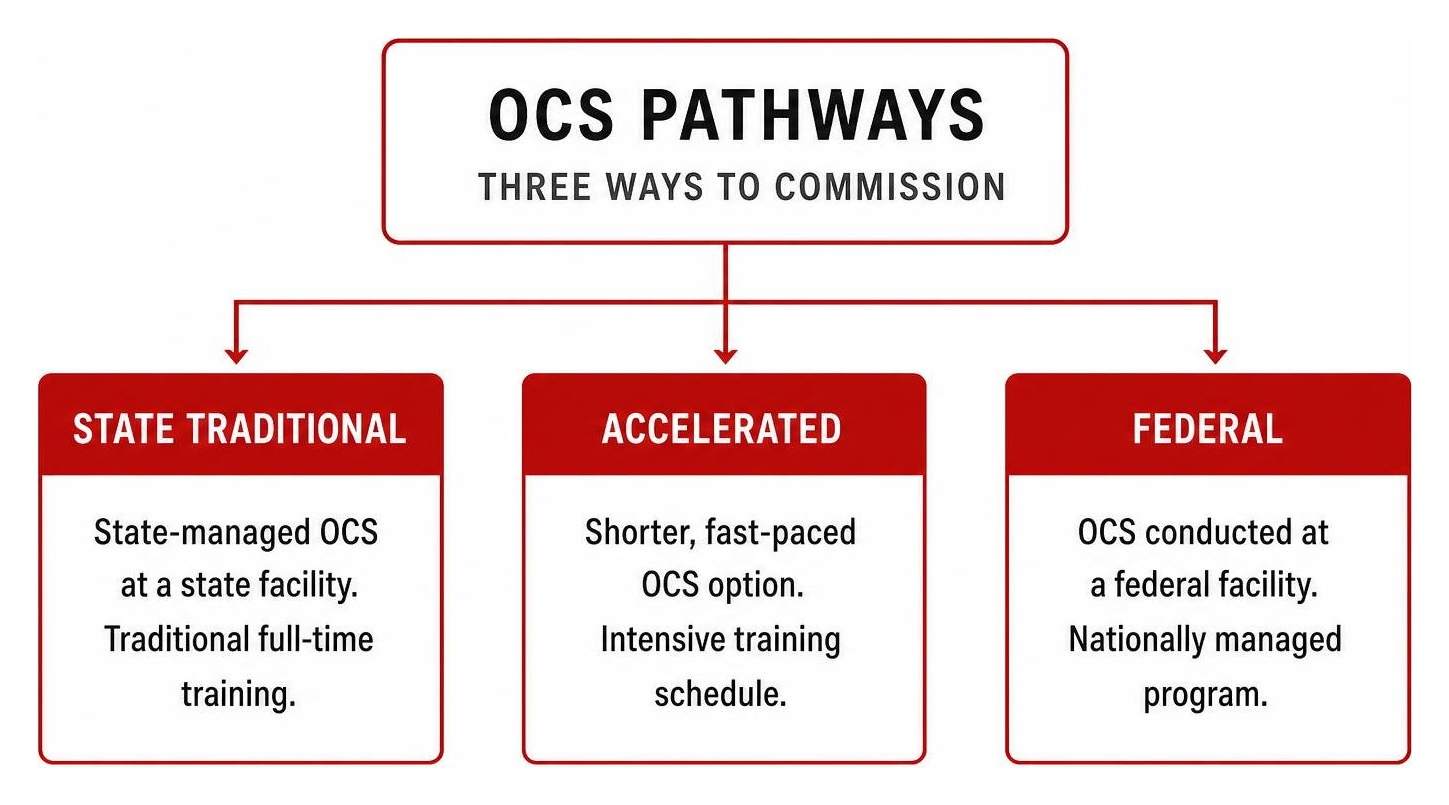
- 09S Officer Candidate School (OCS): If you already have a college degree (or at least 90 credits), you can apply for OCS. The National Guard offers three distinct paths to commission:
Before you ship out to Basic Combat Training (BCT), you will participate in The National Guard Recruit Sustainment Program (RSP). This program meets monthly to prepare you physically and mentally for the rigors of military training, ensuring you are ready to succeed from day one.
Frequently Asked Questions About National Guard Careers
What are the age and education requirements to join the National Guard in 2026?
To enlist in the National Guard in 2026, you must be between 17 and 35 years old (17 requires parental consent). You must have a high school diploma or GED, pass a medical physical, and achieve a qualifying score on the Armed Services Vocational Aptitude Battery (ASVAB). For a complete breakdown of age limits, waivers, and requirements, check out our National Guard Age Limit Guide.
Which National Guard jobs offer the highest enlistment bonuses in 2026?
Enlistment bonuses are based on the needs of the military and vary by state. In 2026, critical-need roles like 31B Military Police and 25U Signal Support Systems Specialist are offering enlistment bonuses up to $20,000 for qualified applicants who enlist for a six-year term.
How do National Guard skills translate to civilian careers?
The Guard’s training is designed to mirror civilian industry standards. Technical roles provide certifications (such as CompTIA Security+ for cyber roles or NREMT for combat medics). Additionally, the leadership, discipline, and security clearances you obtain are highly valued by corporate recruiters, tech firms, and federal law enforcement agencies.
Conclusion
Finding the right career path in 2026 requires balancing your personal passions with your long-term financial and professional goals. Whether you want to defend networks as a cyber specialist, fly helicopters, or build infrastructure as an engineer, the National Guard provides the funded training, benefits, and flexibility to make it happen.
Your next step is to research your options, take a practice ASVAB, and speak with a local recruiter to find out which roles are currently open in your state. To learn more about how your military training will pay off in the private sector, read our comprehensive guide on how military jobs transfer to civilian jobs. Have questions or ready to get started? Visit us at USMilitary.com today to jumpstart your career!
Free for Service Members & Veterans
Get the military benefits intel no one tells you about.
Weekly updates on VA benefits, pay changes, and money tips — free for service members and veterans.
No spam. Unsubscribe anytime. Your info is never shared.


