Understanding the Elite Leadership of the 75th Ranger Regiment
An Army Ranger officer serves as a commissioned leader within the U.S. Army’s premier direct-action raid force, the 75th Ranger Regiment. This role requires exceptional physical fitness, mental toughness, and leadership capability, as officers must successfully complete the Ranger Assessment and Selection Program (RASP 2), maintain a Top Secret security clearance, and lead some of America’s most elite soldiers in high-stakes special operations missions worldwide.
Quick Overview: What is an Army Ranger Officer?
- Unit: 75th Ranger Regiment (part of U.S. Army Special Operations Command)
- Rank Requirement: Officers grade O-2 through O-4
- Selection: Must complete RASP 2 (21-day assessment program)
- Clearance: Top Secret security clearance required
- Physical Standards: Pass Ranger Fitness Test (41 push-ups, 2:35 plank, 5-mile run in under 40 minutes, 6 pull-ups, 12-mile ruck march)
- Primary Role: Plan and lead direct-action raids, special reconnaissance, and light-infantry operations
- Deployment: Each battalion can deploy anywhere globally within 18 hours
- Motto: “Rangers Lead the Way” and “Sua Sponte” (Of their own accord)
The path to becoming an Army Ranger officer represents one of the most demanding leadership journeys in the U.S. military. Unlike simply graduating from Ranger School—which earns soldiers the coveted Ranger Tab—serving as an officer in the 75th Ranger Regiment requires completing a separate, rigorous selection process and maintaining the highest standards of physical conditioning, tactical proficiency, and character.
These officers don’t just wear the tab; they earn the tan beret and Ranger Scroll, symbols of serving in a unit with a lineage stretching back to Rogers’ Rangers in the 1750s. From scaling the cliffs of Pointe Du Hoc on D-Day to leading modern counter-terrorism operations across the globe, Ranger officers have consistently proven that their motto isn’t just words—it’s a promise.
The 75th Ranger Regiment operates at the tip of the spear for American military power. With over 7,000 consecutive days of combat operations marked by December 2020 and participation in nearly every major conflict since World War II, the Regiment demands everything from its leaders while offering unparalleled opportunities to serve alongside the nation’s finest warriors.
I’m Larry Fowler, publisher of the USMilitary.com Network, and since 2007 I’ve worked closely with military recruiters and veterans, providing insights into elite military careers including the demanding path of an Army Ranger officer. This guide draws from official sources, veteran accounts, and current recruitment standards to help you understand what it truly takes to lead at this level.

The Role and Responsibilities of a Ranger Officer
Being an Army Ranger officer means stepping into a leadership role unlike almost any other in the U.S. military. These officers are the backbone of the 75th Ranger Regiment, a premier light infantry and direct-action raid force within the U.S. Army Special Operations Command (USASOC). Our mission is clear: to plan and conduct special missions in support of U.S. policy and objectives, often in the most challenging and hostile environments imaginable.
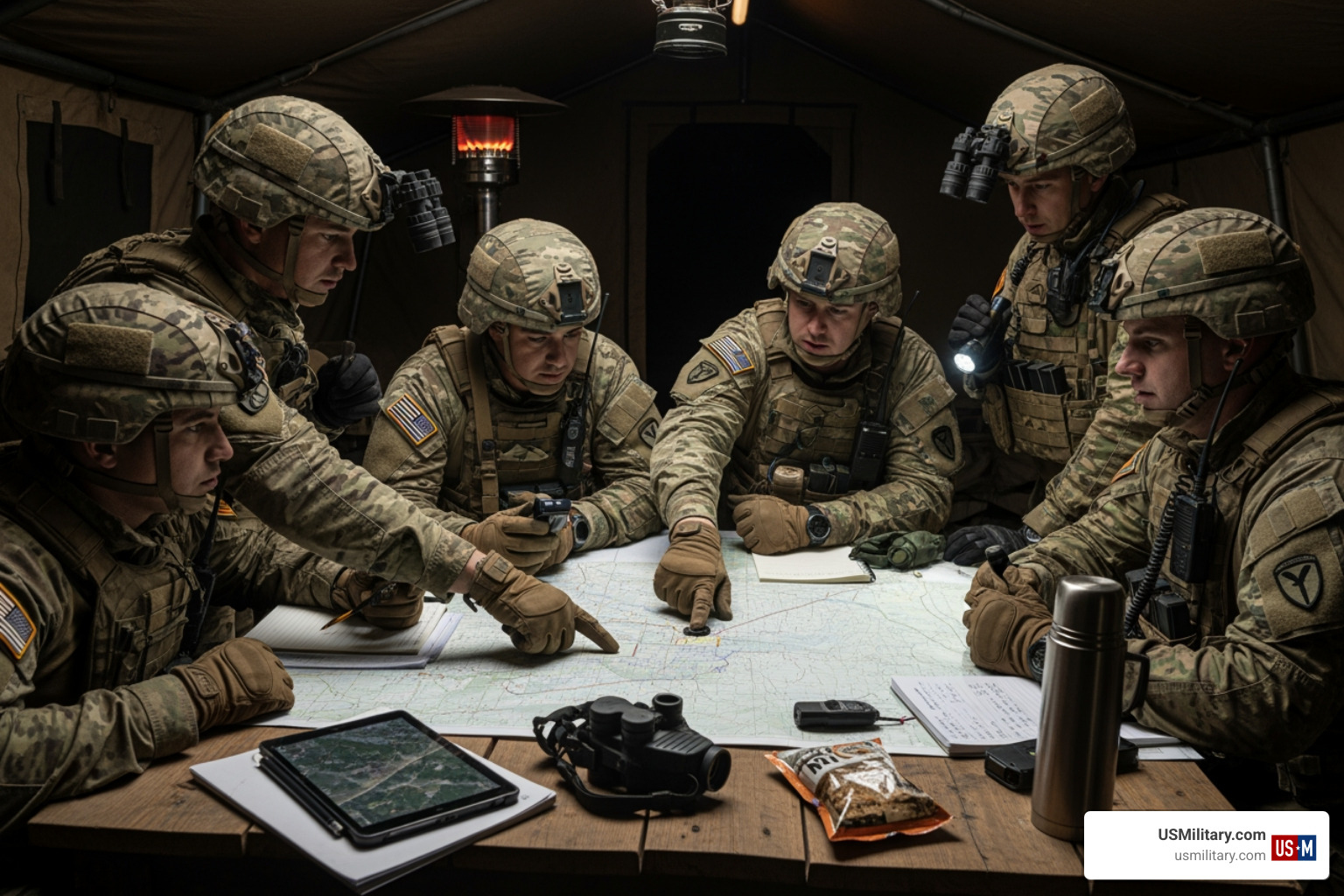
At its core, the role of an Army Ranger officer revolves around leading elite soldiers in high-stakes direct-action operations. This includes everything from precision raids to capture high-value targets, to special reconnaissance missions deep behind enemy lines, and even complex airfield seizure operations. Imagine the intensity of planning a mission where every detail, every movement, and every contingency must be accounted for—that’s the daily reality. We are trained to engage the enemy in close combat and direct-fire battles, recovering personnel and special equipment, and executing conventional or special light-infantry operations with unparalleled speed and lethality.
The 75th Ranger Regiment is known for its rapid deployability. Each Ranger battalion is capable of deploying anywhere in the world with only 18 hours’ notice. This means our officers must maintain a constant state of readiness, both personally and for their units. Mission planning and execution are paramount, requiring meticulous attention to detail, adaptability, and the ability to make critical decisions under immense pressure.
Beyond the battlefield, Army Ranger officers are also deeply involved in training management. They ensure their soldiers are constantly honing their skills, from advanced marksmanship and breaching techniques to airborne operations and fast-roping insertions. The training is continuous and designed to push physical and mental limits, preparing units for any contingency. As one Ranger veteran put it, the regiment demands everything a soldier has, offering the best training, equipment, and leadership in return.
How does this differ from other Army officer roles? While all Army officers lead soldiers, an Army Ranger officer operates within a specialized, high-readiness special operations unit. This translates to a significantly higher operational tempo, more frequent deployments, and a focus on direct-action tactics that are not typical of conventional Army units. Our officers are expected to lead small, agile teams on missions that often carry strategic importance, often working alongside other special operations forces, including elements of the Joint Special Operations Command (JSOC).
The current operational environments for Army Ranger officers are diverse and constantly evolving. From the continuous combat operations in Afghanistan and Iraq that marked over 7,000 consecutive days of deployment, to counter-terrorism efforts against groups like ISIS, and missions in other sensitive regions globally, Ranger officers are at the forefront. They are the “force of choice” for complex, dangerous, and time-sensitive tasks, and their leadership directly impacts the success of these critical operations.
The Gauntlet: How to Become an Army Ranger Officer
This section details the rigorous journey to join the ranks of the 75th Ranger Regiment’s leadership. It’s a path forged in grit, determination, and an unwavering commitment to excellence.
Initial Requirements for an Aspiring Army Ranger Officer
The journey to become an Army Ranger officer begins long before you ever set foot in a selection program. First and foremost, you must be a U.S. citizen and commissioned as an officer in the U.S. Army. The primary commissioning paths include:
- West Point (United States Military Academy): A four-year federal service academy that produces Army officers.
- Reserve Officer Training Corps (ROTC): College-based programs offered at universities nationwide.
- Officer Candidate School (OCS): An intensive 12-week program for qualified college graduates or enlisted soldiers seeking to commission.
Once commissioned, aspiring Army Ranger officers typically need to be in the grades of O-2 (First Lieutenant) through O-4 (Major). There are also specific “Year Group specific criteria” that must be met, and officers are generally expected to have completed at least one tour at a previous duty station before applying to the Regiment.
Beyond rank and experience, a spotless record is essential. You must:
- Qualify for a Top Secret Security Clearance: This is non-negotiable, given the sensitive nature of Ranger operations.
- Hold a Relevant Officer Military Occupational Specialty (MOS): While Infantry (11A) is common, the 75th Ranger Regiment also requires leaders from various support branches. This includes MOSs such as Signal (25A), Military Intelligence (35), Logistics (90A), Civil Affairs (38A), and even specialized healthcare roles like Clinical Psychology (73B) or Physiotherapy (65B). The Regiment’s needs evolve, so always check the latest recruiting guidance. For example, the Regiment is currently not hiring Aviation or Armor officers.
- Have a General Technical (GT) Score of at least 105: This demonstrates the cognitive ability required for complex tactical planning.
- Maintain a Clean Record: No pending actions under the Uniform Code of Military Justice (UCMJ) and no alcohol or drug-related incidents within the last two years are absolute disqualifiers. Integrity and discipline are paramount.
The Physical and Mental Proving Grounds
The physical and mental demands placed on an Army Ranger officer are legendary. This isn’t just about being fit; it’s about being robust, resilient, and capable of performing under extreme duress.
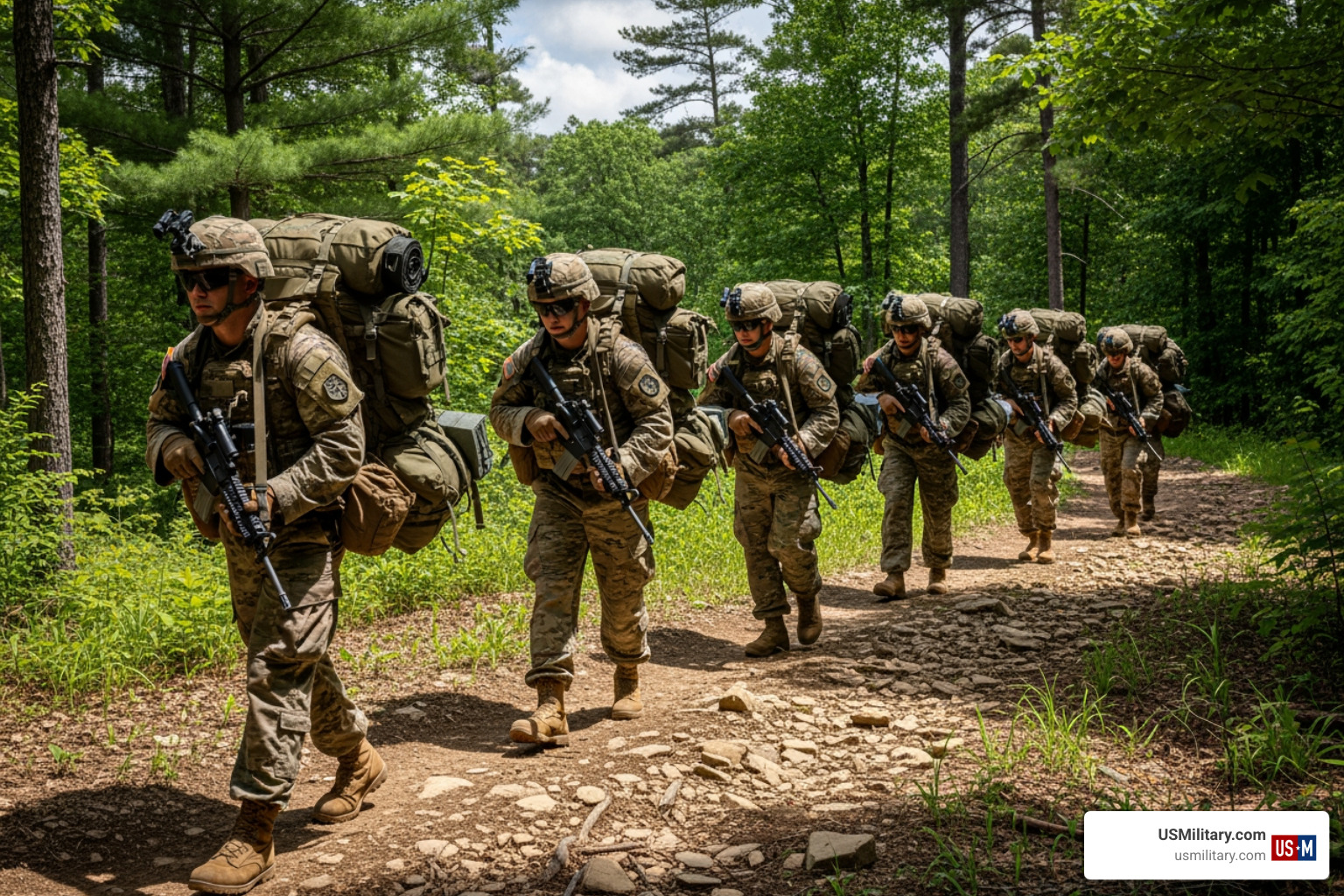
Candidates must meet stringent physical fitness standards. While older tests required 69 sit-ups, 58 push-ups, and 6 pull-ups, the current Ranger Fitness Test (RFT) for the 75th Ranger Regiment is equally demanding:
- 41 T Push-Ups in 2 minutes
- 2:35 plank
- 5-mile run in 40 minutes or less
- 6 pull-ups
Beyond these individual events, you’ll face a grueling 12-mile ruck march with a 35-pound rucksack and weapon, which must be completed in under 3 hours. A Water Survival Assessment is also a critical component, testing your confidence and competence in aquatic environments. We’ve seen how crucial it is to train for at least 12 weeks, combining strength training, endurance, stamina, running, swimming, stretching, and bodyweight exercises.
But physical prowess is only half the battle. The mental proving grounds are just as, if not more, challenging. Army Ranger officers must possess exceptional mental toughness, psychological resilience, and emotional stability. You will be pushed to your absolute limits, deprived of sleep and food, and forced to make critical decisions when utterly exhausted. The personal accounts of enduring “smoke sessions” and relentless training highlight that these are not just physical tests, but deliberate assessments of character and the will to continue when others quit. As one experienced Ranger noted, the soldier who quits during a smoke session will almost certainly quit in combat. This is why the selection process is designed to find those who can maintain discipline and focus even when their bodies scream for rest.
The Selection Process: Earning the Tan Beret
The ultimate gateway to becoming an Army Ranger officer is the Ranger Assessment and Selection Program 2 (RASP 2). This is where the rubber meets the road, and aspiring leaders prove they have what it takes to join the 75th Ranger Regiment.
First, let’s clarify a common misconception: RASP is not the same as Army Ranger School. Ranger School is a challenging, 61-day leadership course focused on small-unit tactics, open to volunteers from all branches of the U.S. military. Graduates earn the coveted Ranger Tab. While earning your Ranger Tab is highly encouraged and makes you a much more competitive candidate for the 75th Ranger Regiment, RASP is the mandatory, unit-specific selection program for all soldiers—officer and enlisted—who wish to serve in the 75th.
For officers, RASP 2 is a 3-week program of instruction designed to assess your ability and teach you the basic skills required to be an effective member of the 75th Ranger Regiment. It’s held 10 times annually, with 34 seats per class. The selection process involves intense physical and mental challenges, including further physical fitness tests, land navigation, psychological screening, and critical event testing in direct-action combat, shooting body positions, breaching, and the use of explosives. It’s a comprehensive evaluation of your leadership potential, tactical proficiency, and ability to operate under extreme pressure.
To apply, active-duty officers must submit a DA Form 4187 through their chain of command, expressing their desire to serve in the 75th. The initial application is typically made through the AIM portal (Assignment Interactive Module) on HRC.army.mil. A complete application packet includes:
- A Letter of Intent (LoI)
- Letters of Recommendation (LoRs, maximum of 4)
- All Officer Evaluation Reports (OERs) and Academic Evaluation Reports (AERs)
- Your current APFT/ACFT Score Card
- The DA Form 4187 endorsed by your Brigade Commander or first O6
- A RASP 2 Pre-Screening Questionnaire
You will also need to ensure you have a current Ranger Physical, stamped “AIRBORNE RANGER,” which you’ll hand-carry to RASP 2 if invited. A minimum Secret security clearance is required to attend RASP 2, but a Top Secret clearance is necessary for the role itself.
✉ Get updates like this in your inbox
Weekly VA benefit changes, pay updates, and money tips for service members, veterans, and military families. Free, no spam.
Upon successful completion of RASP 2, you’ll earn the distinctive 75th Ranger Regiment Scroll and the tan beret—symbols of your entry into this elite force. It’s a moment of immense pride and a testament to your unwavering dedication.
For more detailed information on the application process and requirements, you can visit the Official 75th Ranger Regiment page.
A Legacy of Leadership: History and Career Progression
The history of the U.S. Army Rangers is a rich mix woven with courage, daring, and outstanding leadership, a saga that stretches back centuries and continues to inspire.
Our lineage as Rangers predates the Revolutionary War, with units like Captain Benjamin Church’s Rangers emerging in the 1670s and Robert Rogers’ Rangers gaining renown during the French and Indian War in the 1750s. Rogers’ 28 standing orders for scouting and small-unit tactics are still studied today, a testament to their enduring relevance. During the Revolutionary War, figures like Dan Morgan, Thomas Knowlton, and Francis Marion (the “Swamp Fox”) embodied the Ranger spirit, conducting hit-and-run tactics against superior forces.
The modern Ranger identity, however, truly took shape in World War II with the activation of the 1st Ranger Battalion under Major William O. Darby. These “Darby’s Rangers” distinguished themselves in North Africa, Sicily, and Italy, often leading the way in amphibious assaults. The famous “Rangers Lead the Way” motto was born on D-Day, June 6, 1944, when Brigadier General Norman Cota, facing heavy resistance on Omaha Beach, urged the 5th Ranger Battalion with the words, “Well then Goddammit, Rangers! Lead the way!” Further in the Pacific, the 6th Ranger Battalion conducted daring raids, including the rescue of over 500 Allied prisoners of war at Cabanatuan in the Philippines. Simultaneously, Brigadier General Frank D. Merrill’s Marauders (the 5307th Composite Unit) fought valiantly in the jungles of Burma, disorganizing enemy supply lines and communications.
The Korean War saw the formation of fifteen Ranger companies, used as “firemen” to plug critical gaps and spearhead counterattacks. In Vietnam, the 75th Infantry Regiment was reorganized, forming fifteen Ranger companies that conducted long-range reconnaissance patrols (LRRPs).
The 75th Ranger Regiment as we know it today was officially designated in February 1986, building on the activation of the 1st and 2nd Ranger Battalions in the mid-1970s and the 3rd Battalion in 1984. Since then, Rangers have participated in nearly every major U.S. military operation: from Operation Urgent Fury in Grenada and Operation Just Cause in Panama, to Operation Desert Storm, Somalia, Kosovo, and the continuous combat operations of the Global War on Terrorism. They have been deployed for over 7,000 consecutive days in combat since 2001, conducting everything from airborne assaults to complex urban raids.
This rich history is captured and honored in the Lineage and Honors of the 75th Ranger Regiment. It is this legacy, coupled with the ethos embodied in the Ranger Creed, that an Army Ranger officer lives and breathes every day.
Career Paths for an Army Ranger Officer
For an Army Ranger officer, career progression is a journey of continuous learning, leadership development, and increasing responsibility within one of the Army’s most dynamic units.
Upon successfully completing RASP 2 and joining a Ranger battalion, junior officers will typically serve in roles such as:
- Platoon Leader: Leading a platoon of highly trained Rangers in training and combat operations. This is often the first leadership crucible for a new Ranger officer, demanding direct tactical proficiency and leadership under fire.
- Company Executive Officer (XO): A key support role within a company, managing logistics, administration, and training plans, often preparing for company command.
- Company Commander: Commanding a Ranger company, responsible for its readiness, training, and combat effectiveness. This is a significant leadership milestone, requiring strategic thinking, tactical expertise, and exceptional management skills.
As an Army Ranger officer progresses in rank and experience, they will move into staff roles at the battalion and regimental levels. These positions involve more complex operational planning, intelligence analysis, logistics coordination, and strategic development for the entire Regiment.
The 75th Ranger Regiment also offers specialized career paths based on an officer’s MOS. While Infantry (11A) officers are the core, we also need officers in:
- Signal (25A): For advanced communications and network operations.
- Logistics (90A): Ensuring the Regiment’s rapid deployment and sustained operations are well-supported.
- Military Intelligence (35): Providing critical analysis and intelligence gathering for mission success.
- Specialized Healthcare (e.g., 70H Health Services, 73B Clinical Psychology, 65B Physiotherapy): Supporting the unique medical needs of a special operations force.
The Regimental Reconnaissance Company (RRC), a highly specialized unit within the 75th, also offers unique opportunities and falls under the Joint Special Operations Command (JSOC), providing advanced reconnaissance and operational preparation of the environment worldwide.
After serving in the 75th Ranger Regiment, officers often have exceptional opportunities for post-Regiment assignments. Their experience in special operations, combat leadership, and high-stakes environments makes them highly sought after for roles across the Army, including within other special operations units, joint commands, and strategic planning positions. The skills honed as an Army Ranger officer are transferable and invaluable, setting the stage for a distinguished military career.
The Life of a Ranger: Challenges and Rewards
Life as an Army Ranger officer is a paradox of extreme challenges and unparalleled rewards. It’s not for the faint of heart, but for those who accept it, the experience is profoundly transformative.
The challenges are significant and often relentless. The Regiment’s mission-first mentality translates into a high operational tempo. This means frequent deployments, often to dangerous and remote locations, with little downtime between rotations. We often joke that “home is where the ruck is,” because you spend so much time on the move. This constant readiness and deployment cycle places immense physical strain on officers and soldiers alike, leading to chronic fatigue, injuries, and the need for constant physical maintenance.
Mental stress is another pervasive challenge. The responsibility of leading soldiers in combat, making life-or-death decisions, and operating in high-pressure situations takes a toll. The psychological screening during RASP 2 is designed to identify candidates who can withstand this pressure, but living with it day in and day out requires extraordinary resilience. Family life also faces significant challenges due to the long periods of separation and the inherent dangers of the job. It takes an incredibly supportive family to steer the demands placed on an Army Ranger officer.
Despite these formidable challenges, the rewards are equally profound and deeply satisfying. First and foremost is the camaraderie. The bonds forged in the crucible of Ranger training and combat are unlike any other. You are part of a brotherhood (and sisterhood, as women now serve) that is truly family, where trust and mutual reliance are absolute. We often say, “You’ll never find a better friend, or a worse enemy.”
Leading the nation’s best soldiers is an immense privilege and a powerful reward in itself. To command a group of individuals who consistently perform at the highest levels, embodying the spirit of “Sua Sponte” (of their own accord), is incredibly motivating. You witness the courage, skill, and dedication that define the 75th Ranger Regiment.
Army Ranger officers also gain access to elite training and advanced equipment that few others in the military experience. This includes cutting-edge tactics, specialized weaponry, and continuous professional development that keeps you at the forefront of military innovation. This high level of training, coupled with the Regiment’s focus on “do-it-yourself battlefield medicine,” has significantly reduced mortality rates from potentially survivable wounds, demonstrating a tangible impact on saving lives.
Perhaps the greatest reward is the profound sense of purpose. Knowing that you are contributing to critical national security missions, making a tangible difference in protecting our country, and upholding a legendary legacy is a powerful driving force. The pride of earning the tan beret and serving in the 75th Ranger Regiment is a reward that lasts a lifetime.
Frequently Asked Questions about the Army Ranger Officer Path
We often get questions from aspiring officers curious about the unique path to becoming an Army Ranger officer. Here are some of the most common ones:
Do I have to complete Ranger School before applying to the 75th Ranger Regiment?
While graduating from Army Ranger School and earning the Ranger Tab is not strictly mandatory for applying to the 75th Ranger Regiment, it is highly encouraged and makes a candidate significantly more competitive. The mandatory selection course required for all officers to serve in the 75th Ranger Regiment is RASP 2. All officers attending RASP 2 are typically required to be Ranger qualified, though exceptions to policy can be granted by the Regimental Commander or Command Sergeant Major on a case-by-case basis. Our advice: pursue every opportunity to earn your Ranger Tab if you want to be a competitive candidate.
What are the most common officer branches in the 75th Ranger Regiment?
The 75th Ranger Regiment is a light infantry unit, so Infantry (11A) officers are indeed the most prevalent and form the core of our combat leadership. However, to execute its complex global missions, the Regiment requires highly skilled leaders from various support branches. This includes, but is not limited to, Signal (25A), Logistics (90A), Military Intelligence (35), and specialized medical fields. These officers are crucial for enabling the Regiment’s rapid deployment, advanced communications, intelligence gathering, and sustained operations. The Regiment is continuously growing and seeking talented officers from a wide range of MOSs.
Can women serve as Army Ranger officers in the 75th Ranger Regiment?
Yes, absolutely! The 75th Ranger Regiment is open to all qualified candidates, regardless of gender. The first female officer successfully completed RASP in December 2016, marking a significant milestone as the first special operations unit to have a female soldier graduate its selection course. All officer positions within the Regiment are filled based on meeting the exceptionally high standards of physical fitness, mental toughness, and leadership demonstrated through the rigorous RASP 2 selection process, not on gender. The Regiment seeks the best and most capable leaders for its ranks.
Conclusion
The journey to become an Army Ranger officer is a testament to the pursuit of elite leadership and unwavering commitment. It’s a path paved with extreme challenges—from the grueling physical demands of RASP 2 and continuous deployments to the immense mental stress of leading in combat. Yet, for those who answer the call, the rewards are unparalleled: the unbreakable camaraderie, the privilege of leading the nation’s finest soldiers, access to cutting-edge training and equipment, and a profound sense of purpose in upholding the legendary Ranger legacy.
At USMilitary.com, we understand the dedication and sacrifice required to serve in such an elite capacity. We are here to provide comprehensive resources and insights for those considering this extraordinary career. If you’re ready to accept the challenge and lead the way, your journey as an Army Ranger officer awaits.
Ready to take the first step towards a career that demands the best and offers the most? Explore our resources: Get Ranger-Ready with our ultimate guide to joining the Army’s toughest units.
Free for Service Members & Veterans
Get the military benefits intel no one tells you about.
Weekly updates on VA benefits, pay changes, and money tips — free for service members and veterans.
No spam. Unsubscribe anytime. Your info is never shared.