Why SOF Medical Training Represents the Pinnacle of Combat Medicine
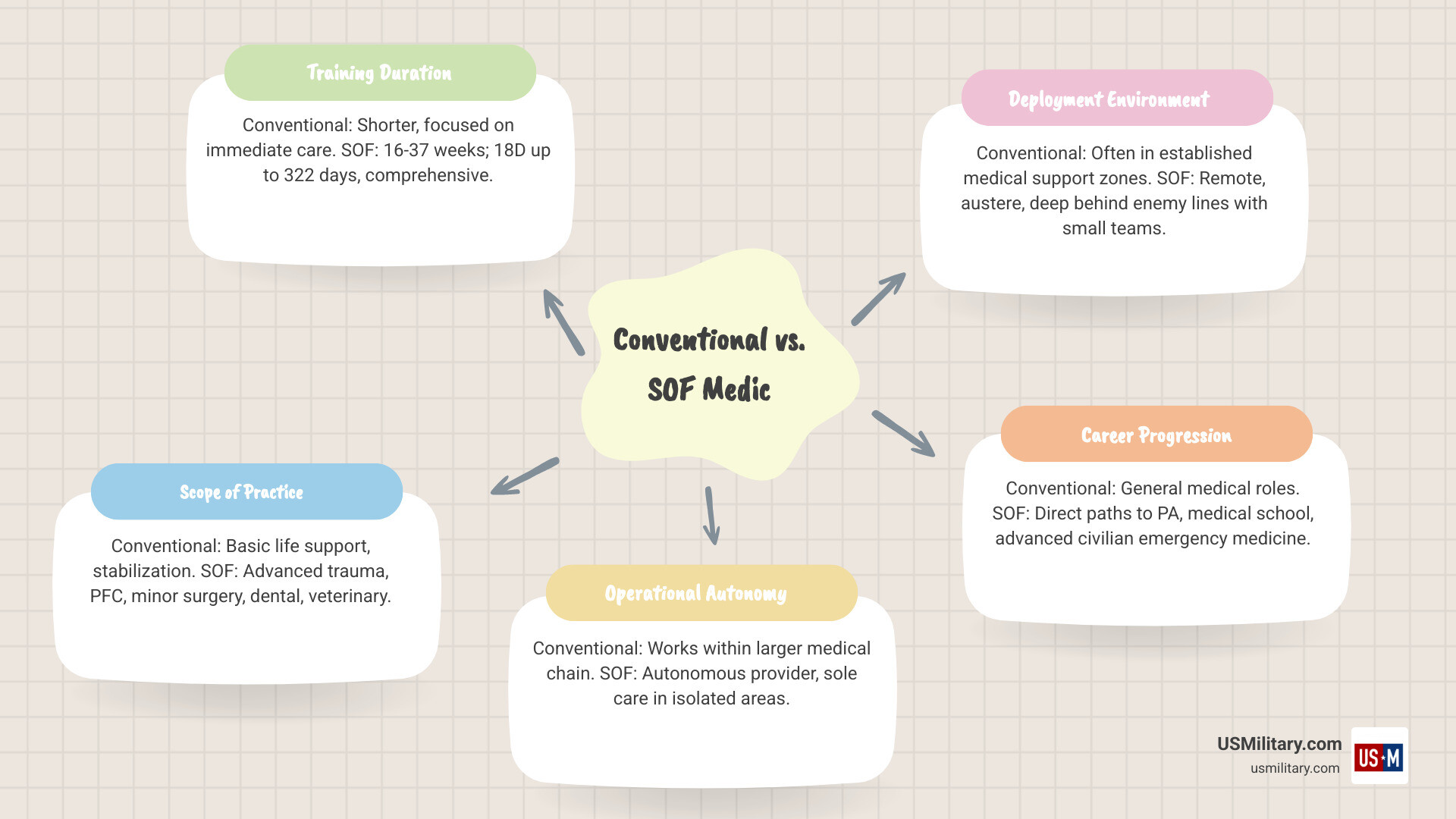
SOF medical training prepares elite military medics to deliver advanced, independent medical care in the most dangerous and isolated environments on Earth. Unlike conventional combat medics who stabilize patients for evacuation, Special Operations Forces medics are trained to function as autonomous medical providers—often the only medical care available for their teams during extended missions deep behind enemy lines.
Key Facts About SOF Medical Training:
- Duration: 16-37 weeks for initial qualification, with 18D (Army Special Forces) training extending to 322 days total
- Scope: Covers trauma care, prolonged field care, minor surgery, dental procedures, veterinary medicine, and advanced diagnostics
- Primary Programs: SOCM (Special Operations Combat Medic), 18D (Army Special Forces Medical Sergeant), SOIDC (Special Operations Independent Duty Corpsman)
- Training Centers: Joint Special Operations Medical Training Center (JSOMTC) at Fort Liberty, NC and Naval Special Operations Medical Institute (NSOMI)
- Recertification: Required bi-annually through sustainment courses
- Career Value: Direct pathways to Physician Assistant programs, medical school, and high-level civilian emergency medicine roles
When Navy SEAL medic Jonny Kim completed his SOF medical training, he leveraged those skills to become a doctor—and eventually an astronaut. This trajectory isn’t unique. The medical training that Special Operations Forces receive doesn’t just save lives on the battlefield. It creates a foundation for medical expertise that rivals civilian emergency medicine programs.
SOF medics operate in a fundamentally different world than conventional military medical personnel. They deploy with small teams into remote villages where they might be the only medical provider for hundreds of miles. They treat not just combat trauma, but also perform dental extractions, deliver babies, care for livestock critical to local populations, and manage chronic diseases—all while maintaining their role as fully operational team members capable of direct combat action.
This dual identity as both warrior and healer requires an extraordinary training pipeline that pushes candidates to their physical and mental limits. The curriculum spans everything from advanced cardiac life support to veterinary medicine, from treating traumatic brain injuries to understanding cultural approaches to healing in different regions. It’s medical education compressed into months rather than years, delivered with the intensity and realism that only military training can provide.
The Mission: Forging a New Breed of Medic
The primary mission of SOF medical training is nothing short of creating a new breed of medic—one who is not merely a first responder but an autonomous, highly capable medical provider. Our goal is to equip these medics with a profound understanding of medical knowledge and skills, ensuring they can deliver a consistent standard of care regardless of the conditions they face. This commitment extends to fostering a career of lifelong learning, adapting to the changing medical challenges in uncertain operational environments.
Unlike their conventional counterparts, SOF medics are often the sole medical lifeline for their teams. This demands an unparalleled level of autonomy and decision-making under fire. They are force multipliers, extending the operational reach and endurance of special operations teams by providing immediate and sustained medical support where no other help is available. This improved medical capability directly contributes to the overall mission readiness of Special Operations Forces, ensuring our elite operators can execute complex missions with confidence, knowing expert medical care is always within reach.

From First Aid to Advanced Provider
The evolution from basic first aid to advanced medical provision is a defining characteristic of SOF medical training. Our medics master Tactical Combat Casualty Care (TCCC), which focuses on immediate, life-saving interventions at the point of injury in a combat zone. But they go far beyond that. They are pioneers in Prolonged Field Care (PFC), a critical capability for managing patients for extended periods—sometimes days—in austere environments with limited resources, awaiting evacuation.
This emphasis on PFC means our medics are trained to handle everything from advanced airway management and mechanical ventilation to administering sedation, ionotropic, and antibiotic medications. They learn advanced cardiac life support (ACLS) scenarios, critical care patient packaging, lab value interpretation, and how to effectively report casualties to receiving facilities, considering all MEDEVAC options. This comprehensive approach ensures that whether they’re in a remote mountain village or a dense jungle, they can provide the highest possible standard of care. The skills they learn are so extensive that our US Army Special Forces Medical Sergeants Make a Difference in countless communities, both at home and abroad.
The Psychological Edge: More Than Medical Skill
Being a SOF medic isn’t just about physical prowess and medical knowledge; it demands an exceptional psychological edge. We understand that the chronic stress and physical demands inherent in a Special Operations career can lead to what researchers call “allostatic load”—the wear and tear on the body. An extraordinarily high allostatic load can manifest as “Operator Syndrome,” a collection of interrelated health and functional impairments. These can include traumatic brain injury effects, endocrine dysfunction, sleep disturbances, chronic pain, substance abuse, depression, anger, cognitive impairments, and challenges with military-to-civilian transition.
Our training incorporates strategies for stress mitigation and resilience training, recognizing that these are crucial for long-term effectiveness and well-being. We understand that operators are often not self-aware in high-stress states, making education and peer support critical. The goal is to monitor and address stress before allostatic overload occurs, utilizing tools like regular endocrine and hormone testing, and emphasizing “the big three” recovery tools: sleep, nutrition, and mindfulness. This holistic approach ensures our medics possess the mental fortitude to endure the unique pressures of their calling, maintaining peak performance and ensuring their survival skills are not undermined by chronic stress. For more in-depth understanding, explore Scientific research on “allostatic load”.
The Pathway: Key Courses and Training Centers
The journey to becoming a SOF medical training specialist is rigorous, demanding exceptional dedication and meeting stringent prerequisites. Candidates must possess not only a foundational military medical background but also demonstrate peak physical fitness. This often includes advanced physical standards, with specific requirements like swimming and diving skills for Navy and Air Force special operations roles. We emphasize that individuals must be physically qualified for transfer, meaning they should not require medical attention upon entering these demanding schools.
Each military branch has its own path into the SOF medical community, though many converge on the same core training institutions. For the Army, Special Forces Medical Sergeants (18D) are legendary for their comprehensive skills. Navy SEALs and SWCC medics, along with Marine Special Operations Command (MARSOC) Corpsmen, follow a distinct path, often involving the Special Operations Combat Medic (SOCM) course and subsequent specialized training. Air Force Special Operations Command (AFSOC) also relies on this elite cadre of medics.
Core SOF Medical Training Pipelines
To truly understand the depth of SOF medical training, it’s helpful to compare the core pipelines that produce these elite medics:
| Course | Primary Branch(es) | Duration | Core Focus – |
|---|---|---|---|
| Special Operations Combat Medic (SOCM) | Army, Navy (SEALs, SWCC), MARSOC (Corpsmen), AFSOF (indirect) | 37 weeks (36 weeks in some sources) | Advanced trauma management, pre-evacuation care, basic team medical care, NREMT-P certification, BLS, ACLS, ATP. – |
| Army Special Forces Medical Sergeant (18D) | Army Special Forces | 322 days (total training) | Includes SOCM, plus advanced medical, surgical, dental, and veterinary skills. – |
| Special Operations Independent Duty Corpsman (SOIDC) | Navy (SEALs, SWCC) | 52 weeks | Builds on SOCM with advanced clinical diagnostics, dive medicine, and prolonged casualty care. – |
The Epicenters of SOF Medical Training
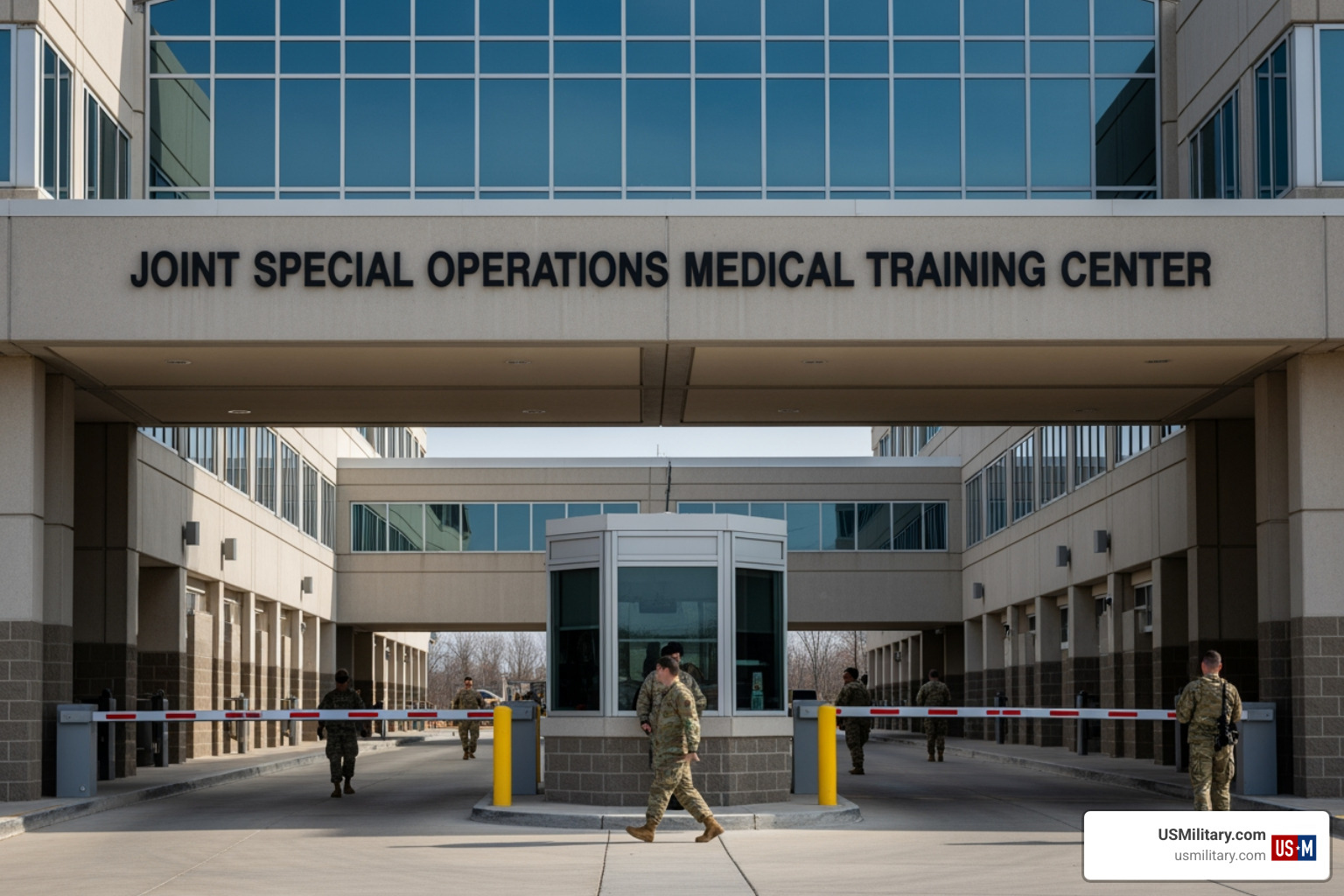
The heart of this elite training is the Joint Special Operations Medical Training Center (JSOMTC) at Fort Liberty, NC. This is where medics from across the Special Operations community—Green Berets, Rangers, Civil Affairs, and PSYOP soldiers, as well as Navy SEALs, SWCCs, and Marine Raiders—converge for the grueling Special Operations Combat Medic (SOCM) course. The curriculum is intense, covering everything from anatomy and physiology to advanced trauma life support.
For Navy SEAL and SWCC medics, the journey continues at the Naval Special Operations Medical Institute (NSOMI), where they earn the title of Special Operations Independent Duty Corpsman (SOIDC). This advanced phase builds upon the SOCM foundation, adding specialized skills in dive medicine, clinical diagnostics, and long-term patient care.
The training methodology is relentlessly hands-on. Students are immersed in hyper-realistic scenarios that simulate the chaos and stress of combat. These exercises, often conducted in challenging environments, test not only their medical knowledge but also their ability to think critically and perform under extreme pressure. The goal is to produce medics who are not just technically proficient but also mentally resilient and adaptable. For more information, you can visit the official JSOMTC page.
Sustainment and Global Standards
Graduation from these initial courses is just the beginning. SOF medics are required to maintain their skills through continuous training and recertification. The Special Operations Forces Medical Sergeants Sustainment Course (SOFMSSC) is a key component of this, ensuring that 18D medics remain at the cutting edge of tactical medicine.
Furthermore, the U.S. military plays a leading role in establishing international standards through programs like the NATO Special Operations Combat Medic (NSOCM) course. This fosters interoperability and ensures that allied special operations forces can work together seamlessly in a medical crisis. This commitment to lifelong learning and global collaboration is what keeps SOF medics at the pinnacle of their profession, ready for any mission, anywhere in the world. For a look at the foundational training many corpsmen receive, check out this article on Marine Corpsman Field Medical School.
The Pathway: Key Courses and Training Centers
The journey to becoming a SOF medical training specialist is rigorous, demanding exceptional dedication and meeting stringent prerequisites. Candidates must possess not only a foundational military medical background but also demonstrate peak physical fitness. This often includes advanced physical standards, with specific requirements like swimming and diving skills for Navy and Air Force special operations roles. We emphasize that individuals must be physically qualified for transfer, meaning they should not require medical attention upon entering these demanding schools.
Each military branch has its own path into the SOF medical community, though many converge on the same core training institutions. For the Army, Special Forces Medical Sergeants (18D) are legendary for their comprehensive skills. Navy SEALs and SWCC medics, along with Marine Special Operations Command (MARSOC) Corpsmen, follow a distinct path, often involving the Special Operations Combat Medic (SOCM) course and subsequent specialized training. Air Force Special Operations Command (AFSOC) also relies on this elite cadre of medics.
Core SOF Medical Training Pipelines
To truly understand the depth of SOF medical training, it’s helpful to compare the core pipelines that produce these elite medics:
| Course | Primary Branch(es)
Introduction
SOF medical training prepares elite military medics to deliver advanced, independent medical care in the most dangerous and isolated environments on Earth. Unlike conventional combat medics who stabilize patients for evacuation, Special Operations Forces medics are trained to function as autonomous medical providers—often the only medical care available for their teams during extended missions deep behind enemy lines.
Key Facts About SOF Medical Training:
- Duration: 16-37 weeks for initial qualification, with 18D (Army Special Forces) training extending to 322 days total
- Scope: Covers trauma care, prolonged field care, minor surgery, dental procedures, veterinary medicine, and advanced diagnostics
- Primary Programs: SOCM (Special Operations Combat Medic), 18D (Army Special Forces Medical Sergeant), SOIDC (Special Operations Independent Duty Corpsman)
- Training Centers: Joint Special Operations Medical Training Center (JSOMTC) at Fort Liberty, NC and Naval Special Operations Medical Institute (NSOMI)
- Recertification: Required bi-annually through sustainment courses
- Career Value: Direct pathways to Physician Assistant programs, medical school, and high-level civilian emergency medicine roles
When Navy SEAL medic Jonny Kim completed his SOF medical training, he leveraged those skills to become a doctor—and eventually an astronaut. This trajectory isn’t unique. The medical training that Special Operations Forces receive doesn’t just save lives on the battlefield. It creates a foundation for medical expertise that rivals civilian emergency medicine programs.
SOF medics operate in a fundamentally different world than conventional military medical personnel. They deploy with small teams into remote villages where they might be the only medical provider for hundreds of miles. They treat not just combat trauma, but also perform dental extractions, deliver babies, care for livestock critical to local populations, and manage chronic diseases—all while maintaining their role as fully operational team members capable of direct combat action.
This dual identity as both warrior and healer requires an extraordinary training pipeline that pushes candidates to their physical and mental limits. The curriculum spans everything from advanced cardiac life support to veterinary medicine, from treating traumatic brain injuries to understanding cultural approaches to healing in different regions. It’s medical education compressed into months rather than years, delivered with the intensity and realism that only military training can provide.
The Mission: Forging a New Breed of Medic
The primary mission of SOF medical training is nothing short of creating a new breed of medic—one who is not merely a first responder but an autonomous, highly capable medical provider. Our goal is to equip these medics with a profound understanding of medical knowledge and skills, ensuring they can deliver a consistent standard of care regardless of the conditions they face. This commitment extends to fostering a career of lifelong learning, adapting to the changing medical challenges in uncertain operational environments.
Unlike their conventional counterparts, SOF medics are often the sole medical lifeline for their teams. This demands an unparalleled level of autonomy and decision-making under fire. They are force multipliers, extending the operational reach and endurance of special operations teams by providing immediate and sustained medical support where no other help is available. This improved medical capability directly contributes to the overall mission readiness of Special Operations Forces, ensuring our elite operators can execute complex missions with confidence, knowing expert medical care is always within reach.
From First Aid to Advanced Provider
The evolution from basic first aid to advanced medical provision is a defining characteristic of SOF medical training. Our medics master Tactical Combat Casualty Care (TCCC), which focuses on immediate, life-saving interventions at the point of injury in a combat zone. But they go far beyond that. They are pioneers in Prolonged Field Care (PFC), a critical capability for managing patients for extended periods—sometimes days—in austere environments with limited resources, awaiting evacuation.
This emphasis on PFC means our medics are trained to handle everything from advanced airway management and mechanical ventilation to administering sedation, ionotropic, and antibiotic medications. They learn advanced cardiac life support (ACLS) scenarios, critical care patient packaging, lab value interpretation, and how to effectively report casualties to receiving facilities, considering all MEDEVAC options. This comprehensive approach ensures that whether they’re in a remote mountain village or a dense jungle, they can provide the highest possible standard of care. The skills they learn are so extensive that our US Army Special Forces Medical Sergeants Make a Difference in countless communities, both at home and abroad.
The Psychological Edge: More Than Medical Skill
Being a SOF medic isn’t just about physical prowess and medical knowledge; it demands an exceptional psychological edge. We understand that the chronic stress and physical demands inherent in a Special Operations career can lead to what researchers call “allostatic load”—the wear and tear on the body. An extraordinarily high allostatic load can manifest as “Operator Syndrome,” a collection of interrelated health and functional impairments. These can include traumatic brain injury effects, endocrine dysfunction, sleep disturbances, chronic pain, substance abuse, depression, anger, cognitive impairments, and challenges with military-to-civilian transition.
Our training incorporates strategies for stress mitigation and resilience training, recognizing that these are crucial for long-term effectiveness and well-being. We understand that operators are often not self-aware in high-stress states, making education and peer support critical. The goal is to monitor and address stress before allostatic overload occurs, utilizing tools like regular endocrine and hormone testing, and emphasizing “the big three” recovery tools: sleep, nutrition, and mindfulness. This holistic approach ensures our medics possess the mental fortitude to endure the unique pressures of their calling, maintaining peak performance and ensuring their survival skills are not undermined by chronic stress. For more in-depth understanding, explore Scientific research on “allostatic load”.
Conclusion
The journey to becoming a Special Operations Forces medic is one of the most demanding and rewarding paths in the U.S. military. It transforms dedicated soldiers, sailors, and airmen into elite medical professionals capable of providing life-saving care in the most challenging conditions imaginable. They are the embodiment of the quiet professional, operating at the intersection of tactical skill and medical expertise.
The training is more than just a series of courses; it’s a crucible that forges individuals with unparalleled resilience, critical thinking abilities, and a profound commitment to their teammates. Whether they are treating a gunshot wound under fire, managing a critically ill patient for days in a remote location, or providing humanitarian care in a foreign village, SOF medics are a critical force multiplier for U.S. Special Operations Command.
Their skills are not only vital on the battlefield but also highly transferable to the civilian world, creating a legacy of service that extends far beyond their time in uniform.
Ready to learn more about elite military careers? Explore our detailed guides on different special operations units and find your path.
- Compare Army Delta Force vs. Navy SEALs
- Learn about the Air Force Pararescue (PJ) pipeline
- Find the role of a Marine Corps Reconnaissance Man
Free for Service Members & Veterans
Get the military benefits intel no one tells you about.
Weekly updates on VA benefits, pay changes, and money tips — free for service members and veterans.
No spam. Unsubscribe anytime. Your info is never shared.


