How Navy SEAL Training Shapes Courageous Faith in Dare to Live Greatly. Don’t Just Live, Live Abundantly. Don’t Just Face Fears—Ask God to Double Down on Them!
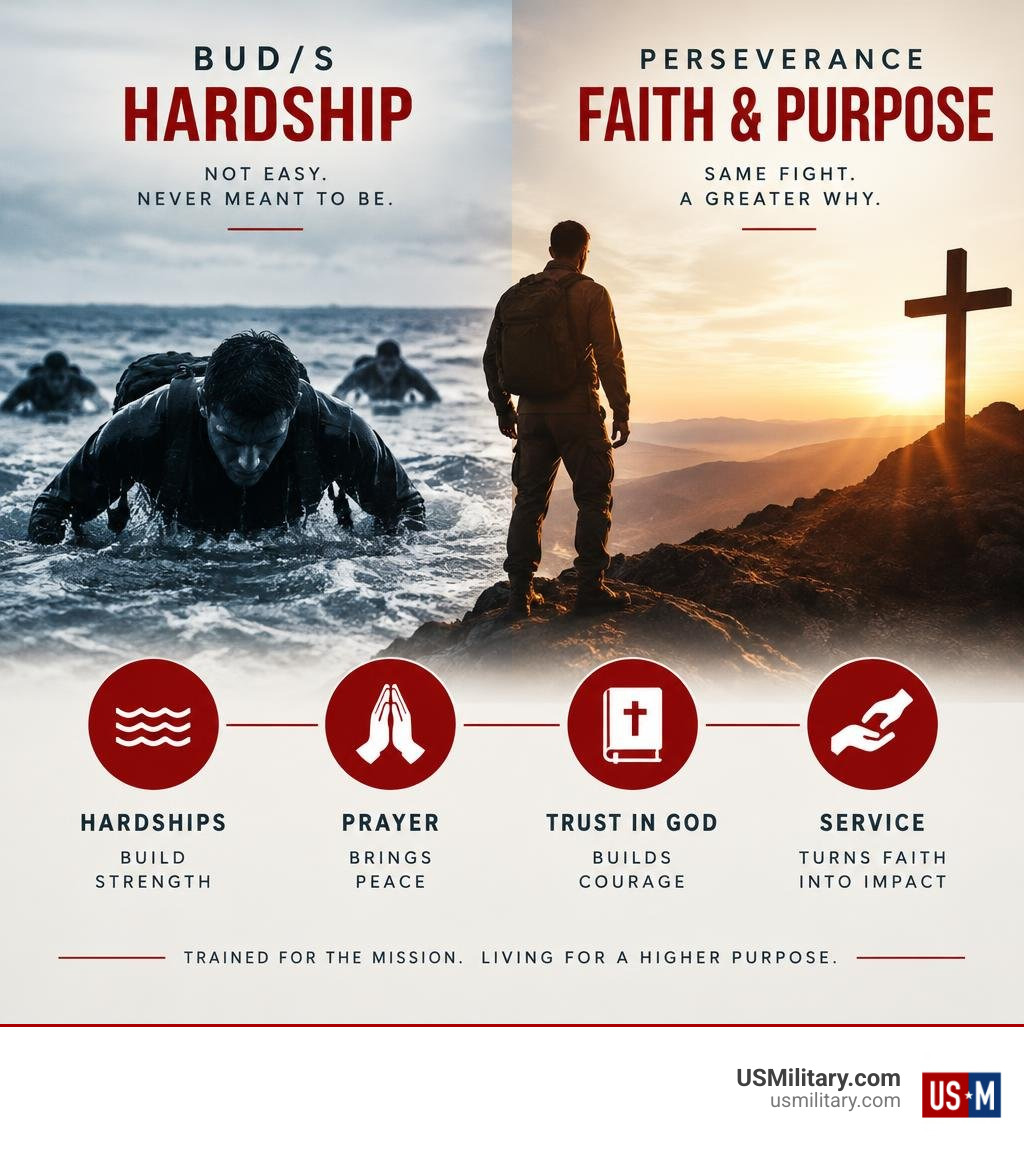
In Dare to Live Greatly, Larry Fowler uses the hardships of Navy SEAL training to show what courageous faith living can look like: face fear, take the next step, and trust God rather than your own strength alone. His BUD/S experiences offer a way to think about perseverance through illness, family loss, and other trials without pretending those struggles are easy. For veterans, service members, and anyone facing a hard season, that connection feels personal rather than theoretical.
Fowler graduated from BUD/S Class 89 after entering training barely able to swim. He carries that experience into a Christian message about endurance, purpose, and helping others. That starting point matters. He was not born tough or confident, and he does not present himself as a superhero. He presents himself as someone who learned, step by step, how to keep going when quitting felt like the easiest option.
This guide draws on Larry Fowler’s experience as a Navy veteran and BUD/S Class 89 graduate, along with the perspective he brings as the author of Dare to Live Greatly. His later personal trials also shape the book’s message and its practical relevance for everyday life.
Related reading:
- Navy SEAL Jocko Willink
- Story of Adam Brown Navy SEAL
- Top 15 Navy SEAL Books For Powerful Courage like Fearless, Unafraid, and Dare To Live Greatly by Larry Fowler
How the Best-Selling Book ‘Dare to Live Greatly’ by Larry Fowler connects Navy SEAL training with Courageous Faith Living

The book’s core claim is simple: real Christian living today takes the grit, courage, and self-confidence of a SEAL in training. Fowler began BUD/S in Coronado, California, in 1977 as a “tadpole” who could barely swim. He describes Hell Week, low-crawling through the Tijuana mudflats, sleep deprivation, log PT, and about six months of mental pressure. A fellow Class 89 trainee remembered a night when onlookers thought Fowler would surely drown or quit, yet he would rather drown trying than give up. That image stays with readers because it captures the book’s central tension: the moment when your body says stop, but your purpose says keep moving. In that sense, the narrative shows how the best-selling book Dare to Live Greatly by Larry Fowler connects Navy SEAL training with courageous faith living.
The book carries awards and rankings, including a 2020 Nonfiction Authors Association Gold Award and a #1 Amazon Nonfiction Inspirational Autobiography label, and reviewers rate it 4.7 out of 5. You can see the Dare to Live Greatly revised edition on the author’s site or read the Amazon book overview. These are the publisher’s and author’s own claims. Even setting awards aside, the appeal is clear for military readers: it speaks in a language of discipline, brotherhood, and mission that many veterans already understand from service.
How Dare to Live Greatly by Larry Fowler connects BUD/S endurance with courageous faith living
Fowler pulls out a few lessons from BUD/S:
- Perseverance: Hell Week lasts about five and a half days with less than four hours of total sleep. Faith, he argues, also needs staying power. You do not build it in a single good week; you build it by showing up again after a bad one.
- Fear-facing: Don’t run from fears and trials; run to them. Fear’s job is to paralyze, so you move anyway. In training that means entering the surf again. In faith it can mean having a hard conversation, admitting you need help, or taking a step toward a calling you feel underqualified for.
- Micro-goals: When the whole thing is overwhelming, focus on the next manageable task, the way trainees do. Instead of thinking about the entire course, you think about the next evolution, the next meal, the next hour. Fowler applies the same idea to prayer, work, and family life.
- Hardship as a crucible: Suffering is training, not proof that God has left. The pressure reveals what you are made of and what you truly depend on.
- Daily reliance: Class 89 is credited with the motto “The Only Easy Day Was Yesterday.” Spiritually, yesterday’s victories don’t carry today’s battle. You need fresh strength, fresh prayer, and fresh obedience each morning.
Attrition shows why the metaphor works. Roughly 75% to 85% of candidates don’t finish, and in Class 173 only 13 of 173 made it straight through. For the full pipeline, see our guide to Navy SEAL training phases and challenges. Those numbers are not just statistics. They remind readers that endurance is rare, costly, and worth respecting, whether on a training course or in a long season of faith.
How Dare to Live Greatly by Larry Fowler connects SEAL grit with everyday faith disciplines
At BUD/S, quitting means ringing a brass bell. Fowler compares that to people walking away from faith when things get hard. Here is how the pieces line up:
| BUD/S Challenge | Faith response |
|---|---|
| Hell Week exhaustion | Rely on God when your strength runs out (Proverbs 3:5-6) |
| Surf torture and cold | Count trials as refining (James 1:2-4) |
| Swim buddy and boat crew | Sacrificial brotherhood (John 15:13) |
| The bell | Choose endurance, and ask for help instead of walking away |
| Earning your place | Steward your gifts for a purpose (Luke 12:48) |
Fowler also teaches that every Christian is a leader, defined as ordinary people with extraordinary faith. Leadership shows up through service, not status. Prayer and Scripture feed that, and self-reliance gives way to dependence on God. That shift is important for veterans and first responders who are used to being the strong ones. The book suggests strength is not needing help; it is knowing where to turn when you do. If you want to see what candidates actually face, read the Navy SEAL BUD/S training requirements. Together, those requirements and Fowler’s reflections show why the training metaphor resonates far beyond the Navy.
✉ Get updates like this in your inbox
Weekly VA benefit changes, pay updates, and money tips for service members, veterans, and military families. Free, no spam.
Fowler’s personal trials and the book’s core spiritual lessons
The book gets weight from what came after BUD/S. Fowler faced lymphoma, which he has described as a gift because it widened his perspective, and the untimely death of his third son. He frames both through the mindset of a trainee who won’t quit, without calling them painless. That honesty matters. He does not suggest that faith removes grief or illness. Instead, he suggests faith gives you a way to walk through them without losing hope, purpose, or connection to other people. For many readers who have faced a VA disability claim, a serious diagnosis, or the loss of a loved one, that distinction feels real and respectful.
Chapter twenty-six, “When You’re Down to Nothing, God Is Up to Something,” is the one reviewers single out for hope when circumstances look hopeless. It is a reminder that a setback is not the end of the story. The same is true in training: a failed evolution does not always mean you are finished, but it does mean you need to reassess, recover, and get back in line.
Other lessons follow. Scars are necessary steps in your journey. Great success requires great failures. Lasting self-confidence is God’s gift. And you’re asked, “What are you starving for?” as a test of whether your goals are worthwhile. Humility and trust sit underneath all of it. Fowler is pushing readers to examine their appetites: status, comfort, approval, or something deeper like service and obedience. For more background, see our in-depth guide to Larry Fowler and this conversation on the importance of perseverance.
What “ringing the bell” means for spiritual endurance
Ringing the bell is the clearest symbol in the book. Fowler’s message is that a SEAL doesn’t give up, and neither should a follower of Christ. We’d add a careful note: perseverance doesn’t mean denying pain. Asking for help, setting wise limits, and leaning on others is part of staying faithful. Even in BUD/S, nobody gets through alone. Swim buddies, boat crews, instructors, and classmates all play a role. In civilian and military life, that support can look like a spouse, a pastor, a counselor, a trusted friend, or a veteran service organization. Endurance is a team effort, even when the work feels lonely.
How the book differs from a conventional SEAL memoir or Christian self-help book
Most SEAL memoirs focus on missions and unit history. Most Christian self-help skips the training stories. Fowler blends both: raw BUD/S scenes, spiritual reflection, and practical encouragement aimed at Christian purpose. Some military-faith books center on conversion or senior leadership; this one centers on character over toughness, asking who you are becoming when nobody is watching. It also speaks to ordinary discipline: showing up, telling the truth, serving your family, and doing the next right thing. It’s also promotional and one-sided by nature, so read it as testimony, not independent analysis. That perspective helps readers take the encouragement seriously without treating every claim as a universal rule.
Putting courageous faith into practice in military and civilian life
These ideas travel well. Veterans leaving service face career uncertainty, money pressure, and identity shifts. Families face crises and health struggles. Accountability and a trusted community matter in every case. The same micro-goal mindset that helps a trainee get through an evolution can help a veteran get through a job search, a benefits process, or a difficult conversation at home. You do not have to solve your whole future today; you have to take the next faithful step today. Our piece on what BUD/S training teaches about confidence, courage, and faith goes deeper.
A simple daily practice for building “warrior confidence”
- Spend the first 30 minutes on prayer, Scripture, and journaling.
- Name the fear in front of you and pick one manageable next step.
- Move your body; exercise builds resilience and eases stress.
- Take consistent action, even small.
- End the day with honest reflection and gratitude.
- Reach out when you feel overwhelmed.
That routine is simple on paper, but it works because it is repeatable. Confidence grows from keeping small promises to yourself and to God day after day, not from one dramatic moment.
Applying the lessons without glorifying aggression or self-reliance
Courage and humility belong together. Disciplined action pairs with surrender, and service beats status. A SEAL platoon works because people think of themselves less, not because anyone is a lone hero. Set boundaries, lean on teammates, and get professional counseling or medical care when you need it. That’s strength, not weakness. In fact, knowing when to rest, when to ask for help, and when to step back can be just as courageous as pushing forward. Fowler’s best insight is that great living is not about proving you are tough; it is about living with purpose, integrity, and faithfulness over the long haul.
Frequently Asked Questions about Dare to Live Greatly and courageous faith
What BUD/S experiences does Fowler use to illustrate perseverance?
Hell Week, swimming and crawling through the Tijuana mudflats, a near-drowning night, and starting out barely able to swim, all as part of BUD/S Class 89. He also returns to log PT, sleep deprivation, and the daily pressure of not knowing if he would make it to the next day. Those specific memories give the book its credibility with military readers.
Which biblical themes anchor the book’s message about courage and endurance?
Themes include perseverance in suffering (James 1:2-4), dependence on God (Proverbs 3:5-6), stewardship and duty (Luke 12:48), and sacrificial brotherhood (John 15:13). The research notes these as common across SEAL faith writing; the book itself is light on formal theology. Its strength is practical application rather than detailed doctrinal teaching.
Can readers without military experience apply the book’s lessons?
Yes. Career challenges, family crises, illness, and grief respond to micro-goals, daily discipline, and trusted support. You don’t need a trident to take the next faithful step. Teachers, parents, nurses, business owners, and students can all use the same principles: name the fear, break the task down, lean on others, and keep going one day at a time.
Conclusion
The takeaway is that SEAL grit works as a metaphor for faith, not a substitute for it. Perseverance, paired with humility and support, is what Fowler’s story models. It is a call to live greatly not by chasing fame, but by showing courage, character, and compassion in ordinary places. For more on the community behind that story, start with our Navy SEALs complete guide, explore everything at USMilitary.com, and pick up the Dare to Live Greatly book page if you want to read it yourself.
Free for Service Members & Veterans
Get the military benefits intel no one tells you about.
Weekly updates on VA benefits, pay changes, and money tips — free for service members and veterans.
No spam. Unsubscribe anytime. Your info is never shared.



Leave a Reply