The Current State of Military Recruiting: Targets, Turnarounds, and Policies
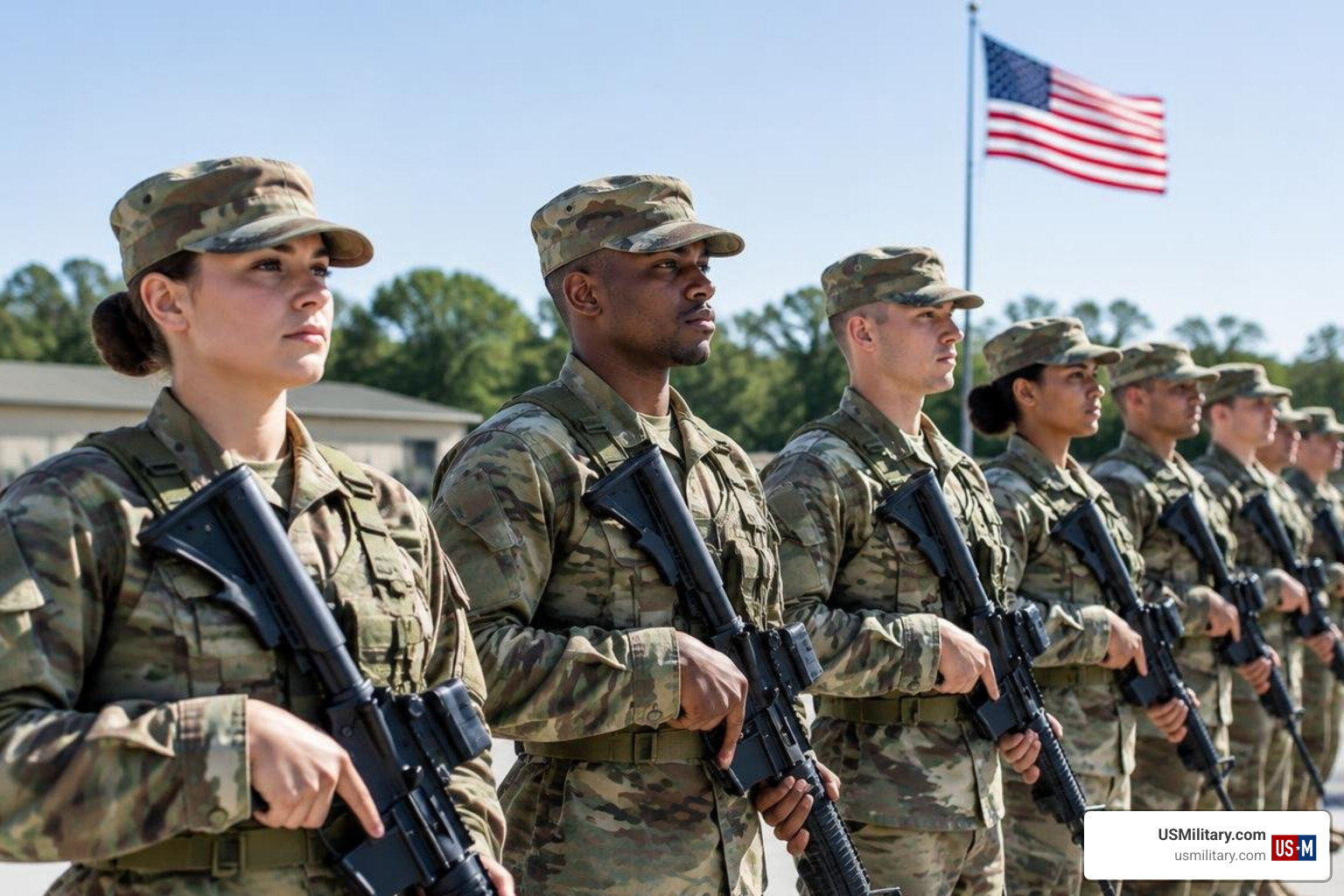
The All-Volunteer Force has navigated one of the most dramatic turnarounds in modern history. Following several challenging years marked by pandemic disruptions, shifting labor dynamics, and record-low youth propensity to serve, all armed services met or exceeded their active-duty accession quotas months ahead of schedule in fiscal year 2026.
Official Department of Defense figures and data from the U.S. Army Recruiting Command show an overall mission achievement rate of 103% across the joint force. This marks a clear rebound from the acute shortages seen earlier in the decade.
The table below outlines the branch-by-branch active-duty enlistment targets and actual accessions for fiscal year 2026:
| Military Branch | FY 2026 Enlistment Goal | FY 2026 Actual Accessions | Status |
|---|---|---|---|
| U.S. Army | 61,000 | 61,500+ | Exceeded |
| U.S. Navy | 45,000 | 45,000 | Met |
| U.S. Air Force | 32,750 | 33,000 | Exceeded |
| U.S. Marine Corps | 26,600 | 26,600 | Met |
| U.S. Space Force | 730 | 730 | Met |
This rebound stems from a deliberate overhaul of how the military identifies, qualifies, and contracts prospective service members. Anyone exploring these pathways can review our detailed guide to military enlistment in the US to understand how these broader national accessions translate to individual career opportunities.
Economic Drivers Reshaping Military Recruiting Outreach
While political leaders often debate what inspires enlistment, Pentagon surveys and field interviews confirm that economic realities drive young Americans to recruiters’ offices. The combination of rising civilian living costs and softening entry-level hiring has made the military’s total compensation package exceptionally attractive.
Recent legislative efforts brought significant base pay increases across the force, including a 4.5% pay raise followed by targeted 10% junior enlisted adjustments and an additional 3.8% bump. When combined with full health care coverage, housing allowances (BAH), meal stipends (BAS), and 100% tuition assistance, the military delivers immediate financial independence to high school graduates and young professionals alike.
Sign-on incentives have also scaled to historic highs to attract high-demand specialties such as cyber operations, nuclear propulsion, and special warfare. Depending on the career field and ship date, prospects can explore which military branch offers the highest cash recruitment bonuses in 2026 to maximize their enlistment package before signing.
Policy Shifts: From DEI Initiatives to Grooming Standards Under Secretary Hegseth
The administrative landscape governing military service has undergone substantial realignments under Defense Secretary Pete Hegseth. Policy shifts have focused heavily on rolling back Diversity, Equity, and Inclusion (DEI) programs, tightening uniform and grooming regulations, reducing shaving profile waivers, and re-centering public messaging on lethality, warfighting readiness, and traditional service culture.
The impact of these directives across the recruiting environment is multifaceted:
- Warfighting Focus: Public-facing marketing campaigns have shifted away from lifestyle-oriented messaging toward rigorous operational readiness and discipline.
- Uniformity and Grooming: Stricter standards on medical shaving waivers and appearance guidelines have been reinstated across all initial entry training environments.
- Outreach Adjustments: While targeted diversity advertising programs were curtailed, recruiters on the ground continue to draw heavily from diverse metropolitan centers where career stability and educational benefits resonate strongly with local youth.
While leadership frames these changes as a restoration of core warrior ethos, data demonstrates that practical economic security remains the fundamental driver for the vast majority of applicants walking through station doors.
The Step-by-Step Enlistment Machine: From First Contact to Boot Camp
Joining the military is not an overnight transaction. It is an administrative pipeline designed to evaluate your intellectual aptitude, moral character, and physical durability before committing federal resources to your training.
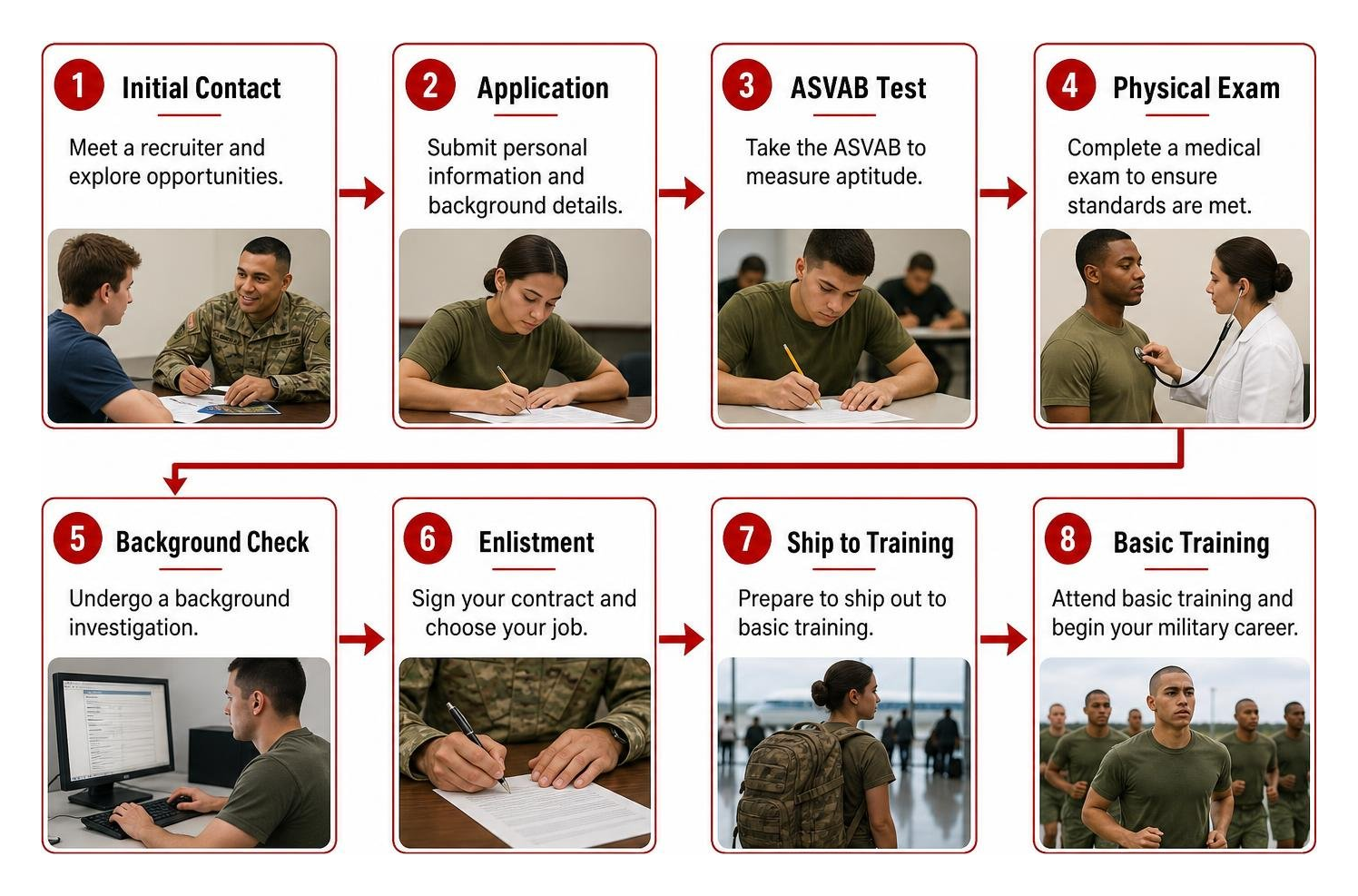
To navigate the milestones effectively, prospective applicants should follow a complete guide to the steps for joining the military and consult official guidance on requirements to join the U.S. military to ensure baseline criteria are met early.
The Recruiter’s Playbook and Local Community Outreach
Recruiters operate across local high schools, community colleges, vocational hubs, and digital platforms to engage prospective talent. Modern recruitment blends digital advertising with personal mentorship, helping applicants weigh their career ambitions against service branch needs.
Because recruiters carry monthly mission goals, smart applicants stay informed. Learning about the top lies military recruiters tell prospects today helps you ask the right questions, double-check verbal promises, and ensure critical contract incentives appear in writing.
When you are ready to initiate direct contact, tools like find an Air Force recruiter near me allow you to speak directly with verified branch representatives in your region.
Processing at MEPS and Navigating Medical Screening
The Military Entrance Processing Station (MEPS) is the operational gateway managed by the United States Military Entrance Processing Command. At MEPS, your records, body, and background face exhaustive examination.
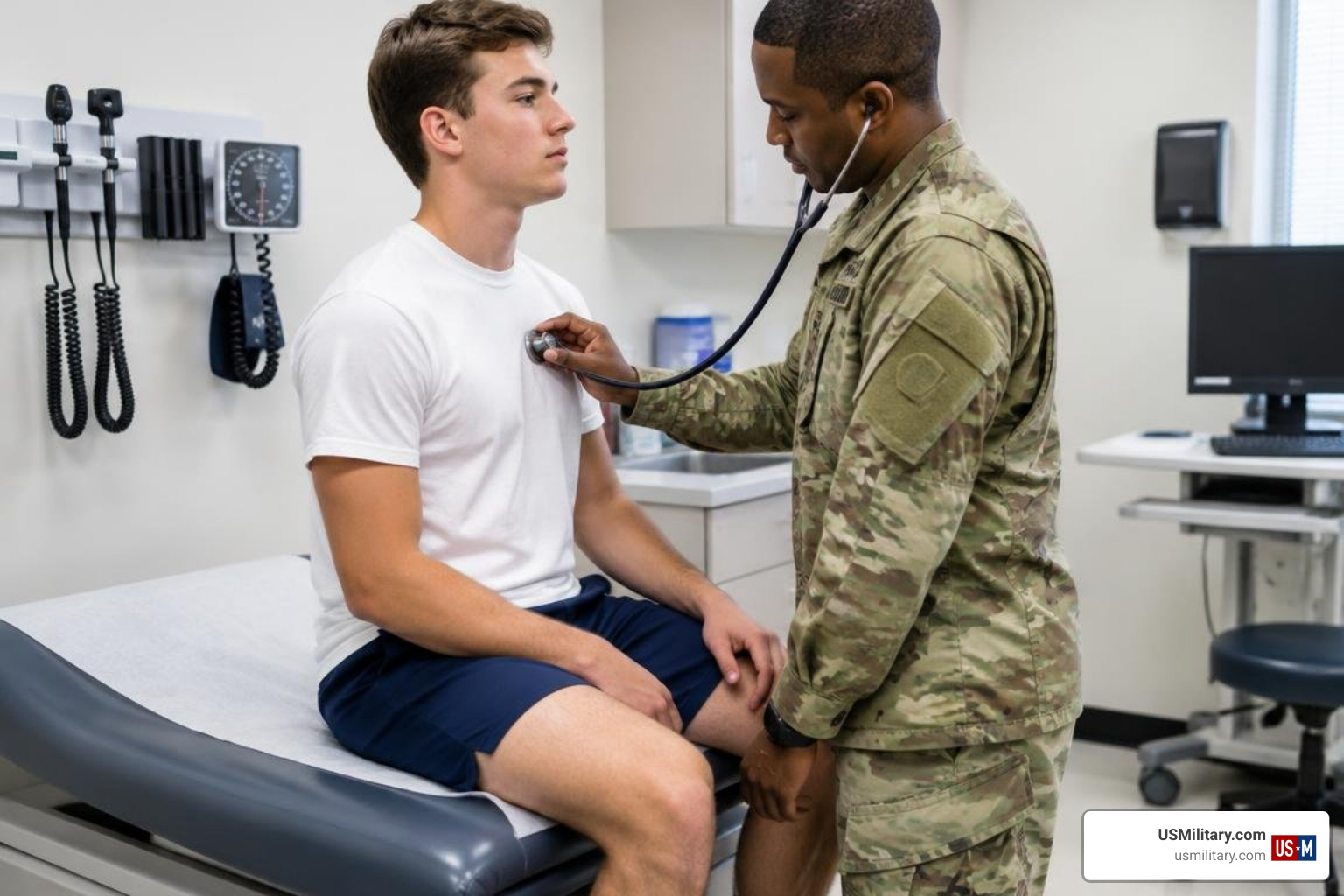
During MEPS processing, you will undergo:
✉ Get updates like this in your inbox
Weekly VA benefit changes, pay updates, and money tips for service members, veterans, and military families. Free, no spam.
- Aptitude Testing: Taking the full Armed Services Vocational Aptitude Battery (ASVAB) if not already completed in school.
- Medical Prescreening & Physical Exam: Complete joint mobility assessments, hearing and vision tests, urinalysis, blood tests, and doctor evaluations.
- MHS GENESIS Digital Review: The Department of Defense’s electronic health record system reviews civilian medical histories, identifying past prescriptions, surgeries, childhood diagnoses, or hospital visits.
- Waiver Adjudication: Any disqualified conditions (such as past asthma, ADHD medication use, or orthopedic surgeries) require medical documentation submitted to branch accession surgeons for waiver approval.
- Job Counseling & Oath of Enlistment: Once medically cleared, you sit with a service counselor, select an available Military Occupational Specialty (MOS) or rating, sign your enlistment agreement, and take your initial oath.
For detailed guidance on navigating this critical processing day, check out our step-by-step guide to US Army recruitment.
Navigating the Eligibility Crisis and Preparatory Programs
The single greatest structural challenge facing national defense is the shrinking pool of qualified youth. Roughly 75% to 77% of young Americans aged 17 to 24 are disqualified from military service without an approved waiver.
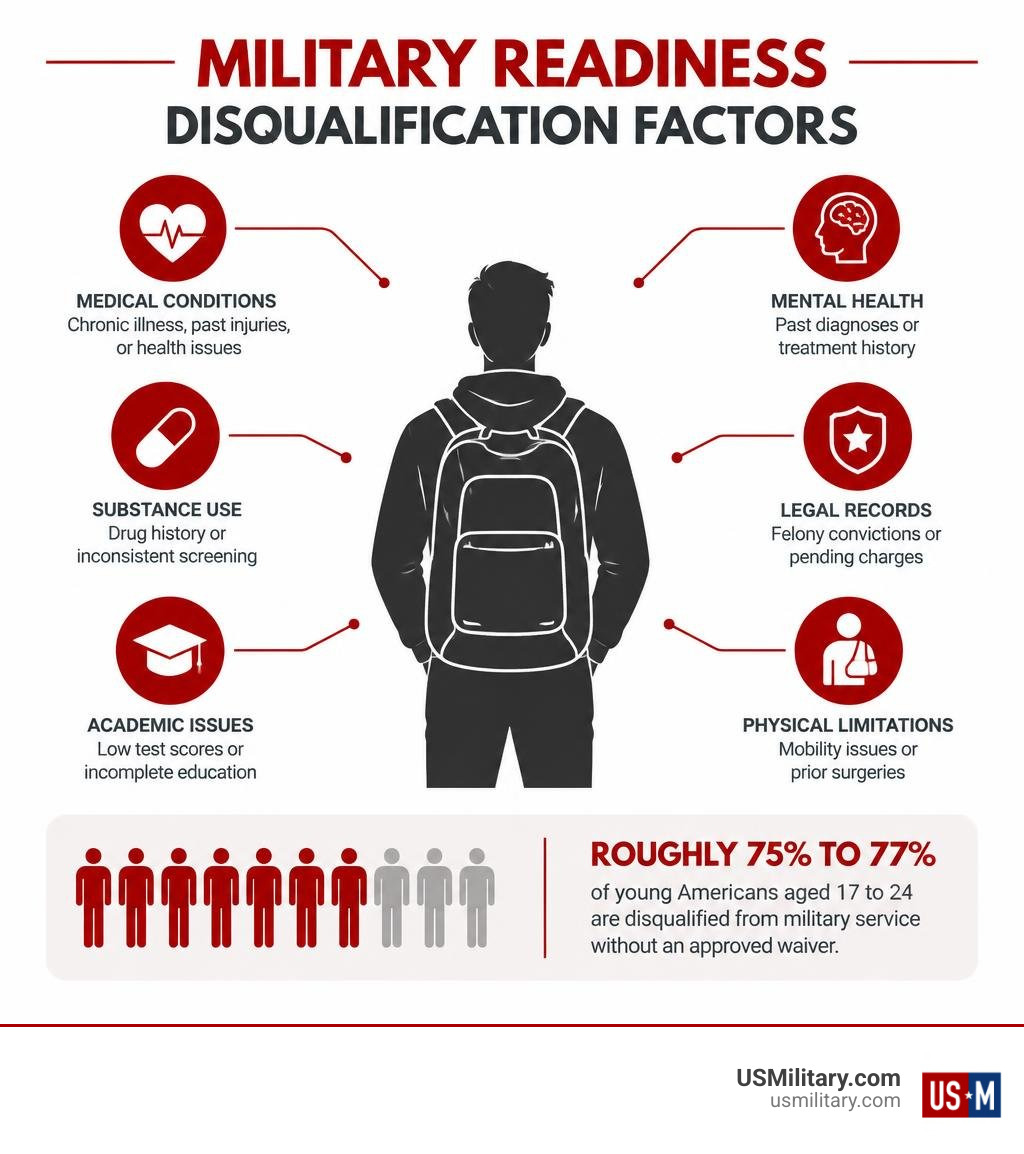
Review our essential guide to Army eligibility requirements for a clear breakdown of physical and moral standards.
Overcoming the Eligibility Crisis in Military Recruiting
The military’s talent deficit is driven by overlapping public health and academic challenges:
- Physical Fitness and Obesity: More than one-third of young adults exceed military body fat standards, presenting orthopedic risks and limiting initial endurance.
- Academic Deficiencies: Declining standardized testing proficiencies have caused more applicants to score below minimum thresholds on the Armed Forces Qualification Test (AFQT). Federal law caps Category IV recruits (those scoring in the 10th to 30th percentile) at no more than 4% of total enlistments.
- Medical Documentation Scrutiny: The deployment of digital health tracking systems flags common conditions that were previously underreported, requiring thousands of administrative waivers annually.
- Demographic Contraction: Declining national birth rates create a natural demographic headwind, shrinking the total pool of 18-year-olds entering the workforce each year.
Before spending hours at a station, use our can I join military guide for 2026 to check where you stand across health, education, and moral metrics.
The Future Soldier and Sailor Prep Courses: Building Rather than Selecting
Recognizing that the nation cannot simply wait for eligibility trends to reverse, the services shifted from a selection model to a developmental model. Pioneered at Fort Jackson, South Carolina, the Army’s Future Soldier Preparatory Course (FSPC) takes promising applicants who fall just short of academic or body composition standards and provides intensive pre-basic training instruction.
Over 90% of students in these academic and fitness tracks successfully graduate, increase their test scores, achieve healthy body fat levels, and transition straight into Basic Combat Training. The Navy established its own preparatory courses, linking applicants directly via United States Navy Recruiting to build qualified Sailors who would have otherwise been turned away.
Shifting Demographics, Geopolitics, and Modern Recruit Motivations
The demographic landscape of the armed forces continues to evolve alongside shifting cultural dynamics and international security developments.

Who Joins Today: Changing Demographics and Family Traditions
Historically, military recruitment relied heavily on a self-contained “family business” model. Approximately 80% of new entrants have a family member who previously wore the uniform. While legacy service remains a foundational pillar, recruiters are increasingly reaching into urban centers and first-generation immigrant communities to sustain overall force strength.
Key demographic patterns shaping current accessions include:
- Urban and Suburban Expansion: Increased outreach in major metropolitan areas across Texas, Florida, California, and mid-Atlantic regions.
- Educational Pathways: Growing interest among college-credit holders seeking immediate loan repayment programs and specialized technical credentials.
- Gender Dynamics: Steady participation of female recruits in medical, intelligence, aviation, and combat arms specialties, balanced by targeted retention initiatives.
To explore how age requirements influence accession profiles across all branches, read our analysis on the age demographics of who is joining the military today.
Geopolitical Tensions: The Impact of the Iran Conflict and Public Perception
Global instability directly shapes how families view military enlistment. Airstrikes, naval confrontations in Middle Eastern waterways, and active operations involving Iran have placed wartime risk back into national headlines.
Independent polling shows that public support for open-ended international deployments remains sensitive to casualty projections and operational duration. While some potential applicants are drawn toward combat roles during heightened geopolitical tension, recruiters frequently address concerns from parents regarding deployment cycles, safety protocols, and operational transparency.
Frequently Asked Questions About the Enlistment Process
Why are military branches hitting their recruiting targets early in 2026?
The early achievement of 2026 accession goals reflects several converging factors:
- Substantial junior enlisted pay raises and competitive housing adjustments that outperform comparable entry-level civilian jobs.
- The rapid scaling of pre-enlistment developmental courses (such as the Future Soldier and Sailor Prep Courses), which brought thousands of previously disqualified candidates up to enlistment standards.
- A cooling civilian labor market that made guaranteed job stability, full medical coverage, and structured career advancement significantly more appealing.
What disqualifies prospective recruits at MEPS today?
The primary causes for disqualification during MEPS processing include:
- Undocumented Medical Issues: Uncontrolled asthma past age 13, recent orthopedic surgeries with retained hardware, heart arrhythmias, or chronic gastrointestinal disorders.
- Prescription Medication History: Recent use of behavioral health prescriptions (such as ADHD medications or antidepressants) without an approved stability window and medical waiver.
- Substance Use: Positive urinalysis results for illegal drugs or unauthorized controlled substances during MEPS screening.
- Moral Disqualifications: Felony convictions, open court cases, or major legal violations that fail to receive a command moral waiver.
How do enlistment bonuses work across different branches?
Enlistment bonuses are financial incentives tied to specific operational requirements. They depend on:
- Critical Skill Needs: High-demand fields (nuclear power, special operations, linguists, explosive ordnance disposal, cyber defense) carry the largest bonuses, sometimes exceeding $50,000.
- Shipping Dates (“Quick-Ship”): Agreeing to depart for basic training within a narrow time window to fill unexpected training seat openings can trigger bonus payouts of $5,000 to $10,000.
- Contract Fulfillment: Bonuses are generally disbursed in installments—an initial sum following the completion of initial entry training (boot camp and technical school), with remaining amounts distributed across annual anniversaries of service.
Conclusion
The modern All-Volunteer Force relies on a balance of competitive compensation, innovative preparatory pipelines, and clear-eyed career development. Understanding how military recruiting operates behind the scenes gives you the leverage to make informed decisions about your future, negotiate favorable contract terms, and choose a career field that serves your long-term goals.
Whether your priority is funding a debt-free college education, developing technical expertise in cyber defense or aviation mechanics, or pursuing a lifelong commitment to national service, having the right information is the essential first step.
We encourage you to explore the comprehensive USMilitary.com military recruiting resource hub to compare branch paths, review enlistment eligibility standards, and take command of your military journey.
Free for Service Members & Veterans
Get the military benefits intel no one tells you about.
Weekly updates on VA benefits, pay changes, and money tips — free for service members and veterans.
No spam. Unsubscribe anytime. Your info is never shared.