How Active-Duty Service Members Celebrate Thanksgiving Week
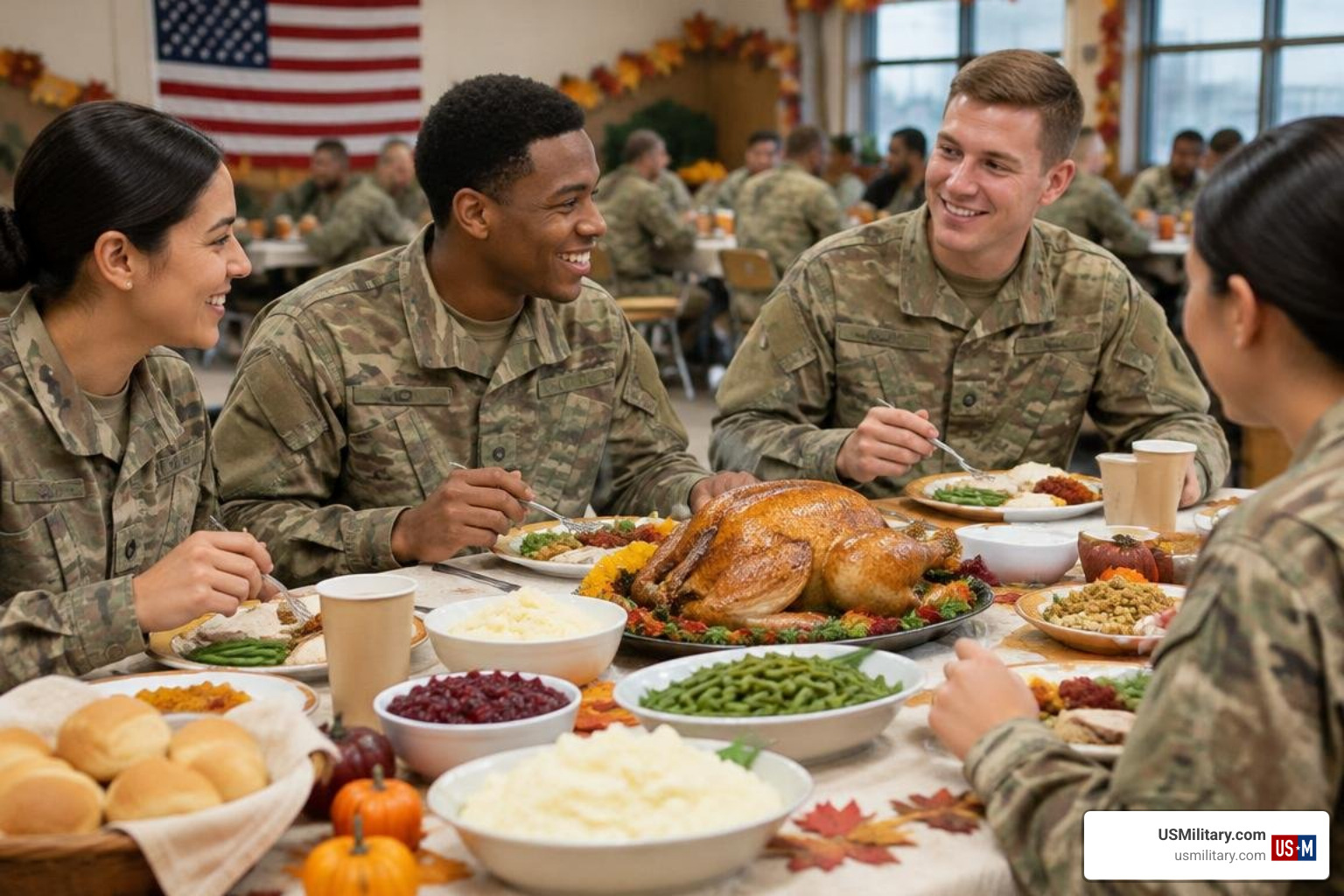
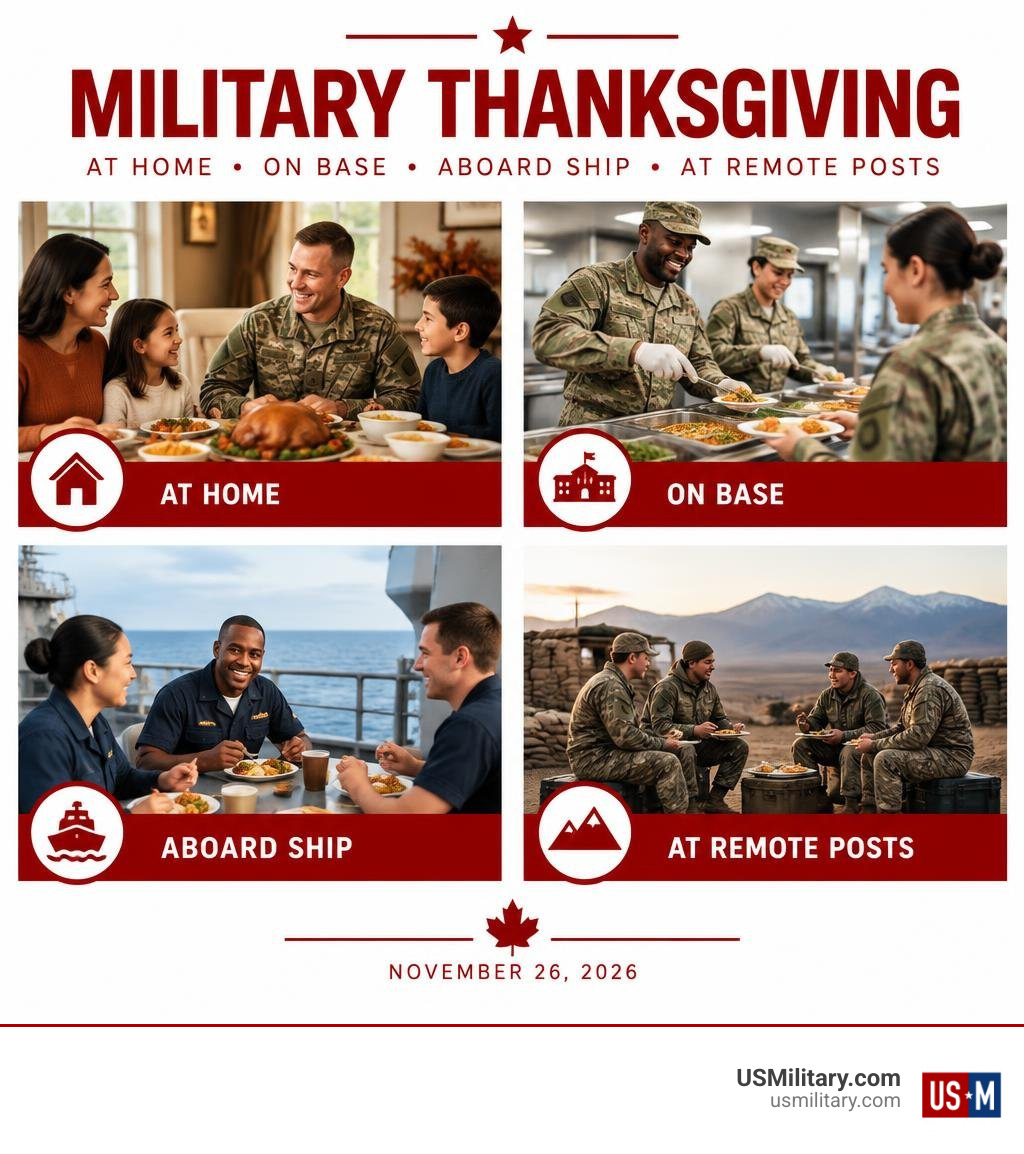
How do our active military men and women celebrate Thanksgiving week? They share holiday meals at home, on base, aboard ships, or while deployed. Dining facilities and galleys often serve a special meal, sometimes with commanders and senior enlisted leaders behind the serving line. Those on duty may eat with their unit, call home when they can, or celebrate with family on another day.
Thanksgiving falls on November 26 in 2026. Throughout the week, plans depend on leave, duty schedules, and location. A service member in garrison may attend a family meal or unit gathering; someone at a remote post may mark the day with a shared meal between missions.
For many families, the week is just as important as the day itself. Travel, shopping, cooking, and reconnecting with loved ones all build toward Thursday, and military households often plan around duty rosters weeks in advance. Even a short break from routine can feel meaningful when everyone knows time together is limited, and that planning helps turn a busy week into a real celebration.
I’m Larry Fowler, a Navy veteran, BUD/S Class 89 graduate, and publisher of USMilitary.com. In this guide to How Does Our Active Military Men & Women Celebrate Thanksgiving Week, I draw on my military background to explain the traditions and the ways troops stay connected when they cannot be home.
Important How Does Our Active Military Men & Women Celebrate Thanksgiving Week terms:
- How Does The Military Celebrate Easter When Overseas
- How Massive is the US Military
- What is the Department of War
How do our active military men and women celebrate Thanksgiving week?
Military service changes how and where we celebrate holidays, but the core spirit of gratitude never wavers. Whether stationed in the United States or forward-deployed overseas, our active military personnel create lasting bonds through unique traditions, shared feasts, and supportive communities.
How do active military men and women celebrate Thanksgiving week in garrison?
For service members stationed in garrison within the United States or at established overseas bases, Thanksgiving week blends time-honored military rituals with downtime and family activities.
Base dining facilities (DFACs) and Navy galleys prepare extensive holiday menus featuring roast turkey, honey-glazed ham, prime rib, shrimp, mashed potatoes, and custom desserts. Base culinary teams spend days planning, often decorating the dining hall and crafting elaborate ice or butter sculptures.
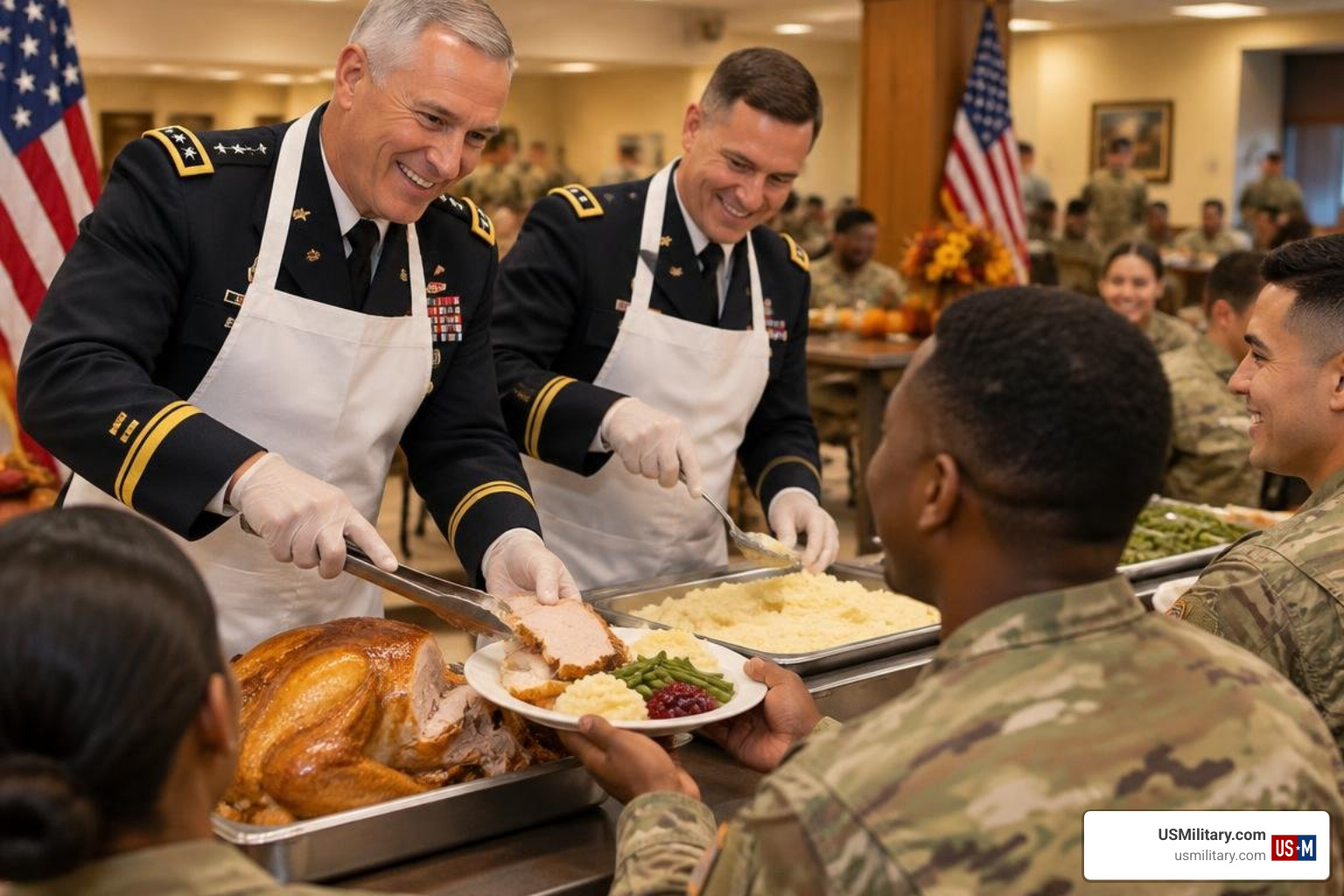
One of the most cherished traditions across all branches is having officers, colonels, sergeants major, and commanding generals put on aprons and stand behind the steam table to serve lower-enlisted troops and their families. This tradition of servant leadership shows that authority in uniform exists to serve and protect. As highlighted in The meal that holds the formation together, this simple act turns a dining hall into a shared family space.
Beyond the main meal, installations observe a modified schedule often called a “holiday routine.” Service members watch football games on barracks lounge televisions, join base turkey trots, or spend time relaxing with visiting families. Many bases also open recreation centers, gyms, and libraries on reduced hours, giving troops a chance to unwind, catch up on rest, and enjoy activities they might not have time for during a normal training week. For junior troops far from home, that relaxed pace and a hot meal served by leadership can make the holiday feel personal rather than routine.
How do active military men and women celebrate Thanksgiving week while deployed?
When deployed to forward operating locations, combat zones, or aboard Navy vessels underway, the operational mission never stops. However, units make every effort to bring a touch of home to the field.
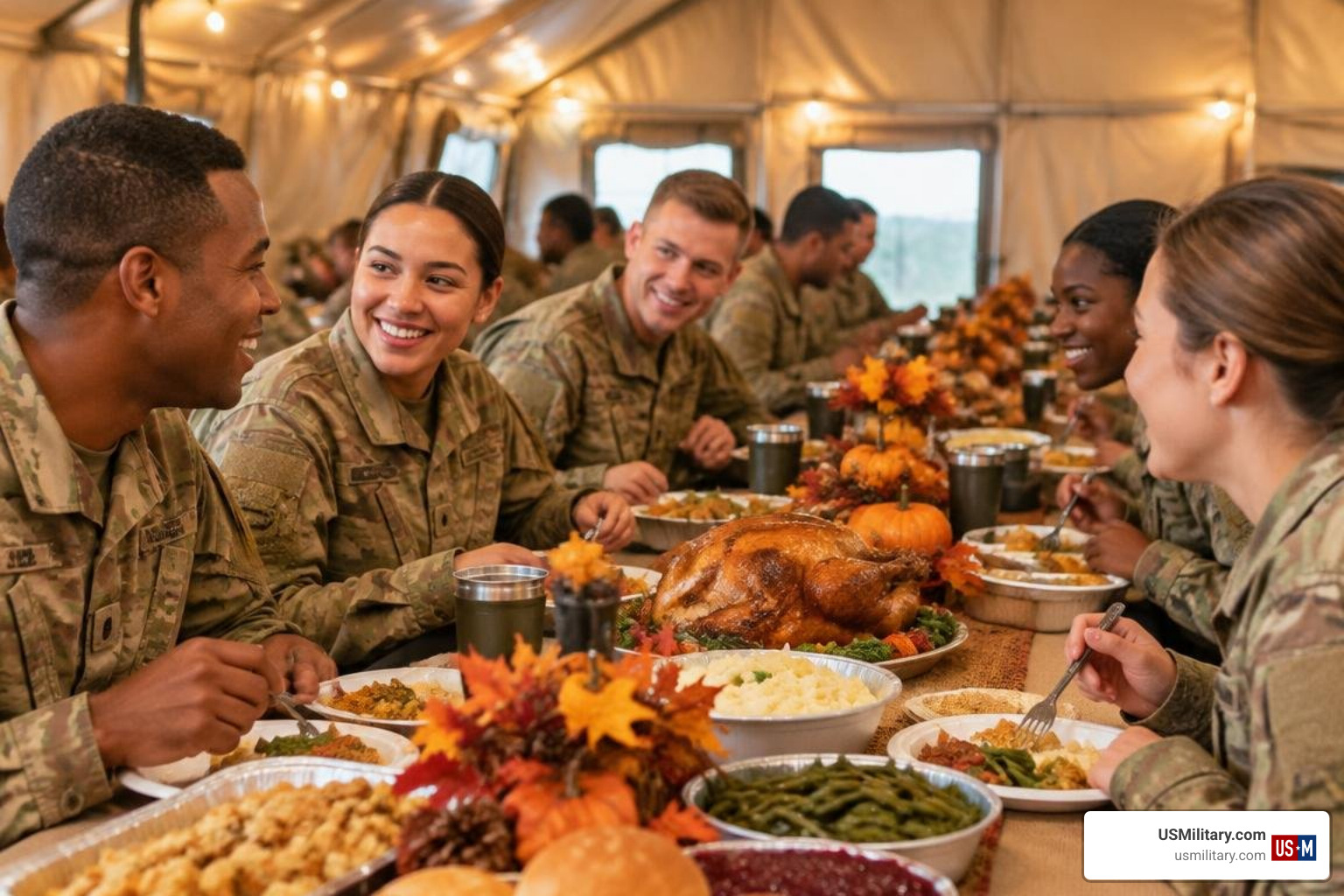
In remote outposts, culinary teams operate field kitchens or heat rations delivered in insulated marmite containers. Navy ships observe holiday routines where non-essential work pauses, leaving only required standing watches and operational duties. Deployed troops share their holiday meal shoulder-to-shoulder with their squads, platoons, or divisions. Calling home via satellite links, video apps, or shipboard internet provides vital moments of connection with distant loved ones.
Commanders and chaplains often make a point of visiting smaller outposts, handing out care packages, and sitting down to eat with troops who might otherwise spend the day on watch. Small touches matter in those settings, from a familiar dessert to a handwritten card from home, and they remind deployed service members that their families and communities back home are thinking of them. Even when the setting is a tent, a flight line, or a ship’s mess deck, the shared meal becomes a moment to pause, reflect, and support one another.
✉ Get updates like this in your inbox
Weekly VA benefit changes, pay updates, and money tips for service members, veterans, and military families. Free, no spam.
The differences between garrison and deployed environments highlight the adaptability of our service members:
| Category | Garrison Celebrations | Deployed & Remote Celebrations |
|---|---|---|
| Meal Setting | Fully decorated DFACs, base galleys, or family homes | Field kitchens, tents, ship mess decks, or remote outposts |
| Duty Demands | Skeleton duty sections; widespread 4-day weekend passes | Active operational watches, security details, and combat missions |
| Family Connection | Immediate family present or short travel distances | Video calls, satellite communications, and care packages |
| Leadership Role | Commanders serve food at formal base meal seatings | Leaders visit outposts, distribute hot chow, and join watches |
How are Thanksgiving meals planned and delivered to troops?
Feeding hundreds of thousands of active service members across every continent is a massive logistical achievement managed by the Defense Logistics Agency (DLA) Troop Support alongside military food-service specialists.
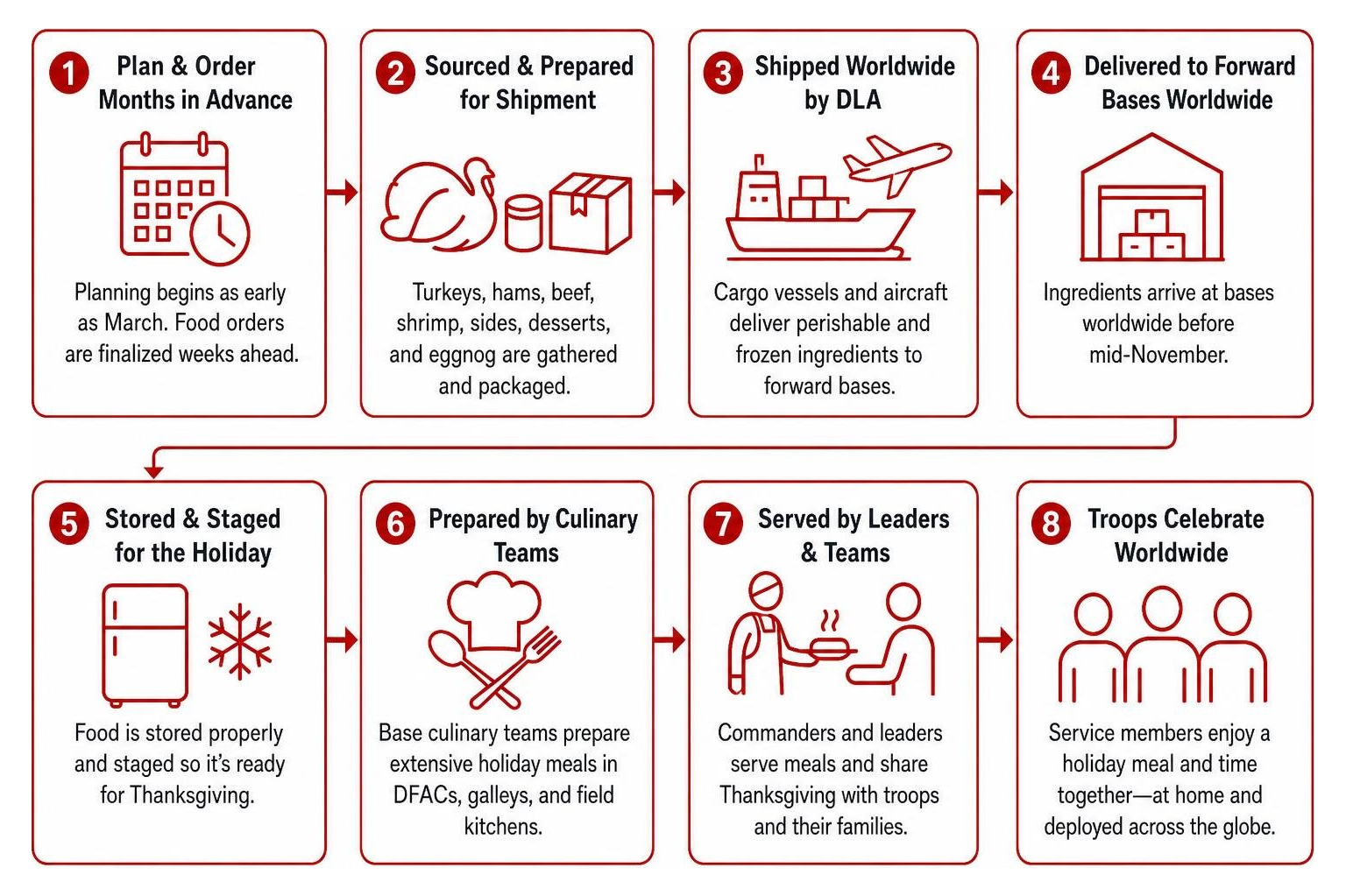
Planning for the Thanksgiving feast begins months in advance, often as early as March. Food orders are finalized weeks ahead so cargo vessels, aircraft, and refrigerated trucks can deliver perishable and frozen ingredients to forward bases before mid-November.
That early planning has to account for weather, distance, and the fact that some locations can only be reached by air or ship. Planners check storage capacity, confirm refrigeration, and coordinate with culinary teams at each installation so menus can be adjusted to what actually arrives. It is a quiet but essential effort, and when it works, troops walk into a dining facility that looks and smells like a holiday meal at home.
The scale of this operation is immense:
- In 2020, as part of the ongoing Thanksgiving Feed-the-Troops tradition, the DLA shipped 9,000 whole turkeys, 51,000 pounds of roasted turkey, 74,000 pounds of beef, 21,000 pounds of ham, 67,000 pounds of shrimp, 16,000 pounds of sweet potatoes, 19,000 pounds of baked pies and cakes, and 7,000 gallons of eggnog.
- In 2021, troops worldwide requested 23,461 gallons of eggnog—roughly triple any prior recorded year.
- By 2023, the DLA delivered 28,945 whole turkeys and broke into the 100,000-pound range for beef (104,717 pounds) to support elevated troop movements and changing global requirements.
These historical milestones showcase the supply chain’s dedication to ensuring that whether a service member is on a destroyer in the Mediterranean or at an airbase in Europe, a traditional meal is ready on Thanksgiving Day.
How do military families and units make Thanksgiving week meaningful?
Thanksgiving week can present emotional challenges for military households facing deployments, intense operational training, or cross-country reassignments. Understanding military family life during demanding assignments helps explain why our military community relies heavily on mutual support and adaptive traditions.
Military families and base communities adapt through several creative traditions:
- Alternate-Day Celebrations: When duty watches or shift work fall on Thanksgiving Thursday, families often hold their Thanksgiving feast the day before, over the weekend, or even weeks later once a deployment ends.
- Unit Friendsgiving & Barracks Potlucks: Single and unaccompanied troops living in barracks are frequently invited to join their married colleagues’ homes. Units organize Friendsgiving dinners to ensure no junior troop eats alone.
- Base Sports and Community Events: Installations host annual 5K Turkey Trots, flag football tournaments, cornhole matches, and volunteer drives.
- Multicultural Menus: Many military families celebrate their diverse heritage by combining traditional roast turkey with regional staples like slow-roasted pernil (pork shoulder), rice and beans, tamales, or lumpia.
- Community Support Programs: Nonprofits play a major role. For instance, programs highlighted by Holiday Meals for Military distribute more than 7,000 holiday meal kits to junior enlisted families during November and December.
Those adaptations are often what families remember most. A meal held on Saturday instead of Thursday, a potluck where everyone brings a dish from home, or a neighbor who checks in during a deployment can mean more than a perfect schedule. Over time, those shared efforts build a sense of belonging that helps military families handle the uncertainty that comes with service.
Access to comprehensive active-duty benefits and support also ensures service members can utilize community centers, chaplains, and morale programs during the holiday season.
Frequently Asked Questions about Military Thanksgiving
Do active-duty service members get Thanksgiving off or travel home?
There is no universal holiday policy across the military. Garrison units often authorize a four-day holiday weekend pass, allowing personnel to travel within a set mileage limit. However, essential watchstanders, medical staff, law enforcement, aircraft maintenance personnel, and deployed units remain on duty to maintain readiness.
What can single service members do if they cannot travel?
Single troops who stay on base have many rewarding options. They can attend the DFAC holiday meal served by base leadership, accept invitations to a colleague’s home, join unit potlucks, participate in base sports tournaments, or prepare simple holiday comfort dishes using commissary provisions in their barracks. Many also use the time to rest, call family, or volunteer for community events, which can turn a quiet week into a chance to connect with others in the same situation.
What foods might appear at a military Thanksgiving?
Military holiday spreads feature traditional staples like roast turkey, stuffing, mashed potatoes, cranberry sauce, gravy, ham, sweet potato casserole, and pumpkin pie. Many dining halls and family potlucks also feature prime rib, steamed shrimp, pernil, plantains, rice dishes, and vegetarian alternatives to satisfy diverse culinary preferences.
Conclusion
Thanksgiving in the armed forces is defined by mutual care, adaptability, and unbroken camaraderie. From senior leaders carving turkeys for junior personnel in bustling base dining halls to small squads sharing a meal at remote operating bases, our service members make the holiday meaningful wherever duty calls. If you are exploring career options, transition assistance, or benefit resources, visit our platform for the latest USMilitary.com military news and service-member guidance. Wherever they serve, that spirit of gratitude and looking out for one another is what makes Thanksgiving week special for our troops and their families.
Free for Service Members & Veterans
Get the military benefits intel no one tells you about.
Weekly updates on VA benefits, pay changes, and money tips — free for service members and veterans.
No spam. Unsubscribe anytime. Your info is never shared.

Leave a Reply