Why VA Chronic Pain Management Matters for Veterans
VA chronic pain management offers veterans a wide range of evidence-based treatments — far beyond just medication. Here’s a quick look at what the VA provides:
| Treatment Category | Examples |
|---|---|
| Behavioral Therapies | CBT-CP, Mindfulness, ACT |
| Complementary Health | Acupuncture, Yoga, Tai Chi |
| Physical Approaches | Physical Therapy, Aqua Therapy, Massage |
| Self-Management Tools | Pacing, Sleep Strategies, Relaxation Techniques |
| Specialized Programs | Active Management of Pain (AMP), Whole Health |
| Opioid Safety | Non-opioid alternatives, Naloxone access |
Chronic pain can affect every part of your life — physically, emotionally, and mentally. For veterans, it’s an especially common challenge. About 44% of military members returning from Afghanistan reported dealing with chronic pain, and it’s one of the top reasons veterans seek VA care.
The good news? The VA has moved well past the old “here’s a prescription” approach. Today, the VA uses a whole-person strategy that treats you — not just your symptoms.
I’m Larry Fowler, publisher of the USMilitary.com Network and a long-time advocate for veteran health and benefits resources, including VA chronic pain management options. Since 2007, I’ve helped connect veterans with the information they need to navigate complex VA systems and make confident decisions about their care. Let’s break down exactly how the VA can help you take control of chronic pain.

The VA’s Modern Approach to VA Chronic Pain Management
In the past, medical professionals often viewed pain as a simple “broken part” that needed fixing. If your back hurt, you got a pill or surgery. We now know that chronic pain—defined as pain lasting longer than three months—is much more complex. The VA has shifted its entire philosophy to reflect this, moving from a “find-it, fix-it” biomedical model to a more comprehensive framework.
At the heart of this transformation are the VA/DoD Clinical Practice Guidelines for Pain, which emphasize patient-centered care and shared decision-making. We aren’t just looking at an X-ray; we’re looking at your life. This modern approach is particularly important for those dealing with service-connected injuries, such as those seeking a VA disability rating for back pain.
The Stepped Care Model for Pain Management (SCM-PM)
Think of the Stepped Care Model as a ladder. The goal is to provide the right level of care at the right time, starting with the least invasive but most effective options.
- Step 1: Primary Care. This is your front line. Your Patient Aligned Care Team (PACT) manages most pain issues using self-management tools, education, and non-opioid treatments.
- Step 2: Specialty Consultation. If pain persists or becomes more complex, your primary team brings in experts. This might include physical therapists, behavioral health specialists, or pharmacists.
- Step 3: Tertiary Care. For the most challenging cases, the VA provides multi-disciplinary pain centers. These centers offer advanced interventions and intensive rehabilitation programs.
This model ensures that you don’t have to jump straight to heavy medications or risky surgeries when a combination of physical therapy and lifestyle changes might actually work better.
The Biopsychosocial Model of Pain
The VA uses the “Biopsychosocial Model” to understand your pain. It sounds like a mouthful, but it’s actually quite simple. It recognizes that pain is influenced by three main areas:
- Biological: The physical injury, nerve damage, or inflammation in your body.
- Psychological: Your thoughts, emotions, and stress levels. (Did you know that anxiety can actually “turn up the volume” on how much pain you feel?)
- Social: Your environment, your job, and your support system at home.
By looking at all three, the VA can create a holistic assessment. For example, if you’re struggling with isolation, that might be making your physical pain harder to bear. Addressing the social side is just as important as treating the physical side.
Behavioral Health and Mind-Body Therapies
One of the most powerful tools in VA chronic pain management isn’t a pill—it’s your brain. Behavioral health therapies help you change how your brain processes pain signals. This is crucial because chronic pain often goes hand-in-hand with other service-connected issues. Many veterans find that managing their mental health is a key step in managing their physical pain, which is why understanding your VA rating for depression or your PTSD VA disability rating is so vital.
Breaking the Cycle with VA Chronic Pain Management Tools
The VA offers Cognitive Behavioral Therapy for Chronic Pain (CBT-CP). This isn’t “talk therapy” in the traditional sense. It’s a structured program that teaches you active coping mechanisms.
- Cognitive Reframing: Learning to identify and change negative thought patterns like “this pain will never end” or “I can’t do anything anymore.”
- Brief CBT-CP: A shorter version often available right in your primary care clinic.
- Headache-Specific CBT: The VA even offers versions specifically designed to help those suffering from chronic migraines or tension headaches.
The goal of CBT-CP is to help you take the “edge” off the pain and regain control over your daily activities. It helps break the cycle where pain leads to inactivity, which leads to more pain.
Mindfulness and Acceptance Therapies
Sometimes, fighting the pain makes it worse. That’s where Acceptance and Commitment Therapy (ACT) and Mindfulness-Based Stress Reduction (MBSR) come in.
✉ Get updates like this in your inbox
Weekly VA benefit changes, pay updates, and money tips for service members, veterans, and military families. Free, no spam.
- Mindfulness: Teaches you to stay present in the moment without judgment. This helps reduce the emotional distress that often accompanies a pain flare-up.
- Emotional Awareness: Programs like Emotional Awareness and Expression Therapy (EAET) help you process the stress and trauma that can get “trapped” in the body as physical tension.
- Resilience Building: These therapies aren’t about making the pain disappear instantly; they are about building your internal strength so the pain doesn’t run your life.
Complementary and Integrative Health Treatments
The VA is a leader in what we call “Whole Health.” This means they embrace treatments that used to be called “alternative” but are now proven to work. These treatments are often used alongside traditional medicine to provide a more complete healing experience.
Whole Health and Meditative Movement
The VA’s Whole Health approach starts with a Personal Health Inventory. You sit down and think about what really matters to you. Is it playing with your grandkids? Is it getting back to a hobby? Your pain management plan is then built around those goals.
- Yoga: The VA even has its own YouTube Yoga videos for veterans. It’s not about being a human pretzel; it’s about gentle movement, breath control, and stretching.
- Tai Chi: This “meditation in motion” is fantastic for balance and reducing stress.
- Yoga Nidra: Also known as “Yoga Sleep,” this is a deep relaxation technique often offered via phone-based classes through the War Related Illness and Injury Study Center (WRIISC).
Restorative and Physical Therapies
Physical movement is often the best medicine for chronic pain. The VA emphasizes “restorative” therapies that help your body heal and function better.
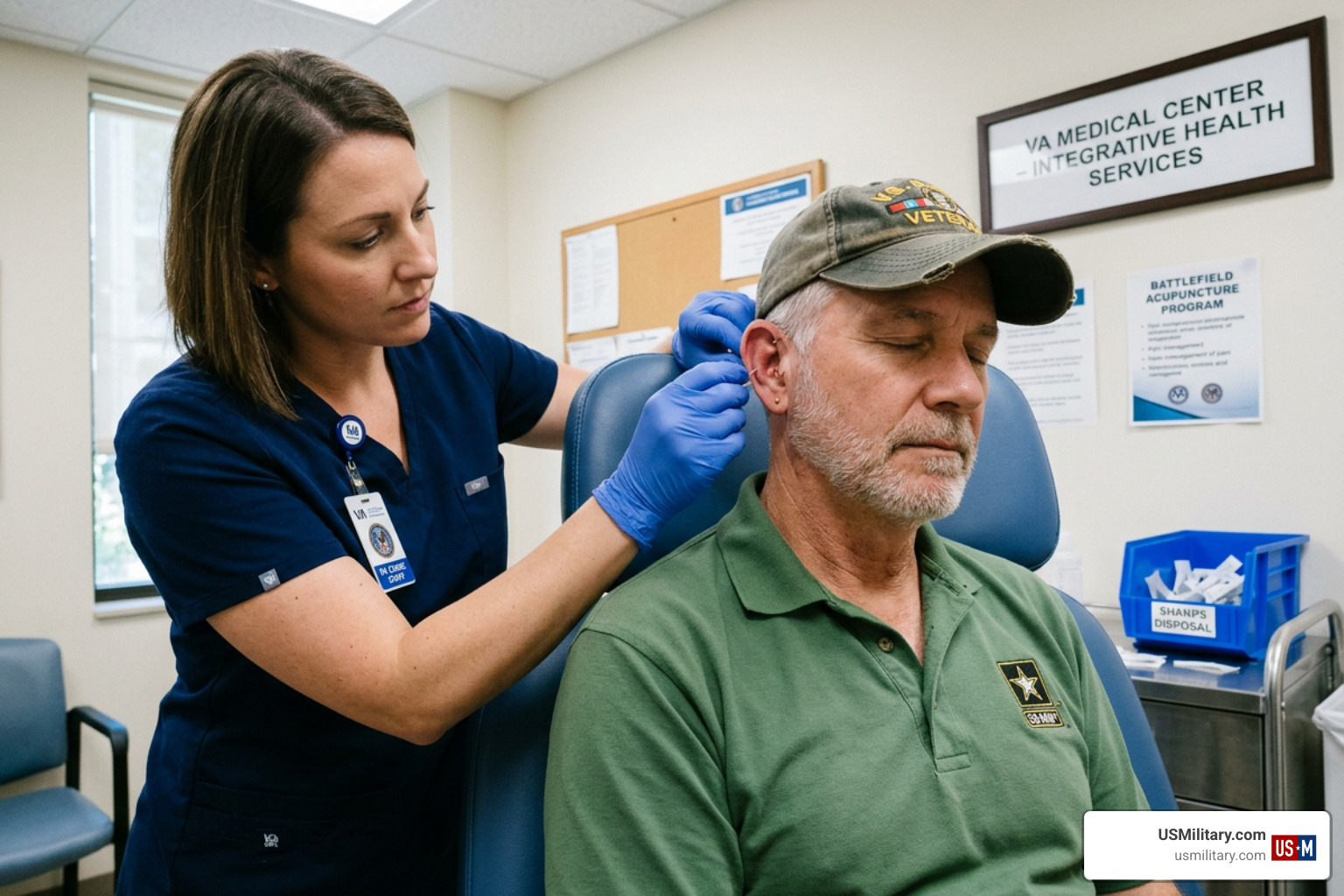
- Battlefield Acupuncture (BFA): A specific type of acupuncture where small needles are placed in the ear. It’s quick, often done in a primary care setting, and can provide immediate relief for many veterans.
- Chiropractic Care: Many VA facilities now have on-site chiropractors to help with spinal alignment and joint issues.
- Massage Therapy: This isn’t just for relaxation; it’s a clinical tool used to reduce muscle tension and improve circulation.
- Aqua Therapy: Exercising in water takes the weight off your joints, making it much easier to move if you have severe arthritis or back pain.
For more details on how these work, you can explore the Complementary Health Approaches to Chronic Pain resources.
Specialized Programs and Opioid Safety
We know the history—for a long time, opioids were the go-to for chronic pain. But we’ve learned the hard way that long-term opioid use can actually make pain worse (a condition called hyperalgesia) and carries high risks of addiction and overdose. The VA has worked tirelessly to reduce opioid reliance, cutting prescription rates by 64% between 2012 and 2020.
If you are struggling with headaches specifically, it’s worth checking your VA disability rating for chronic headaches to see what specialized support you qualify for.
The Active Management of Pain (AMP) Program
One of the “bright spots” in the VA system is the Active Management of Pain (AMP) program. This is an 8-week interdisciplinary program that brings together behavioral health and physical therapy.
- Peer Support: You meet once a week for two hours with a group of fellow veterans. Hearing that you aren’t alone is a massive part of the healing process.
- Functional Improvement: The focus isn’t just on a pain score from 1 to 10. It’s about: Can you walk further? Is your mood better? Are you sleeping more soundly?
- The “Toolbox”: By the end of the 8 weeks, you have a literal toolbox of techniques—from breathing exercises to pacing strategies—that you can use for the rest of your life.
Opioid Safety and Non-Pharmacological Alternatives
The VA’s Opioid Safety Initiative (OSI) is all about keeping you safe while managing your pain effectively.
- Buprenorphine: For veterans who have been on long-term opioids, the VA often recommends switching to buprenorphine. It’s a “partial agonist,” meaning it treats pain and prevents withdrawal but has a much lower risk of overdose and a “ceiling effect” on respiratory depression.
- Naloxone Distribution: The VA provides overdose reversal kits (Narcan) to veterans at risk, ensuring that a mistake doesn’t turn into a tragedy.
- VA PACT Pain Champions: Every VA facility has “Pain Champions”—providers who specialize in bringing modern, non-drug pain options into the primary care setting.
Practical Self-Management Strategies for Veterans
The most important member of your healthcare team is you. The VA provides tons of resources to help you manage pain at home. This is especially helpful if you’re also dealing with secondary issues like sleep apnea or sinus problems, which can be explored through the Insomnia VA rating or the Sinusitis VA disability rating.
Daily Tools for Pain Control
The VA often uses the phrase “Motion is Lotion.” It means that staying still actually makes joints stiffer and pain worse. Here are some practical tips they recommend:
- Activity Pacing: Don’t try to do everything on a “good day” and then spend three days in bed. Learn to take breaks before the pain spikes.
- Sleep Hygiene: Pain and sleep are a two-way street. Improving your sleep habits can actually lower your pain levels.
- Communication Skills: Use “I” statements (e.g., “I am feeling a lot of tension right now and need to sit down for ten minutes”) to help your family understand what you’re going through without causing conflict.
- Relaxation Techniques: Deep breathing, progressive muscle relaxation, and guided imagery can “reset” your nervous system during a flare-up.
Accessing VA Resources
You don’t have to wait for an appointment to get started. The VA has built a digital library of tools:
- MyHealtheVet: Use this to track your pain levels, message your team, and refill non-opioid medications.
- Veterans Health Library: A massive collection of guides on everything from osteoarthritis to spinal cord stimulation.
- Mobile Apps: The VA offers apps like the CBT-i Coach (for sleep) and the Mindfulness Coach that you can download for free.
Frequently Asked Questions
What are the Six Essential Elements of Good Pain Care?
The VA follows these six pillars to ensure you get the best treatment:
- Veteran/Family Education: Empowering you to make shared decisions.
- Team Training: Ensuring all your providers know the latest in pain science.
- Non-Pharmacological Integration: Making sure things like yoga and acupuncture are part of your plan.
- Evidence-Based Prescribing: Using medications safely and only when necessary.
- Team Communication: Bringing your whole team together (even virtually) to discuss your care.
- Outcome Monitoring: Using data to see if your treatment is actually making your life better.
How can I access the Active Management of Pain (AMP) program?
The best way to get into AMP is through a referral from your Primary Care Provider. Ask them about the “Pain Behavioral Health Clinic” or “AMP program” at your local facility. While it started in specific locations like Columbia, SC, many facilities offer similar interdisciplinary pain schools.
Common Questions About VA Chronic Pain Management
- How do I find a local facility? You can use the VA’s facility locator online to find clinics offering specialized pain services.
- What if I’m in a crisis? You can chat confidentially at VeteransCrisisLine.net.
- Can I use Telehealth? Yes! Many behavioral therapies (like CBT-CP) and even some movement classes are now available via VA Video Connect, so you can receive care from your living room.
Conclusion
At USMilitary.com, we believe that no veteran should have to suffer in silence or feel like their only option is a bottle of pills. VA chronic pain management has evolved into a world-class system that respects your service and prioritizes your long-term quality of life. Whether it’s through a yoga mat, an acupuncture needle, or a group session with fellow vets, there is a path forward.
You’ve spent your career looking out for others; now it’s time to look out for yourself. Reach out to your PACT team today and start building your own personalized pain management plan. For more help navigating your journey, check out more info about VA benefits on our site. You earned these resources—don’t hesitate to use them.
Free for Service Members & Veterans
Get the military benefits intel no one tells you about.
Weekly updates on VA benefits, pay changes, and money tips — free for service members and veterans.
No spam. Unsubscribe anytime. Your info is never shared.


