How to Find Military Financial Assistance

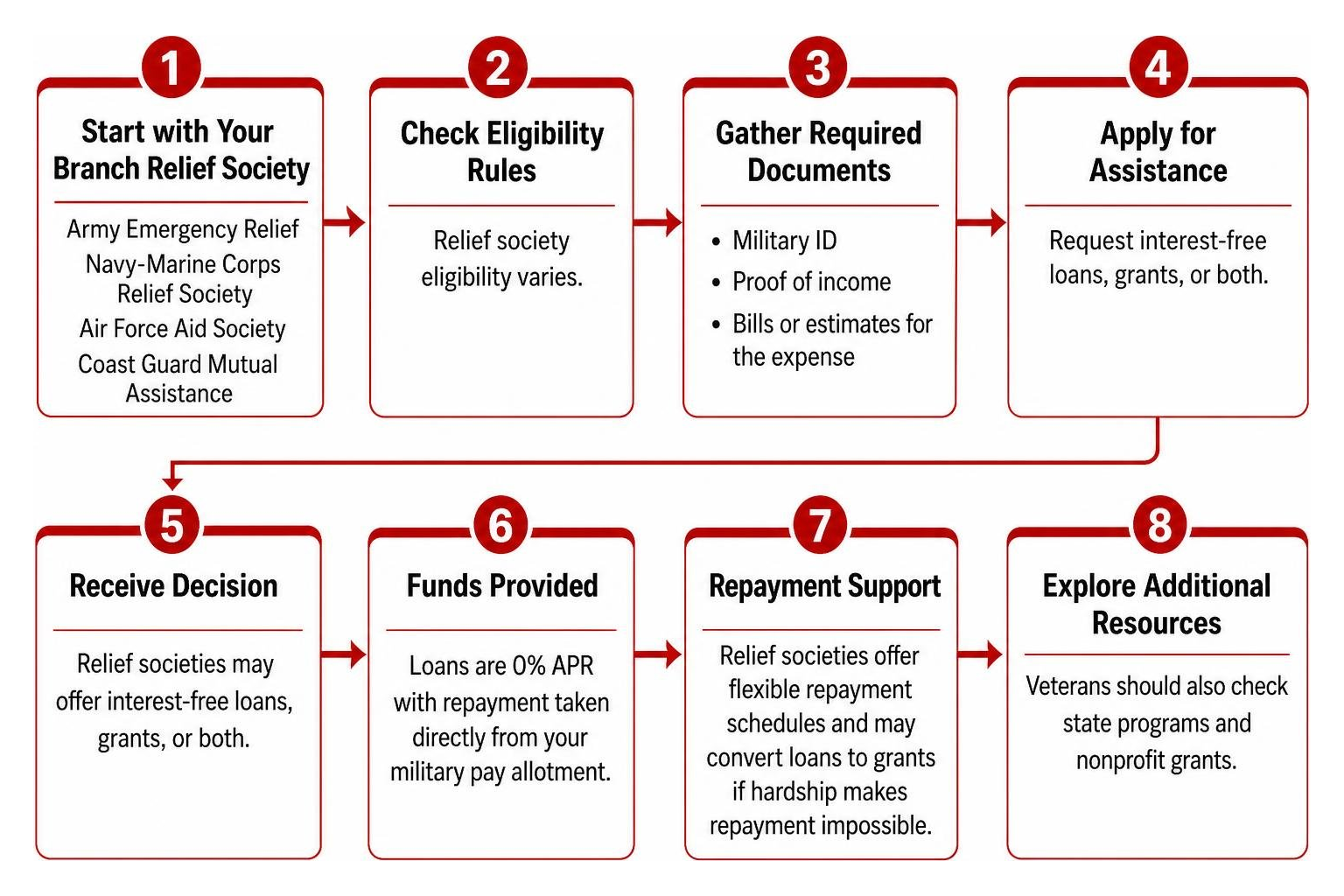
Military financial assistance can help eligible service members and families pay for urgent needs such as rent, utilities, car repairs, and emergency travel. Start with your branch’s relief society: Army Emergency Relief, Navy-Marine Corps Relief Society, Air Force Aid Society, or Coast Guard Mutual Assistance. These organizations may offer interest-free loans, grants, or both. Check the eligibility rules, then gather your military ID, proof of income, and bills or estimates for the expense. Veterans should also check state programs and nonprofit grants, since relief society eligibility varies.
I’m Larry Fowler, a Navy veteran and publisher of USMilitary.com. I’ve covered military benefits and financial planning through the USMilitary.com Network since 2007, and this guide explains how to find military financial assistance that fits your situation.
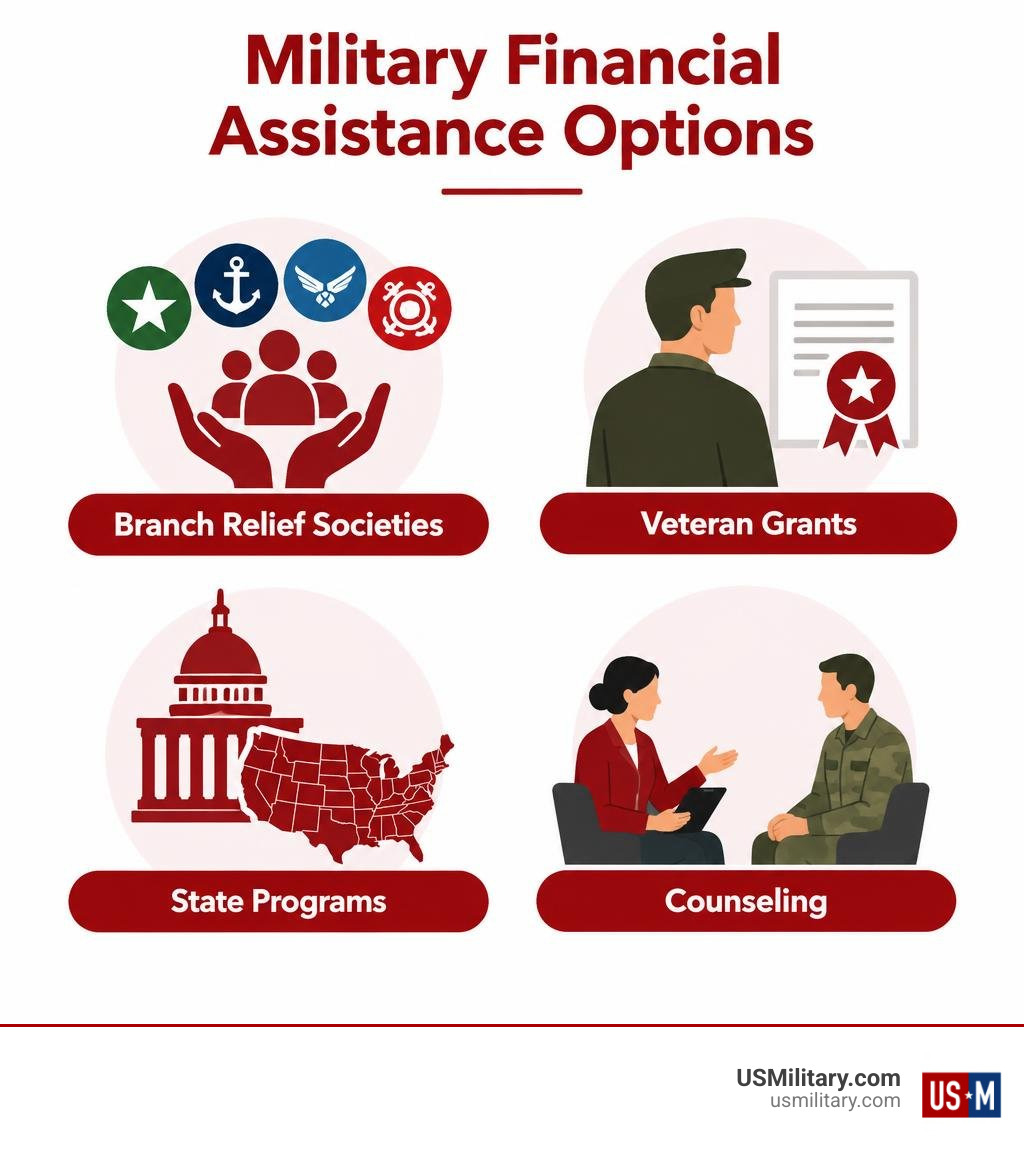
Core Types of Military Financial Assistance for Service Members and Families
When an unexpected emergency threatens your household stability, predatory lenders offering triple-digit interest rates should never be your first call. Our armed forces maintain a robust safety net designed to protect your readiness and well-being. Understanding these options starts with reviewing essential active duty benefits alongside official military relief and emergency financial help resources.
Emergency Relief Grants and Interest-Free Loans
The bedrock of emergency support comes in two primary vehicles: zero-interest loans and non-repayable grants. Unlike commercial financing, these loans carry 0% APR and feature flexible repayment schedules deducted directly from your military pay allotment. When financial hardship makes repayment impossible, relief societies can convert loans into outright grants or issue direct grant funding from day one.
These funds cover immediate essentials:
- Emergency travel for a family illness or bereavement
- Critical vehicle repairs required to commute to duty
- Past-due rent, mortgage payments, or utility disconnect notices
- Uncovered medical and dental co-pays
- Disaster relief after hurricanes, floods, or wildfires
If you serve in the Reserve or National Guard on active Title 10 orders, reserve military members can get emergency loans through these exact same relief societies during your activation window.
Non-Emergency and Educational Military Financial Assistance
Financial support extends beyond acute crises into career advancement and family resilience. Frequent permanent change of station (PCS) moves can disrupt spouse employment, which is why targeted educational assistance exists.

Eligible spouses can access the SpouseWorks Scholarship, which delivers up to $4,000 in financial aid for high-demand licenses, certifications, or associate degrees. Learn more about maximizing these programs in our military spouse benefits complete guide.
Branch-Specific Relief Societies: Eligibility and Coverage
Each branch operates an independent, four-star Charity Navigator-rated relief society. Together, these four organizations support over 2.5 million service members, families, and qualified retirees across the United States. Thanks to formal cross-servicing agreements, you can walk into any military installation’s relief office—regardless of branch—and apply for help from your specific society.
| Organization | Primary Eligibility | Key Programs | Typical Max Support |
|---|---|---|---|
| Army Emergency Relief (AER) | Active Army, Title 10 Guard/Reserve, Retirees, Surviving Spouses | Quick Assist, Disaster Aid, Scholarships | Case-by-case; thousands in zero-interest loans/grants |
| Navy-Marine Corps Relief Society (NMCRS) | Active Navy/Marines, Activated Reservists, Retirees, Dependents | Quick Assist Loans, Budget for Baby, Emergency Travel | Up to $1,000 for Quick Assist; higher for standard relief |
| Air Force Aid Society (AFAS) | Active Air/Space Force, Title 10 Reservists, Retirees, Surviving Spouses | Falcon Loans, Standard Assistance, Education Grants | Falcon Loans up to $1,000; higher for standard claims |
| Coast Guard Mutual Assistance (CGMA) | Active Coast Guard, Reserve, Auxiliarists, Civilian Employees | Quick Loans, Education Loans, Disaster Relief | Quick Loans up to $1,000+; extensive emergency grants |
Army Emergency Relief (AER)
Since 1942, Army Emergency Relief has supported over 4 million soldiers and families with more than $2 billion in assistance—including $1 billion disbursed since 9/11 alone. In 2025, AER assisted more than 28,000 soldiers and family members.
A major benefit of AER is streamlined accessibility. Soldiers in the ranks of E-4 and below can self-sign their own applications without obtaining a company commander’s signature, speeding up crisis response. To explore full eligibility and grant rules, visit the Army Emergency Relief financial assistance programs page.
✉ Get updates like this in your inbox
Weekly VA benefit changes, pay updates, and money tips for service members, veterans, and military families. Free, no spam.
Navy-Marine Corps Relief Society (NMCRS)
Established in 1904, the Navy-Marine Corps Relief Society is the oldest military relief society. NMCRS provides interest-free loans and grants for critical needs ranging from emergency leave travel to essential living costs. Their signature Quick Assist Loan program delivers up to $1,000 in immediate zero-interest funds through an expedited screening process. NMCRS also runs “Budget for Baby” workshops that provide expectant sea service families with free layettes and financial roadmaps.
Air Force Aid Society (AFAS) and Coast Guard Mutual Assistance (CGMA)
Supporting both Airmen and Space Force Guardians, AFAS delivers zero-interest loans and emergency grants to cover urgent needs.

Under the AFAS emergency financial assistance umbrella, Falcon Loans provide up to $1,000 through a fast-tracked application. Coast Guard Mutual Assistance (CGMA) provides an identical lifeline to Coast Guard personnel, offering quick-turnaround loans, emergency grants, and child care support.
Application Process, Documentation, and Ineligible Expenses
Applying for relief society aid is straightforward. While you can review commercial options in our top military loans detailed reviews, non-profit relief societies should always be your first stop to avoid unnecessary debt.
Applying for Military Financial Assistance Through Relief Societies
- Online or In-Person Intake: Submit your application through your branch society’s secure web portal or visit your installation’s Family Readiness Center.
- Caseworker Review: A dedicated caseworker reviews your budget, household income, and hardship details.
- Approval and Disbursement: Approved funds are distributed directly to you via direct deposit or sent directly to vendors (such as landlords or mechanics).
- Allotment Setup: If receiving a loan, repayment begins automatically via payroll deduction, typically structured over 12 to 24 months.
Required Verification Documents and Common Expense Exclusions
To prevent processing delays, gather these core records:
- Valid military ID (CAC or dependent ID enrolled in DEERS)
- Most recent Leave and Earnings Statement (LES)
- Title 10 activation orders (for Guard and Reserve personnel)
- Substantiating documentation (written mechanic estimates, lease agreements, or past-due utility bills)
What Relief Societies Will Not Cover:
Relief societies do not provide funds for civilian court fines, legal penalties, credit card debt consolidation, bail bonds, luxury purchases, or speculative business investments.
State Programs and Veteran Nonprofit Support Networks
When federal and branch relief societies cannot cover your full financial gap, state-level veterans affairs departments and dedicated non-profit charities step in. Make sure you avoid missing out on these benefits by checking the veterans guide to not leaving money on the table.
State-Level Hardship Relief and the American Red Cross Hero Care Network
Many states offer emergency funds for resident service members and veterans. A prime example is Louisiana’s Military Family Assistance Fund (MFA), which can pay up to $10,000 for one claim per active-duty order in a 12-month period to cover living essentials during deployment or activation hardship.
On a national level, the American Red Cross Hero Care Network links families directly to emergency financial support 24/7 at +1 877-272-7337. The Red Cross independently verifies family emergencies, enabling rapid emergency leave approvals and emergency travel funding.
Nonprofit Grants for Wounded Warriors and Veterans
Honorably discharged veterans and wounded warriors have access to several major non-profit funds:
- Operation Homefront: The Critical Financial Assistance Program delivers direct grants for mortgage relief, home repairs, and medical bills, paying service providers directly.
- Veterans of Foreign Wars (VFW): The VFW’s Financial Assistance for Service Members program awards emergency grants of up to $2,500 to help active-duty troops and activated Guard/Reserve members handle daily necessities.
- USA Cares & Soldiers’ Angels: Provide non-repayable food assistance, utility bill payments, and rent support to veterans facing acute hardship.
Frequently Asked Questions About Military Financial Support
Who is eligible for zero-interest emergency military loans?
Active-duty service members, activated National Guard and Reserve personnel serving under Title 10 orders, military retirees, and surviving spouses/dependents registered in DEERS are eligible for zero-interest relief society loans.
What expenses will military relief organizations refuse to cover?
Relief organizations generally deny requests for traffic citations, civil court fines, gambling debts, luxury items, vacations, and general civilian credit card payoff schemes.
Where can service members get free, confidential financial counseling?
Service members can access free financial counselors through installation Personal Financial Managers (PFMs), the DoD Financial Readiness (FINRED) program, and Military OneSource (800-342-9647). If you are mapping out long-term retirement and investment goals, discover why every service member needs a military financial advisor.
Conclusion
Facing an unexpected financial emergency can be stressful, but you never have to navigate it alone. By leveraging zero-interest relief society loans, state hardship grants, and veteran non-profit networks, you can resolve immediate budget gaps while protecting your credit and military career. For comprehensive guides on benefits, pay charts, and loan programs, explore our full suite of military emergency financial assistance resources at USMilitary.com.
Free for Service Members & Veterans
Get the military benefits intel no one tells you about.
Weekly updates on VA benefits, pay changes, and money tips — free for service members and veterans.
No spam. Unsubscribe anytime. Your info is never shared.



Leave a Reply