Understanding America’s Most Elite Counter-Terrorism Force
Delta special forces, officially known as the 1st Special Forces Operational Detachment-Delta (1st SFOD-D), represents the pinnacle of U.S. Army special operations. This elite unit operates under the Joint Special Operations Command (JSOC) and conducts the nation’s most sensitive counter-terrorism missions.
Quick Facts About Delta Force:
| Aspect | Details |
|---|---|
| Official Name | 1st Special Forces Operational Detachment-Delta (1st SFOD-D) |
| Founded | November 19, 1977 |
| Headquarters | Fort Liberty (formerly Fort Bragg), North Carolina |
| Primary Missions | Counter-terrorism, hostage rescue, direct action, special reconnaissance |
| Recruitment Sources | U.S. Army Special Forces (Green Berets) and 75th Ranger Regiment |
| Selection Success Rate | Approximately 10% (9 out of 10 candidates fail) |
| Estimated Operators | 250-400 combat-trained operators |
The unit maintains extreme secrecy. The Pentagon doesn’t officially acknowledge its existence, and it operates under various cover names including Combat Applications Group (CAG), Army Compartmented Elements (ACE), and Task Force Green. Within the special operations community, members simply call it “the Unit.”
Founded by Colonel Charlie Beckwith in 1977, Delta Force emerged as America’s answer to growing international terrorism threats. Modeled after the British Special Air Service (SAS), the unit specializes in missions too sensitive or complex for conventional forces.
Delta Force’s structure includes:
- Four assault squadrons (A, B, C, D) for direct action and reconnaissance
- Aviation squadron for specialized air support
- Clandestine squadron for highly classified operations
- Combat support squadron for medical, intelligence, and logistics
President Trump once described Delta operators as “the most highly trained soldiers in the world,” adding that “there’s nobody that has their talent.” This assessment reflects decades of proven capability in operations ranging from the failed 1980 Iran hostage rescue attempt to the 2019 raid that killed ISIS leader Abu Bakr al-Baghdadi.
The path to becoming a Delta operator is brutal. Candidates must already serve in elite Army units, then survive a four-week selection process that includes grueling land navigation tests, psychological evaluations, and physical challenges that push soldiers to their breaking point. Those who pass face an additional six-month Operator Training Course covering advanced skills from precision marksmanship to espionage tradecraft.

The Origins and Purpose of an Elite Force
The story of Delta special forces begins with a vision and a pressing global need. In the mid-1970s, the world witnessed a surge in international terrorism, from airline hijackings to hostage crises. These events highlighted a critical gap in the U.S. military’s capabilities: a dedicated, highly specialized unit capable of rapidly responding to complex, high-stakes counter-terrorism operations.

This realization struck a chord with Colonel Charlie Beckwith, a decorated U.S. Army Special Forces officer. Having served an exchange tour with the British 22nd Special Air Service (SAS) Regiment, Colonel Beckwith recognized the effectiveness of their small, highly trained, and versatile teams. He tirelessly advocated for the creation of a similar unit within the U.S. Army. His persistence paid off, and on November 19, 1977, the 1st Special Forces Operational Detachment-Delta (1st SFOD-D) was formally established.
Headquartered at Fort Liberty (formerly Fort Bragg), North Carolina, Delta special forces was designed to be America’s premier direct-action and counter-terrorism force. Its establishment was a significant organizational and methodological change, initially met with resistance from some officials who favored larger, more conventional units.
A pivotal moment that underscored the absolute necessity for such a unit was the disastrous Operation Eagle Claw in April 1980. This attempt to rescue American hostages held in Tehran, Iran, ended in tragedy, with equipment failures and the loss of eight servicemen. The failure directly led to a comprehensive overhaul of U.S. special operations capabilities, including the creation of the Joint Special Operations Command (JSOC), under whose operational control Delta special forces now falls.
What is Delta Force?
Delta special forces, often simply referred to as “the Unit” by those in the know, is officially known as the 1st Special Forces Operational Detachment-Delta (1st SFOD-D). It is a highly selective and incredibly secretive component of the U.S. Army, falling under the administrative control of the U.S. Army Special Operations Command (USASOC) but operationally controlled by the Joint Special Operations Command (JSOC).
We consider Delta special forces a “tier-one” Special Mission Unit (SMU). This designation signifies its unparalleled capabilities, rigorous selection, and specialized mission set, which places it at the very top echelon of U.S. special operations forces. Due to its covert nature and the sensitivity of its missions, the U.S. government rarely, if ever, officially acknowledges its existence. To maintain this essential secrecy, the unit operates under various cover names, including Combat Applications Group (CAG), Army Compartmented Elements (ACE), and Task Force Green.
The Unit: A Culture of Secrecy
The veil of secrecy surrounding Delta special forces is not just a tradition; it’s an operational imperative. The classified nature of their missions, often involving counter-terrorism, hostage rescue, and the capture or elimination of high-value targets, demands absolute discretion. This secrecy protects the operators themselves, their families, and the integrity of future operations.
We understand that even the identities of Delta special forces operators are fiercely protected. Their involvement in an operation is rarely confirmed, and even when casualties occur, the Army often refuses to disclose their true unit affiliation. This commitment to anonymity extends to every aspect of their work. This is why we rely heavily on accounts from former operators and reputable journalists who have extensively researched the unit to piece together its public history.
The importance of this secrecy was highlighted in 2023 when the White House accidentally published a photo revealing the faces of Delta special forces members during President Biden’s visit to Israel, leading to swift backlash and apologies. This incident underscored the critical need for operational security. As one expert puts it, they are truly the most secret of secret units, performing high-stakes missions often under the direct authority of the National Command Authority.
Becoming an Operator: The Path to Delta
Becoming a Delta special forces operator is not for the faint of heart. It’s a journey that demands an extraordinary level of dedication, resilience, and skill, pushing individuals beyond their perceived limits. The standards are so rigorous that only the absolute best of the best even stand a chance.
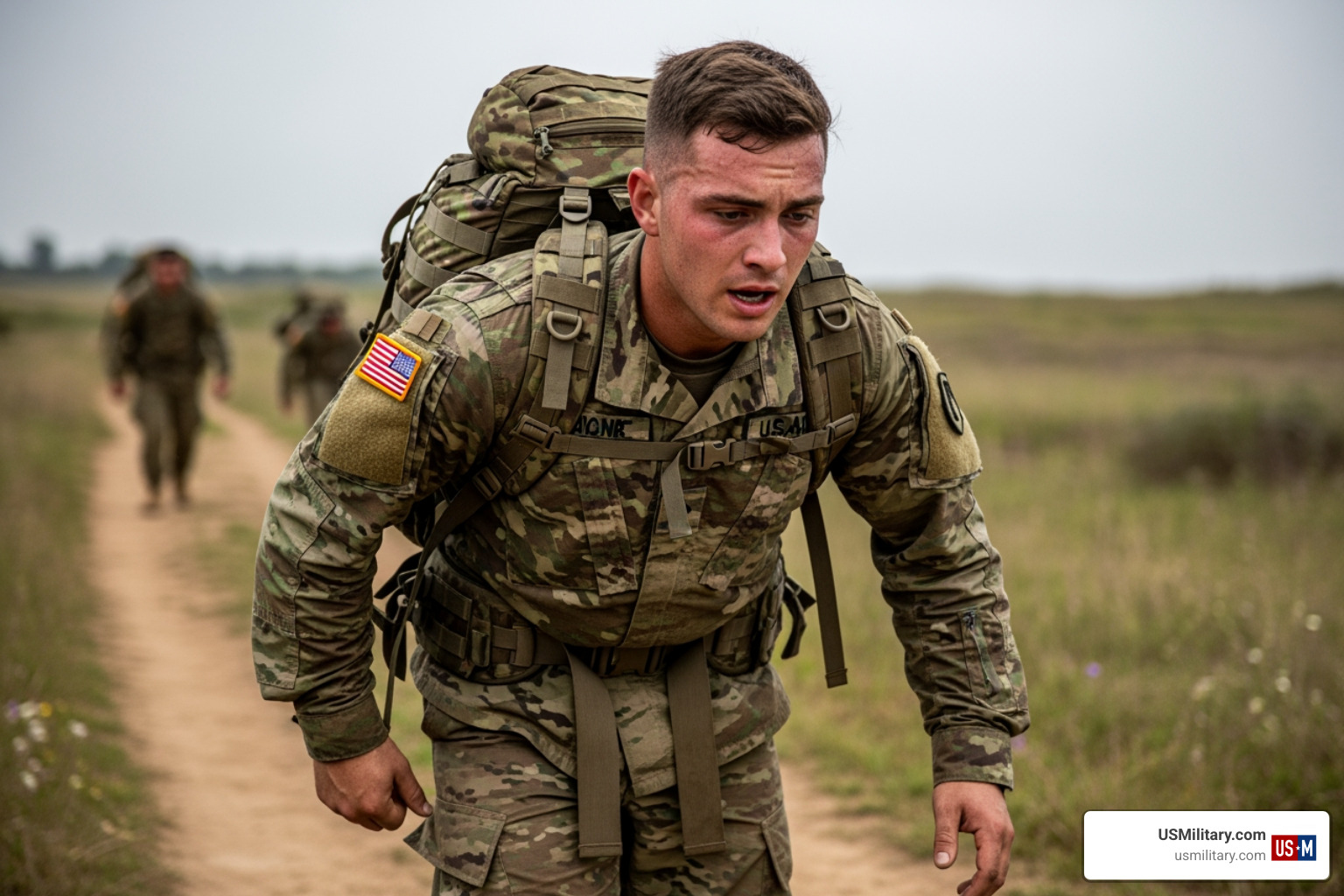
This path is designed to find the top 1% of the military – individuals with best physical endurance, unwavering mental fortitude, and the ability to think critically under immense pressure. The selection process is notorious for its high attrition rate, ensuring that only those with truly exceptional qualities earn the right to wear the coveted “scroll.”
Who Can Join Delta Force?
Delta special forces doesn’t recruit directly from the civilian world or even from entry-level military positions. The unit seeks out seasoned soldiers who have already proven themselves in other elite Army units. The primary recruitment pools are the U.S. Army Special Forces (Green Berets) and the 75th Ranger Regiment. However, candidates can also come from other branches of the U.S. military, including the Coast Guard and National Guard, though this is less common.
To even be considered, candidates must meet a stringent set of basic requirements:
- Rank: Enlisted personnel must be E-4 through E-8, while officers must be O-3 through O-4.
- Age: Candidates must be at least 21 years old.
- Airborne Qualification: An airborne qualification is mandatory, or a willingness to volunteer for training.
- ASVAB Score: A minimum score of 110 on the Armed Services Vocational Aptitude Battery (ASVAB) General Technical (GT) section is required.
- Security Clearance: The ability to obtain a Secret security clearance is essential.
- Disciplinary Record: Candidates must have no record of disciplinary action.
- Service Remaining: At least 2.5 years of service left on their enlistment contract.
These are just the minimums. The individuals who succeed in the Delta special forces pipeline typically possess sterling service records, exceptional leadership qualities, and a deep well of combat experience.
The Grueling Selection Process for delta special forces
The selection process for Delta special forces is a legendary crucible designed to break all but the most determined. This four-week Assessment and Selection (A&S) course is unlike anything else in the U.S. military, and it’s where roughly 9 out of 10 candidates fail.
The process begins with a series of demanding physical fitness tests, pushing candidates to their absolute physical limits. However, physical prowess is just the beginning. The core of A&S revolves around intense land navigation exercises, often conducted over vast distances with heavy loads. The most famous of these is “The Long Walk,” a grueling, timed ruck march that can span up to 40 miles (64 km) over rough, steep terrain, with candidates carrying a 45-pound (20-kg) rucksack. This test is often conducted at night, adding another layer of mental and physical challenge. As candidates progress, the weight of their rucksacks increases, and the time limits decrease, relentlessly testing their stamina and will.
Beyond the physical, the selection process digs deep into a candidate’s mental and psychological makeup. Extensive psychological evaluations and stress tests are administered to assess their decision-making under duress, problem-solving abilities, and mental resilience. The intent is to determine if a candidate possesses the unique blend of intelligence, adaptability, and unbreakable spirit required to operate effectively in the most dangerous and complex environments imaginable.
Operator Training Course (OTC)
For the few who conquer the grueling Assessment and Selection, the journey is far from over. They then start on the six-month Operator Training Course (OTC), where they are transformed into full-fledged Delta special forces operators. This intensive program refines their existing military skills and introduces them to an array of specialized capabilities.
OTC covers:
- Advanced Marksmanship: Precision shooting under various conditions, including close-quarters combat (CQB).
- Demolitions and Breaching: Expert use of explosives and specialized tools for rapid entry into structures.
- Espionage Tradecraft: Learning covert techniques often associated with intelligence agencies, such as dead drops, surveillance, and counter-surveillance.
- Executive Protection: Training in close-quarters security and VIP protection.
- Combined Skills Exercises: Integrating all learned skills into complex scenarios.
- Final Culmination Mission: A comprehensive, multi-day exercise that tests all aspects of their training in a realistic operational environment.
It is only after successfully completing OTC that an individual earns the coveted title of “Operator.” Within the special operations community, this term is specifically reserved for members of Delta special forces who have completed this rigorous selection and training pipeline, signifying their unique status and capabilities.
The Elite US delta special forces: Missions and Structure
Our nation’s Delta special forces are synonymous with versatility, global reach, and unparalleled expertise. As a tier-one unit, they possess capabilities that allow them to conduct the most sensitive and dangerous missions across the spectrum of special operations.
From direct action raids to unconventional warfare, Delta special forces operators are trained to adapt to any environment and overcome any challenge, making them an indispensable asset to U.S. national security.
Primary Roles and Mission Set
The primary mission of Delta special forces is counter-terrorism. This encompasses a broad range of high-stakes operations, including:
- Hostage Rescue: Rapidly deploying to extract captives from dangerous situations, whether on land, sea, or air.
- High-Value Target (HVT) Capture/Kill: Locating, apprehending, or eliminating individuals deemed significant threats to U.S. interests.
- Direct Action: Short-duration strikes and raids against specific targets.
- Special Reconnaissance: Gathering critical intelligence in denied areas, often behind enemy lines.
- Close Protection: Providing security for high-profile individuals in hostile environments.
- Counter-proliferation of Weapons of Mass Destruction (WMDs): Preventing the spread or use of chemical, biological, radiological, and nuclear weapons.
Their missions are often characterized by extreme precision, speed, and discretion, reflecting their role as the tip of the spear in America’s fight against global threats.
Organizational Structure
Delta special forces is structured to maximize flexibility and effectiveness in its diverse mission set. Inspired by the British SAS, the unit’s core is divided into four assault squadrons: A, B, C, and D. Each squadron is further broken down into three troops. Operators typically begin their careers in an assault troop, gaining experience in direct action. More seasoned operators may transition to reconnaissance/sniper troops, leveraging their advanced skills for intelligence gathering and precision engagements.
Beyond the direct action squadrons, Delta special forces also includes specialized support elements crucial to its operations:
- Squadron E (Aviation): Provides dedicated air support using specialized aircraft, often working closely with the 160th Special Operations Aviation Regiment (SOAR), known as the “Night Stalkers.”
- Squadron G (Clandestine): Focuses on highly sensitive reconnaissance and intelligence operations, often leveraging unique tradecraft.
- Combat Support Squadron: Comprises essential personnel specializing in medical support, intelligence analysis, logistics, and explosive ordnance disposal (EOD). While members of these support squadrons are vital, they are not typically considered “operators” unless they have completed the full OTC.
The total personnel assigned to Delta special forces is estimated to be around 1,000-2,000 soldiers, with approximately 300 to 400 being the core combat-trained operators. Sean Naylor, a renowned special operations journalist, estimated in 2001 that the unit had nearly 1,000 soldiers, with about 250 to 300 trained for direct action and hostage rescue.
A Legacy of High-Stakes Operations
Over its history, Delta special forces has been involved in countless classified operations, many of which may never see the light of day. However, some notable missions have become publicly known, cementing their legacy as elite warriors. These operations highlight the unit’s capability to execute complex tasks under extreme pressure:
- Operation Urgent Fury (Grenada, 1983): Delta special forces played a role in the U.S. invasion of Grenada, including a direct action mission to rescue Governor-General Paul Scoon.
- Operation Acid Gambit (Panama, 1989): During the U.S. invasion of Panama, 23 Delta special forces operators conducted a daring mission to rescue American hostage Kurt Muse from Modelo Prison.
- Persian Gulf War (1990-1991): Delta special forces provided critical reconnaissance for coalition forces and were instrumental in sabotaging 26 Scud missiles aimed at Israel. They also conducted elaborate hoaxes to deceive Iraqi divisions.
- Operation Gothic Serpent (Somalia, 1993): Often referred to as “Black Hawk Down,” this mission involved Delta special forces operators in intense urban combat in Mogadishu while attempting to capture warlord Mohamed Farrah Aidid. Master Sgt. Gary Gordon and Sgt. 1st Class Randy Shughart were posthumously awarded the Medal of Honor for their heroic actions protecting a downed helicopter crew.
- 2001 Hunt For Bin Laden (Afghanistan): Following the 9/11 attacks, Delta special forces were among the first units on the ground in Afghanistan, targeting al-Qaeda and Taliban leadership, including operations in Tora Bora.
- Iraq War (2003-2011): Delta special forces were deeply involved throughout the Iraq War, from the initial invasion to counter-insurgency operations. They were instrumental in the capture of Saddam Hussein (Operation Red Dawn) and other high-value targets.
- Benghazi Attack (Libya, 2012): Delta special forces assisted in evacuating the U.S. embassy in Tripoli as the attack unfolded.
- El Chapo Capture (Mexico, 2016): Delta special forces operators were reportedly on the ground during the capture of notorious drug lord Joaquin “El Chapo” Guzman.
- Raid on ISIS leader Abu Bakr al-Baghdadi (Syria, 2019): Delta special forces executed Operation Kayla Mueller, a precision raid that resulted in the death of the ISIS leader.
These operations, and many others, demonstrate the unparalleled capabilities and unwavering dedication of Delta special forces.
How Delta Force Stands Apart
Delta special forces holds a unique position within the U.S. military’s special operations community. While we have other incredibly capable units like the Navy SEALs and Army Special Forces (Green Berets), Delta special forces sets itself apart through a combination of its Army heritage, an exceptionally grueling selection process, and a mission focus primarily on direct action counter-terrorism.
Our emphasis on Army Special Operations means that Delta special forces benefits from the vast resources and doctrinal depth of the U.S. Army, while its operational control under JSOC ensures seamless collaboration with other elite units. This command structure allows for the rapid deployment and integration of various assets, from specialized aviation (like the 160th SOAR) to intelligence support, to accomplish the nation’s most critical tasks.
Frequently Asked Questions about Delta Force
We understand that a unit shrouded in such secrecy naturally sparks many questions. Here, we address some of the most common inquiries about Delta special forces.
What is the main job of Delta Force?
The main job of Delta special forces is counter-terrorism. This includes direct action raids, hostage rescue, and eliminating high-value targets anywhere in the world. They are a versatile force used for the nation’s most critical and sensitive operations, often operating with extreme precision and discretion. Their missions are typically focused on immediate, high-impact interventions.
How hard is it to join Delta Force?
It is exceptionally difficult to join Delta special forces. The selection process has an estimated 90% failure rate, testing candidates to their absolute physical and mental limits. We’re talking about grueling land navigation exercises, intense physical challenges, and rigorous psychological evaluations designed to identify individuals with an unparalleled combination of intelligence, resilience, and adaptability. Only the most resilient and capable soldiers from the Army’s best units even get the chance to try out, and very few succeed.
What is the difference between Army Special Forces and Delta Force?
While both are elite Army special operations units, their core missions and operational approaches differ. Army Special Forces (Green Berets) are experts in unconventional warfare, primarily training and fighting alongside foreign partner forces to build capacity and stability. They focus on long-term engagement and indirect action.
Delta special forces, on the other hand, is a “Tier One” Special Mission Unit focused on direct action and counter-terrorism. Their missions are typically short-duration, high-intensity operations like raids, hostage rescues, and targeting specific individuals. While Delta special forces often recruits from within the Army’s special operations community, including Green Berets, their core missions are distinct, with Delta being the designated direct-action counter-terrorism force.
Conclusion
Delta special forces represents the pinnacle of military prowess, a force of elite warriors operating in the shadows to protect our nation’s interests. Their unwavering dedication, unparalleled skills, and relentless pursuit of excellence make them the tip of the spear in the global fight against terrorism. From their rigorous selection and training to their high-stakes missions around the world, Delta special forces embodies the very best of American military might and ingenuity.
We are proud to provide resources for those who aspire to serve in such capacities, understanding the profound commitment and sacrifice involved. To learn more about Army Special Operations and elite military careers, we invite you to explore the extensive resources available on our platform.
Learn more about Army Special Operations and elite military careers at USMilitary.com
Free for Service Members & Veterans
Get the military benefits intel no one tells you about.
Weekly updates on VA benefits, pay changes, and money tips — free for service members and veterans.
No spam. Unsubscribe anytime. Your info is never shared.


