Why Taking Control of Iran Would Require Far More Than Airstrikes

If the United States took control of Iran, the military would need to do much more than defeat Iranian forces in battle. It would have to secure airspace and sea lanes, protect nuclear and energy sites, clear mines in the Strait of Hormuz, guard supply routes, contain armed groups, and help prevent a power vacuum.
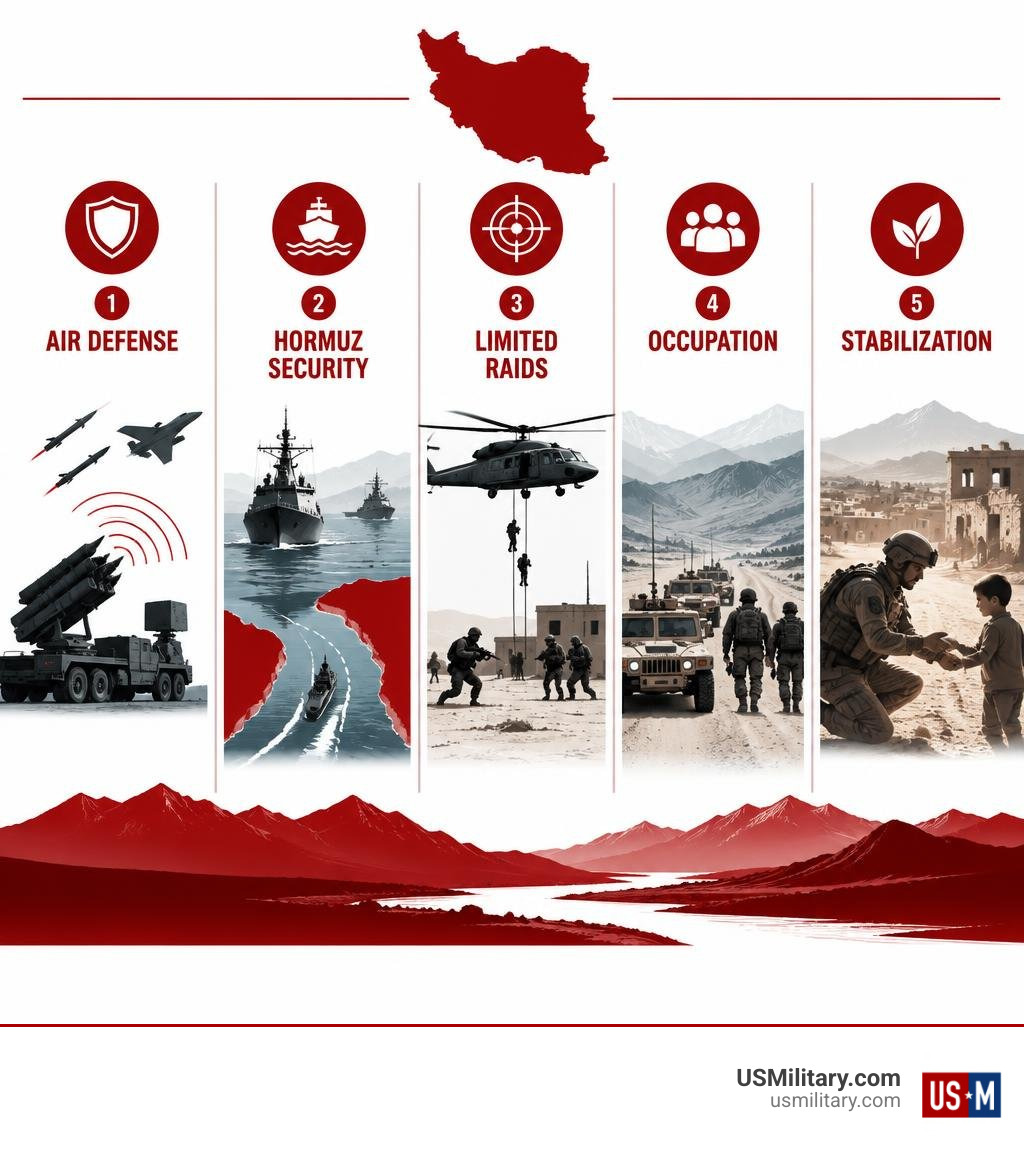
A practical sequence would look like this:
- Suppress remaining missile, drone, air-defense, and naval threats.
- Reopen and protect the Strait of Hormuz, including mine-clearance operations and escorts for commercial ships.
- Use limited ground forces for high-value sites such as islands, ports, nuclear material, airfields, and command centers.
- Mobilize a much larger force for any mainland occupation, likely involving active-duty forces, reserves, and National Guard units.
- Shift to stabilization, protecting civilians and infrastructure while managing insurgency, cyberattacks, and the risk of regional proxy escalation.
The core challenge is scale. Iran has a population of more than 90 million, difficult mountain and desert terrain, a large security apparatus, and long experience with missiles, drones, mines, and irregular warfare. Even if U.S. strikes have reportedly degraded much of Iran’s missile capacity, that would not automatically produce political control or lasting security.
A limited raid or seizure of an offshore asset is very different from occupying the country. The first could involve thousands of personnel with heavy air and naval support. The second could require well over 100,000 troops, sustained logistics, allied access, and a credible plan for what happens after the fighting.
I am LARRY FOWLER, publisher of the USMilitary.com Network since 2007, where we help service members, veterans, and future recruits understand military developments and service decisions. In this guide to How Would The Military Be Used If The US Took Control Of Iran, I break down the force requirements, risks, and real-world limits in plain language.
Strategic Invasion Routes and Regional Entry Points
Planning a large-scale entry into Iranian territory presents extreme geographical friction. Iran spans roughly 1.6 million square kilometers, bordered by rugged mountain ranges, vast central salt deserts, and heavily fortified coastlines. Entering the country requires bypassing or breaching natural fortresses that have defended the Iranian plateau for centuries.
The primary barrier to conventional ground movement from the west is the Zagros Mountain range. These peaks rise sharply from the Mesopotamian basin, creating narrow, easily defended choke points. Military planners evaluating entry corridors frequently study detailed wargame assessments of invasion mechanics. Any armored advance must rely heavily on combined-arms operations where modern tactical air control shaping the battlefield provides continuous close air support to clear fortified mountain passes.
An alternative axis focuses on the southwestern Khuzestan province. Unlike the rest of western Iran, Khuzestan features flat, open plains adjacent to southern Iraq and the Persian Gulf. Securing this region offers direct access to significant energy infrastructure and isolates key logistics hubs, though it leaves invading forces exposed to counterattacks from nearby mountain ridges.
Northern and Western Infiltration Corridors
Staging an advance from the west involves establishing secure staging bases inside friendly or semi-permissive areas of Iraq or neighboring territories. A mechanized breakout through central Zagros passes toward Tehran would require thousands of supply trucks navigating winding, bridge-heavy mountain roads vulnerable to ambushes, landmines, and remote-controlled explosive devices.
To secure these movement corridors, light infantry and special operations teams would spearhead advance reconnaissance. Elite units like the Army Rangers conducting hostile zone operations would be tasked with seizing high-altitude airfields, clearing critical bridges, and neutralizing air-defense batteries before heavy armored columns attempt passage.
Persian Gulf Amphibious Vectors
From the south, amphibious assaults present an entry vector along the Persian Gulf and Gulf of Oman coastlines. Forward-deployed elements, including roughly 2,200 Marines from Marine Expeditionary Units (MEUs), provide the immediate capability to launch air-cushion landing craft and assault amphibious vehicles.
Establishing a firm beachhead along the Iranian coast requires suppressing heavy coastal artillery, mobile anti-ship cruise missile (ASCM) batteries, and swarms of armed fast boats operated by the Islamic Revolutionary Guard Corps Navy (IRGCN). Aspiring recruits interested in participating in these front-line amphibious roles often examine the enlistment age limits for the Marines as force readiness demands grow across the branch.
How Would The Military Be Used If The US Took Control Of Iran
Direct military control over a sovereign nation of over 90 million people demands a massive operational pivot from offensive combat to long-term stabilization, disarming hostile entities, and military governance.
| Operational Metric | Operation Iraqi Freedom (2003) | Hypothetical Iran Operation (2026) |
|---|---|---|
| Target Population | ~25 Million | 90+ Million |
| Land Mass | ~438,000 sq km | ~1,648,000 sq km |
| Initial Combat Troops | ~150,000 U.S. Personnel | 100,000–150,000+ Ground Combat Elements |
| Required Combat Brigades | ~15–17 Brigades | 22–30 Combat Brigades (Active & Guard) |
| Hostile Armed Entities | Iraqi Military & Republican Guard | Artesh (Regular Military), IRGC, Basij Militia |
| Primary Geographic Barrier | Tigris-Euphrates River Basins | Zagros & Elburz Mountain Ranges |
In a post-conflict control scenario, the armed forces would establish administrative zones to manage essential civil services, distribute humanitarian aid, and prevent inter-ethnic factional conflict. This stabilization phase requires disarming conventional Artesh units while actively rooting out underground cells of the Islamic Revolutionary Guard Corps (IRGC) and Basij paramilitary forces.
Force Composition: How Would The Military Be Used If The US Took Control Of Iran
Sustaining military control across Iran would require an estimated 22 to 30 combat brigades. Because the active-duty military structure maintains limited forward-deployable brigade combat teams without stripping other combatant commands, a campaign of this magnitude would necessitate wide-scale mobilization of the Army National Guard and Reserve components.
Elements of the 82nd Airborne Division and quick-reaction Marine units would serve as rapid-reinforcement forces to extinguish localized uprisings. Due to the strain such massive troop levels place on voluntary recruitment, national discussions often turn to legislative policies, prompting individuals to review modern military draft procedures and standards as well as general risk assessments for service drafts.
Securing Strategic Assets: How Would The Military Be Used If The US Took Control Of Iran
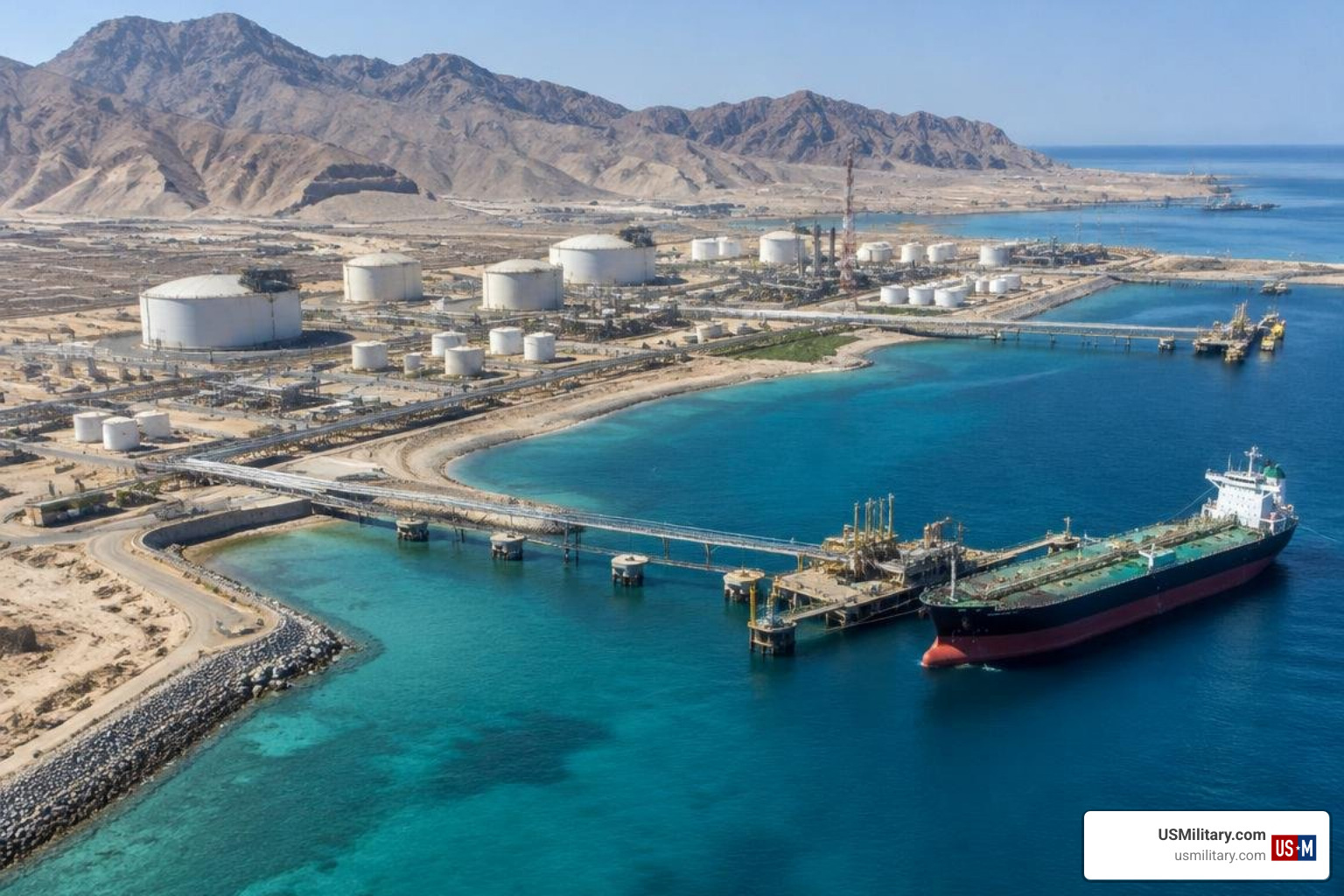
Controlling Iranian territory means securing vast economic and non-conventional weapons infrastructure. Chief among maritime targets is Kharg Island, located in the northern Persian Gulf, which handles roughly 90% of Iran’s crude oil exports.
Securing deeply buried nuclear facilities such as Natanz, Fordow, and Isfahan presents unique technical challenges. Nuclear Disablement Teams (NDTs), supported by conventional infantry security perimeters, must safely secure, inspect, and transport hundreds of kilograms of enriched uranium canisters under hazardous chemical and radiological conditions. Specialized operations analyzing these high-risk missions frequently examine the reality behind deploying special mission units like Delta and SEAL teams alongside expert assessments of US ground force options.
Securing the Strait of Hormuz and Combating Asymmetric Defense
The Strait of Hormuz represents one of the world’s most critical maritime chokepoints, handling roughly 20% of global petroleum transit. In any conflict scenario, securing this narrow waterway is an immediate priority to restore global economic stability.
Key asymmetric threats operating within the strait include:
- Bottom and Moored Naval Mines: Inexpensive, easily deployed ordnance designed to damage commercial tankers and disrupt naval task forces.
- Anti-Ship Cruise Missile (ASCM) Batteries: Mobile, truck-mounted shore launchers hidden within coastal mountain caves and inlets.
- Fast Inshore Attack Craft (FIAC): Swarms of armed speedboats using hit-and-run tactics, rocket-propelled munitions, and remote explosives.
- Unmanned Aerial and Submersible Vehicles (UAVs/UUVs): Low-cost loitering munitions targeting ship superstructures and sensor arrays.
Ongoing operational logs and strike assessments, such as tactical updates on Operation Epic Fury, highlight the persistent need for continuous defensive sweeps to protect commercial shipping corridors.
Mine Warfare and Naval Chokepoint Reopening
Reopening the strait requires specialized mine countermeasures (MCM) task groups, including dedicated minesweepers, MH-53E Sea Dragon helicopters, and unmanned underwater search systems. Carrier Strike Groups stationed in the northern Arabian Sea provide constant defensive combat air patrols to shield slow-moving minesweepers from coastal rocket artillery and drone strikes.
Managing Insurgency, Proxies, and Cyber Warfare
Even if major command nodes are neutralized, the U.S. military would face widespread asymmetric resistance. The IRGC’s Quds Force maintains deep connections with regional proxy militias across Iraq, Syria, Lebanon, and Yemen, capable of striking extended supply lines and staging bases.
Domestically, millions of Basij militia members dispersed throughout urban centers can conduct small-arms ambushes, sabotage electrical infrastructure, and plant roadside explosives. Concurrently, Iranian state-aligned cyber units would execute destructive attacks against tactical communication networks, satellite uplinks, and regional logistics nodes. Sustaining the personnel pipeline required to manage these global threats encourages potential volunteers to review basic military enlistment age requirements.
Geopolitical Fallout and US Military Readiness Constraints
A ground campaign and occupation in Iran would generate severe second-order effects across the entire defense apparatus. The expenditure of advanced precision munitions, such as Patriot PAC-3 interceptors, SM-6 naval missiles, and Tomahawk land-attack cruise missiles, rapidly exhausts critical magazine depth.
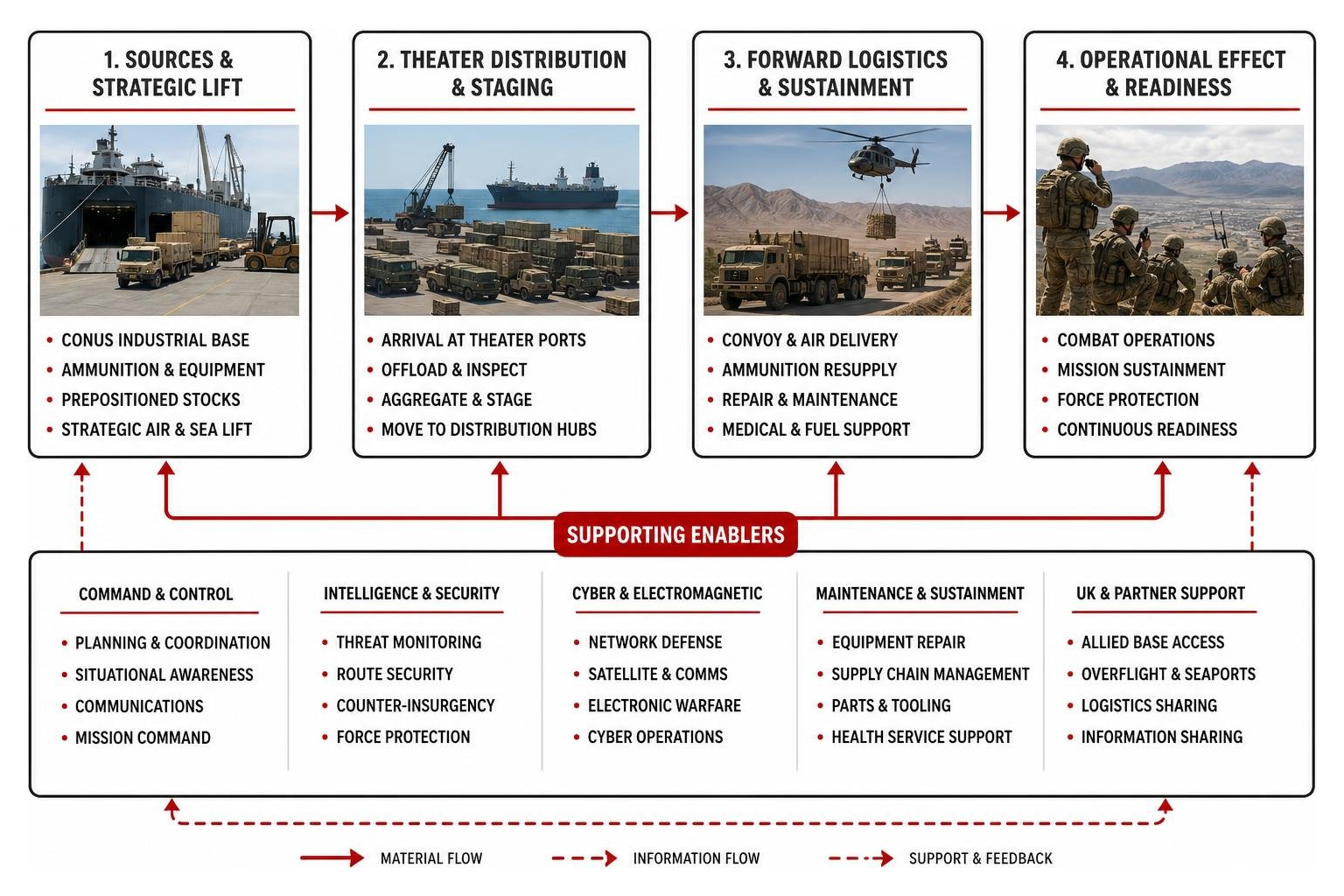
This drain directly affects readiness in other global theaters, most notably the Indo-Pacific, where strategic deterrence regarding Taiwan remains paramount. Furthermore, strategic competitors such as China and Russia could exploit American military overcommitment in the Middle East to advance regional objectives.
Domestically, sustained overseas operations place pressure on national finances. With the national debt exceeding $39 trillion, funding a prolonged occupation with tens of thousands of personnel requires balancing vital domestic and military priorities, as outlined in strategic analyses on the limits of American power in Iran.
Frequently Asked Questions about US Military Operations in Iran
What is the estimated troop size required to occupy Iran?
Standard historical counterinsurgency and stabilization doctrine suggests a force-to-population ratio of 20 security personnel per 1,000 residents. For an Iranian population exceeding 90 million, a complete stabilization force could theoretically require hundreds of thousands of personnel. In practical operational terms, an initial invasion force would require at least 100,000 to 150,000 dedicated combat troops, with 22 to 30 combat brigades cycling through regular rotations to prevent extreme operational burnout.
Can air power alone achieve regime change in Iran without ground troops?
Strategic air campaigns can devastate infrastructure, destroy air defenses, and degrade missile stockpiles, as demonstrated by the reported neutralization of the majority of Iran’s launch capacity. However, military history across twentieth- and twenty-first-century conflicts shows that air power alone rarely forces a deeply entrenched, ideologically motivated regime from power. Ground forces remain necessary to control physical territory, secure borders, and establish administrative governance.
What happens if the US military seizes Kharg Island?
Seizing Kharg Island with an amphibious force of 800 to 1,000 troops provides leverage over roughly 90% of Iran’s crude oil export terminals. While this action directly impacts the Iranian government’s export revenue, it leaves occupying forces isolated roughly 400 miles from the Strait of Hormuz. Ground units on the island remain static targets for asymmetric drone strikes and shore-based missile attacks from the mainland, requiring sustained air and naval protection.
Conclusion
Taking control of Iran represents an immense operational undertaking that extends far beyond tactical air strikes and naval maneuvers. While modern American military technology can neutralize conventional air defenses, naval vessels, and missile launch sites, holding territory across a vast, mountainous nation requires extensive manpower, robust logistical supply lines, and long-term stabilization plans.
At USMilitary.com, we continue to provide service members, veterans, and their families with objective analysis of strategic defense developments, veteran benefits, and career pathways across the armed forces. To learn more about career specialties, service opportunities, and active-duty benefits across every branch, explore our comprehensive guide to United States military branches and service requirements.
Free for Service Members & Veterans
Get the military benefits intel no one tells you about.
Weekly updates on VA benefits, pay changes, and money tips — free for service members and veterans.
No spam. Unsubscribe anytime. Your info is never shared.


