Mapping Military Bases Worldwide
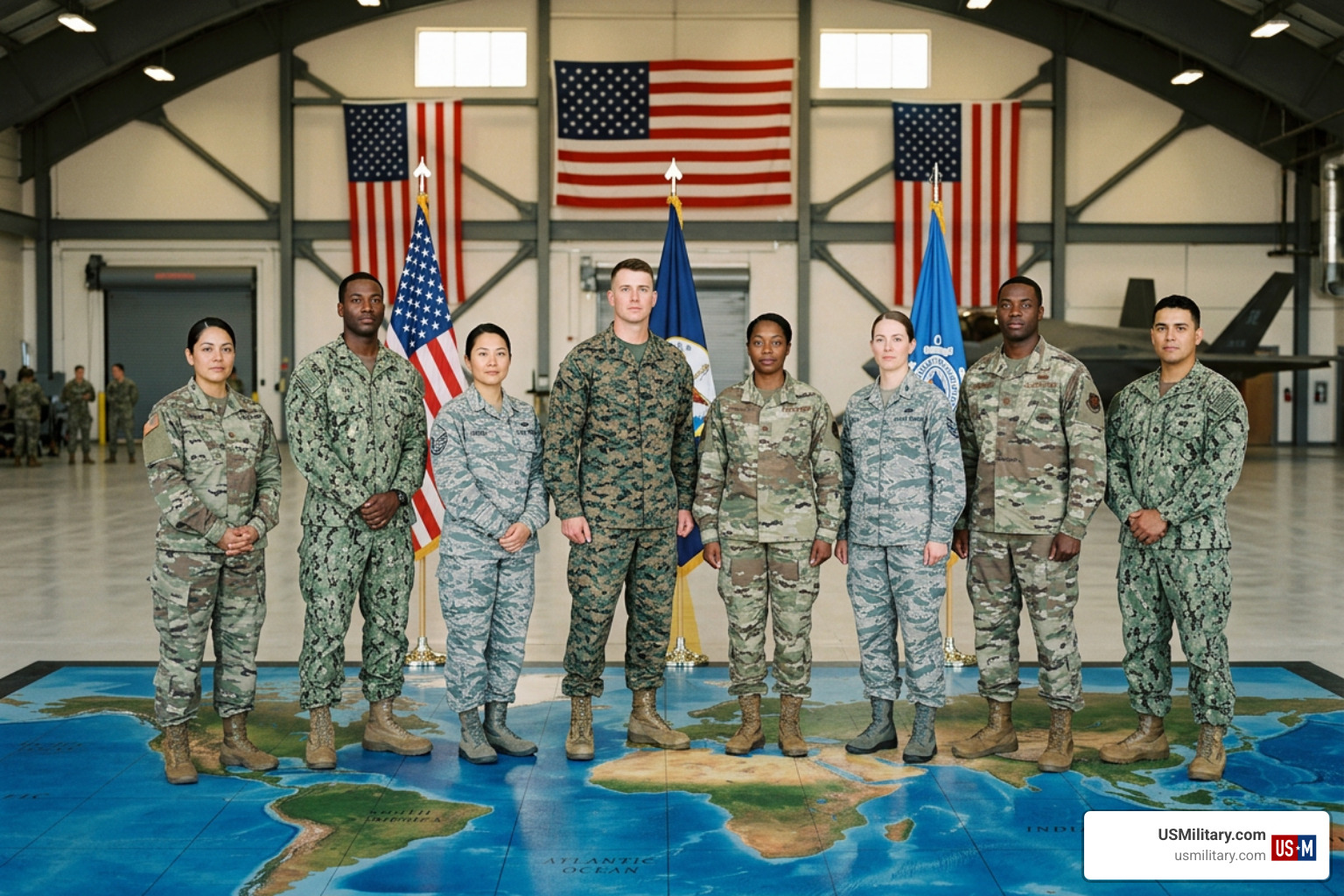
Military bases world wide form a global network of airfields, ports, training sites, logistics hubs, and intelligence facilities. The United States has the largest foreign military presence by a wide margin, while countries such as the United Kingdom, Turkiye, Russia, China, and India maintain smaller networks that support their own regional goals.
| Quick global base picture | What it means |
|---|---|
| United States | Operates the broadest overseas network, with estimates varying by definition of a “base” or access site |
| Major host regions | Europe, the Indo-Pacific, and the Middle East hold many of the largest and most important installations |
| Largest U.S. overseas base by population | Camp Humphreys in South Korea, with roughly 40,000 military and civilian residents |
| Why bases matter | They support deterrence, rapid response, resupply, intelligence, training, and allied defense commitments |
A map tells only part of the story. Some locations are large, permanent installations with runways, housing, and thousands of personnel. Others are small shared facilities, leased spaces, port-access agreements, or temporary sites that can expand during a crisis.
For service members and families, these places can shape where assignments, deployments, and career opportunities happen. For host communities, they can bring jobs and local spending while also raising hard questions about land, sovereignty, safety, and environmental effects.
I am Larry Fowler, publisher of the USMilitary.com Network since 2007, where I have helped active-duty members, recruits, and veterans understand military-related information and benefits. This guide puts military bases world wide into clear context before exploring the countries, missions, agreements, and communities behind the map.
The Global Landscape of Military Bases World Footprints
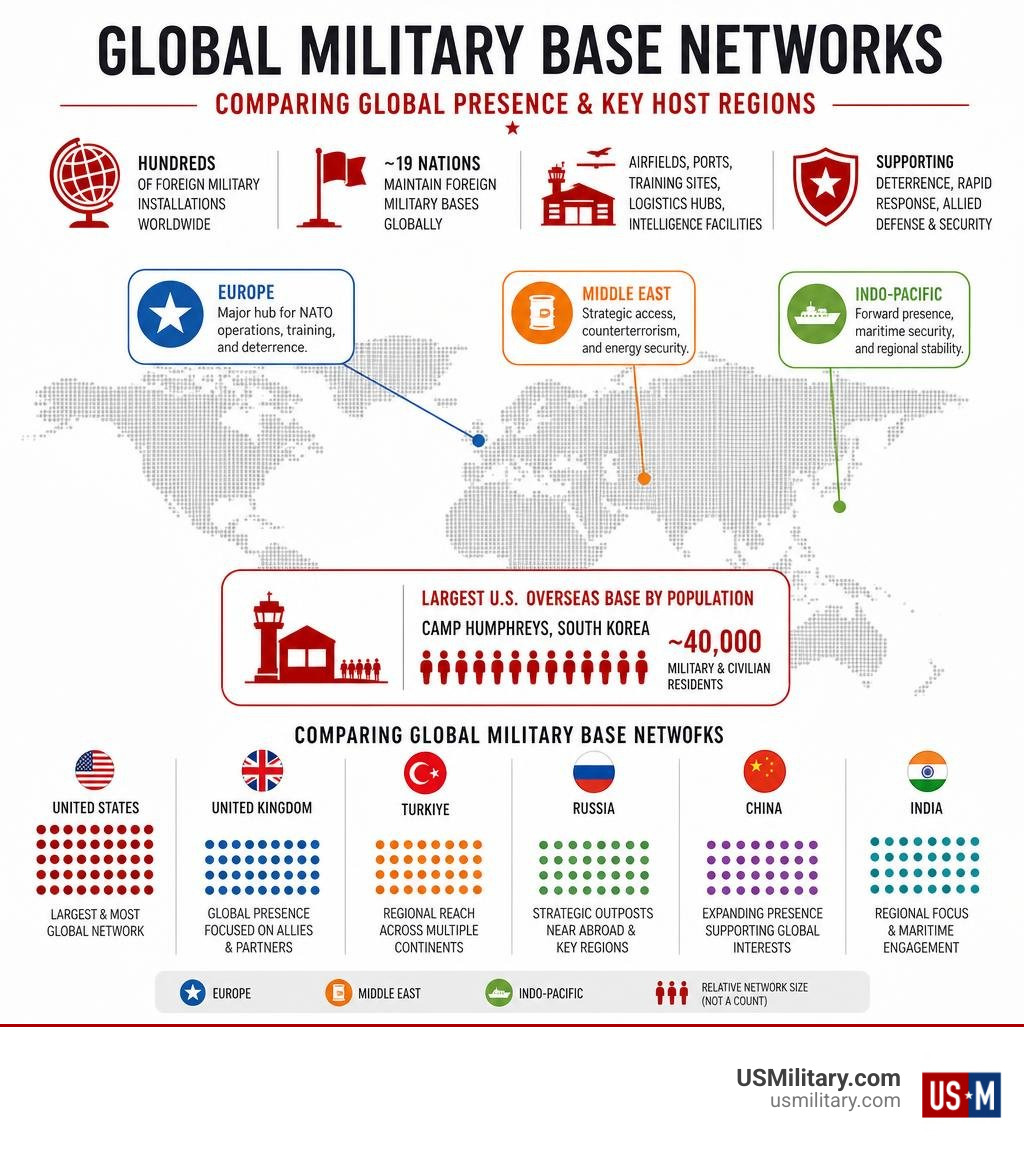
When we analyze the global network of military bases, we immediately notice how heavily weighted the posture is toward a handful of major world powers. A foreign military installation—whether defined as a massive self-contained garrison, a naval refueling pier, an airfield radar site, or a joint intelligence facility—is built primarily to project power beyond national borders.
Across the globe, the total count of foreign military installations numbers in the hundreds, with operating footprints maintained by roughly 19 nations. However, the distribution of these bases is vastly uneven. The United States maintains an unprecedented global footprint, while other countries use strategic foreign outposts to secure regional trade routes, protect neighboring borders, or project regional influence.
| Operating Country | Estimated Foreign Base Count | Countries / Territories Hosted | Primary Strategic Purpose |
|---|---|---|---|
| United States | ~750 to 861 | 80+ | Global force projection, regional deterrence, allied collective defense |
| Turkiye | 131 | 9 | Regional counter-terrorism, border security, cross-border stability |
| United Kingdom | 118 | 38 | Global maritime intelligence, NATO response, legacy territory defense |
| Russia | 35 | 11 | Near-abroad influence, Eurasian buffer security, Mediterranean access |
| India | 19 | 11 | Indian Ocean maritime surveillance, trade route monitoring |
| China | 6 | 6 | Belt and Road logistics protection, sea-line defense |
Visualizing this worldwide web helps us grasp how nations deploy troops across international boundaries. For a deeper geographic breakdown of American overseas facilities, you can view Mapped: Every Known U.S. Military Base Overseas – Visual Capitalist.
Comparing Strategic Distributions of Military Bases World Wide
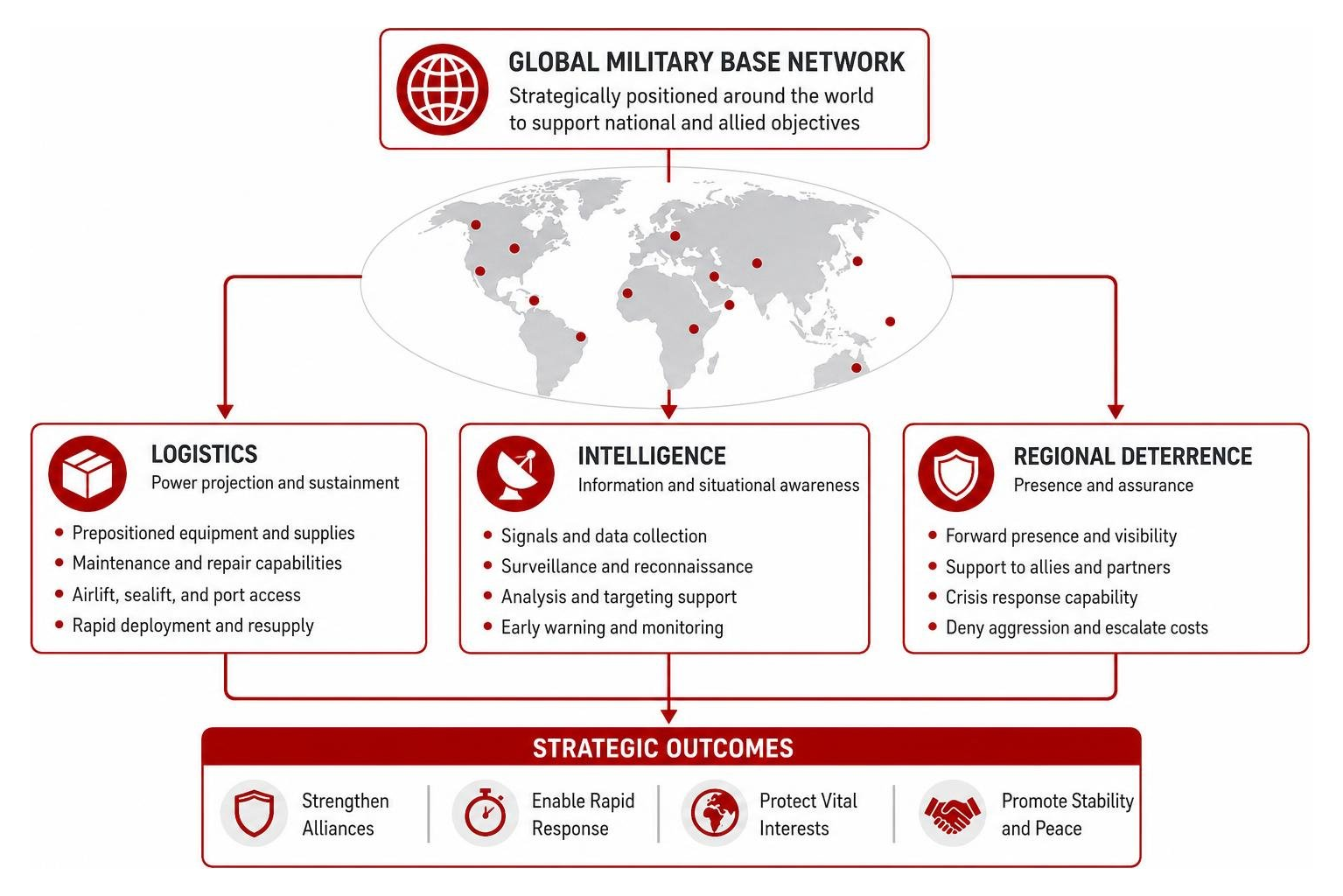
To understand how nations approach foreign military presence, we have to look at their geopolitical strategies. Every country builds or leases overseas installations for very specific tactical reasons:
- United States: Maintains an extensive, worldwide network. With roughly 750 to 861 overseas sites spanning over 80 countries, the U.S. uses its bases to support mutual defense treaties (such as NATO and bilateral agreements with Japan and South Korea), protect international shipping lanes, and provide rapid crisis response options.
- United Kingdom: Operates approximately 118 installations across 38 nations and overseas territories, ranging from permanent sovereign base areas in Cyprus to specialized jungle training sites in Brunei and staging areas in Oman.
- Turkiye: Maintains a significant regional footprint of around 131 bases across 9 nations, focusing heavily on installations in neighboring northern Iraq, Syria, Qatar, and Somalia to secure its immediate perimeter and support regional allies.
- Russia: Maintains about 35 facilities across 11 countries, predominantly located within former Soviet states (its “near abroad”) like Armenia, Belarus, Kazakhstan, and Tajikistan, along with strategic naval and air facilities in Syria.
- China: Takes a selective approach with around 6 official overseas military sites, including its major naval support base in Djibouti and strategic surveillance facilities in the Indian Ocean region.
- India: Operates roughly 19 overseas listening posts and coastal radar stations across 11 countries in the Indian Ocean rim, including Oman, Madagascar, and the Seychelles.
If you are exploring state-side posts alongside international stations, you can check our guide to Find Military Bases Near Me to see how domestic infrastructure connects with overseas missions.
Regional Base Deployment Strategies Across Continents
Global military bases are concentrated in strategic hotspots where major world trade routes, diplomatic alliances, and geopolitical tensions overlap:
- Europe: Europe hosts a dense concentration of foreign installations. Pentagon figures show that Germany alone hosts 174 U.S. military sites, including headquarters like Ramstein Air Base and Stuttgart’s EUCOM. These facilities serve as critical jumping-off points for operations across Africa and the Middle East.
- Indo-Pacific: Focused on maintaining open sea lanes and regional stability, the Indo-Pacific hosts vast numbers of troops. Japan hosts the highest concentration of forward-deployed U.S. forces, with 113 bases and over 54,000 service members. South Korea hosts 83 U.S. sites and approximately 28,500 troops, anchored by Camp Humphreys.
- Middle East & Africa: In Qatar, Al Udeid Air Base serves as a vital command center housing over 10,000 U.S. personnel. In the Horn of Africa, Djibouti hosts an array of international military outposts due to its position near the Bab-el-Mandeb Strait. Here, Camp Lemonnier—housing over 4,000 U.S. personnel—stands alongside military facilities operated by China, France, Japan, and Italy.
- Latin America & Caribbean: Strategic naval installations, such as Naval Station Guantanamo Bay in Cuba, serve as critical hubs for regional security, counter-narcotics enforcement, and maritime search-and-rescue support under U.S. 4th Fleet operations.
For a full listing of active state-side and international posts, readers can review the detailed List of American military installations – Wikipedia.
Strategic Purposes and Evolution from the Cold War to Today
The core mission of foreign military facilities has evolved dramatically over the past century. During the 19th and early 20th centuries, naval powers established networks of “coaling stations”—small, isolated coastal outposts meant solely to refuel steamships carrying commercial goods or patrolling oceanic borders.
During the Cold War, the strategic focus shifted toward massive, permanent garrisons built for collective deterrence. The U.S. and NATO built fortified bases across Western Europe, while the Soviet Union constructed massive armored headquarters across Warsaw Pact nations.
Today, military planners increasingly favor flexibility over permanent mega-bases. Concepts like “sea basing” (using large naval platforms in international waters), expeditionary airfield sharing, and rapid-deployment hub systems allow armed forces to project power quickly without building massive, permanent footprints on host-nation land.
Post-Cold War Pivots and Modern Conflict Roles
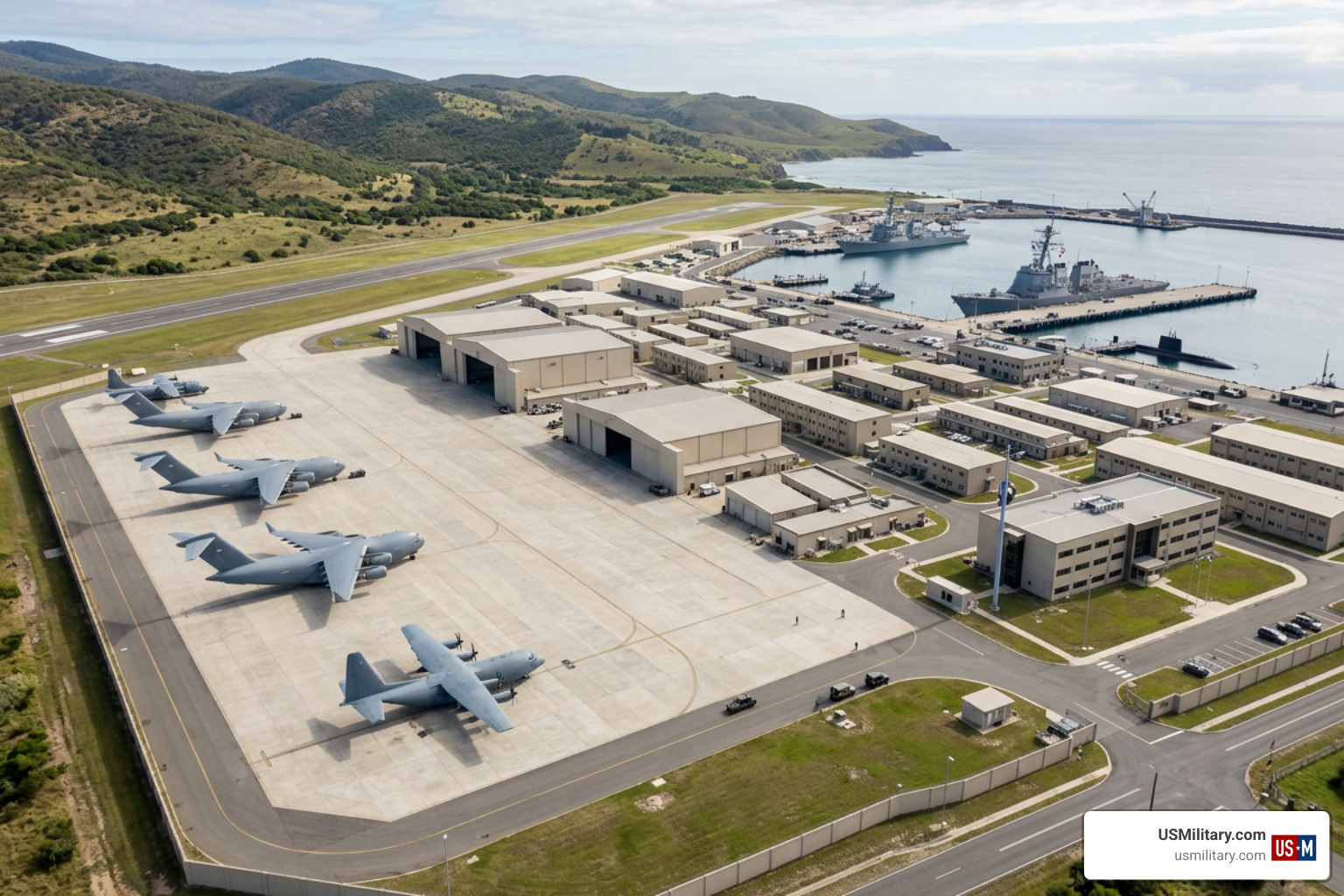
Following the collapse of the Soviet Union in 1991, global military postures underwent a major restructuring. Through mechanisms like the Base Realignment and Closure (BRAC) process in the U.S., defense leaders closed hundreds of legacy European bases between 1990 and 2010.
However, post-9/11 operations in Asia and the Middle East required rapid construction of forward operating bases (FOBs) and tactical air hubs. Large installations like Bagram Airfield in Afghanistan and Al Udeid Air Base in Qatar became central hubs for command, air strike execution, and drone reconnaissance networks.
In modern operations, overseas bases fulfill five core operational functions:
- Power Projection: Launching immediate military actions without relying on long-range transit from home territories.
- Logistics & Resupply: Staging ammunition, fuel, medical centers, and vehicle maintenance facilities close to operational zones.
- Early Warning & Intelligence: Operating long-range radar arrays, satellite ground terminals, and electronic signal interception centers.
- Deterrence: Demonstrating tangible security commitments to regional partners and allies.
- Host-Nation Training: Conducting regular exercises with local allied forces to build interoperability.
The Strategic Approach of China, Russia, and Turkey
As global trade and power dynamics evolve, non-Western powers have developed distinct strategies for foreign basing:
- China: Beijing has historically favored economic investments through its Belt and Road Initiative, but it opened its first official overseas military support base in Djibouti in 2017. China uses this naval facility to protect commercial shipping, safeguard overseas citizens, and extend its naval reach across the Indian Ocean.
- Russia: Moscow maintains key naval bases like Tartus and Khmeimim Air Base in Syria, securing its only warm-water naval outpost in the Mediterranean Sea. Russia also relies on military bases in neighboring nations like Armenia, Belarus, and Tajikistan to maintain regional influence along its borders.
- Turkey: Turkiye has expanded its regional presence dramatically, operating over 131 bases across northern Iraq, Syria, Somalia, and Qatar. These outposts support counter-insurgency operations, protect regional energy corridors, and project influence across the Eastern Mediterranean and Horn of Africa.
Legal Frameworks, Host Nation Impacts, and Controversies
Operating a military base on foreign soil requires intricate legal arrangements between host governments and foreign defense departments. The cornerstone of almost every major foreign military presence is a Status of Forces Agreement (SOFA).
A SOFA defines the legal framework under which foreign military personnel, civilian contractors, and military dependents operate inside a host country. Key provisions in these bilateral agreements usually address:
- Legal Jurisdiction: Determining whether foreign troops facing criminal charges are tried under host-nation court systems or their own military justice system.
- Tax and Import Exemptions: Allowing defense materiel, equipment, and personal belongings to enter host nations duty-free.
- Entry and Exit Visas: Streamlining troop movements across host nation borders without standard civilian customs delays.
- Base Operations Control: Establishing who manages physical perimeter security, air traffic control, and facility construction.
Economic and Social Dynamics in Host Communities
The presence of a foreign military base brings deep economic and cultural integration to nearby host towns, often acting as a primary driver of local commercial activity.
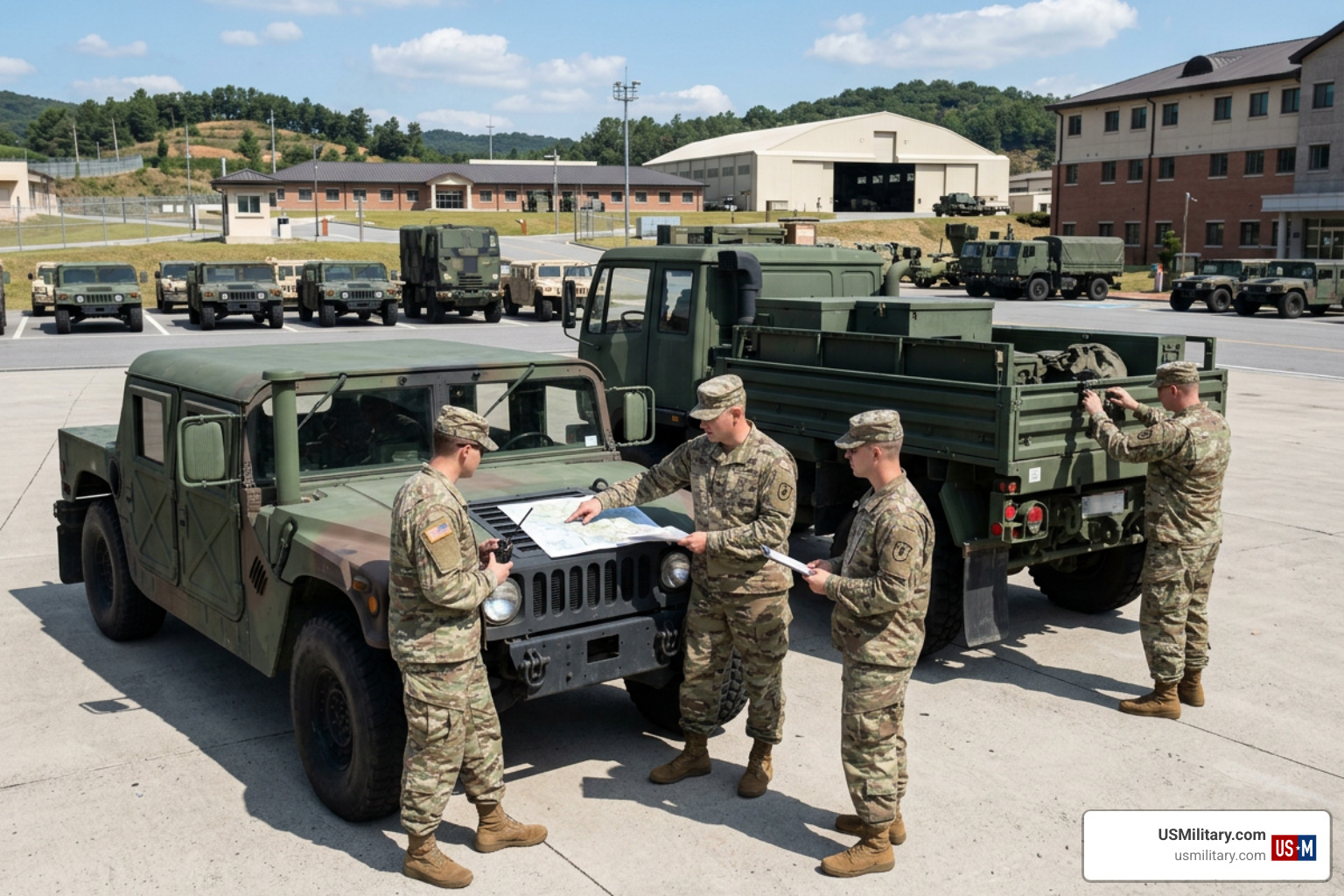
Large overseas installations function much like medium-sized American towns. Major facilities like Camp Humphreys in South Korea host comprehensive suburban amenities—schools, retail stores, housing complexes, athletic facilities, and familiar national food franchises.
In places like Germany’s Rhineland-Palatinate region, Ramstein Air Base supports over 50,000 American military personnel, family members, and civilian contractors. Local German businesses, real estate markets, and municipal services rely heavily on American operational spending.
As highlighted in Goodbye to the US? Not yet in Ramstein, home to the largest American base in the world | International | EL PAÍS English, local community roots often run deep through decades of cross-cultural marriages, local hiring, and shared social groups.
To compare how overseas installations match up against domestic mega-posts in size, you can read our breakdown of the Largest US Military Bases.
Disputes, Environmental Damage, and Sovereignty Tensions
While foreign bases generate local jobs, they can also trigger friction with local residents and civic organizations. Major areas of community tension often involve:
- Sovereignty and Extra-Territoriality: Host nation citizens sometimes object when foreign service members accused of off-base offenses are handled under foreign military legal jurisdiction rather than local criminal courts.
- Environmental Degradation: Military airfields, training grounds, and maintenance yards can cause noise pollution, soil erosion, and chemical runoff (such as fuel spills or fire-fighting foam compounds), leading to protests from local environmental groups.
- Land Rights & Local Displacement: In places like Okinawa, Japan—which hosts over 30 separate U.S. military sites despite making up less than 1% of Japan’s total land area—local civic groups routinely raise concerns over land usage, flight paths over residential neighborhoods, and historical land allocation.
How Smaller Nations Leverage Overseas Bases
You don’t need to be a global superpower to operate military installations outside your borders. Several smaller and regional powers maintain specialized overseas training centers, joint surveillance stations, and logistics sites to strengthen their security:
- Singapore: Facing severe domestic airspace and land constraints on its small island home, Singapore operates air squadrons and ground training detachments abroad in Australia, the United States, France, and New Zealand. These arrangements allow its air force to conduct realistic long-range flight operations and complex joint tactical drills.
- Australia: Australia hosts joint strategic facilities on its own soil—most notably the joint U.S.-Australian satellite communications station at Pine Gap near Alice Springs—while maintaining regional maritime surveillance positions across the Pacific and Southeast Asia.
- India: India has built a network of coastal radar systems and maritime surveillance listening posts across island nations in the Indian Ocean, including the Seychelles, Mauritius, and Madagascar, safeguarding vital commercial sea routes.
To see how specialized training facilities compare stateside, check out our selection of the Top 10 Military Bases in the United States.
The Future of Military Bases World Network Expansion
As we look toward future defense postures, the physical nature of global military bases is undergoing a major technological transformation. Modern military doctrine is shifting away from static, easily targeted super-bases toward agile, dispersed operational models.
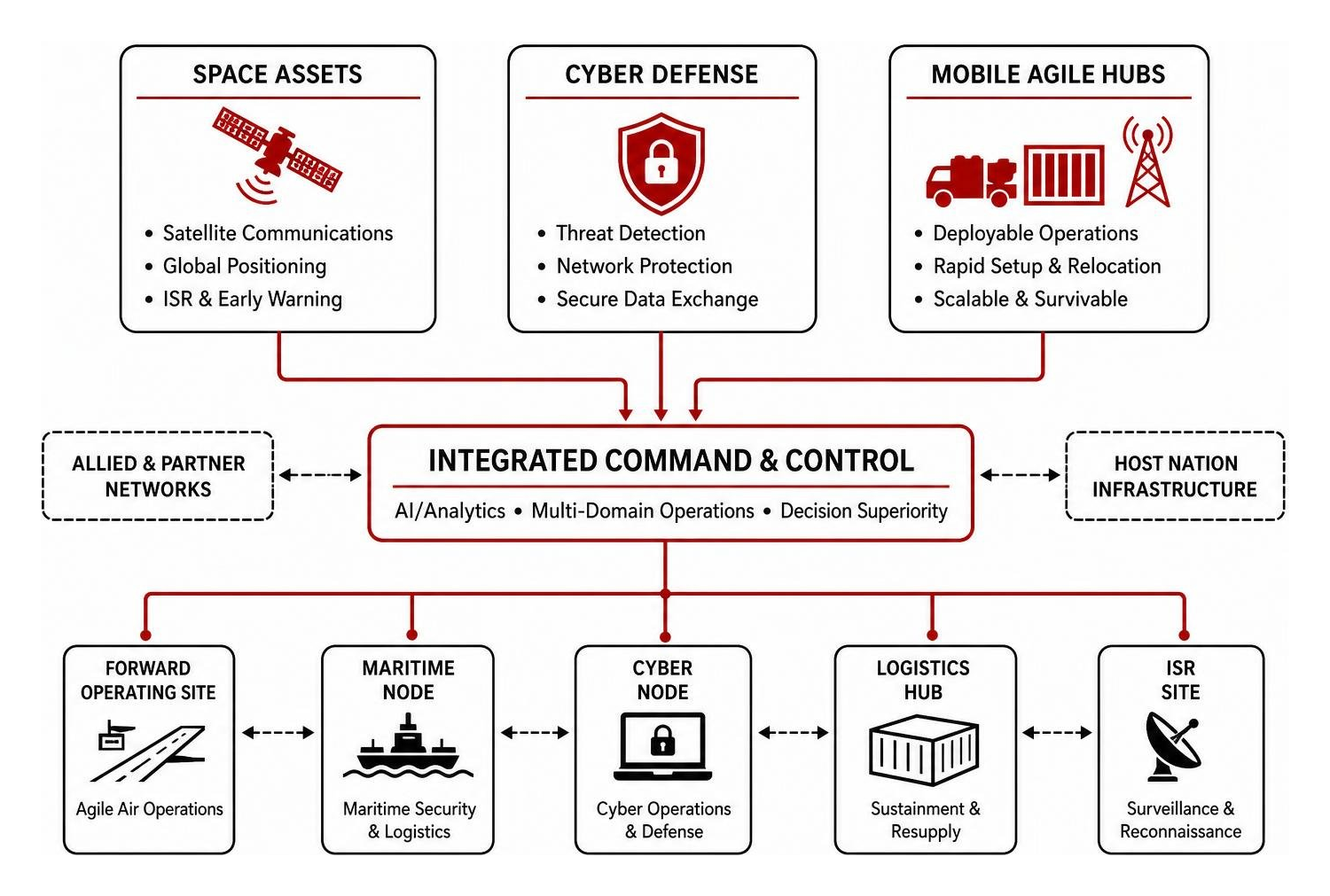
Key trends reshaping international military infrastructure include:
- Agile Combat Employment (ACE): Rather than relying solely on massive permanent airfields, air forces are training to operate from small, remote, dispersed air strips that can be activated, used, and cleared rapidly to minimize risk during active conflicts.
- Space Force & Orbital Tracking: Space has become a primary operational domain. Installations like Pituffik Space Base in Greenland (the U.S. military’s northernmost deep-space radar site spanning 66,000 hectares) play crucial roles in missile warning, satellite tracking, and global defense communications.
- Cyber & Electronic Warfare Hubs: Modern intelligence posts rely less on heavily garrisoned infantry installations and more on high-speed communications nodes, underwater cable landing stations, and secure digital data hubs.
- Unmanned Systems & Drone Forward Sites: Lightweight drone facilities require far smaller footprints, fewer personnel, and shorter runways than traditional fighter or bomber bases, allowing forces to monitor contested spaces flexibly.
For those interested in exploring official, comprehensive directories of state-side and overseas installations across all service branches, visit the official Department of Defense portal at View All Bases & Installations | MilitaryINSTALLATIONS.
Frequently Asked Questions About Global Military Bases
Which country has the most military bases in the world?
The United States operates by far the highest number of overseas military installations in the world. Depending on whether you count small radar sites, fuel depots, and joint host-nation facilities alongside major installations, the U.S. maintains between 750 and 861 foreign military sites across more than 80 countries and territories. The United Kingdom ranks second with roughly 118 overseas installations, followed by Turkiye with around 131 regional sites.
What is the largest U.S. military base overseas?
The answer depends on whether you measure by population, physical area, or air operations:
- Largest by Population: Camp Humphreys in South Korea is the largest U.S. base abroad by resident population, housing roughly 40,000 military service members, civilian employees, and family members.
- Largest by Land Area: Pituffik Space Base in Greenland is the largest by physical footprint, covering over 66,000 hectares.
- Largest Air Hub in Europe: Ramstein Air Base in Germany serves as the primary air mobility hub and supports the largest concentration of American military personnel in Europe.
How do Status of Forces Agreements (SOFA) govern foreign bases?
A Status of Forces Agreement (SOFA) is a legal agreement between a sending nation and a host country. It establishes the rights, responsibilities, and legal protections governing foreign military personnel stationed in that host country. SOFAs cover crucial administrative details, including criminal jurisdiction, passport requirements, local taxation, driver’s licenses, weapon carry rights, and facility maintenance obligations.
Conclusion
The global landscape of military bases world wide represents a complex web of international alliances, strategic deterrence, trade protection, and power projection. From the massive, self-contained footprint of Camp Humphreys in South Korea to agile satellite tracking facilities in Greenland and listening posts in the Indian Ocean, these installations shape global security and international relations every day.
Whether you are a service member preparing for an overseas assignment, a military family navigating a relocation move, or a veteran reviewing your military benefits, understanding where bases are located—and why they exist—helps put military service into a broader global perspective.
At USMilitary.com, we are dedicated to supporting our military community with clear, updated guidance on career paths, branch options, VA benefits, and installation resources. To learn more about base operations, relocation support, and facility profiles across all branches, explore our comprehensive U.S. Military Base Guides.
Free for Service Members & Veterans
Get the military benefits intel no one tells you about.
Weekly updates on VA benefits, pay changes, and money tips — free for service members and veterans.
No spam. Unsubscribe anytime. Your info is never shared.



Leave a Reply