The Historic Push: Are There Any Women in Navy SEALs?
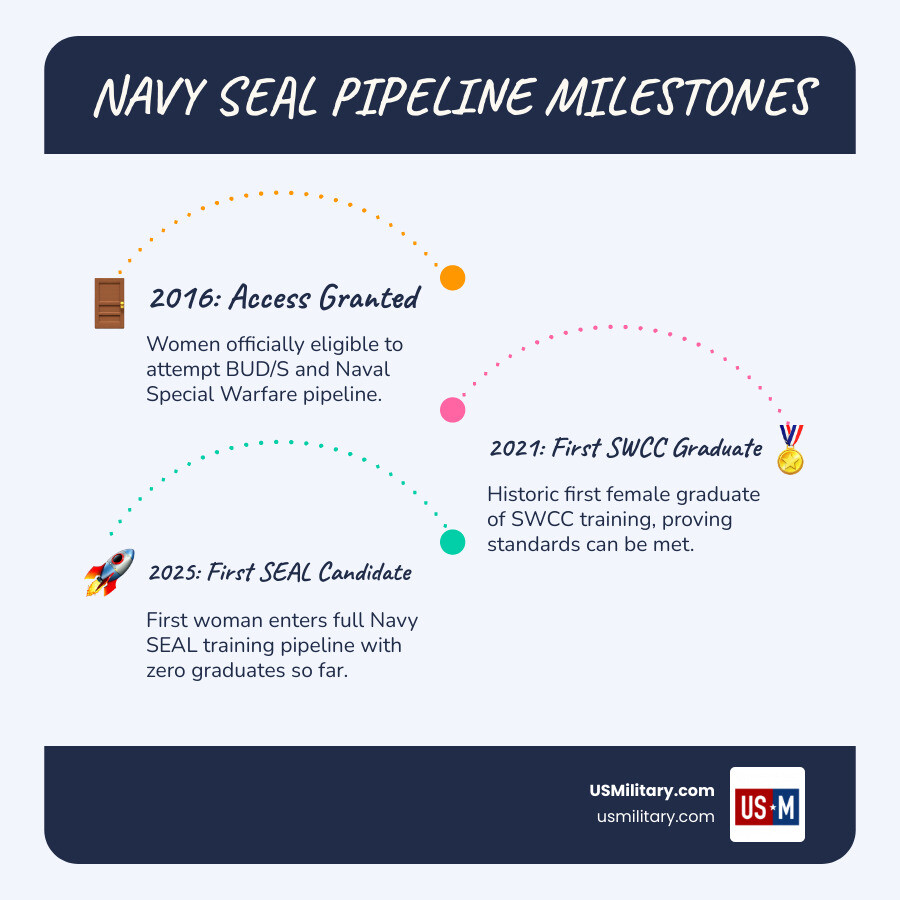
Are there any women in Navy SEALs? As of May 2026, no woman has yet graduated from the full Navy SEAL training pipeline — but the door is officially open, and history is already being made.
Quick Answer:
| Question | Answer |
|---|---|
| Have women been allowed to try? | Yes, since 2016 |
| Has any woman completed BUD/S? | No |
| Has a woman entered the SEAL pipeline? | Yes, the first female candidate entered in 2025 |
| Has a woman completed any Naval Special Warfare training? | Yes — the first female SWCC graduate completed training in 2021 |
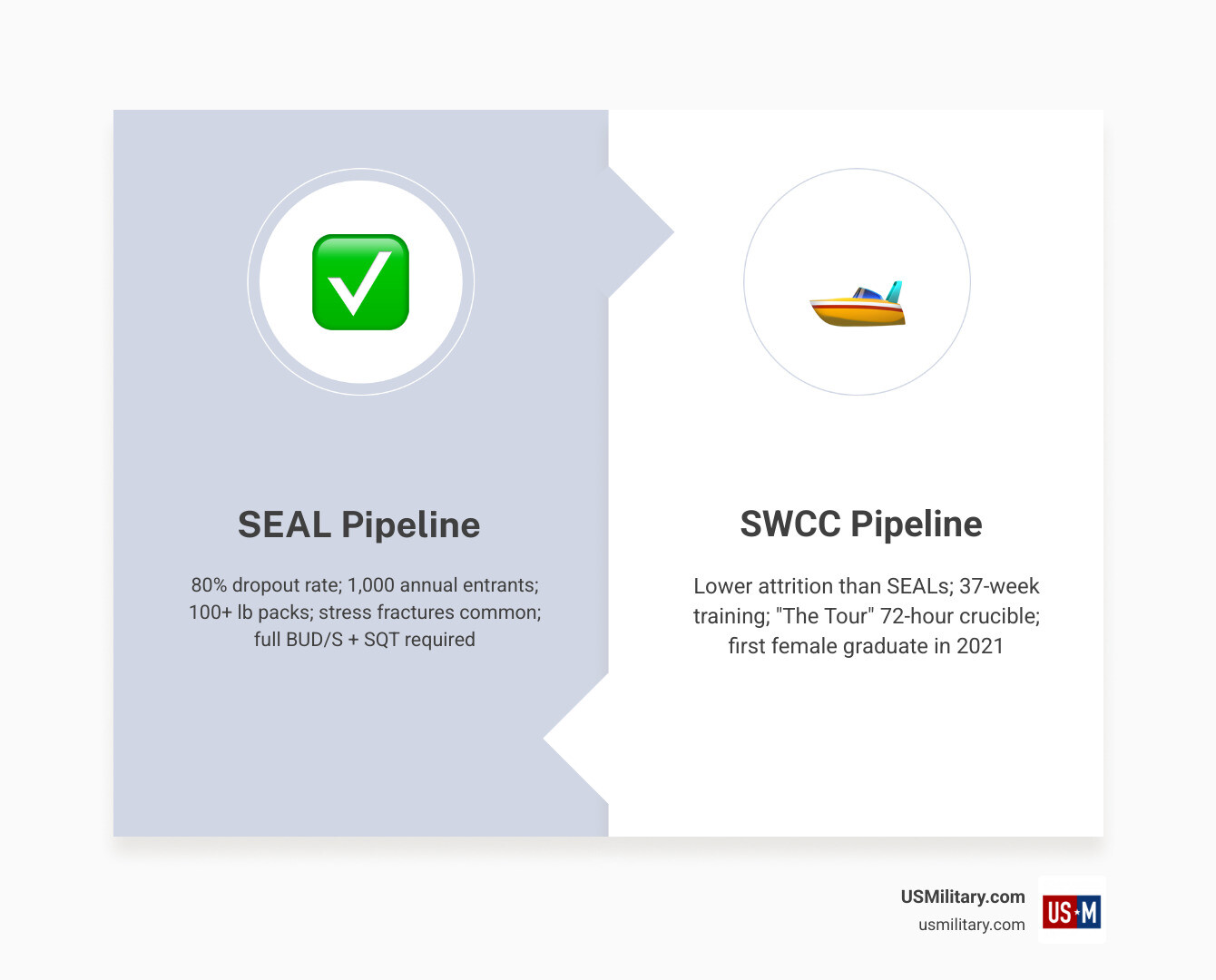
The path to becoming a Navy SEAL is one of the hardest in the entire U.S. military. Roughly 80% of all candidates drop out. Each year, around 1,000 hopefuls start — and only a small fraction finish.
Women are now officially eligible to attempt that same path, held to the exact same standards as men. No exceptions. No shortcuts.
This is a story still being written in real time.
I’m Larry Fowler, publisher of USMilitary.com and a long-time resource for active military, veterans, and those exploring service. Through years of covering military careers and enlistment trends, I’ve tracked the evolving question of are there any women in Navy SEALs closely — and the answer is more nuanced than a simple yes or no. Let’s break it all down clearly.
Are there any women in Navy SEALs terms made easy:
- A Day In The Life Of A Navy SEAL Operator
- Navy SEALs BUD/S Training Requirements
- Who Has The Hardest Training: Navy SEALs vs Army Rangers
Are there any women in Navy SEALs today?
When we look at the current status of the SEAL Teams in May 2026, the short answer is that there are currently no female Navy SEALs serving in the teams. However, that doesn’t mean the progress has stalled. In 2025, the first female candidate officially entered the grueling Navy SEAL officer training pipeline, marking a massive milestone for Naval Special Warfare.
The reality of the SEAL pipeline is that it is designed to break people. Whether you are a man or a woman, the statistics are daunting. Roughly 75% to 80% of candidates drop out of the six-month SEAL training course before they ever see a graduation ceremony. With about five BUD/S (Basic Underwater Demolition/SEAL) classes starting each year — each beginning with roughly 200 hopefuls — we are looking at 1,000 entrants annually. Out of those, only a tiny fraction will earn the right to wear the “Budweiser” (the SEAL Trident).
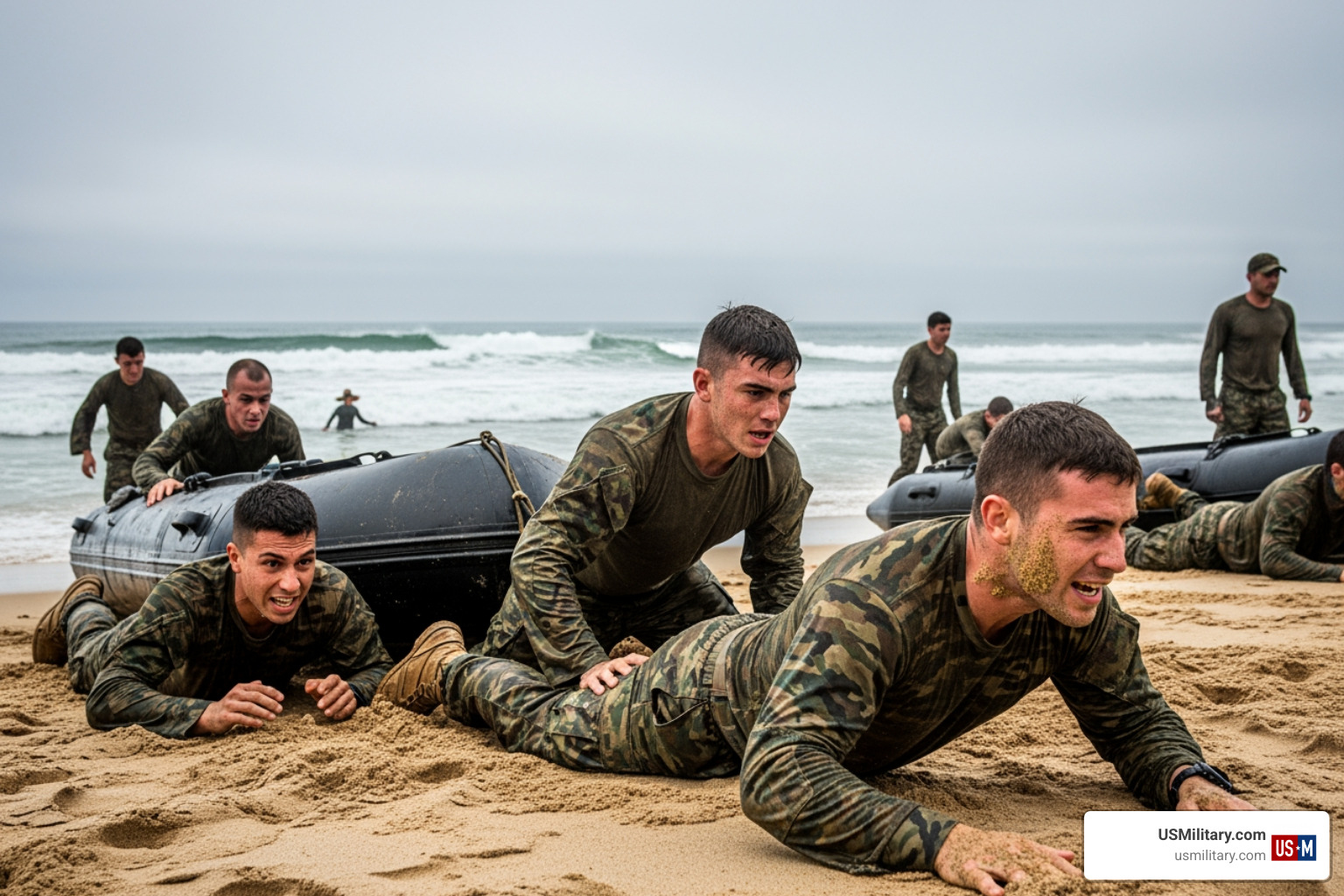
We have seen several women attempt the path. According to reports, several women have sought to become members of Naval Special Warfare, either as SEALs or as Special Warfare Combatant-Craft Crewmen (SWCC). While many did not complete the training, their participation proves that the interest is there. As the First Female Navy SEAL – SOAA discussion highlights, the standard remains the same for everyone. This is a “standards-based” community, and as we discuss at Female Navy Seal, anyone who can meet those benchmarks has earned their place.
The Rigorous Path: Requirements for Women in Navy SEALs
To understand why the question “Are there any women in Navy SEALs?” still yields a “not yet,” you have to look at the barriers to entry. The requirements are the same for every applicant, regardless of gender. This isn’t just about being “fit”; it’s about being among the most elite athletes and tactical thinkers on the planet.
For a woman to join the SEALs, she must first meet the basic Navy requirements:
- Citizenship: Must be a U.S. citizen.
- Age: Generally 17–28 years old (waivers sometimes available up to age 29).
- Eyesight: 20/40 best eye; 20/70 worst eye; correctable to 20/20 with no color blindness.
- ASVAB Scores: High scores in General Technical (GT) and other specific categories.
- Security Clearance: Must be eligible for a Secret or Top Secret clearance.
Beyond the paperwork, the physical screening test (PST) is the first major hurdle. While many people think of push-ups and sit-ups, the SEAL pipeline also requires 15 weeks of Second Class Dive School, covering air and mixed gas diving, underwater welding, and demolition.
Physical and Mental Standards for Women in Navy SEALs
The physical standards are intense. To even be considered, candidates must perform at a high level in the following areas:
| Exercise | Minimum Requirement | Competitive Goal |
|---|---|---|
| 500-Yard Swim | 12:30 | Under 9:30 |
| Push-ups (2 mins) | 50 | 80–100 |
| Curl-ups (2 mins) | 50 | 80–100 |
| Pull-ups (No time limit) | 10 | 15–20 |
| 1.5-Mile Run | 10:30 | Under 9:30 |
While some sources like Quora note that biological differences can make certain tasks like pull-ups more challenging for women on average, the Navy maintains that there will be no “gender-norming” of standards. This means a woman must do the same number of pull-ups as a man to pass.
We saw a major breakthrough in 2021 when a Woman qualifies for Naval Special Warfare Command crew for the first time. She graduated as a Special Warfare Combatant-Craft Crewman (SWCC). While SWCC is a different role than a SEAL, it is part of the same elite command and involves a 37-week training pipeline that includes “The Tour,” a 72-hour crucible of constant movement and minimal sleep.
The mental side is just as tough. Admiral Olson, a former top special operations commander, once noted that being a SEAL isn’t just about push-ups; it’s about courage and intellectual agility. This is why we explore the details of Female Navy Seals as a matter of “when,” not “if.”
Unique Perspectives of Women in Navy SEALs
Why is the military pushing for this integration? It isn’t just about fairness; it’s about mission effectiveness. Women bring unique strengths to the special operations community.
In many modern combat environments, “reading the human terrain” is as important as pulling a trigger. Women often excel at reading subtle social cues and understanding cultural nuances that might be missed by their male counterparts. This was proven through the use of Cultural Support Teams (CSTs). These were groups of women attached to SEAL and Green Beret units to interact with local women and children in conservative societies where male soldiers were culturally prohibited from doing so.
Furthermore, women often bring exceptional ability to adapt under pressure and find creative solutions in dynamic, high-stress situations. As we highlight in our guide on Todays Top Army Careers For Women, the ability to think outside the box is a hallmark of elite operators across all branches.
Challenges and Strengths of Female Candidates
The road to the Trident is littered with challenges. For women, these challenges are often amplified by physiological factors and the pressures of being a “first.”
- Physical Attrition: The sheer load-bearing requirements of SEAL training (carrying 100+ lb packs and boats) can lead to higher rates of stress fractures and overuse injuries.
- Team Dynamics: Integrating into a historically all-male “warrior culture” requires thick skin and incredible leadership. However, many retired SEALs, including some commanders, argue that if a candidate meets the standard, the team will respect them regardless of gender.
- The Numbers Game: Only about 0.055% of high school men who enlist even pursue BUD/S. The pool of women who are both physically capable of meeting the male standards and interested in the role is even smaller.
Despite these hurdles, the success of women in other elite roles — like the US Navy Special Warfare has its first female special operator graduating from SWCC — shows that the barrier is not impossible to break. We also demystify similar roles in our article on Women In Army Delta Force Terms Demystified, showing that special operations as a whole is slowly evolving.
Frequently Asked Questions about Women in Special Operations
Has a woman ever passed BUD/S?
As of May 2026, no woman has graduated from Basic Underwater Demolition/SEAL (BUD/S) training. While women have entered the pipeline and some have completed officer assessment and selection, the full 24-week BUD/S course and subsequent SEAL Qualification Training (SQT) have not yet been completed by a female candidate.
Are standards lower for female SEAL candidates?
No. The U.S. Navy has been very clear that the standards for Naval Special Warfare are gender-neutral. To maintain the integrity of the teams and ensure mission success, every candidate must pass the same physical, mental, and tactical tests.
What other special ops roles are open to women?
Almost all special operations roles are now open to women who can meet the standards. This includes:
- SWCC: Special Warfare Combatant-Craft Crewman (First female graduated in 2021).
- Army Rangers: Multiple women have graduated from Ranger School.
- Green Berets: The first woman graduated from the Army Special Forces Qualification Course in 2020.
- Air Force Special Warfare: Roles like Pararescue (PJ) and Combat Control are open.
For more information on diverse roles, check out the Best Jobs In Army For Women.
Conclusion
The question “Are there any women in Navy SEALs?” might still be answered with “not currently,” but the landscape has changed forever. The 2025 entry of the first female candidate into the SEAL officer pipeline was a watershed moment. It proved that the Navy is committed to a standards-based approach where excellence, not gender, is the only metric that matters.
At USMilitary.com, we believe in providing the most accurate and up-to-date information for those looking to serve their country. Whether you’re aiming for the SEAL Teams or exploring other elite paths, the opportunities for women in the military have never been greater.
If you’re ready to start your journey or just want to learn more about the requirements, check out our Navy SEALs Complete Guide to see exactly what it takes to stand among the best. The first female Navy SEAL is out there right now, training, and we look forward to the day we can update this article with her name.
More Than 90% Of Clients Have Increased Ratings! Why Settle For Less Than You Deserve? Expert Priority Help With Your VA Claim Today! Free Evaluation Call!
The mission of Veteran Services United is to support veterans in filing and winning disability claims by offering expert guidance, advocacy, and personalized assistance. Through dedicated service, Veteran Services United empowers veterans to secure the benefits they have earned, ensuring they receive the care and support they deserve.