Why Marine Corps Recon Stands Among America’s Elite Forces
Marine Corps Recon units are the eyes and ears of Marine commanders, conducting deep reconnaissance, surveillance, and direct action missions in some of the world’s most challenging environments. These elite warfighters operate under the motto “Swift, Silent, Deadly” and serve as a Special Operations Capable (SOC) force within the Marine Air-Ground Task Force (MAGTF).
Quick Overview: What You Need to Know
| Aspect | Key Information |
|---|---|
| Primary Role | Reconnaissance, surveillance, and direct action in support of the MAGTF |
| Structure | Four battalions (three active, one reserve) organized into Division Recon and Force Recon |
| Training | Basic Reconnaissance Course (BRC) plus specialized schools like Combat Diver and Airborne |
| MOS Code | 0321 (Reconnaissance Marine) |
| Motto | “Swift, Silent, Deadly” (Celer, Silens, Mortalis) |
| Key Difference | Division Recon supports the division; Force Recon conducts deeper operations for the MEF |
Marine Corps Reconnaissance has its roots in World War II, when Marine Raiders pioneered amphibious assault tactics. Today’s Recon Marines carry forward that legacy, operating both in the division’s area of influence and far beyond enemy lines.
Whether you’re considering a career in Recon or simply want to understand what these Marines do, you’ll find that their mission combines physical toughness, mental resilience, and technical expertise. They conduct amphibious reconnaissance from submarines and small boats. They parachute into remote areas. They gather intelligence while remaining undetected.
A reconnaissance platoon consists of 23 personnel: one officer, 21 enlisted Marines, and one Navy corpsman. These small teams can operate independently for extended periods, often without direct support from conventional forces.

The Mission and Core Capabilities of Marine Corps Recon
At USMilitary.com, we understand that understanding the full scope of Marine Corps Recon begins with grasping their fundamental mission and capabilities. The primary role of Marine Corps Reconnaissance Battalions is to provide timely, accurate, and relevant intelligence to commanders. This intelligence is crucial for shaping the battlespace and enabling successful operations for the larger Marine Air-Ground Task Force (MAGTF).
Marine Corps Reconnaissance units are masters of observation, infiltration, and discrete action. Their missions are diverse, ranging from gathering critical information about enemy forces and terrain to executing limited-scale offensive actions. We can categorize their wide array of tasks into several key areas:
- Amphibious reconnaissance: Assessing landing zones, hydrographic features, and beach conditions in support of amphibious assaults.
- Ground reconnaissance: Conducting clandestine patrols deep within enemy territory to collect intelligence on enemy positions, movements, and capabilities.
- Surveillance: Maintaining continuous observation of specific targets or areas of interest, often for extended periods, to gather patterns of life or enemy activity.
- Battlespace shaping: Influencing the battlefield environment before major operations, often through direct action or information gathering, to create favorable conditions for friendly forces.
- Raids: Executing swift, limited-objective attacks to seize or destroy specific targets, capture personnel, or rescue captives.
- Direct Action (DA): Short-duration strikes and other small-scale offensive actions conducted in hostile, denied, or politically sensitive environments.
- Initial Terminal Guidance (ITG): Guiding aircraft, landing craft, or parachutists to precise locations, often under adverse conditions.
- Post-strike reconnaissance: Assessing the effectiveness of attacks and collecting battle damage assessment (BDA).
- Hydrographic surveys: Detailed mapping of waterways, coastlines, and underwater features.
These capabilities are outlined in official Marine Corps doctrine, such as Ground Reconnaissance Operations, which emphasizes their role in providing intelligence and shaping future operations.
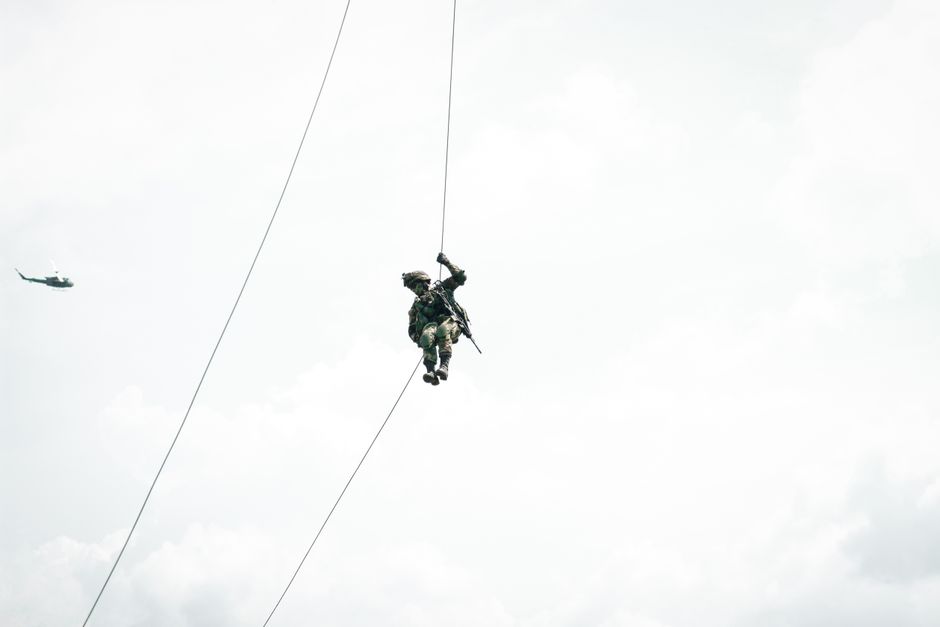
Eyes on the Battlefield: Reconnaissance and Surveillance
The heart of Marine Corps Recon lies in its ability to be the “eyes and ears of the commander.” This means Recon Marines are experts in observing enemy activity and gathering critical information without being detected. They operate behind enemy lines, often in small, self-sufficient teams, to collect intelligence that directly impacts the success of larger Marine operations. This includes everything from identifying enemy strongholds and patrol routes to assessing terrain for maneuverability.
Their stealth and meticulous planning allow them to place remote sensors, conduct specialized surveying (including hydrographic, beach permeability, topography, routes, bridges, structures, urban/rural areas, LZ/DZ, and mechanized reconnaissance), and continuously report intelligence back to the MAGTF commander. This critical data provides commanders with a common operational picture (COP), offering immediate communications, positional data, and situational awareness, as highlighted by the DACT system used by Force Recon units.
Tip of the Spear: Direct Action and Battlespace Shaping
While often associated with stealth and observation, Marine Corps Recon also plays a pivotal role as the “tip of the spear” through direct action and battlespace shaping. These Marines are not just observers; they are trained to execute limited-scale raids and ambushes, seizing key objectives and disrupting enemy operations before the main force even arrives.
Their direct action capabilities include Visit, Board, Search, and Seizure (VBSS) operations, where they board vessels to inspect, secure, or neutralize threats. We’ve seen examples of this in real-world scenarios, such as a detachment from the 15th MEU recapturing the MV Magellan Star from Somali pirates. These missions are designed to create chaos, gather intelligence, or eliminate high-value targets, all contributing to shaping the battlespace in favor of friendly forces. This duality of stealth and decisive action is what makes Marine Corps Recon so uniquely effective.
Organization and Structure: Division Recon vs. Force Recon
Understanding the structure of Marine Corps Reconnaissance is key to appreciating their distinct roles within the Marine Corps. We have four Reconnaissance Battalions in total: three active duty and one reserve. These battalions are the backbone of Marine Corps ground reconnaissance.
Each active duty reconnaissance battalion consists of five companies: a headquarters and service company, three reconnaissance companies, and one force reconnaissance company. For our reserve forces, the 4th Reconnaissance Battalion is structured with a headquarters and service company and five reconnaissance companies. Within these companies, a reconnaissance company typically has a company headquarters section and four reconnaissance platoons (three in the reserve companies). Each platoon, normally consisting of three reconnaissance teams and a headquarters team, is a small but potent unit composed of 1 officer, 21 enlisted Marines, and 1 Navy corpsman, for a total strength of 23 personnel.
The distinction between Division Reconnaissance and Force Reconnaissance is critical and often a point of curiosity. While both are highly trained and perform reconnaissance, their operational scope and the echelons they support differ significantly.
| Feature | Division Reconnaissance | Force Reconnaissance |
|---|---|---|
| Supports | Marine Division | Marine Expeditionary Force (MEF) |
| Operational Area | Area of Influence (tactical depth) | Area of Interest (operational/strategic depth) |
| Mission Focus | Tactical reconnaissance, direct support to infantry | Deep reconnaissance, specialized missions, direct action |
| Insertion Methods | Ground, heliborne, small boat | Airborne, combat diving, submarine, specialized infiltration |
| Operational Scope | Within the division’s immediate battlespace | Far beyond enemy lines, often unsupported for extended periods |
| Equipment | Standard infantry weapons with recon modifications, specialized comms | Highly specialized deep operations gear, advanced comms, diving/parachute gear |
Division Reconnaissance: The Commander’s Eyes Forward
Division Reconnaissance units are an organic asset to the Marine Division, meaning they are directly embedded within the division’s structure. Their primary role is to conduct tactical reconnaissance, serving as the “commander’s eyes forward” within the division’s immediate area of influence. They collect information vital for the infantry battalions and other elements of the division, helping to paint a clear picture of the battlefield.
These units support the ground combat element (GCE) of a Marine Air-Ground Task Force (MAGTF) by conducting close and medium-range reconnaissance. They are experts in ground mobility, observation, and reporting, ensuring that commanders have the necessary intelligence to make informed decisions for tactical engagements.
Force Reconnaissance: Probing Deep into Enemy Territory
Force Reconnaissance, on the other hand, operates on a different scale. These units are an asset of the Marine Expeditionary Force (MEF), designed to conduct deep reconnaissance and surveillance far beyond the division’s front lines, in what’s known as the “Area of Interest.” Their missions often take them into politically sensitive or denied areas, requiring specialized insertion methods that include airborne operations (like parachuting), combat diving (from submarines or surface vessels), and other covert infiltration techniques.
Force Reconnaissance also conducts limited-scale direct action missions, often to destroy high-value targets, capture enemy personnel, or provide critical initial terminal guidance for follow-on forces. Their ability to operate independently for extended periods, gather intelligence, and execute precision strikes makes them invaluable for shaping the battlespace at an operational and strategic level.
The Path to Becoming a Recon Marine: Training and Selection
Becoming a Marine Corps Recon Marine is not for the faint of heart. It requires an extraordinary blend of physical prowess, mental fortitude, and unwavering determination. The journey begins with a rigorous selection and training pipeline designed to push individuals to their absolute limits. We’re talking about an elite group of individuals who earn the Military Occupational Specialty (MOS) 0321, designating them as Reconnaissance Marines.
The initial hurdle for aspiring Recon Marines is the Reconnaissance Training and Assessment Program (RTAP), a demanding preparatory course. This program helps candidates build the necessary foundational skills and physical conditioning to even attempt the main event: the Basic Reconnaissance Course (BRC).

The Grueling Basic Reconnaissance Course (BRC)
The Basic Reconnaissance Course (BRC) is where prospective Marine Corps Recon Marines truly earn their stripes. Taught at the School of Infantry (SOI) West RECON Training Company in Camp Pendleton, California, this 12-week course is broken down into three grueling phases. It’s open to both Marines and Navy hospital corpsmen, reflecting the integrated nature of reconnaissance teams.
Phase 1: Individual Physical Skills (4 weeks)
This initial phase focuses heavily on physical conditioning, pushing candidates through intense running, physical training (PT) sessions, challenging ocean swims, and strenuous rucking with heavy packs. It also introduces critical skills like land navigation, Helicopter Rope Suspension Techniques (HRST – think fast-roping and rappelling), and basic communications and supporting arms procedures. The emphasis here is on developing the individual endurance and fundamental skills required for clandestine operations.✉ Get updates like this in your inbox
Weekly VA benefit changes, pay updates, and money tips for service members, veterans, and military families. Free, no spam.
Phase 2: Small Unit Tactics (3 weeks)
Building on individual skills, Phase 2 shifts to small unit tactics and mission planning. This is where candidates learn to operate effectively as a team, conducting a 9-day exercise in full mission profiles. They refine their patrolling techniques, learn advanced land navigation, and practice the intricate art of planning and executing reconnaissance missions. It’s all about cohesion, communication, and decision-making under pressure.Phase 3: Maritime Missions (2 weeks)
The final phase plunges candidates into the maritime environment, focusing on amphibious reconnaissance, boat operations, and nautical navigation. This includes extensive training in operating small boats, conducting beach landings, and navigating complex water routes. This phase ensures that Recon Marines are proficient in infiltrating and exfiltrating coastal and riverine areas, a crucial capability for the Marine Corps’ amphibious nature.
Advanced Skills and Specialized Schools
Graduating from BRC is just the beginning for a Marine Corps Recon Marine. The journey of continuous learning and specialized skill development is ongoing. After proving themselves at BRC, Recon Marines have the opportunity to attend a wide array of advanced training courses, many of which are shared with other Special Operations Forces. These schools further refine their capabilities, making them even more versatile and lethal.
Here are some of the advanced training opportunities available:
- USMC Combatant Diver Course
- Basic Airborne School (parachutist qualification)
- Military Free Fall (HALO/HAHO – High Altitude Low Opening/High Altitude High Opening)
- SERE (Survival, Evasion, Resistance, and Escape) School
- USMC Scout Sniper Course
- Army Ranger School
- Army Pathfinder Course
- Various Special Operations Training Group (SOTG) programs
- Advanced Long Range Communications
- Weapons and Tactics courses
These advanced courses ensure that Recon Marines are not only physically and mentally tough but also possess a broad spectrum of technical and tactical skills, from underwater operations to precision marksmanship and long-range communications.
History and Legacy: Forged in Conflict
The legacy of Marine Corps Reconnaissance is deeply intertwined with the history of the Marine Corps itself, forged in the crucible of conflict. We can trace its origins back to World War II, a period that laid the foundation for many of the specialized units we see today.
Early on, the Marine Corps recognized the need for specialized units capable of operating behind enemy lines and conducting amphibious reconnaissance. This led to the creation of the Marine Raiders in 1942. These elite units, such as Edson’s Raiders and Carlson’s Raiders, were pioneers in small unit tactics and guerrilla warfare, spearheading amphibious landings and conducting raids. Their exploits in battles like Guadalcanal and Makin Island cemented their legendary status.
Another crucial precursor was the Amphibious Reconnaissance Battalion, often referred to as the “Observer Group.” Formed in 1942, this unit’s specific intelligence missions included surveying beaches for landing, reporting landmarks, and marking landing points, directly influencing the success of amphibious operations.
The Cold War brought new challenges and a fresh impetus for reconnaissance. The advent of nuclear weapons led to the formation of Marine Test Unit 1 in 1954 at Camp Pendleton, California. This unit was tasked with experimenting with new tactics, techniques, and procedures (TTPs) suitable for a nuclear battlefield. It was from the reconnaissance platoon of Marine Test Unit 1 that the 1st Force Reconnaissance Company was formed in 1957, marking a significant milestone in the formal establishment of Force Recon.
Throughout conflicts like the Vietnam War, the Gulf War, and the Global War on Terror, Marine Corps Recon units have continually adapted and evolved, demonstrating their critical value in every theater. Their operational history includes participation in Operation Urgent Fury, Operation Just Cause, and countless missions in Iraq and Afghanistan.
A significant organizational change occurred with the creation of the Marine Corps Forces Special Operations Command (MARSOC) in 2006. While this led to many experienced Force Recon Marines transferring to the new command, it also solidified the distinct roles of Marine Corps Reconnaissance within the conventional force structure. We encourage you to explore A brief history of the U.S. Marine Corps for more details on the broader context of Marine innovation.
Recon vs. MARSOC: Understanding the Difference
It’s common for people to confuse Marine Corps Recon with other special operations forces, especially MARSOC (Marine Corps Forces Special Operations Command). While both are highly capable and conduct specialized missions, there’s a crucial distinction we want to clarify.
Marine Corps Reconnaissance Battalions are conventional forces. They are part of the Ground Combat Element (GCE) of a Marine Air-Ground Task Force (MAGTF). Their primary purpose, as we’ve discussed, is to provide reconnaissance, surveillance, and direct action capabilities in support of the larger Marine force. They are “Special Operations Capable” (SOC), meaning they possess many of the skills and tactics associated with special operations, but they operate under the command structure of the conventional Marine Corps.
MARSOC, on the other hand, consists of Marine Raiders, who are formally designated as Special Operations Forces (SOF). MARSOC is a component of the United States Special Operations Command (USSOCOM), placing them within the broader U.S. Special Operations community alongside units like Navy SEALs and Army Special Forces. Their missions are typically more strategic in nature, often involving unconventional warfare, foreign internal defense, and direct action against high-value targets globally.
So, while Marine Corps Recon and MARSOC Marines share a common ethos of excellence and often some similar training, their organizational placement and primary command authorities differ. They play complementary roles: Marine Corps Recon supports the conventional Marine Corps operations, while MARSOC conducts missions as part of USSOCOM. The creation of MARSOC in 2006 saw many experienced Force Recon Marines transfer to the new command, which helped build MARSOC’s initial capabilities. This evolution highlights the Marine Corps’ commitment to both its conventional excellence and its contributions to the joint special operations community.
Frequently Asked Questions about Marine Corps Recon
We often get questions about Marine Corps Recon, so let’s address some of the most common ones to provide even greater clarity.
Is Marine Recon considered Special Forces?
This is a question we hear a lot! The short answer is no, Marine Corps Recon is not formally considered “Special Forces” in the same way that Army Special Forces (Green Berets) or Navy SEALs are. Those units fall under the United States Special Operations Command (USSOCOM).
Marine Corps Reconnaissance units are highly specialized, elite units within the conventional Marine Corps. They are designated as “Special Operations Capable” (SOC) because they possess many of the advanced skills, tactics, and equipment associated with special operations. However, their primary role is to support the Marine Air-Ground Task Force (MAGTF) and its commanders, operating within the conventional force structure rather than as a component of USSOCOM. Think of them as the Marine Corps’ premier reconnaissance and direct action experts, operating at an elite level, but distinct from the units formally categorized as “Special Forces” or “Special Operations Forces” under USSOCOM.
How long and difficult is the Basic Reconnaissance Course (BRC)?
The Basic Reconnaissance Course (BRC) is undeniably one of the most challenging training pipelines in the U.S. military. As we discussed, it’s a grueling 12-week course designed to test and break individuals, ensuring that only the most determined and capable earn the title of Recon Marine.
The difficulty stems from a relentless combination of physical and mental stressors. Candidates face extreme physical demands, including long runs, intense PT, extended ocean swims, and punishing rucks with heavy gear. Beyond the physical, the course demands exceptional mental resilience, requiring individuals to perform complex tasks under severe sleep deprivation, stress, and adverse environmental conditions. The three phases—individual physical skills (4 weeks), small unit tactics (3 weeks), and maritime missions (2 weeks)—each present unique challenges, with a high attrition rate throughout. It’s a true test of grit, intelligence, and teamwork.
What is the main difference between Force Recon and Division Recon?
The main difference between Force Reconnaissance and Division Reconnaissance lies in their operational scope and the echelon of command they support.
Division Reconnaissance (often referred to simply as “Recon”) is an organic asset to a Marine Division. They conduct tactical reconnaissance, typically operating within the division’s immediate “Area of Influence.” Their missions are focused on providing intelligence directly to the division commander and supporting the infantry battalions in the immediate battlespace.
Force Reconnaissance is an asset of the Marine Expeditionary Force (MEF). They conduct deep reconnaissance and surveillance, operating in the “Area of Interest,” which extends far beyond the conventional front lines. Their missions are often strategic or operational in nature, requiring specialized insertion techniques like airborne or combat diving, and they are capable of operating independently for extended periods, providing intelligence to the MEF commander.
Division Recon focuses on the “closer” fight, while Force Recon probes “deeper” into enemy territory, requiring a higher degree of self-sufficiency and specialized skills. Both are critical, but they serve different intelligence needs for different levels of command.
Conclusion
As we’ve explored, Marine Corps Reconnaissance units embody the pinnacle of Marine Corps ethos: “Swift, Silent, Deadly.” These elite warfighters are indispensable to the Marine Air-Ground Task Force, providing commanders with critical intelligence and shaping the battlespace through their unparalleled reconnaissance, surveillance, and direct action capabilities. From their historical roots in the Marine Raiders to their modern role as the eyes and ears of the MEF and Marine Divisions, Recon Marines consistently demonstrate a profound commitment to excellence, resilience, and unwavering dedication to mission success.
Whether operating deep behind enemy lines or conducting amphibious assaults, the Marine Corps Recon community stands as a testament to specialized training, relentless determination, and the enduring spirit of the Marine Corps. For those inspired by their legacy or considering a path of service, understanding the depth of their commitment is the first step.
For more insights into the U.S. military and to explore various elite units, be sure to visit our comprehensive resources at USMilitary.com. You can even Compare elite units like Delta Force and Navy SEALs to see how these specialized forces stack up.
Free for Service Members & Veterans
Get the military benefits intel no one tells you about.
Weekly updates on VA benefits, pay changes, and money tips — free for service members and veterans.
No spam. Unsubscribe anytime. Your info is never shared.


