What Is the Blended Retirement System (BRS)? A Quick Answer

The Blended Retirement System BRS explained in simple terms: it is the current military retirement plan that combines a monthly pension with a savings account (TSP), a mid-career bonus (Continuation Pay), and an optional lump sum payment at retirement.
Here is a quick breakdown of the four core components:
| BRS Component | What It Is |
|---|---|
| Defined Benefit (Pension) | Monthly retired pay = years of service × 2% × average of highest 36 months of basic pay |
| Defined Contribution (TSP) | Government contributes 1% automatically + matches up to 4% more (5% total) |
| Continuation Pay | Mid-career cash bonus between 8–12 years of service, in exchange for more service time |
| Lump Sum Option | Take 25% or 50% of your pension upfront at retirement; full monthly pay resumes at age 67 |
The BRS went into effect on January 1, 2018. Every service member who entered on or after that date is automatically enrolled. Under the old system, 81% of service members left the military with zero retirement benefit. Under BRS, roughly 85% will receive some form of retirement benefit — even if they never reach 20 years of service.
That one change is why the BRS matters to nearly every person who puts on a uniform today.
I’m Larry Fowler, publisher of the USMilitary.com Network and a longtime resource for active-duty members and veterans navigating military pay and benefits — including the Blended Retirement System BRS explained in plain language for real career decisions. In the sections below, I’ll walk you through every component of the BRS so you can make the most informed retirement planning choices possible.

Blended Retirement System BRS Explained: Legacy High-3 vs. BRS
To truly understand how the Blended Retirement System BRS explained impacts your financial future, we must look at what came before it. For decades, the military used the legacy “High-3” retirement system. High-3 was an “all-or-nothing” structure. If you served 20 years or more, you received a generous lifetime monthly pension. If you served 19 years and 364 days and decided to separate, you left with absolutely nothing in government-sponsored retirement benefits.
Historically, only about 19% of active component service members and a mere 14% of National Guard and Reserve members stayed in the military long enough to reach that 20-year milestone. This meant that roughly 81% of the brave men and women who joined the military separated with zero government retirement savings.
The legacy High-3 pension is calculated using a 2.5% multiplier. If you retire under the legacy system with 20 years of service, your pension is calculated as:
$$\text{20 years of service} \times 2.5\% = 50\% \text{ of your average highest 36 months of basic pay}$$
The Blended Retirement System was created to bridge this massive gap. Under the BRS, the pension multiplier is reduced to 2.0%. This means at 20 years of service, your pension is calculated as:
$$\text{20 years of service} \times 2.0\% = 40\% \text{ of your average highest 36 months of basic pay}$$
While a drop from 50% to 40% sounds like a step backward, the BRS “blends” this reduced pension with a modern, portable 401(k)-style benefit through the Thrift Savings Plan (TSP). Because of the government matching contributions in the TSP, about 85% of all active-duty and reserve service members will now leave the military with a portable retirement nest egg, even if they separate after just a few years.
To learn more about how military pensions are structured across different generations, check out our guide on Military Retirement Pay.
| Feature | Legacy High-3 System | Blended Retirement System (BRS) |
|---|---|---|
| Pension Multiplier | 2.5% per year of service (50% at 20 years) | 2.0% per year of service (40% at 20 years) |
| TSP Government Match | None (Service members could contribute their own money only) | 1% automatic contribution + up to 4% matching (5% total) |
| Mid-Career Bonus | None (Except branch-specific retention bonuses) | Continuation Pay (Paid between 8–12 years of service) |
| Lump Sum Option | No | Yes (Choose 25% or 50% upfront; full pension restores at age 67) |
| Who Benefits? | Only the ~19% who serve 20+ years | ~85% of all service members (due to portable TSP) |
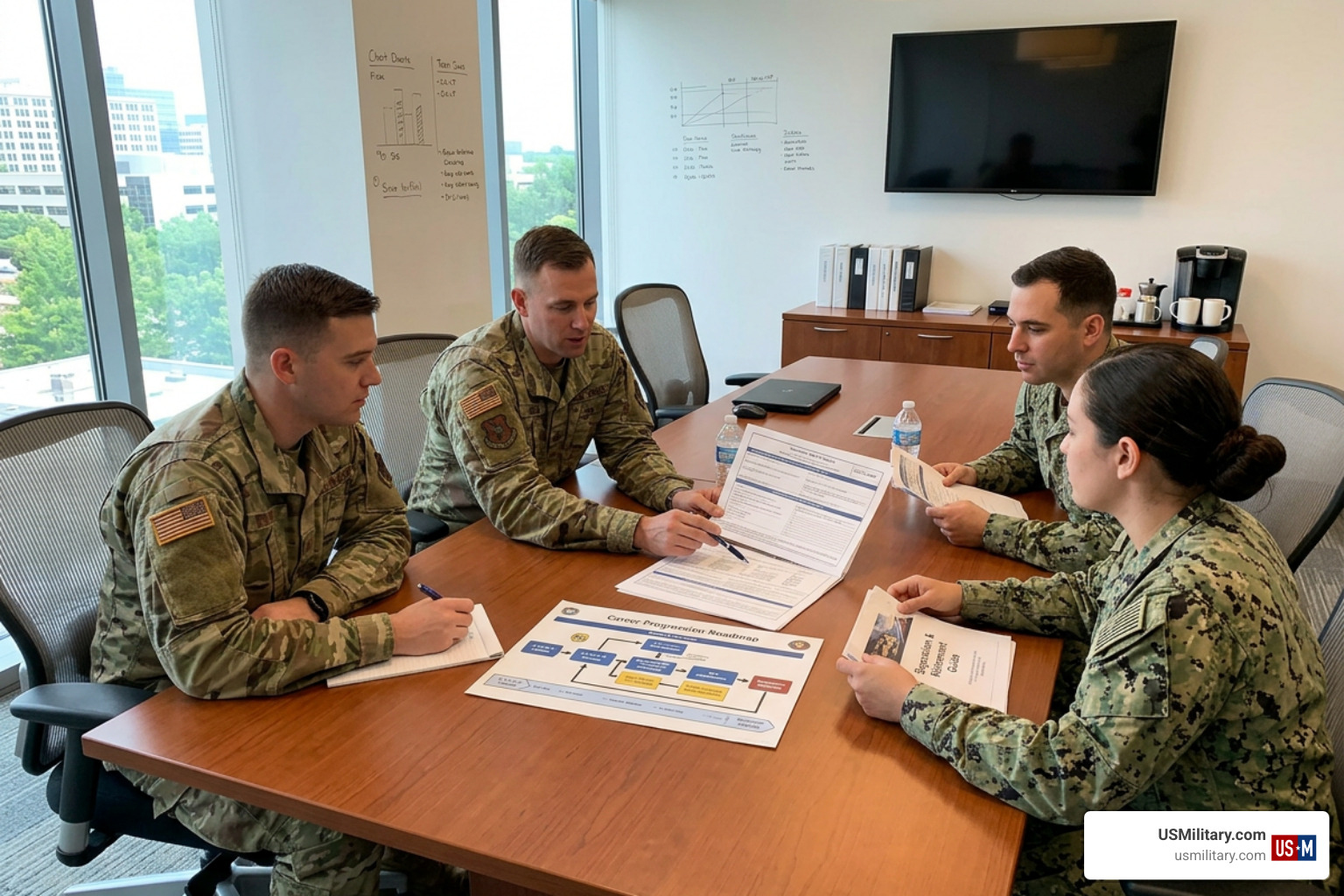
The Four Core Components of the BRS
Now that we have compared the two systems, let’s dive deep into the mechanics of the BRS. The BRS is not just a pension; it is a comprehensive financial package composed of four distinct pillars. Mastering these four pillars is the key to maximizing your long-term wealth.
Defined Benefit Pension under the Blended Retirement System BRS Explained
The first pillar of the BRS is the Defined Benefit, commonly known as the military pension. If you complete at least 20 years of creditable service (or reach 20 qualifying years in the Reserve Component), you are guaranteed a lifetime monthly annuity.
The formula to calculate your monthly BRS pension is straightforward:
$$\text{Monthly Retired Pay} = \text{Years of Creditable Service} \times 2.0\% \times \text{Average of Highest 36 Months of Basic Pay}$$
For example, let’s look at an active-duty E-7 who retires at exactly 20 years of service in June 2026. If their average basic pay over their highest earning 36 months is $4,797 per month, their pension calculation would look like this:
$$20 \times 0.02 \times \$4,797 = \$1,918.80 \text{ per month}$$
This pension is protected against inflation through annual Cost of Living Adjustments (COLA), which are tied directly to the Consumer Price Index for Urban Wage Earners and Clerical Workers (CPI-W). This ensures that your purchasing power does not erode over time.
For members of the National Guard and Reserves, the pension works similarly, but eligibility for receiving retired pay typically begins at age 60 (though this can be reduced to as low as age 50 with creditable active-duty service performed since 2008). Reservists calculate their equivalent years of service by taking their total accumulated retirement points and dividing them by 360.
For more official details on how the pension component operates, you can read the Blended Retirement System – Military OneSource guide.
Defined Contribution and the Thrift Savings Plan (TSP)
The second pillar—and the crown jewel for those who do not serve 20 years—is the Defined Contribution component, which utilizes the Thrift Savings Plan (TSP). Under the BRS, the Department of Defense (DoD) helps you build a portable retirement account through automatic and matching contributions.
Here is how the contribution structure works:
- 1% Automatic Contribution: After 60 days of service, the government automatically contributes an amount equal to 1% of your basic pay to your TSP every single month. You do not have to contribute a single penny of your own money to receive this 1%.
- Up to 4% Matching Contributions: Once you reach your second year of service (after 2 years), the government will match your personal contributions dollar-for-dollar on the first 3% you contribute, and 50 cents on the dollar for the next 2% you contribute.
To maximize this benefit, you must contribute at least 5% of your basic pay to your TSP. Doing so unlocks the full 4% match on top of the 1% automatic contribution, resulting in a total government contribution of 5%.
To see how this compounding works in the real world, consider an E-4 with 4 years of service who contributes 5% of their basic pay. Between their personal savings and the government’s 5% total contribution, they are easily saving over $3,000 each year in their TSP. If they separate after 6 years, they get to take every single dollar of that TSP balance with them to their next civilian job or roll it into a traditional IRA.
To learn how to manage your investment funds and maximize your yields, check out our comprehensive guide on the Thrift Savings Plan (TSP) Military.
Continuation Pay Retention Bonus
The third pillar of the BRS is Continuation Pay. This is a mid-career, one-time cash bonus designed to incentivize service members to stay in the military during a critical retention window.
- Timing: Continuation Pay is offered between the completion of your 8th year of service and before the completion of your 12th year of service (calculated from your Pay Entry Base Date).
- Service Obligation: In exchange for accepting Continuation Pay, you must commit to a minimum of 3 additional years of service (some branches may require 4 years depending on current personnel needs).
- The Payout Rates: The payout rates are determined annually by each individual service branch based on retention needs:
- Active Component: Active duty members can receive a bonus ranging from 2.5 to 13 times their monthly basic pay.
- Reserve Component: National Guard and Reserve members can receive a bonus ranging from 0.5 to 6 times their monthly basic pay (calculated as if they were on active duty).
For active duty members, the standard baseline rate is often set at 2.5 times monthly basic pay. If you are an E-6 reaching your 10th year of service, this bonus can translate to thousands of dollars in immediate cash. To manage your tax liability, the military allows you to receive this bonus as a single lump sum or spread out in up to four equal annual installments.
The Lump Sum Option at Retirement
The fourth and final pillar of the BRS is the Lump Sum Option. When you reach retirement after 20 or more years of service, the BRS allows you to trade a portion of your future monthly pension checks for an upfront cash payment.
Under this option, you can choose to receive:
- 25% Lump Sum: You receive 25% of the discounted present value of your future pension payments upfront. Your monthly pension check is reduced by 25% until you reach Full Retirement Age.
- 50% Lump Sum: You receive 50% of the discounted present value upfront. Your monthly pension check is reduced by 50% until you reach Full Retirement Age.
The catch: The lump sum is calculated using an annual “discount rate” set by the DoD (for example, the rate was 6.32% in 2023). This discount rate means the upfront cash you receive is worth less than the cumulative value of the monthly payments you are giving up. Furthermore, lump-sum payments are fully taxable, which can push you into a much higher tax bracket in the year you receive it.
The silver lining is that your pension is restored to 100% of its full value once you reach Full Retirement Age (typically age 67 under Social Security guidelines). If you are considering this trade-off, we highly recommend reading the official A Guide to the Uniformed Services BRS to run the numbers carefully.
Eligibility, Opt-In Rules, and Vesting Timelines
Navigating the rules of eligibility and vesting is critical to ensuring you do not leave money on the table.
Who is Covered by the Blended Retirement System BRS Explained
The BRS has strict rules based on your Date of Initial Entry into Military Service (DIEMS):
- Automatically Enrolled: If your DIEMS is on or after January 1, 2018, you are automatically enrolled in the BRS. You do not have the option to switch to the legacy High-3 system.
- Grandfathered (Legacy High-3): If you entered the military before January 1, 2018, you were grandfathered into the legacy High-3 system.
- The Historic Opt-In Window: Active-duty service members who had fewer than 12 years of service as of December 31, 2017 (or Reserve component members with fewer than 4,320 retirement points) were given a one-time window throughout calendar year 2018 to opt into the BRS. That opt-in window officially closed on December 31, 2018, and all decisions made during that time were irrevocable.
Special exceptions exist for cadets and midshipmen at service academies or in ROTC programs. If you were enrolled in an academy or ROTC program as of December 31, 2017, you were grandfathered under the old system but are given a brief window to opt into the BRS upon commissioning.
For Air Force personnel looking to run branch-specific retirement calculations, the Air Force Blended Retirement System – MyAirForceBenefits provides excellent tailored tools.
Vesting and Leaving the Military Before 20 Years
Under the legacy system, leaving the military before 20 years meant leaving empty-handed. Under BRS, the concept of vesting ensures that you own your retirement funds even if you separate early.
Vesting means ownership. Here is how the BRS vesting schedule works:
- Your Personal Contributions: Any money you contribute to your TSP out of your own basic pay is 100% vested immediately. It is your money, and you own it from day one.
- DoD Matching Contributions (Up to 4%): The government’s matching contributions are also 100% vested immediately once they are deposited into your account.
- DoD Automatic Contribution (1%): The 1% automatic contribution made by the government vests after you complete 2 years of service. If you separate from the military before reaching your 2-year mark, you forfeit this 1% portion, but you keep everything else.
This portability is a game-changer for early-career service members. To understand how these retirement savings fit into your broader military benefits package, read our deep dive on More Than Just a Job: Essential Active Duty Benefits for Service Members.
Frequently Asked Questions About the BRS
We know that planning for retirement can feel overwhelming. Here are answers to some of the most common questions service members ask about the BRS.
How is the monthly retired pay calculated under BRS?
Your monthly retired pay (pension) under the BRS is calculated by multiplying your total years of creditable service by a 2.0% multiplier, and then multiplying that percentage by the average of your highest 36 months of basic pay.
$$\text{Pension} = \text{Years of Service} \times 2.0\% \times \text{High-36 Month Average Basic Pay}$$
If you serve for 24 years, you will receive 48% of your highest average basic pay for life ($24 \times 2.0\% = 48\%$). If you serve for 30 years, you will receive 60% ($30 \times 2.0\% = 60\%$).
What happens to my TSP contributions if I separate before 20 years?
Your TSP account is entirely portable. If you separate from the military before reaching 20 years of service, your money remains yours. You have several choices:
- Leave it in the TSP: You can leave your accumulated balance in the TSP, where it will continue to grow tax-deferred based on the funds you have selected.
- Rollover to a New Employer’s Plan: You can transfer your TSP balance directly into a civilian employer’s 401(k) or 403(b) plan.
- Rollover to an IRA: You can roll your funds over into a traditional or Roth Individual Retirement Account (IRA) with a commercial financial institution.
To learn more about maximizing your transition benefits as a veteran, read our guide on Top Veteran Benefits.
Can I change my mind after opting into the BRS?
No. The decision to opt into the Blended Retirement System during the 2018 window (or upon commissioning for eligible cadets) is completely irrevocable. Once you sign the paperwork and enroll in the BRS, you cannot return to the legacy High-3 retirement plan.
Because this decision is permanent, the military requires all service members to complete comprehensive financial readiness training before making major career modifications.
Conclusion
The Blended Retirement System represents one of the most significant modernizations of military compensation since World War II. By blending a guaranteed monthly pension with a portable, matching Thrift Savings Plan, the BRS ensures that the vast majority of those who serve our nation leave with a tangible retirement benefit.
Whether you plan to serve a single four-year enlistment or pursue a full 20-to-30-year career, understanding how to leverage the TSP matching, navigate Continuation Pay, and calculate your pension is essential to your long-term financial security.
To explore more about your military retirement options, calculate your benefits, or access personalized financial planning tools, visit the USMilitary.com Retirement Benefits Hub. For general inquiries and career guidance across all branches of service, visit our homepage at USMilitary.com. If you are looking for faith-based inspiration and strength during your military transition, we also recommend reading Larry Fowler’s book, Dare to Live Greatly.
Free for Service Members & Veterans
Get the military benefits intel no one tells you about.
Weekly updates on VA benefits, pay changes, and money tips — free for service members and veterans.
No spam. Unsubscribe anytime. Your info is never shared.


