Who Are the ‘Quiet Professionals’ of Delta Force?
Delta Force gear represents some of the most advanced and expensive tactical equipment in the U.S. military arsenal. Officially known as 1st Special Forces Operational Detachment-Delta (1st SFOD-D), or Combat Applications Group (CAG), these elite operators rely on cutting-edge technology and carefully selected equipment for high-risk counter-terrorism missions.
Key Components of Delta Force Gear:
- Helmet System – Ops-Core high-cut helmets with quad-tube night vision (GPNVG-18), communication headsets, IR guides, and mounting systems (~$46,876)
- Plate Carrier – Crye Precision JPC 2.0 or SPC with modular pouches and ballistic plates (~$10,714)
- Primary Weapon – 10-inch HK 416 rifle with advanced optics, lasers, lights, and suppressors (~$10,440)
- Secondary Weapon – Glock 19 or 17 with red dot sight, aftermarket modifications, and weapon light (~$1,426)
- Combat Uniform – Crye Precision G3 or similar advanced uniforms in Multicam pattern
- Belt System – Crye Precision MRB with holster, magazine pouches, and medical kit
- Total Basic Loadout Cost – Approximately $71,802 per operator
Formed in 1977 by Colonel Charles Beckwith and modeled after the British SAS, Delta Force operates under the Joint Special Operations Command (JSOC). These operators are drawn from experienced Army Rangers and Special Forces, then put through one of the most challenging selection processes in the military. For more details on their origins and missions, you can find More info on Delta Force’s history.
What makes Delta Force unique isn’t just their expensive gear—it’s their operational flexibility. Unlike some other elite units, Delta operators often have significant freedom in customizing their equipment based on mission requirements and personal preference. This means you’ll see variations in their loadouts, even within the same unit.
The gear these operators carry reflects their diverse mission set: hostage rescue, direct action raids, high-value target capture, and covert operations working alongside intelligence agencies. Every piece of equipment—from their $46,876 helmet systems to their modified pistols—serves a specific purpose in keeping them alive and mission-effective in the world’s most dangerous environments.

The High Cost of Elite Operations: Analyzing the Delta Force Gear Budget
When we talk about equipping a Delta Force operator, we’re not just discussing a few pieces of high-quality kit. We’re looking at a substantial investment in cutting-edge technology and specialized equipment designed to give them every possible advantage in the world’s most demanding missions. The total cost to outfit one operator for a basic mission, including their helmet, plate carrier, and pistol, comes in at a staggering $71,802. This figure doesn’t even include specialized weapons like sniper rifles, heavier optics, larger packs, or cold weather gear, which would push the total even higher.
This significant taxpayer investment reflects the critical importance of Delta Force’s roles, which primarily involve counter-terrorism, direct action, and hostage rescue. These are missions where success or failure can have global implications, and providing operators with the best possible tools is paramount. It’s a testament to the value placed on these quiet professionals and their ability to execute operations with precision and lethality. If you’re curious about the rigorous path to joining this elite unit, you can learn How does Delta Force selection work?.
Helmet System Breakdown
The helmet system is consistently one of the most expensive components of an operator’s loadout, and for good reason—it integrates crucial protection, communication, and night vision capabilities. For a Delta operator, the total cost for their helmet system alone comes in right around $46,876. This isn’t just a helmet; it’s a sophisticated command and control center for their head.
Delta Force operators overwhelmingly favor Ops Core high-cut helmets. These helmets provide ballistic protection while allowing for maximum peripheral vision and clearance for communication headsets. Integrated into these helmets are advanced night vision technologies. Most recent images show Delta operators wearing ground panoramic night vision GPNVG-18 quad tube goggles. These four-tube goggles offer a significantly wider field of view than traditional two-tube systems, which is a massive advantage in low-light environments.
Communication is equally vital, and operators typically use integrated Peltor Comtac hearing protection headsets. These not only protect their hearing from gunfire and explosions but also allow for clear radio communication with their team and command elements. Mounting these various accessories requires robust hardware, such as the Wilcox DPAM night vision mount, which securely attaches night vision devices to the helmet. Finally, for identification and signaling, particularly for air support or friendly forces, a Core Survival Hel-Star 6 IR beacon is often mounted, providing a discrete infrared signature only visible through night vision.
Armor and Rifle Costs
Beyond the helmet, an operator’s ballistic protection and primary weapon represent the next largest investments in their Delta Force gear. The total cost for the plate carrier and associated equipment comes in at $10,714, while their custom-configured rifle adds another $10,440.
Delta Force operators rely on modern plate carriers that offer a balance of protection and mobility. The Crye Precision JPC 2.0 and Crye Precision SPC are the most frequently seen models. These carriers are designed to hold ballistic plates, protecting vital organs, and are highly modular. Operators customize them with a variety of pouches from the Crye Smart Pouch Suite for magazines, radios, medical supplies, and general-purpose items. Many also use Crye zip on back panels for additional carrying capacity or specialized roles.
For their primary weapon, the modern CAG blaster is often a custom-configured Heckler and Koch 416 rifle, typically a 10-inch variant. These weapons are renowned for their reliability and accuracy, and Delta operators take full advantage of the modularity to fine-tune them to their exact specifications, as we will explore further below.
Head-to-Toe Loadout: Uniforms, Armor, and Personal Kit
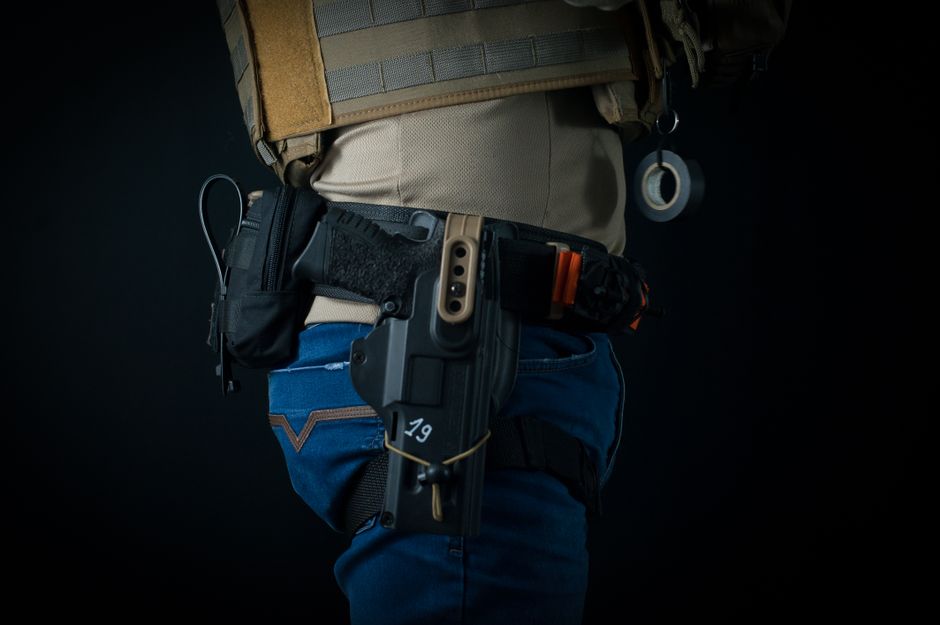
The selection of Delta Force gear goes far beyond just weapons and primary ballistic protection. Every item, from their combat uniforms to their boots and belt setups, is chosen for its performance, durability, and ability to adapt to the fluid nature of special operations. Operator preference is a significant factor, leading to a blend of standardized and personally customized equipment. This emphasis on mission adaptability and modularity ensures that each operator can configure their kit to best suit the specific demands of their mission.
Helmets and Plate Carriers
As we touched on earlier, Ops Core high-cut helmets are the standard for Delta operators. These helmets provide crucial ballistic protection while their high-cut design accommodates communication headsets and advanced night vision systems like the GPNVG-18s.
For ballistic vests, the trend leans heavily towards lightweight plate carriers that prioritize mobility without compromising protection. The Crye Precision JPC 2.0 and Crye Precision SPC are widely adopted. These carriers are highly modular, allowing operators to attach various pouches and accessories using the MOLLE system or Crye’s proprietary Smart Pouch Suite. This modularity is key for specialized roles within Delta Force; a breacher, for instance, might prioritize carrying breaching tools and specialized charges, while a medic’s plate carrier would be heavily focused on medical supplies and trauma kits. Even zip-on back panels are used to quickly change configurations or carry larger items like hydration bladders or additional ammunition.
Combat Uniforms and Footwear
When it comes to combat uniforms, Crye Precision G3 Combat Tops and Combat Pants have been a long-standing favorite due to their integrated knee pads, durable fabric, and functional pocket layout. However, we’ve heard chatter that some operators might be exploring other vendors. There’s a growing interest, for example, in Patagonia L9 Combat uniforms, reflecting Delta Force’s continuous evaluation of the best available gear. The Multicam pattern remains a staple for its effectiveness across various environments.
For footwear, comfort, durability, and support are paramount. While specific models can vary based on individual preference and mission-specific requirements, Salomon Mid combat boots are frequently seen, known for their lightweight design and excellent traction in rugged terrain.
Belt Systems and Holsters
The operator’s belt setup is another critical component for carrying essential items that need to be accessed quickly, particularly secondary weapons and reloads. The Crye MRB belt is a common choice, offering a stable platform for attaching various pouches and a holster.
For holsters, the Safariland 6354 DO holster is a prevalent sight, especially for securing their Glock pistols. This holster is known for its retention capabilities and compatibility with weapon-mounted lights and red dot optics. Beyond the primary sidearm, belt setups typically include pistol magazine pouches, additional rifle magazine pouches, an IFAK (Individual First Aid Kit) for immediate trauma care, and sometimes a dump pouch for quickly stowing empty magazines.
✉ Get updates like this in your inbox
Weekly VA benefit changes, pay updates, and money tips for service members, veterans, and military families. Free, no spam.
The Operator’s Arsenal: A Breakdown of Delta Force Weapon Systems

The selection and customization of weapon systems are where Delta Force gear truly shines in its adaptability and precision. Operators are granted significant freedom to configure their firearms to meet specific mission profiles and personal shooting styles. This level of customization ensures maximum lethality and reliability, critical attributes for success in high-stakes environments.
Primary Weapon Systems: A Closer Look at Delta Force Gear
The backbone of a Delta operator’s primary weapon system is typically the Heckler and Koch 416 carbine, often in a short-barrel 10-inch configuration. This rifle is prized for its piston-driven operating system, offering improved reliability over traditional direct impingement AR-15 variants. Customizations include a Geissele SMR MLOK rail for attaching accessories and an LMT B5 stock for improved ergonomics and stability.
Advanced optics are a must-have. We commonly see operators using either an Eotech XPS 3-0 red dot sight often paired with a G30 magnifier for both close-quarters and extended-range engagements, or a low-power variable optic (LPVO) like the Vortex Optics Razor II E 1-6x scope.
For target acquisition in low light or with night vision, laser aiming modules are essential. While older images show the venerable PEQ 15 IR laser sight, many operators are now transitioning to the NGAL, a newer, more compact version. Illumination is provided by reliable weapon lights such as Surefire M600C scout lights and their associated switches. Finally, to reduce muzzle flash and sound signature, almost all primary weapons are equipped with suppressors, with the Surefire RC 556 suppressor being a common choice. Some operators even use Taran Tactical basepad extensions on their rifle magazines for increased capacity.
Secondary Weapons and Holsters: Completing the Delta Force Gear Kit
For their secondary weapon, Delta Force operators almost universally choose a Glock pistol, typically a Glock 19 or Glock 17. The grand total for the pistol, with its modifications, comes in at $1,426. While a reliable platform out of the box, these pistols often undergo significant modifications to improve their combat effectiveness.
Many operators now mount a Leupold Delta Point Pro red dot sight, allowing for faster target acquisition and improved accuracy, especially under stress. To further improve handling and reloading speed, an aftermarket magwell is a common addition. Some operators also opt for compensators to reduce recoil.
For increased magazine capacity, Taran Tactical basepad extensions are frequently seen on pistol magazines. Finally, just like their rifles, pistols are almost always equipped with powerful weapon lights, with Surefire X300u white lights being a preferred choice for their brightness and durability.
Elite Gear in Context: Comparing Delta Force Equipment to Other US Army Special Operations Units
When we analyze Delta Force gear selection, it’s insightful to compare it to other elite units within the U.S. Army Special Operations Command (USASOC). While there’s often an overlap in the general type of high-quality equipment used across special operations forces, Delta Force, like other Tier One units, has specific preferences driven by their unique mission sets and operational autonomy.
| Category | Delta Force (1st SFOD-D / CAG) | Army Rangers (75th Ranger Regiment) | Green Berets (Army Special Forces) |
|---|---|---|---|
| Primary Rifles | HK 416 (10-inch variant, highly customized) | M4A1 (often Block II or similar, less customization than Delta) | M4A1 (various configurations, often with M-LOK handguards) |
| Pistols | Glock 19/17 (red dot optics, aftermarket mods) | Glock 19 (standard issue, often less customized) | Glock 19 (increasingly with red dot optics) |
| Helmets | Ops-Core high-cut (GPNVG-18, comms, strobes) | Ops-Core FAST SF/XP High Cut (standard accessories) | Ops-Core FAST SF/XP High Cut (standard accessories) |
| Plate Carriers | Crye Precision JPC 2.0 / SPC (Crye Smart Pouch Suite, zip-on panels) | Crye Precision JPC 1.0/2.0, Spiritus Systems LV119 | Crye Precision JPC 1.0/2.0, Spiritus Systems, various others |
| Uniforms | Crye Precision G3/G4, Patagonia L9 (Multicam) | Crye Precision G3/G4 (Multicam) | Crye Precision G3/G4 (Multicam, OCP) |
Delta Force’s gear selection often reflects a blend of the absolute latest technology and well-proven, highly customizable commercial off-the-shelf (COTS) components. Their land-based operational focus, combined with extreme flexibility, means they prioritize lightweight, durable, and adaptable equipment. While Army procurement processes can sometimes be slow, Tier One units like Delta have more direct access to cutting-edge solutions, often bypassing standard channels to acquire specialized items. The research indicates that even other units like Air Force Special Tactics will adopt gear because Delta has them, highlighting their influence.
Compared to other Tier One units like DEVGRU (SEAL Team Six), there’s a significant overlap in equipment, particularly in high-end items from manufacturers like Crye Precision. Both units are Special Missions Units (SMUs) under JSOC and use top-tier equipment. However, DEVGRU’s extensive training in specialized maritime operations—a key differentiator—can lead to some specific gear choices optimized for waterborne insertion and operations that Delta, with its primarily land-based focus, might not emphasize as much. Both units select gear that provides mission-critical advantages, even if their specific preferences or adaptations differ slightly. For a deeper dive into how Delta Force stacks up against other Army Special Operations units, you can explore Delta Force vs. other Army Special Operations.
Frequently Asked Questions about Delta Force Equipment
We often get questions about the specifics of Delta Force gear—how it changes, where it comes from, and why certain choices are made. Let’s tackle some of the most common inquiries.
How has Delta Force gear changed over time?
The evolution of Delta Force gear mirrors advancements in military technology and lessons learned from decades of combat operations. In the early days, operators primarily used modified standard-issue M16s and M1911 pistols. As technology progressed, so did their kit.
A significant shift occurred with the adoption of new rifle platforms, most notably the Heckler and Koch 416, which offered superior reliability. The introduction of high-cut helmets, like those from Ops-Core, revolutionized head protection by integrating communication and night vision capabilities more effectively. Advancements in night vision and optics have been continuous, moving from bulkier PVS-14s to advanced quad-tube GPNVG-18s, and from simple red dots to versatile low-power variable optics and compact laser aiming modules like the NGAL. Plate carriers have also become lighter and more modular, reflecting a constant push for reduced weight and increased flexibility. The trend is always towards lighter, more effective, and more integrated systems.
Can civilians buy authentic Delta Force gear?
This is a tricky question, and the answer is usually “partially.” Many components of Delta Force gear are indeed available to civilians, but often with some caveats.
High-end tactical retailers sell many of the brands favored by Delta Force, such as Crye Precision uniforms and plate carriers, Surefire lights and suppressors (with proper licensing), Ops-Core helmets (though often without the specific ballistic ratings or military-grade components), and Glock pistols. So, you can certainly assemble a very similar, high-quality tactical loadout.
However, truly “authentic” or exact-spec military-grade items, especially those incorporating advanced night vision (like the GPNVG-18s) or laser aiming modules (like the NGAL), are generally restricted. These items are subject to International Traffic in Arms Regulations (ITAR) and are not legally available for civilian purchase or export without specific government authorization. The surplus market might offer older, de-militarized gear, but cutting-edge items remain tightly controlled. For those interested in the aesthetics without the operational capabilities, replica gear for airsoft or milsim is widely available.
How is gear selected for different missions or environments?
The beauty of modern Delta Force gear lies in its modularity and adaptability, which is crucial given the wide array of missions and environments they operate in. Gear selection is highly dynamic and custom to the specific demands of each operation.
For low-visibility operations, operators might choose specific camouflage patterns, lighter loadouts to reduce noise, and passive night vision systems. Direct action raids, particularly in urban environments, often prioritize maximum ballistic protection, CQC-optimized weapon configurations (like short-barrel HK416s), and breaching tools.
Environmental factors play a huge role. For cold weather gear, specialized insulated uniforms and layering systems are critical to maintain performance and prevent hypothermia. Products like UF PRO Delta Cold Weather Gear represent the kind of advanced apparel designed for extreme conditions. In contrast, desert environments demand lightweight, breathable fabrics, and robust hydration systems. Scalable armor systems allow operators to add or remove ballistic panels and pouches based on the threat level and physical demands of the mission. Weapon configurations can also change, with different barrel lengths, optics, and ammunition types selected for tasks ranging from close-quarters battle to precision long-range engagements. The goal is always to be as effective and unencumbered as possible for the task at hand.
Conclusion: The Constant Evolution of the Modern Operator
As we’ve explored, Delta Force gear represents the pinnacle of tactical equipment, carefully selected and customized to give these elite operators every advantage. From the multi-functional Ops-Core helmet systems and modular Crye Precision plate carriers to the highly adaptable HK416 rifles and modified Glock pistols, every piece serves a vital role. The staggering cost of outfitting a single operator—over $70,000 for a basic loadout—underscores the seriousness and complexity of their missions.
However, it’s crucial to remember that while advanced equipment is undeniably important, it is the unparalleled skill, rigorous training, and mental fortitude of the operators themselves that truly make Delta Force effective. The gear is merely an extension of their capabilities, not a substitute for their expertise. As technology continues to advance and global threats evolve, we can expect to see further innovations in Special Operations Forces (SOF) gear. Trends will likely continue towards lighter, more integrated, and smarter systems, with an ongoing emphasis on modularity and mission-specific adaptability.
At USMilitary.com, we are committed to providing comprehensive resources and insights into military service. We hope this extensive guide has given you a deeper appreciation for the dedication and resources involved in equipping America’s most elite warriors. To dig further into the comparisons between top-tier units, we invite you to explore more of our content.
Compare Army Delta Force vs. Navy SEALs
Free for Service Members & Veterans
Get the military benefits intel no one tells you about.
Weekly updates on VA benefits, pay changes, and money tips — free for service members and veterans.
No spam. Unsubscribe anytime. Your info is never shared.


