How US Military Strength Compares With China and Russia Today

The United States remains the strongest military for operations around the world. It has unmatched reach through its allies, overseas bases, carriers, and airpower. But that lead does not mean it would win every fight. China can concentrate ships, aircraft, and missiles close to Taiwan, where US forces must travel farther and protect their bases. Russia’s nuclear arsenal remains a major threat, even as its war in Ukraine has strained its conventional forces.
The key is where a conflict happens. Troop and ship counts alone cannot show readiness, supply capacity, or the risks of escalation. China and Russia also cooperate, but their forces should not be counted as one military.
I’m Larry Fowler, a Navy veteran, BUD/S Class 89 graduate, and publisher of USMilitary.com. In US Military Strength vs China and Russia’s Military: The Truth Today, I use that background to put the numbers in context for service members, veterans, and future recruits.
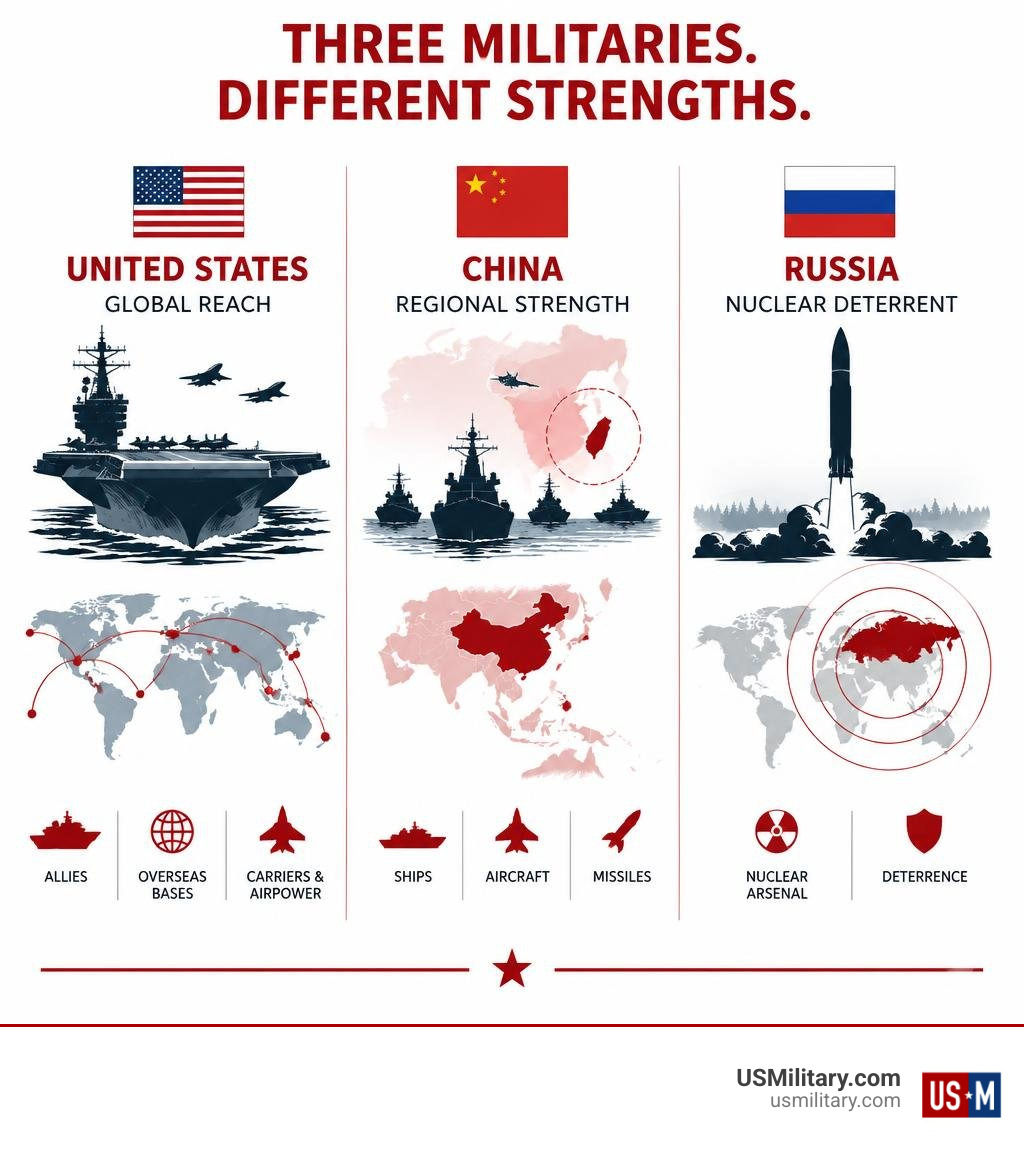
US Military Strength vs China and Russia’s Military: The Truth Today
Understanding today’s balance of power requires looking beyond top-line inventories. While the United States maintains the top spot on global indices (holding a PowerIndex rating of 0.0741 compared to Russia’s 0.0791), raw hardware tallies tell only part of the story.
According to an economic outlook from the Swedish Defence Research Agency (FOI), looking at defense budgets through market exchange rates misses how far a dollar goes in Moscow or Beijing. When adjusted for purchasing power parity (PPP), lower domestic labor and manufacturing costs allow China and Russia to field massive forces on smaller nominal budgets.
| Category | United States | China | Russia |
|---|---|---|---|
| Defense Budget | $831.5B – $916B | ~$266B – $494.4B (PPP adj.) | $126B – $212.6B |
| Active Personnel | 1,333,030 – 1,358,500 | ~2,000,000 – 2,183,000 | 1,320,000 |
| Total Aircraft | 13,032 – 13,175 | ~3,300 | 4,237 |
| Fighter Jets | 1,791 – 2,085 | ~1,232 | 861 – 873 |
| Aircraft Carriers | 11 | 2 (1 operational) | 1 (inactive/drydock) |
| Submarines | 66 (all nuclear) | 74 (diesel + nuclear) | 66 (diesel + nuclear) |
| Main Battle Tanks | 4,666 – 5,652 | ~3,500 – 6,800 | 5,630 |
| Nuclear Warheads | ~5,500 | ~200 – 500+ | ~5,900 – 6,500 |
Budget, Manpower, and Conventional Firepower: US Military Strength vs China and Russia’s Military: The Truth Today
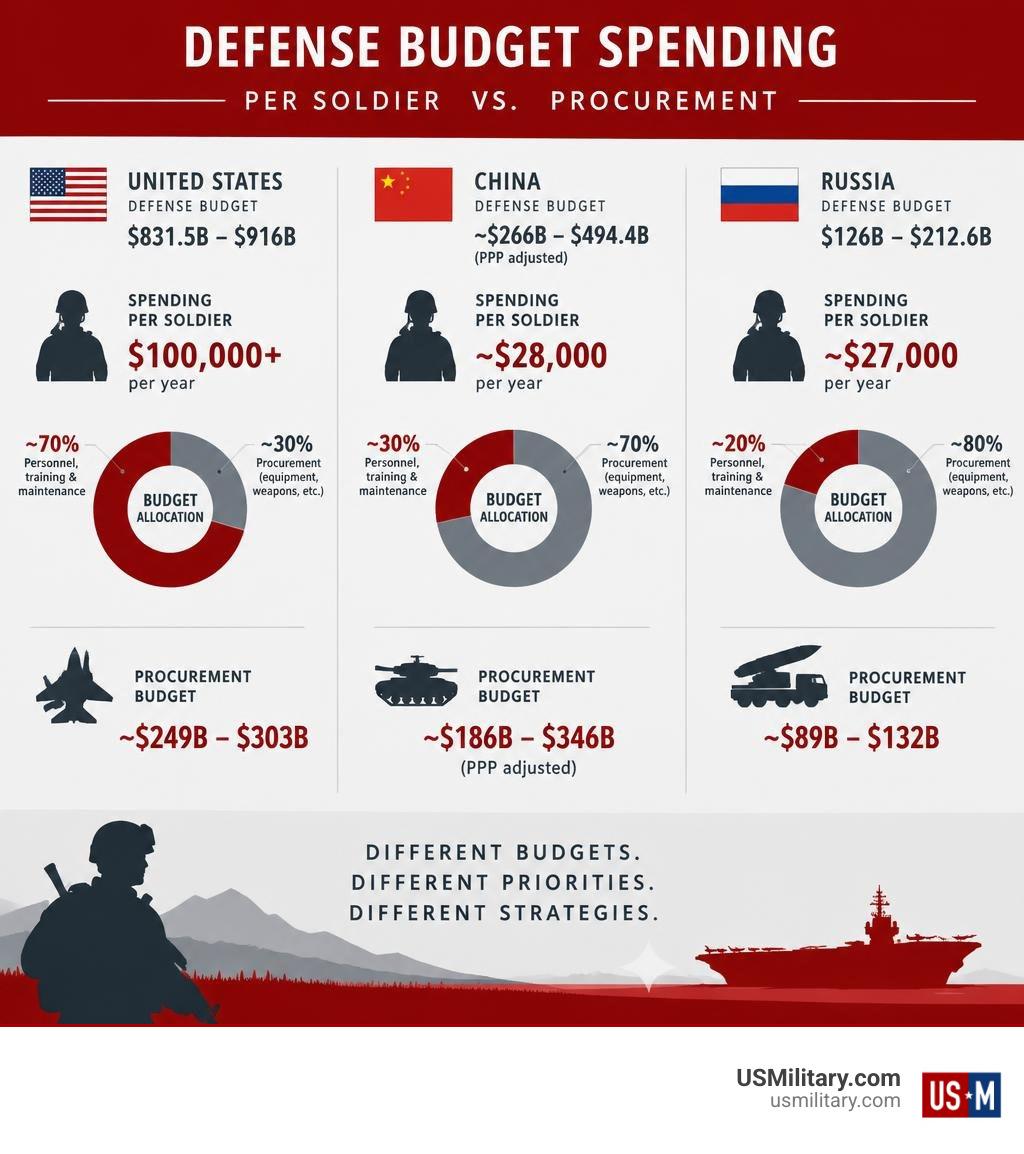
The US defense budget stands at over $830 billion (and up to $916 billion when factoring in all national security expenditures), outpacing Beijing and Moscow combined. However, how that capital is allocated matters.
The US military invests heavily in quality of life, training, and maintenance, spending over $100,000 per active-duty service member annually. China spends approximately $28,000 per soldier, allowing it to pour capital directly into hardware procurement.
When evaluating active-duty troop numbers, the Pentagon fields roughly 1.33 million active personnel and nearly 800,000 reserve troops. In contrast, Beijing commands over 2 million active service members, and Moscow maintains 1.32 million active troops bolstered by 2 million reservists. Both adversaries utilize conscription models to feed their ranks, whereas the US relies on an all-volunteer force.
Recent domestic recruiting shortfalls have pressured ground forces, with the US Army projecting active end-strengths near 443,000. In heavy ground combat, Russia retains significant inventories of towed and rocket artillery (over 8,400 systems), though US ground forces counter this with precision fires, advanced armored vehicles, and air support.
Air, Naval, and Land Warfare: Comparing Carrier Fleets, Submarines, and Armored Forces
In conventional combined-arms warfare, the US holds decisive leads in air and maritime power projection:
- Naval Power: The US Navy operates 11 full-sized nuclear aircraft carriers and 9 amphibious assault ships acting as light carriers. China fields roughly 350 to 400 total hulls, earning it the title of the world’s largest navy by ship count. However, US naval forces dominate in total displacement tonnage, nuclear attack submarines (66 fast-attack and ballistic missile boats), and advanced guided-missile destroyers (83 active).
- Air Superiority: America’s air fleet of more than 13,000 aircraft dwarfs Russia’s 4,237 and China’s estimated 3,300. Crucially, the US maintains unmatched logistics and global strike reach through 610 aerial refueling tankers (compared to Russia’s 18) and over 900 heavy transport aircraft.
- Aviation Technology: From fifth-generation stealth fighters like the F-35 and F-22 to next-generation aviation platforms like advanced scout helicopters, American air assets retain a qualitative edge in avionics and combat networking.
- Land Forces: America maintains 409,660 armored combat vehicles alongside modern M1A2 Abrams tanks, using integrated data networks to outmatch larger but less networked armored formations.
To see how these assets distribute across forward posts, review our breakdown of modern combat hardware and global deployments.
Nuclear Arsenals, Hypersonics, and A2/AD: US Military Strength vs China and Russia’s Military: The Truth Today
Nuclear deterrence remains the baseline of great power stability. Russia fields the world’s largest strategic stockpile with roughly 5,900 to 6,500 total warheads, while the US operates approximately 5,500 warheads deployed across its triad of nuclear submarines, stealth bombers, and land-based ICBMs. China historically kept an arsenal near 200 to 500 warheads, though it is expanding its mobile silo fields rapidly.
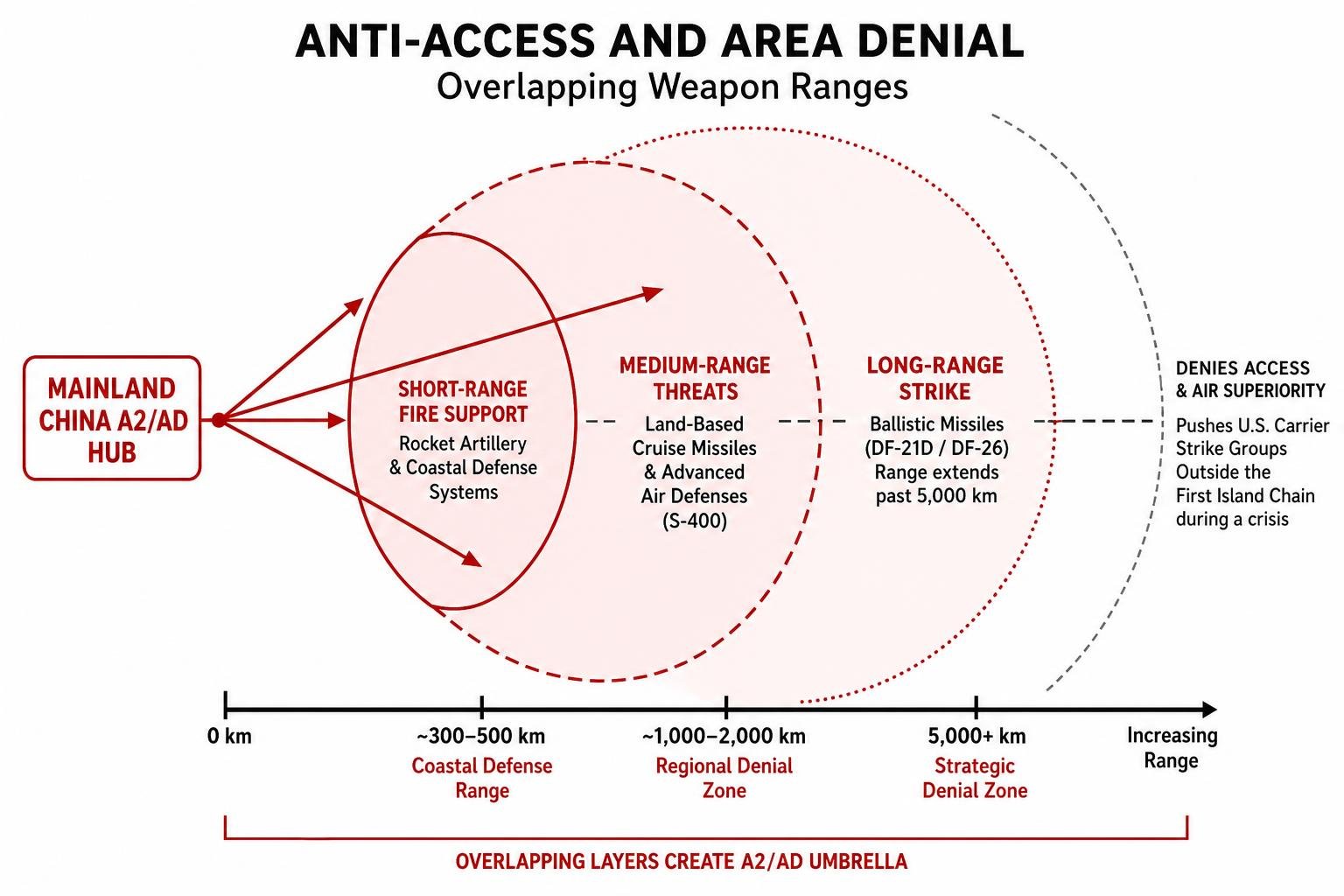
The primary conventional challenge in the Indo-Pacific stems from Anti-Access/Area Denial (A2/AD). China has developed a dense umbrella of over 1,250 ground-launched ballistic and cruise missiles with ranges extending past 5,000 kilometers.
Systems such as the DF-21D and DF-26 “carrier killer” missiles, alongside overlapping Russian-made S-400 integrated air defense batteries, are engineered to push US carrier strike groups outside the First Island Chain during a crisis.
Strategic Assessment: Global Alliances, Space Threats, and Future Conflict Scenarios
America’s structural advantage lies in its network of allies and bases. The US operates roughly 750 overseas bases, creating deep logistical footholds. A comprehensive look at this global footprint is available in our network of overseas military installations.
China and Russia operate with regional concentration and almost no mutual treaty obligations for joint defense. NATO binds 32 nations to mutual defense in Europe, while bilateral treaties anchor US defense pacts with Japan, South Korea, the Philippines, and Australia.
For service members looking to understand how each service branch plugs into these joint missions, explore USMilitary.com’s complete guide to military branches.
Space Domain Warfare, Counterspace Threats, and Emerging Tech Rivalry
Space has transformed into an active operational warfighting theater. Satellite communications, GPS targeting, and missile warning arrays are critical to modern combat networks.
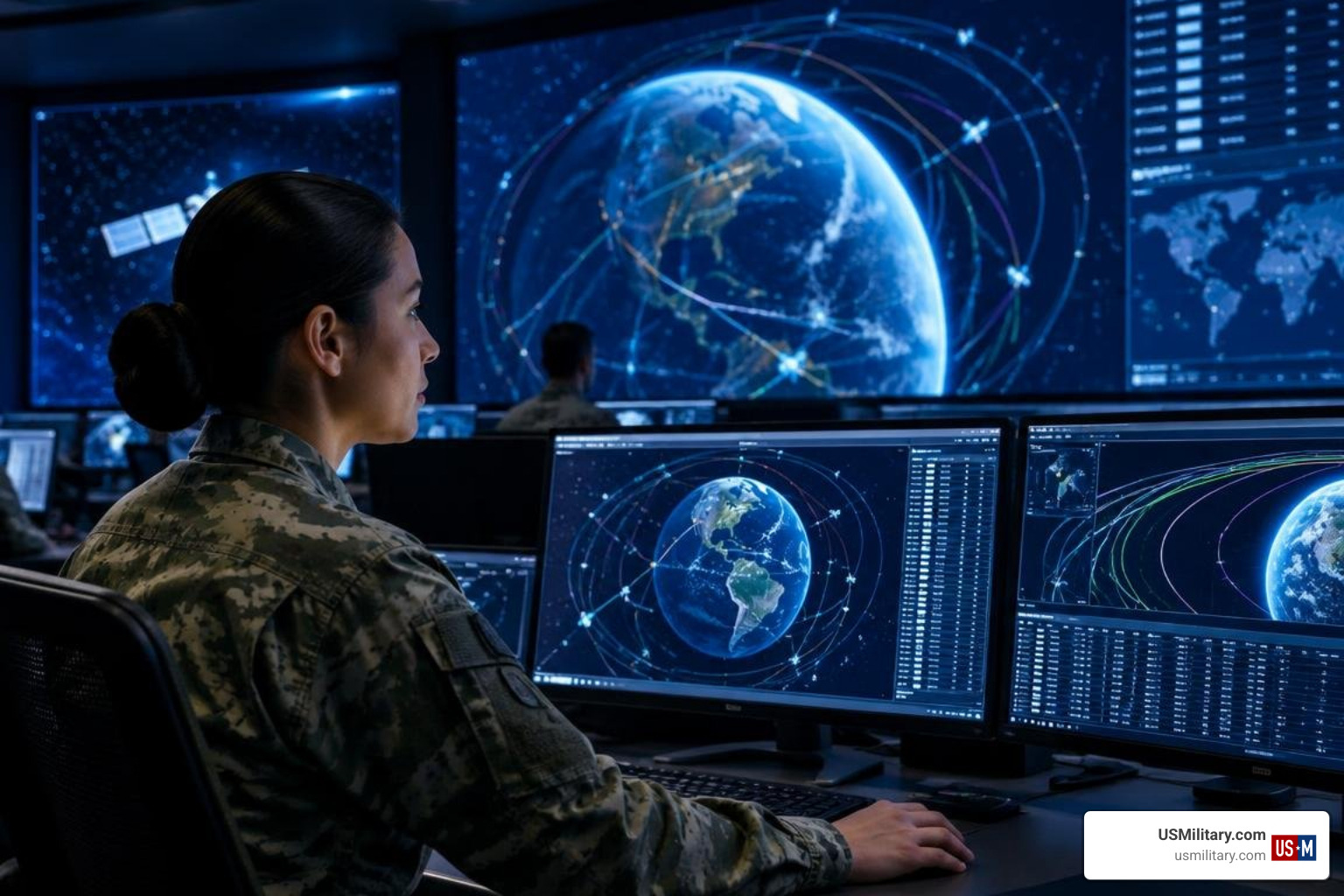
Recent findings from Space Systems Command on orbital threats highlight that both Beijing and Moscow are fielding dedicated counterspace weapons:
- Direct-Ascent Anti-Satellite (ASAT) Missiles: Russia demonstrated its PL-19 Nudol system by destroying an orbital satellite in 2021, generating over 1,500 pieces of trackable debris. China tested a similar kinetic interceptor in 2007.
- Navigation and Surveillance Fleets: China has increased its on-orbit presence by 667 percent over the last decade, operating more than 1,300 satellites. Its BeiDou navigation network now rivals GPS in orbital coverage.
- Economic & Tactical Vulnerability: An adversarial strike causing a 30-day GPS outage could cost the US economy up to $45 billion while degrading military precision-guided munitions.
The China-Russia Partnership, Indo-Pacific War Games, and Lessons for Peer Conflict
Moscow and Beijing have strengthened their tactical cooperation, holding joint bomber patrols over the Sea of Japan and large exercises like Vostok. However, they lack a formal mutual defense alliance, remaining partners of strategic convenience.
Independent think-tank war games examining a potential conflict over Taiwan reveal critical takeaways for modern joint-force planning:
- Airfield Resiliency: Simulations demonstrate that precision missile volleys could crater forward runways at facilities like Kadena Air Base, requiring investments in rapid airfield repair and dispersed Agile Combat Employment (ACE) concepts.
- Munitions Consumption: High-intensity peer warfare burns through precision anti-ship and air defense munitions in weeks, exposing the urgent need for resilient industrial supply lines.
- Unmanned Systems Integration: The conflict in Ukraine shows that commercial and military drones, electronic warfare jamming, and AI-driven command systems have permanently altered traditional infantry and armored tactics.
The data proves that the United States maintains the world’s most powerful military, backed by global logistics and unmatched air and naval fleets. However, closing regional gaps against near-peer adversaries requires continued investment in distributed basing, counter-missile defense, and force readiness.
For more in-depth military guides, career comparisons, and benefits information, explore USMilitary.com.
Free for Service Members & Veterans
Get the military benefits intel no one tells you about.
Weekly updates on VA benefits, pay changes, and money tips — free for service members and veterans.
No spam. Unsubscribe anytime. Your info is never shared.



Leave a Reply