Would a Democratic Majority Cut VA Benefits?
 The chances of a Democratic-majority Congress cutting VA benefits appear low, based on Democrats’ stated positions and their opposition to the proposed 2026 benefit cuts. But no election result can guarantee what a future Congress will do. Veterans should watch both legislation and VA rule changes, especially proposals affecting sleep apnea and tinnitus ratings. In July 2026, House Republican leaders pulled a bill that would have changed those ratings for future claims. The fight is less about whether to help those retirees than how to pay for it.
I’m Larry Fowler, a Navy veteran and publisher of USMilitary.com. I’ve tracked VA disability trends since 2007, and here I examine the question: The Chances of a Democrat Majority Congress Cutting Back VA Benefits?
 Similar topics to The Chances of a Democrat Majority Congress Cutting Back VA Benefits?:
Current Legislative Battles: The Take Care of America’s Veterans Act and Rating Cuts
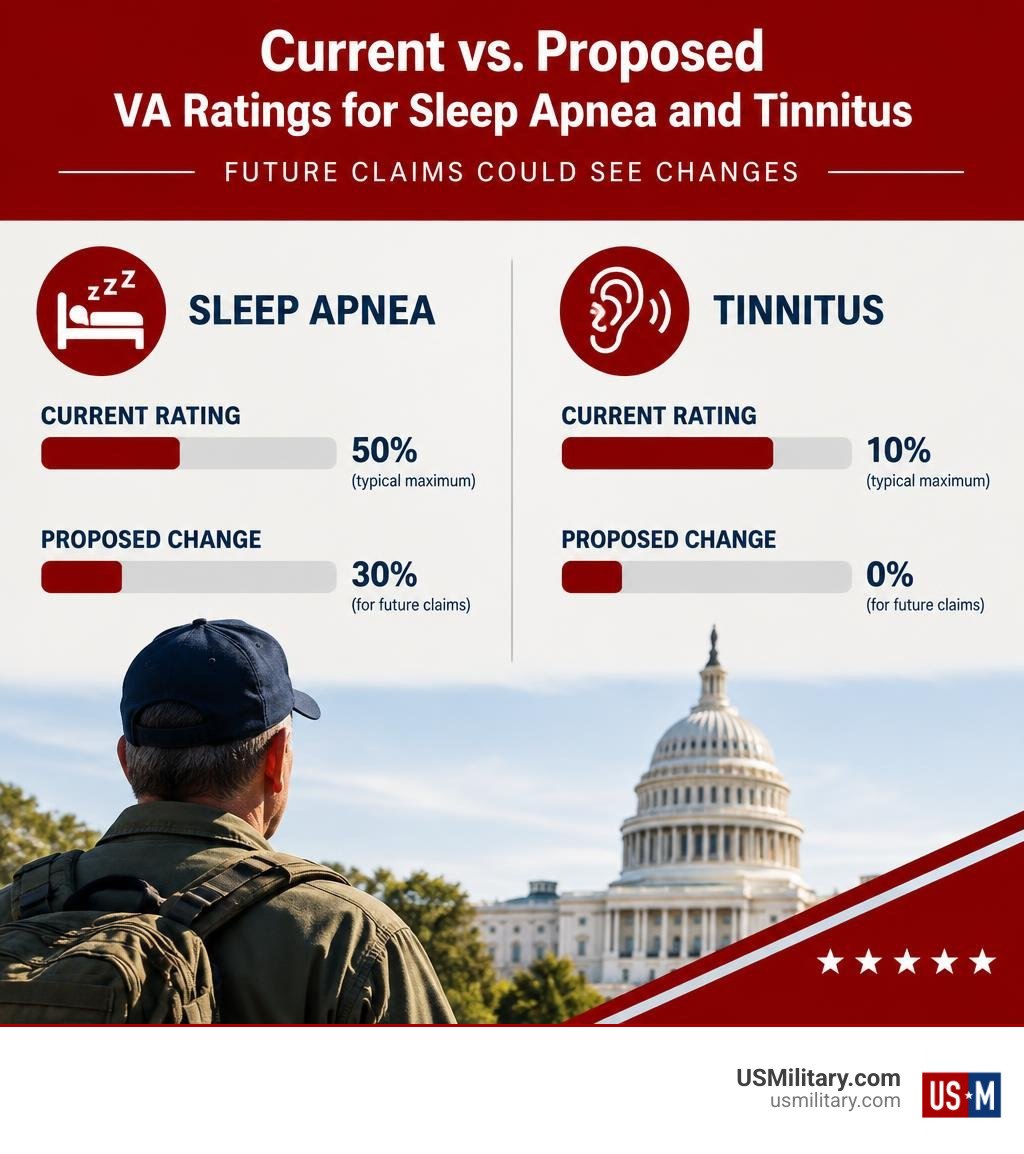
The core debate in Washington during 2026 centers on H.R. 9237, officially titled the Take Care of America’s Veterans Act. While the bill packages several popular initiatives, Section 108 sparked fierce resistance across Capitol Hill and the military community. Under this section, the Department of Veterans Affairs rating schedule would see sweeping overhauls for common service-connected conditions. According to a comprehensive VA analysis, these proposed adjustments would reduce future disability compensation by as much as $57 billion over 10 years and impact roughly 1.5 million veterans filing new claims. Additionally, the legislation introduced provisions raising VA home loan refinancing fees for half a million active-duty service members and veterans, generating roughly $4 billion in offsets over the next decade. When House Republican leadership brought the bill forward, it stalled. On July 16, 2026, leaders pulled the measure from the floor after failing to muster necessary support. Lawmakers highlighted these legislative roadblocks in a formal statement on House Republican failure to advance benefit cuts, signaling that cutting compensation to fund new mandates remains a nonstarter for many members. Understanding how monthly pay ties to your evaluation is critical, as detailed in our guide on disability rating percentages. The table below compares the current rating rules with the restructuring attempted under Section 108:
| Disability Condition | Current VA Rating Standard | Proposed Section 108 Rating Rule | Potential Budget & Veteran Impact |
|---|---|---|---|
| Obstructive Sleep Apnea | Automatic 50% rating if a CPAP or breathing device is required | Shifts to treatment-effectiveness; ratings decrease or drop to 0% if CPAP controls symptoms | Affects over 763,000 future claims; major portion of $57B projected 10-year cuts |
| Tinnitus (Ringing in Ears) | Standalone 10% disability rating upon proving service connection | Eliminates standalone rating; treated solely as a secondary symptom of underlying hearing loss | Impacts future claims for the single most common condition (3.6M current recipients) |
| VA Home Loan Refinancing | Standard statutory funding fee tiers | Increased refinancing fees for active-duty and veterans | Generates up to $4B in cost offsets over 10 years from 500,000 borrowers |
Sleep Apnea and Tinnitus Rating Restructuring
Under current rating schedules, sleep apnea requiring a CPAP machine warrants an automatic 50% evaluation. The proposed revision moves toward a treatment-based model. If your machine successfully manages your airway obstruction, your compensable rating could be drastically reduced or eliminated entirely. For tinnitus, which currently stands as the most common service-connected disability with 3.6 million recipients, the plan removes the standalone 10% rating. Future claimants would have to demonstrate severe, measurable hearing loss to receive any financial compensation for ringing in the ears. To see how these conditions fit into broader compensation programs, consult our guide to VA disability compensation.The Mechanics of Section 108 and Budget Offsets
Section 108 was designed as a legislative “pay-for.” Under federal budgeting, expanding one entitlement often requires mandatory spending reductions elsewhere. Rather than drawing from broader federal revenues, the bill used compensation cuts for future disabled veterans to offset the cost of new programs. During floor debate, 207 House Democrats and three House Republicans supported a motion to recommit. This procedural move sought to strip the rating cuts and replace them with an offset utilizing unobligated Department of Defense funds, highlighting a fundamental divide over budget mechanics.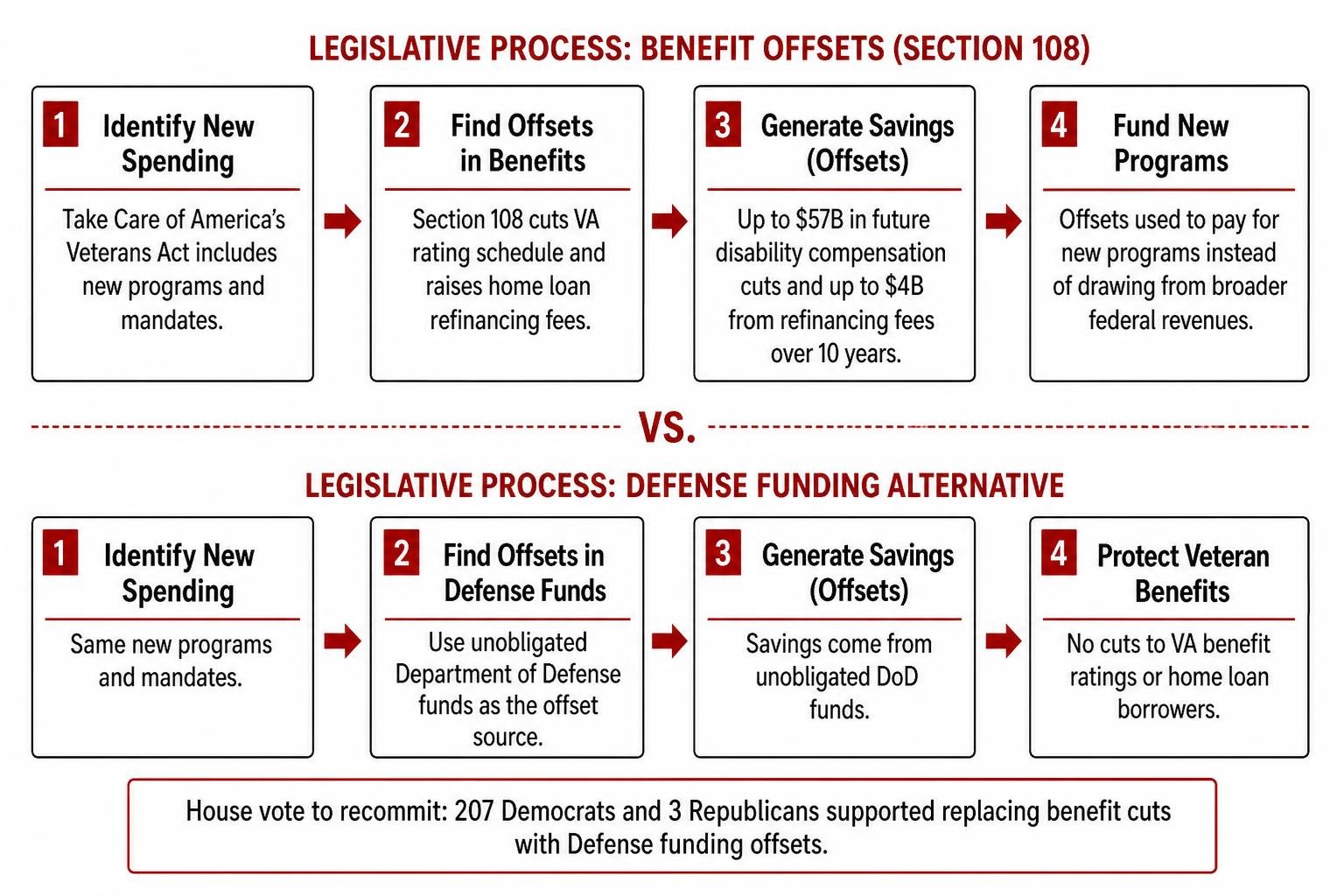
Evaluating the Chances of a Democrat Majority Congress Cutting Back VA Benefits
To gauge whether a Democratic-led House or Senate would roll back entitlements, we must look at voting records and party priorities. Senate Veterans’ Affairs Committee leaders, including Senator Richard Blumenthal, along with House Veterans’ Affairs Committee Ranking Member Mark Takano, have consistently organized opposition against baseline reductions. In official statements outlining legislative goals, such as Ranking Member Mark Takano’s official priorities, Democrats have focused on protecting PACT Act toxic exposure funding and opposing any rollbacks to veteran healthcare budgets. Nearly 50 Senate Democrats and independents signed a joint letter directly opposing rating downgrades for respiratory and audiology conditions. For veterans navigating these evolving programs, our comprehensive military benefits guide outlines core entitlements that remain protected under existing statutory authorities.The Chances of a Democrat Majority Congress Cutting Back VA Benefits Under PAYGO Rules
Pay-As-You-Go (PAYGO) rules require that new mandatory spending be offset by tax revenue or reductions in other mandatory programs. When major veteran initiatives arise, fiscal conservatives often insist on applying strict PAYGO rules to the VA budget. Democrats have historically pushed to exempt veterans’ healthcare and disability benefits from statutory PAYGO constraints, arguing that the cost of caring for injured service members is an ongoing cost of war. If Democrats take majorities in Congress, they are far more likely to waive PAYGO rules for veteran legislation or leverage unused defense appropriations rather than offsetting costs through disability reductions. This approach protects commonly overlooked VA benefits from becoming bargaining chips during budget reconciliations.Assessing the Chances of a Democrat Majority Congress Cutting Back VA Benefits Against Project 2025
External policy frameworks, such as Project 2025, recommend standardizing VA medical evaluations, tightening eligibility criteria for secondary conditions, and shifting more care into the private sector. A Democratic majority in Congress serves as a direct legislative firewall against these proposals. Democratic lawmakers generally oppose efforts to privatize core VA hospital functions, consistently voting to increase internal VA staffing, modernize clinical facilities, and reject administrative revisions that restrict disability eligibility.VSO Opposition, Public Opinion, and Bipartisan Alternatives
Veterans Service Organizations (VSOs) play an influential role in shaping Capitol Hill votes. When Section 108 emerged, major advocacy groups immediately mobilized. Organizations like the VFW and DAV led the charge against the cuts. In national statements, the DAV condemned congressional proposals targeting disability pay, calling benefit reductions a poison pill that forces one group of wounded service members to pay for another.
Veteran Advocacy Groups Divided on Strategy
While opposition was broad, the veteran community experienced a tactical split:- The VFW and DAV: Maintained a firm “red line,” arguing that Congress should never cut earned benefits for future claimants to balance current legislative packages.
- The American Legion: Supported the broader compromise bill, reasoning that keeping funding streams within the veteran ecosystem was necessary to secure urgent reforms for medically retired combat veterans.
The Major Richard Star Act as a Standalone Measure
The primary driver behind these funding disputes is the Major Richard Star Act. This bill would provide full concurrent receipt of both longevity retirement pay and VA disability compensation for combat-injured service members medically retired under Chapter 61 before completing 20 years of active service. The Star Act enjoys overwhelming bipartisan backing, boasting 336 cosponsors in the House and 79 in the Senate. Because the measure costs roughly $58 billion over a decade, legislative leaders packaged it inside larger offset bills. Democratic leaders and key VSOs continue to demand that the Star Act pass as standalone legislation, paid for through broader federal revenue or unused Pentagon funds rather than disability compensation cuts.VA Home Loan
One Benefit Many Veterans Never Use: The VA Loan
Eligible veterans, service members and some surviving spouses can buy a home with no down payment and no PMI. Checking costs nothing.
USMilitary.com may be compensated when you request quotes from lenders through this link.
Frequently Asked Questions About Congress and VA Benefits
What are the chances of a Democratic-majority Congress cutting back VA benefits in 2026?
The chances are very low. Congressional Democrats have maintained unified opposition to cuts targeting disability compensation, sleep apnea ratings, and tinnitus benefits, consistently voting to block offsets that reduce payments for disabled veterans.How would proposed sleep apnea and tinnitus changes affect existing ratings?
Under standard grandfathering rules, veterans who already hold service connection and an assigned rating for sleep apnea or tinnitus would not see their monthly payments reduced. The proposed changes under Section 108 and draft VA administrative rules apply only to new claims and requests for increases filed after the effective enactment date.What is the Major Richard Star Act, and how does it relate to benefit cuts?
The Major Richard Star Act expands concurrent receipt for Chapter 61 combat-injured retirees. Because of its $58 billion price tag, some lawmakers attempted to attach rating cuts for sleep apnea and tinnitus to offset its costs, creating the current legislative showdown.Conclusion: Securing Your Earned Entitlements
The record shows that a Democratic majority in Congress is highly unlikely to cut VA disability compensation. However, administrative reviews and offset negotiations will continue to surface during federal budget debates. We encourage all veterans to review their service records, file claims promptly for any service-related conditions, and work with accredited VSO representatives. To explore your complete range of entitlements, visit our comprehensive US veteran benefits guide at USMilitary.com to ensure you receive every benefit you have earned.Free for Service Members & Veterans
Get the military benefits intel no one tells you about.
Weekly updates on VA benefits, pay changes, and money tips — free for service members and veterans.
No spam. Unsubscribe anytime. Your info is never shared.