What Disqualifies You From A Military Draft? The Quick Answer
What Disqualifies You From A Military Draft? is one of the most searched military questions — and for good reason, especially as headlines about a potential draft continue to make news.
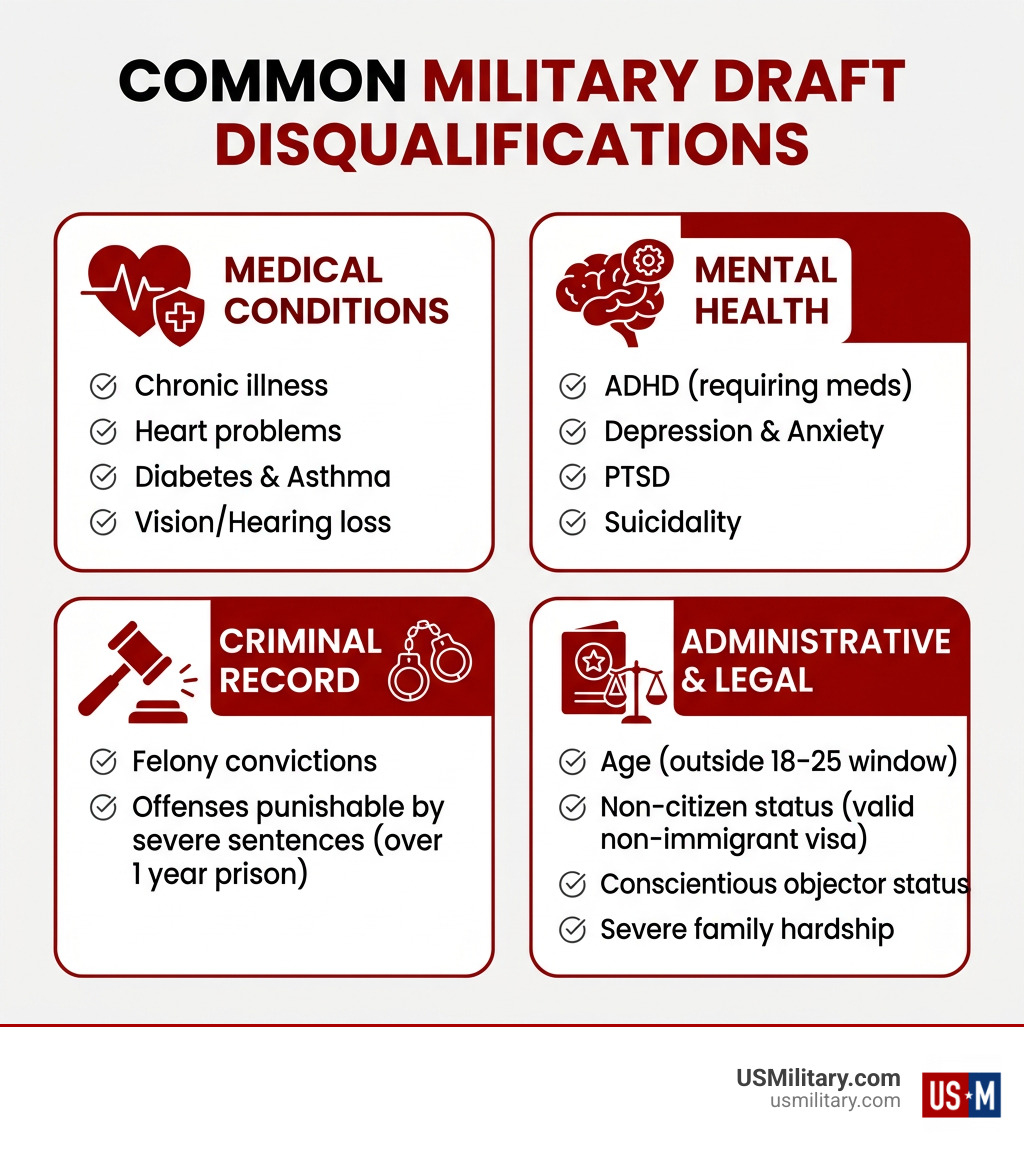
Here are the most common disqualifying factors:
- Medical conditions – chronic illness, heart problems, diabetes, asthma (after age 13), severe scoliosis, or significant vision/hearing loss
- Mental health conditions – ADHD requiring medication, clinical depression, anxiety disorders, PTSD, or suicidality
- Physical disabilities – loss of limbs, paralysis, joint instability, or severe deformities
- Criminal record – felony convictions or offenses punishable by death or more than one year in prison
- Age – men outside the 18–25 registration window are generally not eligible
- Administrative factors – non-citizen status on a valid non-immigrant visa, lack of a high school diploma (in some cases), or failure to meet aptitude standards
- Legal exemptions – conscientious objector status, sole surviving son status, or extreme family hardship
The U.S. has not held a draft since 1973 during the Vietnam War. However, all male U.S. citizens are still legally required to register with the Selective Service at age 18 — and failure to do so is a felony carrying up to five years in prison and a $250,000 fine.
Not every disqualifying condition is permanent. Many can be reviewed for a waiver depending on the branch and circumstances.
I’m Larry Fowler, publisher of USMilitary.com and a long-time resource for active military, veterans, and those navigating the complexities of service eligibility — including what disqualifies you from a military draft. Since 2007, I’ve helped hundreds of thousands of Americans find reliable answers to exactly these kinds of questions, and this article breaks it all down clearly.
What Disqualifies You From A Military Draft? glossary:
Understanding the Current Status of the U.S. Military Draft
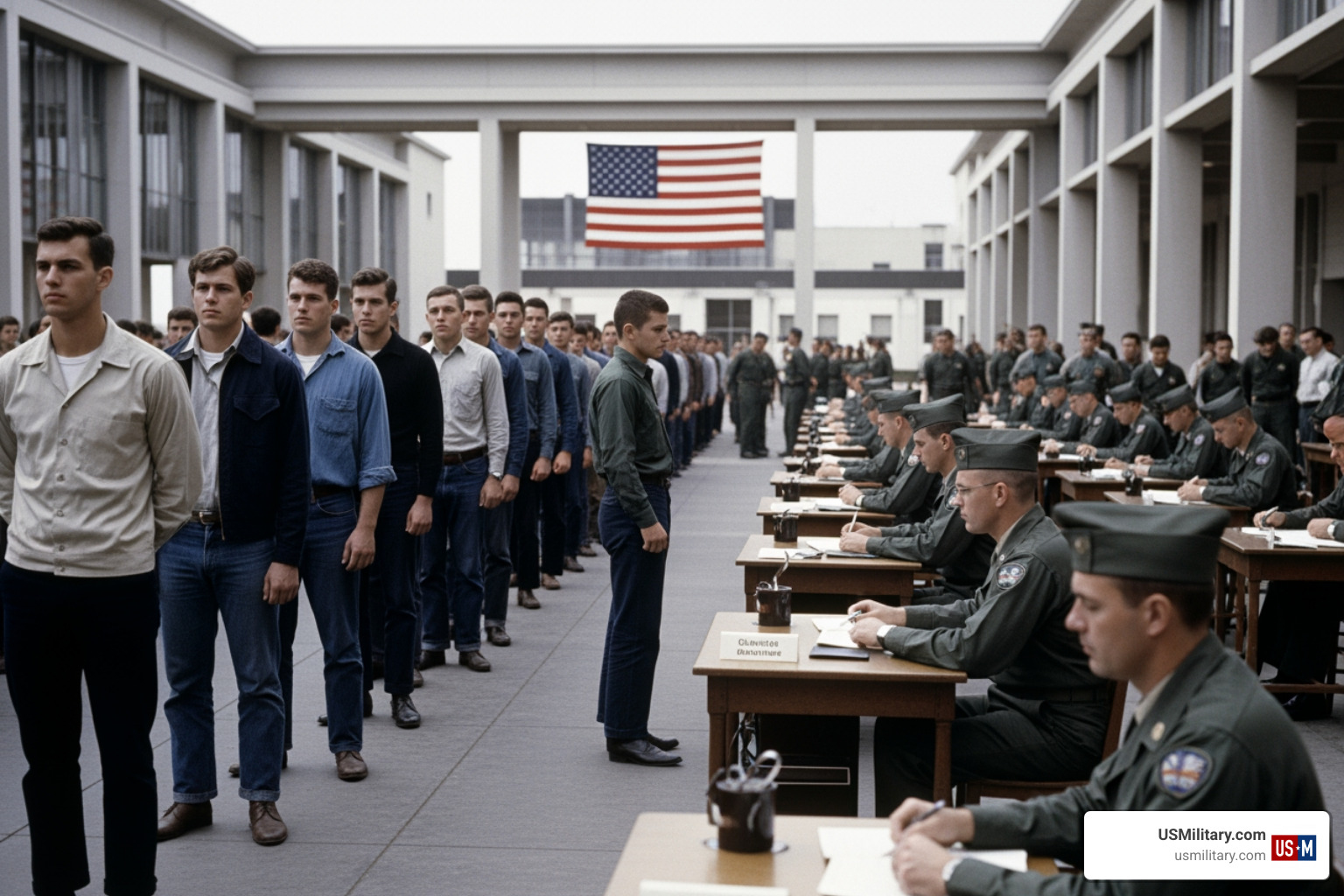
When we talk about the “draft,” we are technically talking about the Selective Service System. While many people use the terms interchangeably, there is a big difference between registering for the draft and actually being called to serve. Currently, the United States operates an all-volunteer force, meaning every soldier, sailor, airman, and Marine chose to be there.
The last time a young man was forced to report for duty via a lottery was in 1973, toward the end of the Vietnam War. Since then, the draft has remained in a “standby” mode. However, the law still requires almost all male U.S. citizens and male immigrants residing in the U.S. to register within 30 days of their 18th birthday. You can find the current registration requirements on the official government site, but the gist is simple: if you are male and between 18 and 25, you must be in the system.
Recently, there has been a lot of chatter about the US military draft in 2026 and beyond. This stems from updates to the National Defense Authorization Act (NDAA), which includes proposals for automatic registration. There is also a significant US military draft bill for women that has made its way through Senate committees. While women are not currently required to register, these legislative moves suggest that the “who” of the draft could expand in the future.
It is important to remember that failing to register is not just a paperwork error; it is classified as a felony. This can result in a fine of up to $250,000 and five years in prison. Beyond the legal trouble, non-registrants are often barred from federal student aid, federal job training, and even U.S. citizenship for immigrants. So, even if you think you might be disqualified, you still have to register.
Medical and Physical Health Standards: What Disqualifies You From A Military Draft?
If the draft were ever reinstated, the first thing that would happen after a lottery is a massive round of medical screenings. This is where most people find themselves exempt. In fact, a shocking 71 percent no longer qualify for military service due to obesity, education issues, or health problems.
The Department of Defense (DoD) has very strict official medical disqualifications that determine who is fit for the rigors of combat. When asking what disqualifies you from a military draft, the musculoskeletal system is often the first place the doctors look. Conditions like severe scoliosis (curvature of the spine), un-united fractures, or a history of chronic joint instability are major red flags. For example, if you have had multiple shoulder dislocations or a back injury that prevents you from carrying a heavy pack, you likely won’t pass.
Other key physical standards include:
- Vision: If your vision cannot be corrected to at least 20/40, or if you have severe refractive errors (over +/- 8.00 diopters), you may be disqualified.
- Hearing: Significant hearing loss — specifically a threshold higher than 25 dB on average across certain frequencies — is a disqualifier.
- Chronic Illnesses: Conditions like Type 1 or Type 2 diabetes, active tuberculosis (within the last 24 months), and certain heart conditions (like arrhythmias or valvular disease) are generally considered incompatible with service.
- Height and Weight: While standards vary slightly by branch, generally being shorter than 60 inches or taller than 80 inches can lead to a rejection.
There is often a military draft age debate regarding whether these standards relax as you get older. The reality is that the military wants young, healthy bodies that can withstand the physical toll of basic training. If a 20-year-old has chronic knee pain from an old injury, they are far less likely to be drafted than someone with a clean bill of health.
Mental Health and Cognitive Conditions: What Disqualifies You From A Military Draft?
Mental health is taken just as seriously as physical health in the modern military. In the past, many conditions were swept under the rug, but today, the DoD is very specific about what disqualifies you from a military draft regarding your psychological well-being.
Common disqualifying mental health conditions include:
- ADHD: This is a common question. Generally, a history of ADHD is disqualifying if you have required medication to function within the last 24 months or if you have demonstrated an inability to perform in school or work without accommodations.
- Depression and Anxiety: A clinical diagnosis of major depressive disorder or a history of panic attacks can be disqualifying, especially if it resulted in hospitalization or long-term medication use.
- PTSD: Post-Traumatic Stress Disorder is a significant disqualifier for induction, as the military environment can exacerbate the condition.
- Suicidality: Any history of self-harm or attempted suicide is typically a permanent disqualifier.
We also have to look at cognitive abilities. If you were drafted, you would be required to take the Armed Services Vocational Aptitude Battery (ASVAB). Your score on the Armed Forces Qualification Test (AFQT) portion determines your “category.” Those in Category V (the bottom 9th percentile) are legally ineligible to serve. Even those in Category IV (10th to 30th percentile) are often limited in how many can be accepted into service at any given time.
If you are wondering, “Can you refuse to go to war?” based on mental health, the answer is that the military would rather not have you if your condition poses a risk to yourself or your unit. Recent initiatives like the Brandon Act have even improved how current service members access mental health care, reflecting a broader shift in how the military views these conditions.
Selective Service Classifications and the 4-F Status: What Disqualifies You From A Military Draft?
If a draft were activated, every man registered would be assigned a classification. These codes determine who goes to the front lines and who stays home. The most famous (or infamous) of these is 4-F.
| Classification | Meaning | Status |
|---|---|---|
| 1-A | Available for unrestricted military service | Draft-eligible |
| 1-O | Conscientious Objector (available for civilian work) | Exempt from combat |
| 1-S | Student deferred until graduation or end of semester | Temporary Deferment |
| 2-D | Ministerial student | Deferment |
| 3-A | Hardship deferment (dependents rely on you) | Deferment |
| 4-F | Not qualified for any military service | Disqualified |
| 4-G | Sole surviving son or brother | Exempt |
When people ask what disqualifies you from a military draft, they are essentially asking how to get a 4-F classification. This status is reserved for those who have a physical, mental, or moral condition that makes them “not fit for service.”
If you receive an induction order, you don’t just get to claim 4-F status on your own. You would report to a Military Entrance Processing Station (MEPS) for a full evaluation. If you disagree with your classification, you have the right to go before appeal boards to present evidence of your disqualification. Knowing who gets pulled first in a draft can help you understand the timeline of when these classifications would actually be handed out.
Legal, Moral, and Administrative Exemptions
Beyond medical issues, there are legal and moral reasons why someone might be disqualified. The United States has a long history of balancing the need for a military with the personal and religious rights of its citizens.
Conscientious Objection A conscientious objector (Classification 1-O) is someone who, because of religious, moral, or ethical beliefs, is sincerely opposed to participation in war in any form. This isn’t a “get out of jail free” card; you have to prove your beliefs are deeply held and consistent. If granted, you might be assigned to non-combatant military service (like being a medic) or ordered to perform civilian work that helps the national interest.
Ministers and Students Ordained ministers are generally exempt from service, though they must still register for the Selective Service. Students training for the ministry may also receive deferments.
Sole Surviving Sons This is a topic often romanticized in movies, but it has real roots in law. A surviving son or brother may be exempt if a parent or sibling died in the line of duty or is missing in action. However, this exemption often does not apply during a war or national emergency declared by Congress.
Family Hardship If your being drafted would cause “extreme hardship” to your dependents — such as a spouse, children, or elderly parents who rely entirely on your support — you may be eligible for a 3-A deferment.
Criminal Records A common question we get is, “Does a criminal record disqualify you?” The answer is: often, yes. Under the law, those convicted of a felony or any offense punishable by death or imprisonment for more than one year may be disqualified. The military places a high value on “moral character,” and a history of drug trafficking, violent crime, or dishonesty can lead to an administrative disqualification.
With the military draft coming back being a frequent topic of debate, understanding these moral and legal boundaries is essential. Many of these rules were solidified after the lessons learned from when the last draft was held in the 1970s.
Can You Get a Waiver for Disqualifying Conditions?
One of the most misunderstood parts of military eligibility is the waiver process. Just because a condition is “disqualifying” doesn’t mean it’s the end of the road. In a draft scenario, the military’s goal is to fill ranks, which means they may be more or less lenient with waivers depending on the “needs of the service.”
If you have a condition like a past ACL reconstruction or childhood asthma, you should consult with a recruiter. They are the gatekeepers for the waiver process. For an ACL tear, if you have had the surgery, completed physical therapy, and have a full range of motion with no instability, a waiver is very common.
For asthma, the rules are a bit tighter. If you have had asthma symptoms or used an inhaler after your 13th birthday, it is technically disqualifying. However, if you can pass a “methacholine challenge” or a pulmonary function test to prove your lungs are clear, a waiver can be granted.
The key to getting a waiver is documentation. You will need:
- Complete medical records regarding the condition.
- Clearances from your civilian doctors.
- A “stable” period (usually 12–24 months) where the condition didn’t require treatment.
Be warned: never lie about a medical condition to get in (or stay out) of the service. This is known as “fraudulent enlistment” and can lead to a dishonorable discharge and legal penalties. As the world watches to see will there be a military draft, the DoD continues to update these standards to ensure the force remains capable.
Frequently Asked Questions about Draft Disqualifications
Who is exempt from registering for the Selective Service?
While almost all men must register, there are a few exceptions. These include non-citizens who are in the U.S. on valid, non-immigrant visas (like students, diplomats, or tourists). Men on active duty in the military and cadets at the Service Academies are also exempt because they are already in the system.
What medical conditions are most likely to result in a 4-F classification?
The most common 4-F triggers are chronic conditions that require daily medication or specialized care that isn’t available in a combat zone. This includes Type 1 diabetes, severe heart disease, Crohn’s disease, and significant physical disabilities like the loss of a limb or blindness.
Can women be drafted under current U.S. law?
No. As of right now, the law specifically states that only “male persons” must register and are subject to the draft. While there has been significant legislative movement to change this — especially since all combat roles were opened to women in 2013 — Congress has not yet updated the Military Selective Service Act to include women.
Conclusion
At the end of the day, the U.S. military relies on its incredible volunteer force to maintain readiness. However, the Selective Service remains a vital insurance policy for our national security. Understanding what disqualifies you from a military draft is about more than just knowing if you’ll have to serve; it’s about understanding the high standards required to protect our nation.
Whether you are looking for information on medical waivers, curious about what is the US military draft, or need help navigating VA benefits, we are here for you. At USMilitary.com, we pride ourselves on being the central hub for military-related guidance, from career paths to financial planning. Stay informed, stay prepared, and thank you for your interest in our nation’s defense.
Free for Service Members & Veterans
Get the military benefits intel no one tells you about.
Weekly updates on VA benefits, pay changes, and money tips — free for service members and veterans.
No spam. Unsubscribe anytime. Your info is never shared.


