Are Army Rangers Special Forces? Here’s What You Need to Know
Are army rangers special forces? The short answer is: it depends on how you define the term.
Here’s a quick breakdown:
| Term | What It Means | Does It Include Rangers? |
|---|---|---|
| Special Forces (SF) | Officially refers only to US Army Green Berets | No |
| Special Operations Forces (SOF) | All elite units under USSOCOM, including Rangers | Yes |
| 75th Ranger Regiment | Army’s premier direct-action raid force | SOF, not SF |
So Rangers are special operations forces — but they are not “Special Forces” in the official military sense. That title belongs exclusively to the Green Berets.
This distinction trips up a lot of people, and for good reason. In movies, news coverage, and everyday conversation, “special forces” gets used as a catch-all phrase for any elite military unit. But inside the US Army, the terminology is very specific — and the difference matters.
The 75th Ranger Regiment operates under US Army Special Operations Command (USASOC) alongside Green Berets, Civil Affairs, and Psychological Operations units. Rangers are elite. Rangers are special operations. But Rangers are not Special Forces.
I’m Larry Fowler, publisher of USMilitary.com, and I’ve spent nearly two decades helping service members and civilians navigate exactly these kinds of questions — including the common confusion around whether are army rangers special forces is even the right question to ask. In this guide, we’ll break down the real differences so you can make informed decisions about military service or simply understand how these elite units fit together.

Similar topics to are army rangers special forces:
Are Army Rangers Special Forces? Defining the Terms
When we ask are army rangers special forces, we are diving into a semantic debate that has existed for decades. To the general public, any soldier jumping out of a plane or conducting a midnight raid is “Special Forces.” However, within the Department of Defense, these terms have legal and organizational weight.
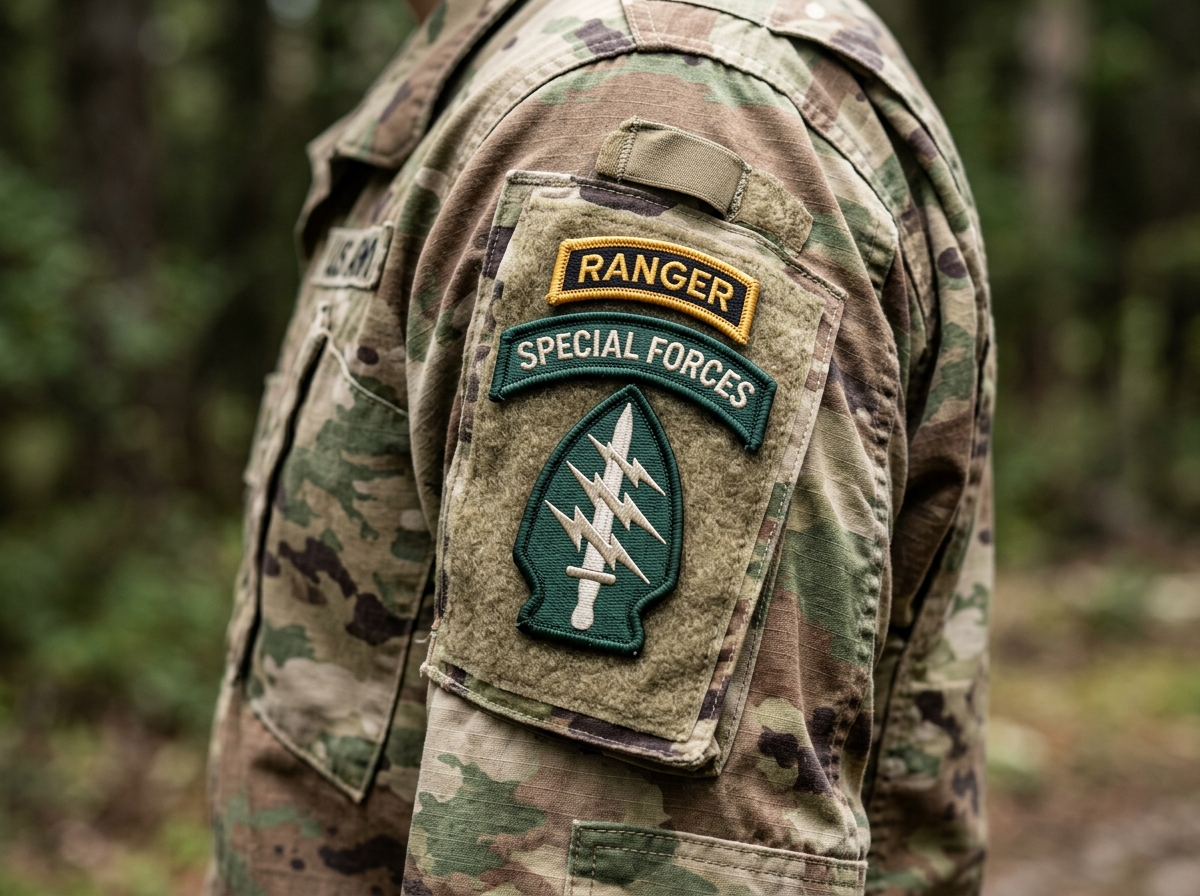
The 75th Ranger Regiment is a Special Operations Force (SOF). This is the umbrella term for all units under the United States Special Operations Command (USSOCOM). This includes Navy SEALs, Air Force Pararescuemen, Marine Raiders, and, of course, Army Rangers.
“Special Forces,” capitalized, is the specific name of the US Army Green Berets. If you call a Ranger a “Special Forces soldier,” you aren’t technically correct in a military context, though you are acknowledging their elite status.
The Distinction Between SOF and SF
The primary reason for the distinction lies in the mission. Rangers are the Army’s premier large-scale raid force. They specialize in “direct action”—think fast, violent, and overwhelming force to seize an airfield or capture a High-Value Target (HVT).
In contrast, the Green Berets focus on unconventional warfare and foreign internal defense. Their job is often to slip into a country, live with the locals, and train them to fight their own battles. While both are elite, their day-to-day jobs are worlds apart. For a deeper dive into the specific missions of the Green Berets, you can view the Wikipedia: US Army Special Forces Overview.
Why Public Perception Often Blurs the Line
Why is there so much confusion? Media influence plays a huge role. Hollywood often uses “Special Forces” as a generic term for “cool guys with night vision.” Additionally, the lineage of these units is intertwined. Many of the original Green Berets were former Rangers from World War II or the Korean War.
Both groups wear distinctive headgear—the Green Beret for Special Forces and the Tan Beret for Rangers—which signals their elite status to the world. To understand how the Ranger identity evolved separately from other units, check out the History of the 75th Ranger Regiment.
The 75th Ranger Regiment: The Army’s Premier Raid Force
If the Army needs a door kicked down in the middle of the night across the globe, they call the 75th Ranger Regiment. They are a lethal, agile, and flexible force. One of their most famous capabilities is the “forcible entry” mission, specifically airfield seizures. They can deploy a full battalion anywhere in the world within 18 hours.
Rangers operate as a “team of teams.” They are light infantry, meaning they move on foot or via light vehicles and helicopters, but they pack a punch that belies their size. They are the “big stick” of the special operations world. For a complete look at what it takes to join this unit, see the 75th Ranger Regiment Unit Overview.
Mission Focus: How are Army Rangers Special Forces in Practice?
While they aren’t “Special Forces” by name, their missions are undoubtedly “special.” The Regiment focuses on the “Big Five”: marksmanship, physical training, medical training, small-unit tactics, and mobility.
Their primary roles include:
- Direct Action Raids: Attacking strategic targets to kill or capture enemies.
- Special Reconnaissance: Scouting behind enemy lines to gather intelligence.
- Personnel Recovery: Rescuing captured or missing soldiers.
You can see these missions in real-world contexts through the DVIDS: 75th Ranger Regiment in Action archives.
Organizational Structure of the Regiment
The 75th Ranger Regiment is headquartered at Fort Moore (formerly Fort Benning), Georgia. It consists of:
- 1st Battalion: Located at Hunter Army Airfield, GA.
- 2nd Battalion: Located at Joint Base Lewis-McChord, WA.
- 3rd Battalion: Located at Fort Moore, GA.
- 75th Ranger Military Intelligence Battalion: Provides high-level intelligence support for Ranger operations. You can learn more about their specific role at the 75th Ranger Military Intelligence Battalion site.
- 75th Ranger Regimental Special Troops Battalion: Handles communications, reconnaissance, and maintenance. Details are available at the 75th Ranger Regimental Special Troops Battalion page.
Rangers vs. Green Berets: Key Differences in Training and Roles
Comparing a Ranger to a Green Beret isn’t about who is “better”—it’s about the tool for the job. If you need to train a village in the mountains of Afghanistan to defend itself against the Taliban, you send a 12-man Green Beret “A-Team.” If you need to drop 500 soldiers onto a runway to seize a strategic point, you send the Rangers.
The Green Beret mission is often political and long-term. They must learn foreign languages and understand local cultures. Rangers, while highly intelligent, focus on the immediate tactical problem: winning the close fight. For a side-by-side comparison of these career paths, visit the SOF Support Foundation: Key Differences Between Rangers and Green Berets.
Training Requirements: Why are Army Rangers Special Forces Candidates?
The path to becoming a Ranger is one of the most grueling in the world. It begins with RASP—the Ranger Assessment and Selection Program.
- RASP 1: An eight-week course for lower-enlisted soldiers (E-1 through E-5). It tests physical endurance and basic Ranger skills.
- RASP 2: A three-week course for officers and senior NCOs (E-6 and above). It focuses on leadership and selection for those who will lead the Regiment.
The age requirements for Army Rangers are straightforward: you must be at least 18 years old and an active-duty soldier.
Comparing Mission Sets: Direct Action vs. Unconventional Warfare
The Special Forces Qualification Course (SFQC), or “Q-Course,” for Green Berets is significantly longer than RASP, often lasting over a year due to intensive language and cultural training. Their mission of guerrilla warfare requires a different mindset than the Ranger’s raid-focused mission. You can compare these pipelines further at Special Forces Training Requirements.
Understanding Ranger School vs. The 75th Ranger Regiment
This is perhaps the biggest source of confusion. Ranger School is not the same as the 75th Ranger Regiment.
Ranger School is a 61-day leadership course. Any soldier in the Army (and even members of other branches) can attend. When they graduate, they earn the Ranger Tab, which they wear on their shoulder for the rest of their career. This signifies they are “Ranger qualified.”
The 75th Ranger Regiment is a specific unit. Soldiers in the Regiment wear the Ranger Scroll on their shoulder. While all officers and NCOs in the Regiment must graduate from Ranger School, not everyone who graduates from Ranger School serves in the Regiment. For more on the school itself, see the Ranger School Student Information and Requirements.
The Physical and Mental Toll of Ranger School
Ranger School is designed to push a soldier to their absolute breaking point. Students conduct about 20 hours of training per day. They consume two or fewer meals (about 2,200 calories) and average only 3.5 hours of sleep. Over the 61 days, they patrol more than 200 miles while carrying 65–90 pounds of gear. It is widely considered the toughest combat leadership course in the U.S. military. Learn more about the phases at the Airborne and Ranger Training Brigade website.
How the Ranger Tab Impacts the Broader Army
The Ranger Tab is a mark of prestige across the entire Army. A “tabbed” soldier is expected to be an expert in small-unit tactics and a leader who can perform under extreme stress. Having Ranger-qualified leaders in conventional units raises the standard for the entire force. Organizations like the National Ranger Association help maintain this standard through competitions and community support.
Frequently Asked Questions about Army Rangers
Are Army Rangers considered Tier 1?
Generally, no. In the special operations hierarchy, “Tier 1” refers to units like Delta Force (1st SFOD-D) and SEAL Team Six (DEVGRU). These units fall under the Joint Special Operations Command (JSOC). However, the 75th Ranger Regiment’s Regimental Reconnaissance Company (RRC) is often considered a Tier 1 asset. Many Rangers eventually try out for and join Delta Force, like the late Master Sgt. Joshua Wheeler, who moved from the Rangers into the highest levels of special operations.
Can women join the 75th Ranger Regiment?
Yes. In August 2015, the first two women successfully graduated from Ranger School, marking a historic shift. Since then, the 75th Ranger Regiment has fully integrated, with women serving in various combat and support roles. The first women to pass Ranger School paved the way for a more inclusive and capable special operations community.
What is the “Ranger Creed”?
The Ranger Creed is a six-stanza document that outlines the philosophy of the unit. It emphasizes that a Ranger will never fail his comrades, will always keep his equipment in top shape, and will “shoulder more than his share of the task.” It is the moral compass for every member of the Regiment and is supported by the U.S. Army Ranger Association.
Conclusion
So, are army rangers special forces? While the terminology suggests they are “Special Operations Forces” rather than “Special Forces,” the distinction is one of mission, not quality. Rangers are the elite of the elite, serving as the Army’s premier raid force and setting the standard for combat leadership.
Whether they are seizing an airfield in the middle of the night or training the next generation of leaders at Ranger School, Rangers continue to “Lead the Way.” If you are interested in pursuing a career in this elite community or want to learn more about the benefits available to those who serve, we encourage you to Explore Army Special Operations Careers and continue your research here at USMilitary.com.
For more information on the Ranger lifestyle and selection process, check out our related guides:
- Do you have what it takes to be an elite Army Ranger?
- What do Army Rangers do?
- Ranger Ready: The Ultimate Guide to Joining
Free for Service Members & Veterans
Get the military benefits intel no one tells you about.
Weekly updates on VA benefits, pay changes, and money tips — free for service members and veterans.
No spam. Unsubscribe anytime. Your info is never shared.


